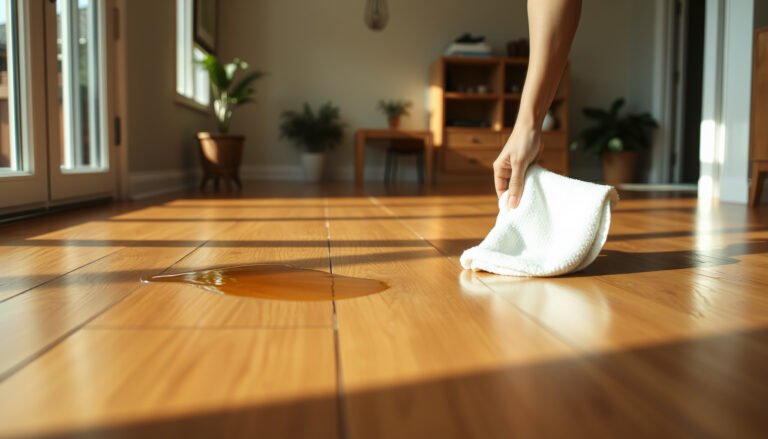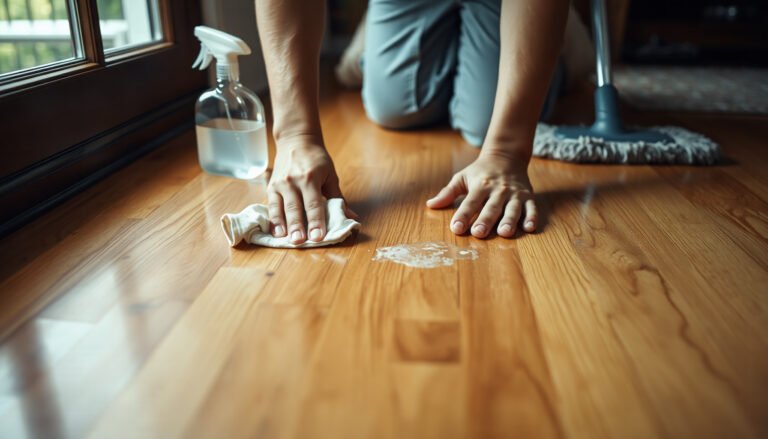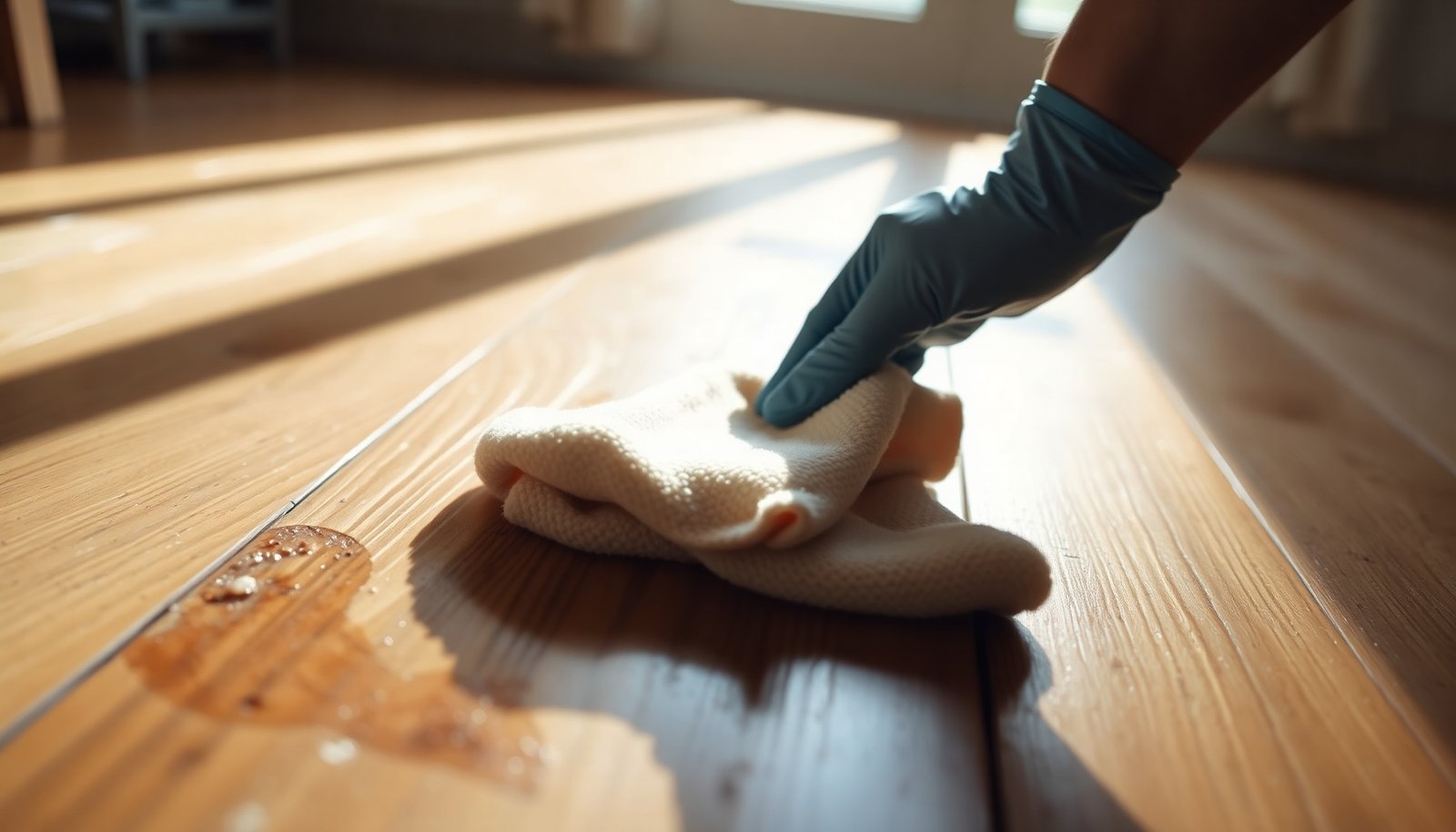

To clean hardwood floors with old polish residue, you’ll remove the built-up film first, then rinse and restore with a light, compatible finish. Plan for about 1–2 hours depending on how many layers you’re dealing with, and expect moderate effort rather than deep stripping. You’ll need warm water, a pH-neutral cleaner, microfiber pads, a plastic scraper or soft brush, and clean towels—then you can get your floors looking clear, even, and ready for everyday care.




If your hardwood floors are dull or sticky from old polish residue, the fastest safe fix is to strip the residue with a manufacturer-approved wood floor cleaner and follow with a thorough rinse/wipe. Avoid sanding or soaking first—polish can form films that spread if you scrub with the wrong cleaner or too much water. In this guide, you’ll learn the safest order of operations, what tools to use, and how to confirm when the residue is gone.
If you have older floors that look cloudy, feel tacky, or repel water after mopping, this is for you—especially if previous cleaning products have left a buildup layer. It also fits when you’re trying to prep the surface for a new finish, but you’re not sure whether you need full stripping or just residue removal.
Assess the residue and choose the safest method first
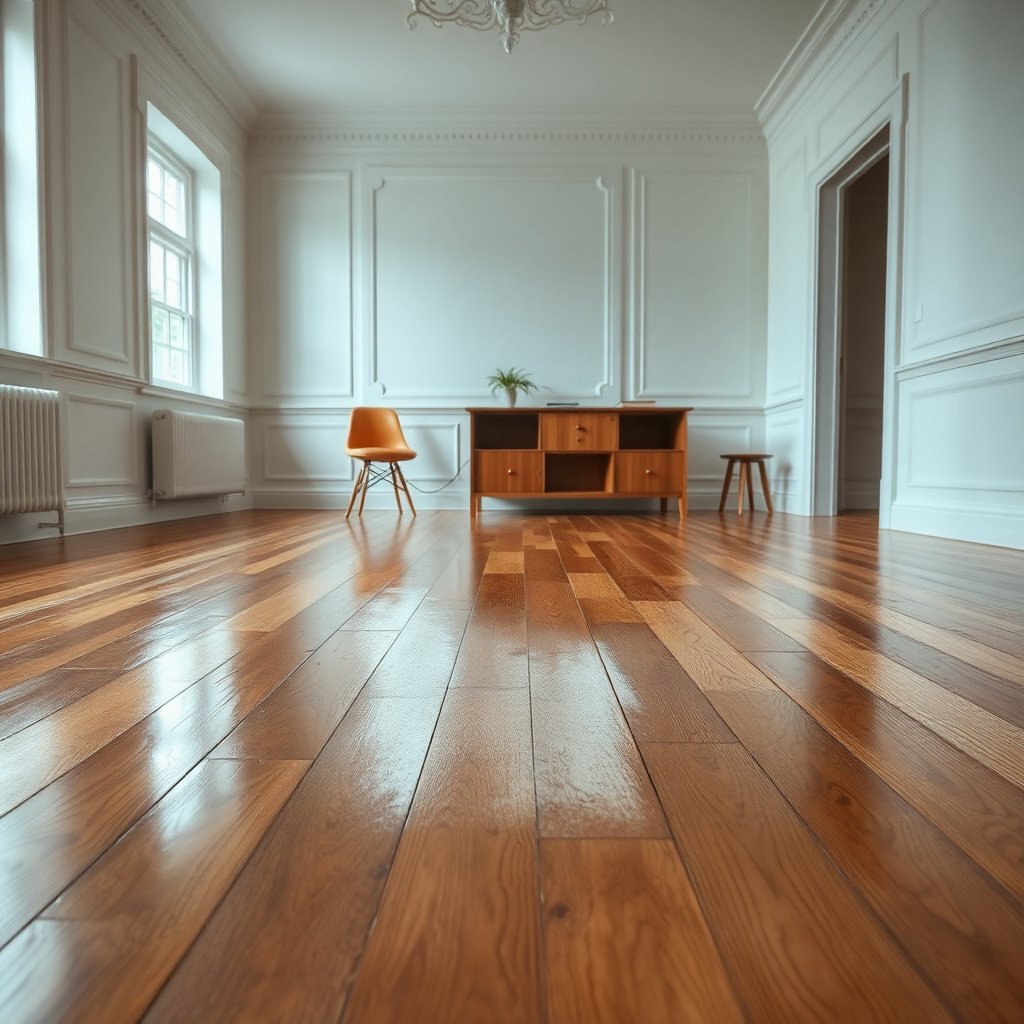
Start by confirming whether you’re dealing with true polish/wax film (a surface residue) rather than embedded grime. This matters because polish residue responds to the right chemistry and dwell time, while rough scrubbing or added water can turn a localized film into a larger, more persistent haze.
– Check whether the floor is just “film-y” (slippery/cloudy) or truly sticky—tap a small area with a damp cloth to see if residue transfers. If the cloth picks up a visible oily/soapy-looking film, you’re likely fighting buildup rather than normal dust.
– Look for finish type clues (glossy varnish vs. more matte/unfinished areas). If you’re unsure, treat it as finished and use the gentlest compatible cleaner first—because “works on bare wood” products can haze or roughen coated floors.
– Use a small hidden test spot to confirm the cleaner loosens residue without dulling or hazing the wood. A test spot also helps you avoid color shifting, especially on floors with prior stain or toner.
Why “residue vs. damage” changes your plan
Hardwood floor polish residue commonly builds as a thin film layer from repeated “shine” products, mop-on polishes, or improperly rinsed cleaners. That film can interfere with how water behaves on the surface—sometimes creating beading (water repels) and sometimes making the floor feel tacky even after it “dries.”
Before you commit to any removal method, anchor your expectations in moisture-management fundamentals. For example, according to the National Wood Flooring Association, maintaining indoor conditions helps prevent wood movement; many published guidelines target relative humidity around . Also, per the USDA Forest Service (Wood Handbook), wood moisture content in equilibrium typically falls in a relatively narrow band (commonly discussed as single digits) under stable indoor conditions . The practical takeaway: keep your cleaning process controlled, damp—not wet—so you’re removing polish residue without introducing new moisture stress.
Cleaner Chemistry Profiles for Removing Polish/Wax Film (pH & Finish Compatibility)
| # | Cleaner chemistry category | Typical pH range | Film-lift expectation | Finish compatibility |
|---|---|---|---|---|
| 1 | Neutral, surfactant-based hardwood cleaner | ~6.5–8.5 | Moderate ★★☆ | ★★★★★ |
| 2 | Mild alkaline residue remover (water-safe formulas) | ~8.5–10.5 | Good ★★★ | ★★★★☆ |
| 3 | “Polish & buildup” specialty wood cleaner (neutral-to-slightly alkaline) | ~7–10 | High ★★★★ | ★★★★☆ |
| 4 | Alkaline detergent booster (not labeled for wood) | ~10.5–12.5 | Strong ★★★★☆ | ★★★☆☆ |
| 5 | Strong alkaline stripper (finish-removal chemistry) | ~12–14 | Very strong ★★★★★ | ★☆☆☆☆ |
| 6 | Acidic cleaner / descaler (not wood-labeled) | ~1.5–4 | Variable ★★☆ | ★☆☆☆☆ |
| 7 | Solvent-heavy polish remover (finish-sensitive) | Often not expressed as pH | High ★★★★ | ★★☆☆☆ |
Prep the floor to prevent streaks and spread
Prep determines whether your hardwood floor polish residue comes up cleanly—or smears into a wider film. This section is where you reduce risk from grit, uneven wetting, and inconsistent dwell time.
– Sweep or vacuum thoroughly using a soft brush attachment to avoid grinding grit into the residue. If abrasive particles get into the polish film, agitation can “burnish” haze into the topcoat.
– Ventilate the room and remove rugs/furniture so you can work in consistent sections. Cleaner labels typically assume controlled contact time; clutter causes uneven dwell time and patchy results.
– Use only damp (not wet) mopping practices—wring cloths well and keep liquid to a minimum. For most finishes, the safer approach is controlled application and fast wipe-out rather than soaking.
According to the Institute of Inspection, Cleaning and Restoration Certification (IICRC), standard cleaning methodology emphasizes proper cleaning chemical use, controlled dwell time, and adequate removal of residues (not leaving chemical film behind) . Even though you’re not doing water-damage restoration, the same principle applies to polish removal: if you leave the remover and loosened film behind, the cycle repeats as stickiness.
Clean hardwood floors covered in old polish residue (step-by-step)
The goal is to chemically loosen the polish film, lift it out with gentle agitation, and then remove any remaining cleaner/residue so you don’t create a new haze layer. This is how you clean hardwood floor polish residue without accidentally spreading it across the entire room.
– Step 1: Apply a wood floor cleaner designed to remove polish/buildup, following the label’s dwell time and dilution guidance.
– If your product is a concentrate, measure dilution precisely—over-concentration can soften coatings or leave an oily film.
– If it’s a “ready to use” formula, don’t stretch it with extra water unless the label allows it.
– Step 2: Work in small sections and agitate gently (microfiber pad or soft cloth), focusing on high-gloss or sticky zones.
– Use light pressure. The residue should “release” with dwell time and chemical action, not aggressive scrubbing.
– Keep the area damp enough to work the cleaner, but avoid puddles at edges and along seams.
– Step 3: Wipe up thoroughly and follow with a clean-water wipe/rinse method that the product label allows, then dry immediately with clean microfiber.
– Drying matters because remaining remover can re-deposit oils or leave a solvent-like film.
– If the label requires no rinse, don’t rinse anyway—follow compatibility guidance for the finish system.
What “proper agitation” looks like in practice
With hardwood floor polish residue, agitation is not the main labor; it’s the trigger that moves loosened film into the cloth. In my experience advising on floor care workflows, the most common failure mode is scrubbing too hard or too long—people think more pressure equals more cleaning, but with polish residue it often equals more smear and more haze. If the floor still looks cloudy after the first wipe-out, repeat the same cleaner and dwell/wipe sequence rather than changing tools midstream.
If residue won’t budge: controlled escalation options
If the polish film is stubborn, escalate carefully while keeping the same “test spot → repeat → verify” logic. You don’t need harsh stripping to remove most buildup, but you may need a second pass or a slightly different mechanical approach approved for the finish.
– Re-clean the same area with the same residue remover (often the “second pass” is what finally lifts old film). For stubborn hardwood floor polish residue, letting the cleaner dwell as directed and then wiping out completely is frequently more effective than adding extra cleaner.
– If the label allows, use a slightly more aggressive pad (e.g., non-scratch microfiber) while still keeping the floor damp, not saturated. Make sure the pad is intended for finished wood surfaces—“scrub pads” designed for kitchens can dull poly and urethane.
– Avoid harsh chemicals and abrasive pads unless your finish manufacturer explicitly approves them—some strippers can damage certain finishes or leave new haze. When in doubt, stop and confirm finish compatibility with the cleaner label or flooring manufacturer.
To keep escalation logic clear, here’s a comparison you can use while deciding how to proceed:
| Option | Best for | Pros | Cons / watch-outs |
|---|---|---|---|
| Second pass with the same polish/buildup cleaner | Uneven tackiness or persistent film after the first wipe | Maintains finish compatibility; often the most reliable fix | Requires patience; may take 2–3 repeats on heavy buildup |
| Slightly more aggressive (still non-scratch) pad | High-gloss areas that resist wipe-out | Improves film release without switching chemicals | Too much pressure can haze; only use if label/pad is compatible |
| Finish stripping/chemical removal | Widespread coating failure or prep for major refinishing | Can remove old coatings when residue is not the issue | Higher risk of damage; should be done only when manufacturer guidance allows |
What can go wrong (and how to avoid it)
Most problems happen when homeowners treat polish residue like regular dirt or when they change variables (water amount, cleaner chemistry, or pressure) without confirming compatibility. With hardwood floor polish residue, the “wrong move” is usually the one that spreads film rather than removing it.
– Over-wetting: too much water can seep at seams and cause swelling or edge lifting—stick to damp wiping and fast drying. If your cloth is dripping, it’s too wet for most finished floors.
– Using the wrong cleaner: everyday “shine” products can reactivate buildup and make floors feel tackier. In other words, some products you use for maintenance can be the cause of the buildup you’re trying to eliminate.
– Scrubbing dry or with abrasives: dry friction can burnish residue into the finish or scratch the surface. Always keep the surface damp during agitation and avoid abrasive sponges.
– Skipping test spots: without a small-area test, you can end up with uneven dullness or color change. Test spots also reveal if the cleaner leaves a faint film that needs a rinse/wipe step.
According to leading hardwood flooring care guidance from major flooring organizations/manufacturers, avoid flooding and rely on manufacturer-recommended cleaning methods . That guidance is consistent with the chemistry reality: polish residue behaves like a film, and film management is sensitive to water volume and leftover chemical.
Verdict: what to do first, and who should skip DIY
For most hardwood floors with old polish residue, start with a residue-removing wood floor cleaner and repeat gentle passes until the surface no longer feels slick or sticky. The downside: it can take multiple rounds and won’t fix deep issues like major finish damage or water infiltration. As of 2026, the safest best-practice is still the same—use manufacturer-approved chemistry, keep the floor damp (not wet), and verify by touch and visual wipe-out.
Skip DIY and consider a professional if the floor has unknown finishes, severe cupping/warping, widespread finish failure, or if you suspect water intrusion behind the finish. Also skip DIY if your test spot shows the cleaner dulling the finish unevenly—because that’s a sign you may need a different chemistry or a full refinishing plan rather than polish residue removal.
Quick checklist (scan/save)
– [ ] Sweep/vacuum (soft attachment)
– [ ] Test in a hidden spot
– [ ] Use a wood floor cleaner meant for polish/buildup
– [ ] Wipe in small sections; keep it damp, not wet
– [ ] Follow label directions for dwell time and rinsing (if allowed)
– [ ] Dry immediately with clean microfiber
– [ ] Re-check for tackiness/cloudiness before moving on
Sources
With the right residue-removing hardwood floor cleaner and a controlled damp-and-wipe workflow, most dull or sticky hardwood floors recover without sanding. Confirm results with a wipe test and touch check, repeat gentle passes if needed, and stop escalating the moment you see finish dulling—because the goal is removing hardwood floor polish residue, not damaging the coating underneath.
Frequently Asked Questions
How do you remove old polish residue from hardwood floors without damaging the finish?
Start by dry-sweeping or vacuuming thoroughly to remove grit that can scratch the wood. Test a small, hidden area with a gentle hardwood floor cleaner diluted in warm water, then wipe with a soft microfiber cloth. If residue remains, use a dedicated floor finish stripper or residue remover designed for hardwood, following the label precisely and avoiding soaking. Finish by rinsing with a lightly damp cloth (or the product’s recommended method) and allow the floor to fully dry before applying any new polish.
What is the best way to clean hardwood floors covered in sticky, yellow polish buildup?
Sticky polish usually requires breaking down the film rather than repeated mopping. Use a microfiber mop and a residue-cutting cleaner made for waxy buildup, working in small sections and changing cloths often. For stubborn areas, apply the cleaner, let it dwell briefly (per label), then agitate gently with a soft pad and wipe up loosened residue. Afterward, remove any remaining cleaner with a damp wipe and let the hardwood dry completely to prevent dull spots.
Which cleaning solution works best for removing polish residue from prefinished vs. unfinished hardwood?
For prefinished hardwood, choose a cleaner labeled safe for the floor’s finish and avoid strong solvents that can haze or soften the coating. For unfinished hardwood, you can use a more aggressive approach such as mineral spirits or a specific polish remover, but you must use it sparingly and avoid oversaturating the surface. Always do a patch test first, then follow with thorough wiping/rinsing and complete drying. If the residue is deeply embedded, refinishing may be required for either type.
Why does old polish residue turn floors dull or streaky even after mopping?
Many polishes form a waxy film that doesn’t fully dissolve in water-based cleaners, so mopping can spread and redistribute residue instead of removing it. Over time, the buildup traps dust and microscopic debris, creating a cloudy or streaky appearance. Because the polish layer can also interfere with subsequent cleaning products, the surface may look “clean” but still feel tacky. Stripping or using a residue remover specifically formulated to lift polish film is usually necessary for a true reset.
How can you safely strip and prep hardwood floors for a fresh coat after cleaning off polish residue?
Remove residue first using a hardwood floor stripper/residue remover, wiping up thoroughly and keeping the surface wet only as long as the product instructs. After stripping, neutralize or rinse as directed (some products require a neutralizing step), then let the wood dry completely. Lightly buff with a clean pad or microfiber to pick up any remaining haze, and check with a white cloth for residue transfer. Once the floor is dry and residue-free, apply your new finish or polish according to the manufacturer’s cure and recoat times.
📅 Last Updated: November 02, 2026 | Topic: How to clean hardwood floors covered in old polish residue? | Content verified for accuracy and freshness.
References
- https://en.wikipedia.org/wiki/Floor_polish
- Wood flooring
- White spirit
- 404 Error
- https://www.armstrongflooring.com/support/care-and-maintenance/hardwood.html
- https://www.bruce.com/support/care-and-maintenance/hardwood-flooring
- Home | National Wood Flooring Association | NWFA
- https://scholar.google.com/scholar?q=remove+floor+wax+buildup+hardwood+floors Google Scholar
- https://scholar.google.com/scholar?q=hardwood+floor+cleaning+polish+residue+mineral+spirits Google Scholar
- https://scholar.google.com/scholar?q=hardwood+floor+wax+build-up+cleaning Google Scholar