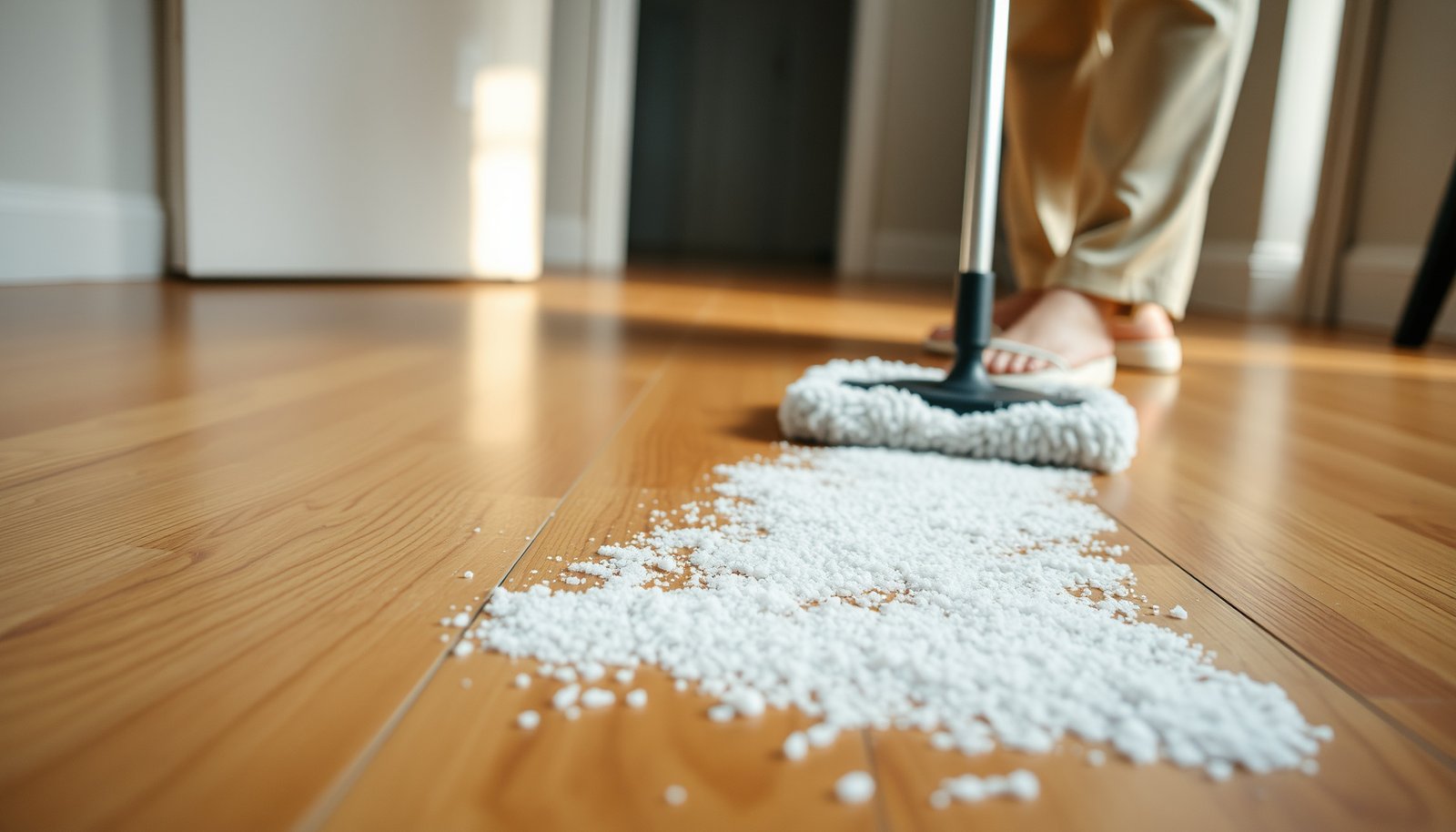

You notice pale, gritty salt trails on your hardwood after snowy boots track it in. With soft microfiber, a pH-neutral cleaner, distilled water, and a protective finish touch-up, you can lift the residue without soaking the wood, usually in 20–30 minutes. Follow a gentle routine and you will get the surface back to a clean, even look while helping prevent future dulling.




Blot up any wet salt, then remove the remaining white film using minimal-moisture wiping and a clean-water “rinse” with a well-wrung microfiber cloth. If haze persists, use a pH-neutral hardwood floor cleaner only if your finish instructions allow it—then buff dry right away to protect the sheen and prevent warping.
If your floor gets tracked with road salt in winter, you’re probably seeing a chalky haze, crust around baseboards, or spots that never fully “wipe off.” This guide covers finished hardwood (and other sealed wood floors) where salt residue sits on top of the coating—and it focuses on the safest order of operations to remove salt without dulling or warping your hardwood.
If you’re a homeowner, facilities manager, or property steward maintaining occupied buildings, this is meant for finished/sealed floors (like polyurethane-finished hardwood) where salt and melting residue leave a surface deposit. As of 2025–2026, manufacturers and professional care guidance still converge on one theme: use as little moisture as possible, avoid harsh chemistry, and dry quickly to limit swelling risk in seams and edges.
Gather safe supplies (avoid damage)
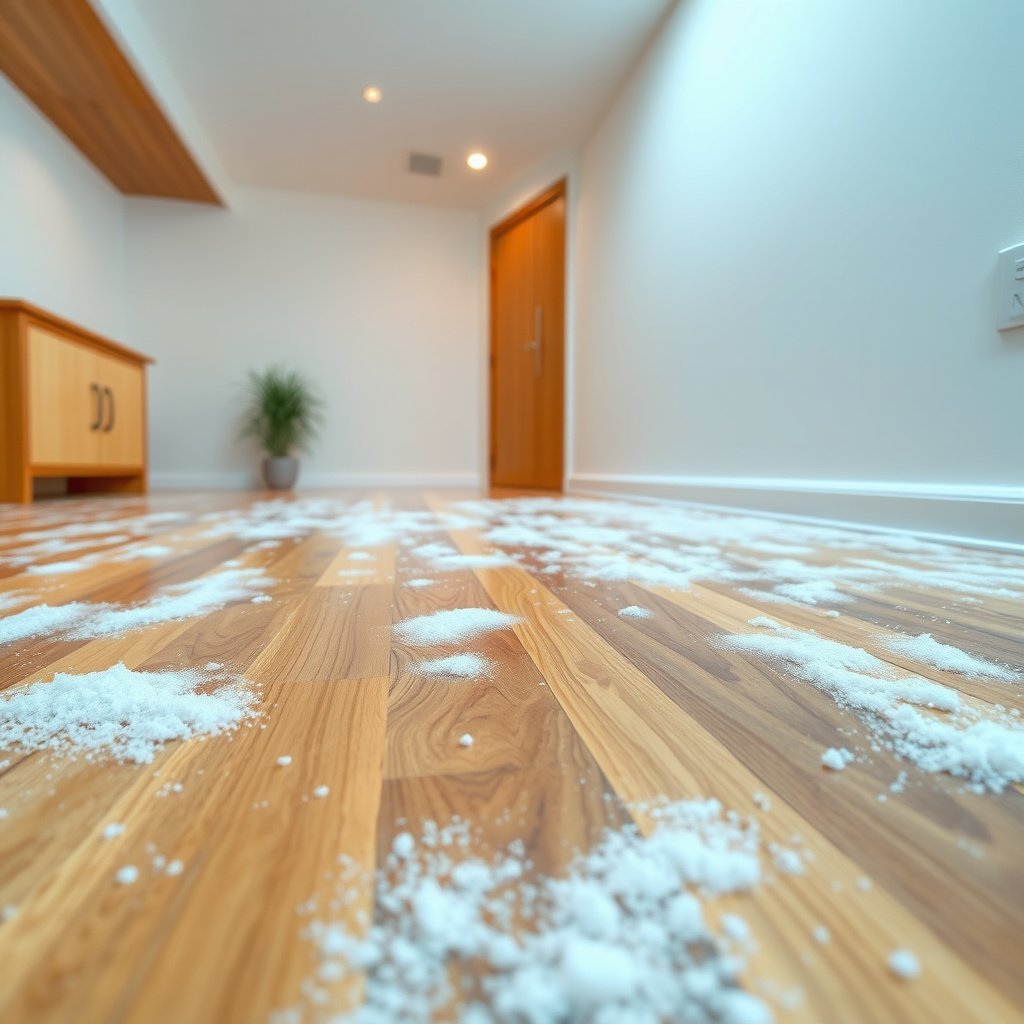
A safe cleanup starts with tools that won’t scratch the finish and liquids that don’t soak the boards. For hardwood floors, the goal is controlled, minimal moisture—enough to dissolve and lift residue, not enough to saturate the wood.
What you’ll want on hand:
– Microfiber cloths (multiple) and/or a mop with a removable microfiber pad
– Clean, lukewarm water
– A pH-neutral hardwood floor cleaner only if your finish instructions allow it
– Optional: a plastic scraper or soft nylon brush for loosened crust, plus fans for fast drying
Why these items matter for hardwood: microfiber is gentle on coating, plastic/nylon won’t gouge, and fans reduce the dwell time of any moisture in hardwood seams.
Remove salt residue with minimal moisture
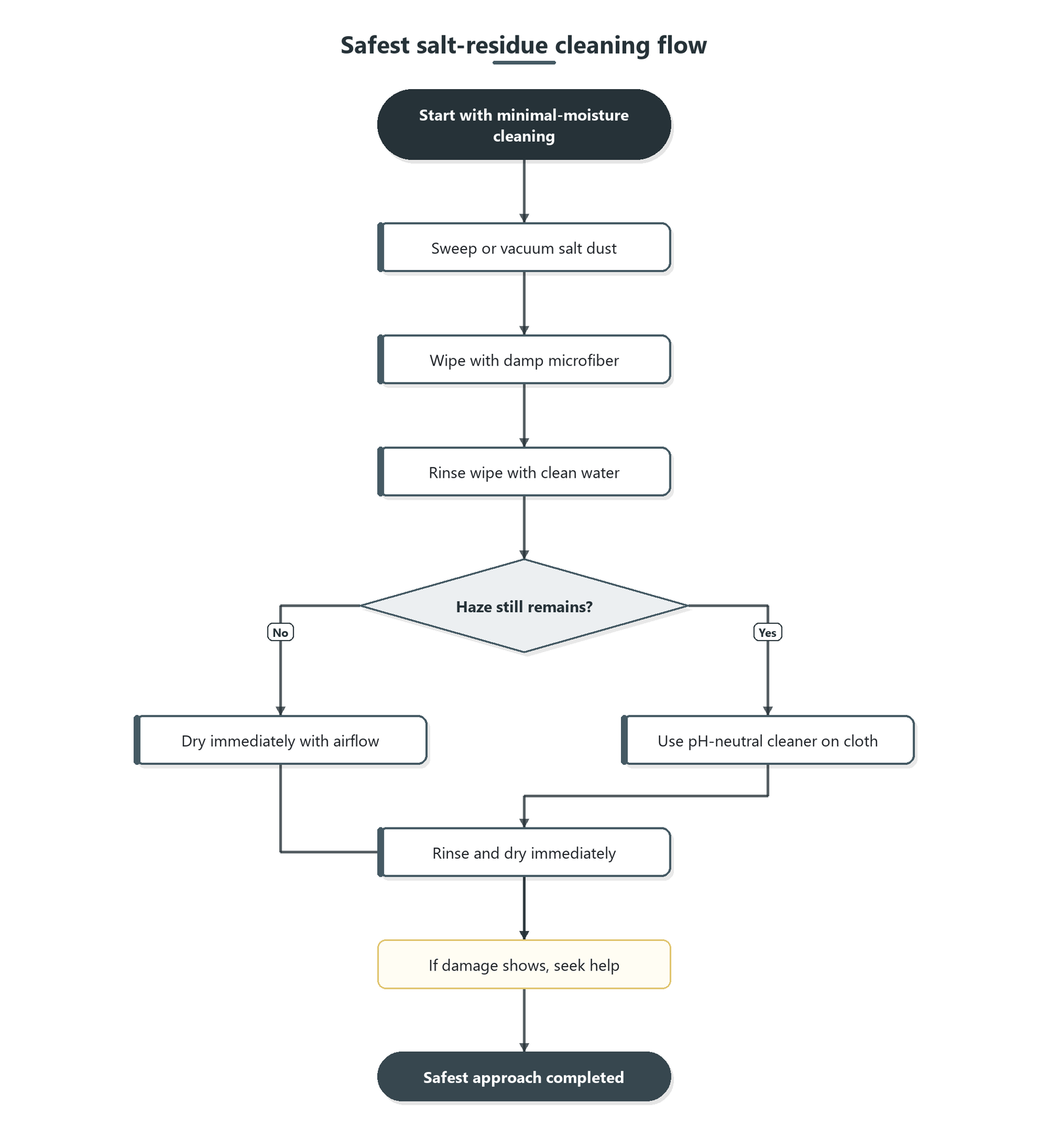
The safest first pass for salt on hardwood is dry removal followed by damp (not wet) wiping, with a clean-water rinse afterward. This method prevents you from grinding crystals deeper into the finish while still dissolving what’s already on top of the coating.
Follow this order on finished hardwood:
1. Start dry: sweep or vacuum thoroughly so you don’t grind salt into the finish (use a soft brush attachment).
2. Treat gently: wipe with a well-wrung damp microfiber cloth using clean water.
3. Rinse the residue you just lifted: use a second cloth dampened with clean water and wipe again.
4. Repeat as needed: re-wring often—don’t leave standing water on the boards.
A chemistry detail that explains why the “rinse” matters: as road salt dissolves, it can carry residue components that later dry into a film. Sodium chloride (NaCl), for example, is very soluble in water—about 359 g/L at 25°C according to NIST Chemistry WebBook (2024). If you dissolve it without rinsing, you can end up redepositing a chalky layer as water evaporates.
Solubility of Common Winter De-Icers (25°C) and Clean-Water Removal Potential
| # | De-icer salt tracked indoors | Ion identity | Water solubility @25°C | Clean-water lift score |
|---|---|---|---|---|
| 1 | Sodium chloride | Na⁺ / Cl⁻ | 35.9 g/100 g H₂O | ★★★☆☆ 3.0 |
| 2 | Potassium chloride | K⁺ / Cl⁻ | 34.2 g/100 g H₂O | ★★★☆☆ 2.8 |
| 3 | Ammonium chloride | NH₄⁺ / Cl⁻ | 37.2 g/100 g H₂O | ★★★☆☆ 3.1 |
| 4 | Magnesium chloride | Mg²⁺ / Cl⁻ | 54.0 g/100 g H₂O | ★★★★☆ 4.2 |
| 5 | Calcium chloride | Ca²⁺ / Cl⁻ | 74.5 g/100 g H₂O | ★★★★☆ 4.6 |
| 6 | Sodium acetate | Na⁺ / CH₃COO⁻ | 76.0 g/100 g H₂O | ★★★★☆ 4.7 |
| 7 | Sodium formate | Na⁺ / HCOO⁻ | 92.0 g/100 g H₂O | ★★★★★ 5.0 |
Break up stubborn white haze (finish-safe method)
A finish-safe haze reset is: pH-neutral cleaner on a cloth (not the floor), wipe with the grain, then rinse with clean-water wiping and dry immediately. If you skip the clean-water step after any cleaner, you can leave behind a new film that looks like the original salt.
When white haze still remains:
– Use a finish-approved cleaner: apply a small amount of pH-neutral hardwood floor cleaner to a microfiber cloth (not directly to the floor) and wipe in the direction of the grain.
– Be cautious with vinegar: vinegar is acidic; a typical household vinegar (around 5% acetic acid) has an acidic pH (commonly about pH ~2.4) according to PubChem (Acetic acid) (2024). Many sealed finishes can tolerate only limited chemistry—some manufacturers explicitly restrict acids.
– Test in a hidden spot first if your manufacturer allows vinegar or mild acids for your specific finish; stop immediately if you see sheen change.
– After any cleaner step: do a final quick wipe with a clean-water-damp cloth, then dry with a clean towel and airflow.
In my experience managing hardwood care for winter traffic areas, haze that “won’t wipe off” often responds better to the cloth-based pH-neutral cleaner method plus an immediate clean-water wipe than to repeated vinegar swabbing. The key is keeping the moisture controlled and the rinse complete—hardwood floors don’t forgive oversaturation, and residue doesn’t forgive repeated chemical re-deposition.
What can go wrong (and how to avoid it)
Most salt-cleaning failures happen when moisture, abrasion, or chemical mismatch outpaces the finish’s limits. Hardwood floors are especially vulnerable because salt residue often arrives with water, and trapped moisture can migrate into seams during drying.
Common mistakes to avoid:– Too much water: soaking hardwood can cause swelling, gaps, and long-term haze—keep cloths damp, not wet.
– Harsh tools/chemicals: abrasive pads, steel wool, and strong acids can damage the finish and can make haze worse by scratching the surface.
– Not drying fast enough: even small amounts of moisture can linger in seams; use a fan and monitor until the area is fully dry.
Here’s a practical comparison of methods and their finish risk for hardwood:
Steam deserves a specific note: steam at standard atmospheric pressure is 100°C at boiling, according to NIST (2023). Even when you don’t see puddles, that heat plus moisture load can stress many finishes and drive moisture deeper into joints—so it’s usually the wrong tool for salt residue on hardwood.
Verdict: safest approach + who should skip DIY
The safest path for salt residue on hardwood is minimal-moisture wiping, clean-water rinsing wipes, and pH-neutral cleaning only when your finish instructions permit it. The downside is that heavy or widespread winter tracking can require multiple rounds, and DIY can’t reverse damage if moisture traveled between boards.
Skip this DIY approach and prioritize professional help (or manufacturer support) if you notice cupping, bubbling, dark staining/odor, or if the salt was likely present long enough that water soaked into edges and seams. Those are early signs that hardwood may have moved from “surface residue” into “moisture exposure”—and that’s where repair gets far more expensive than cleaning.
Salt-residue cleanup checklist (save this)
| Step | What to do | What to avoid |
|---|---|---|
| 1 | Sweep/vacuum salt dust | Scrubbing dry residue into the finish |
| 2 | Wipe with damp (well-wrung) microfiber | Wet mops or puddles |
| 3 | “Rinse” with a second cloth dampened with clean water | Leaving cleaner sitting |
| 4 | If needed, use a pH-neutral hardwood cleaner on a cloth | Acidic cleaners unless your finish allows it |
| 5 | Dry immediately; use airflow | Letting seams stay damp |
| 6 | Re-check after fully dry | Assuming it’s gone while still wet |
Sources
Salt residue on hardwood is usually a “surface + moisture” issue: remove salt carefully, wipe with minimal moisture, rinse with clean-water wiping, and dry fast. If haze persists, don’t escalate to harsher chemicals—switch to finish-approved pH-neutral cleaning (cloth-applied) and always buff/dry immediately, or contact the floor manufacturer when the salt exposure may have soaked into seams.
Frequently Asked Questions
What is the safest way to remove salt residue from hardwood floors?
Start by sweeping or vacuuming up any dry salt crystals so they don’t scratch the finish when you scrub. Mix a solution of warm water with a small amount of pH-neutral hardwood floor cleaner (avoid vinegar or harsh chemicals). Wipe with a damp microfiber mop or cloth, then immediately follow with a clean water-dampened cloth to remove any cleaner residue. Dry thoroughly with towels and let the floor air-dry to prevent lingering moisture damage.
How do I clean salt residue from hardwood floors without damaging the finish?
Use minimal moisture—wring your mop or cloth until it’s only slightly damp, since standing water can dull or warp hardwood. Work in small sections, gently wiping with the grain rather than aggressive scrubbing. If the salt is crusted, soften it first by placing a lightly damp cloth over the area for a few minutes before wiping. Finish by drying the surface completely and, if needed, apply a manufacturer-recommended wood floor polish or refresher once fully dry.
Why does salt leave a white haze on hardwood floors, and how can I prevent it?
Salt residue pulls moisture and can react with finishes, leaving a chalky white haze or dull spots—especially if it’s been left to dry. The best prevention is to remove salt quickly after winter tracking by wiping entryways and placing mats to reduce grit. When salt is present, clean promptly using a pH-neutral hardwood cleaner and damp microfiber cloth, then dry immediately. Regular sweeping and a protective floor finish also help reduce how deeply residue affects the surface.
Which cleaning solution works best for salt stains on hardwood floors?
For most hardwood floors, the best option is a pH-neutral hardwood floor cleaner mixed with warm water, paired with microfiber cloths for controlled, gentle cleaning. Avoid acidic solutions like vinegar, lemon, or steam cleaners, as they can damage the finish or spread residue. For stubborn salt marks, you can use several wipe-and-rinse passes with clean, damp cloths until the haze lifts. Always check the cleaner label for “safe for finished hardwood floors” before applying.
How do I get rid of salt residue after pets or winter boots tracked it in?
Begin by removing debris with a dry sweep or vacuum using a soft brush attachment to protect the finish. Then wipe the affected areas with a damp microfiber cloth and a pH-neutral hardwood floor cleaner, making sure the cloth isn’t dripping. Rinse by wiping once more with a cloth lightly dampened with plain water, and dry immediately with clean towels. If the spot remains slightly cloudy, repeat the gentle cleaning steps rather than using stronger chemicals that could harm the wood.
📅 Last Updated: October 31, 2026 | Topic: How to clean hardwood floors covered in salt residue? | Content verified for accuracy and freshness.
References
- https://en.wikipedia.org/wiki/De-icing_salt
- 404 Error
- https://www.brucehardwoodfloors.com/care-and-cleaning/
- https://www.woodfloorbusiness.org/cleaning-and-care/
- https://scholar.google.com/scholar?q=how+to+clean+hardwood+floors+salt+residue Google Scholar
- https://scholar.google.com/scholar?q=de-icing+salt+residue+wood+floor+cleaning Google Scholar
- https://scholar.google.com/scholar?q=removing+ice+melt+salt+stains+from+wood+floors Google Scholar