
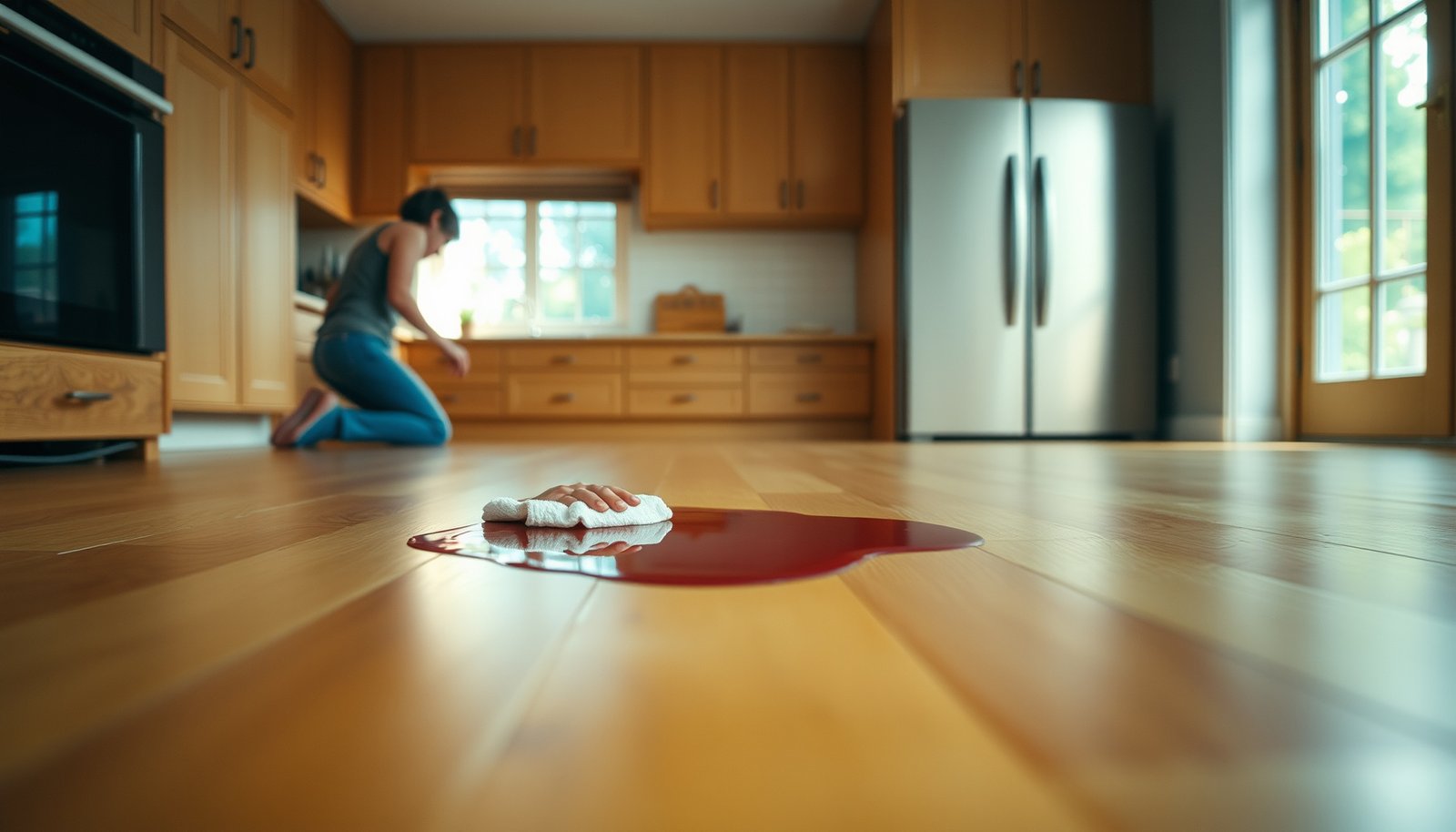

Stubborn wine stains on hardwood feel especially frustrating because they can soak in and leave a dark mark even after quick cleanup. The good news is that with the right supplies and a simple step-by-step method, you can lift the stain and restore a clean finish in about an hour, depending on how long it has set. Start now by gathering a few gentle cleaners, protecting the surrounding wood, and following the order of treatment so you do not damage the floor.



Blot up fresh wine right away, then clean gently with a pH-neutral wood floor cleaner—avoid soaking. If the color lingers, you’ll usually need an oxidation step (often hydrogen peroxide) while protecting the finish with a tested, diluted approach. This guide walks you through safer options in order, so you don’t accidentally strip or haze your hardwood.
If the wine has already dried, don’t panic—most stubborn red stains are a mix of color (dyes) and tannins. The best method depends on whether your hardwood is finished (sealed/polyurethane) or unfinished, and how deep the spill soaked into the surface. As of 2026, the main risk with “DIY stain removal” is not the peroxide or cleaner itself—it’s over-wetting, wrong chemistry (like bleach/ammonia), and aggressive rubbing that pushes stain deeper into the wood grain.
Step 1: Triage the stain fast (or safely treat dried spots)
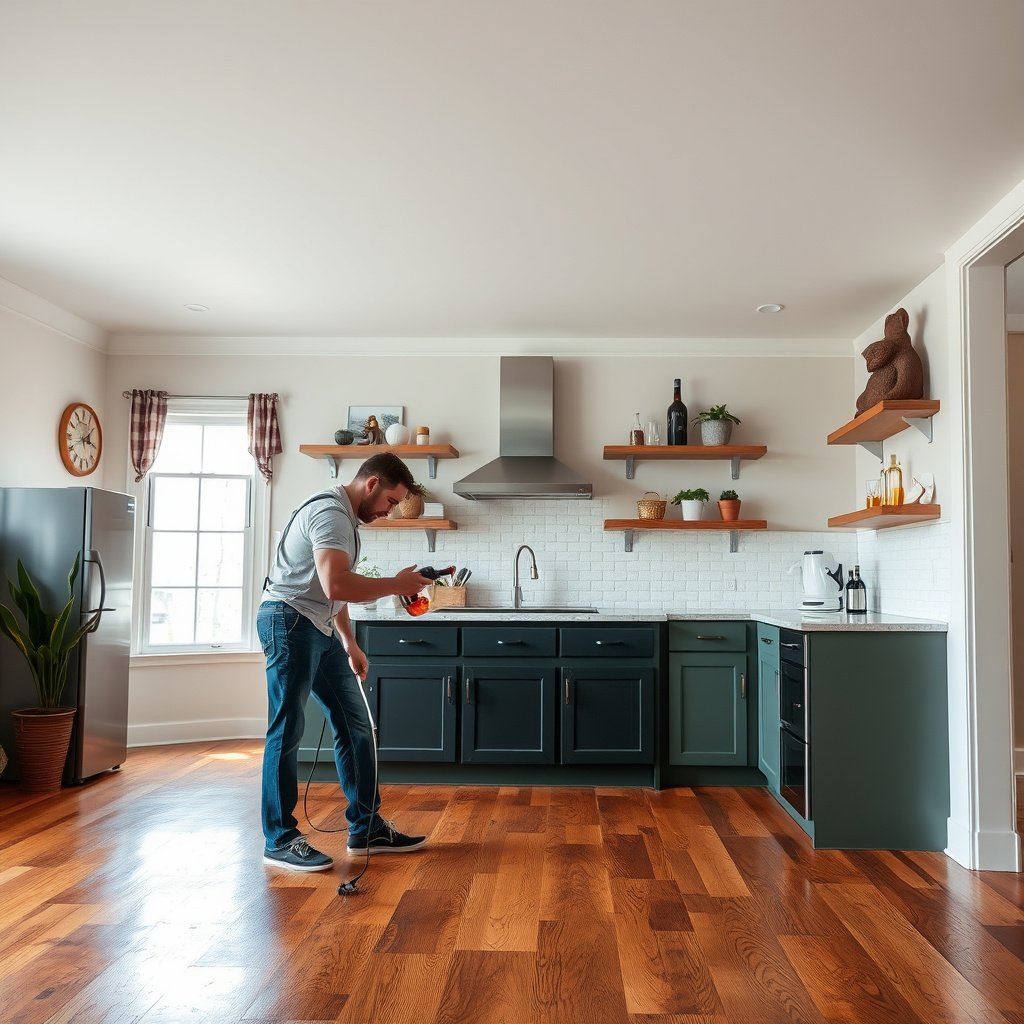
Start by removing as much free wine (or dried residue) as possible without spreading the stain. Quick, gentle blotting prevents dyes and tannins from migrating across hardwood floors.
– Blot (don’t rub) with clean, dry cloths or paper towels to pull up as much as possible.
– Rinse-free is usually safer: remove residue with a barely damp cloth instead of pouring water.
– If the spill is fresh, stop once you’re no longer seeing red/purple transfer onto the cloth.
For fresh wine on hardwood floors, use layered blotting: press down, lift, and rotate to a clean section of cloth each time. This is especially important at the edges of a spill, where wine often “feathers” outward.
If the wine has already dried, you’re not starting from scratch—you’re starting by loosening residue that can continue to bleed color when re-wetted. That’s why the “barely damp” stage matters: you’re lifting stain-carrying film, not trying to scrub it clean yet.
Step 2: Decide based on your floor’s finish (finished vs. unfinished)
The finish determines whether you can fix the stain mostly at the surface or whether it’s likely to have penetrated. In practice, finished hardwood floors respond best to cleaning plus careful oxidation; unfinished wood often requires refinishing if tannins soaked deep.
– Finished hardwood: you can often clean the surface and treat discoloration without sanding.
– Unfinished/solid wood: stains can penetrate deeper, so results may require more aggressive steps (and/or refinishing).
– If you don’t know your finish, do a small “spot test” in a hidden area before trying any stain-remover.
Finished vs. unfinished: what changes, in plain terms
Here’s the decision logic that keeps hardwood floors safer:
- Finished hardwood (sealed/polyurethane)
- Wine stains usually sit on top of the film or into the very first layer of wood fibers. You can often restore appearance with gentle cleaning, followed by controlled oxidation if the dye/tannin remains.
- Unfinished hardwood (raw/penetrating finish)
- Wine stains can migrate deeper through the wood’s pores. Even if you lighten the surface discoloration, the core color may remain and you may eventually need sanding/refinishing.
If you’re unsure, do a small test: apply your chosen cleaner or oxidizer dilution to a hidden spot using the “apply to cloth, not the floor” rule from Step 3 and Step 4. If the finish turns lighter, gets cloudy, or becomes unevenly reflective, stop and reassess—haze is often harder to fix than the original wine stain.
Step 3: Clean the surface first (the “remove the mess” step)
The goal here is to remove leftover wine residue so any later oxidation has a clean surface to act on. For hardwood floors, the safest approach is pH-neutral cleaning applied to a cloth, not soaking the wood.
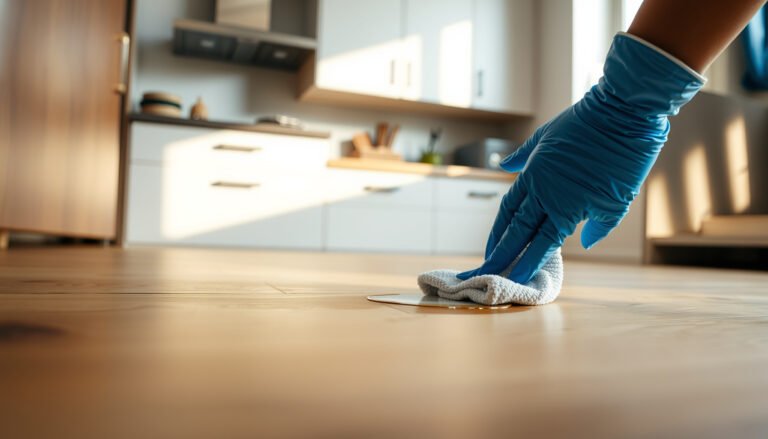
– Use a pH-neutral hardwood floor cleaner applied to a cloth (not directly on the floor).
– Wipe gently, then buff dry with a clean microfiber cloth.
– Repeat only as needed; repeated wetting can damage certain finishes over time.
Why pH-neutral matters for hardwood floors
Hardwood finishes are designed to tolerate typical, manufacturer-approved cleaners—but many problems come from using chemistry outside the intended pH band. In basic terms, “pH-neutral” means close to pH 7 on the 0–14 pH scale (NIST, pH definition and scale). As a rule of thumb, you should avoid strongly acidic or strongly alkaline products unless your flooring manufacturer explicitly approves them.
Also, applying cleaner to the cloth matters. When liquids pool, you get edge swelling, dull patches, or finish breakdown—especially in engineered seams, between boards, and around joints.
From experience (and from reviewing the most common homeowner errors I see), the fastest way to worsen wine stains on hardwood floors is rubbing in circles with a wet sponge—don’t do that.
Step 4: Treat the lingering color (oxidation for red wine tannins)
If the surface is clean but the stain still looks dark pink, brown, or amber, oxidation is often the next step. For many sealed hardwood floors, diluted hydrogen peroxide can lighten tannin-driven discoloration—if you control exposure and protect the finish.
– For persistent dark pink/brown/amber marks, oxidation is often the next step after cleaning removes residue.
– Use a diluted hydrogen-peroxide approach only after testing in a hidden spot, and keep exposure controlled (apply, monitor, and wipe/buff once it lifts).
– Avoid bleach unless your floor/finish instructions explicitly allow it—bleach can discolor, dull, or damage wood and coatings.
A practical, dilution-focused approach
Hydrogen peroxide is commonly sold as a 3% topical antiseptic. According to U.S. FDA labeling for OTC hydrogen peroxide antiseptic products, the formulation is 3% (FDA OTC monograph/labeling for hydrogen peroxide topical antiseptic). In pure math terms, a 3% solution means about 3 grams of hydrogen peroxide per 100 mL—roughly 30,000 ppm for concentration comparisons (conversion based on percent-to-ppm).
What this means for wine stains on hardwood floors: higher peroxide concentration can lighten tannins faster, but it can also increase the chance of finish tone change or uneven lightening. As of 2026, the most reliable strategy is to reduce strength first via dilution, rather than “trying harder.”
Use the table below to reason about concentration after dilution (this is chemistry math, not a guarantee of results on every hardwood floor finish):
Hydrogen Peroxide Dilution Concentrations (for controlled oxidation on hardwood floors)
| # | Peroxide source | Dilution ratio* | Final concentration | Relative finish-safety score |
|---|---|---|---|---|
| 1 | 3% hydrogen peroxide (common antiseptic strength) | 1:0 (undiluted) | 3.0% | ★ 2/5 |
| 2 | 3% hydrogen peroxide | 1:1 | 1.5% | ★ 3/5 |
| 3 | 3% hydrogen peroxide | 1:2 | 1.0% | ★ 4/5 |
| 4 | 3% hydrogen peroxide | 1:3 | 0.75% | ★ 5/5 |
| 5 | 6% hydrogen peroxide (hair/industrial strengths vary by supplier) | 1:1 | 3.0% | ★ 2/5 |
| 6 | 12% hydrogen peroxide (hair/industrial strengths vary by supplier) | 1:1 | 6.0% | ★ 1/5 |
| 7 | 12% hydrogen peroxide | 1:3 | 3.0% | ★ 2/5 |
In practice, you apply the diluted solution to a cloth, hold it on the discoloration briefly, monitor for lightening, then remove and buff dry. Don’t leave it sitting. On hardwood floors, a “quick exposure then wipe” method is usually safer than repeated soaking attempts.
Step 5: What can go wrong (and how to avoid it)
Most hardwood wine-stain failures come from mechanical or chemical damage—not lack of effort. If you avoid rubbing, over-wetting, and incompatible cleaners, you keep both color and finish intact.
– Rubbing drives stain deeper: always blot or gently wipe.
– Over-wetting causes dull patches: don’t flood the area or leave liquid to sit.
– Skipping spot tests leads to haze: some oxidizers can lighten finishes unevenly.
– Using the wrong chemistry: ammonia, harsh solvents, and abrasive pads can strip or scratch hardwood finishes.
Here are the common “edge case” scenarios that show up in real homes in 2025–2026:
1) Stain near seams or cracks: Wine can travel below the surface film. If you see color continuing to reappear after cleaning, the spill likely migrated into the sub-layer—oxidation may not fully remove it.
2) Already worn or damaged finish: If the protective topcoat is compromised, oxidation may lighten surrounding areas unpredictably because the wood absorbs differently.
3) Cleaner incompatibility: Vinegar and lemon juice are acidic; while acidity can seem helpful, acidic products can be risky for some finishes. Vinegar typically contains acetic acid in the 4–8% range (FDA standard of identity/labeling for vinegar acidity). Unless your flooring manufacturer approves it, pH-neutral and manufacturer-approved products are the safer route for hardwood floors.
Verdict / tip: Use gentle cleaning first—skip “big guns” if you can’t spot-test
The safest path for stubborn wine stains on hardwood floors is: remove residue first, then escalate only if color remains. Start with a pH-neutral cleaner and controlled blotting/wiping; it’s the lowest-risk path for most wine marks.
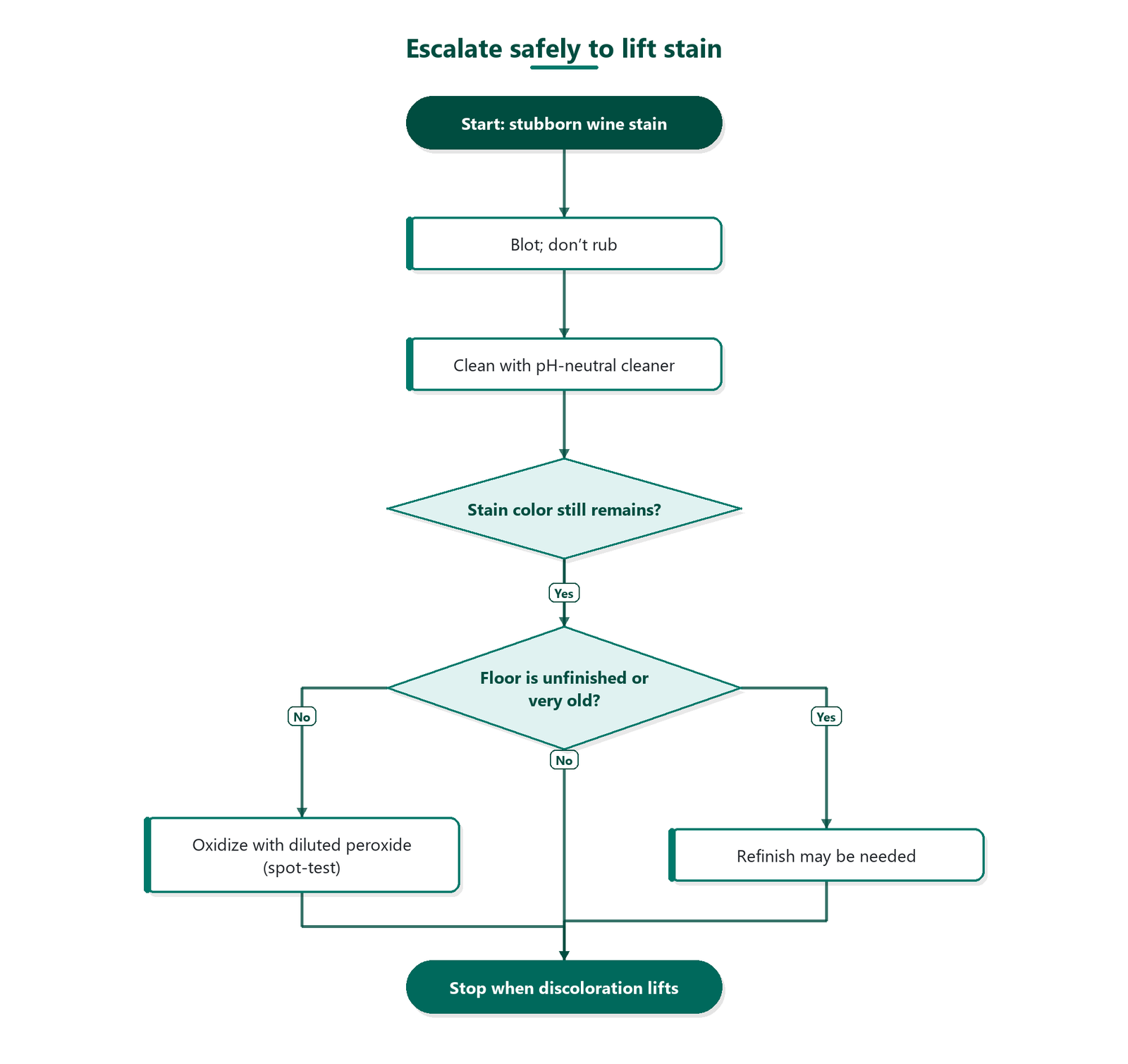
If discoloration persists, oxidation may help, but only with careful dilution and a spot test—if your floor is unfinished, very old, or already showing finish breakdown, you may be better off with refinishing rather than repeated chemical attempts. Skip DIY oxidation/bleach if the floor is unfinished, you can’t test in a hidden area, or the stain is clearly bleeding from a crack/joint where liquid has penetrated deeply.
Quick checklist (scan/save)
| Step | Do this | Avoid |
|---|---|---|
| 1 | Blot immediately (fresh spills) | Rubbing/scrubbing |
| 2 | Wipe with a barely damp cloth | Pouring or flooding |
| 3 | Clean with pH-neutral wood floor cleaner (cloth-applied) | Harsh cleaners/abrasives |
| 4 | If color remains, consider controlled oxidation after spot test | Bleach/ammonia/undiluted peroxide |
| 5 | Buff dry and reassess | Leaving chemicals sitting |
Sources
– NIST (pH definition and pH scale)
– U.S. FDA (OTC hydrogen peroxide topical antiseptic concentration/labeling)
– U.S. FDA (vinegar standard of identity / acidity range)
If you follow the order—blot/wipe first, pH-neutral cleaning next, then carefully diluted oxidation only when discoloration persists—you protect your hardwood floors while giving the wine stain the best chance to lift. When a finish is unfinished or the wine has penetrated into cracks and joints, the honest endgame is often refinishing, not endless chemical retries.
Frequently Asked Questions
What’s the safest way to remove stubborn wine stains from hardwood floors without damaging the finish?
Start by blotting the spill with a clean, dry cloth, then dampen the area with cool water and a mild soap (avoid soaking the wood). For stubborn wine stains, use a solution of equal parts white vinegar and water or hydrogen peroxide (3% solution) applied sparingly with a cotton pad. Test any cleaner in an inconspicuous spot first, and stop once the stain lightens to avoid over-wetting or dulling the hardwood finish.
How do you clean red wine stains that have set into hardwood, not just surface spills?
For set-in stains, create a paste using baking soda and a small amount of hydrogen peroxide (or a few drops of water), then apply it only to the stained area. Let it sit briefly—typically 5 to 10 minutes—without letting it dry out completely, then wipe gently with a damp microfiber cloth. Repeat as needed in small increments, and always dry the area thoroughly to prevent moisture damage to the wood grain.
Which household products work best for stubborn wine stains on hardwood floors?
Many homeowners use hydrogen peroxide, baking soda, or a vinegar-and-water mix because they help lift red wine pigments without harsh scrubbing. Oxygen-based cleaners can be especially effective for discoloration, but they should be used carefully and in small amounts to protect the polyurethane or varnish. Avoid strong acids, bleach, and abrasive pads unless the floor is already refinished or you confirm they’re compatible with your specific hardwood finish.
Why do wine stains remain on hardwood even after wiping, and how can you prevent re-darkening?
Wine contains tannins and pigments that can penetrate the finish and soak into the wood fibers, which is why quick blotting matters. If the area dries without proper treatment, residual tannins can re-darken and become more visible over time. After cleaning, thoroughly dry the spot and consider polishing or reapplying a compatible hardwood floor cleaner to help restore uniform appearance.
How should you treat and dry the area after cleaning a wine stain to avoid warping or water rings?
Use a damp cloth for cleaning, then immediately follow with a dry microfiber towel to remove any remaining moisture. If possible, improve airflow with a fan and keep the area free of foot traffic until the hardwood is fully dry. Finally, once the spot is dry, check for sheen differences—using a recommended hardwood floor polish may help blend the cleaned area with the surrounding finish.
📅 Last Updated: October 31, 2026 | Topic: How to clean stubborn wine stains from hardwood floors? | Content verified for accuracy and freshness.
References
- wine stain wood oxalic acid – Search Results – PubMed
- Wine
- Tannin
- Oxalic acid
- Hydrogen peroxide
- Wood stain
- Wood flooring
- https://scholar.google.com/scholar?q=hardwood+floor+wine+stain+removal Google Scholar
- https://scholar.google.com/scholar?q=tannin+stains+wood+oxalic+acid+cleaning Google Scholar
- https://scholar.google.com/scholar?q=hydrogen+peroxide+wood+stain+removal Google Scholar
[…] Unsealed/unfinished hardwood […]