

Choosing laminate floors for a living room? If you want the fastest path to a good decision, prioritize wear layer thickness, an AC rating of at least AC4, and a moisture-resistant core that matches your room’s humidity. Get the right plank thickness and locking system for stability, then align color and texture with your lighting and décor for a finish that holds up day after day. Follow these criteria and you’ll know which laminate to buy without second-guessing.




Choosing the right laminate floors for a living room comes down to matching durability and wear layer to your real traffic, then pairing the right locking system with your specific subfloor/underlayment. If you get those details wrong, laminate can fail quickly—usually due to prep or moisture problems, not the floor’s “look.”
If you’re planning a living-room refresh in 2026 and you want a floor that’s attractive, consistent, and easier to install than many alternatives, this is for you. It’s also ideal if you’re comparing laminate boxes online and feel like every brand uses different terms for durability, thickness, and moisture protection.
Choose laminate flooring based on your living room’s traffic, moisture risk, and the details of the plank/locking system. Focus first on the wear layer/durability rating, then match color/finish to your light and furniture, and finally confirm your subfloor and underlayment will work with that specific product. If you’re comparing laminate options and wondering what matters most (and what doesn’t), this guide walks you through the decisions that typically make or break the result—before you buy.
Pick durability first (living room traffic level)
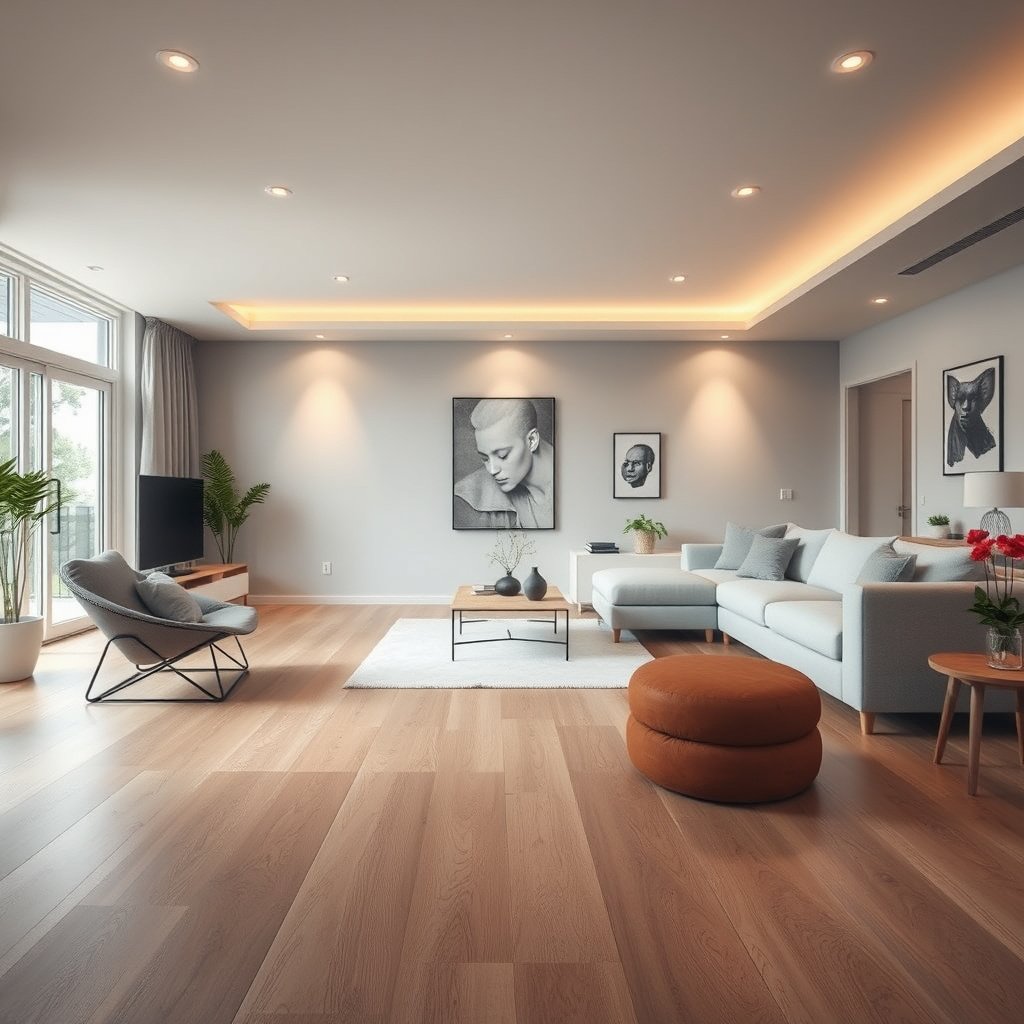
In most living rooms, the “best” laminate isn’t the prettiest—it’s the one with the right durability class for scratch/scuff resistance. Your wear layer rating is what stands between everyday life (shoes, pet nails, moving furniture) and visible dulling.
For laminate flooring, durability is usually communicated through an AC (abrasion class) system. These classifications exist so buyers can compare products in a consistent way, regardless of where they’re sold.
According to EN 13329 (laminate floor covering classification), laminate wear performance is grouped into AC1 through AC5 abrasion classes. (EN 13329:2016)
According to the EN 13329 laminate classification framework, higher AC classes are intended for heavier residential use and/or light to heavy commercial use, depending on the rating level. (EN 13329:2016)
In a typical living room, scuffs and scratches concentrate where people enter, pass through, and where pets jump or run—so durability needs to match those “hot zones,” not the whole room’s average traffic.
– Look for a durability/wear-layer rating that fits normal daily use (and pets/guests, if applicable)
For a living room that sees frequent foot traffic, occasional drop zones (toys, remotes, bags), and furniture being moved during cleaning, aim higher than “minimal residential” ratings. If your laminate is for a showpiece area with controlled access, you can often choose a lower class—without sacrificing the look.
– Check the manufacturer’s recommended room use and warranty language for living areas
The warranty is where “durability” becomes contractual. When laminate flooring gets scratched or scuffed, many warranties tie coverage to (a) correct subfloor prep, (b) approved underlayment, and (c) installation method. In other words, the wear layer rating matters—but so does the way the flooring is installed and maintained.
– If you expect spills, heavy moving of furniture, or lots of foot traffic, don’t “cheap out” on the wear layer
I’ve seen the same pattern repeatedly in homeowner discussions: buyers pick a cheaper laminate because it matches the trim, but the dulling and scuffing appear sooner than expected—especially around entry routes and where pets pace. Choosing a higher durability laminate can mean you won’t “baby” the floor as much.
Quick reality check: laminate flooring is built to resist surface abrasion, not to permanently tolerate neglect. The wear layer helps with scratches and everyday scuffs; it won’t replace good habits around grit, dragging, or standing liquid at seams.
Choose thickness and plank/locking type
A living-room laminate installation succeeds when thickness and locking design match your subfloor flatness and your underlayment thickness. If the click-lock system isn’t compatible with your base prep, you can end up with gaps, movement, or noise.
According to manufacturer installation guidance for floating laminate, planks are designed to expand/contract and rely on a perimeter expansion gap plus an underlayment that meets the product specifications.
Floating laminate typically uses an interlocking “click” or locking edge system, which can be sensitive to subfloor flatness—small unevenness can translate into joint stress over time.
For moisture testing in concrete, ASTM standards commonly use in-situ relative humidity (%RH) rather than surface checks, because deeper slab conditions drive flooring risk. (ASTM F2170-17)
– Match thickness to your subfloor flatness and the manufacturer’s installation requirements
Think of thickness as “forgiving padding” and “manufacturing tolerance,” not just comfort underfoot. Many laminate flooring systems require your subfloor to meet a maximum flatness tolerance. If your subfloor is only “pretty flat,” a thicker plank doesn’t automatically fix it—still, it may tolerate minor irregularities better when installed correctly.
– Prefer a click-lock system that’s designed for your subfloor type and underlayment thickness (follow the product instructions)
The locking mechanism must seat fully and stay seated. Some floating laminate products specify a maximum underlayment thickness (or require a specific underlayment type) so the joints lock properly and the floor stays stable under load.
– Confirm the product is meant for “floating floor” installation if that’s what you plan to do
Many laminate floors are designed as floating floors (no glue to the subfloor). If you buy a product intended for another installation method, you can create expansion and warranty issues. For living rooms in particular, floating installation is common because it handles normal seasonal movement—when the product and underlayment are matched correctly.
From the field perspective: when people report persistent joint gaps or “creaking,” the cause is often a mismatch between the flooring’s locking design and either (1) underlayment thickness or (2) subfloor flatness, not the click-lock itself.
Match style to how the room actually looks
The best-looking laminate in a showroom can look dull—or overly gray—in your actual living room lighting. Choose the finish, plank proportions, and undertone intentionally so the floor harmonizes with your walls and furniture.
Laminate’s visual appearance depends heavily on finish (matte/texture/gloss), which affects how dust, scuffs, and light reflections show up in daily use.
Undertone matters: warm lighting can shift “cool gray” laminates toward a bluer tone, while warm beige trim can make some gray floors appear greener or flatter.
If you’re comparing samples online, note that images are not color-managed like physical materials, so undertone shifts are common across devices and lighting conditions.
– Choose a finish (matte vs. textured vs. glossy) based on how visible dust and foot marks are in your space
Matte and textured finishes usually hide fine dust better and reduce the look of micro-scuffs. Glossy finishes can look striking, but they often reveal footprints and wear patterns faster in living areas with bright natural light.
– Pick plank width and length that fit your room layout so seams don’t look awkward
Bigger rooms often benefit from longer, wider planks because seams feel less frequent. Smaller rooms may look better with narrower planks to avoid overly bold visual bands. The direction you run the planks also affects how the room reads.
– Bring home samples if possible—laminate photos online often don’t match real lighting (especially warm vs. cool undertones)
In 2026, buyers still get surprised by undertone after installation because their home’s light temperature changes through the day. If you can, view samples in the same lighting conditions you’ll live with (morning, afternoon, and evening).
Style tip that saves time: test samples next to your actual wall paint and one furniture material (like a sofa fabric or cabinet finish). Undertones “compete” most noticeably at those edges.
Plan for moisture and underlayment (this is where problems start)
If there’s one area where laminate flooring projects go wrong, it’s moisture readiness and underlayment matching. A beautiful laminate can still fail if the slab/subfloor is too wet, too uneven, or paired with an incorrect vapor barrier system.
ASTM F2170 (2017) describes in-situ relative humidity testing for concrete, reporting results as a %RH condition deeper in the slab rather than only at the surface. (ASTM F2170-17)
ASTM F1869 specifies the calcium chloride test method for measuring moisture vapor emission rate (MVTR) from concrete, typically expressed in lbs per 1,000 sq. ft. per 24 hours. (ASTM F1869-16)
Floating laminate installation details matter at seams and transitions because living rooms often connect to kitchens, halls, and entryways where moisture risk and foot traffic increase at the edges.
– Verify your subfloor is clean, solid, and flat—laminate failures usually trace back here
If your subfloor is dusty, loose, or uneven, laminate joints can stress and underlayment can compress unevenly. That leads to gaps, noise, and a “soft” feel underfoot.
– Use the correct underlayment (and vapor barrier if required) per the manufacturer’s specs
Many laminate manufacturers require a specific underlayment system and may require an additional vapor barrier over concrete. Underlayment can’t be “close enough” in thickness or type—especially if you’re installing over a slab.
– Think about edges and transitions: living rooms connect to kitchens/halls more than people expect, so sealing/detailing matters
Seam risk isn’t confined to the center of the living room. Transitions to kitchens, entryways, and bathrooms—plus doorways—are where movement and incidental wetness tend to show up first.
Laminate with standard HDF core vs water-resistant laminate core (living-room risk view)
| VS: Moisture/Seam Performance in a Living Room | |
|---|---|
| Criteria (10+) | Standard HDF-core laminate vs Water-resistant core laminate |
| Core type | Standard HDF core is more sensitive to standing moisture at seams; water-resistant core is engineered to better resist short-term exposure. |
| Seam behavior | Seams are the main risk point; proper locking and detailing reduce water migration. |
| Tolerance of slow leaks | Less tolerant—slow moisture can build at the edge/joint over time. |
| Need for strict underlayment matching | Both need manufacturer-approved underlayment/vapor barrier; water-resistant cores don’t remove the requirement. |
| Best living-room scenario | Lower-spill homes or tightly controlled cleaning habits. |
| Dog/child incident frequency | More forgiving when spills happen—still requires prompt cleanup. |
| Warranty posture | Often requires correct installation, acclimation, and moisture limits for coverage. |
| Repairability | If moisture reaches the core, sections may need replacement—spot repair is limited. |
| Cost vs risk | Water-resistant options usually cost more but can reduce “seam sensitivity” concerns. |
| Maintenance expectations | Both require dry cleaning methods and prompt spill cleanup. |
| Verdict | Choose water-resistant core laminate for a living room with frequent small spills or lots of pets—only if you still meet moisture limits and underlayment requirements in the product instructions. |
Installation requirements you should check before committing
A high-quality laminate can still underperform if you skip acclimation, expansion gaps, or installation conditions. Before you open the boxes, confirm the requirements that protect the floating-floor design.
Floating flooring systems rely on predictable expansion and contraction, which is why manufacturers specify perimeter expansion gaps instead of hard-fitting boards to walls or trim.
Concrete moisture testing is typically measured in-situ (ASTM F2170) or via calcium chloride (ASTM F1869) before installation, because slab moisture can drive floor movement and dimensional change. (ASTM F2170-17; ASTM F1869-16)
Acclimation is about letting the installed products reach home conditions so the floor’s dimensions stabilize; skipping it increases the chance of post-install joint issues.
– Confirm acclimation requirements and installation conditions (temperature/humidity targets) in the product instructions
As of 2026, manufacturers still require you to install within specific temperature and humidity ranges. If you live in a climate with big seasonal swings, this step is non-negotiable.
– Measure your room and plan for expansion gaps around walls, doorways, and fixed posts
You can’t treat expansion gaps as optional detail work. Without them, laminate flooring can buckle or push against trim, which can create visible gaps and joint stress.
– Decide your layout (which direction you’ll run planks, where you’ll start, and how you’ll handle tricky corners)
Layout planning prevents “micro-cuts” that look uneven and reduces end-joint clustering. It also helps you avoid awkward seam patterns where your living room sight lines are strongest.
Moisture-readiness decisions (quick comparison of common test standards)
Moisture Testing Standards Used Before Floor Installation (Common Concrete Checks)
| # | Standard | Measures | Reported Unit/Output | Typical Concrete Use |
|---|---|---|---|---|
| 1 | ASTM F2170 | In-situ RH | %RH (relative humidity) | Slab moisture risk checks |
| 2 | ASTM F1869 | MVTR | lbs/1,000 sq. ft./24h | Moisture vapor emission rate |
| 3 | ASTM F710 | Surface prep | Preparation steps/criteria | Concrete/underlayment readiness |
| 4 | ASTM F3010 | Moisture emissions | Moisture testing method | Alternative moisture measurement workflows |
| 5 | EN 13329 | Abrasion class | AC1–AC5 classification | Wear/durability expectations |
| 6 | ASTM D4263 | Concrete moisture indicator | Plastic sheet test (qualitative) | Early screening before detailed testing |
| 7 | ASHRAE 55 | Indoor climate targets | Comfort RH guidance range | Supports stable acclimation conditions |
Installation requirements you should check before committing
A high-quality laminate can still underperform if you skip acclimation, expansion gaps, or installation conditions. Before you open the boxes, confirm the requirements that protect the floating-floor design.
Before installing laminate flooring, many product instructions require acclimation to the home’s temperature and humidity so the planks reach equilibrium.
When manufacturers specify expansion gaps, it’s because floating laminate needs room to expand without pushing against walls, millwork, or thresholds.
In concrete moisture workflows, ASTM F2170 and ASTM F1869 represent two common, standards-based ways to quantify slab moisture risk before installation. (ASTM F2170-17; ASTM F1869-16)
– Confirm acclimation requirements and installation conditions (temperature/humidity targets) in the product instructions
If you’re installing in 2026 during a season with HVAC cycling or windows open frequently, confirm whether the flooring should be kept in a controlled environment before and during installation.
– Measure your room and plan for expansion gaps around walls, doorways, and fixed posts
Expansion gaps aren’t “hidden by trim” in a reliable way if you mis-measure. A living room with lots of exterior wall surfaces tends to exaggerate seasonal movement.
– Decide your layout (which direction you’ll run planks, where you’ll start, and how you’ll handle tricky corners)
Plan for the room’s main sight lines—usually from the entry into the living room. This is where laminate seams should look intentional, not accidental.
What can go wrong when choosing laminate
Laminate problems usually trace back to three categories: durability mismatch, incorrect moisture/underlayment pairing, and inadequate subfloor prep. If you want to avoid rework, focus on these failure modes early—before you commit.
Scratch and scuff complaints often correlate with a durability class that’s too low for the living room’s actual abrasion exposure, such as pet traffic and chair/sofa movement. (EN 13329 framework)
Subfloor flatness issues frequently manifest as joint stress, hollow spots, and a “springy” feel—symptoms people often incorrectly blame on laminate.
Moisture-related failures at laminate seams are commonly driven by slab/subfloor moisture and inadequate vapor barrier setup, even when the floor itself appears intact at first.
– Buying a beautiful but lower-durability laminate can lead to scratches, scuffs, and dulling faster than you expect
Living rooms are “horizontal traffic zones.” If you move furniture, use roller chairs near the space, or have pets, the difference between durability classes shows up as sooner-looking wear.
– Skipping the correct underlayment/vapor barrier (or using one that conflicts with the flooring instructions) can cause movement, noise, or moisture-related issues
Underlayment is part of the system. A thicker or incompatible pad can prevent locks from fully engaging or can change the way the floor flexes under load.
– Installing over an uneven subfloor can create gaps, creaks, and a “springy” feel—often blamed on the laminate when it’s actually prep
If you hear creaks as you walk, it’s often the underlayment compressing unevenly or the plank stressing at high spots. The laminate may be doing exactly what it’s designed to do—while the base is out of spec.
– Choosing a plank style that clashes with your room proportions (too wide, wrong undertone) can make the whole space feel off even if the floor performs well
Visual mismatch is real. A gray floor with cool undertones can make warm wood look dull; a high-contrast plank can over-emphasize transitions in an open-plan living area.
Pros/Cons snapshot: laminate vs other common living-room floorings
| Flooring choice | What you get | Main trade-offs |
|---|---|---|
| Laminate | Strong scratch resistance at the right AC class; wide style selection; floating installation. | Not as forgiving of standing liquid at seams as water-resistant rigid options; relies on correct underlayment and flatness. |
| Luxury vinyl plank (LVP) | Generally more tolerant of everyday spills because the material is less seam-sensitive than many laminates. | Wear layer still matters; some styles show dents under point loads. |
| Engineered hardwood | Closest feel to real wood look-and-grain; refinishing may be possible depending on wear layer. | Often higher cost; still sensitive to moisture—especially standing water. |
Verdict / tip + quick checklist
Laminate is a solid living-room option when you pair the right durability level with correct subfloor prep and the manufacturer-approved underlayment. The downsides: it’s not as forgiving as luxury vinyl/solid wood for wet messes at seams, and it won’t hide major subfloor bumps.
Who should skip laminate (or at least rethink):
– You expect frequent standing water or heavy spills that won’t be cleaned immediately
– Your subfloor can’t realistically be made flat enough for the specific product
– You want the exact look/feel of real hardwood and aren’t willing to choose a finish carefully
Scan-and-save checklist (use this while comparing boxes)
| Decision | What to check on the box/spec sheet |
|---|---|
| Durability | Wear layer / rating and living-room suitability |
| Fit | Thickness + locking system type (and compatibility with your subfloor/underlayment) |
| Underlayment | Whether it’s included and what’s required (vapor barrier? thickness?) |
| Moisture readiness | Any moisture limits and installation conditions |
| Warranty | What voids coverage (often prep/underlayment/installation steps) |
| Style | Finish type (matte/texture) and undertone under your lighting |
| Installation | Acclimation + expansion gap requirements (don’t guess) |
Best-for comparison: laminate vs LVP vs engineered wood (living-room usage)
| Feature | Laminate | LVP | Engineered hardwood |
|---|---|---|---|
| Scratch resistance (with correct AC class) | Strong | Strong (wear layer dependent) | Moderate–Strong |
| Seam forgiveness for spills | Lower | Higher | Moderate |
| Installation method | Often floating | Often click/float | Often nail/glue/float (varies) |
| Tolerance of subfloor unevenness | Limited | Often better | Varies by install type |
| Visual authenticity | Good “wood look” | Good “wood look” | Highest |
| Style/format variety | High | Very high | Medium–High |
| Maintenance needs | Dry cleaning preferred | Wider range of cleaning methods | Wood-care specific |
| Moisture testing relevance (concrete) | High | High (still important) | High |
| Cost positioning | Often mid | Often mid–low | Often higher |
| Best tolerance for daily “oops” moments | Depends on prompt cleanup | Generally strongest | Depends on exposure and care |
| Best For | Living rooms with controlled moisture, solid prep, and the right AC class | Households with frequent spills and a “wipe-and-go” lifestyle | Buyers prioritizing real wood feel and look |
Laminate flooring can be an excellent living-room upgrade in 2026—but only when you treat it like a system (wear layer + installation + moisture control), not just a decorative surface. Choose durability first, match thickness and locking design to your subfloor realities, and follow the underlayment/vapor barrier requirements exactly. Do that, and laminate gives you the look you want with a much lower chance of surprise failures.
Frequently Asked Questions
What features should I look for when choosing laminate floors for a living room?
Prioritize a thick wear layer and a durable AC rating (AC3 for most living rooms, AC4 if you want extra scratch and scuff resistance). Look for water-resistant or waterproof laminate options, especially if you have pets or spill-prone living areas. Also check for an authentic-looking design (realistic wood grain or stone patterns) and an attached underlayment if you want better comfort and quieter footsteps.
How do I choose the right laminate floor thickness and underlayment for a living room?
Most living rooms do well with 8–12 mm laminate thickness, which improves feel and stability and helps reduce hollow-sounding floors. Choose an underlayment based on your subfloor and moisture risk—foam underlayment adds comfort and sound control, while an attached pad can simplify installation. If your subfloor is concrete or moisture is a concern, select an underlayment with an appropriate vapor barrier to protect your laminate flooring from moisture.
Which laminate finish is best for living rooms—matte, texture, or high-gloss?
For everyday living areas, matte or low-sheen finishes usually hide minor scratches, dust, and glare better than high-gloss surfaces. Textured or embossed-in-pattern laminates mimic real wood and tend to look more convincing from different angles. If your living room gets a lot of natural light, a matte finish can reduce reflections while still keeping the floor easy to maintain.
Why does the AC rating and durability matter for laminate floors in a living room?
The AC rating reflects how well laminate flooring resists abrasion, which matters in living rooms where foot traffic, furniture movement, and pet nails can cause wear. A higher AC rating generally means better scratch resistance and longer-lasting appearance, so you won’t need to replace or refinish as soon. If your living room is used heavily or you have kids and pets, investing in more durable laminate flooring can save money over time.
How do I choose the right color and style of laminate flooring to match my living room?
Start by matching your laminate floor color with your room’s dominant tones—warm oak styles pair well with beige, cream, and honey wood accents, while cooler greys and ash tones work with modern neutrals. Consider contrast: lighter floors can make a living room feel larger, while darker floors add warmth and drama (but may show dust more easily). Use sample planks in the room’s lighting conditions (morning vs. evening) to ensure the laminate flooring color looks natural across the day.
📅 Last Updated: October 20, 2026 | Topic: How to choose laminate floors for a living room? | Content verified for accuracy and freshness.
References
- Laminate flooring
- Underlayment
- Vapor barrier
- Indoor air quality
- https://www.epa.gov/indoor-air-quality-iaq/formaldehyde-indoor-air
- https://www.epa.gov/indoor-air-quality-iaq/volatile-organic-compounds-vocs
- F2199 Standard Test Method for Determining Dimensional Stability and Curling Properties of Resili…
- https://scholar.google.com/scholar?q=how+to+choose+laminate+flooring+living+room+ac+rating+thickness+underlayment Google Scholar
- https://scholar.google.com/scholar?q=laminate+flooring+moisture+barrier+installation+astm+f2199 Google Scholar
- https://scholar.google.com/scholar?q=laminate+flooring+formaldehyde+voc+indoor+air+quality Google Scholar