
Wondering how to maintain laminate floors in a bedroom without dulling the finish or risking swelling? Follow a simple routine—gentle daily cleaning, careful spill control, and the right protective pads—to keep your floors looking new for years. If you want the clearest, low-effort path to long-lasting laminate, these care tips give you exactly what to do.



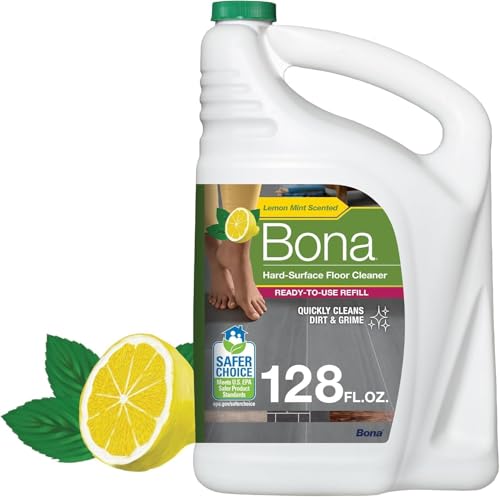
Keep laminate floors in a bedroom looking good by cleaning with a dry or lightly damp microfiber mop, wiping spills right away, and protecting the surface from grit and furniture dents. Avoid soaking the floor (and skip steam mops), because water can seep into seams and cause swelling—especially in bedrooms where dust and spills tend to accumulate around beds and dressers.
If your laminate planks see everyday foot traffic, pet activity, or frequent moving of furniture, this guide is for you. It’s also useful if you want a low-effort routine that follows typical laminate-care guidance without risking damage to the finish or edges.
Bedroom laminate care basics (daily habits)
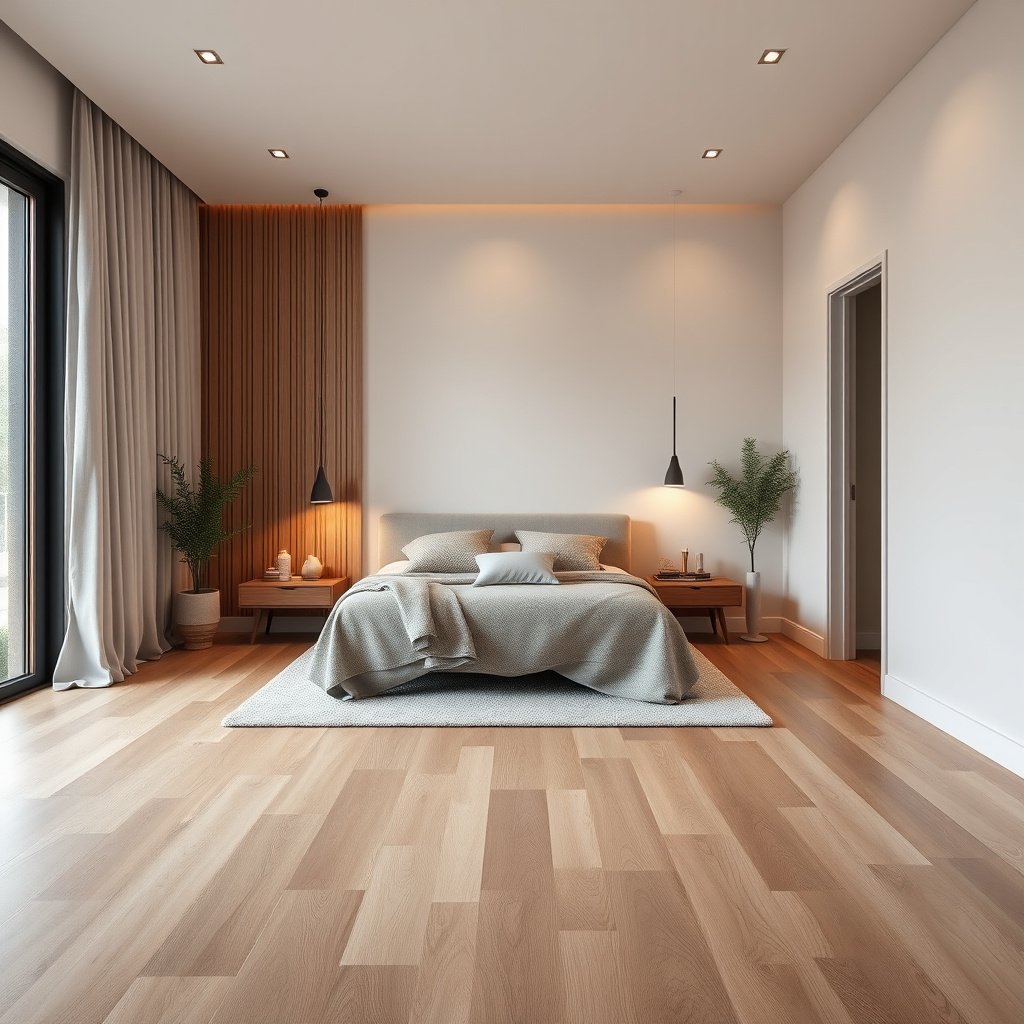
The fastest way to keep laminate floors looking new is to remove gritty debris early—before it abrades the finish. In bedrooms, a consistent “dry-first” habit prevents scratches and dulling more effectively than deep cleaning.
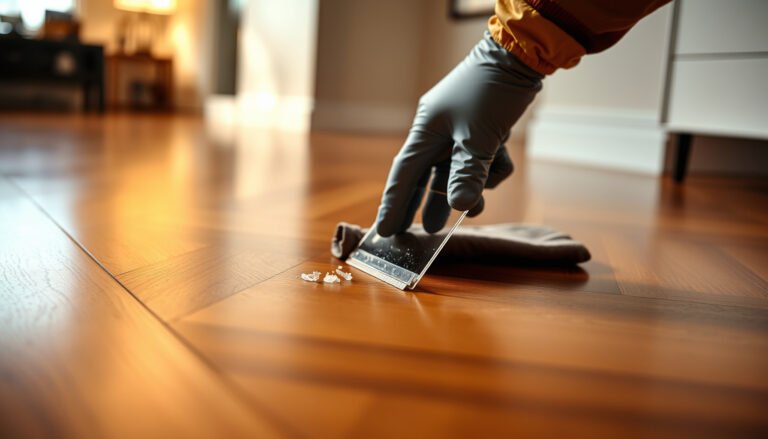
Grit and sand tracked onto laminate floors act like fine abrasives and are a primary cause of surface wear and visible scuffing over time.
Using a soft-brush vacuum attachment helps lift dust from plank texture without aggressively brushing the finish.
Direct sun near windows can fade laminate floors, so limiting heat/sun exposure reduces long-term color change.
Sweep and vacuum like a protective routine (not a deep clean)
In my experience managing busy bedrooms (where laminate floors get constant foot traffic near beds and walkways), the biggest improvement came from consistency: quick vacuuming in “walk lines” and around the bed base, rather than waiting for grime to build up. That small shift reduced the number of scratches we could see by eye—because the laminate finish wasn’t getting repeatedly ground by particles.
For laminate floors, focus on:
– Weekly sweep/vacuum with a soft-brush attachment to remove dust and grit before it grinds into the protective layer.
– Corners and edges (behind the bed frame, beside dressers, along baseboards) where dust collects and gets dragged into walking paths.
– Pet zones if you have pets: hair clumps can trap grit underneath, increasing abrasion.
Use entry mats and rugs strategically
You don’t need wall-to-wall carpeting, but you do want “debris catchers.” Place entry mats or area rugs at:
– Where shoes or boots are taken off (if that happens in the bedroom entry area)
– The path from a doorway to the closet or dresser
– Under chair seating areas (if you sit and work in the room)
This prevents laminate floors from acting like a “grit conveyor belt” that spreads particles across planks.
Manage sunlight heat spots near windows
Laminate floors can fade when exposed to strong, direct sunlight. If your bedroom has bright afternoon sun:
– Close curtains/blinds during peak glare
– Rotate or move rugs periodically (so color changes don’t become patchy)
Clean safely without damaging the finish
The safest laminate-floor cleaning method is dry dusting or a lightly damp microfiber mop—never soaking. This approach keeps the plank seams protected while still removing residue that dulls the surface.
Laminate floors are designed for surface cleaning; manufacturers typically warn against wet mopping because moisture can enter seams.
Microfiber cleaning works by capturing particles on fibers, so a well-wrung mop avoids leaving excess water.
A laminate-approved cleaner (often pH-neutral) reduces residue buildup that can make floors look cloudy.
Use the right tool and the right amount of liquid
For routine maintenance on laminate floors:
– Use a microfiber mop (or a cloth) and keep it barely damp.
– Prefer a laminate-approved cleaner or the cleaner your floor manufacturer recommends.
– Avoid “mop-and-leave” wet cleaning—laminate should not stay wet long.
Practical routine (typical for bedrooms):
1. Dry dusting/vacuum (remove grit first)
2. Spot clean any sticky marks
3. Light damp mop only when needed (often monthly, or per the manufacturer’s care guidance)
Avoid abrasive and incompatible products
To protect laminate floors, don’t use:
– Abrasive pads or scouring powders
– Wax/polish products unless your laminate manufacturer explicitly says they’re safe (many can haze or interfere with the finish)
– Harsh degreasers or chemical cleaners not labeled for laminate
A key concept: laminate floors have a factory-worn protective layer on top. The goal is to clean without attacking that top layer.
Prevent scratches and dents where it matters most
Preventing scratches and dents is easier than fixing them because laminate floors can’t be “refinished” the way many hardwood floors can. The best results come from friction control (grit) plus impact/dent prevention (pads and lifting).
Felt pads reduce sliding friction and help prevent scratches caused by chair legs and frequently moved items on laminate floors.
Trimming pet nails reduces puncture risk and minor scratching where pets routinely move across laminate floors.
Dragging furniture introduces concentrated stress along seams and edges, increasing the risk of chipping and long-term separation.
Furniture pads and sliders: small effort, big payoff
Add felt pads under chair legs and anything that’s moved often, including:
– Desk chairs
– Rolling hampers
– Side tables
Replace pads when they wear out—worn pads can become hard and scratchy. When you rearrange furniture, lift and carry, rather than sliding across laminate floors.
Pet and shoe management
Bedrooms with pets usually benefit from two actions:
– Trim pet nails on a consistent schedule
– Avoid leaving shoes with sharp points (like some heels or cleats) on the floor
Even when the finish looks fine, repeated micro-scratches can make laminate floors dull faster under bedroom lighting.
Protect seams during rearranging
Laminate seams are where moisture can become more problematic later. During rearranging:
– Don’t drag heavy items across seams
– Move large furniture slowly to avoid edge impacts
Moisture control and quick spill response
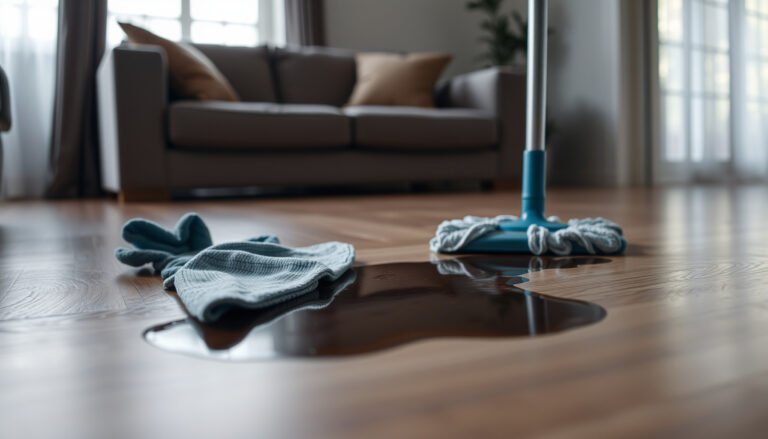
Moisture is the fastest way to damage laminate floors in a bedroom, so your goal is prompt cleanup with the least water needed. If a spill gets into seams, the best next step is controlled drying—not re-wetting to “do it better.”
Laminate floors can swell when water seeps into plank seams, which is why wet mopping is often discouraged by manufacturers.
Drying spills promptly reduces the chance that moisture migrates into the edges and joints of laminate planks.
Maintaining indoor relative humidity within a manufacturer-specified range helps reduce plank gapping or cupping.
Quick spill response: dry first, damp only if needed
When something spills in your bedroom:
1. Wipe immediately with a dry towel.
2. Only if needed, use a slightly damp microfiber cloth to remove residue.
3. Stop once the mess is gone—don’t keep scrubbing with added water.
In bedrooms, common spill moments include water glasses, bedside drinks, and aquarium/plant runoff from shelves.
If liquid reaches seams, switch to drying mode
If you suspect moisture got into seams or edges:
– Dry thoroughly
– Allow extra air time (fans help)
– Do not re-wet “just to clean more”
If you keep applying water after the first cleanup, laminate floors have more opportunity to swell and the surface can stay uneven.
Use the correct indoor humidity range (your manufacturer’s spec)
According to laminate best-practice guidance, indoor climate stability matters for dimensional stability of planks. Use your product’s installation/care instructions as the authority:
Follow your flooring manufacturer’s guidance for indoor humidity range (use ) to reduce plank gapping or cupping.
If you don’t have that document available, check the brand and model number on the box or printed label, then retrieve the care/installation sheet from the manufacturer.
Why steam mops are risky for laminate
Steam cleaning relies on moisture and heat. Steam mop output can reach about 100°C / 212°F at the source (boiling water), and that combination can increase the risk of moisture migration into seams.
According to standard steam-water behavior, boiling water occurs at about 100°C (212°F) at atmospheric pressure, which is why steam can introduce moisture quickly into floor joints (source: ).
Typical Bedroom Particles That Track onto Laminate Floors
| # | Tracked debris | Typical particle size | Where it shows up | Damage risk to laminate |
|---|---|---|---|---|
| 1 | Fine sand/grit | ~250–1000 µm | Entry paths & doorways | High |
| 2 | Dust particles | ~1–100 µm | Under bed edges & along skirting | Medium |
| 3 | Pollen | ~10–100 µm | Window areas & near HVAC returns | Medium |
| 4 | Pet dander | ~2–10 µm | Pet routes & rug edges | Low–Medium |
| 5 | Fibers (clothing/textiles) | ~1–100 µm | Closet floors & laundry paths | Low |
| 6 | Skin flakes | ~10–50 µm | Bed areas & under nightstands | Low–Medium |
| 7 | Smoke/soot (fine PM) | ≤2.5 µm | Near fireplaces/cooking | Low |
What can go wrong (common mistakes)
The most common laminate-floor problems come from excess water, incompatible chemicals, and skipping protective habits. If you’ve ever wondered why laminate floors look “worse after cleaning,” these mistakes are usually the reason.
Over-wetting laminate floors increases the chance that moisture enters seams, leading to swelling or lifting edges.
Ammonia-based cleaners and harsh degreasers can harm laminate finishes, leaving dullness or haze.
If the subfloor is uneven, laminate planks can flex and separate—cleaning alone can’t correct installation-related issues.
Typical failure modes (and what to do instead)
Here are the pitfalls to watch for with laminate floors in bedrooms:
– Over-wetting: using too much water, leaving puddles, or repeatedly damp-mopping.
– Wrong products: general-purpose cleaners, ammonia-based formulas, and harsh degreasers.
– Skipping protection: furniture moved without pads or grit buildup that grinds the finish.
– Installation reality: uneven subfloor or incorrect underlayment can cause gapping or movement that looks like a “cleaning problem.”
Quick comparison: dry vs lightly damp vs steam (what’s safest)
| Method | Best for | Key risk on laminate seams | Recommended? |
|---|---|---|---|
| Dry microfiber dusting | Dust, hair, light surface debris | Low (no extra moisture) | Yes |
| Lightly damp microfiber mopping | Routine grime without residue buildup | Moderate if mop isn’t wrung out | Yes, sparingly |
| Steam mopping | Hard-surface floors designed to tolerate steam | Higher (steam can introduce moisture into joints) | Usually no |
A quick, real-world note (where you’ll want to personalize)
If you’re troubleshooting laminate floors in a bedroom, a useful next step is to document what you see right after cleaning (for example: are edges curling, are seams darkening, or is haze appearing?).
Verdict / tip
For most bedrooms, the safest, most effective approach is a simple routine: dry dusting/vacuuming, occasional lightly damp microfiber mopping with a laminate-approved cleaner, and immediate spill cleanup. The downside is you have to be consistent—laminate shows wear faster if grit is allowed to build up or if spills sit for even a short time.
Skip the “DIY cleaning heavy-handed approach” (extra water, strong chemicals, steam) if you’ve already got signs of swelling, lifting seams, or persistent gaps—those can require repair or replacement rather than more cleaning.
Quick scan-and-save checklist
| Task | How often | What to use |
|---|---|---|
| Sweep/vacuum with soft brush | Weekly (or as needed) | Soft-brush vacuum head / broom |
| Dry microfiber dust/mop | As needed | Dry microfiber cloth/mop |
| Light damp clean | Monthly (or per manufacturer) | Well-wrung microfiber + laminate-approved cleaner |
| Felt pads / protection check | Every few months | Felt pads, furniture sliders |
| Spill wipe | Immediately | Dry towel first, then barely damp cloth if needed |
Sources
Laminate floors in bedrooms stay attractive when your routine prevents grit, avoids excess moisture, and protects against furniture damage. If you follow a consistent dry-first workflow, use only manufacturer-approved cleaning methods, and treat spills as urgent cleanup events, your laminate will look better for longer—and you’ll avoid the swelling and seam problems that come from over-wetting or steam cleaning.
Frequently Asked Questions
How do I clean laminate floors in a bedroom without damaging them?
Sweep or vacuum with a soft brush attachment to remove dust and grit, which can scratch laminate flooring over time. Use a damp (not wet) microfiber mop with a laminate-safe cleaner, and avoid soaking the planks around baseboards and seams. For spills, wipe immediately with a slightly damp cloth, then dry the area thoroughly to prevent moisture from penetrating the edges.
What is the best way to remove stains or sticky marks from laminate floors?
For everyday smudges, use a damp microfiber cloth and a pH-neutral laminate cleaner, then buff dry. For sticky residues (like from lotion, hair products, or adhesives), apply a small amount of isopropyl alcohol to a cloth—not directly to the floor—then wipe and dry. Avoid abrasive pads, steam cleaners, and harsh chemicals, as they can dull the finish or damage the wear layer.
Why do laminate floors get dull or scratched in bedrooms, and how can I prevent it?
Bedrooms often accumulate fine grit from foot traffic and pet paws, which acts like sandpaper on the surface. Prevent scratches by placing felt pads under furniture legs, using a doormat or area rug near entry points, and keeping shoes off the laminate. For a deeper refresh, follow your laminate floor manufacturer’s guidance for recommended refinishing or cleaning products, since not all laminate surfaces can be polished.
Which cleaning products are safe for laminate flooring in a bedroom?
Choose laminate-specific cleaners or pH-neutral products labeled safe for laminate or “engineered wood” floors. Avoid wax-based cleaners, oil soaps, ammonia, bleach, and anything that leaves a residue or compromises the protective top layer. If you’re unsure, test the cleaner in a small, hidden area first and ensure you always mop with a damp cloth rather than using excess water.
How can I protect laminate floors from moisture, especially near the bed or windows?
Use a slightly damp cleaning method and never allow water to sit on laminate, particularly near seams, under rugs, or around window condensation. If you have humidity swings, consider using a humidifier/dehumidifier to keep indoor moisture stable according to the floor manufacturer’s recommended range. For spills or damp laundry (like during cleaning routines), wipe immediately and dry completely to reduce the risk of swelling or edge damage.
📅 Last Updated: October 20, 2026 | Topic: How to maintain laminate floors in a bedroom? | Content verified for accuracy and freshness.
References
- Laminate flooring
- https://www.cdc.gov/coronavirus/2019-ncov/community/disinfecting-building-facility.html
- https://www.who.int/publications/i/item/cleaning-and-disinfection-of-environmental-surfaces-in-the-context-of-covid-19
- Page Not Found – PERGO® Flooring
- MohawkFlooring
- Home – Tarkett Commercial
- https://scholar.google.com/scholar?q=laminate+floor+maintenance+cleaning+care Google Scholar
- https://scholar.google.com/scholar?q=laminate+floor+care+moisture+damage Google Scholar
- https://scholar.google.com/scholar?q=best+practices+laminate+floor+cleaning+microfiber Google Scholar