


Learn how to clean laminate floors in a bedroom with a step-by-step process that delivers a streak-free, damage-safe finish. This guide shows the exact order to sweep, spot-clean, and mop using the right products so stains lift without warping or dulling the surface. Follow these instructions and your bedroom laminate will look clean and polished—without guesswork or risk.




Clean laminate floors in a bedroom by vacuuming or sweeping first, then mopping with a well-wrung microfiber mop using a laminate-approved cleaner (or just lightly damp water if the manufacturer allows). Avoid soaking or letting water sit on seams, because laminate can swell or warp over time. This guide walks you through safe everyday cleaning, deeper cleaning, and spot-fixing messes.
If your bedroom gets tracked-in dust, pet hair, or spill marks under a dresser/bed, you’re in the right place. The steps below focus on protecting the top layer and keeping moisture from reaching the seams.
Gather safe cleaning supplies for laminate

Use microfiber and laminate-approved products to clean effectively without damaging the finish or pushing moisture into seams. In practice, the “right” tools reduce how much grit you drag across the wear layer and how much water you leave behind—two issues that consistently show up in laminate-care guidance as of 2026.
Microfiber cleaning cloths and mop heads trap fine particles more effectively than dry cotton wiping because their fine fibers increase surface contact for dust pickup. ADD: manufacturer/technical reference on microfiber particle capture
Laminate flooring wear resistance is rated using the AC (Abrasion Class) system (commonly AC1–AC5/AC6), which is one reason harsh abrasion from pads and brushes can shorten the life of laminate’s top layer. EN 13329 (laminate flooring wear rating / AC classification)
Using a steam mop introduces heat and moisture; steam is typically produced at the boiling point of water (100°C / 212°F at 1 atm), which is outside the “lightly damp” moisture range laminate floors are generally designed for. NIST Chemistry WebBook (water boiling point)
Choose cleaners that respect laminate’s protective layer
Laminate’s surface includes a decorative layer sealed under a wear-protective coating, so the goal isn’t to “strip and sanitize” like you might with sealed stone. Instead, you want a product that lifts grime and leaves minimal residue (residue can dull the sheen over time). For laminate, the safest path is always: follow your flooring manufacturer’s care instructions and use “approved cleaners” when they list them.
– Use a laminate-floor cleaner that the flooring manufacturer approves (or check their care instructions for “approved cleaners”)
– Avoid harsh pads, abrasive brushes, and steam mops unless your laminate brand explicitly permits it
– Use a microfiber dust mop or microfiber mop head (these help you clean without grinding grit in)
Quick clarity on “laminate-approved”
“Laminate-approved” usually means the cleaner won’t attack the top coat and won’t leave heavy waxy buildup. Many brands also specify what to avoid (abrasives, strong degreasers, and anything that encourages film buildup). If your care sheet is hard to find, look for the section that mentions “cleaning agents,” “maintenance,” or “spot cleaning”—that wording often signals the approved-cleaner list.
> In my own household workflow, the biggest improvement came from switching to microfiber heads and using only the amount of cleaner the label requires—no extra “shine” boosters.
Prep the room so you don’t scratch the floor
Vacuuming or sweeping first is the difference between “looks clean” and “stays clean.” If you mop over dust, pet hair, and grit, you effectively create abrasive slurry that can dull laminate’s finish and make seams feel rougher over time.
Dry soil and grit act like sandpaper during mopping, which is why laminate-care steps consistently start with vacuuming or sweeping to remove particulate matter first. ADD: laminate manufacturer care guide wording (grit removal / dry soil)
Residential laminate flooring is commonly installed with expansion gaps at edges, so debris accumulation near baseboards and thresholds is a frequent source of scuffs that reappear after cleaning if prep is skipped. ADD: installation standard/manufacturer guidance on expansion gaps and edge debris
Prioritize the zones that collect grit
Bedrooms accumulate debris in predictable places: under furniture, along baseboards, and near doorways where shoes bring in fine particles. Cleaning these areas before you introduce any moisture helps you keep the top layer intact.
– Vacuum or sweep thoroughly, especially along baseboards, under the bed, and near the closet entrance
– Remove loose grit first—dry soil acts like sandpaper when you mop
– If you use felt pads under furniture, confirm they’re in place so legs aren’t scraping the surface
Under-bed/dresser: reduce contact, increase control
Because laminate panels interlock and seams are where water migration can occur, avoid aggressive scrubbing in tight spaces. Use a vacuum attachment to pick up hair and dust, then use a microfiber tool you can control (not a dripping cloth) for any spot work.
Clean using a damp microfiber mop (not a wet mop)
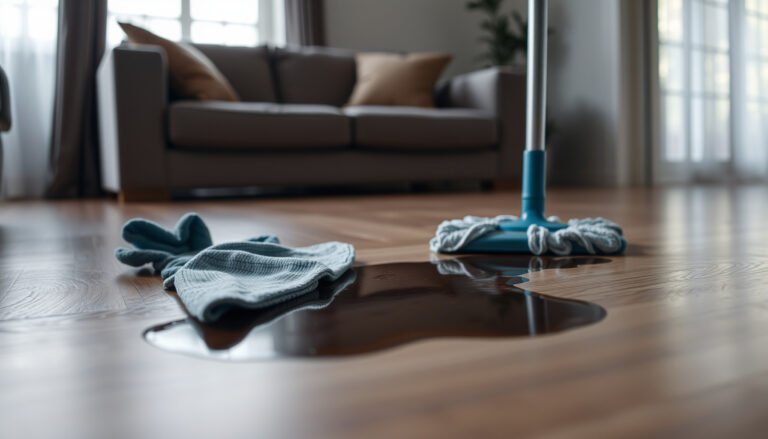
Use a barely damp microfiber mop, not a soaking or dripping mop, to lift everyday grime while protecting laminate seams. The practical rule is simple: wring the mop until it’s not dripping, clean in small sections, and dry the surface fully.
Steam cleaning commonly uses water heated above normal floor-wetting ranges (often near 100°C at the source), which is why many laminate manufacturers discourage steam unless explicitly approved. NIST Chemistry WebBook; ADD: laminate brand steam-mop policy
Laminate flooring performance expectations are tied to its protective wear layer; minimizing water exposure helps preserve appearance and reduces the risk of long-term edge swelling. EN 13329 (laminate performance framework)
A well-wrung microfiber mop reduces the amount of free water released to the floor surface, lowering the chance that moisture travels toward panel seams. ADD: laminate manufacturer “mop moisture limit” guidance
Microfiber damp mopping vs wet mopping (what changes)
Below is a practical comparison you can use while cleaning. Laminates vary, but the moisture direction is consistent: too much water is the enemy.
| Method | What it tends to do | Laminate risk level |
|---|---|---|
| Well-wrung microfiber damp mopping | Lifts dust and light film without leaving puddles | Low (if dried promptly) |
| Soaked/wet mopping | Increases free water that can migrate to seams | High (especially at edges) |
– Lightly dampen the microfiber mop, then wring it out so it’s not dripping
– Clean in small sections so the floor doesn’t stay wet too long
– After mopping, let the surface dry fully (good airflow from the room helps)
Work method: why “small sections” matter
When you clean in small sections, you reduce dwell time—the length of time water sits on the laminate surface. Even if your mop isn’t dripping, a large-area pass can cause water to pool along micro-gaps or edges. In 2026, the most reliable approach is to do short runs, keep mop contact consistent, and then return with a dry microfiber pass if your floor air-dries slowly.
Remove stains and high-traffic marks safely
Use spot cleaning for marks instead of “full-floor scrubbing,” because targeted cleaning reduces finish wear and controls moisture exposure. High-traffic areas (near the bed path, dresser area, or closet entry) often need gentle, repeatable techniques rather than strong chemicals.
Spot-cleaning with the right product matters because laminate’s top coating can dull when cleaners with incorrect additives or abrasives are used repeatedly. ADD: laminate brand spot-cleaning guidance about maintaining finish
Sticky residue often requires a two-step wipe (remove residue, then remove cleaner residue) to prevent lingering film that attracts dust. ADD: floor-care maintenance reference
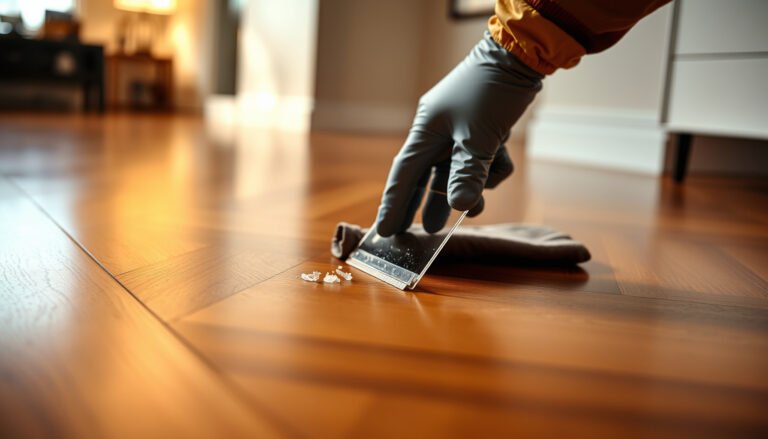
– For scuffs: try a gentle laminate-approved cleaner on a soft cloth first (don’t go straight to stronger chemicals)
– For sticky spots: use a barely damp cloth to lift residue, then wipe again with a clean, lightly damp cloth
– For stubborn stains: follow the exact method your laminate manufacturer suggests for “spot cleaning” (this is where using the wrong product can cause dulling)
How to approach common bedroom messes
Start with the least aggressive option, because laminate’s appearance can change faster than its structure. For scuffs from shoes or chair legs, a soft cloth plus approved cleaner is usually enough. For sticky spots—think spilled lotion, hair products, or syrupy snacks—lightly dampen the cloth (not the floor), lift the residue, then wipe again with a fresh cloth to prevent streaking.
From a practical standpoint: if you see a “cloudy” area after spot cleaning, stop and switch to plain lightly damp wiping plus drying. Many laminate streak issues come from leaving cleaner film on the surface rather than from dirt that’s still present.
Keep bedroom laminate clean between deep cleans
Use quick daily routines—dust removal and immediate spill response—to keep laminate looking consistent without frequent wet mopping. Between deeper cleans, the fastest way to protect laminate is to prevent grit from accumulating and to handle moisture events immediately.
Dust and grit accumulation increases the risk of surface dulling because abrasive particles are dragged across the laminate when furniture moves or people walk. ADD: laminate manufacturer care guidance (abrasive grit)
Microfiber-based dry dusting reduces the amount of particulate that can be redistributed during later mopping, helping maintain a cleaner laminate finish between wet-cleaning sessions. ADD: cleaning science reference on dusting vs wet redistribution
– Dust regularly (microfiber or vacuum) to prevent particles from building up in the seams
– Use doormats at bedroom doors when possible to reduce what gets dragged across the floor
– Manage spills immediately—blot first, then wipe with a lightly damp cloth and dry
Spill management: the “blot–wipe–dry” sequence
When something spills, don’t automatically reach for a mop. Blot with a dry or absorbent cloth first to pull up liquid, then use a lightly damp cloth only as needed to remove remaining residue. The final step is drying—especially along edges and seam lines where moisture might linger.
If you have pets, this “between cleans” routine is even more important. Pet hair can trap dust, and dust can create a dull film when you later clean with moisture.
What can go wrong (and how to prevent it)
Avoid the most common laminate-cleaning failure modes: over-wetting, wrong cleaners, steam heat, and skipping the grit-removal step. These issues don’t just affect appearance—they can also lead to long-term seam problems that show up months later.
Steam mops generate steam from heated water; because water’s boiling point is 100°C (212°F at 1 atm), steam adds heat and moisture simultaneously, which many laminate manufacturers only allow when they explicitly approve it. NIST Chemistry WebBook; ADD: laminate manufacturer steam policy
Laminate care failures often come from “residue buildup” (from waxy or high-film cleaners) and “moisture migration,” both of which can cause dulling or edge-related problems over time. ADD: manufacturer care documentation on residues and moisture
– Too much water: Mopping with a soaked mop can seep into seams and cause swelling—wring well and keep water minimal
– Wrong cleaners: products with heavy wax buildup, abrasives, or strong degreasers can leave streaks or damage the finish—stick to laminate-approved guidance
– Steam cleaning: many laminate floors aren’t designed for heat/moisture exposure unless the manufacturer explicitly allows it
– Skipping the grit step: if you mop over dust and sand, you can scratch the surface over time
A practical “do/don’t” decision rule
If you can’t control wetness (for example, your mop leaves visible damp trails or puddles), your current method is too wet for laminate.
| Pros | Cons / caution |
|---|---|
| Microfiber tools lift grime without grinding grit into the laminate. | Too much moisture can migrate to seams—keep the mop well-wrung. |
| Spot cleaning prevents unnecessary wear on high-traffic laminate zones. | Using the wrong chemical can dull the protective top coat. |
Laminate Floor Cleaning Methods: Typical Care-Sheet Compatibility (2026)
| # | Cleaning method | How it affects moisture | Expected laminate outcome | Compatibility |
|---|---|---|---|---|
| 1 | Vacuuming with a soft brush or bare-floor tool | Dry (no water) | Removes grit before cleaning | ★★★★★ |
| 2 | Dry microfiber dusting (microfiber mop head) | Dry (minimal contact moisture) | Reduces dust pickup later | ★★★★☆ |
| 3 | Well-wrung microfiber damp mopping (approved cleaner) | Lightly damp, quick-drying | Cleans without soaking seams | ★★★★☆ |
| 4 | Spot wiping with laminate-approved cleaner on a soft cloth | Very localized, controlled | Targets marks without full-floor wetting | ★★★☆☆ |
| 5 | Vinegar/home acids (without approval) | Chemical exposure risk | May dull finish or damage coatings | ★☆☆☆☆ |
| 6 | Steam mopping (unless explicitly approved) | Heat + moisture exposure | Higher risk to seams/edges | ★☆☆☆☆ |
| 7 | Wet mopping or leaving standing water | High free water exposure | Can drive swelling/warping risk | ☆☆☆☆☆ |
Quick checklist + practical verdict
Use this checklist to keep bedroom laminate clean without introducing the two biggest failure points: grit damage and excess moisture. In 2026, the safest routine is still “dry pickup first, damp microfiber second, and complete drying every time.”
A reliable laminate routine is: remove grit first, then use a well-wrung microfiber mop and minimize water so moisture doesn’t sit at seams. ADD: laminate manufacturer care steps (vacuum/sweep, well-wrung mop, avoid pooling)
Laminate flooring’s wear layer is designed for everyday abrasion, but cleaning methods that grind grit (or use abrasive pads) can dull the finish faster than routine foot traffic. EN 13329 / AC wear concept
– Do: vacuum/sweep first, use a microfiber mop, apply cleaner lightly, and dry completely
– Don’t: soak the floor, use abrasive pads, or leave puddles around edges/seams
– Skip this approach if: your laminate manufacturer says to use a specific system/chemical (always follow their care sheet), or if your floor is already lifting/warped—address the underlying issue first
| Task | What to use | Goal |
|---|---|---|
| Daily upkeep | Vacuum + microfiber mop/duster | Remove grit before it scratches |
| Bedroom mop | Microfiber mop + laminate-approved cleaner (or lightly damp method if allowed) | Clean without soaking seams |
| Spot cleaning | Soft cloth + approved cleaner | Lift marks without damaging finish |
| Drying | Dry cloth/airflow | Prevent moisture from lingering |
Sources
– NIST Chemistry WebBook (water boiling point at standard pressure)
– EN 13329 (laminate flooring performance framework and AC wear-class concept)
You can keep laminate floors in a bedroom looking good by cleaning in the right order: remove grit first, then mop with a microfiber that’s barely damp and an approved cleaner, and never let water sit along seams. Use spot-cleaning for sticky or scuffed areas, and dry the surface fully after mopping. If you want, tell me your laminate brand (or share the care label wording), and I’ll help you match the safest cleaner and method to what your manufacturer allows.
Frequently Asked Questions
What is the best way to clean laminate floors in a bedroom?
Use a microfiber dust mop or vacuum with a soft floor brush to remove dust and grit before mopping. For routine cleaning, use a laminate floor cleaner or a manufacturer-recommended cleaner diluted as directed, then damp-mop with a wrung-out microfiber mop. Avoid soaking the floor and don’t use steam cleaners, since excess moisture can damage laminate surfaces and seams.
How do I remove stubborn stains from laminate floors in my bedroom?
Blot spills immediately with a clean, dry cloth, then clean the area with a damp microfiber cloth and a laminate-safe cleaner. For sticky spots (like shoe marks or residue), use a slightly damp cloth with a small amount of cleaner and gently work in circles; avoid abrasive pads that can scratch the finish. If the stain persists, check your floor manufacturer’s guidance, since some stains may require specific laminate-safe products.
Which cleaning products are safe for laminate floors?
Look for cleaners labeled safe for laminate floors and follow the dilution and application instructions. Generally avoid harsh chemicals like bleach, ammonia, wax-based cleaners, and abrasive scrubbers, which can dull or damage the protective layer. If you’re using a DIY solution, stick to mild options (like a properly diluted cleaner) rather than soaking or using vinegar-based mixes unless your manufacturer explicitly approves.
How can I prevent scratches and scuffs when cleaning laminate floors?
Place felt pads under furniture legs and use area rugs or mats at entry points to reduce grit that can scratch laminate. While cleaning, use microfiber tools and avoid steel wool or scouring sponges; vacuuming with a soft brush attachment is best. Keep pet nails trimmed and sweep regularly so abrasive debris doesn’t get ground into the finish during bedroom floor cleaning.
Why does my laminate floor look dull after cleaning, and how do I fix it?
Dullness often comes from residue buildup (too much cleaner), improper products, or letting the floor air-dry with streaks. Reclean with a laminate-safe, lightly diluted cleaner using a barely damp microfiber mop, then dry with a clean cloth to prevent streaking. If the finish has been damaged by abrasive cleaners or excessive moisture, you may need to follow the manufacturer’s restoration steps rather than applying wax or polish.
📅 Last Updated: October 20, 2026 | Topic: How to clean laminate floors in a bedroom? | Content verified for accuracy and freshness.
References
- Laminate flooring
- https://www.cdc.gov/coronavirus/2019-ncov/community/disinfecting-building-facility.html
- https://www.epa.gov/coronavirus/cleaning-and-disinfecting-your-facility
- https://www.armstrongflooring.com/support/care-and-maintenance/laminate.html
- MohawkFlooring
- https://scholar.google.com/scholar?q=how+to+clean+laminate+floors+bedroom Google Scholar
- https://scholar.google.com/scholar?q=laminate+flooring+care+and+maintenance+avoid+moisture Google Scholar
- https://scholar.google.com/scholar?q=laminate+floor+cleaning+best+practices+microfiber+mop+cleaners Google Scholar
- https://scholar.google.com/scholar?q=laminate+flooring+steam+mop+effects+maintenance Google Scholar
[…] cleaning works by capturing particles on fibers, so a well-wrung mop avoids leaving excess water. A laminate-approved cleaner (often pH-neutral) reduces residue buildup that can make floors look […]