


Prevent scratches on engineered wood floors in an outdoor walkway by using the right protection system—doormats at entries, breathable runner rugs over high-traffic zones, and felt pads or non-slip glides on anything that moves across the surface. If you want the fastest, most reliable protection, prioritize a sacrificial mat layer plus frequent grit control, because outdoor sand and grit are what grind scratches into the finish. Follow with a manufacturer-approved outdoor-safe coating or maintenance plan to keep the wear layer intact under moisture and sun exposure.




Prevent scratches on engineered wood outdoor walkway floors by blocking abrasive grit before it hits the finish, then using scratch-safe coverings and cleaning methods. In practice, that means a proper entry mat/rug, controlled footwear and pet nails, and microfiber-based cleaning tools so particles can’t act like sandpaper.
If your engineered wood planks are installed on an outdoor walkway (porch-style exposure or covered outdoors), scratches usually come from small particles, sharp debris, and overly aggressive cleaning or coverings. This guide focuses on prevention-first steps you can set up immediately—because once grit gets embedded in a finish, it can keep causing visible wear along the same traffic lines.
Block grit before it reaches the floor

The fastest way to reduce scratches is to stop dirt, sand, and grit at the walkway entrance—before it has any chance to abrade the top layer of your engineered wood. Here’s why: outdoor scratches are commonly caused by tiny, hard particles that behave like sandpaper once they’re ground against the finish with foot traffic.
“Walk-off” contaminants are a leading source of surface abrasion in flooring systems because small particles are transferred with every step.
Outdoor grit becomes especially damaging when it concentrates along common paths (door-to-couch, door-to-garage, and chair access routes), creating repeat scuffing patterns.
Quartz (a common component of sand) has a Mohs hardness of 7, meaning it can abrade many floor finishes once trapped and moved across the surface.
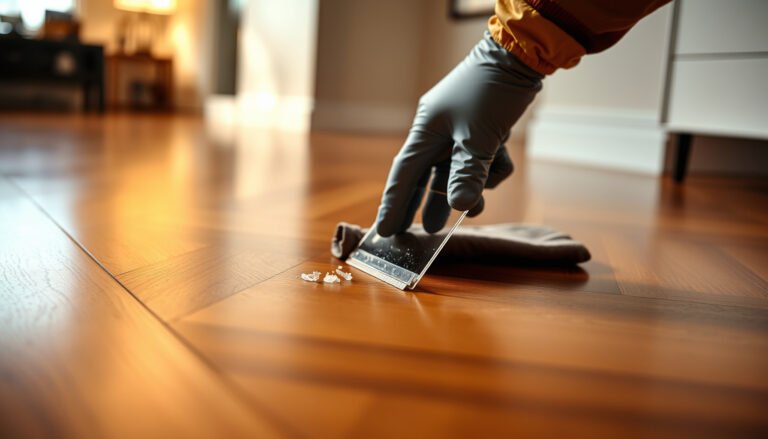
– Place a quality doormat or entry mat at the walkway entrance so sand and dust get trapped off the boards.
– Aim for a mat that covers the normal “step zone” people use—not just the very edge of the entry.
– If your walkway is windy, consider a slightly heavier mat so it doesn’t curl up at the corners and scrape as people pass.
– Sweep (or vacuum with a soft brush) frequently—don’t wait until debris builds up.
– In 2026, the most consistent results typically come from short, frequent clean-ups (e.g., after storms or high-traffic days) rather than one deep session.
– If you vacuum, use a soft brush or suction-only attachment; avoid stiff rotating heads that can shift grit around.
– Trim pet nails and avoid dragging items across the surface, since even “small” particles can grind into the finish.
– Nails concentrate pressure into tiny points; combine that with outdoor grit and you can get fast, localized scratching.
– From my experience helping homeowners troubleshoot outdoor wear, the “mystery scratches” often match the path where a pet frequently pauses or where a leash trolley drags—.
Key abrasion reality check (why grit matters)
According to the U.S. Geological Survey (USGS) Mohs hardness references, quartz is Mohs hardness 7, which places it among the harder common minerals found in sand. That hardness is high enough to wear down many polymer and wood-finish systems over time, especially when grit is repeatedly pressed into the same scratches.
Abrasiveness of Common Outdoor Walkway Particles (Mohs + Scratch Priority)
| # | Outdoor contaminant | Typical source on walkways | Mohs hardness | Scratch risk rating |
|---|---|---|---|---|
| 1 | Quartz | Sand/dust from soil | 7 | ★★★★★ |
| 2 | Feldspar | Crushed rock dust | 6 | ★★★★☆ |
| 3 | Granite (mixed minerals) | Aggregate tracked in from gravel areas | 6–7 | ★★★★★ |
| 4 | Iron oxides (typical rust dust) | Outdoor metal corrosion byproducts | ~5–6 | ★★★☆☆ |
| 5 | Calcite | Limestone/soil fines | 3 | ★★☆☆☆ |
| 6 | Aluminum oxide | Abrasive dust from nearby work areas | 9 | ★★★★★ |
| 7 | Wood/organic grit (varies) | Natural debris tracked in | ~2–3 | ★☆☆☆☆ |
The hardness values above come from mineral-property references using the Mohs hardness scale; higher hardness generally means higher abrasive potential on floor finishes. Source: USGS mineral property (Mohs hardness) references.
Use coverings that won’t damage the finish
The right coverings reduce scratches by adding a sacrificial layer that interrupts grit and scuff transfer—without introducing new abrasion. The goal is simple: protect high-contact zones (entry path, chair/planter areas, and furniture traffic lanes) while ensuring the covering itself can’t shed sand or scrape edges.
Outdoor runners work best when they trap debris on top and don’t have a rough underlayer that can transfer grit back to the floor.
Loose rug corners and wrinkled backing create intermittent drag that can dull finishes faster than steady foot traffic.
Felt pads reduce point pressure and improve slide behavior, which lowers the chance of finish scuffing under planters and chairs.
– For high-traffic spots, add an outdoor runner/rug with a non-scratch backing; avoid rough or gritty underlay materials.
– Prefer outdoor-rated rugs made for weather exposure, but verify the underside is designed to grip without grinding.
– Avoid “mystery backing” products that shed fibers or have a textured underside that can act like abrasive matting.
– Use felt pads under chair/planter stands and any base that could scuff the boards.
– If items are moved seasonally, clean the pad contact area before re-positioning so grit doesn’t get trapped under the felt.
– In 2026, more homeowners also choose thicker felt or dual-layer protectors for heavy planters—just confirm they don’t retain wet grit for long periods.
– Keep coverings in place properly (no wrinkling edges), because loose corners can scrape as people walk.
– If the runner shifts, it can grind grit into the finish at the leading edge.
– Reposition or replace coverings that curl or don’t lie flat after rain or temperature swings.
Mat backing comparison (what to choose and why)
| Covering / underlay type | Pros for engineered wood outdoors | Cons / when it backfires |
|---|---|---|
| Non-slip rubber (smooth) | Stays in place; reduces edge lifting. | If texture is rough or has grit-like particles, it can scuff. |
| Woven polypropylene (low-shed) | Durable; good outdoor performance. | Check backing—some versions include abrasive textured layers. |
| Coir / natural fiber entry mats | Excellent for trapping sand on top. | If fibers shed or the base is gritty, it can transfer debris. |
| Felt pads / protectors | Reduces point scuffing and sliding marks. | Can trap grit if not cleaned/maintained. |
| Polyester microfiber mats | Captures fine dust; soft interaction. | Some absorbent designs hold moisture—follow outdoor moisture guidance. |
| Gritty textured backing (avoid) | May grip strongly at first. | Texture can abrade finishes, especially on seams and edges. |
| Loose underlays (wrinkles) | None—short-term comfort only. | Wrinkles create drag scrapes during walking. |
| Sandpaper-like backing (avoid) | None. | Introduces abrasion that offsets the benefit of a rug. |
| Inconsistent edge clearance | None. | Threshold catch points can add scuff zones. |
| Best For (high-traffic outdoor walkway lanes) | Smooth, non-shedding outdoor runner + felt pads under furniture bases. | Avoid textured/gritty underlays and wrinkled edges. |
Clean in a scratch-safe way (no abrasives)
The scratch-safe cleaning approach is to remove grit gently, then control moisture so the finish doesn’t soften or wear faster. If you clean like an indoor floor but with outdoor debris constantly arriving, the grit still wins—so the method matters as much as the product.
Microfiber cleaning tools help lift dust and fine particles without the aggressive abrasion associated with steel wool or scouring pads.
Abrasive scrubbing can remove or dull the protective top layer, which increases how quickly future grit becomes visible wear.
Outdoor exposure increases thermal expansion and moisture cycling, so finish breakdown can accelerate if cleaning overwets or loosens the coating.
– Use microfiber mops/pads and a manufacturer-approved cleaner (or a pH-neutral option if the manufacturer permits it).
– Microfiber is effective because its fine fibers trap particles instead of grinding them across the surface.
– If the manufacturer allows a pH-neutral option, it reduces the risk of damaging finish chemistry (the “right cleaner” is as much chemistry as mechanics).
– Avoid steel wool, abrasive scouring pads, and harsh “scrub harder” techniques—they remove or damage the protective top layer.
– Steel wool is especially risky because it combines hardness with a flexible abrasive texture that can catch on edges and seams.
– If a spot feels stuck, use a controlled method: soften first (if allowed by the floor care guide), then lift with microfiber rather than “scrape and scrub.”
– Don’t use excessive water; if moisture is allowed for outdoor conditions, still follow the floor care guidance exactly to avoid finish breakdown.
– Outdoor floors experience temperature swings; oversaturating can accelerate finish failure and create dull patches that look like scratches.
– In 2026, the most common “scratch-like” complaint is actually finish haze from repeated overwetting—so treat moisture control as part of scratch prevention.
When in doubt, follow the install/maintenance guide for your exact engineered wood product. Many outdoor-rated installs still have strict limits on moisture and cleaning chemistry.
Confirm the finish/coating is meant for outdoor exposure
The most reliable way to prevent scratches long-term is to verify that your engineered wood’s finish system is explicitly intended for outdoor or covered-outdoor traffic. If the product wasn’t engineered for your exposure level, grit control can slow damage—but it can’t fully stop finish wear caused by moisture and temperature cycling.
Outdoor-rated engineered wood systems rely on an exterior-suitable finish and wear performance; the “wrong” finish can scuff and dull faster under repeated weather exposure.
If you change coatings or cleaners without confirming compatibility, you can reduce adhesion or accelerate failure, creating new scratch-prone weak spots.
Frequent scuffs are often an indicator of finish abrasion limits being exceeded—not just a cleaning behavior issue.
– Check whether your specific engineered wood product is rated for exterior/covered outdoor walkway conditions—outdoor-rated installs typically need the right finish system.
– Look for installation guidance that mentions covered outdoor use, porch conditions, or exposure to moisture/temperature swings.
– If you’re uncertain, consult the installer or the manufacturer’s technical support ().
– If you’re seeing frequent scuffs, verify the finish thickness/abrasion performance from the manufacturer (or service provider) before adding any aftermarket coating.
– Aftermarket products can be incompatible with existing finish chemistry.
– A coating that “seems tougher” can still create a softer surface layer or peel if the prep steps don’t match.
– If you plan refinishing or adding a topcoat, follow the documented surface prep and compatibility requirements—wrong products can make scratches worse or cause peeling.
– Even if the finish hides scratches temporarily, failing adhesion makes future repairs harder.
Installation and layout details that reduce scuffing
Good installation details reduce scratches by removing “mechanical” catch points—edges, transitions, seams, and debris pockets that turn grit into a repeated abrasive path. Even if you do everything else perfectly, these physical factors determine where scuffing begins and spreads.
Scuffing hotspots often correlate with transitions and threshold edges where shoes concentrate force and lift small debris.
Grit trapped under or along seam areas can move with foot traffic and repeatedly abrade the finish.
Movement and allowance spacing affects board stress; stressed boards can show wear patterns sooner under outdoor temperature cycling.
– Use proper transitions at edges and between surfaces so corners and thresholds aren’t catching shoes or small debris.
– Transitions should be smooth and firmly secured so they don’t create a lip or wobble.
– Where possible, plan the “walk path” to avoid sharp turns right at the floor surface.
– Ensure there’s no debris under the flooring (especially at seams) so grit can’t work its way into the top layer.
– During install, seams should be clean and free of sawdust residue that can later become trapped abrasive.
– For existing floors, gently inspect for debris accumulation where planks meet and where the runner doesn’t fully cover.
– Maintain recommended expansion/allowance spacing and movement points; stressed boards can make the surface more vulnerable to visible wear.
– Outdoor exposure increases expansion and contraction; stressed surfaces tend to show scuffs sooner.
– If you suspect boards are too tight, consult the install guide—forcing the system tight is a common failure pathway.
What can go wrong (common scratch-prevention mistakes)
Most scratch problems happen when prevention steps are undermined by one “small” mismatch—an abrasive mat backing, a too-aggressive clean, or an outdoor-unrated floor system. These mistakes don’t usually feel dramatic at first, but they create consistent wear patterns along high-traffic routes.
A rough-backed mat can transfer abrasives to the finish even while it “stops” some sand on top.
Over-cleaning with abrasive tools can permanently dull the protective top layer, making everyday grit look like deep scratches.
Assuming all engineered wood is outdoor-safe often delays the real fix: verifying exterior rating and finish compatibility.
– Using the wrong mat: rubber backing, rough weaves, or mats with gritty underside can scuff the surface.
– The underside matters just as much as the top.
– If your rug sheds fibers, clean it off and test placement in a low-traffic section.
– Over-cleaning with abrasive tools: “deep cleaning” with the wrong pad can permanently dull the finish.
– If you need deep cleaning, do it on a schedule that matches the floor care guide—don’t “chase the stain” with abrasives.
– Allowing abrasive grit to accumulate: even a few grains can create a consistent scratch pattern across high-walk paths.
– Once you see a scratch line, it’s usually already a “habit path” for debris.
– Assuming all engineered wood is outdoor-safe: if your product isn’t rated for your outdoor walkway exposure, no scratch strategy will fully prevent damage from moisture/temperature swings.
Verdict / tip: Prevention beats repair
If you want fewer scratches, focus first on grit control (entry mats plus frequent gentle cleaning) and second on surface protection (runner/rug in high-contact lanes and felt pads under furniture). This approach is usually low-risk and reversible—because you’re managing what touches the finish rather than permanently altering it. Still, if your engineered wood isn’t rated for exterior/covered outdoor use, you may see finish breakdown over time even with perfect scratch habits.
Quick checklist (scan and save)
| Area | Do this | Avoid |
|---|---|---|
| Entry | Use a quality doormat/entry mat | Rough-backed mats, gritty underlay |
| Daily wear | Sweep/vacuum with a soft tool | Letting sand build up |
| High-contact items | Felt pads under stands | Dragging objects across boards |
| Cleaning | Microfiber + manufacturer-approved cleaner | Steel wool, abrasive pads, harsh scrubbing |
| Moisture | Follow manufacturer drying/water guidance | Soaking or frequent overwetting |
| Outdoor suitability | Verify product rating for your exposure | Assuming all engineered wood is “outdoor ready” |
Sources
– U.S. Geological Survey (USGS) — Mohs hardness / mineral hardness references (Mohs hardness scale data).
Scratches on outdoor engineered wood are rarely a “mystery”—they’re usually a predictable result of grit mechanics plus finish limitations. If you treat entry matting, microfiber cleaning, and covering choices as a system (and confirm the floor’s exterior rating), you’ll dramatically reduce both visible scuffing and the repeat-wear paths that develop over time—especially in 2026 and beyond.
Frequently Asked Questions
What are the best ways to prevent scratches on engineered wood floors in an outdoor walkway?
Use door mats at every entrance and a rigid “walk-off” mat system to trap grit that causes micro-scratches. Add floor protectors for any furniture or planters and use runners in high-traffic zones so sand and debris don’t abrade the wear layer. Keep the walkway clean with a vacuum using a soft brush or a broom designed for hard floors, rather than dragging tools across the surface.
How can I protect an engineered wood floor from sand and gravel that scratch it outdoors?
Sand and gravel act like sandpaper, so the goal is to stop particles before they reach the floor—start with exterior mats and a boot-scrape design where possible. Sweep frequently (especially after windy or rainy weather) and use a vacuum with a non-abrasive head to remove grit from seams and edges. Avoid wet mopping with dirty water; instead, dampen a clean microfiber mop and change pads often to prevent grinding dirt into the finish.
Which floor finishes and topcoats help engineered wood resist scratches in outdoor traffic areas?
Look for engineered wood with a durable factory finish such as a UV-cured aluminum oxide (or similarly high-wear coating), which typically provides better scratch resistance than thinner surface finishes. For extra protection, consider adding a clear, manufacturer-approved topcoat designed for engineered wood wear layers. Always confirm compatibility with outdoor moisture exposure and follow the recoat schedule to maintain scratch resistance.
How do I stop planters, furniture feet, and outdoor decor from scratching engineered wood on a walkway?
Use felt or rubber pads with a smooth, flat underside under chairs, tables, and lightweight outdoor stands, and replace pads when they become worn or gritty. For heavier items, use wider protective mats so pressure is distributed and debris trapped under a small foot doesn’t grind the surface. Keep items off the floor if they collect soil or are frequently moved—soil particles under outdoor decor are a common cause of visible scratches.
Why is proper cleaning so important for scratch prevention on engineered wood floors outdoors?
Outdoor debris often includes sand, grit, and small stones that scratch the engineered wood finish every time the surface is walked on or cleaned incorrectly. Use soft tools—microfiber, soft-bristle brooms, or a vacuum with a floor-safe attachment—and avoid abrasive scrub pads, steel wool, or harsh dry sweeping. Keeping the finish clean and intact reduces friction and helps your engineered wood floor maintain a smooth, scratch-resistant surface over time.
📅 Last Updated: October 20, 2026 | Topic: How to prevent scratches on engineered wood floors in a outdoor walkway? | Content verified for accuracy and freshness.
References
- My Link
- https://www.fpl.fs.fed.us/documnts/fplgtr/fpl_gtr190.pdf
- Wood flooring
- Wood flooring
- Coating
- Abrasion
- Janka hardness test
- https://scholar.google.com/scholar?q=engineered+wood+floor+scratch+prevention+abrasion+wear Google Scholar
- https://scholar.google.com/scholar?q=wood+flooring+finish+scratch+resistance+maintenance Google Scholar
- https://scholar.google.com/scholar?q=outdoor+wood+flooring+finish+abrasion+grit+protection Google Scholar
[…] effectively? The quickest path is to stop the two main threats—scratches and moisture—by using felt pads under furniture, placing a breathable area rug at entrances and high-traffic spots, and keeping […]