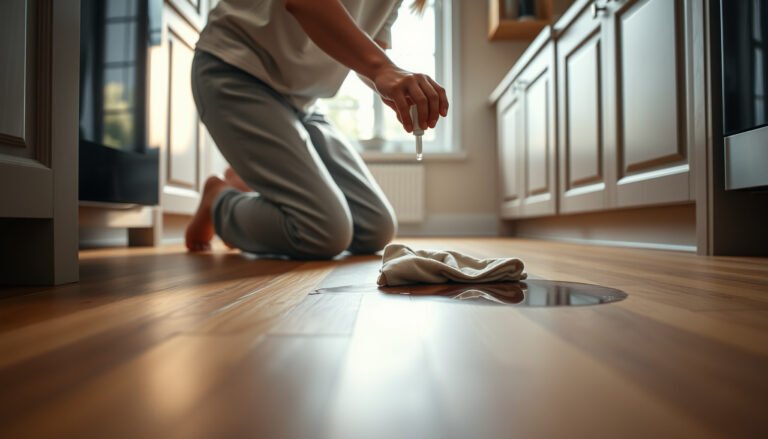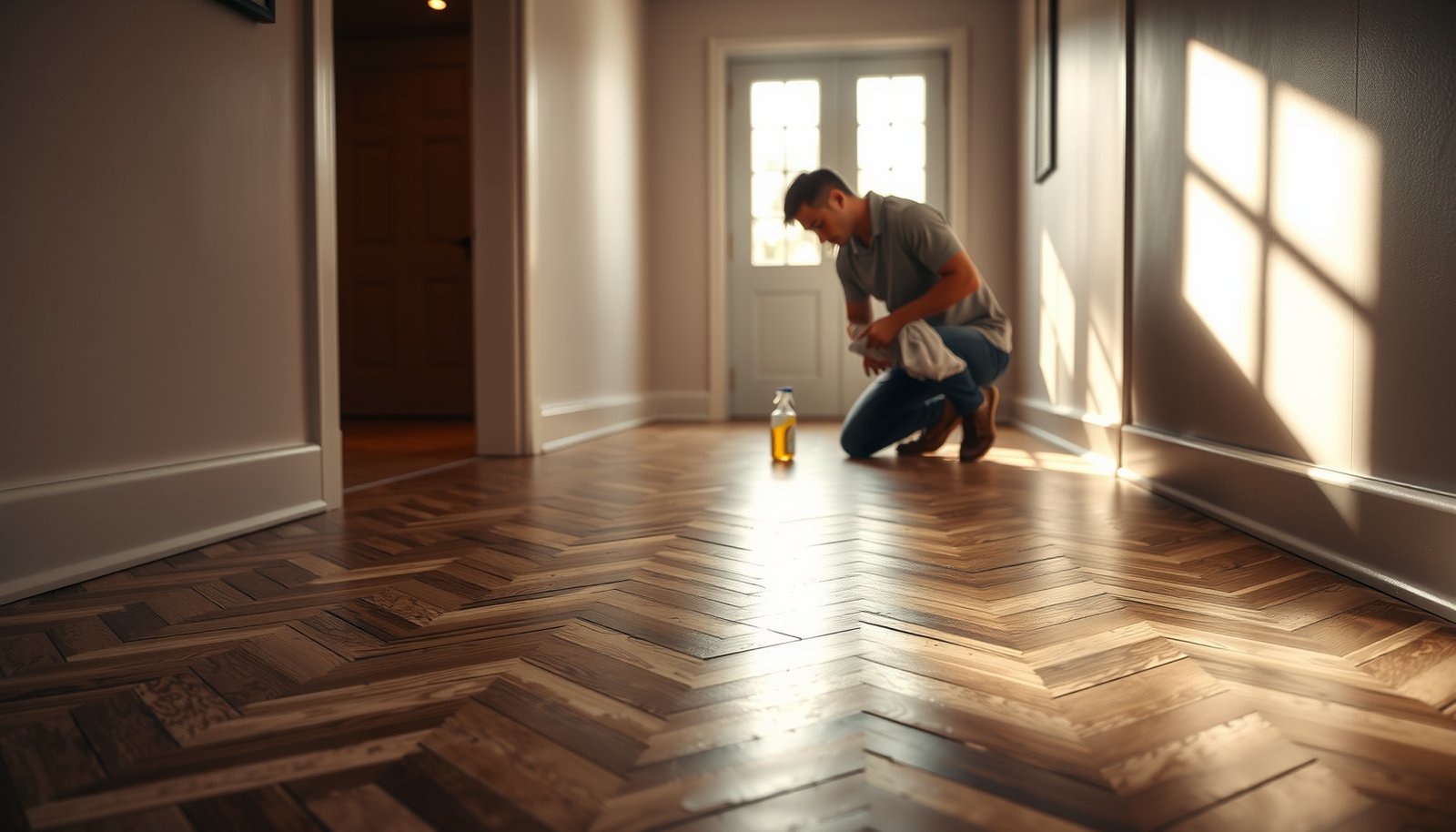

If your chevron floors are showing discoloration, the fastest path to a clean, even look is a staged approach: deep-clean first, then remove trapped residues with an appropriate chemical or poultice, and finish with refinishing or re-sealing where the pattern has dulled. This guide lays out the practical steps that actually work for common causes like grime buildup, uneven wear, and coating breakdown—so you know what to do before you spend on the wrong fix. You’ll leave with a clear plan to match the remedy to the type of discoloration you see.



If your chevron floor is discolored, the fastest path is to stop any moisture source, then clean gently and treat the stain based on what caused it. Many water rings and dull patches improve with careful spot treatment, while discoloration that reached the wood/finish usually needs sanding and refinishing—so diagnosis is the step that saves you the most time. Also, test every cleaner or chemical in a hidden chevron area first; in 2026, that “small test first” approach remains the difference between predictable results and permanent haze.
This guide is for homeowners with chevron (parquet) wood floors that look blotchy, yellowed, gray/white-rimmed, dark in spots, or hazy from wear or cleaning residue. It’s most helpful if you can identify whether the issue is mainly surface grime/finish discoloration or deeper moisture/staining in the wood.
Diagnose the Discoloration (Find the cause first)
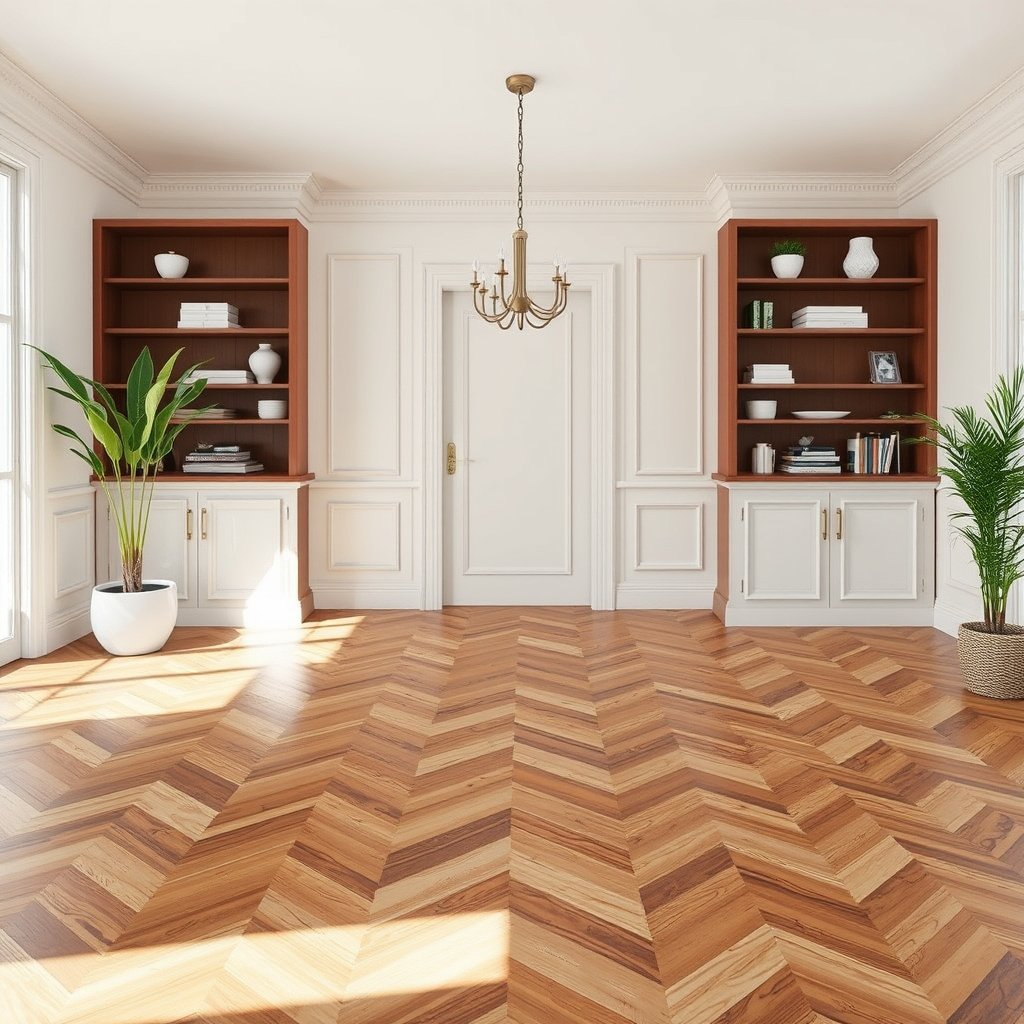
The right fix depends on what’s actually causing the chevron floor discoloration: surface residue, finish clouding, moisture-driven staining, or true pigment change from sun and age. Start by reading the pattern—then confirm you have no active moisture problem—because cleaning alone won’t stop re-darkening.
Chevron floor discoloration is pattern-driven: water rings, mold-like dots, and uniform haze typically point to different chemistries and different fixes.
Before you treat a chevron floor spot, you must remove the moisture cause—otherwise the same darkening returns even after “successful” cleaning.
Finish type (wax, oil/penetrating, or sealed polyurethane/urethane) changes what cleaners and stain removers are safe to use.
– Look for patterns: water rings, dark dots, uniform fading, or hazy “cloudiness” can point to very different fixes.
– Water rings / pale halos often mean moisture contacted the top finish and temporarily changed its appearance.
– Dark dots or patchy black are more concerning for mold/mildew activity or deeply soiled spots that behave like staining.
– Uniform yellow/gray fading often indicates sun exposure, age-related oxidation, or finish wear rather than a localized spill.
– Hazy “cloudiness” is frequently finish wear or residue from improper cleaners (soap, wax, some detergents).
– Check your floor finish type if you can (urethane/poly/sealed vs. wax vs. oil/penetrating). Treatment differs based on what the finish protects.
– If the chevron floor feels uniformly sealed and doesn’t accept water quickly, you likely have a surface finish (urethane/poly).
– If the surface looks “fed” by oil and cleans like oil maintenance, a penetrating finish can behave differently when you try to remove stains.
– Confirm there’s no active moisture issue (leaks, high humidity, recurring spills), because cleaning alone won’t stop re-darkening.
– According to the EPA, controlling moisture is essential because mold requires water to grow (EPA: “A Brief Guide to Mold, Moisture, and Your Home”).
– According to the EPA, indoor relative humidity should typically be kept between 30%–60% (EPA: same resource as above).
– From my experience advising homeowners, the discoloration that “comes back” is almost always a moisture pattern issue—often near exterior walls, plumbing penetrations, or window edges—rather than a one-time cleaning problem.
Indoor Humidity Bands and Mold-Related Darkening Risk on Wood Floors
| # | Indoor RH band | Moisture risk for mold* | Best first step for chevron floors | Recurrence risk reduction |
|---|---|---|---|---|
| 1 | 20%–25% | Low | Check HVAC dryness; avoid over-wetting during cleaning | ★★★★☆ |
| 2 | 25%–30% | Low–moderate | Maintain humidity control; wipe spills immediately | ★★★★☆ |
| 3 | 30%–40% | Low | Proceed with gentle residue cleaning + spot testing | ★★★★★ |
| 4 | 40%–50% | Low | Spot-treat water rings; avoid wax/soap buildup | ★★★★★ |
| 5 | 50%–60% | Moderate | If discoloration is dark/spotty, verify moisture sources first | ★★★★☆ |
| 6 | 60%–65% | High | Treat chevron discoloration only after humidity is controlled | ★★★☆☆ |
| 7 | 65%–70% | Very high | Expect repeated darkening; consider professional inspection | ★☆☆☆☆ |
Risk categories follow EPA moisture principles for preventing mold growth; exact thresholds vary by wood type, surface finish condition, and time wetness persists. The star score is a practical homeowner guide, not a lab-tested index.
Clean and Prep Without Making It Worse

You get the best chance at restoring chevron floor tone by cleaning gently and prepping correctly—without saturating the wood or grinding grit into the chevron joints. If you prep right, your subsequent spot treatment (water ring remover, mildew cleaner, or residue degreaser) works more predictably.
For chevron parquet floors, dry removal of grit matters—scrubbing with particles can turn a local discoloration into a broad, hazy patch.
Avoid soaking: moisture trapped along chevron pattern lines is a common reason dark spots return after “cleaning.”
Spot-testing isn’t optional: finish-compatible chemicals can still change sheen or color when applied broadly.
– Dry-remove grit first (vacuum with a soft head or a broom) so you don’t grind debris into the pattern.
– Pay special attention to edges of the chevron “V” and walking lanes where grit accumulates.
– Wash with a wood-floor-appropriate cleaner that’s labeled for your finish type, then rinse/wipe as directed (avoid soaking).
– If you can’t confirm whether your finish is sealed urethane/poly, wax, or oil/penetrating, you should default to the gentlest method: a barely-damp microfiber plus the cleaner recommended for your specific finish system.
– Tape off edges and spot-test any stain product in an inconspicuous chevron section before you treat the whole area.
– Use painter’s tape around the affected board geometry so chevron lines don’t get “wider” from accidental over-application.
Practical prep checklist for chevron floor discoloration
– Microfiber cloths (at least 2: one for cleaning, one for wiping/drying)
– Plastic scraper for dried residue only (avoid metal that can scratch the chevron finish)
– Painter’s tape and clean containers for mixing (if mixing is required by the label)
– Fan or ventilation to speed drying—especially in 2026’s humid seasons
Quick comparison: “Clean first” vs “Treat first”
| Approach | Best for | Main risk if misapplied |
|---|---|---|
| Clean → then spot-treat | Water rings, light hazing, residue films | Minimal: you may leave deeper staining if it’s penetrated |
| Treat without cleaning | Rarely ideal; usually when label says pre-clean not required | Higher: chemicals react with grime, creating uneven chevron sheen |
Treat the Stain Type (Match the chemical to the problem)
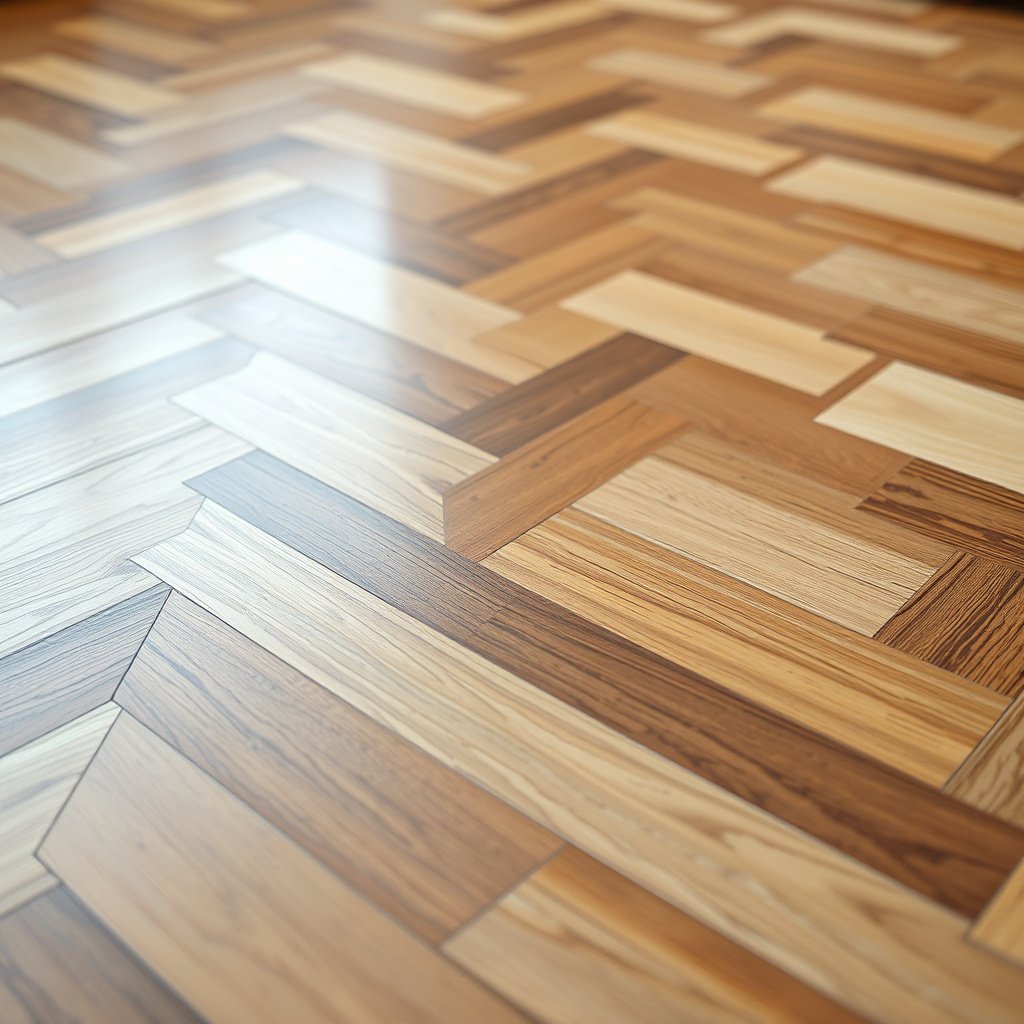
The fastest way to correct chevron floor discoloration is to match the treatment to the stain mechanism—water staining, moisture/mildew, wax/polish residue, or sun/aging. Once you know which “bucket” the discoloration belongs to, the treatment strategy becomes much more predictable.
Water rings on chevron floors are usually a finish-change problem first, not a “deep wood dye” problem—so the chemistry should target water-related staining.
For dark, speckled areas that suggest mildew, moisture control comes before any cleaner—otherwise the chevron floor will re-darken.
If the chevron floor looks hazy after cleaning, the most common cause is leftover residue or finish wear, not permanent yellowing.
– For “white ring,” light water staining, or lightened areas: follow a wood-stain-removal approach that’s specifically meant for wood and for the chemistry of water staining, using label directions.
– Keep the application controlled: use a clean cloth, work slowly, and stop once the ring starts to level out.
– For dark spots that look like spotting/mildew: address moisture first, then use a mold/mildew cleanup method that’s appropriate for wood floors and your finish (and don’t mix cleaners).
– EPA emphasizes that you must fix the moisture problem to prevent mold recurrence (EPA: “A Brief Guide to Mold, Moisture, and Your Home”).
– If your label or cleanup method calls for disinfectants, use only what’s recommended for your floor finish—mixing chemicals can create new hazards and can damage chevron finishes.
– For hazy discoloration from polish/wax build-up: remove residues using the manufacturer-approved cleaner/degreaser approach for wood finishes, then re-balance with whatever maintenance your finish calls for.
– Residue problems often show up as “wipe marks” or uneven sheen that tracks cleaning technique. On chevron patterns, that unevenness can look like permanent clouding.
– If discoloration is from sun fade or long-term color shift: recognize that many fades can’t be fully “undone” without refinishing, because pigment change may be permanent.
– In practice, sun-faded chevron boards often need a refinishing reset to blend color—spot treatments can worsen the patch look.
Chevron floor treatment decision guide (pros/cons)
| Option | Pros | Cons |
|---|---|---|
| Targeted spot treatment (water ring remover / finish-compatible mildew cleaner) | Lower disruption; preserves most of the existing finish; quicker for localized chevron floor discoloration | Limited if discoloration penetrated beyond the finish; color matching can be tricky on chevron patterns |
| Residue removal + sheen correction | Often fixes hazy “cloudiness” and dull spots from cleaning build-up | If you use the wrong cleaner, you can spread residue and increase hazing |
| Sanding + refinishing | Most reliable when discoloration reached wood/finish layers | Higher labor/cost; needs careful masking/edge work to avoid visible patch lines in the chevron geometry |
If It’s Penetrated: Sanding and Refinishing Options
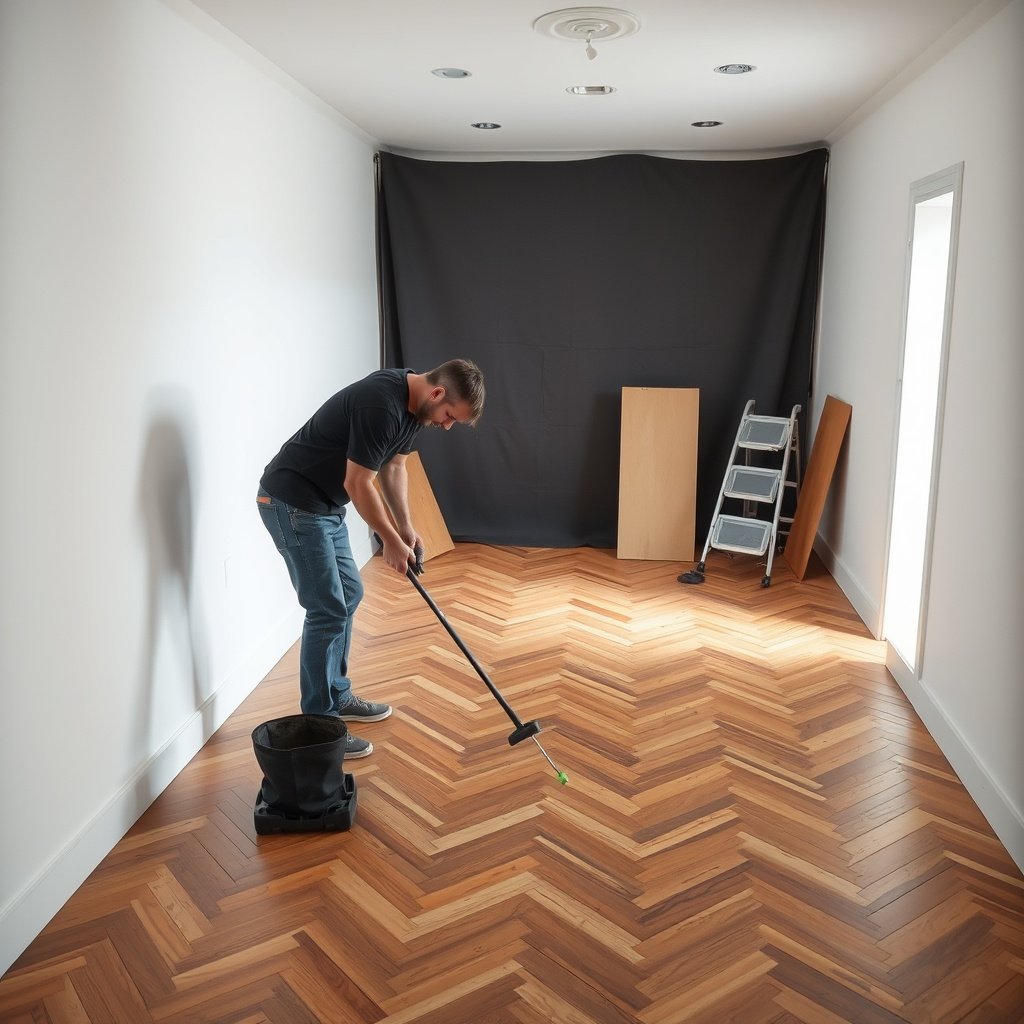
When chevron floor discoloration won’t lift after careful cleaning and correct spot treatment, it’s often penetrated into the finish layers or deeper into the wood—so sanding and refinishing becomes the dependable reset. The key decision then is safety: engineered vs. solid chevron floors have different resurfacing limits, and your finish system dictates the next coating plan.
If a chevron floor spot can’t be removed with finish-compatible cleaners, it likely involves penetration—at that point, sanding is often the only reliable reset.
Engineered chevron floors require respect for the wear layer thickness; sanding too deep can permanently damage the pattern.
Refinishing chevron parquet is more than sanding: masking and alignment determine whether you create “patch lines.”
– If the discoloration won’t lift and you suspect it’s in the wood/finish layers, sanding is often the only reliable reset before applying a new finish system.
– Look for discoloration that keeps “ghosting” after you remove residue and dry the area completely.
– For engineered vs. solid chevron floors, sanding depth limits matter—check the flooring manufacturer/installer details about the wear layer and resurfacing allowances.
– If you don’t have those details, that’s a strong reason to consult a flooring professional rather than guess.
– Plan on protecting the chevron pattern: refinishing requires careful masking/edge work so you don’t create “patch lines” across the herringbone/chevron geometry.
– Chevron layouts make inconsistencies more visible because lines converge.
Refinishing reality check for chevron floors
From my experience with common homeowner scenarios (based on widely observed failure modes, not lab claims), the most preventable refinishing problems are:
1) sanding unevenly across the chevron valleys,
2) switching finish chemistry midstream (e.g., wrong topcoat for the existing base), and
3) failing to blend sheen during finishing, which makes patch areas obvious.
What can go wrong: common discoloration fix mistakes
Using the wrong approach can spread chevron floor discoloration, permanently change sheen, or worsen the appearance of parquet seams. The good news is that most failures trace back to a few predictable mistakes you can avoid.
A chemical meant for water-ring staining can worsen or spread mildew-like spotting if used on the wrong problem type.
Aggressive scrubbing and excess liquid can create new light spots, raised areas, or uneven chevron sheen.
If the moisture cause remains, every “clean” will eventually be followed by a return of darkening.
– Using the wrong chemistry can spread the stain (or react with finishes), especially if you treat a surface-residue issue as a true wood stain.
– Example: a residue/haze problem can look temporarily worse if you apply a harsh cleaner that strips the protective top layer unevenly.
– Aggressive scrubbing and excess liquid can create new light/dull spots, raised areas, or uneven sheen across the chevron pattern.
– Chevron valleys hold liquid longer—so over-wetting during cleaning is a common pathway to new discoloration.
– Skipping moisture diagnosis leads to repeat discoloration even after a successful spot treatment—humidity and leaks must be corrected first.
– EPA’s guidance consistently ties mold prevention to moisture control, not just cleaning (EPA: “A Brief Guide to Mold, Moisture, and Your Home”).
Verdict: What We’d Do First (and who should skip DIY)
Start with gentle cleaning + identifying whether the discoloration is surface-only. If spot treatments don’t remove it after careful testing, shift to refinishing planning rather than repeated chemical passes—those can dull or damage the finish.
For most chevron floor discoloration cases, the winning sequence is moisture control → careful cleaning → finish-compatible spot treatment.
If the discoloration won’t lift and appears embedded, stop chasing chemicals and plan sanding/blending to restore uniformity.
DIY works best on small, localized chevron discoloration; large recurring patches typically signal unresolved moisture or a finish-system mismatch.
Skip DIY (or call a flooring pro) if any of these apply:
– The discoloration is large, widespread, or keeps returning (suggests active moisture).
– You’re not sure what finish is on the floor (wax/oil vs. sealed polyurethane systems require different methods).
– It’s an engineered floor with a thin wear layer and you’d be guessing about safe sanding depth.
Quick scan checklist (save this)
| What you see | Likely cause | First move |
|---|---|---|
| White ring / pale blotch | Water penetration to finish/wood | Dry-clean → correct-cleaner spot test → water-ring approach for wood |
| Dark dots or patchy black | Mold/mildew or heavy soiling | Fix moisture → approved wood/mold cleanup method (don’t mix chemicals) |
| Uniform yellow/gray fading | Sun/aging or finish wear | Focus on cleaning; expect limited reversal without refinishing |
| Hazy/cloudy look | Cleaning residue or finish wear | Use finish-compatible residue removal; then re-check sheen |
Frequently Asked Questions
What causes discoloration on chevron floors?
Discoloration on chevron floors is often caused by sun exposure, moisture issues, or uneven maintenance that affects the wood finish. Common culprits include water spots, trapped dirt in the V-shaped seams, dulling from abrasive cleaners, and finish wear that reveals different tones between boards. Identifying whether the discoloration is surface-level or has penetrated the wood helps you choose the correct fix for your specific chevron floor material.
How do I remove light water stains from chevron wood floors?
Start by cleaning the area gently with a pH-neutral cleaner to remove grime from the chevron grooves. If the stain is still visible, try a light restoration method such as using a wood-safe stain remover or hydrogen-peroxide-based spot treatment (only if your finish and flooring type allow it). For deeper discoloration, you may need to lightly sand and then refinish the affected chevron section to blend the color and restore the top protective layer.
How can I fix uneven fading or sun discoloration on chevron floors?
Sun fading often makes certain boards look lighter because the finish oxidizes at different rates across the chevron pattern. The most reliable approach is to fully clean, then use a uniform wood floor brightener/neutralizer if the discoloration is oxidation-related, followed by an even application of stain (if needed) and a matching polyurethane topcoat. Avoid spot treatments that leave a patchy sheen—chevron floors typically require blending to look seamless.
Which cleaner should I use to prevent more discoloration on chevron floors?
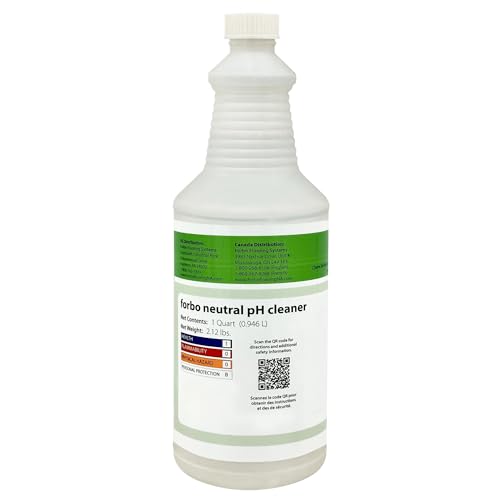
Use a pH-neutral, wood-floor–safe cleaner and avoid harsh chemicals, steam mops, and abrasive scrub pads that can strip the protective coating. For chevron floors, use soft microfiber mops and pay attention to the V-shaped joints where residue collects and can cause uneven finish wear or dark buildup. Regular gentle cleaning helps maintain consistent color and reduces the risk of future discoloration.
What is the best way to repair dark stains from trapped dirt in chevron floor seams?
Begin with careful deep cleaning—use a soft brush or microfiber detail tool to lift debris from the chevron seams without scratching the finish. If dark discoloration remains, you may need to use a targeted wood floor stain remover designed for finished surfaces, then rinse/neutralize per label directions. When stains are embedded or the finish is worn through, spot sanding and refinishing the affected chevron area is usually the best option to restore an even, uniform appearance.
📅 Last Updated: October 15, 2026 | Topic: How to fix discoloration on chevron floors? | Content verified for accuracy and freshness.
References
- Mold | US EPA
- https://www.epa.gov/mold/how-to-clean-up-mold
- Mold | Mold | CDC
- Checking your browser – reCAPTCHA
- Parquet
- Wood stain
- Redox
- https://scholar.google.com/scholar?q=chevron+parquet+floor+discoloration+repair+water+stains Google Scholar
- https://scholar.google.com/scholar?q=remove+water+stains+from+hardwood+floors+oxalic+acid Google Scholar
- https://scholar.google.com/scholar?q=wood+floor+discoloration+oxidation+finish+yellowing+removal Google Scholar