
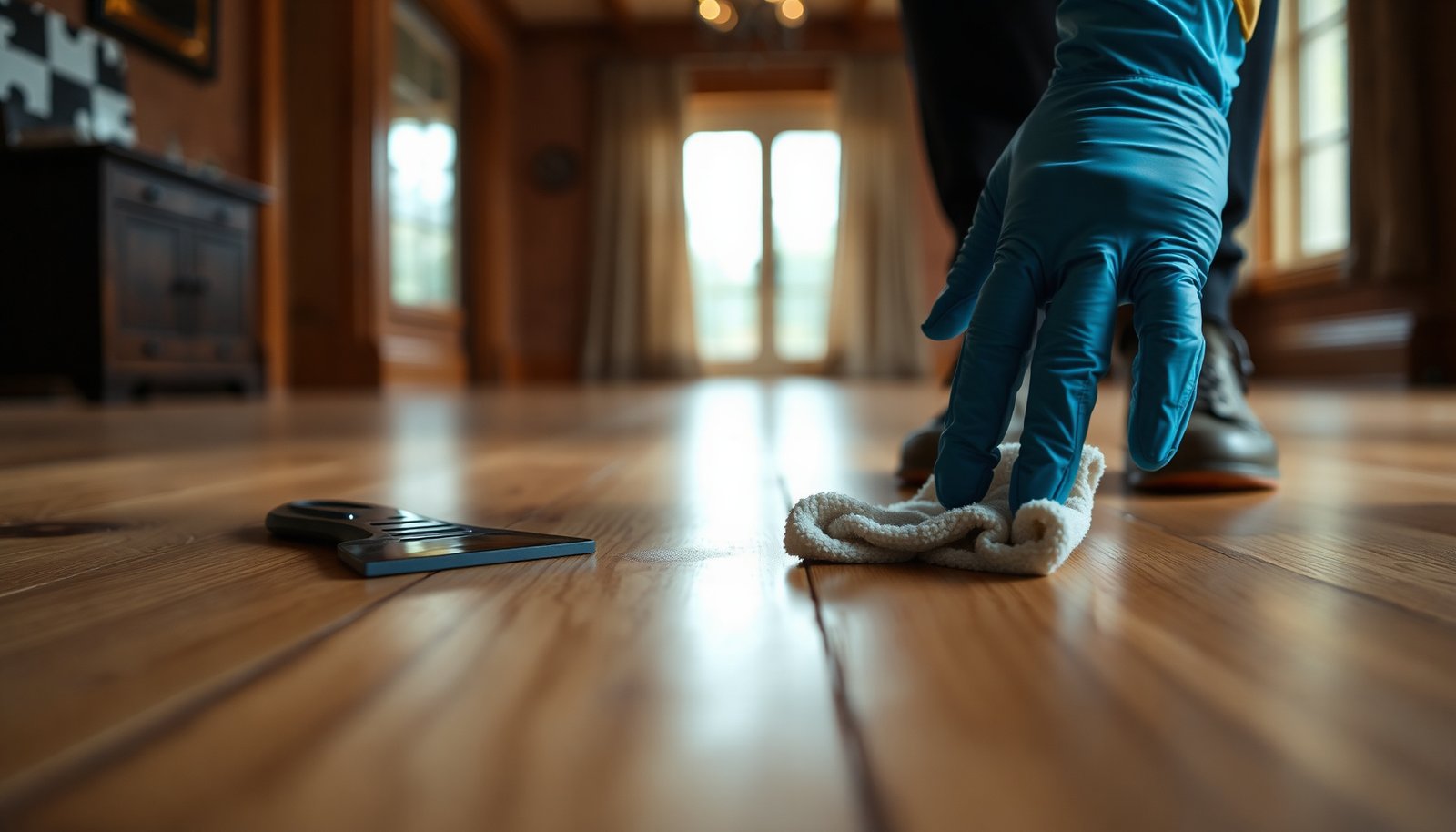

Safely cleaning thinset residue from hardwood floors requires removing the hardened film without scratching or stripping the wood’s finish. With the right approach—soft microfiber cloths, a plastic scraper, and a pH-neutral cleaner—you can tackle most jobs in about an hour, depending on how thick the residue is. Follow the steps carefully and you’ll restore a clean, smooth surface without costly refinishing.




Don’t try to “wash it off” right away—thinset is cement, so the safest approach is careful mechanical removal first, then gentle, pH-neutral cleaning with minimal moisture. Start by lifting the bulk residue with a plastic scraper/razor, then remove the haze with a barely damp microfiber so you don’t soak or etch the wood finish.
If you’ve got thinset splatter or cured grout-like film on hardwood (especially after tile work), this guide is for you. It’s written to help you avoid common finish damage—because the right method depends more on your floor’s finish (sealed/pre-finished vs. unfinished) than on the remover you choose.
Prep first: identify the finish and protect the floor
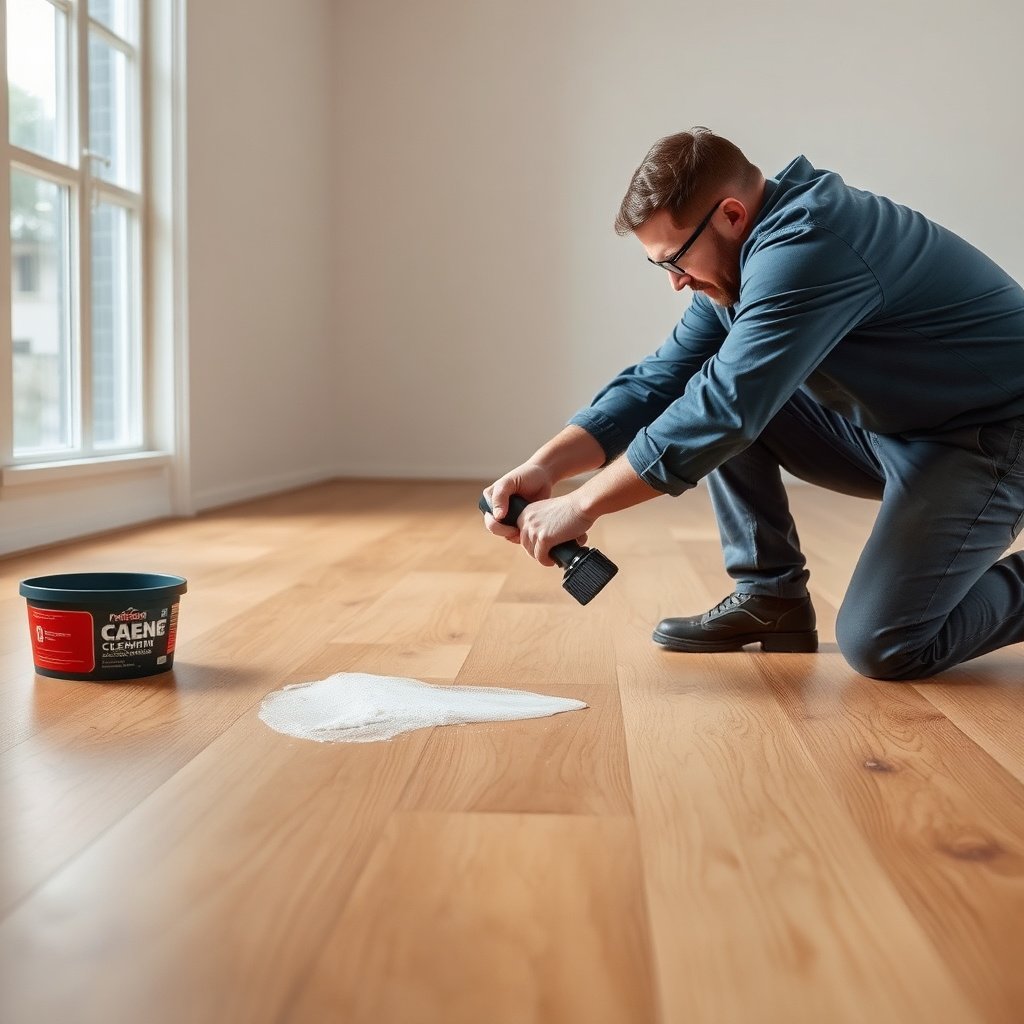
The safest way to clean thinset residue is to start by confirming how your hardwood is finished, because that determines what liquids and even how much friction are acceptable. Once you know whether the surface is sealed (polyurethane/water-based finish) or unfinished, you can plan the least aggressive approach that still removes the cement film.
– Check whether the hardwood is sealed/pre-finished (polyurethane/water-based finish) or unfinished, since many cleaners can dull or stain an unprotected surface.
– Sealed hardwood usually tolerates wiping with pH-neutral products in light amounts, but can still haze if you scrub too hard or re-wet repeatedly.
– Unfinished hardwood (no surface film) is more porous, so thinset residue clean-up should rely more on dry/near-dry mechanical removal and faster, minimal-moisture wipe-downs.
– Protect nearby areas: tape off edges and use a plastic sheet or paper to keep dust and cleaning liquids from spreading.
– Thinset residue cleanup creates fine dust when scraped; that dust can act like an abrasive if it’s allowed to migrate.
– Test anywhere you can’t avoid first (under a cabinet/closet edge): thinset removers can affect shine and color.
– This test is especially important “as of 2026,” because many floors are hybrid products (factory topcoat over a stained substrate) and don’t respond the same way as older, single-stage finishes.
To make this decision faster, here’s a clear sealed-vs.-unfinished comparison for thinset residue cleaning:
| Floor condition | Best first move for thinset residue | What to avoid |
|---|---|---|
| Sealed / pre-finished | Plastic scrape first, then barely damp microfibers | Over-wetting, heavy scrubbing that leaves dull “burnished” spots |
| Unfinished / bare wood | Dry lift + controlled wipes; minimize liquid contact | Soaking, repeated wet passes that darken grain or raise water marks |
| Unknown finish age | Treat as “unsealed” until proven otherwise; test spot | Chemical “shortcuts” without a test patch |
Safe step-by-step removal (start dry, then go lightly damp)
The safest way to remove thinset residue is to change the order: lift the bulk while it’s dry, then clean the haze with minimal moisture. That sequence prevents the cement from smearing deeper into wood pores or spreading into a wider dull patch.
– Dry-lift the bulk: use a plastic scraper/razor at a low angle to remove loose thinset without gouging.
– Keep your blade nearly parallel to the floor so you’re shaving, not digging.
– If the thinset is still “friable,” you may be able to remove most of it without any liquid—this is ideal for hardwood finish protection.
– Remove the haze: wipe with a clean, barely damp microfiber, then switch to a fresh side to prevent re-depositing residue.
– For thinset residue, the “haze” is often a mix of cement dust and fine film that transfers when you drag the same cloth repeatedly.
– Repeat in small passes—stop if you notice finish dulling or smearing, and reassess your cleaner choice.
– As of 2026, many restoration professionals still use this logic because finish failure is often visible within minutes: dulling, cloudiness, or streaking indicates you’re moving too aggressively (or using a chemistry that’s too harsh for that finish).
A key reason for the “start dry” rule is that thinset residue is cement-based and strongly alkaline. According to NIOSH Pocket Guide to Chemical Hazards (Portland cement), cement dust and fresh cement can be strongly alkaline (pH roughly 11–13). That alkalinity can react with certain wood surface films—especially if you spread it with wet wiping instead of lifting it mechanically first.
Choose cleaning solutions that won’t attack wood finishes
The safest cleaner for thinset residue is a pH-neutral, wood-safe option used in small amounts—because the chemistry needs to be gentle even after you’ve removed the bulk material. Avoid “cement dissolvers” that are acidic or otherwise aggressive unless the floor finish can tolerate them.
– Prefer pH-neutral, wood-safe cleaners (or a cleaner specifically labeled safe for your hardwood finish) over strong acids/alkalines.
– If a product doesn’t clearly state pH-neutral (or a narrow pH range), assume it may be too harsh for thinset residue removal on hardwood.
– Use the “least chemistry that works”: apply cleaner to the cloth (not the floor) and keep dwell time short—then wipe clean with water on a separate cloth.
– This technique limits how long alkaline/cement fines can interact with the finish.
– Avoid home “cement dissolvers” that are acidic (like vinegar) or harsh without knowing how they react with your finish.
– Vinegar is acidic, and pH matters. According to NIST (pH scale—logarithmic hydrogen ion activity), each pH unit represents a 10× change in hydrogen ion activity—so pH 2 is about 100,000× more acidic than pH 7.
To keep thinset residue cleaning controlled, follow a simple “two-cloth” method:
1) Cleaner goes on a cloth; you wipe the haze.
2) A second cloth lightly dampened with clean water removes cleaner residue (which also helps prevent streaks).
And if you’re tempted to use stronger solutions, remember that pH is not the only variable—finishes vary widely (urethane, penetrating oil, wax topcoats, and stains). The same thinset residue can behave differently across floors, which is why testing matters.
What can go wrong if you use the wrong tools or liquid
Even if you use a decent cleaner, thinset residue cleanup can still damage hardwood when tools scratch, water swells seams, or chemistry dulls the finish. This section focuses on the failure modes you want to prevent.
– Scratches: metal blades, steel wool, or gritty pads can permanently mark hardwood, especially if the thinset is hard and you’re pressing down.
– Thinset residue often becomes harder as it cures; a blade that “slides” on softer debris can suddenly catch and leave a visible track.
– Swelling/warping: soaking water into seams can cause cupping or gaps—use minimal moisture and dry immediately.
– Wood movement is tied to moisture content. According to USDA Forest Service, Wood Handbook—Wood as an Engineering Material, wood swelling/shrinkage becomes pronounced as moisture content changes beyond the fiber saturation point (commonly around ~25–30% moisture content), and repeated wetting accelerates uneven moisture patterns.
– Finish damage: cement residue, over-wet wiping, or the wrong remover can cloud gloss, soften a finish, or leave a dull patch even after the residue is gone.
– The dull patch is often not “dirt”—it’s a finish surface that has been chemically or mechanically altered. That’s why thinset residue cleaning should stop early when you see change.
Pros/cons of the two most common removal strategies
Here’s a quick comparison so you can choose a method that matches your situation with thinset residue:
| Approach | Pros for thinset residue | Cons / risks |
|---|---|---|
| Mechanical-first (plastic scrape + microfibers) | Lowest finish chemical risk; controlled removal; works well for splatter/haze | Time-consuming for thick cured spots; requires careful technique to avoid scratches |
| Chemical-first (thinset dissolvers) | Can loosen stubborn residue faster | Higher chance of finish dulling/staining; higher risk if finish is unknown; can spread residue if not controlled |
Verdict/tip: use gentle mechanics and controlled moisture (skip if unsure)
This is usually workable for small spots or light haze—especially when you remove the bulk first and avoid soaking. The downside is that cured thinset can be stubborn, and aggressive removal (scrapers, stronger chemicals) can cost you your finish—so when you can’t clearly test safely, hiring a flooring professional is often the better call.
Who this advice fits best is DIYers dealing with thinset splatter, dust-film, and grout-like haze after tile work. If your thinset residue is extensive, the finish is unknown/very old, or you already see dulling spreading, the cost of “one more attempt” can outweigh the savings.
Who should skip DIY: if the residue covers a large area, the finish is unknown/very old, the floor is unsealed, or you see finish damage starting to spread.
Quick checklist (scan/save):
| Step | What to do | Avoid |
|---|---|---|
| 1 | Protect edges; clear dust | Let residue grind into the floor |
| 2 | Lift bulk with a **plastic** scraper/razor | Metal blades, steel wool, abrasives |
| 3 | Wipe with **barely damp** microfiber | Soaking, puddles, repeated wet mopping |
| 4 | Use **pH-neutral / wood-safe** cleaner (test first) | Strong acids/alkalines, unknown “cement dissolvers” |
| 5 | Dry and inspect often | Continuing if the finish dulls |
Frequently Asked Questions
What is the safest way to remove thinset residue from hardwood floors?
The safest approach is to use the gentlest method first: dry scrape any loose buildup, then clean the remaining thinset with a pH-neutral cleaner and warm water. Avoid harsh acids or abrasive pads that can dull or etch the wood finish and leave permanent haze. If residue is still stuck, soften it with a minimal amount of manufacturer-recommended tile-removal solvent (or a thinset-specific remover) and work slowly to prevent moisture damage.
How do I clean thinset haze or grout film from hardwood without damaging the finish?
Start by testing a small, hidden area with a damp microfiber cloth and a pH-neutral floor cleaner to see if the residue lifts without clouding. For light haze, you can often remove it by repeated gentle wiping, followed by a clean-water rinse and thorough drying. If haze persists, use a specialized “thinset/grout film remover” formulated for floors, applied sparingly and immediately wiped away—never soak the hardwood.
Why should I avoid using vinegar, muriatic acid, or wire brushes on hardwood?
Thinset residue may require chemical or mechanical removal, but acidic cleaners like vinegar or muriatic acid can damage the polyurethane or varnish coating and can discolor certain wood species. Wire brushes and scouring pads are abrasive and can scratch the finish, forcing costly refinishing. Using controlled, wood-safe products and soft tools helps protect the hardwood floor’s sheen and integrity.
What’s the best tool and technique to scrape thinset off hardwood floors safely?
Use a plastic razor scraper or a razor blade scraper designed with a guard so you can lift residue without gouging the wood. Keep the blade nearly flat to reduce bite, and remove small sections while the thinset is softened or loosened with a cleaner. After scraping, clean the area with a pH-neutral hardwood cleaner, rinse lightly if needed, and dry immediately to avoid swelling or edge lift.
Which thinset residue remover is safest for hardwood floors, and how should I apply it?
Look for a thinset/grout film remover or adhesive remover labeled “safe for wood floors” or compatible with finished hardwood, and avoid products that contain strong acids or aggressive solvents. Apply with a microfiber cloth or sponge in small sections, let it dwell only as directed, and then wipe thoroughly—don’t allow the chemical to sit long or soak into seams. Finish by cleaning with a pH-neutral solution and drying completely, then assess for any finish haze before continuing.
📅 Last Updated: November 04, 2026 | Topic: How to safely clean thinset residue from hardwood floors? | Content verified for accuracy and freshness.
References
- https://extension.umn.edu/household-cleaning/cleaning-hardwood-floors
- https://www.mapei.com/us/en-us/faqs/how-to-remove-mortar-haze
- Thinset
- https://scholar.google.com/scholar?q=thinset+residue+removal+hardwood+floor Google Scholar
- https://scholar.google.com/scholar?q=mortar+haze+removal+from+wood+floor+finish Google Scholar
- https://scholar.google.com/scholar?q=cement+based+residue+cleaning+wood+finishes+acid+abrasive Google Scholar

[…] and the thinset smear only dulls the blade. With the right softening agent, nylon scraper, and a pH-neutral cleaner, you can loosen the remaining residue without gouging the finish. Plan for about an hour of careful […]
[…] controlled moisture and gentle chemical dissolution, not harsh scraping or soaking. You’ll need a plastic scraper, pH-neutral hardwood cleaner, white vinegar or manufacturer-approved mortar remover, and microfiber […]