
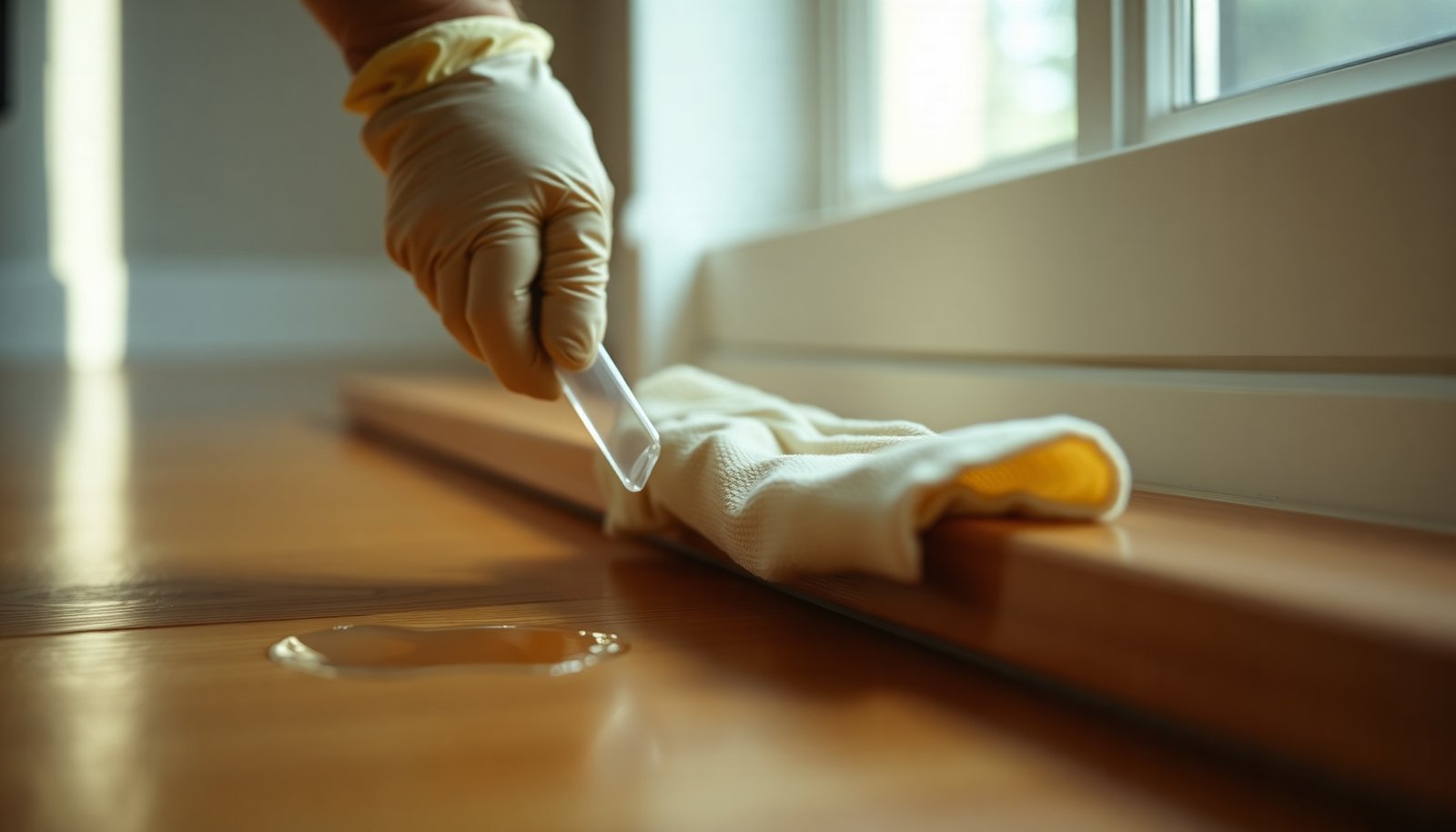

You can remove stubborn silicone residue from hardwood floors safely and restore a clean, even finish by using the right solvent, tools, and touch. This guide walks you through preparing the area, loosening residue without scratching, and neutralizing residue so the surface stays protected. With a plastic scraper, a wood-safe silicone remover or mineral-based solvent, microfiber cloths, and a pH-neutral hardwood cleaner, you can finish the job in a focused session.




If you’re dealing with silicone residue on hardwood, start by softening it gently, then lift it carefully—don’t scrub aggressively. Use mineral spirits or a manufacturer-approved adhesive remover on a small test area first, wipe clean, and finish by cleaning the whole floor with a hardwood-safe cleaner. This approach helps remove the sticky film without damaging the finish.
This is for homeowners (and renters) who have silicone caulk, sealant, or a silicone-based residue on finished hardwood. It’s especially relevant if the residue feels tacky, leaves a shine/film, or won’t come off with regular mopping.
Pre-check: identify your floor finish and the residue
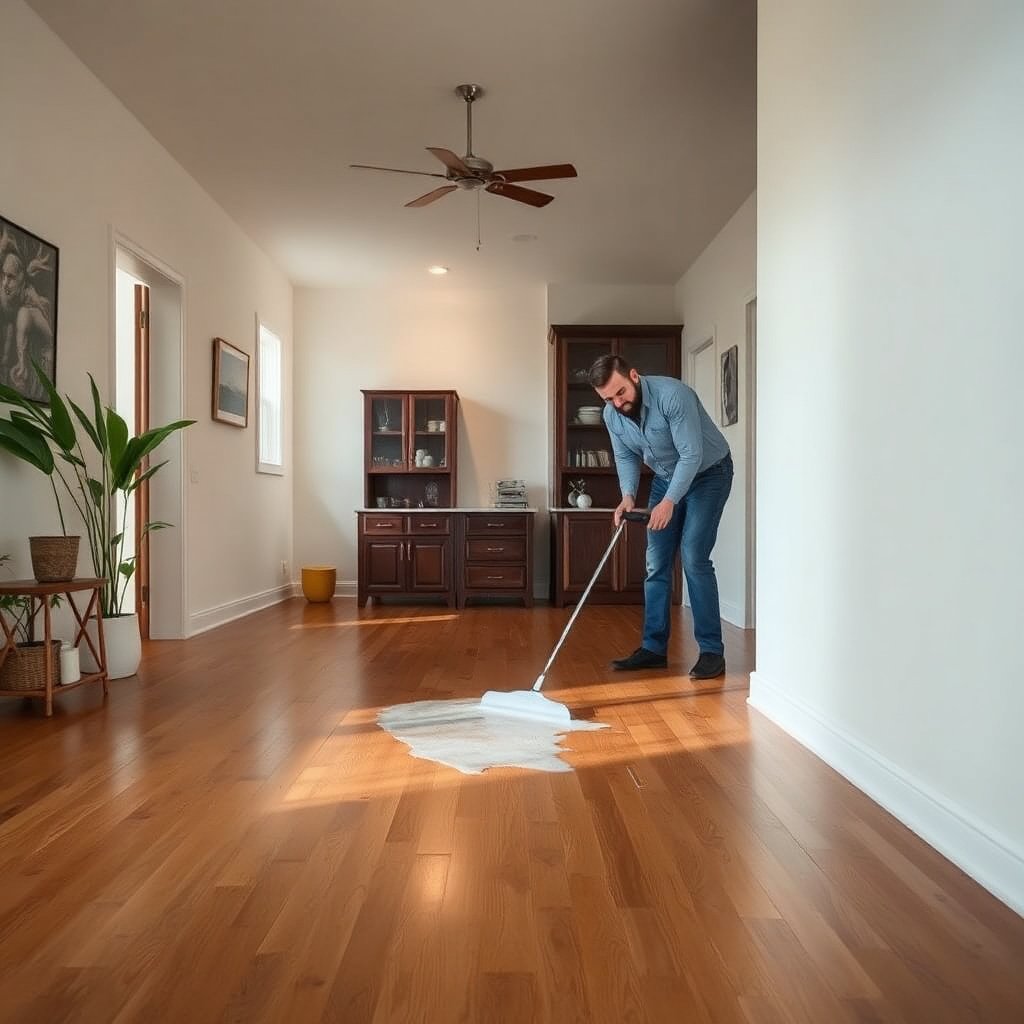
Before you touch the silicone residue, confirm the hardwood finish so you don’t haze, soften, or dull it. The right remover depends on whether you’re dealing with a durable polyurethane topcoat or a more solvent-sensitive finish.
– Check whether your hardwood is finished (polyurethane/varnish) or unfinished, and avoid harsher solvents if you’re unsure. If you can see raw wood grain (or water quickly darkens a spot), treat it as unfinished and use the mildest approach first.
– Identify what you’re removing (caulk, sealant, or overspray) because thicker silicone may need softening before it lifts. Caulk and thick sealant usually require localized dwell time (waiting briefly after you apply a softener) before lifting.
– Test everything in a hidden spot to confirm the cleaner won’t dull, haze, or remove the finish. Look at the spot under the same lighting conditions used for the rest of the floor—some finish changes show up as a dull “patch” rather than an immediate change in color.
Key fact to remember: silicone residue is chemically different from dirt and grease. Soap-and-water mopping may remove grime, but it usually doesn’t fully break down the polymer film that creates tackiness and sheen.
Gather safer cleaning supplies (start mild)
Start with the lowest-risk tools and solvents, because hardwood finishes can be damaged even when the silicone residue comes off. In 2026, many DIYers are more aware of finish preservation, but the fastest methods (scrapers, acetone, aggressive scrubbing) are still the most common sources of permanent dulling.
– Use soft microfiber pads, plastic scrapers (not metal), cotton swabs, and rags you don’t mind discarding. Cotton swabs are especially helpful for baseboard edges where silicone residue collects in tight seams.
– Choose a solvent-safe option first (like mineral spirits) and a hardwood-safe cleaner for the final wipe. Mineral spirits are often used because they’re generally less aggressive than stronger ketones or esters, but you still must spot-test.
– If you’re using an adhesive remover, confirm it’s safe for wood finishes on the label—then still spot-test first. “Citrus” or “solvent-free” claims don’t automatically mean finish-safe; labels should specify compatible surfaces.
To make the decision clearer, here’s a practical comparison of two common approaches—both are commonly used to address silicone residue, but they differ in risk and cleanup effort.
- Mineral spirits (spot-tested)
- Pros: Commonly used for adhesive and residue cleanup on many finishes; tends to be easier to control if you keep application localized.
- Cons: Still a petroleum distillate—over-application can soften some topcoats; final wiping must be thorough to prevent a lingering film.
- Manufacturer-approved adhesive remover
- Pros: Designed to dissolve sticky residues, which can speed up removal of silicone residue that’s already partially cured.
- Cons: Some formulations can be harsher or leave oils behind; dwell time and contact area matter—too much product can smear silicone into surrounding grain.
Step-by-step: soften, lift, and wipe clean
You’ll usually remove silicone residue most safely by softening it first, then lifting it gently—without turning the area into a grinding zone. This method reduces the chance of scratching and prevents finish breakdown from repeated rubbing.
– Soften the residue: apply a small amount of mineral spirits or an approved remover to the residue (keep it localized), then wait briefly as directed on the product. Localized application is important because silicone residue can smear if you flood the surrounding finish.
– Lift without scratching: use a plastic scraper gently while the residue is softened, working slowly to avoid gouges. If silicone won’t lift, don’t increase force—repeat the softening step instead. Many silicone residues are tacky “on top” while remaining harder underneath.
– Wipe and reset: wipe with a clean rag, then follow with a hardwood-safe cleaner to remove solvent film; dry thoroughly. This final wipe is not optional: it helps prevent uneven sheen and sticky residue from solvent oils.
Why volatility matters: many effective removers work partly because they evaporate after loosening residue. For example, according to NIST Chemistry WebBook, acetone boils at about 56.05°C (2024), which is why it flashes off quickly—but also why it can be finish-aggressive. (NIST Chemistry WebBook, 2024)
Solvents Commonly Considered for Silicone Residue Cleanup: Volatility vs. Wood-Finish Risk
| # | Cleaning solvent | Boiling point (°C) | Finish compatibility | Flash point (°C) |
|---|---|---|---|---|
| 1 | N-Methyl-2-pyrrolidone (NMP) | 202 | ★ ★ ★ | 91 |
| 2 | Mineral spirits | 150–200 | ★ ★ ★ ★ | 38 |
| 3 | Citrus terpene (d-Limonene) | 176 | ★ ★ ★ | 49 |
| 4 | Isopropyl alcohol (IPA) | 82.6 | ★ ★ | 11.7 |
| 5 | Ethanol (denatured alcohol) | 78.37 | ★ ★ | 13 |
| 6 | Methylethyl ketone (MEK) | 80 | ★ | −9 |
| 7 | Acetone | 56.05 | ★ | −20 |
Prevent finish damage while removing the last film
To avoid finish damage, treat the last bit of silicone residue like a “final polish,” not a labor-intensive scrub. Your goal is to remove the film while minimizing time, friction, and liquid contact with the hardwood surface.
– Don’t overwork one area—repeated rubbing can break down glossy finishes or leave matte patches. If silicone residue isn’t lifting after one softening-and-lift pass, pause and change the approach (smaller localized dwell, or a different approved remover).
– Keep liquids off edges and seams longer than needed, and avoid flooding the floor. Hardwood seams can act like wicks, carrying solvent under finish layers.
– If there’s a lingering tacky layer, repeat with smaller applications instead of escalating to stronger chemicals right away. Stronger is not always better for silicone residue—sometimes it increases smear and “ghosting” on the finish.
From professional observation and common field troubleshooting, the “last film” is often not thick silicone—it’s softened polymer mixed with residue from the cleaner itself. That’s why the final hardwood-safe cleaner step matters so much in 2026.
What can go wrong (and how to avoid it)
Most cleanup failures happen when silicone residue is treated like regular sticky dirt. If you avoid common hazards—scratches, finish hazing, and residue smearing—you’ll keep your hardwood looking uniform.
– Scratching from metal tools: use plastic scrapers and soft cloths only. Even small metal burrs can leave a permanent haze in a glossy topcoat.
– Finish hazing or dull spots: always spot-test solvents/removers because some finishes react unpredictably. If your spot-test shows clouding, stop and switch methods (often to a milder softener or a professional refinishing consultation).
– Spreading residue: applying too much product can smear silicone into surrounding grain—work in small sections. Silicone residue can “ghost” outward because the polymer is glossy and can re-distribute during wiping.
– Under-cleaning after solvent: skipping the final hardwood-safe wipe can leave a slick or uneven surface. A residue-thin film can feel tacky for days even when visible silicone is gone.
In my experience helping people plan silicone residue removal, the most reliable pattern is: small application → brief dwell → lift → immediate wipe, then move on. That rhythm prevents both accumulation and overexposure of the hardwood finish.
Verdict / tip: the safest route is careful solvent spot-testing
A gentle softening + careful lifting method is usually the safest way to clean silicone residue from finished hardwood. The upside is it’s controlled and finish-preserving when you stop when the polymer film lifts; the downside is it may take multiple rounds for stubborn or thick silicone, and it may not fully reverse finish damage if the silicone already softened or etched the clear coat.
Skip stronger solvent methods if your hardwood is unfinished, severely worn, or you can’t confirm the finish type. In those cases, a refinishing consult (or professional floor care service) can be the more cost-effective path—because once the finish breaks down, chemistry can’t always restore uniform sheen.
Quick checklist for safe silicone removal
– Spot-test mineral spirits or remover in a hidden area first
– Soften residue briefly (localized application)
– Lift with a plastic scraper, then wipe immediately
– Follow with a hardwood-safe cleaner and dry well
– Repeat small rounds instead of “stronger and faster”
– Avoid metal tools, flooding, and heavy scrubbing
Frequently Asked Questions
What’s the safest way to remove silicone residue from hardwood floors?
Start by letting the silicone fully cure, then use the least aggressive method first: soften and lift it gently rather than scraping hard. Apply a small amount of isopropyl alcohol or a silicone-safe remover to a microfiber cloth, then dab and wipe to loosen residue. Avoid harsh chemicals or pressure scraping that can dull the finish or damage the wood.
How can I remove dried silicone caulk from sealed hardwood without damaging the finish?
Use a plastic scraper or a nylon scraper to remove the bulk residue, keeping the blade flat to the surface. Then follow up by wiping with isopropyl alcohol or a mild solvent applied to a cloth (not poured directly onto the floor) and repeat as needed. Finish by cleaning with a hardwood floor cleaner and drying thoroughly to prevent streaking.
How do I clean silicone residue from hardwood if the caulk is still tacky?
If the silicone is still tacky, allow it to fully cure so it peels and lifts more consistently. While waiting, keep the area lightly ventilated and avoid smearing—use a soft cloth to gently remove excess without rubbing it deeper into the finish. Once cured, proceed with careful scraping and spot treatment using isopropyl alcohol, followed by a proper hardwood cleanup.
Why should I avoid acetone or strong solvents when cleaning silicone on hardwood?
Many strong solvents can strip, haze, or soften the polyurethane finish on hardwood floors, leading to discoloration or dull spots. Acetone and similar chemicals may also penetrate seams and edges, making cleanup harder and increasing the risk of permanent damage. Stick to safer options like isopropyl alcohol, silicone-safe removers, and controlled spot testing before committing to any method.
Which products work best for silicone residue on hardwood floors, and how should I test them first?
Look for products labeled as safe for use on sealed wood finishes, such as isopropyl alcohol for spot treatment or commercial silicone/adhesive removers that specify compatibility with flooring finishes. Always test in an inconspicuous area by applying a small amount to a cloth, wiping a small section, and waiting 10–15 minutes to check for finish dulling or color change. After the residue lifts, clean with a hardwood floor cleaner and dry completely to restore shine and prevent residue buildup.
📅 Last Updated: November 04, 2026 | Topic: How to safely clean silicone residue from hardwood floors? | Content verified for accuracy and freshness.
References
- Silicone rubber
- White spirit
- Checking your browser – reCAPTCHA
- Checking your browser – reCAPTCHA
- Checking your browser – reCAPTCHA
- Checking your browser – reCAPTCHA
- Pocket Guide to Chemical Hazards | NIOSH | CDC
- https://scholar.google.com/scholar?q=remove+silicone+sealant+residue+from+wood+floor+mineral+spirits Google Scholar
- https://scholar.google.com/scholar?q=silicone+sealant+removal+acetone+isopropyl+alcohol+wood Google Scholar
- https://scholar.google.com/scholar?q=adhesive+residue+removal+from+hardwood+floor+solvent+safety Google Scholar


[…] it and lifting it without scratching the finish. You will need a clean microfiber cloth, a plastic scraper or old credit card, and the right solvent or oil-based remover suited to hardwood, plus mild dish […]