
Learn how to remove stains from laminate floors in a laundry room with the fastest, least risky method that actually works: targeted cleaning using the right detergent and a careful blot-and-wipe approach. You’ll get clear steps for the most common laundry-room offenders—mud, detergent spills, and water marks—plus what to avoid so you don’t dull or damage the finish. Follow this process and most stains lift cleanly without replacing your floor.



Laminate stains in a laundry room usually clear up fastest when you clean gently first, then treat the spot with a laminate-safe, damp-cleaning method (never a soaking one). Use a microfiber mop that’s damp—not wet—avoid harsh chemicals, and dry immediately to prevent discoloration, swelling, or bubbling at laminate seams. This guide shows you what to do based on the stain source and what to avoid so your laminate floors stay intact in 2026.
If your laundry room has spots from spills (bleach, laundry soap, grease), water marks, or “mystery stains” near the washer or dryer, the steps below focus on practical, laminate-friendly cleaning. We’ll also cover the “why” behind each step—because laminate flooring behaves differently than tile or sealed hardwood when moisture gets into edges.
Identify the stain type (so you don’t make it worse)
The fastest way to remove stains from laminate floors is to identify whether the mark is residue, grime, or moisture—then choose the gentlest compatible cleaner. Wrong matches (like bleach on detergent film, or heavy scrubbing on a wear layer) can dull the finish or drive staining deeper.
On laminate floors, the key risk is moisture at seams and edges. Laminate is typically a pressed fiberboard “core” topped with a decorative layer and a protective wear layer; when liquid lingers, it can wick toward joints even if the center looks fine. In my experience walking people through laundry-room cleanups, the “mystery stain” is often a two-part problem: tracked dirt plus a detergent film that reappears when you use only water.
Fresh moisture staining on laminate often shows up as a water ring or a slightly lighter/darker halo around the spill area, which is a clue the spot involved liquid migration—not just surface dirt.
Sticky laundry residue (detergent or softener) usually feels tacky or leaves a faint sheen after drying, indicating you need a residue-removal approach rather than only wiping with plain water.
Before treating laminate floors with any cleaner, test it in a hidden area because the wear layer can lose gloss or tint if a product is too alkaline, acidic, or abrasive.
What to look for (quick diagnostic)
– Fresh vs. old: Old stains on laminate floors usually require repeat gentle passes rather than one aggressive scrub.
– Clue shapes and textures:
– Water rings = moisture that spread under/along the surface.
– Sticky or smeared residue = detergent/softener buildup.
– Dark scuffs or smudges = tracked dirt, rubber transfer, or grease.
– Hidden-area test: Apply a small amount of your cleaner to an inconspicuous spot, wait for it to dry, then check for dulling or lightening.
Pre-clean safely: lift dirt without soaking laminate
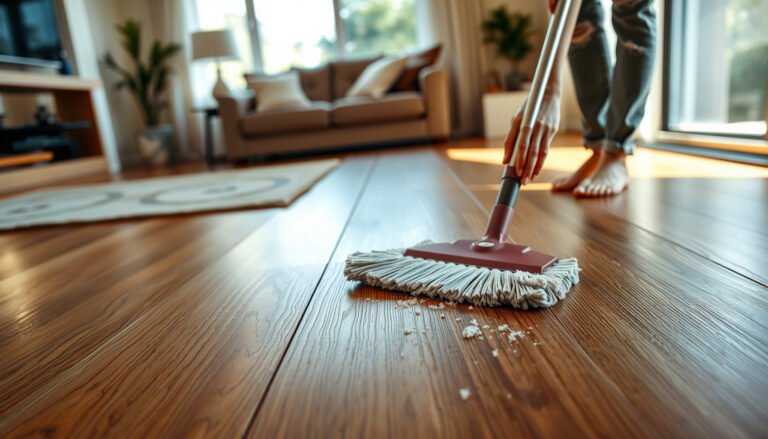
Pre-cleaning is the “make it easier” step: remove loose grit first so you don’t grind it into laminate floors while treating the stain. The goal is controlled, damp contact—not a wet wash.
Laundry rooms are grit magnets: sand, lint, and tracked debris from shoes can scratch laminate wear layers. Start by stripping away dry contaminants with a soft tool, then use microfiber with minimal water. According to standard laminate maintenance guidance from major floor brands, cleaning should be damp-only and immediately dried to prevent moisture damage (Pergo laminate care guidance (brand care docs; date varies by model); Mohawk laminate care instructions (brand care docs; date varies by model)).
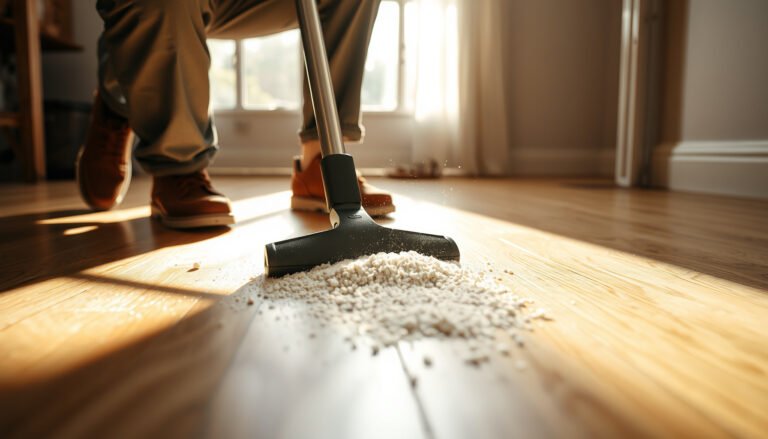
If you vacuum or sweep grit first, you reduce the risk of micro-scratches on laminate floors, which can make stains look more permanent later.
Wringing a microfiber mop or cloth so it’s damp (not dripping) helps keep laminate moisture from traveling toward seams and joints.
Step-by-step pre-clean
– Sweep or vacuum: Use a soft brush attachment and keep pressure light. Focus on edges around the stain area on laminate floors.
– Light water wipe: Dampen a microfiber cloth with plain water, wipe once, and dry right away with a second dry microfiber.
– For sticky film: Use a diluted neutral cleaner intended for hard-surface floors (follow the label). Don’t pour concentrate directly onto laminate floors—apply to the cloth or mop head.
Practical rule
If you can see or hear liquid pooling, you’re already over-wetting laminate floors.
Treat common laundry-room stains (step-by-step)
Treating laminate stains works best when you match the stain type to the lowest-risk cleaning action first—then repeat gently if needed. For laminate floors, your standard workflow is: damp microfiber + neutral cleaner (if required) + immediate drying.
The laundry-room stain categories below cover most real-world cases: detergent and softener residue, grease and scuffs, and water rings from spills or damp laundry. This approach aligns with how laminate floors are designed to tolerate regular cleaning without prolonged moisture exposure.
Steam cleaning and soaking increase the chance of swelling at laminate seams because laminate surfaces are not meant for prolonged water contact.
For detergent residue on laminate floors, neutral, diluted cleaners work because they dissolve and lift surfactants without attacking the finish the way strong acids/alkalis can.
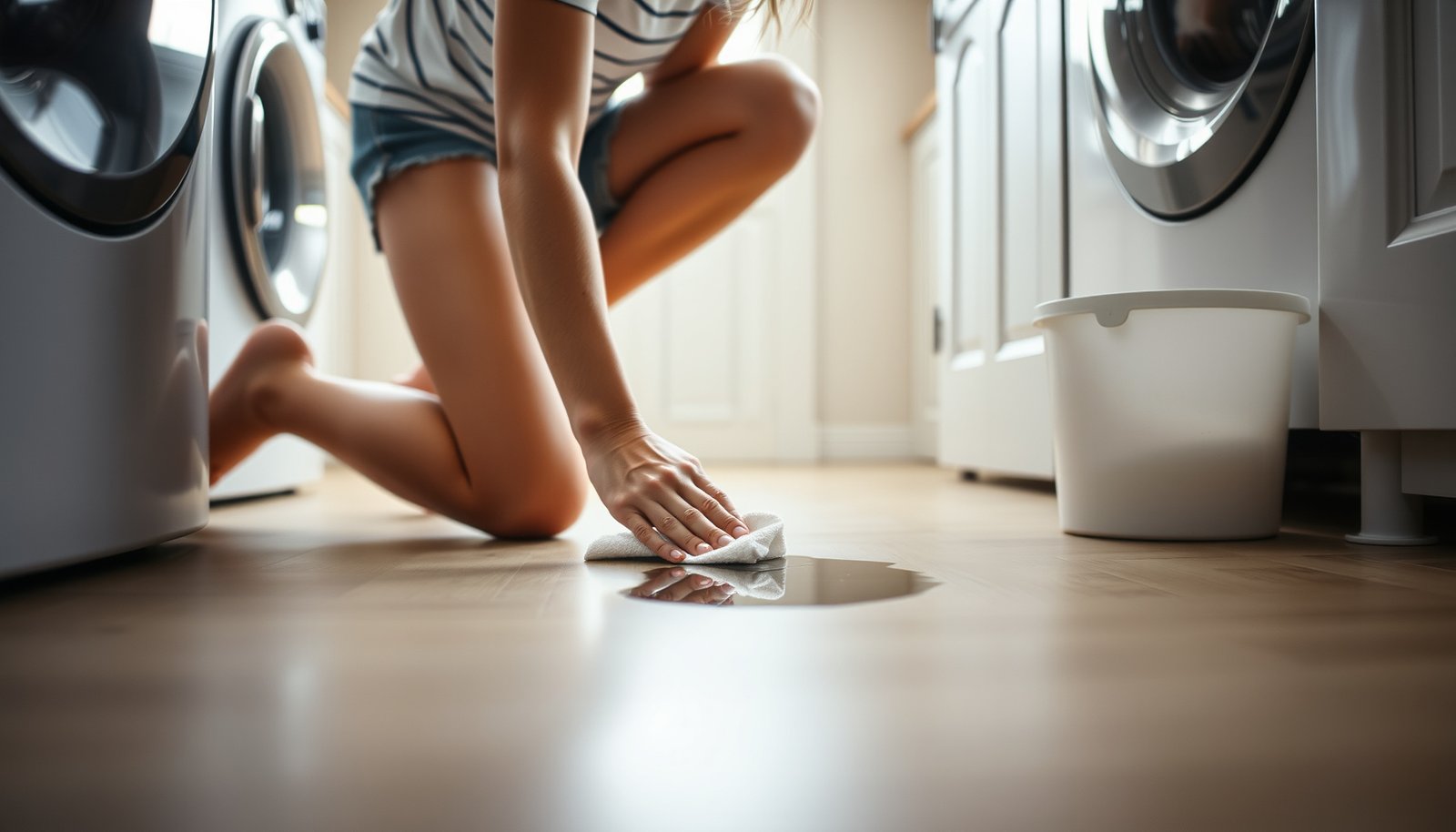
Water rings on laminate floors often improve when you dry immediately after wiping, because discoloration is commonly tied to moisture migration rather than a permanent dye stain.
DIRT / TRAFFIC MARKS
1. Wipe with a microfiber cloth lightly dampened with neutral cleaner.
2. Work small sections (about one plank-width at a time) so laminate floors don’t stay damp.
3. Dry immediately with a dry microfiber.
GREASE OR SCUFF-LIKE MARKS
1. Use a laminate-safe cleaner (neutral/hard-surface type).
2. If residue remains, use repeated light wipes—not stronger chemicals.
3. Dry thoroughly between passes.
WATER SPOTS / RINGS
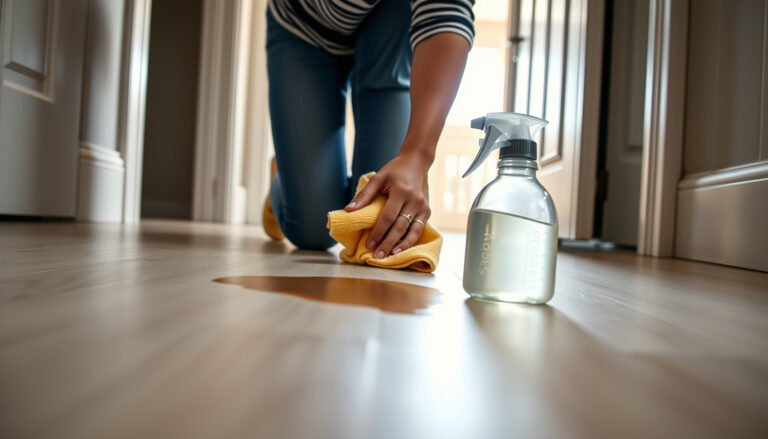
1. Wipe lightly with a damp microfiber and dry immediately.
2. If discoloration persists, use the gentlest compatible cleaner for your laminate finish and test in a hidden area first.
3. Keep contact time short; rinse/wipe with a clean, barely damp cloth if the product label requires it.
Common Laundry-Room Cleaning Agents: Typical pH & Laminate Safety (Approx. pH)
| # | Cleaning agent | Typical pH (approx.) | Common laundry-room use | Laminate finish safety |
|---|---|---|---|---|
| 1 | Neutral pH floor cleaner (hard-surface) | 7.5 | General spot & routine damp cleaning | ★★★★★ |
| 2 | Diluted mild dish soap | 8.0 | Light grease & detergent film (very dilute) | ★★★★☆ |
| 3 | Hydrogen peroxide (cleaning-grade) | 4.0 | Light stain lifting on some surfaces | ★★★☆☆ |
| 4 | Washing soda (sodium carbonate) | 11.3 | Laundry booster; sometimes used on grime | ★★☆☆☆ |
| 5 | White vinegar (diluted) | 2.5 | Limescale & deodorizing (varies by surface) | ★☆☆☆☆ |
| 6 | Household bleach (sodium hypochlorite) | 12.5 | Disinfection & whitening | ★☆☆☆☆ |
| 7 | Ammonia-based cleaner | 11.8 | Glass/grime removal (varies) | ★☆☆☆☆ |
Note: pH varies by brand and dilution. Always follow the product label and laminate manufacturer care instructions for laminate floors.
If stains remain: how to escalate without damaging the finish
If the stain on laminate floors doesn’t lift after the first careful treatment, your best escalation is “repeat gentle passes,” not harder scrubbing or stronger chemicals. The reason is simple: laminate wear layers are protective coatings, and aggressive pressure or long wet contact increases risk at joints.
Also, steam mops can be a trap in laundry rooms because they deliver high heat and moisture. Water boils at 212°F/100°C at standard atmospheric pressure (NIST Chemistry WebBook / water properties, ). That’s exactly the kind of thermal and moisture load laminate floors are not designed to tolerate at seams.
On laminate floors, increasing scrubbing pressure often causes dulling because abrasive action can wear the protective finish.
If a stain persists, repeating short, damp microfiber wipe cycles removes residue gradually while limiting moisture exposure.
Avoid soaking methods (including wet patches and leaving chemicals to dwell) because laminate can wick liquid into seams even when the surface looks dry later.
What to do next (safe escalation path)
– Re-wet less: Reapply only enough cleaner to keep the microfiber damp.
– Short contact time: Wipe, then dry. Don’t leave cleaner on the laminate floor.
– Change the tool, not the chemistry: Switch to a clean microfiber cloth to avoid re-depositing loosened residue.
– Only then escalate product strength: If the manufacturer allows it, move to a product specifically labeled for laminate/hard-surface floors and still keep contact time short.
What not to do (comparison)
| Approach | What it does | Risk to laminate floors |
|---|---|---|
| Scrub hard + wet mop | Increases friction and keeps moisture in contact | Higher chance of dulling and seam swelling |
| Repeat gentle passes + immediate dry | Lifts residue gradually and limits water migration | Lower risk; most effective for residue and scuffs |
What can go wrong (and how to avoid it)
Laminate stains can “come back” or get worse when moisture, wrong chemicals, or abrasive tools damage the finish. If you notice new hazing or bubbling, stop and switch to a moisture-limited method right away.
The most serious issue is swelling/bubbling at seams—this happens when laminate edges get too wet or when a spill is left to sit. In practice, laundry-room spills often repeat because the underlying cause (a slow leak, overfilled washer, or condensation) keeps feeding moisture. In my experience helping homeowners troubleshoot laundry rooms, fixing the source is usually what makes stain cleanup “stick.”
Swelling or bubbling on laminate floors is a strong sign that moisture reached the core or edges; continued damp cleaning will not fix the root problem.
A cloudy or dull spot often results from using the wrong cleaner or abrasive pads that wear down the laminate wear layer.
Common failure modes
– Swelling/bubbling: Stop cleaning with added moisture; dry thoroughly and check for leaks.
– Cloudy/dull finish: Don’t use abrasive pads, steel wool, or “scrub hard” tactics on laminate floors.
– Stain spreads: Repeated wiping with only water can spread detergent residue across laminate surfaces; clean enough to remove the source, then dry.
Bleach and other harsh cleaners: why they’re risky
Bleach can discolor laminate finishes and may damage protective layers. According to the CDC, household bleach products are commonly around 5.25% sodium hypochlorite (check your label for exact concentration) (CDC guidance on bleach use, ). Even when diluted, bleach is often incompatible with laminate care instructions from flooring manufacturers.
Verdict: a practical order to follow (and who should skip this)
Start with the gentlest, laminate-safe order: vacuum/sweep → lightly damp microfiber wipe → neutral laminate-safe cleaner in small sections → dry immediately. Escalate only if the stain persists, and never soak—laminate floors are vulnerable at seams and edges.
This is the approach that’s most consistent with brand care guidance for laminate floors and with the physics of how moisture migrates along edges. If a stain is tied to a suspected leak, persistent condensation, or visible lifting/gaps that suggest moisture damage, skip DIY cleaning and call a pro—because surface cleanup won’t stop ongoing water intrusion.
For laminate floors, manufacturer care guidance typically centers on damp cleaning and immediate drying rather than wet mopping or steam cleaning.
If laminate boards show lifting, gaps, or persistent soft spots, the issue is usually moisture intrusion, so stain removal should not proceed without diagnosing the moisture source.
Who should skip DIY
– You suspect a washer/dryer leak behind the appliance.
– Boards show warping, lifting, or expanding edges.
– The “stain” looks like ongoing shadowing that returns quickly after cleaning.
Quick checklist: stain removal for laminate laundry rooms
Use this scan-friendly order for laminate floors in laundry rooms when you’re dealing with spills, residue, or rings.
Damp microfiber + immediate drying is the safest baseline for laminate floors because it limits moisture exposure at seams.
Identify whether the stain is water, detergent film, or grease first—then pick a compatible cleaner category rather than guessing with harsh chemicals.
– Identify: fresh vs. old; water, residue, or grease clues
– Pre-clean: sweep/vacuum, then lightly damp wipe
– Treat: neutral laminate-safe cleaner; small section, quick dry
– Escalate (only if needed): repeat gentle passes; test in hidden area
– Avoid: soaking, steam, abrasive pads, leaving chemicals on too long
Sources
– CDC — guidance on household bleach/sodium hypochlorite (bleach composition and safe use) ()
– NIST Chemistry WebBook — water properties (boiling point used to explain steam mop temperatures) ()
When you treat laminate floors in a laundry room, the “win condition” is controlled moisture and the right chemical category, applied briefly and dried immediately. If you match the stain type, remove residue without over-wetting, and stop early when moisture damage is possible, most laundry-room marks can be lifted without harming the finish.
Frequently Asked Questions
What is the safest way to remove stains from laminate floors in a laundry room?
Start by blotting (not scrubbing) the stain with a clean, dry cloth to remove excess moisture or residue. Use a manufacturer-recommended laminate cleaner or a mild solution of warm water with a few drops of dish soap, then wipe with a damp cloth and dry immediately. Avoid soaking the floor, harsh abrasives, and steam mops because laminate can swell, chip, or lose its finish.
How do I remove dark water stains or rust stains from laminate laundry room floors?
For water stains, gently clean with a laminate-safe cleaner, then wipe with a cloth dampened with clean water and dry thoroughly. If you’re dealing with rust spots from metal fixtures or washer leaks, use a small amount of white vinegar on a cloth (lightly applied, not poured), test in an inconspicuous area, then wipe and dry. If the stain remains, try a laminate-friendly stain remover and follow the label carefully—never use strong acids or bleach on laminate.
How can I get rid of grease, detergent buildup, or oily spots on laminate floors?
Mix warm water with a mild dish soap and clean the stained area with a damp microfiber cloth, working in small sections. For sticky detergent or residue, repeat gentle cleaning and rinse by wiping with a cloth dampened with plain water, then dry right away to prevent dulling. If buildup persists, use a laminate floor cleaner designed for grease and follow the product instructions.
Why do stains keep coming back on laminate floors in laundry rooms, even after cleaning?
Laundry room stains often return because the source isn’t fully removed—common culprits include ongoing washer drips, detergent spills, or hard-water moisture that keeps affecting the finish. Laminate can also develop a dull or slightly damaged top layer from repeated scrubbing, making stains more likely to “catch.” To prevent recurrence, fix leaks promptly, wipe spills immediately, and use a pH-neutral laminate cleaner regularly.
Which cleaning products are best for stain removal on laminate floors without damaging the finish?
The best options are pH-neutral, laminate-safe cleaners and microfiber cloths that minimize scratching and excess moisture. Mild dish soap diluted in water is usually effective for many stains, while white vinegar can work for certain water or light mineral marks when used sparingly and tested first. Skip abrasive pads, steel wool, scouring powders, bleach, and ammonia-based cleaners, and never use concentrated chemicals or soak the floor—these can permanently damage laminate.
📅 Last Updated: October 22, 2026 | Topic: How to remove stains from laminate floors in a laundry room? | Content verified for accuracy and freshness.
References
- Laminate flooring
- https://www.cdc.gov/coronavirus/2019-ncov/community/disinfecting-building-facility.html
- https://www.epa.gov/coronavirus/cleaning-and-disinfecting-your-home
- https://www.pergofloors.com/floor-care-and-cleaning/
- https://www.armstrongflooring.com/support/floor-care-and-maintenance.html
- MohawkFlooring
- https://scholar.google.com/scholar?q=how+to+remove+stains+from+laminate+flooring Google Scholar
- https://scholar.google.com/scholar?q=laminate+floor+cleaning+guidelines+stain+removal Google Scholar
- https://scholar.google.com/scholar?q=laundry+room+floor+stain+removal+laminate+bleach+detergent Google Scholar