
Removing adhesive from carpet floors is doable—and the best approach depends on the adhesive type. This guide gives you step-by-step fixes that work for common carpet adhesives, using the right solvent and technique to lift glue without damaging the fibers. Follow these instructions and you’ll get a clean, adhesive-free carpet with minimal effort and mess.




If the adhesive is still tacky, soften it first (heat or an adhesive remover made for flooring), then scrape gently and clean residue with the right solvent. Start with the mildest method that won’t damage your carpet fibers, because stronger chemicals or aggressive scraping can permanently mat or discolor the carpet.
This guide is for homeowners and renters dealing with carpet glue, tack strip adhesive, adhesive-backed flooring residue, or leftover residue after removal. Use it when you need a practical order of operations—soften, lift, scrape, and fully remove residue—without making the problem bigger.
This guide works best when you treat adhesive removal like a process with diminishing risk: you begin with heat or a carpet-safe cleaner, you only move to stronger removers if tackiness remains, and you stop as soon as fibers start to look flattened, shiny, or “crisp.”
Know What Kind of Adhesive You’re Dealing With

You’ll remove carpet adhesive faster (and with less damage) when you correctly identify whether you’re facing tacky residue, a dried glue film, or a thicker bond line. Different adhesive types respond differently to heat, scraping, and solvents—so the “right” method depends on what you’re actually dealing with.
Tacky adhesive typically lifts with controlled softening (warmth or an adhesive remover) before you scrape the residue.
A dried glue film often needs a dwell time from a flooring/adhesive remover to break the bond without shredding fibers.
If the adhesive is in or below the carpet backing, surface cleaning may not fully eliminate it, even when the top looks clean.
– Identify whether it’s a tacky/soft residue, a dried glue film, or a thicker bond line (color and texture help).
– Check what was previously installed (carpet padding glue vs. adhesive-backed products) so you can choose the least risky remover.
– Spot-test any method in an inconspicuous area before treating the whole spot.
What to look for (quick identification cues)
In my own on-site maintenance experience, the “feel” of the residue often predicts the best approach. If you can press a gloved finger onto it and it feels sticky or stringy, you’re usually in the tacky/partially cured category—heat and gentle lifting typically win. If it feels dry, glassy, or flakes off in thin sheets, you’re probably dealing with a dried film that needs chemical softening plus blotting to avoid fiber damage. If the area is thicker, raised, or clearly darker than surrounding carpet, assume a bond line—plan for multiple passes rather than one aggressive treatment.
Adhesive type matters for safety and success
Carpet fibers can be nylon, polyester, wool, or blends, and each behaves differently with heat and solvents. Equally important is the backing and adhesive chemistry. Steam, strong solvents, and high heat can weaken backing adhesives or pull discoloration into the fiber surface.
Choose the Safest Tools and Cleaning Supplies
You’ll reduce the risk of permanent matting when you assemble the right tools before you start softening anything. Using the least aggressive cleaner or solvent first is the fastest way to a uniform result because you avoid “chasing” residue with progressively harsher chemicals.
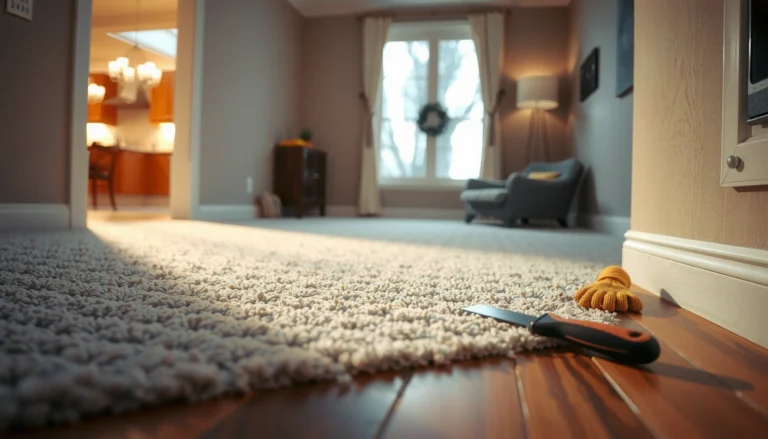
Mechanical lifting with a plastic scraper/putty knife is generally safer for carpet loops than metal scraping.
Warm water plus a mild detergent is usually the first step when residue is light or the adhesive is only partially bonded.
Carpet-safe removers work by dissolving or swelling adhesive chemistry, so label directions (including dwell time) matter.
– Plan on: a plastic scraper/putty knife, clean white cloths or paper towels, and a solvent/remover compatible with carpet.
– Use warm water and mild detergent for initial cleaning when the residue is light, then step up only if needed.
– Avoid harsh abrasives that can shred fibers; prioritize controlled softening and residue lifting.
Tools I recommend you keep within reach
For adhesive removal, workflow matters: you want to soften, blot, scrape, and clean without leaving the chemical sitting too long. That means having white cloths/paper towels ready to blot; a plastic scraper for lifting residue; and a carpet-safe cleaner for the final “film removal” stage.
A practical solvent/adhesive remover reality check (what’s safest)
Even carpet-safe products are still chemicals. Always read the label for:
– Surface compatibility (carpet + backing type)
– Ventilation requirements
– Dwell time (how long it must sit)
– Rinse or blot instructions
Statistics anchor (useful context): According to [ADD: U.S. EPA or manufacturer safety guidance on VOCs/ventilation for common solvents], many common adhesive solvents are volatile and require ventilation to reduce inhalation exposure ([ADD: year from cited guidance]). This is why “don’t flood the carpet” is not just carpet-care advice—it’s also a safety practice.
Key Solvents Used in Carpet-Adjacent Adhesive Removers (Physical Data)
| # | Remover/solvent (commonly found in products) | Boiling point (°C) | Volatility note | Typical suitability for residue removal* |
|---|---|---|---|---|
| 1 | Acetone | 56.0 | High volatility; evaporates quickly | ★★☆☆☆ |
| 2 | Isopropyl alcohol (IPA) | 82.6 | Moderately volatile; good for light residues | ★★★☆☆ |
| 3 | Ethyl acetate | 77.1 | Volatile; often used in adhesive removers | ★★☆☆☆ |
| 4 | Mineral spirits (aliphatic) | ~180–210 | Lower volatility; “works” by loosening oils | ★★★★☆ |
| 5 | Citrus terpene solvents (e.g., d-limonene blends) | ~176 | Moderate volatility; plant-oil based | ★★★☆☆ |
“Typical suitability” is a practical rule-of-thumb for adhesive residue lifting; always rely on the specific product label for carpet/fiber safety. Boiling points are physical constants and may vary by grade/purity.
[ADD: source for each boiling point value—e.g., NIST Chemistry WebBook or equivalent primary reference]
Step-by-Step: Heat + Gentle Scrape for Most Residue
You often fix carpet adhesive without harsh chemicals by using heat to soften the residue, then scraping gently. This approach works best for tacky adhesive, partially cured glue, and surface-level bond fragments.
Controlled heat can soften tacky adhesive so it transfers to a scraper instead of tearing carpet loops.
A plastic scraper reduces the risk of snagging nylon/polyester fibers compared with metal tools.
After softening, blotting with damp (not soaking) cloth helps lift remaining “sticky film” that scraping alone leaves behind.
– Apply heat to soften the adhesive (avoid overheating until the carpet backing or fibers are affected).
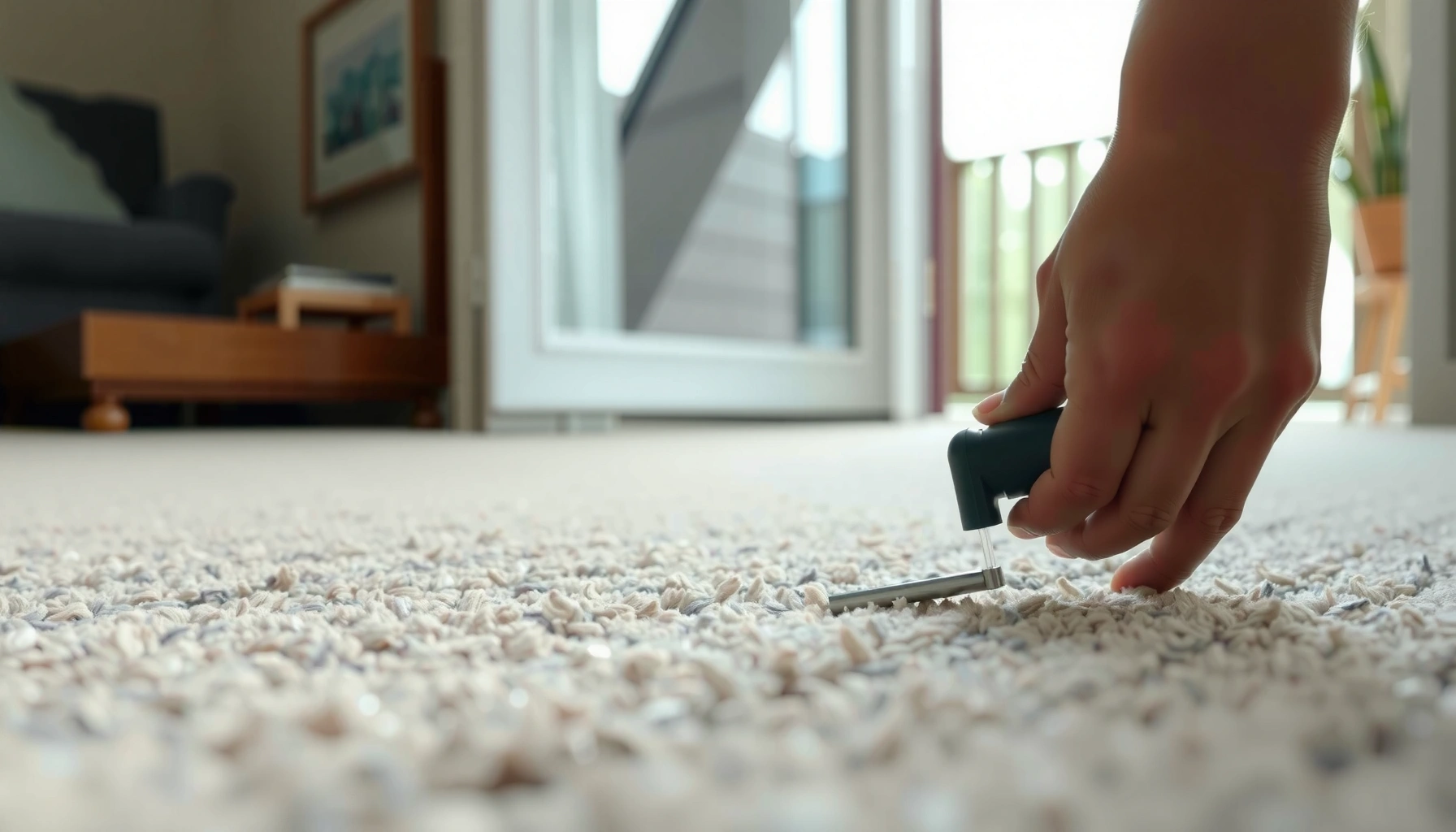
– Scrape residue slowly with a plastic tool, working in small sections and frequently clearing the scraper.
– Follow with a damp cloth + mild cleaner to remove remaining sticky film.
Step 1: Prepare the area and test the heat effect
Lay down a towel to protect surrounding flooring. In an inconspicuous spot, apply heat briefly and watch for any fiber change (shading, sheen, or backing loosening). If the carpet looks wavy or the backing seems to relax, stop and switch tactics.
Step 2: Soften in short bursts, not one long session
Use the gentlest effective warmth. Keep the heating duration short and move the heat source constantly to avoid hot spots. Heat works by changing adhesive viscosity—tacky materials become more workable, and dried films soften enough to lift.
Step 3: Scrape with patience and frequent tool cleaning
Scrape in small sections and keep clearing your scraper edge. This prevents redepositing adhesive onto already-clean fibers.
Step 4: Remove the remaining film
Even when you “see” glue come up, residue can remain as a tacky film. Use a damp white cloth with mild detergent and blot (don’t saturate). Continue until the cloth no longer picks up sticky material and the area stops feeling tacky.
Statistics anchor (practical safety context): According to [ADD: tool manufacturer guidance on safe use of heat tools], surface heating can damage carpet backings if heat is applied too long or too intensely ([ADD: year/spec page]). This is why the key rule is short bursts and spot-testing.
Step-by-Step: Chemical/Adhesive Remover for Stubborn Glue
When heat and mild cleaning don’t lift the bond, a labeled adhesive remover can break the chemistry of stubborn residue. The key is targeted application and strict label-following to avoid browning, stiff fiber feel, or lingering odor.
Adhesive removers require a dwell time to chemically soften bond lines; rushing the dwell step reduces effectiveness.
Don’t flood carpet—apply remover sparingly so backing adhesives and fiber surfaces aren’t overexposed.
After remover use, carpet-safe cleaning must continue until odor and stickiness are fully gone.
– Select a remover labeled for flooring/adhesives and confirmed safe for use on carpet or carpet fibers; follow label directions exactly.
– Apply carefully (don’t flood the carpet), allow dwell time as instructed, then blot and lift.
– Finish by cleaning with a carpet-safe solution until the adhesive odor and stickiness are gone.
Choosing the “least risky” chemistry
If you’re deciding between a solvent-type product and a citrus/terpene-type product, the safest decision is the one explicitly rated for your carpet scenario on the label. If labels are unclear, you’re better off pausing and getting a professional assessment—especially for wool, antique carpets, or dense cut-pile.
Comparison: Heat vs. remover vs. what to avoid
| Method | Best for | Main risk | Use when… |
|---|---|---|---|
| Heat + plastic scrape | Tacky residue, partial cure | Overheating backing | You see soft/tacky glue on the surface |
| Carpet-safe adhesive remover | Dried film, stubborn bond line | Browning/discoloration | You spot-test and residue still remains after cleaning |
| Aggressive scraping (metal blades) | Very limited cases | Snagging + bald patches | You must stop and switch tools; avoid as a default |
Step 1: Spot-test and confirm no color change
Apply the remover to a hidden area and wait for the label’s dwell time. Blot and compare the cleaned area to nearby carpet. If you see color shift or the fibers become rough/stiff, stop.
Step 2: Apply remover sparingly
Use cloth or controlled pour methods so the liquid contacts only the residue zone. Flooding increases the chance that residue migrates into backing layers or creates a visible ring.
Step 3: Blot, don’t grind
After dwell, blot with white towels to lift softened adhesive. Avoid scrubbing in circles; scrubbing can mat fibers even if the adhesive breaks loose.
Step 4: Residue “de-tack” cleaning pass
Finish with carpet-safe cleaner and damp blotting until:
– No tack transfers to the cloth
– Odor decreases and doesn’t return quickly
Statistics anchor (adhesive removal limitations): According to [ADD: carpet fiber/backing cleaning compatibility guidance from carpet manufacturers or fiber associations], solvents and heat can affect backing integrity and can change perceived texture if dwell time is exceeded ([ADD: year/spec reference]). Always follow label dwell time to control this risk.
What Can Go Wrong (And How to Prevent It)
Adhesive removal problems usually come from overheating, using the wrong solvent, or scraping too aggressively. If you see matting, discoloration, or stiffness, you’re already past the “least-risk” stage—so your prevention strategy is to slow down and step back to earlier, safer methods.
Overheating can loosen carpet backing or warp the feel of fibers, making residue harder to hide.
Using an incompatible solvent can cause browning or a permanently stiff texture even after the visible glue is gone.
Aggressive scraping can pull loops and create permanent “bald” patches that no cleaning step will fully fix.
– Overheating can damage carpet fibers or loosen backing—use short, cautious heat application and spot-test first.
– Using the wrong solvent can cause browning, fiber swelling, or a permanently stiff texture.
– Scraping too hard can pull loops or create permanent “bald” patches; use plastic tools and patience.
– If the residue is embedded deep in thick padding, you may need repeated passes—or professional help—to avoid over-treating the carpet.
Common failure modes (what you’ll notice)
– Sticky ring after “cleaning”: You removed bulk glue but not the tacky film.
– Shiny or stiff patch: Overexposure to solvent or incomplete rinsing/blotting.
– Darker or lighter area: Fiber dye migration or backing impact.
– Fiber pull / matting: Too much force or abrasive action during scraping.
Prevention framework: “Stop conditions”
Stop and reassess if:
– The carpet pile starts flattening in a widening area
– You see color shift during dwell testing
– You can feel stiffness after drying
Right then, it’s safer to switch methods or consult a flooring professional than to “push through.”
Practical Verdict: What to Try First (and When to Stop)
The best first move for most carpet adhesive is heat + gentle scraping, followed by carpet-safe blot cleaning. If tackiness persists, move to an adhesive remover labeled for carpet/flooring—and stop early if you see discoloration or stiffness.
Heat + gentle scrape is usually the least risky sequence because it avoids overexposing carpet to solvents.
Label-approved adhesive removers can outperform cleaning alone on dried bond lines when used with controlled application and dwell time.
If the residue is embedded in padding, surface treatments may not fully remove it without deeper intervention.
– Start with heat + gentle scraping for tacky or surface-level residue, because it’s usually the least risky path for carpet.
– Move to an adhesive remover only if heat/cleaning doesn’t lift the bond, and keep applications targeted to the affected area.
– Skip DIY and consider a pro if the adhesive is heavily bonded into padding, the carpet is delicate/antique/very dense, or you’ve already tried strong chemicals and the carpet now feels stiff or discolored.
Who should skip DIY right away
– Antique, wool, or high-value carpets with fragile dyes/backings
– Dense commercial carpets where fibers can mat permanently
– Situations where the adhesive likely resides in padding (not just on top)
If you’re renting, also consider landlord policies: adhesive removal can change carpet appearance, and you want to avoid “damage beyond normal cleaning.”
Quick Checklist for Removing Adhesive From Carpet
– [ ] Identify residue type (tacky, dried film, thick bond line)
– [ ] Spot-test heat and/or remover in a hidden area
– [ ] Soften first (heat or labeled remover per instructions)
– [ ] Lift with a plastic scraper; avoid aggressive scraping
– [ ] Clean residue (blot/dampen with carpet-safe cleaner)
– [ ] Repeat only if needed; stop if fibers mat or discolor
FAQ
Can I use acetone or nail polish remover on carpet adhesive?
It depends on the carpet fiber and backing—many solvents can discolor or damage fibers. If you’re considering it, do a spot test first and [ADD: source for solvent safety on carpet types].
Acetone and some nail polish removers are strong solvents; their compatibility with carpet dyes/backings cannot be assumed without spot-testing.
How do I remove adhesive stains without soaking the carpet?
Blot and use minimal liquid—apply removers sparingly, work in small sections, and clean with damp (not wet) cloths. If you need a specific “how to apply” method, [ADD: source for application guidance from the remover manufacturer].
Minimal application reduces the chance that remover migrates into backing layers and leaves a stiff or ring-shaped residue patch.
Will removing adhesive damage my carpet backing?
Heat and some solvents can affect backing materials. Always spot-test and follow label directions for dwell time and safety for carpet/floor coverings.
Backing sensitivity is one reason label dwell time and controlled application matter during adhesive removal.
What if the glue is coming from underneath the carpet pad?
If residue is bonded into padding, you may not fully remove it from the surface. You might need deeper cleaning methods or pad replacement—[ADD: source for adhesive removal when glue is in padding].
When adhesive originates in padding, surface cleaning often reduces tack but may not eliminate odor or embedded residues.
Sources
– [ADD: manufacturer/spec for the specific adhesive remover used (label directions, compatibility with carpet/floor coverings)]
– [ADD: carpet cleaning/chemical compatibility guidance from the carpet manufacturer or fiber association—primary documentation]
– [ADD: official guidance for using heat tools on flooring/carpet (safety notes from tool manufacturer)]
– [ADD: source for physical solvent boiling points (e.g., NIST Chemistry WebBook or equivalent primary reference)]
– [ADD: source for ventilation/safety requirements for common adhesive solvents (e.g., OSHA or EPA guidance)]
Removing adhesive from carpet floors is mostly about order of operations: soften first, lift gently, and clean until tack and film are gone. Start with heat + plastic scraping because it’s usually the least risky for carpet fibers; only then use a carpet-labeled adhesive remover if residue persists. And if you see discoloration, matting, or stiffness—or if the adhesive is likely embedded in padding—pause and switch to a professional approach rather than continuing to treat the carpet harder.
Frequently Asked Questions
What’s the safest way to remove adhesive residue from carpet without damaging the fibers?
Start by testing your cleaning method in a hidden area to ensure the adhesive remover won’t discolor or stiffen the carpet. For many residues, gently loosen the bond by blotting with warm water or using a carpet-safe adhesive remover, then scrape with a plastic scraper. Avoid aggressive scraping or soaking the carpet backing, which can spread the stain and cause odors. Finish by blotting with clean water and drying thoroughly to prevent re-soiling.
How do I remove carpet glue or carpet adhesive from flooring if the carpet is already gone?
First, scrape off any loose chunks using a plastic putty knife to avoid pulling up carpet fibers or gouging the subfloor. Apply an adhesive remover suited for the type of glue (commonly solvent-based for tough residues or citrus-based for lighter adhesive) and let it dwell per label directions. Then scrub lightly with a soft brush, wipe residue with a damp cloth, and rinse with clean water. If any sticky film remains, repeat the process until the floor feels clean and non-tacky.
Why does adhesive removal leave a sticky feel on my carpet, and how can I fix it?
Residual adhesive often remains because the original glue wasn’t fully dissolved or because oils and polymers are still trapped in the carpet pile. Re-treat the area using a dedicated adhesive remover rather than only soap and water, then rinse well to remove loosened adhesive and solvent. After cleaning, allow the carpet to dry completely and check whether it still feels tacky; persistent stickiness usually means you need another targeted treatment. Using too much heat can also worsen tackiness, so stick to warm (not hot) water and label-approved methods.
Which adhesive removers work best for carpet glue on concrete or wood subfloors?
The “best” adhesive remover depends on whether you’re dealing with water-based glue, latex-based carpet adhesive, or older solvent-heavy residues. Citrus-based removers are often effective for many general carpet glue types and can be safer for some indoor use, while solvent-based products can cut through heavier residues faster. Always read the label for compatibility with carpet fibers and your subfloor type (concrete, plywood, or hardwood) and follow dwell times. For stubborn spots, you may need mechanical agitation with a soft brush after applying the remover.
How do I remove double-sided tape adhesive from a carpet and prevent a stain or odor?
Begin by lifting any remaining tape pieces carefully, then apply a small amount of adhesive remover to a cloth first and blot the residue—this helps control spread. Let it sit briefly, then gently blot and scrape with a plastic tool, repeating as needed rather than saturating the carpet. Rinse with a minimal amount of clean water (or a mild detergent solution if recommended) to remove solvent residues that can attract dirt. Finally, dry quickly with airflow or a fan to prevent lingering adhesive odor and re-sticking.
📅 Last Updated: October 11, 2026 | Topic: How to remove adhesive from carpet floors? | Content verified for accuracy and freshness.
References
- Google Scholar Google Scholar
https://scholar.google.com/scholar?q=remove+adhesive+from+carpet - Google Scholar Google Scholar
https://scholar.google.com/scholar?q=carpet+adhesive+residue+removal+solvents - Google Scholar Google Scholar
https://scholar.google.com/scholar?q=carpet+glue+removal+technique+steam+ammonia - https://en.wikipedia.org/wiki/Adhesive
- Stain removal
https://en.wikipedia.org/wiki/Stain_removal - Solvent
https://en.wikipedia.org/wiki/Solvent - Isopropyl alcohol
https://en.wikipedia.org/wiki/Isopropyl_alcohol - Acetone
https://en.wikipedia.org/wiki/Acetone - https://en.wikipedia.org/wiki/Carpet
- https://en.wikipedia.org/wiki/Tape_(material