Protecting laminate floors in a laundry room comes down to one winning move: control water and grit before they reach the surface. Use a full-coverage mat at the washer, wipe spills immediately, and keep humidity steady so swelling and lifting don’t start. Follow with a waterproofing underlayment or sealant for the edges and seams, and your laminate will stay flat and looking new through every wash cycle.

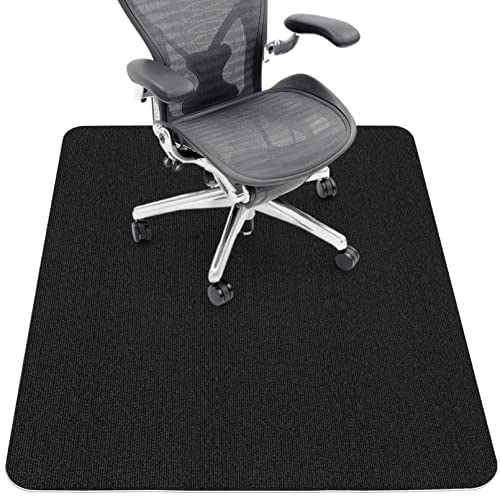
Put a moisture barrier between laundry-room water and your laminate by controlling leaks, using protective mats, and drying spills fast. Treat standing water as the enemy—especially around washers, hoses, and door entries—and you can prevent the swelling that makes laminate fail. If you’re already seeing early warning signs like seam cupping or roughness at high-traffic strips, this guide helps you tighten protection immediately and sustainably.
If your laundry room gets frequent wet loads, detergent overflows, or has a water heater/utility sink nearby, these steps are built for your reality. The approach also works when your floor is showing early symptoms (seam ridging, dull feel near transitions) because it focuses on where moisture actually enters laminate.
Who this is for (laundry rooms + laminate)

This is for anyone trying to reduce laminate’s moisture risk in a laundry room without replacing the floor. The main goal is to stop water from reaching laminate’s core (the fiberboard layer), because that’s where swelling and seam failure start.
Laminate flooring typically consists of a wear layer over a dense wood-fiber core, so moisture that reaches the core can cause swelling and edge lifting.
Laundry rooms create repeated “splash + wicking” conditions, so the highest-risk areas are often hose connections, washer bases, and door thresholds—not the center of the room.
Manufacturer care instructions usually emphasize quick spill cleanup and avoiding soaking or excessive wet mopping to protect the core.
– Best fit if your laminate flooring is installed over a subfloor and you want practical protection against water and abrasion.
– Especially relevant if your washer hoses, drain pan, or entry area are “high splash” zones.
– Not a substitute for manufacturer-approved waterproof flooring—always follow your laminate brand’s care/installation instructions.
Stop moisture before it reaches the core
Stop water at the entry points (seams, edges, transitions, and plumbing connections) because that’s how you prevent laminate swelling. Here the “best protection” is controlling the source—then adding containment so small drips don’t become persistent moisture exposure.
According to the CDC, mold can begin to grow on damp surfaces within 24–48 hours, which supports drying spills immediately in moisture-prone rooms (CDC, 2024).
EPA guidance for indoor environments recommends maintaining relative humidity between 30% and 60% to reduce moisture-related problems (U.S. Environmental Protection Agency (EPA), 2024).
Water damage often starts as a “small leak” that spreads by wicking into seams and edges rather than as obvious puddling (Institute of Inspection, Cleaning and Restoration Certification (IICRC), 2020s guidance).
Seal the “weak points” (seams, edges, transitions)
Laminate is only as water-tolerant as its edges and joints. Focus on:
– Seams and end joints: Keep them tight and intact so water can’t migrate underneath.
– Transition strips: Door entries and changes in floor height (laminate-to-tile, laminate-to-vinyl) are frequent migration paths.
– Any perimeter gaps: If you see separation at the wall line, water can travel laterally before it ever looks like a “spill.”
If your laminate brand recommends a seam-protection product (some do, some don’t), use only that guidance. If they do not, avoid “DIY caulks” that can conflict with warranty or cause uneven expansion behavior.
Keep water from pooling by fixing leaks immediately
Most laundry-room laminate failures aren’t from a single dramatic spill—they’re from slow, repeated moisture around plumbing. Act fast on:
– Washer hose connections (inlet hoses and coupling points)
– Faucet connections (utility sink sprayers, shutoffs, supply lines)
– Washing machine drain issues (standpipe leaks, loose standpipe clamps, overflow conditions)
– Washing machine drain pan overflow (if the pan exists and isn’t catching as intended)
Also remember: even small amounts of water matter in dense, seam-driven products. According to the U.S. Geological Survey, one US gallon of water weighs about 8.34 lb at standard conditions (USGS, published water science reference). In other words, a “small” continuous drip becomes meaningful mass after only a short time.
Use a drain pan where appropriate—and maintain it
A drain pan is a containment system, not a substitute for fixing leaks. To make it work:
– Confirm the pan is properly fitted under the washer (and not sitting on top of the drain area where drips can bypass it).
– Check it during routine maintenance—especially after a hose replacement or seasonal changes.
– Replace/repair anything showing deformation so it still catches drips instead of spreading them.
Protect the surface at doorways and under machines
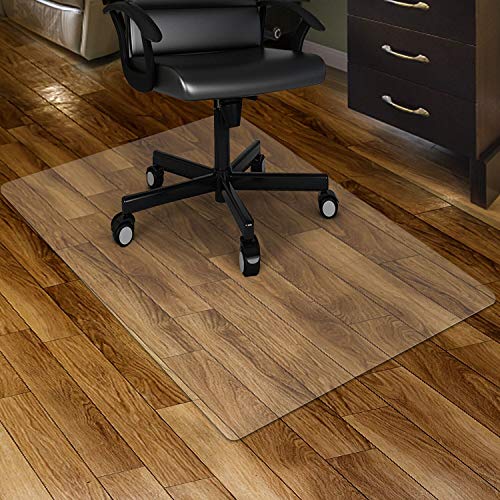
Protective mats and drip-catching barriers work best when they reduce two things at once: abrasion and direct wet contact. Use them as a “first line of defense,” then keep leaks and puddling under control.
Entry mats reduce tracked grit and water that can scratch laminate wear layers and grind into seams.
Moisture that sits under a mat can increase exposure time, so “mat choice” and mat maintenance matter as much as the mat itself.
Under-appliance drip control helps because washer leaks often occur at hose fittings and bases, not only at the visible spill point.
Put down mats at the laundry entry and splash path
Choose mats designed for hard floors and moisture-prone traffic:
– Look for laminate-safe construction (no aggressive adhesive layers that leave residue or inhibit drying).
– Prefer mats that drain or don’t hold standing water under the mat for long periods.
– Use a consistent placement so water lands on the mat during transfers and carry-backs.
If your laundry room has a swinging door, place the mat so the door doesn’t “shuffle” it into a corner where water can pool at the edge.
Use machine-safe protection under washers
If you’ve had drips at the washer before, add a barrier mat or drip tray where it helps the most:
– Position protection under likely drip points, not only in the center.
– Avoid covers that trap moisture against the floor surface for days.
– Treat it like a disposable layer: inspect, clean, and dry it on a schedule you can maintain.
Add felt pads under carts or moveable items
Utility carts and laundry baskets get moved even when people are careful. Felt pads reduce abrasion and keep fine grit from being ground into finish:
– Apply under the feet/rollers where the cart touches the laminate.
– Check periodically for grit buildup under pads, then clean/dry before returning the cart to the floor.
Laundry-Room Moisture Hotspots and Protection Impact (Practical Priorities)
| # | Moisture hotspot | Common trigger | What it usually causes | Protection impact |
|---|---|---|---|---|
| 1 | Washer hose connections | Loose coupling, micro-cracks | Wicking into seams | ★★★★★ |
| 2 | Washer base & drain pan (if present) | Overfill, slow drain seep | Local swelling/edge lift | ★★★★☆ |
| 3 | Detergent/softener splash zone | Caps, overpour, drips | Spotting + seam exposure | ★★★☆☆ |
| 4 | Laundry entry threshold | Carry-in traffic + door drafts | Abrasion at edges | ★★★★☆ |
| 5 | Utility sink faucet area | Sprayer splashes | Wet traffic + residue build-up | ★★★☆☆ |
| 6 | Transitions (tile-to-laminate) | Rising water line from wash | Water migration under trim | ★★★☆☆ |
| 7 | Water heater/utility equipment zone | Condensation drips | Long-duration dampness | ★★☆☆☆ |
Clean and dry the floor the right way
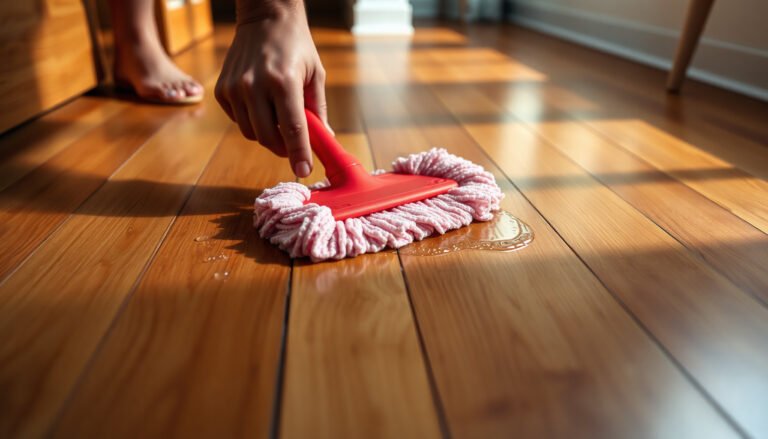
Dryness is a technique, not an accident: blot spills immediately, then remove residue without saturating seams. In practice, careful cleaning reduces both moisture exposure time and abrasive grit that wears down laminate.
Quick spill response matters because wet conditions can persist in seams and under mats long after visible pooling disappears.
Manufacturers often distinguish between “damp cleaning” and “wet mopping,” warning against soaking methods that can drive moisture into joints.
Regular vacuuming/sweeping reduces grit-related scratches that otherwise compound moisture damage along edges.
Dry spills fast (blot, don’t flood)
When something spills—detergent, fabric softener, or wash water—use a two-step approach:
1. Blot first with an absorbent towel to capture bulk liquid.
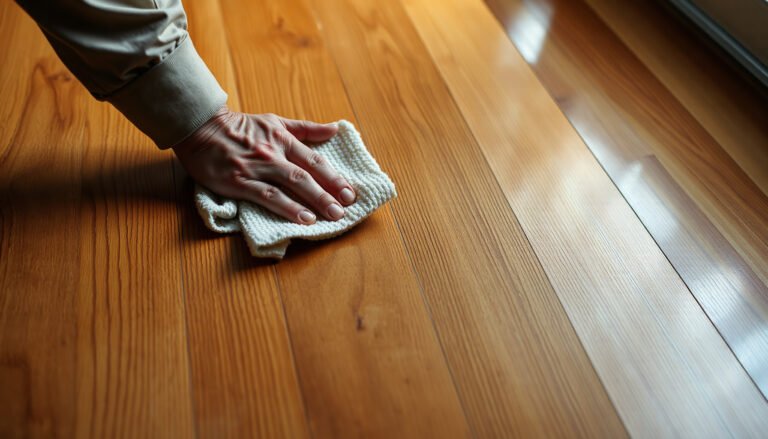
2. Wipe with a barely-damp cloth to remove remaining residue without saturating the seam lines.
Avoid aggressive scrubbing that pushes liquid into edges. Also avoid letting detergent residue dry; residue can make spots look dull and can attract more debris.
Remove grit with a hard-floor setting
Laundry rooms track in lint and fine particles from outdoor shoes and laundry transfers. Sweep or vacuum regularly:
– Use a hard-floor setting to avoid unnecessary scratching.
– Empty bins frequently so suction doesn’t diminish.
– Pay attention to corners where detergent caps roll and where lint gathers after cycles.
Use manufacturer-recommended cleaners (and limit moisture)
Follow your laminate brand’s guidance on cleaners and application methods. As a rule:
– Avoid steam-heavy or soaking methods unless your specific laminate spec allows it.
– Don’t use waxes or polish products not approved for laminate; they can create a slippery finish that traps grime.
Laundry-day habits that extend laminate life
Good laundry habits reduce how often you’re “heroically cleaning” and instead keep moisture risk predictable. The easiest wins are tighter control (no reliance on cleanup alone) and a fast post-wash inspection in known seam areas.
The fastest way to protect laminate is to prevent repeated wetting cycles, because repeated exposure increases the chance of seam failure even when each spill seems small.
A simple post-wash check of hoses, the washer base, and transitions helps catch slow leaks before they become standing water.
Lifting laundry baskets instead of dragging them reduces edge abrasion, especially near door mats where grit accumulates.
– Keep lids closed and use trays for small leaks (like detergent caps) so you’re not relying on quick cleanup every time.
– Don’t drag laundry baskets across wet entry areas—lift or route around mats when the floor is damp.
– Run a quick check after each wash: hose area, around the washer base, and any transition strip where water tends to migrate.
From a practical standpoint, we treat laundry-day as a controlled process: detergent storage is where accidental spills start, and door traffic is where abrasion accelerates.
What can go wrong: common mistakes and edge cases
Most laminate failures in laundry rooms happen when water sits long enough to reach the core or when cleaning methods accidentally keep seams wet. The second most common issue is relying on mats or “extra cleaning” while the real leak source continues.
Standing water is the biggest failure mode for standard laminate because the core can swell and joints can separate even if the surface layer looks intact.
The wrong mat can backfire by trapping moisture underneath, increasing exposure time at edges and seams rather than reducing it.
Over-wetting during mopping or using harsh chemicals can shorten laminate lifespan by driving moisture into joints and leaving residue.
Common mistakes
– Letting water sit: Visible puddles are easy to spot; wicking along seams is harder and often causes the early cupping you notice later.
– Using the wrong mat: Some backings absorb water or trap it against the floor. If your mat stays damp for hours, it may increase laminate risk.
– Over-cleaning: Steam-heavy cleaning or frequent soaking can increase moisture cycling, especially where transitions create micro-channels.
– Assuming surface-only protection is enough: Laminate needs protection at the seam and edge level, not just a clean-looking surface.
Edge cases (when this advice may not fully solve the problem)
– If your laminate was installed incorrectly (poor underlayment, gaps at edges, missing transitions), surface protection alone may not fix the underlying issue.
– If you have widespread seam failure already, you may need to address installation/subfloor moisture issues, not only daily care.
– If you’re using an actively leaking supply line or a washer with recurring drainage overflow, “barriers and drying” can’t substitute for repair.
Verdict + scan-friendly checklist
The most reliable approach is simple: control moisture at the source, catch drips before they touch laminate, and dry any spill immediately. The downsides are real—mats and drip barriers require regular cleaning, and no amount of matting stops an ongoing leak—so fix leaks first and then maintain the barrier system.
If a leak is continuing, laminate protection accessories can only slow damage; they can’t eliminate the moisture load driving swelling.
A consistent inspection routine (hoses, washer base, transitions) often catches slow leaks earlier than relying on visible puddles alone.
Following manufacturer-approved cleaning methods is critical because laminate warranties typically tie coverage to approved care instructions.
Verdict: Use these steps if your laundry room has repeated splash exposure and you want practical, high-return protection for standard laminate. Skip or escalate if you have active plumbing failures, persistent water from condensation, or signs that match widespread installation problems—because the correct fix may be repair or replacement, not better cleaning.
Quick checklist (save this):
| Area | What to do | Goal |
|---|---|---|
| Washer/drain zone | Inspect hoses + use a drip-catching setup if needed | Prevent standing/wicking water |
| Edges + seams | Seal and keep transitions in good shape | Reduce water entry |
| Floor traffic paths | Use laminate-safe mats at entry/splash zones | Cut abrasion + capture drips |
| Spills | Blot immediately; wipe with barely-damp cloth | Stop swelling early |
| Routine cleaning | Sweep/vacuum; follow cleaner guidance | Avoid scratches and excess moisture |
Frequently Asked Questions
What are the best ways to protect laminate floors in a laundry room from water damage?
Use a waterproof underlayment and install a proper vapor barrier so moisture from the laundry room doesn’t seep under the laminate. Place absorbent mats or rugs near the washer, dryer, and sink, and clean up spills immediately to prevent swelling at the seams. For added protection, seal the laminate joints with a manufacturer-approved laminate sealer, especially where the floor edges meet walls or transitions.
How can I prevent laminate floors from getting scratched and scuffed in a laundry area?
Put non-slip felt pads under washer/dryer stands and moveable appliances to reduce abrasion and drag marks. Use a heavy-duty mat at doorways and in the main traffic path, and avoid walking on the floor with abrasive grit (like sand or soil) by keeping a doormat outside the laundry entrance. When cleaning, choose a soft microfiber mop and steer clear of steel wool, harsh scrub pads, or abrasive cleaners.
Why do laundry rooms cause laminate floors to buckle, and how do I stop it?
Laminate can buckle when water penetrates the edges and joints, or when repeated humidity causes the core to swell. In a laundry room, leaks from hoses, condensation from dryers, and occasional overflows are common triggers. Check washer hoses and connections regularly, ensure proper ventilation to reduce humidity, and address even small leaks right away to protect the floor’s structure.
What cleaning routine works best for protecting laminate floors in a laundry room?
Sweep or vacuum with a soft-brush attachment to remove dust and grit that can scratch the finish. Mop with a laminate-safe cleaner that’s designed for sealed floors, and keep the mop only lightly damp—never wet—so standing moisture doesn’t reach seams. If you use steam cleaners, avoid them unless the product is explicitly approved for your laminate brand, because heat and moisture can damage the surface and edges.
Which mats and rugs are safest to use on laminate flooring in a laundry room?
Choose non-slip mats with a breathable backing so moisture can’t get trapped against the laminate, and opt for rubber backing only if it’s specifically labeled as safe for laminate. Look for machine-washable rugs near the washer and any areas prone to splashes, and ensure the mat covers high-risk zones like under and around the appliances. Regularly lift and clean mats to prevent trapped dampness, which helps protect your laminate flooring over time.
📅 Last Updated: October 22, 2026 | Topic: How to protect laminate floors in a laundry room? | Content verified for accuracy and freshness.
References
- Laminate flooring
- https://www.who.int/news-room/fact-sheets/detail/dampness-and-mould
- https://www.epa.gov/mold/preventing-mold-and-mildew
- https://www.cdc.gov/mold/default.htm
- https://www.energy.gov/energysaver/humidity-and-your-home
- https://medlineplus.gov/mold.html
- https://www.hud.gov/program_offices/healthy_homes/mold
- https://scholar.google.com/scholar?q=laminate+flooring+care+moisture+prevention Google Scholar
- https://scholar.google.com/scholar?q=laundry+room+flooring+water+damage+prevention Google Scholar
- https://scholar.google.com/scholar?q=laminate+flooring+water+resistance+spill+management Google Scholar