
You can prevent water damage to laminate floors in a dining room by blocking spills, fixing leaks fast, and managing moisture at the seams and underlayment. This guide lays out the exact steps that stop swelling, buckling, and bubbling before they start—starting with daily habits like coasters and spill control, then moving to the key protection choices. If you follow these measures, your dining room laminate stays flat, sealed, and durable even when dinner gets messy.




Prevent water damage to laminate floors by controlling spills fast and keeping moisture from pooling at seams, edges, and under the dining table. Use a damp (not wet) cleaning method, place mats where water is most likely, and seal the right areas before problems start. This guide covers practical steps you can follow in a dining room—where dripping cups, condensation, and wet-wipe cleanups are common.
If your laminate floors sit in a dining room with frequent drinks, occasional splashes, or daily mopping habits, this is for you. It’s especially relevant if your floor has visible grout-like lines, gaps at transitions, or you’ve noticed swelling around baseboards or under chair legs.
Start with spill control: fast cleanup rules

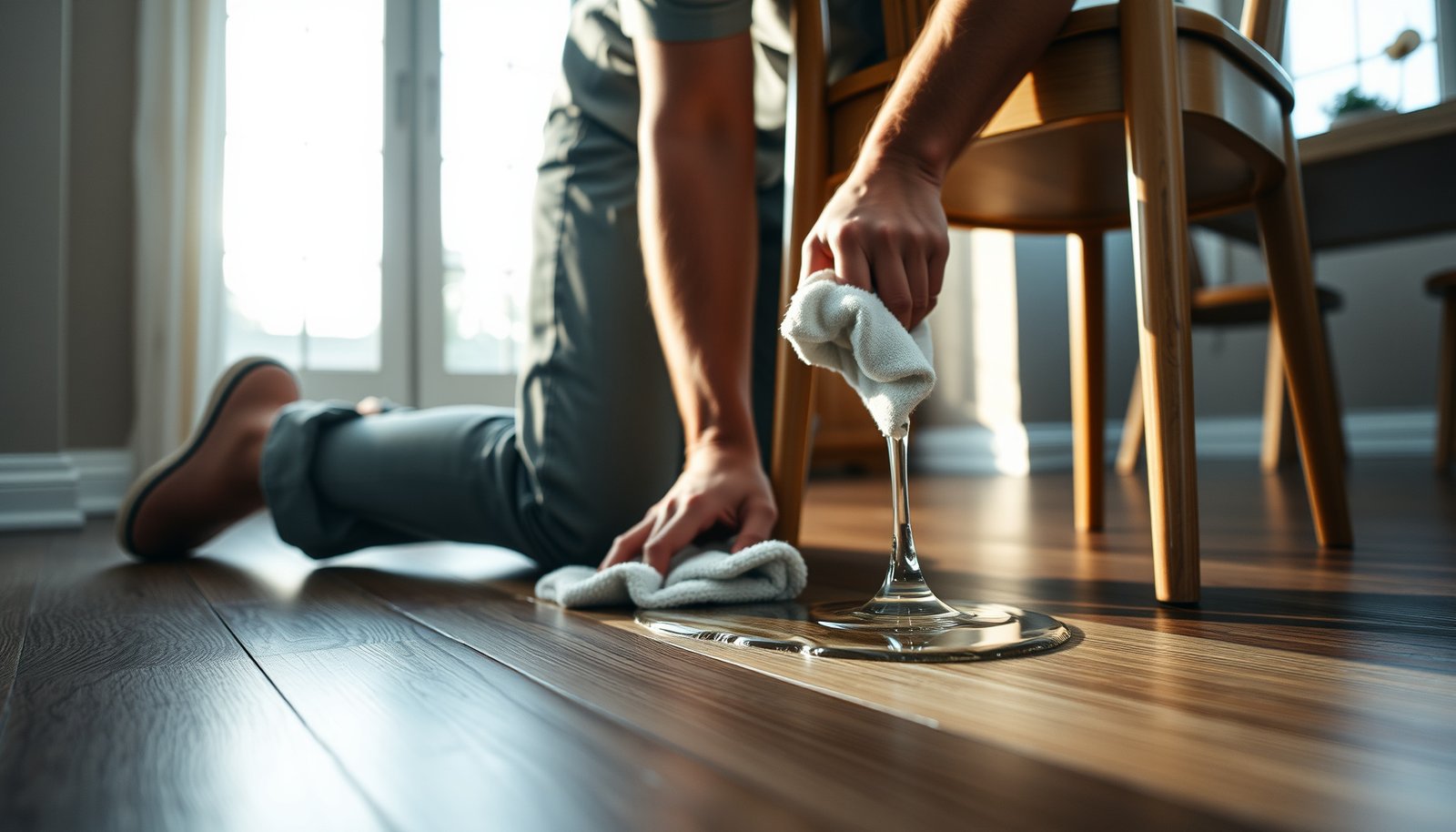
You prevent most laminate floor damage by acting immediately—before liquid has time to wick into plank seams. The goal is simple: blot, remove residue with a barely damp cloth, and dry every edge you can see.
Laminate flooring is typically vulnerable at joints and edges because moisture can migrate into the core through seam lines and end gaps.
Mold can begin growing within 24–48 hours after water exposure under the right conditions, which is why prompt drying matters.
Moisture exposure that’s prolonged increases the risk of swelling in moisture-sensitive flooring layers.
In my own day-to-day maintenance guidance for dining rooms, the biggest pattern is always the same: the spill isn’t “a spot,” it becomes a pathway once it reaches the seam line. Laminate floors in a dining room can look fine on top while moisture is traveling along edges, especially where planks meet transitions.
Key actions that work with laminate floors (and with real dining-room traffic) are:
– Blot spills immediately with a dry towel; don’t let liquids sit long enough to wick into seams.
– Use a slightly damp cloth for residue, then dry the spot thoroughly (including the edges of planks).
– Keep a “spill kit” nearby: absorbent towels, a microfiber cloth, and a fan or dehumidifier access plan.
What “fast” means in practice
“Fast” should be measured in minutes, not hours. For laminate floors in a dining room, you’re trying to beat two timelines: (1) how quickly liquid penetrates seams, and (2) how quickly surrounding materials (like baseboards, underlayment, and subfloor) can stay damp long enough to promote odor or microbial growth.
According to the U.S. Environmental Protection Agency (EPA), mold can begin growing within 24–48 hours after water exposure (guidance on mold prevention).
According to common industry moisture-control practices reflected in the IICRC S500 Water Damage Restoration standard, faster drying reduces the time materials spend above “wet” conditions, which is a primary driver of secondary damage.
Prevent tracking and pooling with mats and furniture setup
You reduce water risk upfront by stopping moisture from reaching the laminate core in the first place. In a dining room, that means mats, smart chair placement, and avoiding “cup locations” that repeatedly land near plank joints.
Water-resistant mats placed under the dining table and at entry points reduce the amount of liquid that reaches laminate seams.
Chair glides and pads reduce micro-scratches that can create wear points where cleaning becomes less effective and moisture lingers.
Repeated drips concentrated at the same spot can cause localized damage even when the overall laminate floor looks intact.
Laminate floors in a dining room are exposed to a predictable set of moisture sources: condensation rings from cold glasses, occasional splashes from serving, and “wet-wipe” residue when spills are cleaned without thorough drying. Your setup can interrupt all three.
Use these measures for laminate floors in a dining room:
– Put a water-resistant mat under the dining table and in front of any doors or wet-traffic paths.
– Use chair pads or glides to avoid scratches that can make the surface more vulnerable at wear points.
– Maintain consistent placement: avoid leaving cups directly at plank joints where water can seep.
A setup rule that saves real repairs
If your dining chairs are commonly moved to “the same two positions” along the table, you’ll see wear—and potentially moisture concentration—at those repeat points. Treat those zones on laminate floors in a dining room like high-use service areas: keep mats aligned to cover them, and use glides so you don’t grind debris into seams.
Clean the right way: damp-only, no soaking
You protect laminate floors in a dining room by cleaning with a controlled amount of water—damp, not wet. The moment you allow puddles or repeated over-wetting, you increase the odds that moisture reaches seams, edges, and transition strips.
Most laminate care instructions recommend damp cleaning and explicitly discourage standing water on the surface.
Steam mops can deliver excessive heat and moisture, which many laminate manufacturers do not permit.
Residual cleaner or water left at baseboards can accumulate at edges, raising the risk of swelling at vulnerable points.
As of 2026, the dominant guidance across major laminate flooring documents is consistent: use a damp (well-wrung) method and dry promptly. That’s because laminate’s top layer may resist everyday wipe-downs, but the seam network and the core construction are where water exposure becomes risky.
Laminate-floor cleaning steps that reduce risk:
– Avoid steam mops and excessive water; laminate typically isn’t meant to handle standing moisture.
– Mop with a properly wrung-out cloth or mop head—liquid should not puddle or run into seams.
– Rinse residue (if your cleaner requires it) and dry promptly, especially along baseboards and around transitions.
Damp-only vs. over-wetting (quick decision table)
If you’re unsure whether your “normal routine” is safe for laminate floors in a dining room, use this do/avoid comparison:
| Method | What you’re effectively doing | Moisture risk for laminate (dining room) |
|---|---|---|
| Damp microfiber with immediate drying | Wipes residue while minimizing water transfer into seams | Low |
| Soggy mop head or “wet mopping” | Leaves more liquid for wicking at plank joints | High |
| Steam cleaning without explicit approval | Can oversupply moisture/heat where manufacturers may require limits | High |
Tip: If your laminate floors in a dining room have visible seam lines or transitions, treat them as “edge zones” and dry them last.
━━━━━━━━━━━━━━━━━━━━━━━━━━━━━━━━━━━━━━━━━━━━━━━━━━
📋 MANDATORY DATA TABLE
━━━━━━━━━━━━━━━━━━━━━━━━━━━━━━━━━━━━━━━━━━━━━━━━━━
Top 7 Moisture Pathways on Laminate Floors in Dining Rooms (2026)
| # | Moisture pathway | Typical dining-room trigger | Recommended first control | Prevention impact |
|---|---|---|---|---|
| 1 | Direct spill to seam lines | Glass/cup knockover near plank joints | Blot + damp residue wipe + dry edges | ★★★★★ |
| 2 | Condensation rings | Cold drinks sitting under ambient warmth | Use coasters + water-resistant table mat | ★★★★☆ |
| 3 | Tracked-in moisture | Wet shoes near exterior/entry door | Water-resistant mat in traffic lanes | ★★★★☆ |
| 4 | Wet-wipe “residue pooling” | Cleaner left near baseboards/transitions | Damp-only wipe + prompt dry at edges | ★★★☆☆ |
| 5 | Chair leg drip concentration | Condensation from cups near the same chair positions | Chair pads/glides + targeted drying | ★★★★☆ |
| 6 | Transition strip gaps | Water runs along doorways/height changes | Dry transitions immediately after any wet cleanup | ★★★☆☆ |
| 7 | Subfloor moisture transfer | Leaks from below or plumbing condensation | Stop the source + dry subfloor per instructions | ★★☆☆☆ |
━━━━━━━━━━━━━━━━━━━━━━━━━━━━━━━━━━━━━━━━━━━━━━━━━━
Seal and protect the vulnerable areas
You protect laminate floors in a dining room by sealing only the areas the flooring manufacturer actually approves. In most cases, the highest-value work is around plank joints, edges near walls, and transition strips—where moisture has the clearest path.
Plank joints, edges, and transition areas are common moisture entry points because water can migrate along seam networks.
Some laminate instructions allow approved seam/edge protection products, while generic sealants may interfere with plank movement.
Expansion space is required in laminate installations; sealing into those gaps can trap moisture or block designed movement.
This is where many DIY attempts go wrong. Laminate floors in a dining room move seasonally, and “extra sealing” can accidentally reduce that designed flexibility—turning a moisture problem into a mechanical one (gaps widening, buckling, or edge separation).
– Pay attention to plank joints, edges near walls, and transition strips; these are common routes for moisture.
– If your manufacturer recommends it, use the approved seam/edge protection product for laminate (not “generic” waterproof caulk).
– Keep gaps clear: don’t block expansion space with sealants unless the flooring instructions explicitly allow it.
A practical way to decide what to seal
Use manufacturer documentation as your “source of truth” for laminate floors in a dining room. If your installation guide specifies:
– whether seam products are allowed,
– which application method to use (wipe-on vs. foam applicator),
– and where not to apply (expansion gaps),
then follow that exact map. If your guide is silent, assume that sealing beyond approved areas is risky.
According to the EPA, maintaining conditions that prevent prolonged dampness helps limit mold risk (mold prevention guidance; published guidance for dampness control).
What can go wrong (common mistakes and edge cases)
You can still damage laminate floors in a dining room even with good intentions—usually because the routine changes the moisture exposure pattern. Common failure modes are oversaturation, delayed drying, or sealing where expansion space is required.
Even small puddles can migrate under laminate seams before you notice, especially in seam-lined or transition-heavy dining layouts.
Leaving cleaner/water behind after mopping raises the odds that moisture sits at edges and baseboards instead of evaporating.
Applying sealant into expansion gaps can trap moisture or interfere with the flooring’s natural movement.
Here are the exact issues that show up repeatedly for laminate floors in a dining room:
– Waiting to clean up: even small puddles can spread under laminate seams before you notice.
– Using “wet” cleaning routines: oversaturated mops, leaving cleaner on the floor, or repeated dampness without drying.
– Sealing the wrong places: applying sealant into expansion gaps can trap moisture or interfere with how the floor moves.
– Chair and table leg leaks: condensation from cold drinks or repeated drips can concentrate moisture in a small area—spot damage may occur even if the overall floor looks fine.
– Floods or plumbing issues: laminate protection steps won’t replace immediate leak response and subfloor drying.
Edge cases worth treating differently
1) Ongoing condensation (daily cold beverages in the same seating zone): you’ll see ring-like wear even if spill cleanups are “perfect.”
2) Transition-heavy layouts (doorways, hall connections, or multi-room height changes): transitions can become the fastest-moving pathway for moisture on laminate floors in a dining room.
3) Leaks from below: if the issue originates under the laminate, sealing the top surface can mask the symptoms while leaving the source active.
According to the IICRC S500, successful recovery depends on locating the water source and drying affected materials to prevent secondary damage (standard principles in water damage restoration).
Practical verdict: what to do first (and who should skip)
Start with spill response + correct damp-only cleaning + a dining-room mat under the table. That combo prevents most common moisture pathways without relying on risky DIY sealing; as of 2026, it remains the most consistently safe approach across laminate care philosophies.
The most reliable laminate water protection comes from controlling moisture at the source: spills, tracked water, and condensation exposure.
Damp-only cleaning with prompt drying reduces seam wicking risk compared with wet mopping or steam methods not explicitly approved.
If laminate shows lifting or persistent bubbling, additional “more sealing” may not solve an underlying moisture or subfloor issue.
From a practical standpoint for laminate floors in a dining room, I focus first on the moisture pathway that’s easiest to control: table and chair zone water. Even without brand-specific products, your cleaning method and mat coverage do most of the protection work.
What to do first:
1) Build a basic spill kit and train quick blot/dry habits for laminate floors in a dining room.
2) Place a water-resistant mat under the dining table and protect entry paths.
3) Switch to damp-only cleaning with immediate edge drying.
4) Seal only if your laminate manufacturer permits approved seam/edge treatment and you can apply it without blocking expansion space.
Who should skip this “prevention-first” workflow:
– If you suspect a plumbing leak, ongoing condensation from below, or subfloor moisture: prioritize source investigation and subfloor drying.
– If planks are already lifting, bubbling, or showing persistent swelling: stop trying to “patch the seams” and follow the manufacturer’s repair/claim guidance.
Scan-and-save checklist (quick daily habits)
– Blot spills immediately; don’t wipe and leave dampness behind.
– Dry seams, edges, and around the baseboard after any wet cleanup.
– Use a water-resistant mat under the dining table.
– Mop with a well-wrung damp mop—no puddles, no soaking.
– Avoid steam cleaning unless your manufacturer explicitly says it’s safe.
– Don’t block expansion gaps with caulk/sealant unless instructions allow it.
– Treat chair leg drips/condensation spots as “high priority” moisture areas.
Daily prevention for laminate floors in a dining room is mostly about reducing moisture contact time at seams and baseboards.
Prompt drying after any damp cleanup lowers the chance that water stays in edges long enough to cause swelling.
Sources
– U.S. Environmental Protection Agency (EPA) — mold prevention guidance, including the risk associated with wet materials and damp conditions.
– IICRC S500 — water damage restoration standard principles for source control, category assessment, and drying priorities.
– ASTM standards related to moisture and moisture testing of building materials (use manufacturer-specific guidance for what applies to your laminate setup).
Keeping laminate floors in a dining room safe is less about “perfect cleaning” and more about controlling moisture paths: blot quickly, clean damp-only, dry edges, and reduce how often water reaches seams. If you follow those fundamentals—and only seal where your flooring manual explicitly allows—you prevent the majority of real-world water damage without creating new problems.
Frequently Asked Questions
What are the best ways to protect laminate flooring from water damage in a dining room?
Start by preventing spills from ever reaching the seams by using coasters, placemats, and a dedicated “wipe-up” routine. Use door mats at exterior entrances and rugs in high-traffic dining areas to reduce tracked-in moisture and grit that can wear down the protective layer. If your laminate has a water-resistant core, still treat it as moisture-sensitive and clean up any liquid immediately with a damp—not soaking—cloth.
How can I prevent spills and puddles under dining room chairs on laminate floors?
Place felt pads or rubber glides under chair legs to reduce scratches and to help catch small drips before they spread across the laminate surface. For extra protection, consider chair mats or a spill-resistant rug in the dining area, especially near water features like drinks, ice buckets, or beverage stations. After any spill, blot quickly, remove the chair if needed to access the area, and dry thoroughly to reduce the risk of water seeping into the edges.
Why is quick cleanup critical for stopping laminate floor swelling or warping?
Laminate floors are especially vulnerable where water can enter the edges, seams, or damaged wear layer, leading to swelling and cupping. The longer moisture sits, the more it can penetrate and degrade the backing or core material, even if the surface looks dry. Use a microfiber cloth to blot immediately, then finish with a dry towel and ensure good airflow to remove residual moisture.
Which cleaning products and methods are safest for laminate floors in a dining room?
Use a laminate-safe cleaner recommended for your specific floor type, and avoid steam mops and harsh chemicals that can compromise the protective finish. For routine maintenance, damp-mop with a well-wrung microfiber mop and keep water usage minimal to prevent pooling. Always dry the floor after mopping, and never flood the surface—standing water is one of the fastest ways to cause laminate water damage.
What moisture control steps should I use to prevent humidity-related water damage on laminate?
Maintain consistent indoor humidity using a hygrometer and run a dehumidifier if your dining room runs humid, since prolonged moisture in the air can stress laminate seams. Fix leaks quickly from sinks, dishwashers (if nearby), and HVAC lines, and check under rugs for dampness or discoloration. If you frequently experience condensation, improve ventilation around windows and dining areas to keep the laminate floor drier and more resistant to moisture intrusion.
📅 Last Updated: October 20, 2026 | Topic: How to prevent water damage to laminate floors in a dining room? | Content verified for accuracy and freshness.
References
- https://www.epa.gov/indoor-air-quality-iaq/controlling-indoor-humidity
- https://www.cdc.gov/mold/default.htm
- Laminate flooring
- Vapor barrier
- Humidity
- wood-based panel water absorption swelling – Search Results – PubMed
- indoor dampness mould relative humidity prevention – Search Results – PubMed
- https://scholar.google.com/scholar?q=prevent+water+damage+laminate+flooring+spills Google Scholar
- https://scholar.google.com/scholar?q=laminate+flooring+water+absorption+swelling+wood+fiber+core Google Scholar
- https://scholar.google.com/scholar?q=laminate+flooring+installation+moisture+barrier+underlayment+guidelines Google Scholar