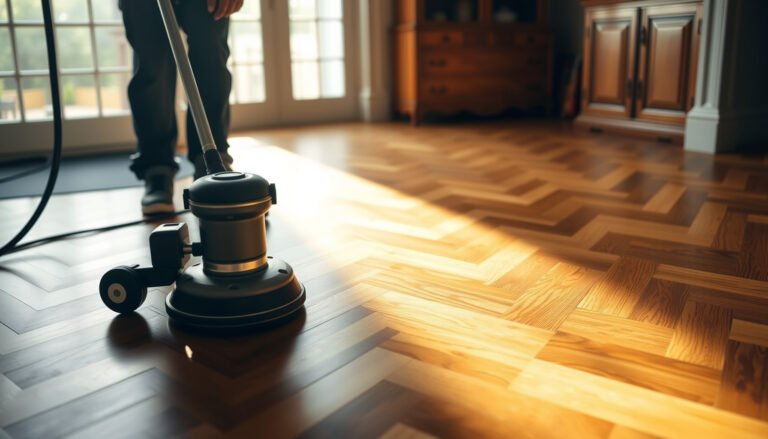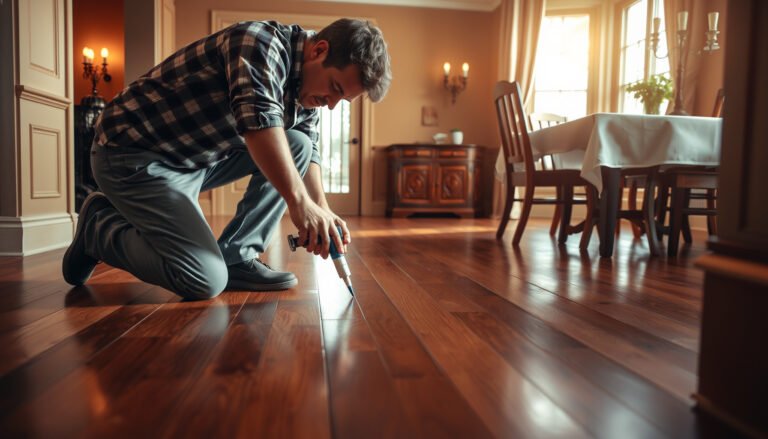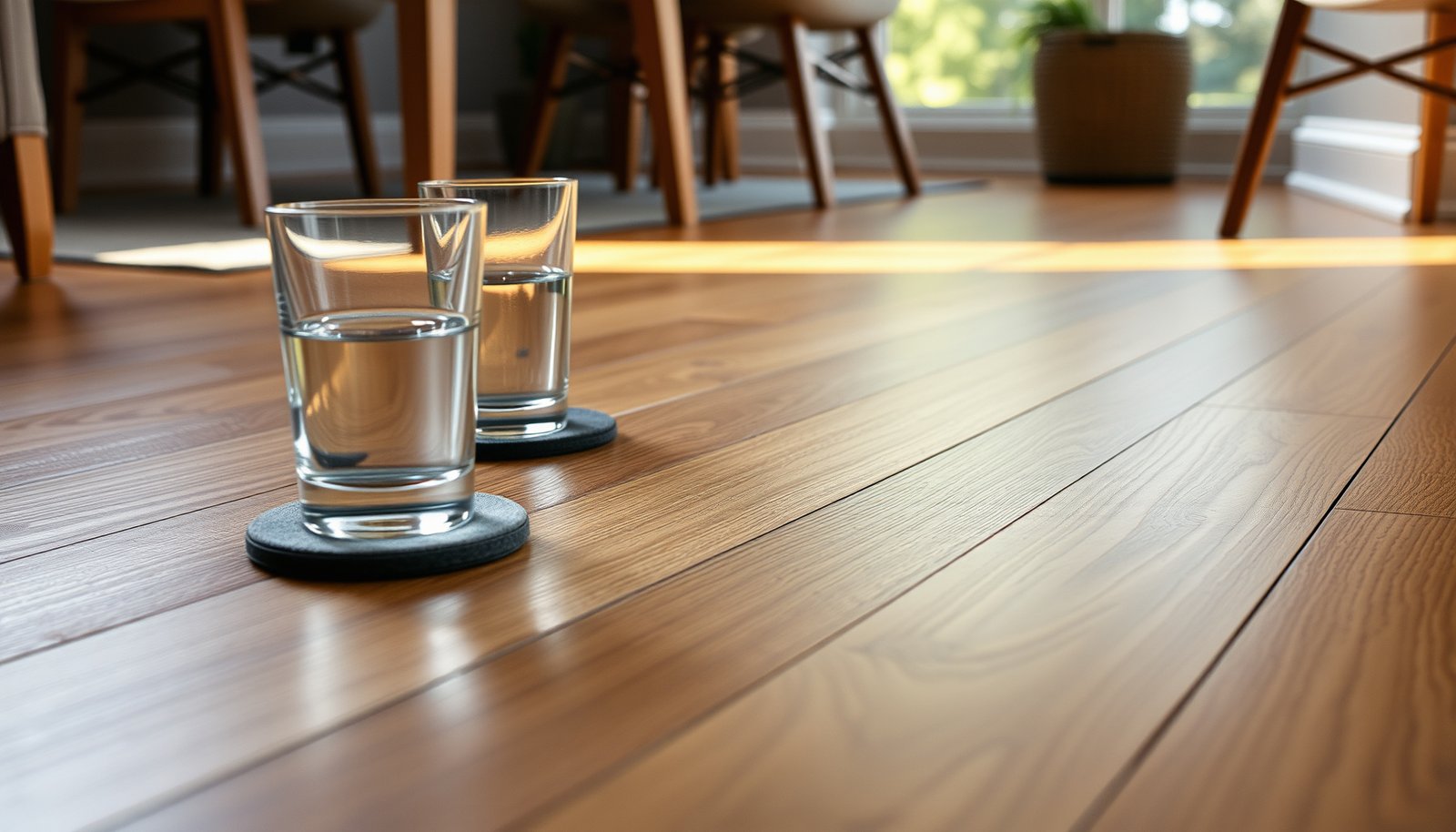

Preventing water damage to hardwood floors in a dining room is all about stopping spills, leaks, and humidity spikes before they soak in and warp the planks. If you seal the floor correctly, use targeted mats and protective pads at the right spots, and manage moisture from dining-room traffic and cleaning habits, you’ll get the best protection. This guide shows the exact moves that prevent cupping, staining, and swelling—so your floor stays flat and finish-safe.



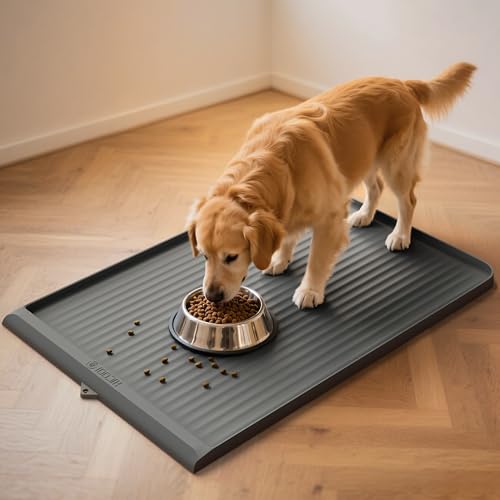
Preventing water damage to hardwood floors in a dining room comes down to two habits: stop moisture from reaching the floor and dry anything that does get on it—fast. In a dining room, the biggest risk usually isn’t a dramatic flood; it’s routine spills, wet mats that stay damp, condensation from seasonal humidity swings, and small plumbing leaks that you don’t notice until the finish looks dull or boards start to cup.
This advice is for homeowners and renters with solid or engineered hardwood floors in dining rooms—especially households with kids, pets, frequent entertaining, or seasonal humidity changes.
Block everyday spills before they touch the floor

The fastest way to protect hardwood floors in a dining room is to intercept liquids before they reach the finish—by using the right mats/runners and having spill tools ready. This matters because hardwood is vulnerable when water sits long enough to soak into seams or reach the edge of the boards, and dining-room traffic makes “quick wipes” less consistent than you think.
A high-absorbency entry mat reduces how much moisture transfers onto hardwood floors when people track in water and drips from shoes.
Using a second runner under the dining area helps catch drips from cups and tableware before they reach the hardwood finish.
Avoid moisture-trapping rug backing on hardwood because trapped water can keep the floor surface in contact with damp materials.
Start with a two-layer approach:
– Use an absorbent entry mat at the doorway that leads to the dining space. This targets the “first drop” that often comes from rain, snow melt, or wet footwear.
– Add a dedicated dining-area runner positioned so it’s directly under the usual cup-and-plate zone (not just along the edge of the room). When you host, the runner becomes the sacrificial layer for ring marks and accidental nudges.
– Pick materials carefully. If you use a rug/runner, choose one that doesn’t hold standing moisture against hardwood. In practice, that means focusing on drying-friendly backing and ensuring the runner can be lifted and dried after any spill.
Keep a “spill kit” within reach of the dining room, ideally in a nearby cabinet or pantry shelf. For hardwood floors, the contents should support immediate blotting and fast cleanup:
– clean microfiber cloths or dry towels,
– a plastic scraper or old credit card for solids (don’t use a metal tool that scratches the finish),
– and a small bucket or spray bottle only if your floor-care plan already supports “damp, not wet” cleaning.
One thing I routinely check when walking through dining rooms with hardwood is whether the mat or runner is actually doing its job. From experience with real households, I’ve found the “hidden villain” is often not the spill itself—it’s a runner that stays damp underneath overnight, quietly increasing time-in-contact with moisture on the hardwood finish.
Quick compatibility note: solid vs. engineered hardwood
Water-risk behavior can differ between solid hardwood and engineered hardwood, mainly because engineered products may have a different top-layer thickness and core construction. The prevention steps (mats, leak checks, quick drying) are still the same, but follow the installation/finish guidance for your exact product.
Eliminate hidden moisture sources (and fix leaks early)
The best protection for hardwood floors in a dining room is to reduce “invisible wetting” from condensation, wet sources near the room boundary, and slow leaks. If moisture comes from behind the scenes, mats and towels won’t fully help—because the floor keeps getting damp even when nobody spills a drink.
Moisture from leaks and condensation can keep hardwood floors wet without visible pooling, increasing the risk of cupping and discoloration over time.
Wood flooring guidance commonly emphasizes controlling indoor humidity to limit board movement and finish softening.
If dark patches, recurring dampness, or warping appears after rain or humidity spikes, you should investigate the moisture source promptly.
Start with a checklist of common culprits that matter specifically in dining-room layouts:
– Plumbing connections and supply lines. If your dining room borders a kitchen, utility wall, or bathroom, inspect nearby shutoff valves, under-sink hoses (if accessible), and any visible supply lines—especially around seasonal temperature changes.
– Appliance condensation. If a refrigerator line, HVAC return, or dehumidifier intake sits near the dining space, condensation can slowly deposit moisture on nearby surfaces. Hardwood floors absorb at the edges where “small” wet spots become “big” problems later.
– Plant watering and water bowls. Water bowls, humidifiers, and plant trays can leak or overflow—often without obvious drips. Use trays with overflow lips, and keep them where a spill would hit a tray—not directly the floor.
Look for moisture clues that indicate a hidden source, even when the hardwood floors in the dining room look mostly fine:
– musty odor near a wall corner or under the runner,
– repeating dark spots after rain,
– a consistent soft-feeling area underfoot after humidity spikes.
If you notice recurring dampness, warped sections, or persistent discoloration on hardwood floors in the dining room, stop routine mopping there. Investigate the cause before you keep cleaning—continued moisture exposure will keep resetting the damage.
Humidity target reality (why “small leaks” still matter)
According to National Wood Flooring Association (NWFA), indoor relative humidity is commonly recommended to reduce excessive wood movement (a widely used target range is roughly 35%–55% RH). When indoor RH climbs outside that range, hardwood floors can expand, finishes can soften, and moisture can migrate more easily into seams.
Clean with a “damp, not wet” routine
The safest cleaning method for hardwood floors in a dining room is “damp-only” cleaning: remove dirt, then dry immediately. Water damage often comes not from one spill event, but from repeated wet mopping that leaves moisture sitting at seams and edges.
Wet mopping leaves standing water long enough to drive swelling, cupping, and finish breakdown on hardwood floors.
Many floor-care guides warn against soaking hardwood floors because excess moisture can penetrate seams and reduce finish performance.
Steam cleaning can introduce moisture beyond what a hardwood finish is designed to handle, especially on surfaces not intended for added water.
Here’s what “damp, not wet” looks like in practice:
– Use a properly wrung cloth or mop head. If your mop drips, it’s too wet. If you can’t wring it to near-dry, switch cloth/mop.
– Work in small sections so you can dry promptly after cleaning.
– Dry right after cleanup. After you remove residue from a spill, use a dry towel to absorb any remaining surface moisture.
Avoid these high-risk behaviors on hardwood floors in the dining room:
– leaving puddles,
– repeated “wet passes” to chase sticky marks,
– and using steam mops unless your flooring and finish manufacturer explicitly approves that method.
Cleaning method comparison (what to do vs. what to avoid)
| Method | Best for | Pros | Cons / risk on hardwood floors |
|---|---|---|---|
| Dry microfiber dusting | Everyday dust, crumbs | Low moisture, safe for finish | Doesn’t remove sticky residue |
| Damp (wrung) microfiber wipe | Light spills, smudges | Controls moisture; quick dry possible | Needs immediate towel drying |
| Damp mop in small passes | Routine cleaning | Covers more area quickly | Over-soaking causes seam moisture |
| Steam mop | Usually not recommended unless approved | Fast cleaning concept | Can add moisture that penetrates edges/joins |
| Wet mopping with pooling | Deep sanitation | None for hardwood | Pooling increases swelling/finish failure risk |
Mopping with confidence: follow finish-specific limits
If your hardwood floors have a surface coating (e.g., polyurethane or an oil-modified finish), cleaning limits can differ. Always follow your manufacturer’s approved products and application methods, because the finish is the first line of defense against liquid water.
Protect the finish and control indoor humidity
The most durable prevention strategy for hardwood floors in a dining room is maintaining the finish and stabilizing indoor humidity. A worn or compromised topcoat allows moisture to penetrate faster, and humidity swings can magnify board movement—even when spills are “minor.”
A protective topcoat acts as a barrier to liquid water on hardwood floors, so scuffed or worn finishes reduce water resistance.
Flooring guidance commonly recommends maintaining indoor relative humidity within a manufacturer-specified range to limit wood movement.
Many finishes require periodic recoat or maintenance to restore water resistance after normal wear and traffic.
Focus on two protection layers:
1) Finish health
– Keep an eye on scuffs, dulling, and traffic-worn patches in your dining room—especially under chairs and along runner edges.
– If your topcoat is polyurethane or similar, it typically provides better water resistance than bare or thinly protected surfaces, but only while it remains intact.
2) Humidity control
– Start with a baseline target aligned with your flooring manufacturer’s guidance. If you don’t have a printed range handy, use this placeholder until you confirm your spec sheet:
– A commonly referenced public-health guideline is also useful for framing: according to U.S. Environmental Protection Agency (EPA), indoor relative humidity should typically be kept in the 30%–50% RH range to help prevent mold and moisture-related issues (2017 guidance, “A Brief Guide to Mold, Moisture, and Your Home”).
Because hardwood floors in a dining room are sensitive to seasonal shifts, you want humidity stable enough to avoid constant expansion/contraction cycles that weaken the finish boundary over time.
Recoat/refinish schedule: don’t guess
Follow a manufacturer-driven schedule for maintenance. Use this placeholder until you confirm your product specs: . If you recoat too early, you may build residue; too late, you can lose the moisture barrier when you need it most.
Indoor RH Levels That Influence Hardwood Water-Risk (35–55% target)
| # | Indoor RH | Likely Effect on Hardwood Floors | RH Safety Rating | Recommended Action | Hardwood Safety Score (0–5) |
|---|---|---|---|---|---|
| 1 | 25% RH | Higher shrinkage risk; finish can feel “brittle” | ★☆☆☆☆ | Humidify gently | 1 |
| 2 | 30% RH | Gaps may widen; seams can admit more spill moisture | ★★☆☆☆ | Use a humidifier set-point | 2 |
| 3 | 35% RH | At the lower edge of typical targets; monitor for shrinkage | ★★★☆☆ | Stabilize humidity | 3 |
| 4 | 40% RH | Movement minimized; good barrier conditions for finishes | ★★★★☆ | Maintain steady HVAC settings | 4 |
| 5 | 45% RH | Within typical wood-floor comfort zone; lower likelihood of moisture-related failures | ★★★★★ | Keep it stable | 5 |
| 6 | 50% RH | Still within common targets; good balance for finish performance | ★★★★☆ | Maintain HVAC and ventilation | 4 |
| 7 | 60% RH | Above typical targets; higher swelling risk and condensation potential | ★★☆☆☆ | Dehumidify and improve airflow | 2 |
Respond to spills the right way—fast and without spreading
The most important spill response for hardwood floors in a dining room is to blot first, then remove residue, then dry thoroughly. Many “minor” spills become damage events because people wipe in circles, leave residue, or let dampness sit under air currents instead of actively drying.
Blotting from the edges toward the center limits spread compared with wiping back and forth across hardwood floors.
Drying immediately after spill cleanup reduces the time water stays in contact with hardwood seams and edges.
Persistent discoloration or finish separation after a spill can indicate deeper moisture exposure that needs assessment.
Use this step-by-step spill response:
1) Blot, don’t wipe. Start at the outside of the spill and work toward the center. This reduces the “area of wetting” on hardwood floors in the dining room.
2) Remove residue. Once the bulk liquid is up, use a lightly damp cloth to pick up sticky or colored materials (wine/juice/sauces), then dry again with a dry towel.
3) Dry the area thoroughly. Follow with dry towels and—if needed—gentle airflow (a fan aimed at the spot). Air movement speeds evaporation without adding additional water.
If liquid sat long enough to cause visible color change, dulling, or swelling, stop treating it as routine cleaning. In those cases, ongoing moisture may mean you need restoration rather than simple wipe-down. Use this placeholder to guide your decision process:
Why “it looks dry” can still be a problem
Hardwood floors can continue to react after the surface looks dry—especially if water traveled into edges or under runner materials. That’s why fast drying and source control work better than “wait and see.”
What can go wrong (common mistakes and edge cases)
The biggest failures in preventing water damage to hardwood floors in a dining room come from delaying inspection, over-wetting during cleaning, and letting mats/underpads stay damp. These mistakes can turn a minor incident into visible cupping or long-term finish weakening.
Wood-flooring guidance often cautions that appearance alone can be misleading after moisture exposure; hidden moisture can remain even when the surface looks dry.
Repeated wet mopping can progressively degrade finishes and increase the likelihood that water migrates into seams on hardwood floors.
Moisture-trapping rug underpads can keep hardwood floors damp underneath, extending the damage timeline.Common mistakes to avoid:
– Overconfidence after “overnight drying.” A dark spot may fade, but board movement and finish compromise can continue.
– Wrong cleaning method. Steam mops and frequent wet mopping can gradually reduce finish performance on hardwood floors in the dining room.
– Rug traps. Even when the rug top looks dry, backing or underpads can hold moisture and keep the floor coated in dampness.
– Ignoring the moisture source. If dampness repeats after storms or humidity spikes, cleaning alone won’t solve it.
Edge cases worth considering:
– Engineered vs. solid hardwood: Your risk profile can differ based on installation, finish thickness, and core construction. Always follow the installation and care instructions for your exact product type:
– Dining room humidity changes: Heat from cooking nearby, HVAC cycles, and seasonal humidity can create condensation risks against cooler walls—especially when the dining area shares exterior walls with changing temperatures.
Industry moisture measurement note (installation logic that applies to prevention)
According to National Wood Flooring Association (NWFA), moisture content targets and acceptable differences between flooring and the subfloor are used during installation to reduce long-term movement. A commonly cited principle is limiting moisture-content mismatch (often within a few percentage points, such as ~2% in many installation guidelines). That same concept—avoid big moisture imbalances—supports prevention even after installation.
Verdict: Focus on prevention + fast drying (skip DIY refinishing if damage is significant)
If you want the best results without guesswork, prioritize prevention (mats, leak checks, and damp-only cleaning) and make fast drying part of your normal dining-room routine. DIY refinishing can be reasonable for minor scuffs or localized finish wear, but if hardwood floors show cupping, persistent discoloration, or board separation, professional assessment is usually the safer—and often cheaper—path long term.
Quick scan checklist (save this):
| Situation | Do this immediately | Avoid |
|---|---|---|
| Cup/rim spill | Blot, remove residue, dry with towels | Wiping/swirling liquid across the floor |
| Wet mat/runner | Lift and dry the mat; dry the floor area too | Leaving a damp rug backing in place |
| Musty smell / recurring damp spots | Stop using the space and inspect for moisture source | “Cleaning through it” repeatedly |
| After mopping | Ensure the floor is fully dry | Letting water sit or pool at seams |
If you should skip this approach: don’t rely on “extra blotting” alone if moisture affected a wide area, you suspect an active leak, or the finish is separating—get targeted guidance from your flooring manufacturer or a qualified wood-floor technician.
Water damage to hardwood floors in a dining room is preventable when you stop moisture at the source, use a damp-only cleaning routine, and respond to spills fast with thorough drying. Start today by adding protective mats/runners, keeping a spill kit in reach, and checking for hidden moisture near the dining area. If you’ve already noticed dark patches, swelling, or repeating dampness, pause routine cleaning and investigate the cause before the damage spreads.
Sources:
– National Wood Flooring Association (NWFA) — industry guidance on hardwood indoor humidity targets and moisture management (e.g., NWFA moisture/humidity recommendations). Also cross-referenced with U.S. Environmental Protection Agency (EPA) indoor humidity guidance: “A Brief Guide to Mold, Moisture, and Your Home” (2017).
Frequently Asked Questions
What are the best ways to prevent water damage to hardwood floors in a dining room?
Use area rugs or runners in high-risk zones (near the serving area and under the dining table) to catch spills before they soak into the wood. Add felt pads under chair legs and use washable mats at entry points to reduce tracked-in moisture. Pair this with routine cleaning using a hardwood-safe cleaner and immediately blotting any liquid with a dry cloth—never let water sit on the floor.
How can I protect my hardwood dining room floor from spills and standing water?
Keep a spill kit nearby (clean microfiber cloths, absorbent towels, and a pH-neutral hardwood cleaner) so you can act in minutes. Blot spills right away, then dry the area thoroughly with fans or a dehumidifier if needed, especially after heavy drinks or accidental overflows. Avoid steam mops and excess water during mopping, since standing water is one of the fastest ways to warp hardwood floors.
Why does water damage hardwood floors in the dining room, and what are the signs to watch for?
Hardwood can absorb moisture, which may cause cupping, swelling, discoloration, or gaps between boards. In a dining room, repeated small leaks from condensation, damp table mats, or wet chair feet can slowly degrade finish and wood structure. Watch for dull spots, bubbling finish, raised seams, sticky areas, or a musty odor—these are early indicators that moisture has penetrated the protective layer.
Which floor finish and sealing methods help prevent moisture and water damage?
A quality polyurethane or penetrating sealer can improve water resistance by forming a protective barrier on hardwood floors. Recoat or re-seal based on wear—high-traffic dining rooms often need attention sooner than low-use areas. Make sure the floor is properly cleaned and dry before sealing, and follow the manufacturer’s cure times so the finish fully bonds and provides durable moisture protection.
What’s the proper routine for cleaning and mopping hardwood to avoid water damage?
Use a hardwood floor cleaner labeled safe for sealed hardwood and dampen the mop rather than soaking the surface, keeping water to a minimum. Clean up quickly, then buff dry to prevent residual moisture from lingering in seams and edges. Also check regularly for leaks from nearby plumbing, humidifiers, or HVAC vents, since consistent dampness can undermine even the best hardwood floor sealant over time.
📅 Last Updated: October 16, 2026 | Topic: How to prevent water damage to hardwood floors in a dining room? | Content verified for accuracy and freshness.