
To prevent scratches on chevron floors, you need the right protection plan—and this guide delivers it with practical, do-this-now steps. If you want a clear winner, focus on routine felt/soft underlayment for furniture plus high-durability floor mats at entry points to stop grit and drag before it hits the pattern. You’ll also learn the fastest ways to choose the right cleaners and maintenance routine so the chevron finish stays crisp, not scuffed.


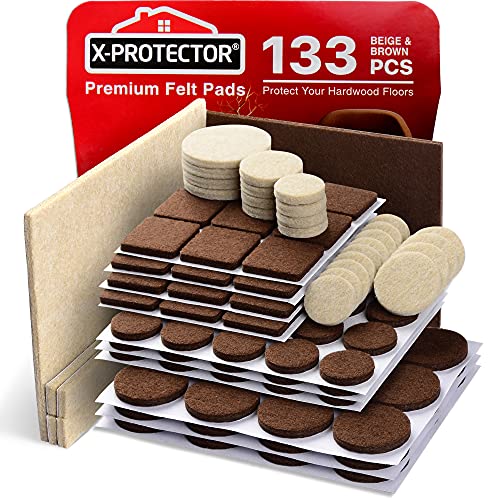
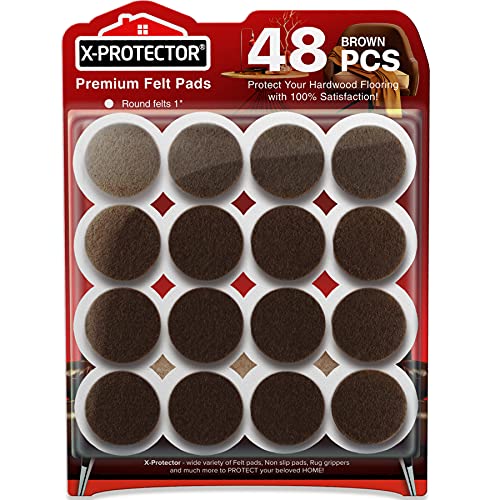
Prevent scratches on chevron floors by blocking two causes: grit (sand-like particles) and point pressure (furniture and shoes). Use felt pads/glides, place quality doormats, and clean gently so you don’t grind particles into the finish.
This advice is for homeowners and renters with chevron wood floors (or finished wood flooring) who are seeing scuffs, scratches near entryways, or marks from chairs, pets, or everyday foot traffic.
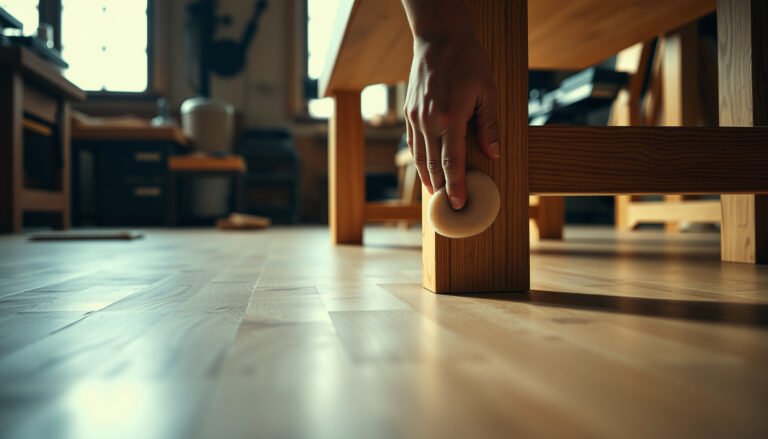
Protect furniture legs with felt pads and glides
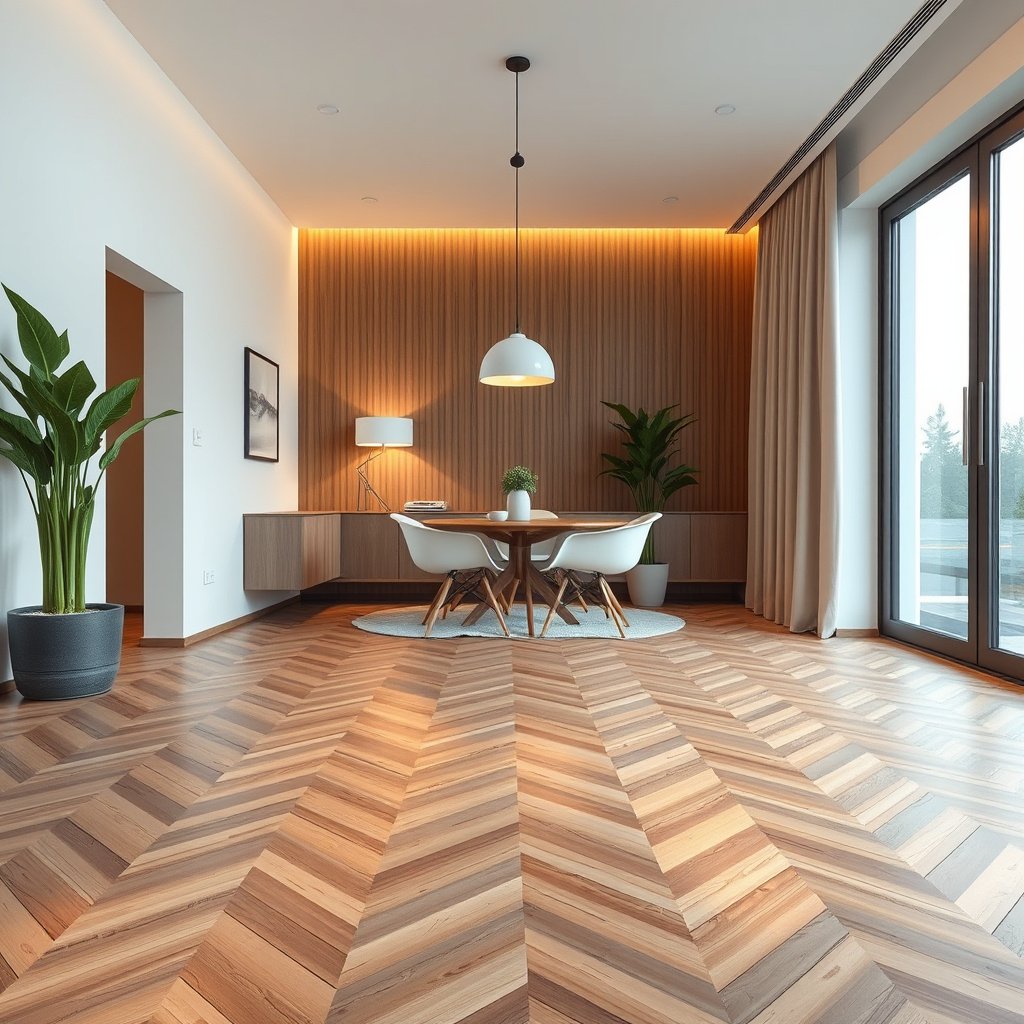
Point pressure is one of the fastest ways chevron wood floors get scratched, because a small contact point concentrates force on the chevron planks. The direct fix is to reduce that load and friction with felt pads for everyday chairs—and glides for heavier pieces—so the floor never takes the “impact.”
Felt pads reduce both friction and point pressure from chair and table legs, which helps prevent localized abrasion on finished wood floors.
Glides distribute weight over a larger footprint than bare plastic or metal feet, lowering the stress applied to individual chevron planks.
What to do on day one
– Add felt pads to every chair/table leg (replace worn pads—slick bare plastic can become a scratch source).
– Use wider glides under heavy items to reduce “point loads” on the chevron planks.
– Lift instead of dragging when moving furniture across the pattern.
Why this works on chevron layouts
Chevron flooring creates a strong visual pattern, but the planks are still individual wood strips with a protective topcoat. When furniture legs drag even slightly—especially across the grain/diagonal lines—particles and the leg’s edge effectively “mill” the finish. That’s why worn pads are such a common culprit: once the felt flattens or tears, the surface can become nearly as hard as plastic.
Also, pay attention to “high stress zones” in chevron wood floors: chair legs near the living room edge, desk chairs rolling onto a runner, and the front of the sofa where foot traffic pivots.
Stop grit at the door (and in the cleaning routine)
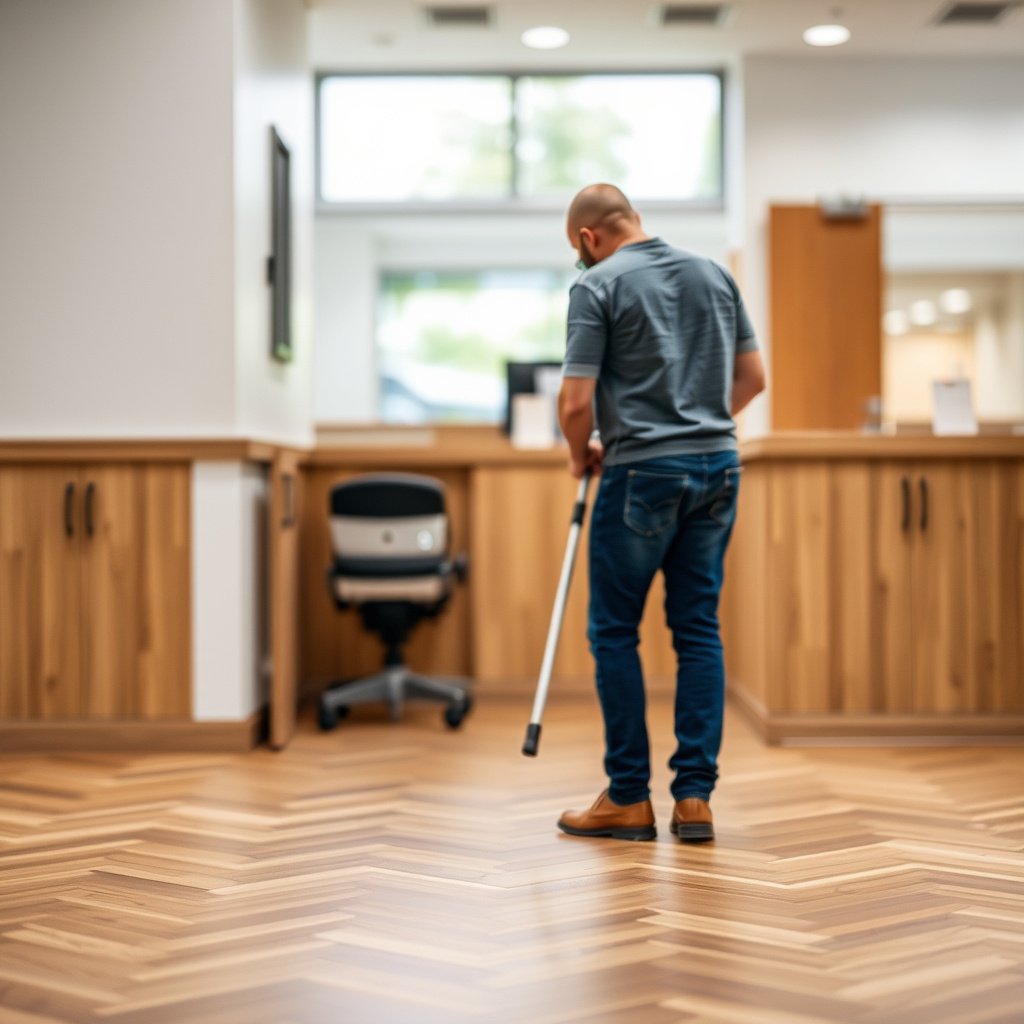
Grit scratches chevron floors because tiny abrasive particles move like sandpaper when they’re pushed across the surface. The practical strategy is to trap grit at entries first, then vacuum/dry-dust correctly so you’re removing particles instead of grinding them into the chevron finish.
Entrance matting is a core grit-control step because footwear is a primary pathway for abrasive dirt to reach indoor surfaces.
Vacuuming with a floor-safe head helps remove grit that would otherwise be transferred while mopping, reducing abrasion risk on coated wood floors.
Daily/weekly routine that actually protects chevron wood floors
– Put a mat at every exterior entrance and use a small “shake-off” rug by the entry.
– Sweep or dry-dust regularly, then use a vacuum with a floor-safe head (avoid spinning brushes that can abrade).
– When mopping, use only finish-safe products and don’t let grit get pushed around.
The “grit math” (why even small amounts matter)
A few particles may not look like a problem—but wood finishes fail at the microscopic level. According to the U.S. Geological Survey, sand grains are generally about 0.0625–2.0 mm in diameter, which is large enough to act like abrasive grit when trapped under shoes or pet paws (). According to industry guidance often cited by cleaning organizations, a large share of indoor soil enters through entrances (commonly “up to 80%,” depending on study conditions) (). Combine that with furniture point pressure and chevron wood floors can show scratches surprisingly quickly—especially at entryways.
From the floor-care perspective, chevron wood floors are especially vulnerable because cross-direction foot movement (turning, pivoting, carrying items) keeps transferring grit across many planks.
Clean and maintain the finish without wearing it down
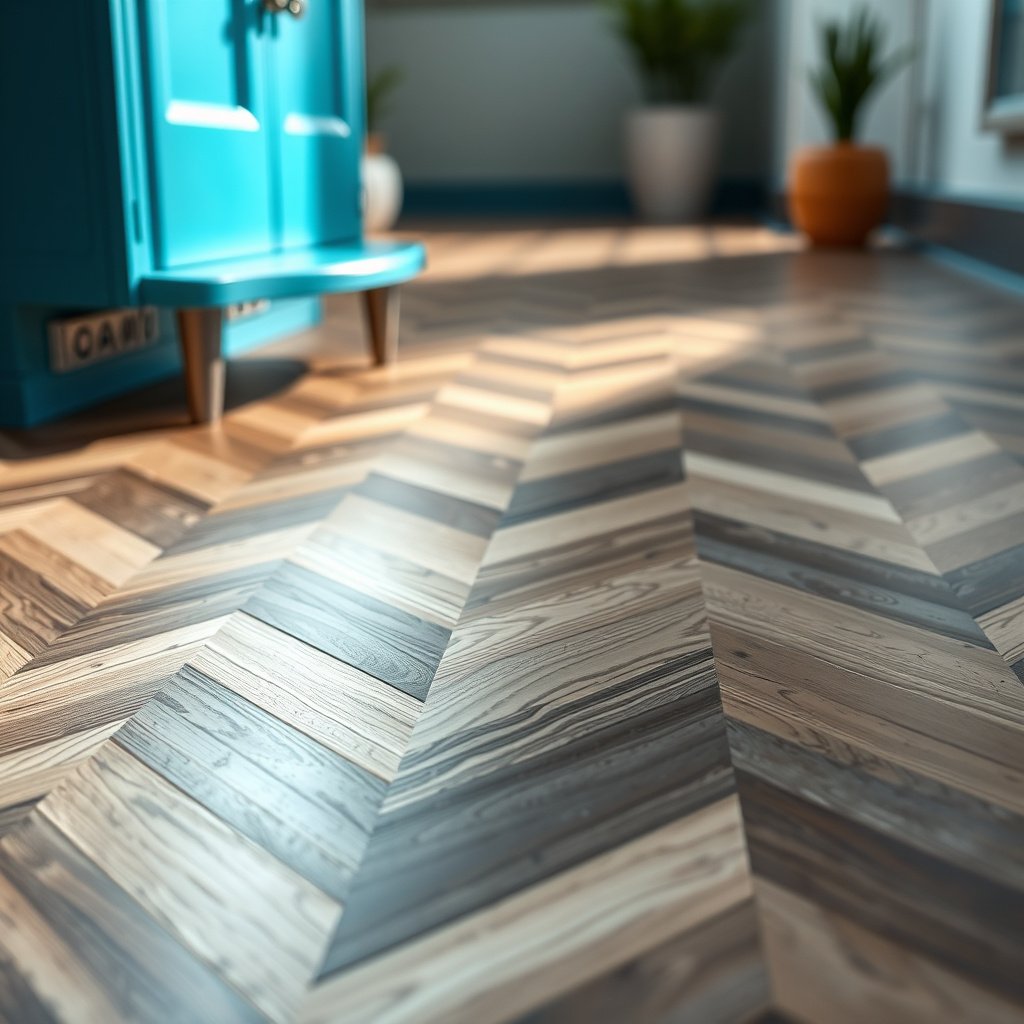
The cleanest maintenance is also the gentlest—because aggressive cleaning abrades the finish as surely as grit does. For chevron floors, the goal is to clean contaminants without dulling or thinning the protective topcoat that shields the wood and grout-like edges between planks.
Finish manufacturers typically require using only cleaners approved for the specific coating system to avoid dulling, softening, or stripping.
Abrasive pads and harsh scrubbing can increase surface wear by mechanically removing topcoat material on finished wood floors.
Follow the rules that match your chevron floor’s topcoat
– Follow the floor finish manufacturer’s cleaning instructions (especially for polyurethanes/UV-cured finishes).
– Avoid abrasive pads, “scrub” brushes, and harsh all-purpose cleaners that can dull or compromise the topcoat.
– If the floor is looking rough, consider whether it needs re-coating/refinishing rather than repeated aggressive cleaning.
Quick comparison: what to do vs what to avoid
| Approach | Pros for chevron floors | Main downside |
|---|---|---|
| Microfiber + approved cleaner | Removes residue without heavy abrasion | Requires using the right product for your finish |
| Abrasive pads / scrub brushes | May remove grime fast on contact | Can dull the chevron floor’s sheen and increase wear |
| Harsh all-purpose cleaners | Convenient and readily available | Can compromise coating chemistry over time |
If chevron wood floors start looking “dry,” “cloudy,” or uneven in sheen, that’s often a finish-wear signal—not a dirt-removal signal. In that case, switching cleaning styles can help, but re-coating/refinishing may be the durable fix.
Minerals Commonly Found in Tracked Outdoor Grit and Their Abrasiveness (Mohs Scale)
| # | Tracked grit mineral | Typical nearby source | Why it scratches chevron floors | Best protection action | Mohs hardness |
|---|---|---|---|---|---|
| 1 | Quartz | Sand, soil, and concrete dust | Hard particles abrade the topcoat during foot traffic | Use mats + dry-dust/vacuum before mopping | 7 |
| 2 | Feldspar | Gravel and road dust | Sustains micro-scratches across seams and edges | Keep entry doormats clean and shake off rugs | 6 |
| 3 | Magnetite | Iron-rich soil and aggregate | Higher hardness increases abrasion under rolling shoes | Vacuum with a floor-safe head; avoid brush agitation | 6 |
| 4 | Calcite | Limestone dust from sidewalks/driveways | Less hard than quartz but still abrades when trapped | Use a second mat zone inside the entryway | 3 |
| 5 | Gypsum | Dust from some construction materials | Lower hardness but can still contribute to dulling | Control tracked grit during construction/renovations | 2 |
| 6 | Talc | Some road/yard dust sources | Low hardness, but frequent traffic can still wear finish | Routine dry-dusting prevents buildup | 1 |
| 7 | Corundum | Crushed mineral aggregates (rare) | Very hard particles accelerate topcoat wear quickly | Aggressive grit control with mat strategy during peak traffic | 9 |
(That mineral mix is why “good enough” cleaning—like dry sweeping that pushes debris around—can still lead to scratches on chevron wood floors. The fix is removing grit, not just redistributing it.)
Reduce traffic damage with rugs and shoe rules
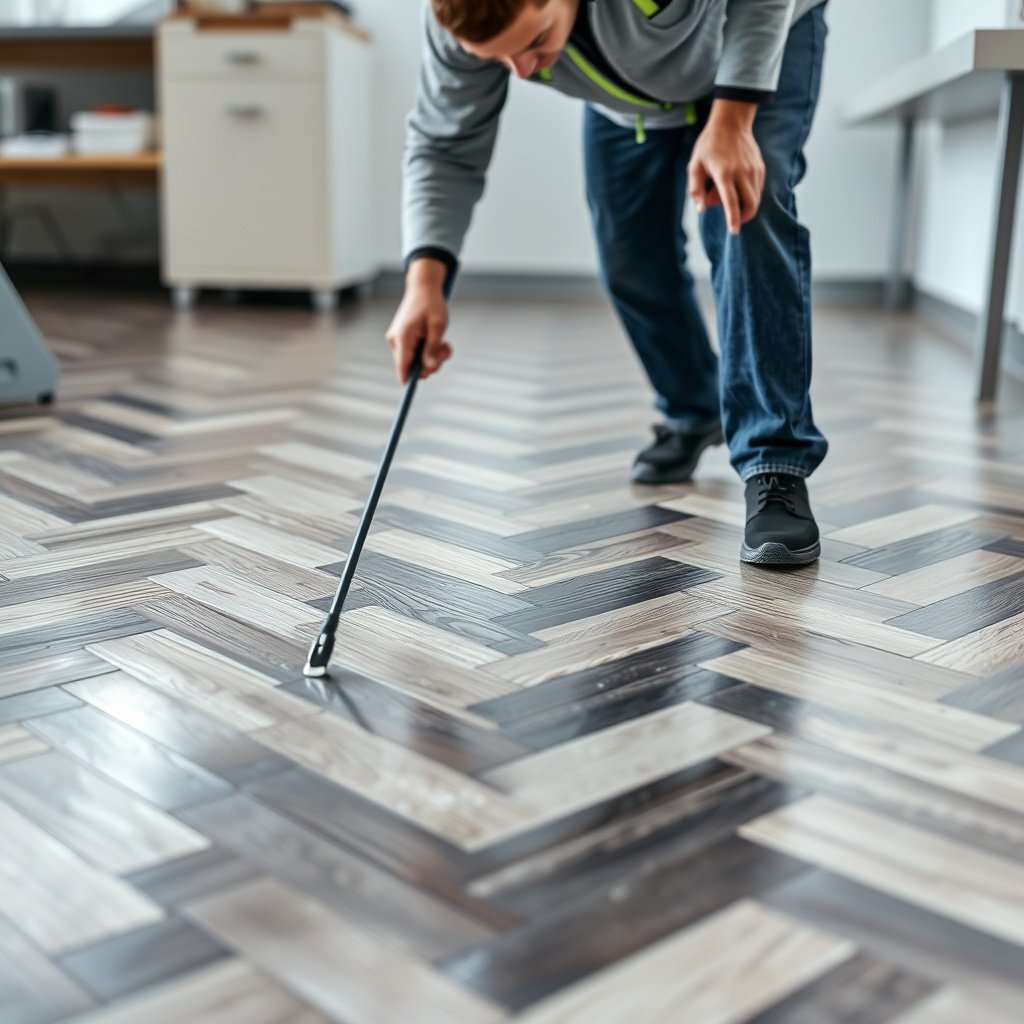
Rugs and shoe policies reduce the two ingredients scratches need: friction and abrasive transfer. For chevron floors, the best results come from placing rugs where people turn and stop—hallways, entry paths, and in front of seating—then keeping grit-prone shoes off the finish.
Runners and area rugs act as sacrificial wear surfaces by catching abrasion before it reaches wood seams and finish.
Removing shoes indoors reduces the amount of tracked grit that can abrade a floor’s topcoat.
Target the “wear funnel” on chevron wood floors
– Use runners or area rugs in hallways and in front of high-traffic seating to catch abrasion before it reaches the chevron seams.
– Encourage “wipe-and-go” footwear habits: remove grit-prone shoes indoors when possible.
– Keep pet nails trimmed—scratch risk often increases near couch edges, feeding areas, and pathways.
Practical notes that matter
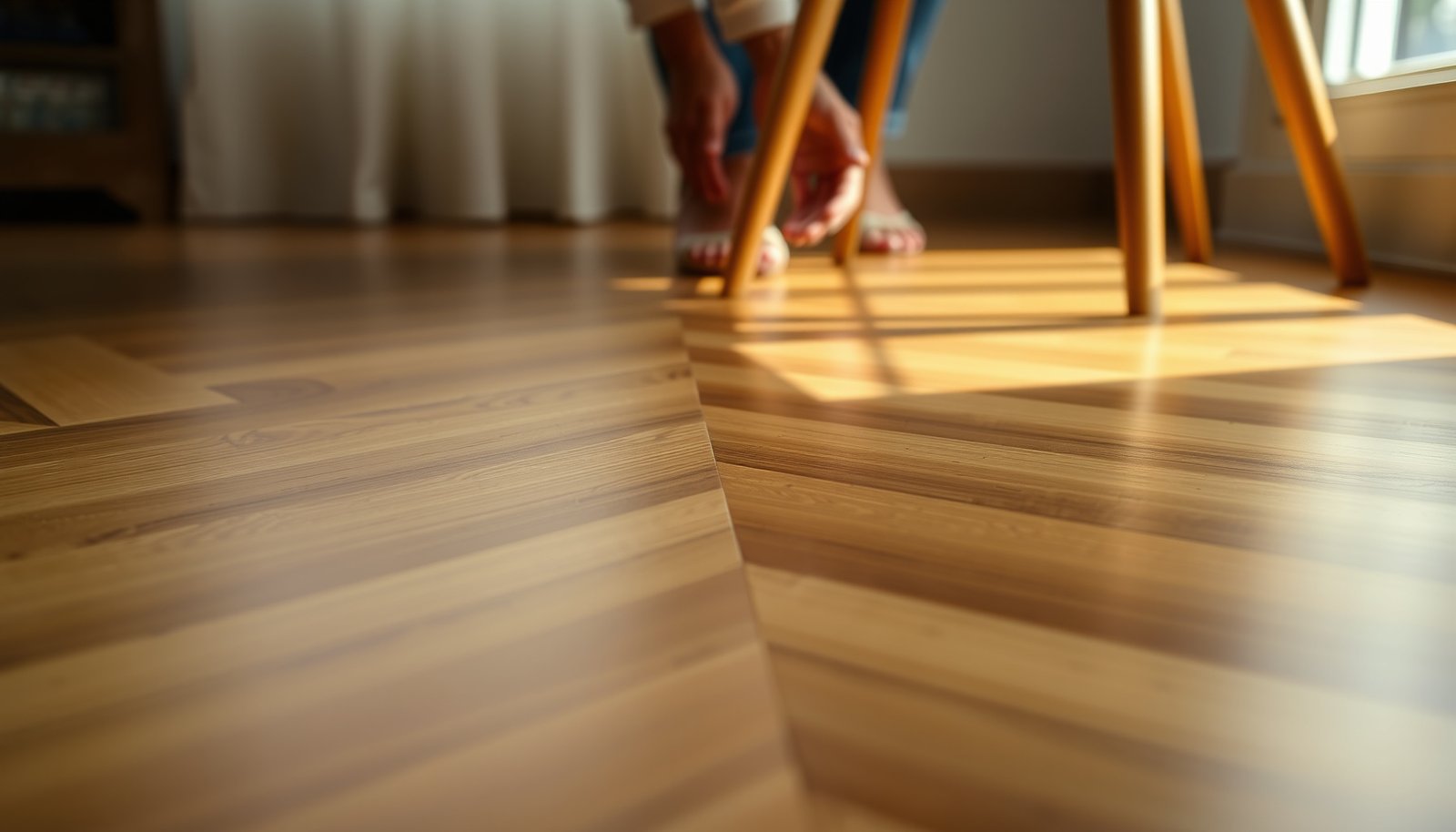
Chevron scratches often appear as short runs or scuffed streaks that match traffic direction. That pattern usually means someone “pivots” their feet at that location—perfect conditions for grit to shear across the topcoat.
For rugs, make sure the rug backing and padding are floor-friendly (some rubber backings can interact with finishes over time). If you’re unsure, use a rug pad designed for finished hardwood.
Repair scratches early so they don’t keep spreading
Early intervention is cheaper and less visible on chevron wood floors because small damage grows through repeated friction. The answer is to treat light scuffs as surface issues first, then address deeper scratches as finish-topcoat damage that may require professional repair or refinishing.
Surface scuffs may be removable with finish-approved cleaners/polishes, while deeper scratches that breach the topcoat typically need topcoat repair.
Touch-ups and repairs work best when the repair strategy matches the floor’s coating chemistry and wear layer.
Steps that limit “scratch propagation”
– For light surface marks, try the gentlest approach first: a manufacturer-recommended cleaner/polish designed for your finish type.
– For deeper scratches, plan for touch-up or a professional refinish—patching works best when you address the damaged topcoat layer correctly.
– Don’t sand an unknown finish “just a little” across the chevron pattern; uneven sanding can create a visible sheen difference.
Why “unknown finish” is a real risk
Chevron floors can be finished with oil-modified systems, water-based polyurethanes, or UV-cured coatings. Each behaves differently under cleaners and repair products. If you sand without knowing the finish system, you can create an uneven wear pattern—then cleaning “everywhere” won’t correct the sheen mismatch.
If you’re unsure what you have, check the installation paperwork or contact the installer/manufacturer before you spot-repair.
What can go wrong (common mistakes)
A lot of chevron-floor scratches are preventable, but a few common habits accelerate wear fast. The main problem is treating symptoms (visible marks) with methods that keep abrading the chevron finish underneath.
Using abrasive tools, steam, or aggressive scrubbing can escalate tiny surface scratches into broader dull areas by mechanically wearing the coating.
If you don’t control tracked grit, felt pads and careful furniture placement may still fail because particles keep acting as the abrasive.
Common mistake list (and what to do instead)
– Using the wrong cleaning tools (abrasive pads, steam, or aggressive scrubbing) can turn tiny scratches into dull, permanently worn areas.
– Skipping mat strategy: without grit control, felt pads alone won’t stop scratches caused by particles embedded in shoe soles or paws.
– Choosing a repair method that doesn’t match the finish: different topcoats (oil vs. varnish/poly) require different products and processes.
Also watch for “hidden” scratch creators: grit under chair pads, tiny stones trapped in rug edges, and pet claws interacting with the same traffic corridor repeatedly.
Verdict / tip
For most homes, the most reliable scratch prevention on chevron floors is a “systems” approach: felt pads + mat strategy + finish-safe cleaning + targeted rugs in traffic paths. The downside is that it takes consistency (pads and mats need regular checking), and repairs may still be needed for deep damage. If your floor’s finish is already badly worn or you’re unsure what finish it has, before trying touch-ups or sanding.
Quick checklist (save this)
– [ ] Felt pads on every furniture leg (check monthly)
– [ ] Doormat(s) at all entrances + shoe wipe habit
– [ ] Vacuum with floor-safe head / no abrasive attachments
– [ ] Gentle, finish-safe cleaner only
– [ ] No abrasive pads, no harsh scrubbers
– [ ] Runners/area rugs in hallways and seating zones
– [ ] Trim pet nails regularly
– [ ] Touch-up only if you know the finish type
Sources
– National Wood Flooring Association (NWFA) — wood floor care and maintenance guidance (e.g., grit control, cleaning approach).
– Bona / Loba / other finish manufacturers — “use approved cleaners for your finish” and maintenance instructions for coated wood floors.
– Your chevron floor installer or manufacturer’s care instructions (the authoritative source for your exact topcoat).
Frequently Asked Questions
What are the most common causes of scratches on chevron floors?
Scratches on chevron floors are usually caused by grit being tracked in, abrasive debris from dust mops, and sharp edges on furniture or pet claws. In many homes, the finish also gets worn down over time, making everyday contact more damaging. High-traffic areas like entryways and hallways are where chevron flooring typically shows scratch marks first.
How can I prevent scratches on chevron floors from everyday foot traffic?
Use a quality doormat at every entry and add an extra rug runner in hallways to trap dirt before it reaches the chevron floor. Vacuum or sweep frequently using a soft attachment, and avoid harsh dry mopping that can grind particles into the finish. For indoor shoes, consider barefoot-friendly or soft-soled footwear to reduce micro-scratches.
How should I protect a chevron floor from furniture scuffs and dragging?
Install felt or rubber pads under chair legs, tables, and cabinets, and replace them when they thin out. When moving furniture, lift and carry whenever possible—dragging—even lightly—can leave visible marks on chevron patterns. For heavy items, use furniture sliders designed for wood or finished floors to minimize abrasion.
Best way to stop chevron floor scratches caused by pets and high-activity areas?
Keep pet nails trimmed and smooth, and consider using nail caps to reduce the chance of claw scratches. Place area rugs or protective runners in zones where pets spend time, such as near food bowls or beds, since constant scratching points will build up over time. You can also choose a scratch-resistant floor cleaner recommended for your chevron floor finish to help maintain protective layers.
Which protective products and routines work best to keep chevron floors scratch-free?
A combination of felt pads, entry mats, and routine cleaning is the most reliable prevention strategy, but using the right maintenance product matters too. Apply floor protectants or polish only if they’re compatible with your specific chevron floor finish (urethane, oil, or wax) to avoid dulling or adhesion issues. Periodically refresh the protective coating according to the manufacturer’s schedule to keep chevron flooring more resistant to scuffing and scratches.
📅 Last Updated: October 15, 2026 | Topic: How to prevent scratches on chevron floors? | Content verified for accuracy and freshness.
References
- Wood flooring
- NWFA | National Wood Flooring Association
- American Hardwood Information Center | American Hardwood Information Center
- Bring out the beauty in floors
- LOBA: Agência de Transformação
- Armstrong Flooring®
- RFCI – Resilient Flooring Covering Institute
- https://scholar.google.com/scholar?q=prevent+scratches+on+hardwood+floors+felt+pads+rugs+maintenance Google Scholar
- https://scholar.google.com/scholar?q=wood+floor+surface+protection+scratch+prevention+chairs+casters+abrasion Google Scholar
- https://scholar.google.com/scholar?q=hardwood+floor+care+how+to+prevent+scratches+humidity+cleaning+avoid+abrasives Google Scholar