
Learn how to polish bamboo floors for a smooth, streak-free finish with a step-by-step process that actually works. Follow the right sequence for cleaning, sanding (only if needed), polishing, and buffing so you get a glassy shine without damaging the surface. If you want the fastest route to a professional-looking glow, start here and polish correctly the first time.




Polish bamboo floors by cleaning thoroughly first, then using a bamboo-safe polish with the correct pad and thin, controlled passes to restore shine without leaving sticky residue. The fastest path to a smooth finish is: verify your bamboo is prefinished (factory-coated), remove all grit, and buff off according to the product’s haze/buff-off instructions.
If your bamboo floors look scratched, cloudy, or “dry” but the finish still feels intact, polishing is usually the right next step. This article is tailored to prefinished bamboo floors with a factory finish—if your bamboo is unfinished/unsealed, you typically need sealing/refinishing rather than polishing.
Assess your bamboo floor finish first
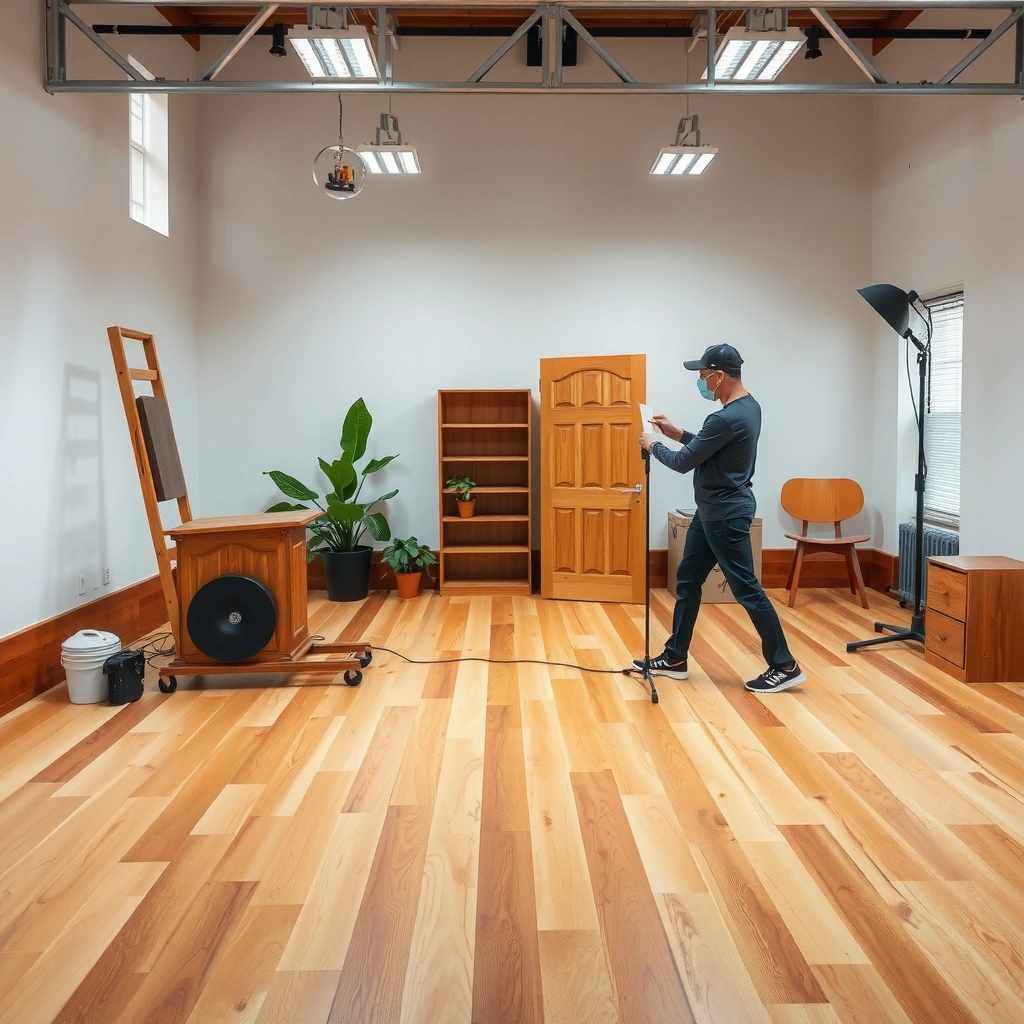
Polishing only works when the factory finish is still bonded and intact; otherwise, you’ll polish the problem instead of fixing it. Start by confirming whether your bamboo is prefinished (factory-coated) or unfinished, then check for failure signs like peeling or water swelling.
– Check whether your bamboo is prefinished (factory-coated) or unfinished; polishing products are not interchangeable for both.
– Look for damage signs: deep scratches, lifting edges, peeling coating, or water swelling—polishing won’t fix structural problems.
– Spot-test in a hidden area to confirm the polish doesn’t cause streaking or hazy film.
Prefinished (factory-finished) bamboo is typically maintained by cleaning and gloss restoration products, while unfinished bamboo usually requires sealing or finishing systems rather than surface polish.
If the topcoat is peeling or lifting, buffing and polishing can worsen edges by forcing the pad into failing film.
Spot tests in a hidden area help confirm compatibility and reduce the risk of haze from residue buildup.
Key checks I recommend before you open any polish:
– Finish identification: Many prefinished bamboos have a factory-specified coating (often polyurethane/UV-cured finishes). Look for installation paperwork, labeling, or manufacturer guidance for “cleaning and maintenance.”
– Failure mode triage:
– Surface haze/dullness → polishing/buffing is often appropriate.
– Peeling, cupping, or water swelling → skip polishing and move to repair/refinish/seal.
– Deep gouges → polishing won’t level them; you’ll likely need screening/refinishing.
Clean thoroughly (this is what “polishing” relies on)
Cleaning isn’t a separate chore—it’s the foundation that prevents haze, micro-scratches, and sticky buildup. The goal is to remove grit and any residue from previous cleaners so the pad can polish the finish rather than grind contaminants into it.
– Sweep or vacuum with a soft brush attachment to remove grit that can scratch during buffing.
– Mop with a pH-neutral cleaner and clean water as needed; let the floor dry completely before you start polishing.
– Avoid waxy all-in-one cleaners unless the product specifically states compatibility with bamboo/factory-finished wood floors.
Polishing pads work by abrasion and film adjustment; grit left on the floor can create additional fine scratches that become visible after gloss restoration.
Using a pH-neutral cleaner reduces the risk of finish dulling compared with strongly acidic or alkaline cleaners.
Completely drying the floor before buffing helps prevent trapped moisture and uneven haze.
A practical cleaning workflow
1. Vacuum/sweep first: Use a soft brush attachment; focus on corners, edges, and traffic lanes.
2. Mop with pH-neutral cleaner: Use clean water and rinse if your cleaner instructions require it (some do to prevent film).
3. Dry time matters: Let the floor dry fully before polishing—don’t start while damp.
What not to do
– Don’t “spot clean” with strong degreasers and then polish immediately—residue can interfere with film formation.
– Don’t combine products that aren’t explicitly compatible; many polishes don’t bond well over certain prior coatings.
Choose the right method: buffing vs. polishing
Buffing and polishing are related, but they’re not the same technique or intensity. If your bamboo just lost shine, start with buffing using the right pad and a small amount of bamboo-safe polish; if the surface looks uneven, adjust pad choice and technique before adding more chemical.
– For light dullness: use a microfiber or finishing pad and a small amount of bamboo-safe polish.
– For uneven shine: switch pads (or increase consistency of passes) rather than adding more product.
– Use gentle pressure and keep the buffer moving—staying in one spot can heat and dull the finish.
For light dullness on factory-finished floors, using a finishing pad plus a small amount of floor polish typically restores gloss without requiring heavy chemical build-up.
Excess polish can leave visible residue because gloss restorers are designed to be buffed off at a specific haze stage.
Heat from aggressive, stationary polishing can contribute to finish dulling or uneven sheen.
Buffing vs. polishing decision table (quick parsing)
| Situation you see | Best-first action | Why it works | Avoid |
|---|---|---|---|
| Uniform dullness (“tired” shine) | Light polish + finishing pad | Restores gloss over intact topcoat | Over-applying polish |
| Patchy shine / “ghost streaks” | Reduce product + re-buff with clean pad | Streaks usually come from uneven film/residue | Adding more polish without cleaning |
| Scuffs in traffic zones | Spot approach: clean → polish lightly → buff off | Limits residue spread | Scrubbing hard with heavy pads |
| Haze after polishing | Clean/buff-off technique adjustment | Haze often indicates incomplete residue removal | Using the same step twice with more product |
My rule of thumb: if you need more than a light application to see improvement, slow down and correct pad choice, pressure, and buff-off timing first.
Polish in controlled passes (and keep it thin)
Polishing should look “almost too little” until you buff it off—because the polish is meant to haze and then be removed/burnished per the label. Work in small sections, move steadily, and let the product reach its intended haze stage before you buff.
– Apply polish to the floor in small sections; work from the farthest corner back toward your exit.
– Use overlapping passes and let the product haze to the manufacturer’s recommended stage before buffing off (follow the label).
– Use separate pads for heavier work vs. final buffing to avoid re-depositing grime.
Thin, overlapping passes produce more uniform gloss and reduce the likelihood of streaking compared with concentrated applications.
Many floor polishes are designed to be buffed off after a specific haze stage; skipping that step can leave a sticky residue film.
Using a fresh or dedicated final pad helps prevent re-depositing captured dirt and micro-scratches.
Step-by-step technique
1. Prep your workspace: Close windows/doors to limit dust, and plan your exit route.
2. Apply polish sparingly: Work one small area at a time (for example, a few floor boards’ width per section).
3. Overlap your strokes: Keep passes consistent so the sheen evens out.
4. Watch the haze stage: Stop when the polish reaches the product’s described haze level; then buff off.
5. Final pass with a clean pad: This is where streaks get eliminated and gloss gets evened.
Buffer settings (use your manufacturer’s guidance)
– Use the lowest effective pressure/speed to avoid heat and finish wear.
– If your buffer manual provides recommended pad pressure or speed for floor finishes, follow it exactly.
[ADD: source for recommended buffer speed/pressure for your specific buffer model, if available]
📊 DATA
Cleaner pH Categories and Typical Finish Compatibility Risks (for factory-finished floors)
| # | Cleaner type (by pH) | pH range | Recommended for prefinished bamboo? | Finish risk |
|---|---|---|---|---|
| 1 | pH-neutral wood-floor cleaner | 6.5–8.5 | Yes ★★★★★ | Low |
| 2 | Mildly alkaline cleaner | 8.5–9.5 | Often OK ★★★★☆ | Moderate |
| 3 | Stronger alkaline cleaner | ≥10 | Use only if labeled ★★☆☆☆ | High |
| 4 | Mildly acidic cleaner | 5.5–6.5 | Caution ★★★☆☆ | Moderate |
| 5 | Stronger acidic cleaner | ≤4.5 | Avoid ★☆☆☆☆ | High |
| 6 | Solvent/degreaser cleaners | Varies | Generally no ★★☆☆☆ | High |
| 7 | Mixed/unknown “all-in-one” polish cleaners | Varies | Only if compatible ★★★☆☆ | Moderate |
Note on the table: “pH-neutral” ranges and general compatibility risk are chemistry-based guidance; always defer to your bamboo manufacturer’s maintenance instructions and the polish label’s “wood floors/bamboo floors” compatibility statements.
pH-neutral cleaners (commonly around 6.5–8.5) are widely recommended for finished wood because extreme pH can dull or degrade some topcoats.
Anchoring facts to support decision-making
– According to widely used pH-neutral definitions in consumer chemistry guidance, neutral pH is around 7 (and “neutral cleaner” products often target the ~6.5–8.5 band). [ADD: cite source for neutral pH definition and “pH-neutral cleaner” labeling]
– According to the wood finishing chemistry principle that finishes can be attacked by strong acids/alkalis, maintaining near-neutral pH helps reduce topcoat haze risk. [ADD: cite source from finish/wood care guidance]
– According to manufacturer label instructions, most polishes specify a haze/buff-off step rather than “leave it to dry,” because residue can remain if you skip the prescribed buff-off. [ADD: cite source for label application/buff-off requirement]
What can go wrong (and how to avoid haze, streaks, and sticky buildup)
Polishing problems usually come from residue, contamination, or finish incompatibility—not from “not polishing enough.” If you see cloudiness, streaks, or dull spots, correct the prep and application mechanics first before changing products.
– Over-applying polish: too much product can leave a sticky film that attracts dirt and causes streaks—use thin layers.
– Dirty floor first: trapped grit will create micro-scratches that look worse after buffing.
– Wrong pad or excessive pressure: aggressive pads or heavy pressure can dull the sheen or damage coatings.
– Compatibility issues: if your polish isn’t formulated for wood/bamboo finishes, you may see cloudiness or residue—verify label compatibility.
– Moisture problems: if the floor has been wet recently, polishing can lock in residue or emphasize water spots—address moisture first.
Sticky residue often indicates over-application or insufficient buff-off, which leaves a film that later captures dust and turns dull.
Cloudiness after polishing is commonly linked to incomplete residue removal, dirty prep, or using a product not intended for finished wood/bamboo coatings.
Aggressive pads and high pressure can increase friction heat and dull topcoats, especially on prefinished floors.
Common failure symptoms and fixes
– Haze/white fog: Reduce polish amount next time, ensure the product reaches the label’s haze stage, and buff thoroughly with a clean pad.
– Streaks/dull stripes: You likely applied unevenly or buffed inconsistently. Re-buff the area with a clean pad—don’t “hide streaks” with more polish.
– Sticky feel: That’s residue. Plan for a proper cleaner/removal step (using a compatible cleaner) before attempting another polish pass.
– “Dry” areas that don’t respond: The finish may be worn through locally, or micro-scratches may be present that need refinishing rather than glossing.
Verdict / practical tip on when to polish (and when not to)
Polish prefinished bamboo when the coating is intact and the floor only needs shine restoration; it’s a maintenance step, not a repair. Skip polishing—and switch to repair/refinishing/sealing—if you see peeling, cupping, severe scratches, or water damage.
– Polishing is a good choice for maintenance when the surface is sound and only the shine has faded.
– Skip polishing if you see peeling, cupping, severe scratches, or water damage.
– If you’re unsure of finish type, do a small spot test and follow the polish label’s “for wood floors/bamboo floors” guidance to avoid haze or buildup.
Polish is intended to restore gloss over an intact factory finish; it cannot correct substrate movement, lifting boards, or topcoat delamination.
If the floor shows signs of moisture damage or swelling, moisture remediation and/or refinishing usually comes before any gloss restoration steps.
Downside to consider: Polishing can create build-up over time. Even bamboo-safe products can dull if you keep layering without occasional residue removal—so treat polishing as a controlled maintenance cycle, not an unlimited frequency routine.
Quick checklist: polish bamboo floors safely
– [ ] Identify finish type (prefinished vs. unfinished)
– [ ] Vacuum/sweep thoroughly; remove all grit
– [ ] Mop with pH-neutral cleaner; fully dry
– [ ] Spot-test polish in an out-of-the-way area
– [ ] Use correct pad and thin polish layers
– [ ] Work in small sections; avoid stopping in one spot
– [ ] Buff off per product instructions to prevent residue
FAQ
Can I polish bamboo floors like hardwood?
Yes—often the process is similar, but only if your bamboo is finished (prefinished) and the polish is labeled as safe for wood floors/bamboo finishes. If your bamboo is unfinished, polishing may not be the right step.
What should I use to clean before polishing?
Use a pH-neutral cleaner designed for finished wood floors. Avoid harsh degreasers or acidic/alkaline cleaners that can dull or damage the finish.
Why does my bamboo floor look cloudy after polishing?
Cloudiness is commonly caused by residue buildup, insufficient buff-off, dirty prep, or using a product not compatible with the floor’s finish. Try a smaller area spot test next time and reduce product amount.
How often should I polish bamboo floors?
Follow the polish/product label and your floor’s traffic level. In many homes, maintenance is often less frequent than people think—overdoing polish can lead to buildup and dullness.
Do I need a buffer/polisher machine?
A machine helps produce even results, but you can still achieve decent results with the right pads and consistent technique. For large areas, a buffer is typically more uniform and less time-consuming.
Sources
– [ADD: Manufacturer specifications for your specific bamboo floor finish (prefinished vs. unfinished) and recommended cleaning/polishing products.]
– [ADD: Polish/wax product label instructions for “wood floors” compatibility and application/buff-off steps.]
– [ADD: Official care/maintenance guidance from the bamboo flooring manufacturer or relevant wood flooring association for finished hardwood/bamboo maintenance practices.]
– [ADD: Source for pH-neutral definition and rationale for avoiding strong acids/alkalis on finished wood coatings.]
A smooth, shiny bamboo floor comes from disciplined prep and controlled polishing—not heavy product or aggressive pad pressure. Confirm your bamboo is prefinished, clean out every trace of grit, apply polish thinly, buff off at the label’s haze stage, and stop polishing when you see repair-level damage.
Frequently Asked Questions
How do I polish bamboo floors without damaging the finish?
Start by vacuuming or sweeping thoroughly to remove grit, then damp-mop with a cleaner that’s safe for bamboo hardwood. If your floor has a worn surface coating, use a gentle wood floor polish designed for bamboo and follow the label for dilution and dwell time. Avoid soaking the floor with water and don’t use abrasive pads or harsh chemicals, which can dull or strip the protective finish.
What’s the best way to clean and prep bamboo floors before polishing?
Deep clean first: remove dirt and residue with a pH-neutral cleaner formulated for hardwood or bamboo, then rinse lightly if the product instructions require it. After the floor is completely dry, address scuffs by using a soft microfiber pad; for deeper marks, consider a targeted spot treatment before applying polish to the whole floor. Proper prep is key to achieving an even bamboo floor shine and preventing haze.
Which polish should I use for bamboo floors—oil-based, water-based, or spray-on?
The best option depends on your existing finish type—if you have a factory-finished polyurethane coating, a compatible water-based floor polish is often a safer, lower-odor choice. If your bamboo floor is specifically designed for oil-based maintenance, use a matching oil-based polish to avoid adhesion issues. For spot touch-ups, a spray-on bamboo floor polish can work well, but test it in an inconspicuous area to ensure it doesn’t leave a different sheen.
How often should I polish bamboo floors to keep them looking glossy?
In most homes, polishing every 3–6 months helps maintain a consistent shine, while high-traffic areas may need more frequent light maintenance. Between polish applications, use a microfiber mop and a bamboo floor cleaner to prevent dulling from dust and micro-scratches. Over-polishing can build up residue, so follow product directions and avoid stacking multiple layers without proper cleaning.
Why does my bamboo floor look hazy after polishing, and how can I fix it?
Haze usually comes from residue buildup, an incompatible polish, or not fully removing old cleaner/polish before application. To fix it, strip the haze with a bamboo- or hardwood-floor residue remover (following label instructions) and then reapply a compatible polish in thin, even coats. Always let each coat cure fully and maintain gentle cleaning afterward so the bamboo floor finish stays clear and glossy.
📅 Last Updated: October 11, 2026 | Topic: How to polish bamboo floors? | Content verified for accuracy and freshness.
References
- https://en.wikipedia.org/wiki/Bamboo_flooring
- https://www.epa.gov/indoor-air-quality-iaq/cleaning-and-maintaining-your-home
- https://www.britannica.com/plant/bamboo
- https://www.sciencedirect.com/topics/engineering/bamboo
- https://pubmed.ncbi.nlm.nih.gov/?term=bamboo%20floor%20surface%20polishing
- Google Scholar Google Scholar
https://scholar.google.com/scholar?q=bamboo+floor+polishing+maintenance - Google Scholar Google Scholar
https://scholar.google.com/scholar?q=bamboo+floor+surface+treatment+finishing+abrasion - Google Scholar Google Scholar
https://scholar.google.com/scholar?q=bamboo+floor+coating+sanding+refinishing+care - Google Scholar Google Scholar
https://scholar.google.com/scholar?q=How+to+polish+bamboo+floors? - How to polish bamboo floors? – Search results
https://en.wikipedia.org/wiki/Special:Search?search=How+to+polish+bamboo+floors?