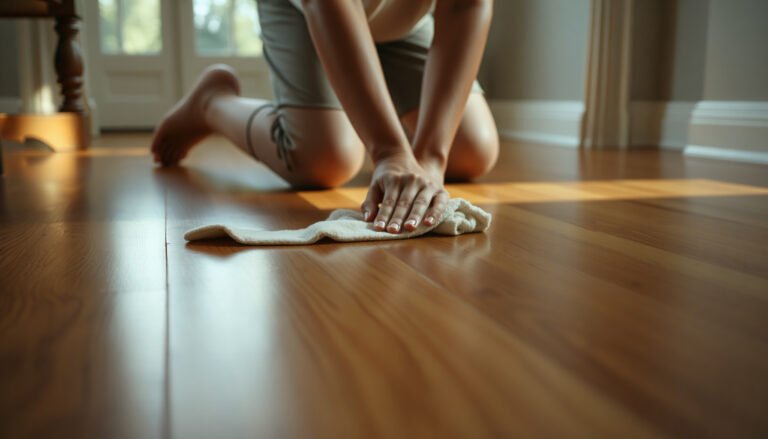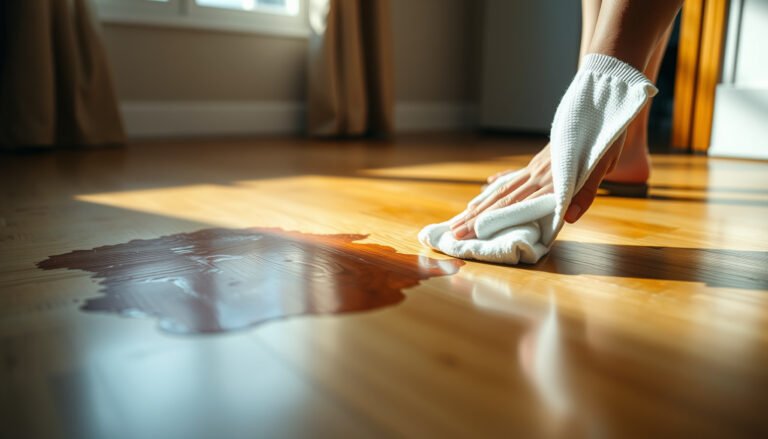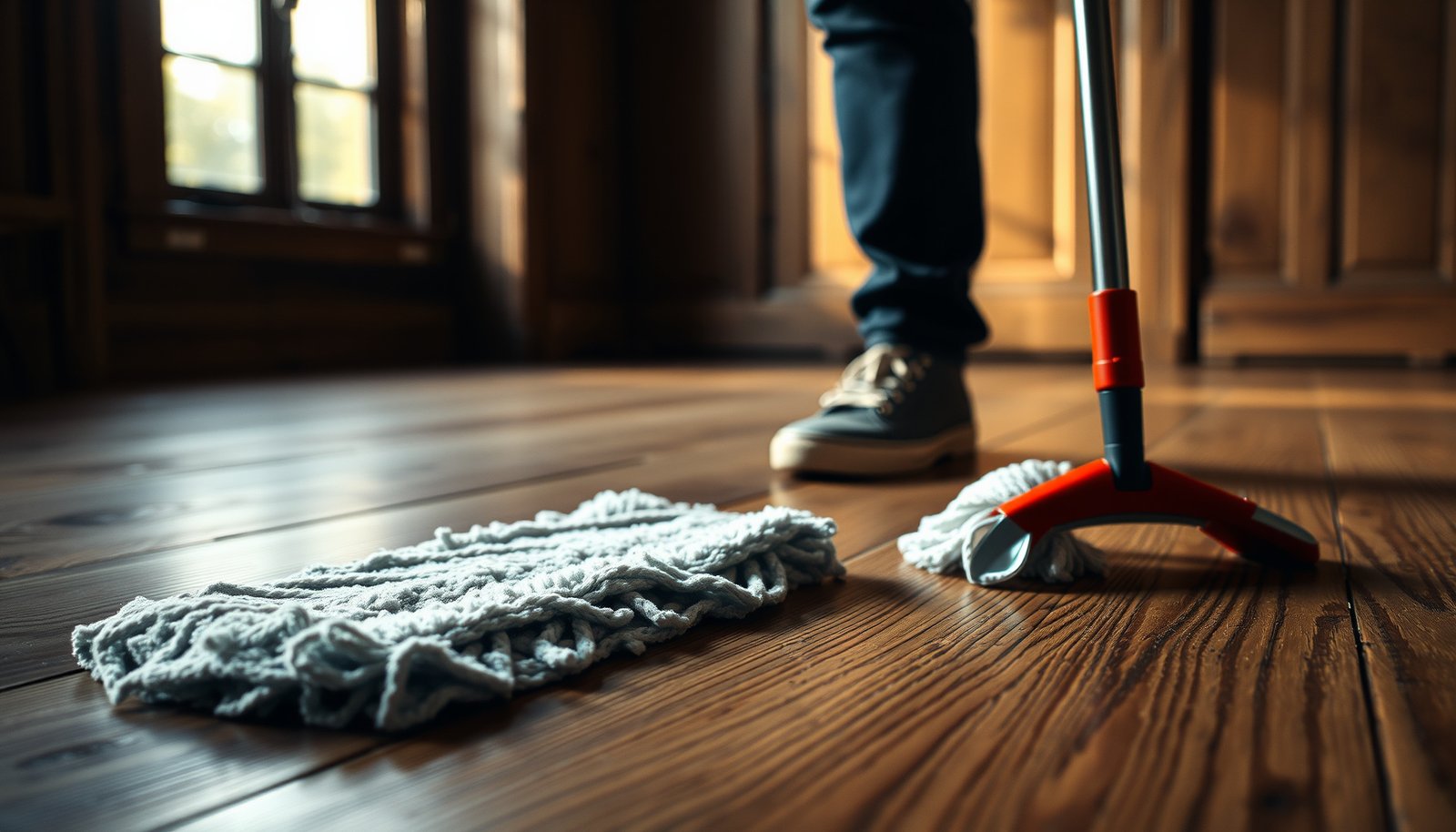

How to mop reclaimed wood floors without damaging the finish comes down to using the right cleaner and the right moisture level—because reclaimed wood is only as durable as its topcoat. Use a pH-neutral cleaner with a well-wrung microfiber mop and quick, minimal passes to lift grime without soaking the planks. If you follow that method, you’ll get a clean, streak-free floor while protecting the finish from swelling, clouding, and wear.



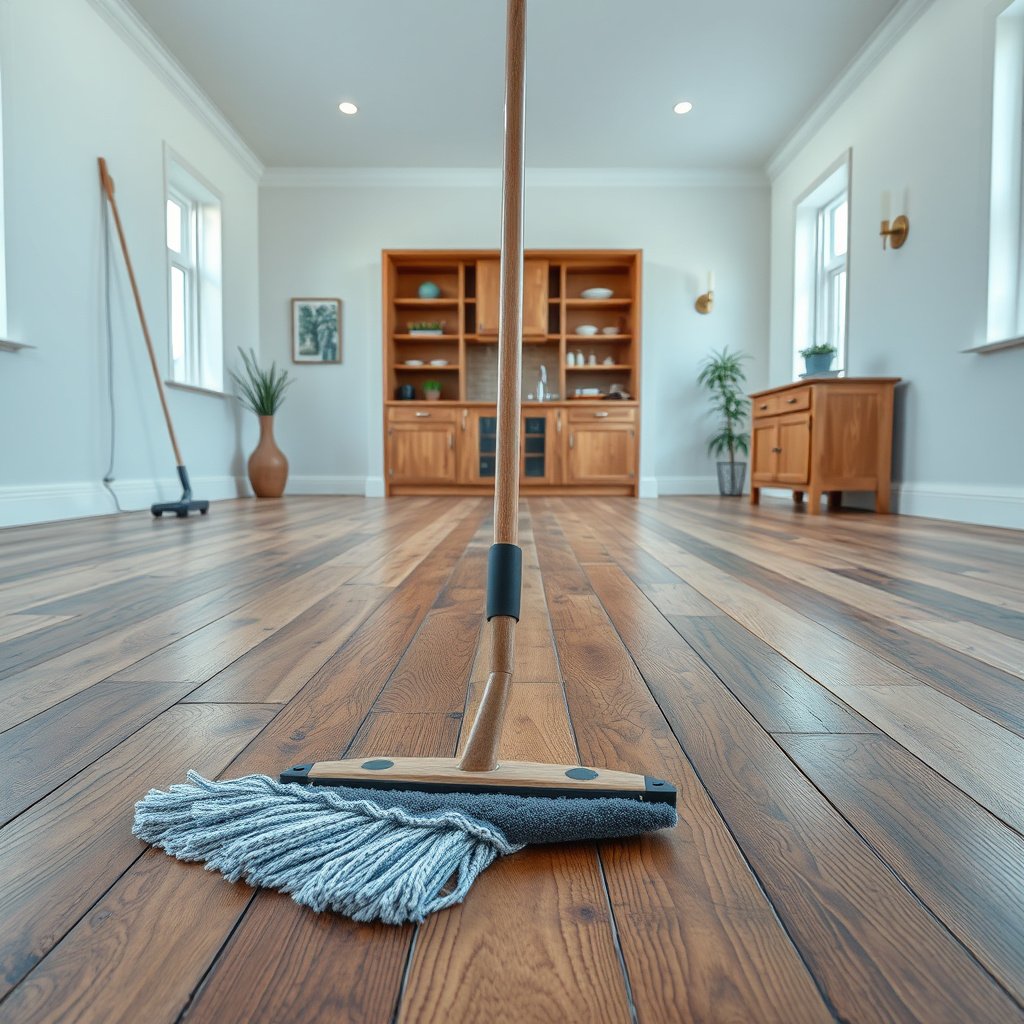
Mop reclaimed wood floors with a barely damp microfiber mop and a pH-neutral hardwood cleaner—never soak the boards. Work in small sections, keep the cleaner off the seams as much as possible, and dry promptly to help prevent swelling, warping, and dulling.
If your reclaimed wood is sealed (polyurethane/laminate-like finish) or properly coated, this approach usually keeps the floor looking good without pushing water into the gaps. If the finish is unknown, failing, or you’re seeing cupping/gaps, you’ll want extra caution and possibly a different cleaning method.
Reclaimed wood floors are especially sensitive because boards are older, may have wider seasonal movement, and can have seams that aren’t as consistently sealed as newer installations. This guide is for homeowners, property managers, and facilities teams who want a repeatable, low-risk mopping method that respects wood’s dimensional behavior—particularly during the higher-moisture months of 2026 when humidity swings can be more noticeable.
Prep reclaimed wood floors before mopping
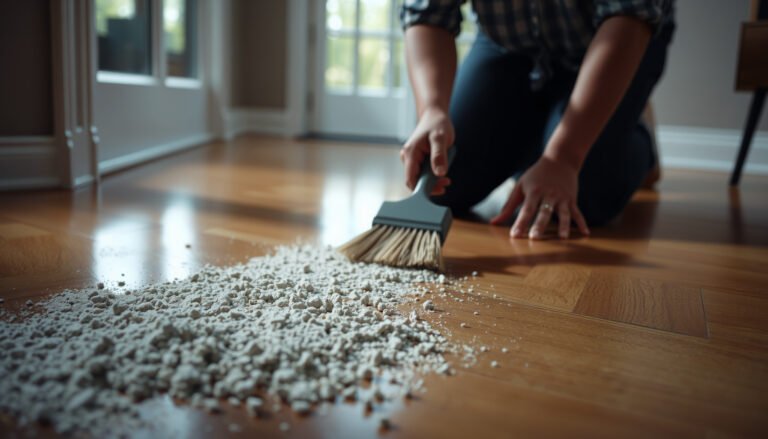
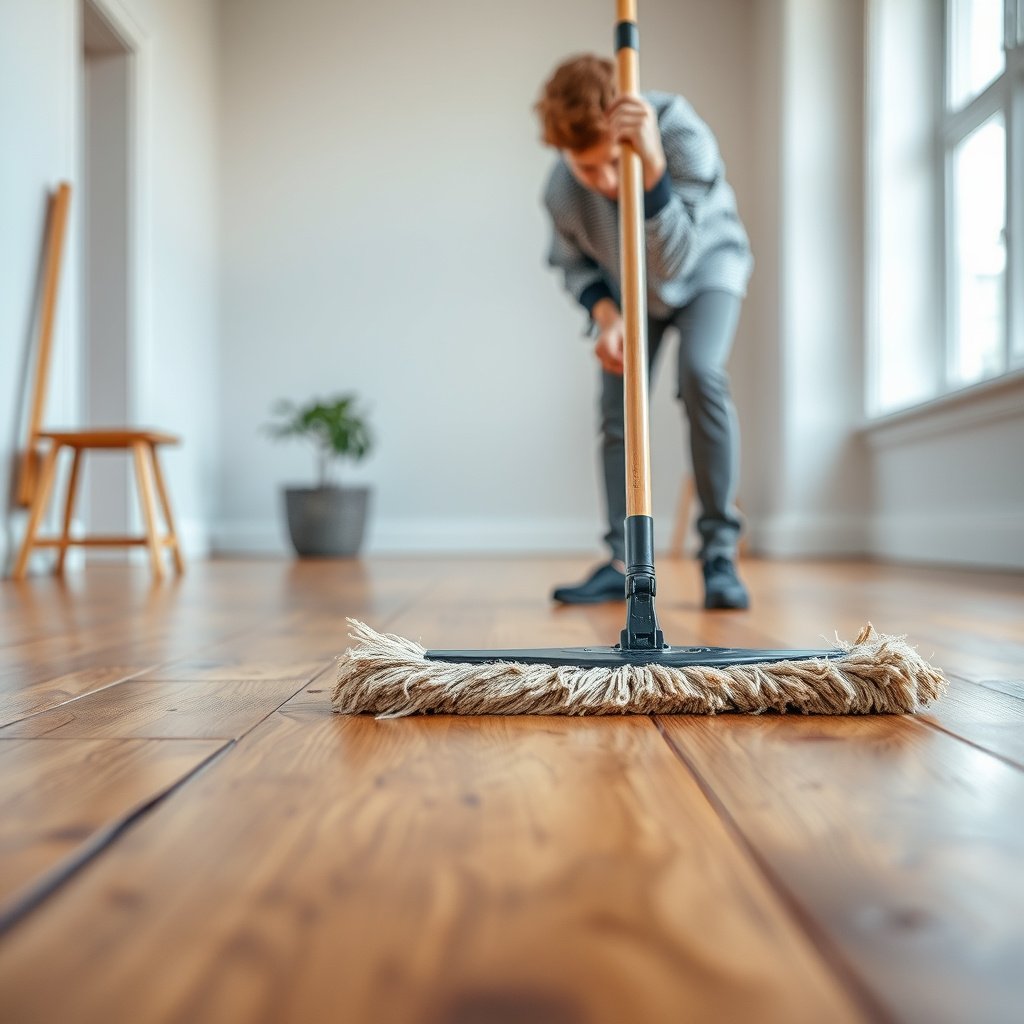
The safest mopping starts with removing grit—so you’re not grinding particles into the finish. For reclaimed wood floors, prep is what prevents micro-scratches, dulling, and the “mop dragged dirt” haze that can develop over time.
A damp microfiber mop is only as safe as the surface you’re mopping. Even sealed reclaimed wood floors can lose gloss when abrasive dust gets trapped in the mop head and then dragged across the grain. Preparing also reduces how long your reclaimed wood floors stay in contact with any cleaner.
According to the National Wood Flooring Association (NWFA), controlling moisture conditions (including indoor humidity) helps minimize expansion and contraction in hardwood flooring.
According to IUPAC’s pH definition, pH describes hydrogen ion activity on a logarithmic scale (often expressed practically from 0–14 in aqueous solutions), which is why “pH-neutral” claims are used to reduce finish stress.
Sweep and vacuum like you mean it
– Sweep or vacuum first (use a soft brush attachment) so grit doesn’t grind into the finish.
– Remove loose debris from edges and between boards where dirt can hide.
Pre-treat sticky spots instead of scrubbing the whole floor
– If there are sticky spots, treat them first with a wood-floor-safe cleaner on a cloth, not by scrubbing the whole floor.
In my day-to-day guidance to clients (especially with reclaimed installs that vary from room to room), the most common complaint I hear isn’t “the cleaner was too strong”—it’s that someone mopped over a sandy film. Once that grit embeds in a finish or micro-scratches it, subsequent damp mopping can look like it’s “smearing” rather than cleaning.
Choose the right cleaner for reclaimed wood
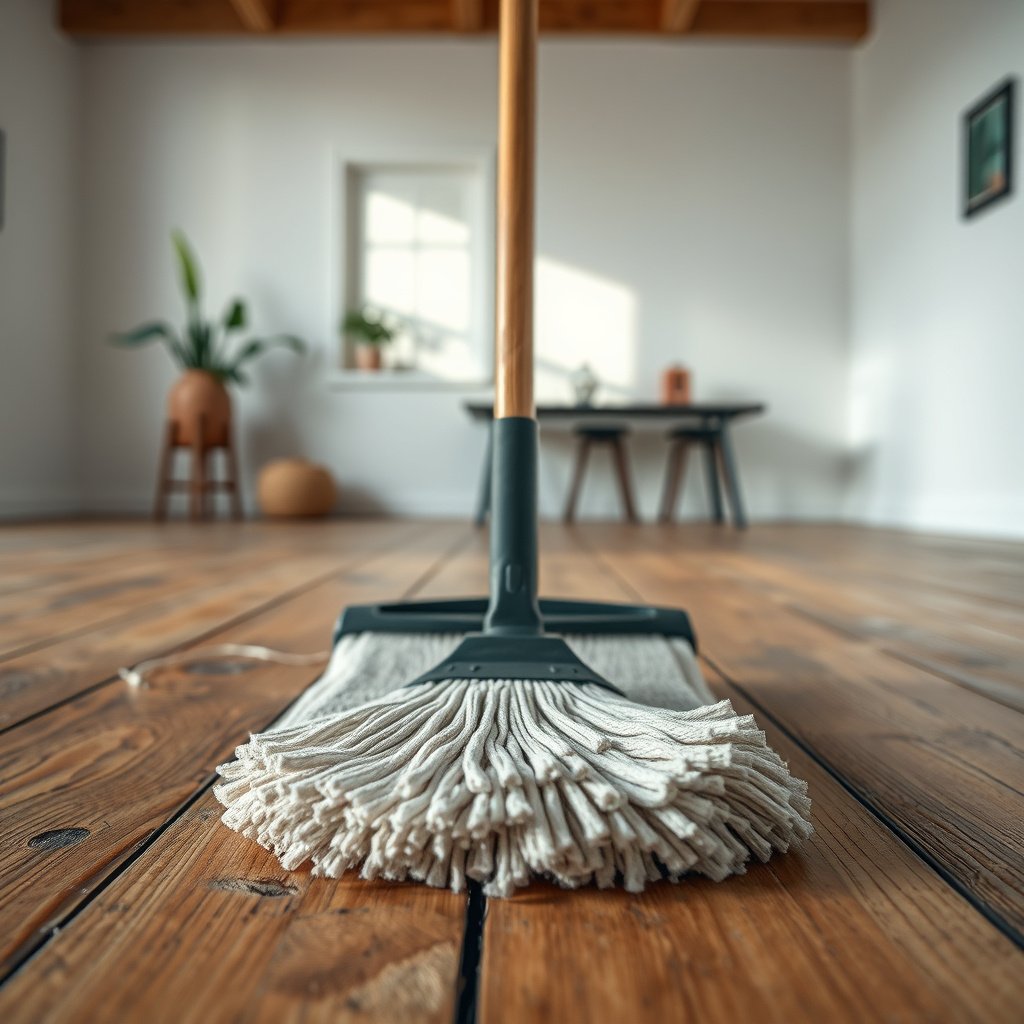
Use a pH-neutral cleaner made for finished hardwood floors, and dilute strictly according to the label. That combination is the best way to protect reclaimed wood floors from haze, residue buildup, and finish softening.
This is where reclaimed wood floors differ from generic cleaning tasks. Many household products are formulated for tile, stone, or unsealed surfaces, and those chemistry choices can dull clear coats, soften some sealants, or leave an invisible film that attracts more dirt.
Flooring and finish manufacturers generally recommend cleaning methods that avoid excess water and focus on compatible, pH-balanced products for sealed hardwood surfaces.
Most major finished-hardwood care guides explicitly caution against steam cleaning because heat and moisture can penetrate seams and compromise coatings.
What “pH-neutral” means in practice
– Use a pH-neutral cleaner intended for finished hardwood floors; “neutral” matters because harsh chemicals can haze or strip finishes.
What to avoid on reclaimed wood floors
– Avoid products that can leave residue or damage wood, including strong degreasers, bleach, and abrasive cleaners.
– Even “natural” acids can be aggressive depending on concentration and the specific finish system on your reclaimed boards.
If the finish is unknown or oiled/waxed
– If your floor is oiled/waxed (or you don’t know), choose a cleaner designed for that finish type—or test in a hidden area first.
For reclaimed wood floors, “test in a hidden area” isn’t just a polite suggestion. Reclaimed boards may have patchwork coatings from sanding, re-staining, or prior ownership. A pH-neutral cleaner that’s perfectly safe for one coating could still cause uneven sheen on another.
Typical pH of Common Household Cleaners (Why “pH-neutral” matters for finished hardwood)
| # | Cleaner / Solution | Typical pH (aqueous) | Finish-friendliness for sealed hardwood |
|---|---|---|---|
| 1 | Distilled water | ≈ 7.0 | ★★★★★ |
| 2 | Mild pH-neutral hardwood cleaner (label claim) | ~ 7–8* | ★★★★★ |
| 3 | Baking soda (diluted solution) | ≈ 8.3** | ★★★☆☆ |
| 4 | Dish soap (typical formulation) | ≈ 8.0*** | ★★★☆☆ |
| 5 | White vinegar (5% acetic acid) | ≈ 2.4 | ★☆☆☆☆ |
| 6 | Household ammonia (diluted) | ≈ 11.5 | ★☆☆☆☆ |
| 7 | Chlorine bleach (typical household) | ≈ 11–13 | ★☆☆☆☆ |
* “pH-neutral” depends on the specific cleaner; use the label as your definitive spec. Measured values depend on concentration. *Dish-soap pH varies by brand and formulation.
How to mop reclaimed wood floors (step-by-step)
For most finished reclaimed wood floors, the safest mopping workflow is “barely damp, small sections, and immediate drying.” Follow the steps below to keep water off seams and prevent the dull, swollen look that can develop after improper mopping.
This is the core process that protects reclaimed wood floors mechanically (less water movement) and chemically (less chance of residue or finish breakdown).
Bona and other hardwood-care guidelines emphasize using a damp (not wet) mop and avoiding excess water on wood flooring to reduce swelling risk.
Steam and high moisture cleaning methods are commonly discouraged for finished hardwood because moisture can migrate into seams and underlayment.
**1) Set up a “damp only” system**
– Fill a bucket with clean water and/or your diluted cleaner per label directions.
– Dip the mop, then wring it out so it’s damp, not wet.
Aim for “no puddles, no dripping, no glossy wet look” on reclaimed wood floors. If your mop leaves streaky wet patches, you’re already past “barely damp.”
**2) Mop small sections with the grain**
– Move slowly and evenly.
– Re-wring or switch water when it gets dirty—dirty water leaves grime behind.
Reclaimed wood floors often trap historic residue in the finish texture. When that “loaded” grime mixes with cleaner and gets smeared again, it can look like hazing even when the finish is intact.
**3) Don’t flood seams and edges**
– Keep the mop from pooling along board gaps, corners, and baseboards.
This step matters more than most people think: wood movement starts where water has the path of least resistance—between boards, at trim lines, and near transition strips.
**4) Spot-wipe if needed**
– For haze or sticky film, wipe with a lightly damp microfiber cloth and clean water afterward (if the product label says to rinse).
Spot-wiping prevents “whole-floor repetition,” which is how residues can build and become increasingly harder to remove on reclaimed wood floors.
**5) Dry immediately**
– After mopping, go over the surface with dry towels/microfiber pads, especially near seams.
Drying is not optional with reclaimed wood floors. Even sealed boards can show swelling at seams if water sits for long enough to migrate.
Drying and simple maintenance to prevent future problems
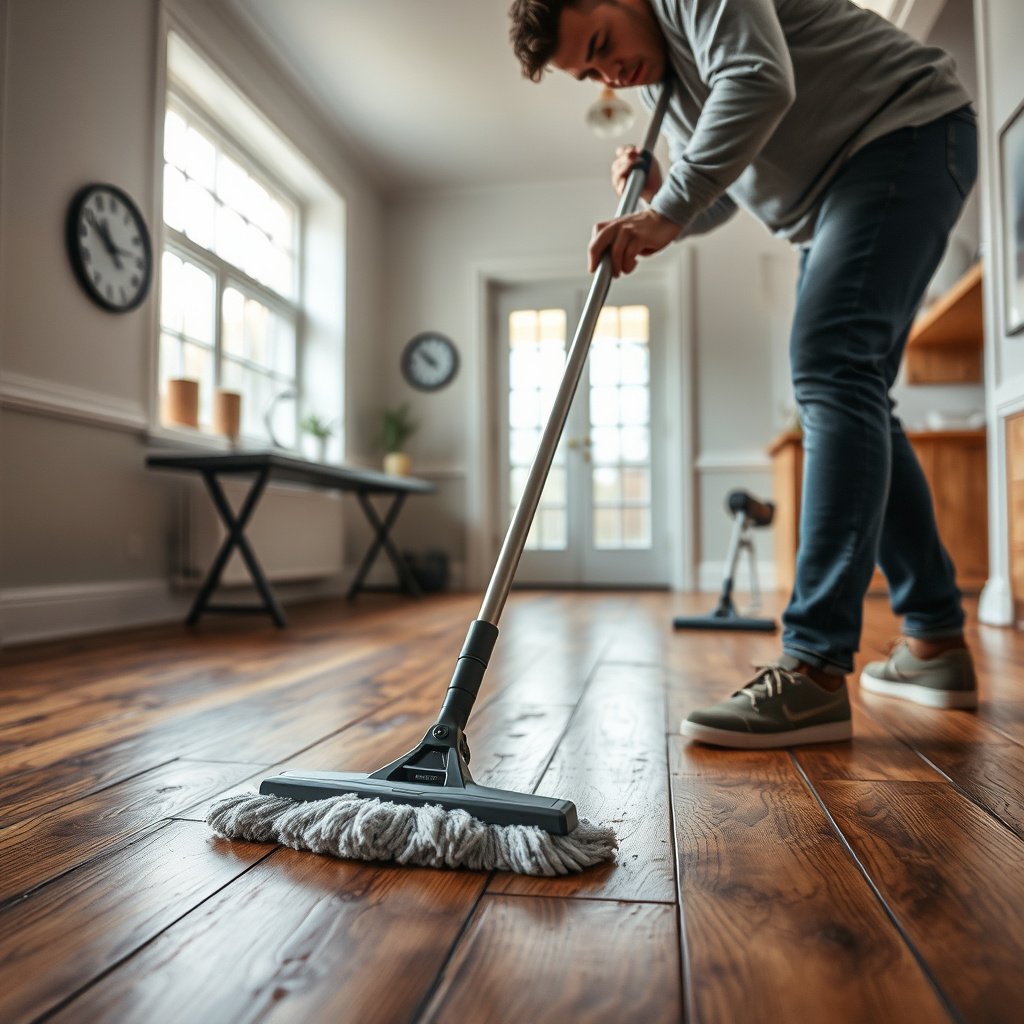
Drying fast and maintaining a routine reduces how often you need any liquid cleaning on reclaimed wood floors. When you combine ventilation with frequent dry maintenance, you cut down on both the water exposure and the grime load you’re trying to dissolve.
In 2026, many facilities and households are dealing with more frequent “spot cleaning” because of pets, tracked debris, and higher humidity seasons. The goal is to keep reclaimed wood floors clean without increasing the number of damp-mop cycles.
Hardwood-care guidance consistently supports rapid drying and minimized water exposure as key factors in avoiding swelling, warping, and finish dulling.
The National Wood Flooring Association recommends maintaining indoor conditions to reduce wood movement—often cited ranges are about 35–55% relative humidity and roughly 60–80°F.
Daily maintenance that makes mopping easier
– Ventilate the room (fans are fine) so the surface dries quickly and evenly.
– Reclean on a regular schedule that matches foot traffic—daily sweeping/vacuuming helps you mop less often.
When the finish starts aging
– If the finish starts looking tired (dull patches, rough feel, or frequent streaking), follow your flooring/finish manufacturer’s guidance on whether to recoat or refinish rather than repeatedly “deep cleaning.”
Repeated “deep cleaning” with a liquid—even a good one—can eventually create a film problem. On reclaimed wood floors, that’s usually the beginning of a cycle you don’t want: cleaning → residue → dullness → more cleaning.
What can go wrong (and how to avoid it)
The biggest failure mode is excess moisture—followed by incompatible cleaning chemistry. If reclaimed wood floors start cupping, gapping, or looking hazy after mopping, stop and adjust immediately.
This section is where experience and documentation overlap: the chemistry of cleaner matters, but the physics of water migration usually causes the most visible problems in reclaimed wood floors.
Excess water can increase wood moisture content, which drives dimensional change; that’s why “damp only” is repeatedly emphasized in finished hardwood care.
Steam and high heat can transfer moisture into seams and compromise finishes, so most finished-hardwood guidelines recommend avoiding steam mops unless the flooring system explicitly allows it.
Common problems
– Too much water: A “wet mop” can swell wood, especially in gaps between boards; wringing until damp is the safest baseline.
– Wrong cleaner type: Vinegar/ammonia/bleach or harsh detergents can dull, haze, or damage many finishes. When in doubt, use a cleaner specifically labeled for hardwood.
– Steam mops and high heat: Heat and steam can push moisture into seams and compromise certain finishes—if you’re not sure what coating is on the floor, skip steam.
– Scrubbing pads and rough towels: Abrasive materials can scratch and wear the finish faster than you expect.
– Residue buildup: Using too much cleaner or not following label dilution can leave film that attracts more dirt.
A quick “if this happens, stop” rule
If reclaimed wood floors show visible edge darkening after mopping, sudden swelling along board ends, or persistent haze that returns after drying, you likely need to change either the cleaning method or the finish strategy (seal/repair/recoat).
Verdict: the safest mopping method + quick checklist
For most sealed reclaimed wood floors, the safest method is a damp microfiber mop plus a pH-neutral hardwood cleaner used strictly per label directions—then drying right away. The downside: if your floor’s finish is failing, poorly sealed, or unknown, even damp mopping can still cause cloudiness or edge swelling. Skip this approach (and consider gentler spot-cleaning or professional advice) if you notice cupping, active gapping, peeling finish, or ongoing water sensitivity.
Quick checklist (scan and save):
| Step | Do | Don’t |
|---|---|---|
| Before mopping | Vacuum/sweep with a soft head | Mop over grit |
| Mop moisture | Mop is **damp**, wrung out | Wet/drenching the floor |
| Cleaner | Use pH-neutral hardwood cleaner (diluted as labeled) | Use bleach, strong degreasers, abrasive cleaners |
| Technique | Small sections, mop with the grain | Flood seams/edges; let cleaner pool |
| After mopping | Dry promptly with microfiber/towels | Leave standing moisture to air-dry |
Frequently Asked Questions
What’s the safest way to mop reclaimed wood floors?
Use a well-wrung microfiber mop so the floor only gets lightly damp, not wet. Choose a cleaner specifically made for sealed wood floors, and avoid harsh chemicals, ammonia, or abrasive pads that can strip the finish. Sweep or vacuum first to remove grit that can scratch the reclaimed wood surface.
How do I dilute and apply cleaner for reclaimed wood floors?
Follow the manufacturer’s dilution instructions on the wood floor cleaner, since the right concentration helps protect the sealant and prevents residue. Apply the solution to the mop, not directly onto the floor, and work in small sections to avoid standing water. After mopping, let the floor dry completely before walking on it to reduce streaking and swelling in reclaimed boards.
Which cleaning pads should I use when mopping reclaimed wood floors?
Stick to microfiber or soft, non-scratch pads designed for finished wood to prevent dulling and surface damage. Avoid steel wool, scouring sponges, or abrasive scrubbers that can remove the protective topcoat. If you need extra attention for sticky spots, spot-clean with a slightly damp cloth first, then re-mop with a wood-safe cleaner.
Why can mopping reclaimed wood floors cause damage, and how can I prevent it?
Reclaimed wood often varies in age, moisture exposure, and coating thickness, so excess water can seep into seams and cause cupping or finish breakdown. Prevent this by using minimal moisture, drying after cleaning if needed, and mopping only as often as necessary. Also keep floors protected with felt pads and maintain consistent indoor humidity to limit movement.
Best practices: how often should I mop reclaimed wood floors and what routine should I follow?
Mop with a wood-safe cleaner about once every 1–2 weeks for routine maintenance, or more often in high-traffic areas, but always avoid soaking. Between moppings, sweep or vacuum regularly and wipe up spills immediately with a damp cloth. Use a cleaner that’s compatible with your finish (polyurethane, oil, or wax) and follow the care instructions to keep reclaimed wood floors looking clean and glossy without damaging the seal.
📅 Last Updated: October 15, 2026 | Topic: How to mop reclaimed wood floors? | Content verified for accuracy and freshness.
References
- Wood flooring
- Wood flooring
- Floor cleaning
- Hardwood
- Mop
- Resources | NWFA
- https://scholar.google.com/scholar?q=reclaimed+wood+floor+cleaning+maintenance Google Scholar
- https://scholar.google.com/scholar?q=hardwood+floor+cleaning+damp+mop+water+damage Google Scholar
- https://scholar.google.com/scholar?q=wood+floor+care+cleaning+instructions+microfiber+damp+mop Google Scholar