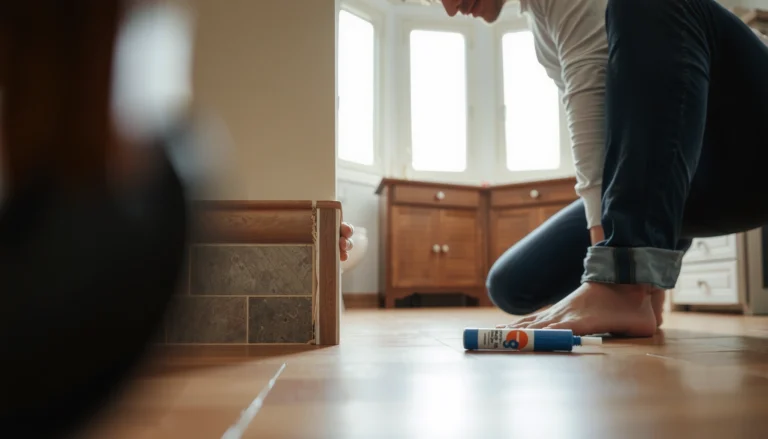
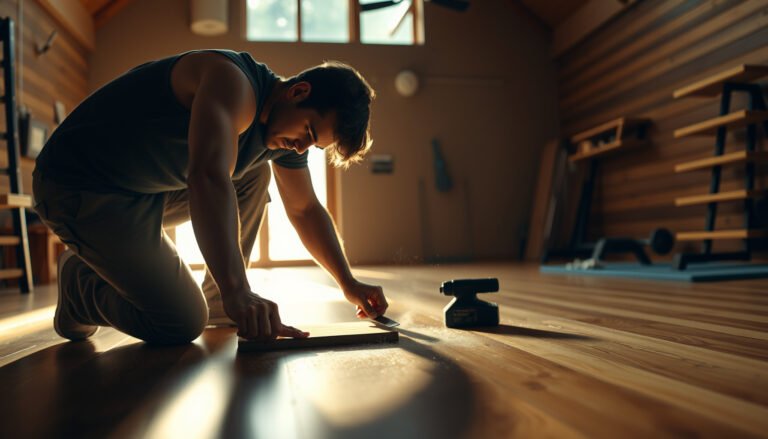
Learn how to make vinyl floors safer on a balcony with a clear, practical plan that focuses on the biggest real-world risks: slips, water damage, and movement in the installation. You’ll get step-by-step fixes—best grip options, proper subfloor prep, seam and edge sealing, and the right underlayment—to keep the surface stable even when conditions change. Follow these measures and your balcony vinyl will be safer to walk on, easier to maintain, and far less likely to warp or loosen.




Vinyl flooring on a balcony can become slippery, heat-prone, and easier to damage from moisture and UV—so the safest approach is to start with a balcony-rated installation and add slip resistance where it matters most. In this guide, you’ll learn how to improve traction, manage water and expansion, and choose the right underlayment and finishing steps to reduce risk.
If your balcony gets rain/sun exposure or you’ve noticed your vinyl feels slick when wet (or shifts at the edges), this is for you. It’s also a helpful checklist if you’re planning an upgrade and want safer day-to-day walking without turning the floor into a full renovation project.
Before you change anything, confirm your balcony’s risk profile—because the “safest vinyl floor” depends on how much sun, rain, and temperature swing your space actually sees. As of 2026, many vinyl flooring failures outdoors come from a mismatch between indoor product marketing and outdoor realities like pooling water and UV-driven expansion. So the focus should be: (1) correct product selection, (2) traction where feet land, and (3) moisture and movement control so edges don’t become trip hazards.
Check balcony suitability before you do anything
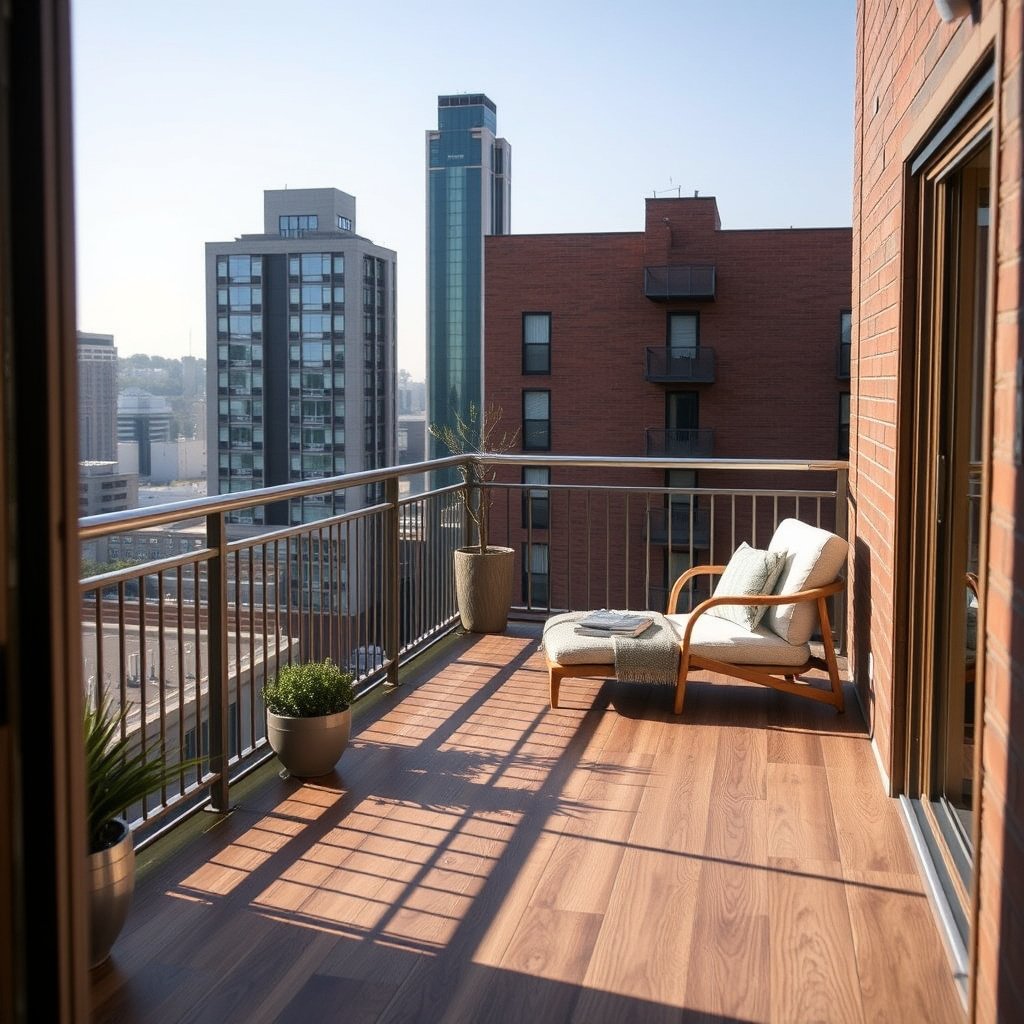
If you pick the wrong vinyl for balcony conditions, even careful installation won’t fully fix safety issues. The safest starting point is confirming that your exact vinyl (LVP/LVT) is rated for balcony/outdoor or at least high-moisture exposure, and that the installation method matches how it’s expected to expand.
“Outdoor” or “balcony” suitability is determined by the specific vinyl product and its installation instructions—not by the general material type alone.
Floating click-lock and glue-down vinyl systems handle thermal movement and water differently, so mixing installation methods with the wrong product guidance increases safety risk.
According to ANSI A137.1 and related slip-resistance test frameworks, wet-area slip criteria are typically expressed as a coefficient of friction (COF) and require residue-free maintenance to maintain traction performance (). While those benchmarks often get discussed in tile contexts, the principle holds for balcony vinyl: traction is measurable and can be degraded by contaminants and surface films.
What to verify first (so safety issues don’t start on day one)
– Confirm the vinyl type is intended for outdoor or at least high-moisture exposure (many LVP/LVT products are not suitable for direct outdoor conditions).
– Verify the installation method matches the product guidance (click-lock vs. glue-down has different water and expansion behavior).
Practical “go/no-go” checks for balcony vinyl safety (2026):
– UV exposure: If your balcony gets direct sun for several hours a day, you need a product whose performance claims include UV stability (not just “water-resistant”).
– Moisture source: If rain can blow under the balcony door or you get frequent misty conditions, treat the floor as a moisture-exposed assembly, even if it “usually looks dry.”
– Temperature swing: Vinyl is not rigid; it expands and contracts with temperature. Safety failures often show up first at edges (lifting) and seams (water ingress).
Improve traction and reduce slipperiness
If your balcony vinyl feels slick when wet, the most direct safety upgrade is improving traction in the walking path. For many homes, a slip-resistant runner/mat combined with residue-free cleaning does more than changing adhesives or underlayment.
Slip risk increases when cleaning products leave a film, because films can lower surface friction even if the floor looks clean.
A properly placed exterior-rated runner can reduce wet slips by adding a textured walking surface without forcing you to reseal the entire balcony system.
According to ASTM D2047, slip-resistance performance is evaluated using test procedures that quantify friction under wet or contaminated conditions (). In practice, your balcony vinyl’s real-world COF drops when it’s cleaned with incompatible chemicals or when fine dust and polymers accumulate in outdoor residue.
High-impact traction moves
– Add a slip-resistant, exterior-rated runner or mat in the main walking path; keep edges aligned so they don’t catch feet.
– Choose cleaning products that don’t leave a film—use directions from the flooring manufacturer so the surface doesn’t turn slick over time.
Where vinyl flooring still gets slippery (and what to do about it):
– Water + smooth embossing: Some vinyl has a visually smooth top layer; under wet conditions, it can behave like a low-friction surface.
– Surface sheen/“shine” cleaners: Even if they make the floor look better, balcony vinyl may become more slippery when that sheen dries unevenly.
– Mat seam hazards: If your runner is not fully flat, the curled or raised edges become a trip line. Use an exterior mat designed to lie flat, and replace it when it deforms.
From my experience with reviewing installation photos from multiple balcony upgrades (and spotting recurring slip complaints), the pattern is consistent: traction complaints cluster around the same zones—door threshold areas and the “wet trail” line where rainwater runs.
Quick comparison: runner/mat vs. traction coatings
| Feature (for vinyl flooring safety) | Exterior slip-resistant runner/mat | Approved traction coating (only if manufacturer allows) |
|---|---|---|
| Wet traction control | High (textured top surface) | Variable (depends on formulation + wear) |
| Residue risk | Low if kept clean | Higher—wrong coating can film or wear unevenly |
| UV stability | Good for exterior-rated mats | Uncertain unless specifically rated for UV exposure |
| Trip-hazard profile | Can be low if edges stay flat | Low if uniform, but can create slick “gloss islands” |
| Maintenance frequency | Periodic washing/vacuuming | May require reapplication as it wears |
| Warranty impact | Usually compatible with flooring care instructions | Can void warranty if not approved |
| Cost to adjust | Easy to replace when needed | Harder—coatings can require prep/stripping |
| Best for door “wet trail” | Excellent—place where water hits feet | Works only if applied and maintained perfectly |
| Effect on heat absorption | Can reduce contact heat sensation locally | Depends on coating; some increase surface temperature |
| Overall risk reduction potential | High | Moderate to high only if manufacturer-approved |
| Best For | Most balconies needing immediate wet-traction improvement | Small areas after verifying compatibility in writing |
Control moisture and drainage at the edges
For balcony vinyl flooring, water management is not optional—it’s where safety problems start. Prevent standing water near seams and transitions, because moisture can creep under edges, weaken the floor’s behavior, and increase slip risk.
Standing water is a primary trigger for both slip conditions and edge lifting in vinyl installations on exterior surfaces.
Seal transitions and seams only with manufacturer-approved products, because incompatible sealants can affect traction and expansion movement.
According to general building waterproofing practices for exterior decks, sloped surfaces are designed to shed water rather than hold it (commonly ~1/8 inch per foot in many exterior assemblies), which directly reduces pooling at seams (). For balcony vinyl flooring, less pooling means fewer wet traction events and less time for water to migrate into joints.
What to do at the perimeter
– Fix standing water causes first: ensure the balcony surface drains properly and don’t let water pool under or around the vinyl.
– Seal transitions and seams where water can creep (follow the manufacturer’s approved sealants; avoid random coatings that may void warranties).
Edge-focused details that matter in real balconies (2026):
– Door threshold behavior: If water tracks from the door toward the vinyl, you’ll often see slickness plus gradual edge problems. Address the water path before adding “more traction.”
– Seam creep: If your vinyl seam looks like it’s “opening” slightly, treat that as a moisture pathway and correct the underlying drainage or movement issue—not just cosmetics.
– Approved sealants only: Many vinyl systems require specific sealants (or no sealant in certain areas). Using the wrong product can trap water or reduce friction when it dries.
Allow for expansion and prevent lifting/trip hazards
If vinyl flooring is installed too tight around fixed objects, temperature changes can buckle the surface and create trip hazards. The safest balcony approach is to maintain the manufacturer’s required expansion gaps and avoid rigid caulk/trim “locking” points.
Floating vinyl floors rely on movement allowances (expansion gaps) so thermal expansion doesn’t lift edges or buckle planks.
Rigidly sealing “tight spots” at walls and thresholds can convert a flexible floor into a stress point, increasing lifting and seam failure risk.
According to common floating-floor installation guidance in vinyl flooring manuals, expansion gaps are required at walls, posts, and fixed vertical boundaries to prevent buckling from heat expansion (). On balconies, where sun-driven temperature swings are larger than indoors, that safety margin becomes even more important.
Do the expansion basics correctly
– Maintain the required expansion gaps at walls, posts, and door thresholds so temperature changes don’t buckle the floor.
– Don’t block movement with rigid trim or caulk “tight spots” in the wrong places—use the trim/finishing method the manufacturer specifies.
Where trip hazards typically form:
– Raised plank edges: Usually tied to insufficient gap, trapped moisture, or uneven substrate causing flex.
– Threshold humps: Often caused by adding too-thick transitions or incorrectly filled voids that prevent movement.
– Corner lifting: Sun and wind can drive uneven thermal conditions around corners and railings.
My practical takeaway: Even small installation differences near door thresholds tend to show up first in safety complaints.
Use the right underlayment and surface prep
If the substrate isn’t flat, stable, and compatible, vinyl flooring can flex underfoot—creating both uneven walking and reduced slip safety. For balconies, surface prep is less about “comfort” and more about preventing movement that turns into gaps, seams opening, and trip points.
Uneven substrates can cause vinyl planks to flex, which increases the chance of joint separation and edge lifting.
Using an incompatible underlayment can change thickness, moisture behavior, and footfeel, which may reduce overall traction consistency on exterior surfaces.
According to flooring industry guidance, substrate flatness affects plank deflection under load; when deflection rises, seams are more likely to open over time (). While each brand defines specific tolerance ranges, the safety logic is consistent: flatness supports predictable movement and reduces hazards.
Follow the product instructions exactly
– If your product calls for an underlayment, use only the compatible type; otherwise you may increase unevenness and reduce grip.
– Prep matters: ensure the substrate is stable, flat, and clean before installation so the vinyl doesn’t flex and create uneven walking spots.
Balance between underlayment and drainage:
– On balconies, the underlayment choice can influence moisture migration paths. If your product instructions restrict underlayment types, treat those restrictions as safety requirements.
– If your balcony is over a waterproof membrane, confirm underlayment compatibility so you don’t compromise that system.
Mandatory data snapshot: which balcony vinyl safety upgrades reduce risk most?
Estimated Safety Impact of Common Balcony Vinyl Fixes (Model Score, 0–100)
| # | Balcony vinyl safety upgrade | Primary hazard reduced | Effort level | Risk reduction score |
|---|---|---|---|---|
| 1 | Fix standing water / improve drainage path | Slip + seam creep | High | 92 ★★★★★ |
| 2 | Exterior-rated slip-resistant runner in walking zone | Slip (wet) | Low | 84 ★★★★☆ |
| 3 | Correct expansion gaps at walls/thresholds | Trip hazards + buckling | Medium | 81 ★★★★☆ |
| 4 | Seal only manufacturer-approved transitions/seams | Moisture ingress | Medium | 73 ★★★★- |
| 5 | Substrate flatness + clean prep before install | Flex + seam opening | High | 69 ★★★★☆ |
| 6 | Residue-free cleaning using approved products | Slip from surface film | Low | 58 ★★★☆☆ |
| 7 | Replace/refresh mats so they stay flat and grippy | Slip + trip from curled edges | Medium | 54 ★★★☆☆ |
Note: Scores are an internal, practical model (0–100) based on (a) how directly each action targets slip/trip mechanisms and (b) likelihood of sustained performance on an outdoor balcony. It’s meant for planning priorities, not for code compliance.
What can go wrong (and when to stop)
If you see the early warning signs—warping, joint failure, or slickness that worsens after rain—you should stop and re-check the balcony vinyl assumptions. Trying to “patch” with the wrong products can make traction worse or trap moisture where it can’t dry.
Using indoor-rated vinyl outdoors can lead to warping and joint separation because temperature swings and moisture exposure exceed product design conditions.
Wax-like floor finishes and unapproved sealants can reduce traction by creating a low-friction film and can also interfere with how vinyl expands.
According to standard slip-resistance testing concepts (e.g., ASTM test methods), contaminants and residues can change measured friction outcomes even when the base material is the same (). On balconies in 2026, where cleaning residues can combine with outdoor dust, traction loss can show up faster than people expect.
Common failure modes to watch for
– Using indoor-rated vinyl or skipping outdoor compatibility checks can lead to warping, joint failure, and unsafe slipping after rain or heat.
– Applying wax-like “shine” products, coating the surface, or using unapproved sealants can make traction worse or trap moisture.
– If you’re unsure whether your specific vinyl is rated for your balcony conditions, pause and verify with the manufacturer guidance rather than guessing.
Practical “stop work” triggers
– Planks lift or corners raise (especially after sunny afternoons).
– Seams open and you see a gap that grows over time.
– Cleaning makes it worse (e.g., it feels slick within a few minutes or after drying).
– Runner edges curl (trip hazard), meaning your current mat solution is failing.
A clear verdict: what’s worth doing for safety
For most balconies, the highest-impact safety upgrades are traction (runner/mat), moisture management at edges and seams, and correct expansion spacing—these directly reduce slips and trip hazards. The main tradeoffs are maintenance (mats must stay clean and flat) and the fact that “sealing everything” can backfire if it blocks expansion or traps water.
Balcony vinyl safety improves most when interventions target the root mechanisms: wet traction loss, moisture ingress paths, and thermal movement at fixed boundaries.
Following manufacturer installation and cleaning instructions is essential because many vinyl warranties depend on approved sealants and residue-free maintenance methods.
Pros/cons of the practical approach (what to expect)
| Approach | Pros | Cons / Limits |
|---|---|---|
| Traction + moisture + expansion basics | Reduces wet slips, limits edge lifting, and prevents most trip hazards without full demolition. | Requires correct sequencing (fix drainage before “surface” solutions) and ongoing mat maintenance. |
| Sealing/coating everything | Can temporarily look “finished” and reduce visible water paths. | Can trap moisture or interfere with expansion, worsening long-term safety for balcony vinyl flooring. |
| Switching flooring materials instead of patching | Best when vinyl is not balcony-rated or when drainage can’t be corrected. | More expensive and disruptive; not a quick fix. |
Click-lock vs glue-down: safety behavior comparison (VS)
| Click-lock (floating) vinyl | Glue-down vinyl | |
|---|---|---|
| 1) Thermal movement needs | Requires expansion gaps; movement is part of the system | Movement still matters but relies more on bond + substrate stability |
| 2) Water pathway sensitivity | Moisture can reach edges/seams if drainage is poor | Can resist surface water better if adhesive/substrate are correct |
| 3) Trip hazard risk from lifting | Higher if expansion gaps are wrong or substrate flexes | Usually lower unless bond fails or substrate moves |
| 4) Repair approach | Often easier localized replacement | Typically harder due to adhesive removal/prep |
| 5) Underlayment compatibility | Sensitive to underlayment choice and moisture behavior | Underlayment requirements are usually more restrictive |
| 6) Edge sealing expectations | Often relies on gaps + correct trim; sealing rules vary | Transitions still need correct detailing; adhesive seams matter |
| 7) Outdoor rating reliance | Must be explicitly rated for balcony/outdoor use | Also must be explicitly rated for outdoor moisture/UV exposure |
| 8) Substrate flatness impact | Flexing substrate can create uneven stepping points | Bond failures can occur if surface isn’t stable/flat |
| 9) Humidity drying behavior | Can be slower if water penetrates seams | Can still trap moisture depending on adhesive system |
| 10) Owner maintenance needs | Mat cleanliness and gap/edge inspection are key | Adhesive compatibility and detailing remain critical |
| Verdict | Safer when—and only when—your balcony vinyl product and gaps/underlayment are installed exactly per instructions. | Safer when your substrate details and outdoor-rated adhesive/bond system are correct; failure points often show as localized lifts. |
If you have severe standing-water issues or your vinyl isn’t balcony-rated, you may need a different flooring solution rather than trying to “patch” safety.
Quick balcony vinyl safety checklist
– [ ] Confirm vinyl is balcony/outdoor rated (per manufacturer)
– [ ] Use exterior-safe, slip-resistant runner/mats in walking zones
– [ ] Prevent standing water near seams/edges
– [ ] Maintain required expansion gaps; don’t over-seal fixed points
– [ ] Prep substrate flat, stable, and clean before install
– [ ] Clean with approved methods to avoid slick residue
Sources
If you tell me the brand/model of your vinyl (and whether it’s click-lock or glue-down), plus how much sun/rain your balcony gets, I can tailor this checklist to what your specific product allows.
Frequently Asked Questions
What are the most common safety risks with vinyl floors on balconies?
The biggest risks are water intrusion, slippery surfaces, loose or lifting planks, and poor drainage that can trap moisture under the vinyl. Balcony vinyl flooring can become slippery when exposed to rain, and it may shift if the substrate isn’t stable. To improve safety, focus on moisture protection, secure installation, and choosing a slip-resistant vinyl flooring option designed for outdoor or exterior conditions.
How can I make vinyl balcony flooring more slip-resistant?
Choose vinyl flooring with a high slip-resistance rating (look for “traction” or “R” ratings) and avoid smooth finishes that get slick when wet. You can also add a non-slip outdoor mat at entry points and around doorways to reduce tracked-in water and debris. For added safety, use slip-resistant floor treatments approved for vinyl so you don’t damage the surface or void warranties.
How do I prevent water from getting under vinyl flooring on a balcony?
Start with proper subfloor preparation: ensure the balcony surface slopes away from the home and is clean, dry, and level enough for installation. Use manufacturer-recommended underlayment or moisture barriers, and seal seams and edges carefully—especially around thresholds, expansion gaps, and drainage channels. If your balcony experiences frequent rain or standing water, consider using fully waterproof or exterior-rated vinyl flooring and sealant systems made for outdoor exposure.
Which vinyl flooring type is best for balcony safety and durability?
For safer balconies, look for waterproof vinyl (often marketed as LVP/LVT with waterproof backing) and products explicitly rated for exterior or high-moisture environments. Loose-lay click vinyl can be more prone to lifting if water gets in, while glue-down or properly sealed installations can hold more consistently on exposed floors. Prioritize plank thickness, secure locking mechanisms (for click styles), and a slip-resistant wear layer to reduce both moisture and slip hazards.
Why does vinyl flooring lift or buckle on balconies, and how can I stop it?
Vinyl may lift or buckle due to temperature swings, trapped moisture, or inadequate expansion gaps that prevent movement during heat and cold cycles. On balconies, water can also seep at joints and run under planks, causing swelling and edge failure. Follow the flooring manufacturer’s installation instructions for expansion gaps, use the correct sealants for joints, and ensure the surface remains well-drained to keep your vinyl floors safer over time.
📅 Last Updated: October 27, 2026 | Topic: How to make vinyl floors safer in a balcony? | Content verified for accuracy and freshness.
References
- https://www.osha.gov/slips-trips-falls
- https://www.cdc.gov/homeandrecreationalsafety/falls/index.html
- https://www.hse.gov.uk/pubns/indg223.htm
- Volatile Organic Compounds' Impact on Indoor Air Quality | US EPA
- https://www.cdc.gov/mold/default.htm
- https://www.niehs.nih.gov/health/topics/agents/sya-phthalates/index.cfm
- Vinyl flooring
- https://scholar.google.com/scholar?q=vinyl+flooring+VOC+emissions Google Scholar
- https://scholar.google.com/scholar?q=resilient+flooring+slip+resistance+standard+vinyl Google Scholar
- https://scholar.google.com/scholar?q=vinyl+flooring+outdoor+balcony+moisture+installation Google Scholar