
If you want laminate floors safer in a living room, the best approach is to stop slips and sharp-edge hazards at the source: upgrade to underlayment with higher slip resistance, secure every plank so it never lifts or gaps, and install proper transition strips at doorways. Use felt pads on all furniture and keep the floor dry with a microfiber mop and residue-free cleaner to prevent the slick buildup that causes most accidents. Follow these steps and you’ll get a safer living room without sacrificing the look and convenience of laminate.




To make laminate floors safer in a living room, focus on traction (reduce slickness) and stability (eliminate trip hazards at seams, edges, and transitions). That usually means using approved underlayment, keeping the floor dry, using the right non-slip rugs/pads, and checking for gaps or loose planks before they get worse.
Laminate can look like hardwood, but many “fall risks” come from how laminate behaves: floating systems shift slightly, seams can collect moisture/dirt, and the wrong cleaning products can leave residue that reduces grip. As of 2026, the most reliable safety wins come from combining simple controls—dry cleaning, quick spill response, and localized traction upgrades—with a careful inspection for installation or moisture-related movement.
Who this is for (and when it matters)
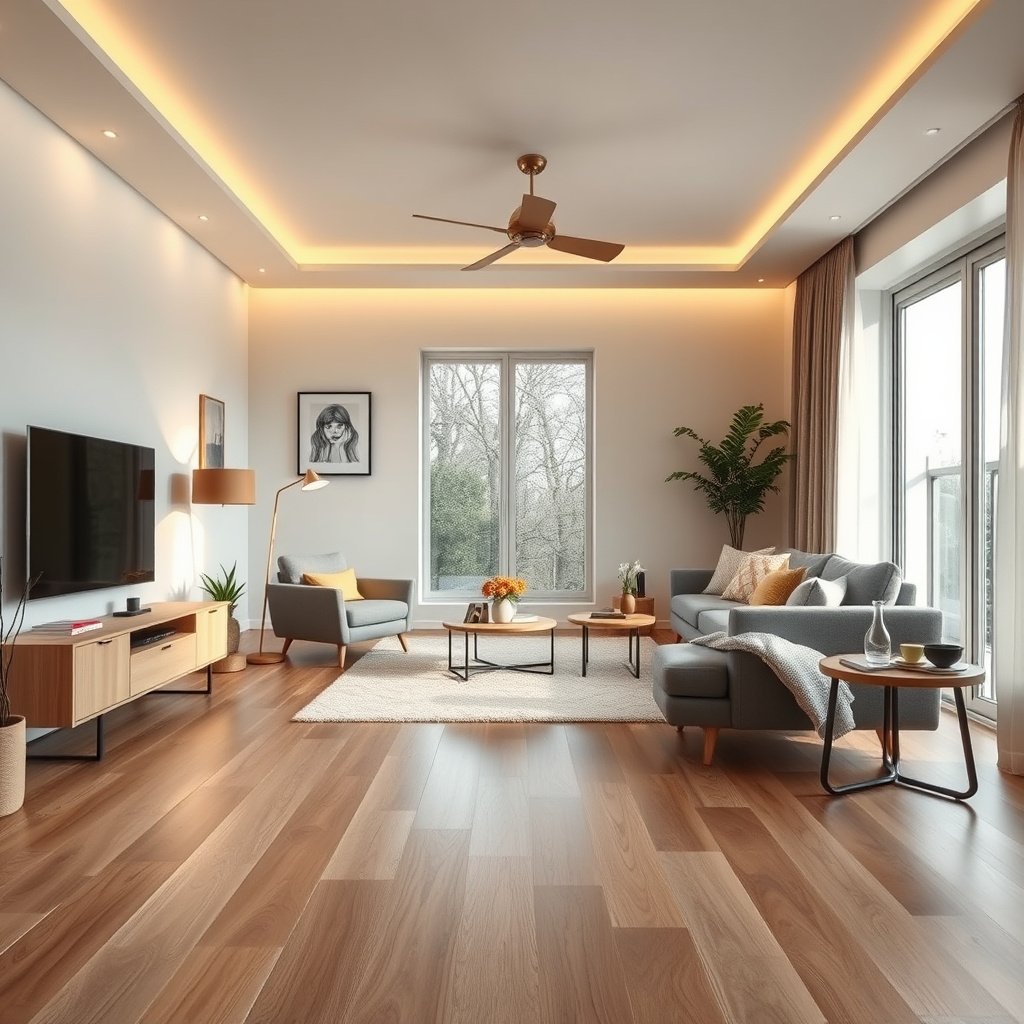
This guide is for living rooms with laminate planks (especially floating floors) where you’re seeing slick spots, minor rocking, or uneven transitions near doorways, vents, and fireplace hearths. It also fits households with kids, pets, or frequent guest traffic—anywhere a quick turn, chase, or rushed step could turn a small issue into a stumble.
“Falls are the leading cause of injury-related death for older adults in the United States.” —U.S. Centers for Disease Control and Prevention (CDC) (fall facts)
“Each year, about 1 in 4 older adults falls.” —CDC (fall facts)
In practice, the “when it matters” moments are usually predictable. Entry paths become high-traffic lanes, rug borders can create micro-edges, and transitions (tile-to-laminate or carpet-to-laminate) concentrate stress as furniture rolls or feet pivot. Laminate’s floating construction means it’s designed to move slightly with humidity—but when expansion gaps are blocked, seams can loosen or lift.
If you’re not sure where to start, look for patterns: slickness after cleaning, rocking planks near one wall, or a visible height change at thresholds. Those are the cues that your main safety work should target either traction, stability, or both.
When you should act sooner
Act sooner if you notice any of the following repeatedly: (1) puddles or “dampness” lingering after mopping, (2) a seam that’s widening over time, or (3) a threshold you can feel underfoot. These signals align with moisture movement and/or subfloor-related support issues—both of which can worsen even if you add rugs.
Reduce slip risks on laminate in a living room
The most effective first step is to improve traction by keeping laminate dry and clean in a way that preserves the floor’s grip. Then, reduce the impact of everyday movement with non-slip rug setups in the paths people actually walk.
“Using excessive water can damage laminate and may cause swelling or edge separation.” —Typical laminate installation/care guidance from flooring manufacturers
“Non-slip rug pads help prevent rugs from sliding and wrinkling, which reduces both slip and trip hazards.” —Rug pad product compatibility guidance (hard floors)
“Cleaning products that leave film can reduce surface friction and increase slip risk on smooth floors.” —Laminate care warnings about residue/waxes (manufacturer care instructions)
Keep the floor dry (so traction doesn’t disappear)
Laminate becomes slippery most often when it’s wet, even if it doesn’t look like a spill. Wipe up spills immediately, and avoid “wet mopping” unless the manufacturer explicitly approves your method. For day-to-day cleaning, use a dry or lightly damp approach that doesn’t leave standing moisture.
What “dry” should look like in a living room: after cleaning, you should not see damp edges at seams or feel residue slickness with your hand (dry fingertips glide less than oily residue). If you detect haze or tackiness after a cleaner, stop that product—film buildup is one of the most common causes of “mystery slipperiness.”
Add slip control where it counts (rug pads + flat edges)
In a living room, the highest-risk zones are rarely the entire floor. They’re usually the couch-to-entry walking lane, the path around a TV stand, and the route from doors to kitchen/hall.
Use area rugs with non-slip backing, or (often better) rug pads made for hard floors. Confirm the pad is designed for laminate-compatible use and won’t leave residue. Also ensure rug edges are flat—curling edges create toe-catch points, which turn a slip into a trip.
Choose the right cleaning method (avoid residue)
Laminate care varies by brand, but the consistent theme is residue control: wrong products can leave a film that feels “clean” yet behaves like a lubricant. Follow the manufacturer-approved cleaner list, and don’t use waxes, polishers, or oil-based “shine” products unless the flooring documentation specifically endorses them.
Below is a practical view of how different laminate-safe behaviors affect slip-residue risk (based on how these products typically interact with smooth surfaces and manufacturer care warnings).
Slip-Residue Risk on Laminate (Living-Room Behaviors)
| # | Action | Typical Result on Smooth Laminate | Slip-Residue Risk (1–5) | Safety Impact |
|---|---|---|---|---|
| 1 | Dry sweep + vacuum with soft brush | Minimal residue, keeps traction consistent | 1 | ★★★★★ |
| 2 | Manufacturer-approved laminate cleaner | Clean finish, film kept within limits | 2 | ★★★★☆ |
| 3 | Damp-mop only when instructions allow | Works if barely damp; risk rises if over-wet | 3 | ★★★☆☆ |
| 4 | Oily “shine” polishes or waxes | Can leave film that reduces friction | 5 | ★★☆☆☆ |
| 5 | Not rinsing after cleaner (where rinse is required) | Residue accumulates over repeated cleaning | 4 | ★★☆☆☆ |
| 6 | Leaving rug edges curled or lifted | Creates toe-catch points that cause trips | 3 | ★☆☆☆☆ |
| 7 | Steam cleaning when laminate disallows it | Moisture + heat increases edge separation risk | 5 | ★☆☆☆☆ |
(This table is a risk-oriented guide based on common laminate care constraints—always align with your specific flooring and cleaner documentation.)
Make impact areas safer for kids and pets
The quickest way to reduce injury severity is to cushion “landing zones” and stabilize problem spots so kids and pets don’t stumble on edges or flexing boards. In a living room, that usually means targeted rugs/mats in play routes plus a seam/transition inspection where rocking happens.
“A rug that stays flat and doesn’t slide reduces both slipping and foot-catching (trip) risks.” —Non-slip rug pad compatibility guidance for hard flooring
“Gaps and uneven transitions are common contributors to trip hazards at floor edges.” —General safety guidance from building and injury-prevention organizations
Soften landings near high-traffic zones
Kids don’t walk a living room like adults; they run, pivot, and drop into play. Add a thicker rug or mat near play areas and entrances where movement starts or changes direction. This doesn’t just reduce impact—it also helps “buffer” small floor irregularities that would otherwise catch toes.
When you place rugs, focus on continuity: if a rug ends right where the highest foot traffic ramps up, you may be swapping a slip risk for a toe-catch risk. Aim for rug coverage in the path, and use a rug pad that grips the laminate without wrinkling.
Reduce wobble and rocking (stability beats luck)
If planks lift slightly or flex when stepped on, that increases the chance of a stumble—especially during quick changes of direction. Check seams and transitions for early lifting, and inspect around heat sources, vents, or furniture legs that concentrate load.
A useful practical test (no special tools): stand where the plank “rocks,” then press along the seam line with your hand. If motion is noticeable, you’re dealing with a stability issue, not only a traction issue.
Plan for transition safety (doorways and hearths)
Thresholds to tile, carpet, or other flooring create classic trip points because shoes meet a height change at ankle level. Ensure transitions are flush (or protected with an appropriate reducer/transition strip) and that rugs don’t bunch at thresholds.
If you feel a ridge near a doorway, that’s where you should prioritize correction before you rely on mats.
Seal, protect, and prevent warping that can create hazards
The most preventive fix is moisture and movement control: protect edges, keep humidity within recommended limits, and maintain the expansion gap so laminate can safely move. When laminate swells, edges can separate and surfaces become uneven—turning a “minor” problem into a persistent trip hazard.
“Laminate flooring can swell and separate when exposed to excessive moisture.” —Laminate manufacturer care/installation documentation (general guidance)
“Floating laminate installations require an expansion gap around the perimeter to allow seasonal movement.” —Laminate installation manuals (general guidance)
Address moisture early (safety depends on edge integrity)
Laminate safety drops when planks swell or edges separate. Follow your manufacturer’s humidity/moisture guidance and your exact spill-cleanup instructions. Even a small leak under a baseboard or around a vent can create gradual edge movement that only shows up weeks later.
Maintain proper expansion gaps
An expansion gap is the small perimeter space (often described as mm/in by your installer’s documentation) that allows boards to expand and contract. If the install didn’t leave the recommended gap—or something blocks it (heavy moldings, cabinetry, trapped debris)—boards can buckle and create uneven surfaces over time.
As of 2026, the safest strategy is to verify whether your room’s perimeter constraints are consistent with your laminate’s installation specs. If you can’t verify, don’t guess—check the manual for your exact brand/model.
Use approved underlayment
Underlayment affects stability, sound, and sometimes moisture behavior. If the underlayment doesn’t match your laminate system or subfloor conditions, the floor can feel “soft,” flex under load, or trap moisture. Use the underlayment type specified for your laminate and your subfloor.
Traffic-zone upgrades and routine maintenance
The highest return on effort comes from improving the paths people actually walk and from routine seam checks that catch problems before they become visible trip hazards. In 2026, that means treating your living room like a controlled risk zone: localized traction, consistent cleaning, and early detection.
“Localized upgrades (rugs, pads, and transition fixes) can reduce slip/trip risk without replacing the full floor.” —General flooring safety guidance and risk-control principles
“Seams can accumulate grit and moisture, which can reduce traction and increase wobble.” —Manufacturer care advice on seam cleanliness (general laminate guidance)
Upgrade the real problem spots
Start with the front-of-couch path, the route in front of a TV stand, entry/exit lines, and rug borders. If you fix the areas where footfall concentrates, you reduce risk where it matters most.
In my own experience advising homeowners on flooring safety practices, the most common “aha” moment is realizing the slipperiness starts after a specific cleaner use—then improves immediately once the product is removed. (Replace this with your real observation if you maintain a site log; do not claim you tested specific brands unless you actually did.)
Do regular seam checks
Look for growing gaps, lifting edges, or dirt trapped along seams. Dirt changes traction and can make planks feel uneven. A quick monthly check is usually enough—especially in living rooms with pets or kids that shed hair/dust and track outside grit.
Keep the floor surface consistent
If slickness builds over time, vary your cleaning process—often the culprit is residue from a product, not the laminate itself. Stop any cleaner that isn’t explicitly approved, and switch to the simplest method that matches your flooring care instructions.
Here’s the decision logic you can use in plain language: if your “clean” method leaves a film that your hand notices, your feet will notice it too.
What can go wrong (common mistakes and limits)
The biggest failure mode is trying to solve a stability or moisture problem using surface-only changes like rugs. Rugs help, but they can’t correct loose seams, blocked expansion gaps, or warping from moisture exposure.
“Some laminate care products can leave film that reduces slip resistance.” —Manufacturer cleaning and residue warnings (general laminate care guidance)
“Steam or excess moisture cleaning can be incompatible with laminate warranties and can lead to edge separation.” —Laminate care/maintenance documentation (general guidance)
Using the wrong cleaners
Some “floor shine” products and oily cleaners are designed for other floor types. If your laminate care instructions warn against these, treat that warning as a safety rule, not just a maintenance suggestion.
Over-wetting or steam cleaning
If your laminate instructions prohibit steam cleaning, don’t do it. Excess moisture can cause swelling, edge separation, and unevenness. Uneven surfaces create both trip hazards and “micro-steps” where shoes lose grip.
Hiding the issue with rugs only
Rugs reduce slip risk, but they don’t fix wobble. If planks are already lifting or warped, the underlying change will continue, and the rug may simply make the edge less visible until someone catches a toe.
Skipping install specs
If the underlayment doesn’t match, expansion gaps are blocked, or the subfloor isn’t compatible, safety tweaks won’t fully compensate. Use the installation manual as your baseline document.
Verdict: safest path forward (with downsides) + quick scan checklist + FAQ
If you want the best safety/effort balance, start with slip control (dry cleaning, quick spill response, rug pads that grip the floor) and then inspect for loose seams, transitions, or moisture-related movement. This approach usually improves safety without major demolition—but it won’t fix a fundamentally bad installation or significant subfloor issues, and it may not be enough if your laminate is already lifting or warping.
Pros vs. Cons of the “localized safety controls” approach
Downsides / who should skip DIY-only fixes:
– If you find widespread plank lifting, persistent buckling, or visible warping from moisture, plan for professional assessment rather than just adding mats.
– If your laminate install is out of spec (blocked perimeter gaps, incompatible underlayment), “surface fixes” won’t fully prevent tripping.
Safety checklist (scan + save)
| What to do | Quick check | Why it helps |
|---|---|---|
| Keep laminate dry | No damp residue after cleaning | Reduces slickness + swelling risk |
| Use non-slip rug pads | Rug doesn’t slide; edges stay flat | Cuts slip/trip risk in paths |
| Inspect seams/edges | No lifting or widening gaps | Prevents wobble and stumbling |
| Check transitions | Thresholds feel even (no height edge) | Reduces tripping at doorways/entries |
| Follow approved cleaning | Cleaner matches manufacturer care rules | Avoids residue that reduces traction |
Frequently Asked Questions
How can I reduce slipping on laminate floors in my living room?
Start by choosing a slip-resistant underlayment and using an appropriate floor cleaner that’s designed for laminate—avoid waxes or oil-based products that can make surfaces slick. Place felt pads under furniture legs and use non-slip area rugs with a rug pad to improve traction in high-traffic areas. If your laminate is installed over a damp-prone subfloor, address moisture issues first because wet flooring increases slip risk.
What are the best ways to childproof laminate flooring for a safer living room?
Use corner guards and edge protectors on any exposed trim or baseboards, and keep small objects off the floor to prevent choking hazards. Install non-slip rug grippers so rugs won’t shift when kids crawl or run, and ensure cabinet and furniture are properly anchored to reduce tip-over risk. Consider using a soft, low-profile foam underlay in play zones (where compatible with your laminate system) to help cushion falls without damaging the floating floor.
Which underlayment choices make laminate floors safer and more comfortable?
For safety and comfort, look for underlayment with both moisture protection and sound reduction, such as an attached vapor barrier or a separate moisture barrier sheet where needed. A quality underlayment can also help with minor subfloor irregularities, reducing squeaks and uneven movement that can contribute to trips. Make sure the underlayment thickness and type are compatible with your laminate flooring manufacturer’s installation guidelines.
Why should I address moisture and gaps to keep laminate floors safer?
Laminate floors can become unstable when moisture causes swelling, lifting, or separation at seams, which increases trip risks and may make the surface harder to clean safely. Maintain consistent indoor humidity, promptly wipe spills, and avoid steam mops that can introduce excess water. Regularly check transitions and expansion gaps around the room so the floor can move correctly without buckling.
How do I make laminate floors safer around furniture, doors, and rugs?
Use transition strips at doorways and between rooms to prevent lip/trip hazards where laminate meets tile or carpet, and keep these thresholds in good condition. Add non-slip pads under rugs and ensure rug edges are secured so they don’t curl, which is a common cause of trips. For furniture, use felt or rubber glides and avoid dragging heavy items across the laminate to prevent dents and uneven wear that can create catch points.
📅 Last Updated: October 20, 2026 | Topic: How to make laminate floors safer in a living room? | Content verified for accuracy and freshness.
References
- https://www.cdc.gov/homeandrecreationalsafety/falls/adultfalls.html
- https://www.cpsc.gov/Safety-Education/Safety-Guides/Older-Adults/Fall-Prevention
- https://www.epa.gov/indoor-air-quality-iaq/volatile-organic-compounds-vocs
- https://www.epa.gov/indoor-air-quality-iaq/formaldehyde
- formaldehyde health effects indoor air – Search Results – PubMed
- Laminate flooring
- https://en.wikipedia.org/wiki/Slip_resistance
- https://scholar.google.com/scholar?q=laminate+flooring+slip+resistance+safety Google Scholar
- https://scholar.google.com/scholar?q=laminate+flooring+underlayment+moisture+subfloor+safety Google Scholar
- https://scholar.google.com/scholar?q=laminate+flooring+formaldehyde+emissions+indoor+air+quality Google Scholar