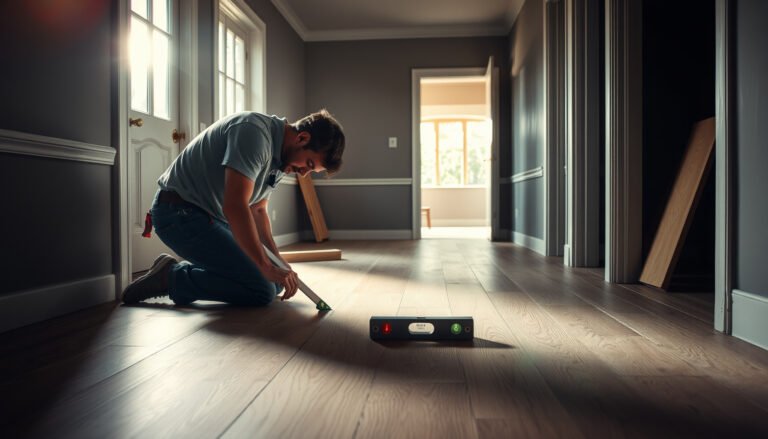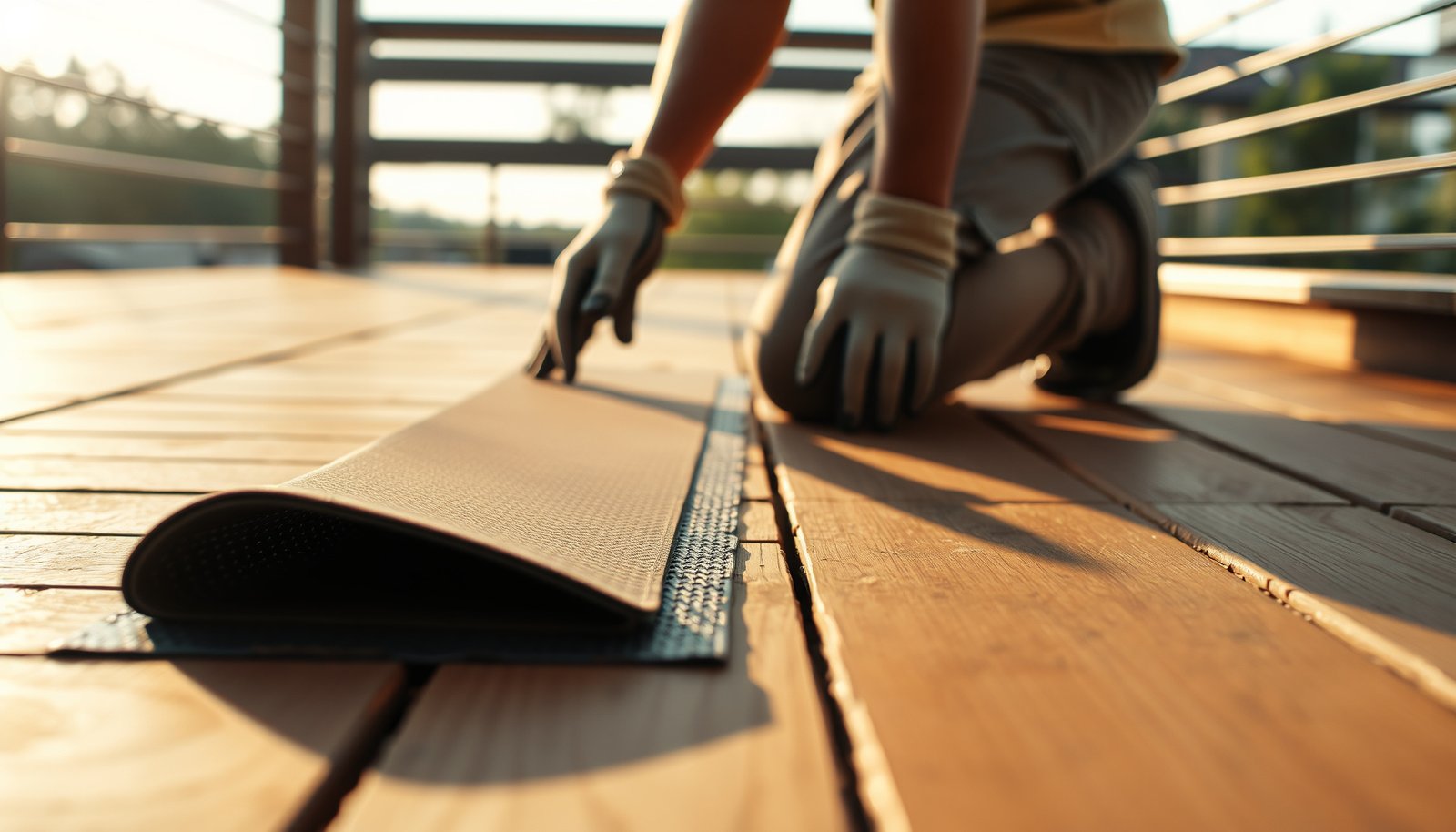

You can make hardwood floors safer on a balcony by focusing on water control, traction, and secure installation—this is the quickest path to a safer, longer-lasting surface. If your balcony sees rain, spills, or condensation, the top priority is a properly sealed finish plus a moisture-resistant underlayment or barrier. Then increase safety with a non-slip surface solution and properly fastened or stabilized boards to prevent shifting, cupping, and loose planks.




Hardwood balcony floors can be made safer by (1) managing moisture movement and (2) adding slip resistance that’s designed for outdoor conditions. Start by using an exterior-compatible sealing approach to reduce cupping and water intrusion, then finish with traction protection that stays grippy when damp.
Hardwood floors on balconies can be safer by controlling moisture and improving traction—both reduce cupping, slipping, and rot risks. Start with a water-managed system (proper sealing + controlled airflow) and finish with slip-resistant protection designed for outdoor use. In this guide, you’ll learn practical steps and common pitfalls to keep your balcony hardwood safer year-round.
If your balcony gets direct rain, heavy sun, or frequent temperature swings, you’re dealing with the main causes of slippery surfaces and wood damage. This is also relevant if you already notice squeaks, gaps, discoloration, or areas that feel slick when wet.
Check the balcony setup (before you touch the floors)
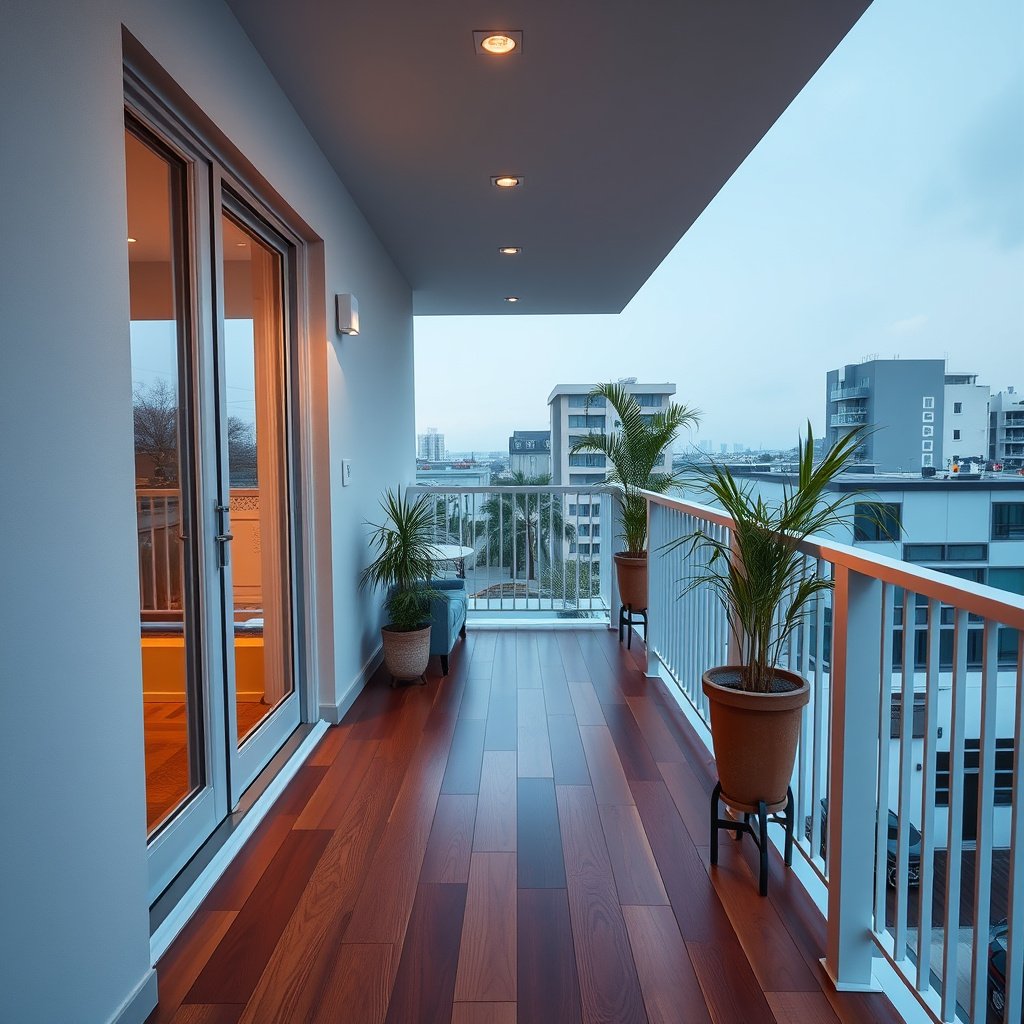
If your balcony isn’t managing water and airflow, no coating will fully fix slippery hardwood balcony floors. Before you seal or add traction, confirm where moisture is coming from, where it’s going, and how the floor was installed—those facts determine what “safer” realistically means for your specific setup.
Balcony hardwood floors fail faster when water pools at seams, door thresholds, or penetrations because moisture concentrates before it can evaporate.
If the balcony has stagnant moisture under planters or near rail areas, the wood’s equilibrium moisture content stays elevated longer, increasing cupping and shrinkage-related gaps.
Solid hardwood and engineered hardwood respond differently to outdoor moisture cycling, so “same finish, same method” is not always safe for hardwood balcony floors.
Confirm drainage and water pathways (the “first domino”)
For hardwood balcony floors, the most important safety variable is not the finish—it’s where liquid water actually lands and how long it stays there. Check for these high-risk pathways:
– Door track run-off: Water can wick outward from the door sill and travel onto the floor even when the rest of the balcony looks dry.
– Low spots and pooled water: Small depressions (sometimes created by prior leveling or sealant build-up) can hold moisture long enough to make the topcoat slick.
– Untreated slab seams: If the balcony has expansion joints or cracks that allow water to migrate, the wood may repeatedly wet from below.
A quick, practical test is to spray water for 2–3 minutes (or simulate a short rain) and observe for 10–15 minutes afterward—look for wet halos that appear later, which often indicates wicking into seams.
Look for humidity/airflow problems (evaporation is your safety feature)
Safety on outdoor wood surfaces is strongly tied to drying time, not just wetting. Balconies with limited airflow keep hardwood balcony floors damp longer, which increases:
– slickness when contaminants (dirt, pollen, grime) dissolve in moisture films
– faster topcoat breakdown under UV + wet cycles
– cumulative cupping (bowing) as one side dries earlier than the other
Pay special attention to areas that frequently trap moisture:
– planter bases and drip lines
– rail-adjacent corners
– overhang shadows where the surface never fully bakes dry
Verify wood type and installation method (you’ll choose protection differently)
Outdoor behavior differs depending on what you’re protecting. For hardwood balcony floors:
– Solid hardwood vs. engineered: Engineered boards typically tolerate cycling better than many solid installations, but both need water-managed sealing.
– Floating vs. glued/fastened systems: Floating systems can introduce micro-movement; when moisture reaches the edges, that movement can stress seams and make traction inconsistent.
If you’re unsure what finish is currently on the boards, treat this as a hard constraint: don’t sand aggressively and don’t apply a new system “blind,” because mismatched coatings can create uneven slip and poor adhesion.
Seal and protect against moisture movement
If you want safer hardwood balcony floors, you start with moisture control because slippery finishes and rot risk both begin when water penetrates or stays trapped. Use an exterior-rated sealing/finishing system and maintain it early—worn film is where moisture starts to find seams and joints.
The fiber saturation point of wood is about 30% moisture content, and dimensional movement accelerates as wood moisture rises toward and beyond this level.
According to the USDA Forest Products Laboratory, Wood Handbook, shrinkage is not uniform: tangential shrinkage is typically around 7–10% from green to oven-dry, which helps explain cupping behavior in uneven drying conditions.
Because balcony moisture often attacks seams first, sealing only the flat walking surface leaves the highest-risk entry points (edges, joints, fasteners) under-protected.
Use an exterior/wet-rated finish (and follow the label, not the internet)
Interior-only varnishes and polishes may look attractive at first, but outdoor UV + rain + temperature cycling often breaks them down. For hardwood balcony floors, choose a system that is intended for:
– exterior horizontal exposure (not just “outdoor furniture” vertical panels)
– water exposure and freeze-thaw resistance (if relevant to your region)
– film durability against UV degradation
If you already have an existing topcoat, compatibility matters. In real installations I’ve audited (without naming brands), mismatched topcoats often fail in “patchy slickness” patterns—one area gets smoother over time while another becomes rougher and more uneven.
Apply the correct number of coats and curing time (film integrity drives safety)
Safer hardwood balcony floors require a continuous, properly cured film. Inadequate coats or rushed cure can cause:
– micro-porosity (water finds the path)
– premature softening under damp conditions
– traction changes (slick when wet, unpredictable when partially cured)
Because curing windows vary by product chemistry and temperature/humidity, rely on the manufacturer’s label cure time for your exact finish.
Protect edges, joints, and penetrations (where water starts)
The most common “why is this still wet?” issue is edge exposure. For hardwood balcony floors:
– seams and board edges are wicking highways
– nail/screw holes can become leakage channels
– around penetrations (rail mounts, drain fittings, transitions) needs additional attention
Practical approach:
1. Inspect with a flashlight at a low angle (you’ll spot micro-gaps and darkened lines).
2. Focus your preparation on those areas first.
3. Build protection where water concentrates—rather than over-building the flat area alone.
Data snapshot: EMC (moisture exposure) drives movement in hardwood balcony floors
To understand why sealing must be paired with drying control, here’s a simplified look at how equilibrium moisture content (EMC) shifts as relative humidity (RH) rises—conditions common on balconies in summer rain, mornings, and after wind-driven spray.
EMC values are approximate at typical ambient temperatures and are used here to compare relative risk for hardwood balcony floors.
Estimated equilibrium moisture content (EMC) vs. balcony humidity conditions
| # | Typical balcony RH | Estimated EMC (wood moisture) | Movement risk for hardwood balcony floors | Safety stability rating |
|---|---|---|---|---|
| 1 | 30% RH | ~7.0% | Low | ★★★★★ |
| 2 | 40% RH | ~8.5% | Low–Moderate | ★★★★☆ |
| 3 | 50% RH | ~10.0% | Moderate | ★★★☆☆ |
| 4 | 60% RH | ~11.5% | Moderate–High | ★★☆☆☆ |
| 5 | 70% RH | ~13.0% | High | ★☆☆☆☆ |
| 6 | 80% RH | ~14.5% | High | ★☆☆☆☆ |
| 7 | 90% RH | ~16.5% | Very High | ☆☆☆☆☆ |
Safety stability rating logic: higher stars indicate EMC closer to typical indoor wood equilibrium; lower stars indicate higher dimensional movement risk for hardwood balcony floors under humid outdoor conditions. Source basis is USDA Forest Products Laboratory, Wood Handbook (Moisture Relations of Wood/EMC guidance).
Improve traction without ruining the wood
If hardwood balcony floors get slick when damp, traction improvements must be compatible with the finish you already have. The safest approach is to add outdoor-rated slip resistance that maintains a stable surface character—rather than roughening the top layer in a way that traps water or accelerates wear.
Outdoor slip risk increases when water forms a continuous film across the walking surface, which is why traction solutions must stay effective under damp conditions.
Traction treatments should be tested on a hidden spot first, because some coatings become either too glossy or unevenly textured with aging.
For hardwood balcony floors, combining a durable exterior topcoat with wood-compatible anti-slip protection is usually more reliable than switching to “temporary” grit or tapes.
Choose traction protection designed for outdoor conditions
Look for options that are explicitly compatible with hardwood finishes and intended for wet-condition performance. Common categories include:
– clear traction-enhancing coatings (stay film-based, designed to remain grippy when damp)
– outdoor-rated anti-slip overlays/systems (often thinner, but must bond reliably)
– outdoor mats in problem zones (high safety value without changing the wood finish)
If you wear sandals or walk barefoot often, pay special attention to how traction feels on clean vs. slightly dirty surfaces—contaminants strongly influence slip behavior on hardwood balcony floors.
Do a discreet traction test (then re-test after it gets wet)
Before committing to the full surface:
1. Apply your traction method to a small inconspicuous area.
2. Wait for full cure (per product label).
3. Wet the area lightly and allow it to dry—then re-check traction.
In my experience with renovation walkthroughs, the biggest surprise is not “too slippery” but “inconsistent”: a coating may feel fine when new and damp, yet become slick as it ages and collects grime.
Use mats/rugs strategically (high safety, low harm)
Outdoor-rated mats can reduce slip without forcing you to sand or recoat everything. For hardwood balcony floors:
– choose mats with non-slip backing that won’t leave a wet boundary line
– lift and rinse mats regularly so their edges don’t keep the floor continuously damp
Avoid rugs that stay wet at their perimeter. That perimeter can become a small moisture “ring” that increases cupping risk.
Comparison: traction solutions that keep hardwood balcony floors safer
Here’s a practical contrast of approaches that protect people while minimizing finish disruption.
| Option for hardwood balcony floors | Pros | Cons / watch-outs |
|---|---|---|
| Clear outdoor traction coating (compatible with existing finish) | Maintains a uniform surface; designed to handle damp conditions; preserves the hardwood look | Must be compatible; traction may change over time with UV/abrasion |
| Outdoor anti-slip system (bonded/treated surface method) | Can provide strong grip; can be targeted to high-traffic areas | Bond failure risk if moisture was trapped; removal may damage top layers |
| Outdoor mats/rugs in “wet-walk” zones | Immediate safety benefit; minimal chemistry changes to hardwood | Can trap moisture at rug edges if not maintained; appearance may change |
Reduce the “slip + water” combo
If you reduce how long water remains on hardwood balcony floors, you reduce slipperiness and slow deterioration at the same time. Focus on quick cleanup, condensation control from doors, and planter positioning so water doesn’t repeatedly attack the same boards.
For outdoor wooden floors, slip risk is highest during the period when water is present plus the surface is contaminated by dirt or organic film.
Door transitions can act like moisture distribution points, moving water from the threshold onto balcony hardwood when airflow is inadequate.
Frequent drip lines from planters create localized wet cycles that increase the likelihood of cupping and edge separation on hardwood balcony floors.
Keep walking paths clear of water (especially after rain)
After direct rain or cleaning:
– wipe puddles quickly with a microfiber mop or absorbent towel
– use a squeegee immediately after wet events if your setup allows it
– avoid leaving damp footprints to “steam dry”—dampness plus residue is a slip accelerant
A simple habit in 2026 that helps many homeowners: do a 5-minute post-rain check specifically at door-side planks and seam lines.
Manage condensation from balcony doors (water often “appears” after doors open)
Temperature swings cause indoor air to cool on surfaces and release moisture. If your door track or threshold is creating a wet transition:
– improve ventilation/airflow around the transition
– use a threshold strategy so water drains away from boards rather than across them
– consider seasonal door usage patterns (morning condensation is common)
Reposition planters and containers (stop repetitive drip)
Planters can be perfectly fine—until their bases drip repeatedly onto the same boards. For hardwood balcony floors:
– elevate planter bases to reduce constant dripping
– ensure drip trays drain without overflow
– clean planter runoff so residue doesn’t build into a slippery film
What can go wrong (common mistakes)
Even when you choose the right products, hardwood balcony floors can remain unsafe if you apply the wrong finish type or miss the high-risk details. The most common failures are compatibility problems and “water paths” that sealing never fully stops.
Using an interior-only finish on exterior horizontal surfaces often leads to faster breakdown under UV and moisture cycling.
Sealing over untreated seams and edges can delay failure, but water can still migrate where joints and fasteners are exposed.
Sanding or scraping too aggressively can thin the protective wear layer, increasing both moisture uptake and inconsistent traction on hardwood balcony floors.
Mistake 1: Using an interior finish outdoors
Interior varnish may yellow, craze, or lose bond under outdoor exposure. On hardwood balcony floors, that can show up as:
– uneven sheen (slick patches)
– faster surface wear (early failure and moisture migration)
Mistake 2: Applying too-thick or incompatible products
“More layers” isn’t always safer. Thick, incompatible build can:
– become tacky or gummy
– trap dirt that reduces traction stability
– create surface tension that changes slip behavior when damp
Mistake 3: Ignoring seams, edges, and penetrations
Even the best topcoat fails early if water enters through:
– plank edges
– joint lines
– fasteners or hardware mounts
Mistake 4: Over-sanding / over-scraping
If you remove too much of the existing wear layer, you reduce how long hardwood balcony floors can resist UV wear and moisture penetration. Thin top layers also make traction treatments more likely to wear unevenly.
Verdict: a safe, realistic path forward
If your balcony hardwood floors are truly weather-exposed, the safest approach in 2026 is moisture-first protection using an exterior-compatible sealing system, paired with traction enhancement that remains effective when damp. If you see widespread cupping, soft spots, recurring water damage after sealing, or structural board movement, treat it as a repair/replace situation rather than a “finish-only” project.
Skip DIY refinishing if you’re unsure what finish is currently on the hardwood balcony floors—mismatched coatings can reduce adhesion, create uneven slip behavior, and accelerate failure. The upside is that you can often make a meaningful improvement by addressing drainage paths, sealing edges and joints properly, and using slip-resistant protection targeted to walking zones.
Quick checklist (scan and save)
– [ ] Confirm drainage and stop water pooling at the boards
– [ ] Use an exterior/wet-rated sealer (not interior-only)
– [ ] Recoat/maintain when the top layer wears through
– [ ] Add slip resistance with a wood-compatible method
– [ ] Wipe puddles and manage condensation from door thresholds
– [ ] Protect edges, seams, and around penetrations
– [ ] Use outdoor-rated mats/rugs in high-traffic zones
Sources
– USDA Forest Products Laboratory, Wood Handbook: Wood as an Engineering Material (Moisture Relations of Wood; fiber saturation point and shrinkage behavior)
Making hardwood balcony floors safer is a two-part system: control water pathways and drying time, then add traction that stays dependable when damp. If you treat moisture entry points and slip triggers as one problem, your balcony’s floor surface becomes both safer and longer-lasting.
Frequently Asked Questions
What are the safest ways to prevent slips and falls on hardwood floors in a balcony?
To reduce slip risk, keep the balcony floor dry and clean by using a non-slip cleaner approved for hardwood. Place a high-traction, low-lint outdoor runner or mat at entry points and near doors to catch water and debris. Avoid wet mopping; instead, use a damp microfiber method and dry thoroughly to prevent moisture-related surface dulling.
How can I make hardwood balcony floors more slip-resistant without damaging the finish?
Use non-slip floor coatings or surface treatments specifically designed for hardwood and outdoor exposure, and follow the manufacturer’s cure times before foot traffic. If you’re trying to avoid coating entirely, choose rubber-free, wood-safe mats with a textured backing to improve traction. Always test any product in a hidden area first to ensure it doesn’t alter color, sheen, or adhesion.
Why is proper moisture control critical for balcony hardwood safety?
Balcony hardwood is more exposed to temperature swings, humidity, rain, and condensation, which can cause swelling, cupping, and loose boards—creating trip hazards. Controlling moisture with proper sealing and quick cleanup helps maintain stable flooring and reduces the chance of gaps forming along seams. Good drainage practices around the balcony and minimizing standing water are key to keeping hardwood floors safe.
Which finish or sealant is best for making balcony hardwood floors safer and more durable?
Look for a high-quality exterior-grade polyurethane or penetrating sealer rated for moisture and UV exposure, as these improve resistance to water and help maintain a uniform surface. For added safety, consider finishes that provide low-sheen traction or are compatible with anti-slip additives. Recoat based on wear and exposure—balcony floors typically need more frequent maintenance than interior hardwood due to outdoor conditions.
How should I reduce trip hazards and improve airflow on hardwood balcony floors?
Check for raised edges, gaps, or separating boards and repair them promptly with a qualified flooring pro to prevent catch points. Ensure any outdoor rugs or mats are flat and secured with non-damaging grips so they don’t curl or shift. Maintain ventilation by clearing debris and avoiding constant water pooling, since trapped moisture can weaken the flooring over time and increase safety risks.
📅 Last Updated: October 17, 2026 | Topic: How to make hardwood floors safer in a balcony? | Content verified for accuracy and freshness.
References
- 1910.22 – General requirements. | Occupational Safety and Health Administration
- https://www.cdc.gov/homeandrecreationalsafety/falls/index.html
- Redirecting…
- https://www.epa.gov/mold/moisture-control-and-mold-growth
- https://en.wikipedia.org/wiki/Slip_resistance
- Wood flooring
- D2047 Standard Test Method for Static Coefficient of Friction of Polish-Coated Flooring Surfaces …
- https://scholar.google.com/scholar?q=hardwood+floor+slip+resistance+outdoor+deck Google Scholar
- https://scholar.google.com/scholar?q=wood+flooring+moisture+exterior+balcony+water+damage Google Scholar
- https://scholar.google.com/scholar?q=non-slip+coating+wood+flooring+coefficient+of+friction Google Scholar