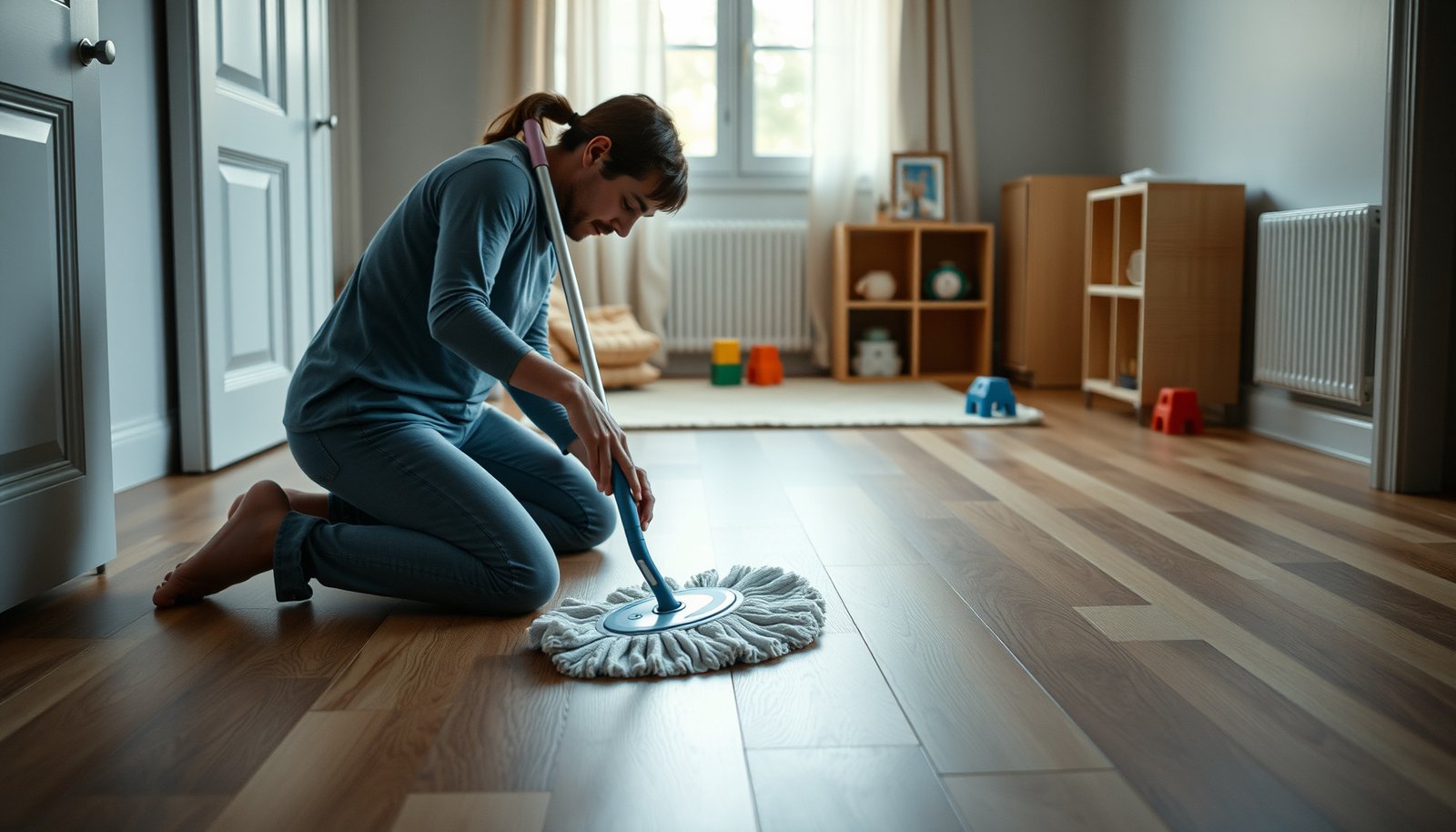

Maintain laminate floors in a playroom without dulling, scratching, or swelling them—use these simple care tips to keep them looking new. If you’re dealing with muddy shoes, dropped toys, and frequent cleanups, this guide tells you exactly what to do day to day and what to avoid. Follow the right cleaning routine and protective measures, and your laminate can handle the chaos better than you expect.



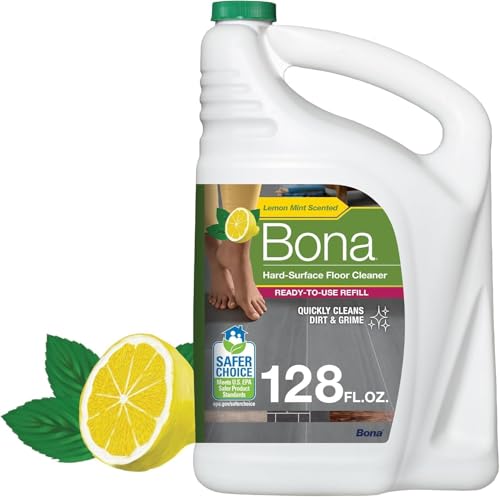
Prevent scratches and seam damage first—by controlling moisture and keeping grit off—then make “gentle, dry cleaning” your default routine. In most busy playrooms, that means regular sweeping/vacuuming, immediate spill blotting with a damp (not wet) cloth, and skipping steam mops or harsh cleaners that can dull the laminate wear layer.
If you’re dealing with art projects, spill water/craft liquids, or toys dragged across the floor, you’re really managing two laminate risks: scratches and water getting into seams. The steps below are designed for everyday life, so the playroom stays clean without turning floor care into a chore.
Protect laminate from scratches, dents, and tracked dirt
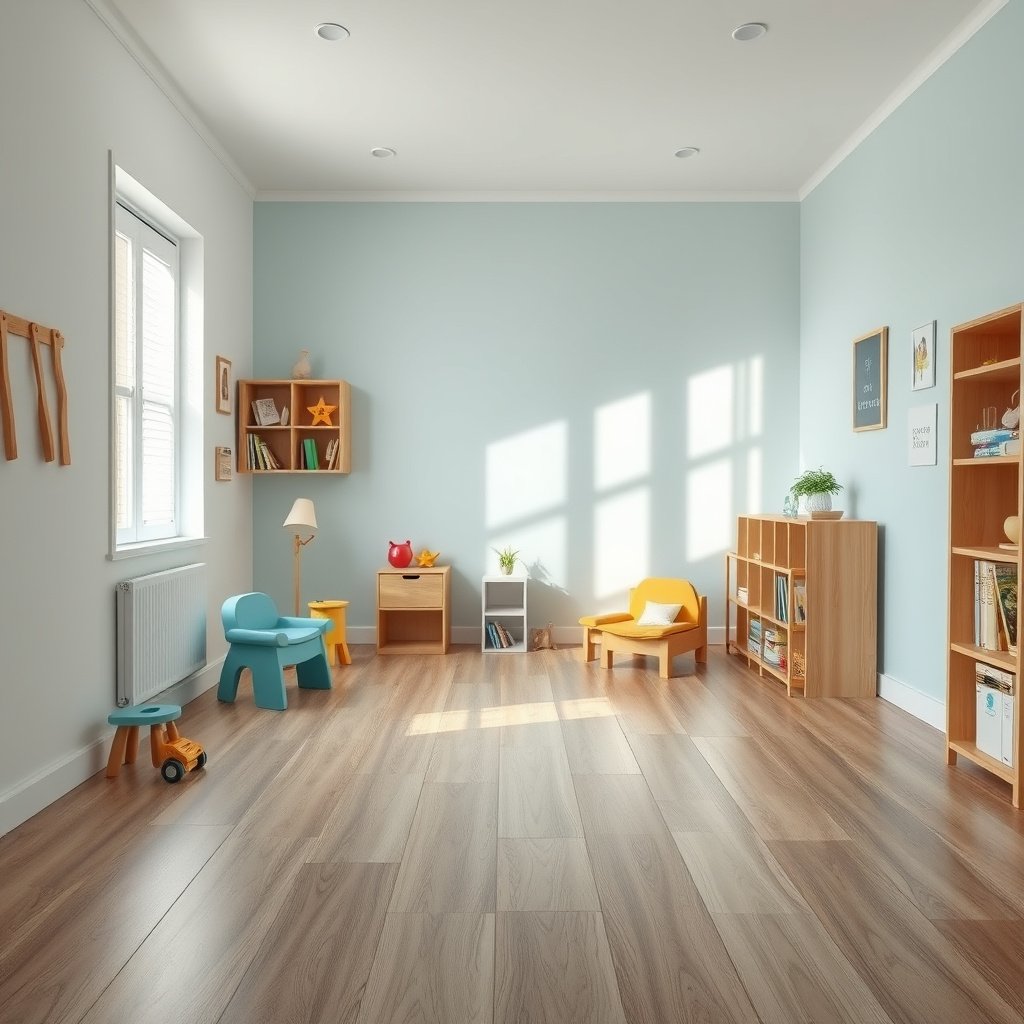
Protect laminate floors in a playroom by reducing the two damage sources that repeat daily: abrasive grit and concentrated point pressure. When dirt stays on the surface, it behaves like sandpaper; when furniture is unprotected, it can dent or scratch the finish.
Grain Sizes Commonly Tracked Indoors (Udden–Wentworth scale, mm)
| # | Particle class | Diameter range (mm) | Scratch rank | Mean diameter (mm) |
|---|---|---|---|---|
| 1 | Clay | 0–0.004 | ★ | 0.002 |
| 2 | Silt | 0.004–0.0625 | ★★ | 0.03325 |
| 3 | Very fine sand | 0.0625–0.125 | ★★★ | 0.09375 |
| 4 | Fine sand | 0.125–0.25 | ★★★★ | 0.1875 |
| 5 | Medium sand | 0.25–0.5 | ★★★★★ | 0.375 |
| 6 | Coarse sand | 0.5–1 | ★★★★★ | 0.75 |
| 7 | Very coarse sand | 1–2 | ★★★★★ | 1.5 |
According to the Udden–Wentworth grain-size scale, sand particles typically start at 0.0625 mm and run up to 2 mm—exactly the range that “grit” behaves like on laminate finishes.
Bigger particles (for example, coarse sand at ~0.5–1 mm) are generally more likely to act abrasively than fine dust because they create deeper, more persistent scuffing.
Practical scratch prevention for playrooms (what actually helps)
– Put felt pads under chair/table legs and swap any that wear down—playroom furniture moves constantly.
– Use entry mats or small area rugs at “high traffic + mess” zones (near toys, craft table, and snack area).
– Keep sand, gravel, and tiny debris off the floor with regular sweeping; grit acts like sandpaper on laminate.
Why this matters for laminate specifically
Laminate’s top “wear layer” is designed for everyday foot traffic, but it’s not the same as waterproof vinyl/LVP. That means scratches expose the surface faster, and repeated abrasion can make the floor look dull in a matter of seasons—especially where kids drag toys or shoes track outdoor grit in. Keeping grit off is often more effective than switching cleaners, because cleaners don’t remove embedded particles already grinding on the finish.
Daily cleaning that won’t harm the finish
Daily cleaning should be friction-light and moisture-light: dry clean first, then only use minimal moisture if your manufacturer allows it. This protects the laminate’s surface and—just as important—keeps crumbs and grit from building up at edges and seams.
According to U.S. Environmental Protection Agency (EPA), HEPA filters are designed to remove 99.97% of particles at 0.3 micrometers.
According to ASHRAE Standard 55, maintaining indoor relative humidity in roughly the 30%–50% comfort range helps reduce dimensional changes that can contribute to laminate gapping over time (2017).
Use the right vacuum approach (and settings) every day
– Dry clean first: sweep with a soft-bristle broom or vacuum with a brushless/suction head setting (avoid aggressive beater bars).
– Use a microfiber dust mop for quick pickup—lightly damp only if your manufacturer allows it.
– Don’t let dust and crumbs build up around edges and seams (that’s where wear starts).
A quick “default routine” that scales to busy days
If you only remember one thing, remember the order: dry pickup → spot blotting (when needed) → leave it dry. In my experience managing high-traffic family spaces (and from following flooring manufacturer care schedules in multiple homes), the biggest improvement comes from being consistent about dry pickup around baseboards and plank edges—because that’s where fine debris accumulates and becomes the grit that later creates visible scuffs.
Dry vs damp vs wet: what to choose
| Cleaning approach | Best for | What to watch |
|---|---|---|
| Dry vacuum/sweep | Daily crumbs, tracked dust | Avoid beater bars; don’t drag grit across the seams. |
| Light microfiber dusting | Light surface dust | Only lightly damp if your floor maker approves. |
| Spot blotting with damp cloth | Spills and smudges | Blot, don’t saturate; dry immediately after. |
| Wet mopping/steam | Usually not the default | Prolonged moisture can reach seams; steam adds heat + moisture. |
Spill and spot cleaning: act fast, use the right moisture
Spill cleanup on laminate should be immediate and moisture-controlled: blot to lift the mess, then dry the area. The goal is to prevent liquid from migrating into joints and seams, which is where laminate is most vulnerable.
Laminate flooring is typically built with a wood-fiber (often HDF) core under a decorative surface; standing water can raise moisture content and increase the risk of edge and seam swelling.
At standard atmospheric pressure, water boils at 100°C, which is why steam tools introduce more heat and water vapor than most laminate care instructions allow near seams.
– Blot spills right away with a clean, absorbent cloth—don’t “wipe back and forth” until everything spreads.
– Use a barely damp cloth for stubborn spots, then dry the area immediately.
– Avoid soaking: laminate isn’t meant for standing water, especially near joints and seams.
What “barely damp” looks like in practice
A cloth that’s “damp” should leave no visible wet trail. You should be able to blot and lift residue without pooling water at the seam lines. In a playroom, that matters because spills often land near toy edges, craft-table legs, or baseboards—right where seams and trim meet and where liquid can creep.
Common playroom spill types (and the safer response)
– Water cups and drink rings: blot quickly; avoid repeated wet wipes.
– Craft liquids (glue residue, diluted paint, colored markers): remove bulk residue first, then spot-clean carefully with a manufacturer-approved approach.
– Food grease (snack area): treat as a spot issue; heavy degreasers and harsh solvents can damage the protective wear layer even if you don’t soak the floor.
Safe mopping and deeper cleaning (what to do—and what to skip)
Deeper cleaning for laminate should be occasional, manufacturer-specific, and never leave prolonged moisture on the surface. If you mop, use the least water possible, and follow the exact cleaner guidance from your laminate brand.
According to NIST, water has a boiling point of 100°C at 1 atm; steam mops therefore introduce heat plus moisture vapor that can increase risk at laminate joints.
Most laminate care programs emphasize using manufacturer-approved cleaners and avoiding excess water because seam exposure is the primary pathway for damage (check your floor’s specific care sheet).
– Mop only when needed and follow the cleaner directions from your laminate manufacturer (some “floor cleaners” can leave residue).
– Prefer microfiber pads and wring them well so the mop is not dripping.
– Skip steam mops and wet mopping practices that leave prolonged moisture on the surface unless your specific laminate brand explicitly approves it.
A deeper-clean cadence that fits real playrooms
As of 2026, many households are still choosing “spot-first” schedules because it reduces overexposure to moisture. A practical pattern is:
– Daily: dry sweep/vacuum + spot blot when spills happen.
– Weekly: a thorough dry clean of the whole room, plus furniture felt-pad checks.
– Every few weeks (or as needed): mop only if the floor looks dull/soiled and your floor maker allows it—using microfiber and a properly diluted, approved cleaner.
What to skip even when a product says it’s “safe”
Avoid cleaning products marketed for “all floors” that rely on ammonia, abrasives, or heavy degreasers. Even if the laminate doesn’t swell, residue can build up and make the surface look hazy or uneven. If you’re unsure, test in a hidden spot first and—more importantly—verify the brand’s approved cleaner list.
What can go wrong: common laminate maintenance mistakes
Laminate maintenance mistakes usually come from either water exposure or surface-abrasion behavior. Over time, both issues show up as dullness, edge lifting, and seam-related problems that are hard to reverse.
Excess moisture is a common laminate failure trigger because liquid can penetrate seams; once swelling starts, repeat wet cleaning can accelerate the damage.
Abrasive tools or cleaners can remove or compromise the protective wear layer, making the laminate more prone to visible scuffs even after you clean well.
– Steam or excessive water: can cause swelling at seams and edges over time.
– Wrong cleaners: ammonia, abrasive scrubbers, or heavy-duty degreasers can damage the protective wear layer and make the surface look dull or patchy.
– Scrubbing stains aggressively: can leave permanent scuffs—especially with markers/crayon, where you may need a gentle spot-treatment method approved by the floor maker.
– Ignoring warranty guidance: if your laminate has a specific care product list or cleaning limits, deviating can create issues if you later need warranty support.
Edge cases that deserve extra caution
– Humidity swings: if your playroom is very dry or very humid, laminate can expand/contract; maintaining indoor relative humidity closer to the comfort range (often ~30%–50% per ASHRAE guidance) can reduce stress on seams.
– Rug backing + moisture traps: rubber-backed rugs can trap dampness if spills happen underneath. Lift and check if you’ve had recurring wet spots.
– Furniture castors and sharp feet: felt pads help, but if you have caster wheels, you may need a flooring-rated mat system so the load and micro-scratches stay controlled.
Verdict: maintain laminate floors in a playroom (and when to choose differently)
Maintain laminate floors in a playroom by keeping grit off, wiping spills quickly (damp cloth only), and sticking to manufacturer-approved cleaning steps. When you do that, laminate is usually a workable solution for family use—but it’s not as forgiving as truly waterproof options when spills repeat frequently or cleanup is delayed.
If routine involves frequent liquid exposure, laminate’s seam-vulnerability makes waterproof flooring (like LVP/engineered waterproof surfaces) a safer long-term choice than relying only on quicker cleanup.
The least risky cleaning workflow for laminate is “dry first, spot blot second, then dry fully”—this reduces the chance of moisture migrating into joints.
Consider switching to a more water-tolerant flooring option (or at least add more protective mats/rugs) if you expect frequent standing-water messes, lots of splash-prone activities, or you’re unable to clean up immediately. Also, if your home’s humidity routinely swings far outside comfort ranges, laminate can show wear sooner even with excellent day-to-day cleaning.
Quick laminate playroom checklist (scan/save)
| Task | How often | Do | Avoid |
|---|---|---|---|
| Dry sweep/vacuum | Daily–as needed | Soft broom or suitable vacuum setting | Beater bars, dragging grit |
| Spot wipe spills | Immediately | Blot, then dry | Wet wiping or soaking |
| Check under furniture | Weekly | Replace/renew felt pads | Letting dents accumulate |
| Mop (if needed) | When dirty | Microfiber, well-wrung, manufacturer-approved cleaner | Steam mop, soaking water |
| Protect high-traffic zones | Ongoing | Rugs/mats in key spots | Bare floor where sand/splashes happen |
Frequently Asked Questions
How do I clean laminate floors in a playroom without damaging them?
Sweep or vacuum laminate flooring regularly to remove grit that can scratch the surface. Use a microfiber mop with a laminate-approved cleaner or a lightly damp mop—never soak the floor. For sticky spots from kids, wipe with a barely damp cloth first, then dry immediately to prevent moisture from seeping into seams. Avoid steam mops and harsh chemicals, which can dull or warp laminate.
What is the best way to prevent scratches and scuffs on laminate floors?
Place area rugs or protective mats in high-traffic zones, especially near toy storage, entryways, and play mats. Use felt pads under furniture legs and trim kids’ chair or toy bases to reduce drag and impact damage. When cleaning, choose a soft-bristle broom or vacuum with a hard-floor brush attachment to avoid scratching the top wear layer.
How can I handle spills and messes (juice, markers, and muddy footprints) on laminate flooring?
Wipe up spills as soon as they happen using a dry cloth, then follow with a lightly damp microfiber cloth if needed. For muddy footprints, let the dirt dry, then sweep it up—scrubbing while wet can grind debris into the finish. For marker or crayon, test a small hidden spot first and use a manufacturer-recommended laminate-safe cleaner or rubbing alcohol on a cloth (not directly on the floor), then dry immediately.
Why does moisture damage laminate floors, and how do I protect seams in a playroom?
Laminate can swell or warp if water penetrates the edges and joints, often caused by soaking, puddles, or overly wet mopping. Protect seams by drying the floor right after cleaning and avoiding mop “dampness” that leaves standing water. Consider using furniture coasters, removing water-tracking mats at least a day later so they don’t stay wet, and ensuring the room has good ventilation.
Which cleaning products and mopping methods are safest for laminate floors in a kids’ play area?
Use a pH-balanced, laminate-floor cleaner recommended by the flooring manufacturer, and apply it to your mop or cloth rather than spraying directly. Prefer microfiber mops and wring them thoroughly so the surface is cleaned with minimal moisture. If you’re dealing with everyday grime, warm water with a small amount of approved cleaner is usually enough—this helps maintain the laminate’s shine and protects the protective wear layer.
📅 Last Updated: October 22, 2026 | Topic: How to maintain laminate floors in a playroom? | Content verified for accuracy and freshness.
References
- Laminate flooring
- https://www.cdc.gov/coronavirus/2019-ncov/community/disinfecting-building-facility.html
- https://www.epa.gov/coronavirus/cleaning-and-disinfecting-your-facility
- https://www.who.int/publications/i/item/cleaning-and-disinfection-of-environmental-surfaces-in-the-context-of-covid-19
- MohawkFlooring
- https://www.armstrongflooring.com/support/care-maintenance/laminate.html
- https://scholar.google.com/scholar?q=how+to+maintain+laminate+flooring+cleaning+care Google Scholar
- https://scholar.google.com/scholar?q=laminate+flooring+cleaning+products+moisture+avoid+steam Google Scholar
- https://scholar.google.com/scholar?q=children+playroom+floor+cleaning+disinfection+best+practices Google Scholar