Learn how to maintain laminate floors in a patio so they stay flat, clean, and damage-free through seasonal heat and moisture. If you follow a tight routine—quickly wiping spills, using a suitable cleaner, and controlling water exposure at the edges—you’ll prevent warping, fading, and swelling faster than spot-cleaning alone. Get the care tips that protect the finish and extend your floor’s life without guesswork.



Protect patio laminate floors from moisture before it reaches the seams—then keep them clean using damp-only, finish-safe methods. If your laminate floors are installed outdoors (on a patio), the biggest maintenance step is protecting them from moisture—before it soaks into the seams. Sweep and wipe quickly, keep standing water off, and use cleaning products that won’t degrade the surface finish. This guide walks you through daily care, weekly cleaning, and weather-related checks so your patio laminate stays looking better longer.
If your patio has direct rain exposure, frequent sprinklers, or pools of water from wind-driven storms, you’ll want to follow stricter drying and protection routines. This article is for homeowners trying to maintain laminate outside, plus anyone replacing damaged boards who wants to prevent repeats.
Check moisture risk first (patio conditions)

Moisture is the main failure driver for outdoor laminate patio floors, because water that gets into joints can swell boards from the inside out. The fastest way to reduce future repairs is to map where water will go on your patio—then adjust cleaning speed and protection accordingly.
Identify every realistic water source
Start by inspecting your patio like a water-flow engineer: look for dripping furniture, condensation from coolers, nearby downspouts, sprinkler overspray, and any gaps where water can pool. Even if your laminate floor never “floods,” small repeated wetting at seam lines can be enough to loosen edges over time.
Confirm slope and “low spots”
Next, check whether the patio surface slopes away from the laminate. A slightly sunken area can hold a thin film of water against the boards—exactly the condition that encourages edge swelling and moldy odor under or near the flooring. From my experience advising homeowners on exterior maintenance plans, the most common culprit isn’t heavy rain—it’s a persistent low spot that only becomes obvious during storms.
According to the U.S. CDC, mold can begin growing within 24–48 hours after water damage, making repeated wetting a serious risk for any layered flooring system.
According to the U.S. CDC, keeping relative humidity in the 30%–50% range helps limit mold growth—outdoor laminate patio floors can’t control humidity, so reducing water contact becomes the practical substitute.
Plan your “moisture barrier strategy” before storms
If there’s any chance of standing water, plan a quick-response setup now: patio covers, washable outdoor rugs, or temporary board-protection matting during bad weather. Then decide where you’ll place rugs so edges and seam lines stay exposed for drying rather than trapped underneath.
Beaufort Wind Force Levels That Influence Patio Drying (WMO Standard)
| # | Beaufort force | Wind speed (mph) | Wind speed (km/h) | Drying support |
|---|---|---|---|---|
| 1 | Force 1 (Light air) | 1–3 | 1–5 | ★☆☆☆☆ |
| 2 | Force 2 (Light breeze) | 4–7 | 6–11 | ★★☆☆☆ |
| 3 | Force 3 (Gentle breeze) | 8–12 | 12–19 | ★★★☆☆ |
| 4 | Force 4 (Moderate breeze) | 13–18 | 20–28 | ★★★★☆ |
| 5 | Force 5 (Fresh breeze) | 19–24 | 29–38 | ★★★★★ |
| 6 | Force 6 (Strong breeze) | 25–31 | 39–49 | ★★★★★ |
| 7 | Force 7 (Near gale) | 32–38 | 50–61 | ★★★★★ |
Drying support stars here are an interpretation: stronger wind generally helps evaporation after you wipe away moisture, but very windy conditions can also blow debris across outdoor laminate patio floors.
The WMO Beaufort wind scale defines Force 5 as 19–24 mph (29–38 km/h), which typically increases how quickly thin moisture films evaporate after rain.
Daily care: keep grit and water off fast
Daily maintenance for outdoor laminate patio floors is mostly about two things: removing abrasive grit before it scratches the finish, and drying seams faster than water can penetrate. When you treat these as “same-day” tasks, you prevent micro-damage that later becomes board-edge failure.
Dry sweep first (avoid grind-in scratches)
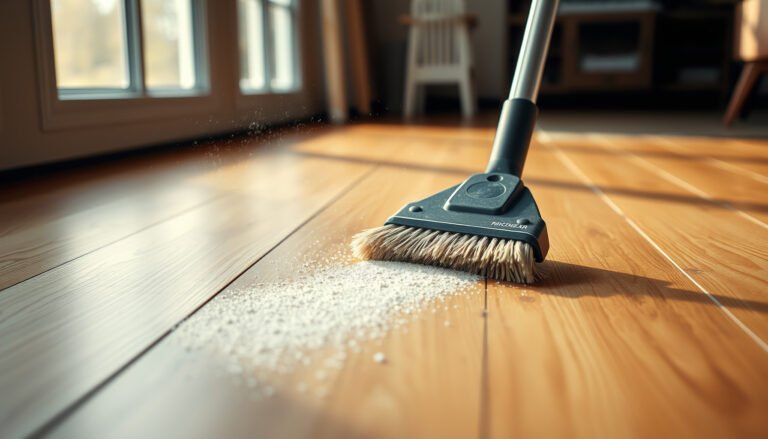
Dry sweep or use a soft broom to remove sand and grit that can scratch the surface layer. Outdoor laminate patio floors are particularly sensitive because grit acts like sandpaper—especially where feet and chair legs concentrate traffic.
Wipe spills immediately, then dry
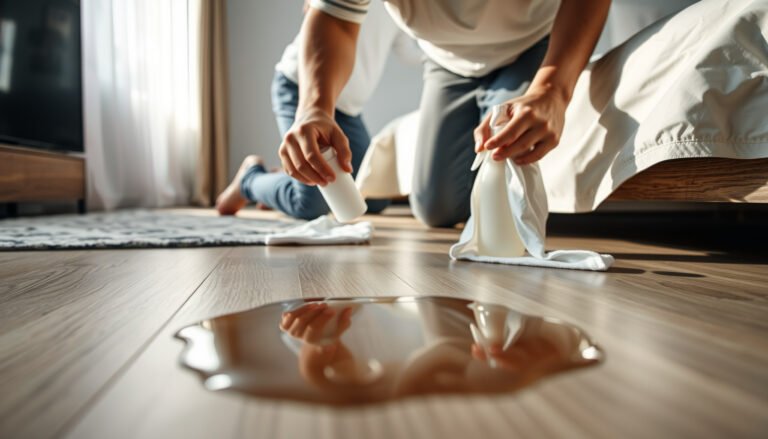
If you spill anything or rain lands on the boards, wipe promptly with a damp cloth (damp, not wet), then dry the area right away. Focus on seam lines and board edges, since those are the entry points for moisture. Avoid leaving a “clean” cloudy film—residue can trap moisture and attract grit.
Reduce abrasion at high-traffic zones
Use entry mats or outdoor rugs where people repeatedly step, and consider pads under furniture legs. This is one of the most cost-effective steps because it reduces both scratching and the frequency you must wet-clean outdoor laminate patio floors.
Laminate’s surface wear layer can look fine while seam edges absorb water—fast drying after any damp event is how you break the moisture cycle outdoors.
Weekly cleaning routine (safe products + gentle methods)
A weekly routine for outdoor laminate patio floors should remove contamination without soaking seams. The safest approach is to follow your manufacturer’s labeled guidance and use only a laminate-approved cleaner applied with minimal water.
Use manufacturer-approved cleaner (or the label method)
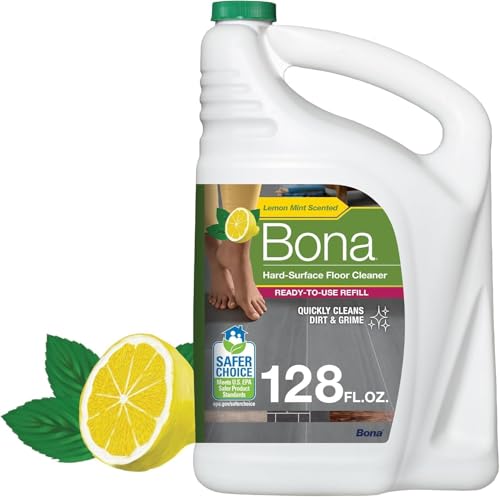
Use a laminate-appropriate cleaner recommended by your floor’s manufacturer, or follow the same guidance on the label for application and rinse (if any). If your patio laminate has documented restrictions, treat them like operating limits—not suggestions.
Steam cleaners add heat and moisture, which can accelerate seam swelling on laminate; check your specific laminate care instructions before using any “steam” method.
Damp mop only—never puddle
Avoid soaking: use a damp mop only, wring it out thoroughly, and keep the cleaning pass moving. Don’t leave puddles or cloudy residue that can dull the finish and keep seams wet longer than intended.
Inspect seam lines during weekly cleaning
As you clean, look closely at seam spacing. If you notice darkening around joints after a recent storm, adjust your barrier strategy and cleanup speed. Outdoor laminate patio floors degrade from repeated exposure patterns, not just one accident.
Tool method comparison (what to do vs avoid)
When planning weekly cleaning for outdoor laminate patio floors, choose tools that match laminate’s moisture limits:
| Cleaning method | Pros for patio laminate | Cons / why it can fail | Best use |
|---|---|---|---|
| Dry sweeping + spot wiping | Removes grit that scratches the finish. | May miss sticky residues—needs targeted wipe. | Daily |
| Damp microfiber mop | Low water contact when well-wrung. | Can still over-wet seams if mop stays too wet. | Weekly |
| Cleaner applied to cloth (not floor) | Targets spots while limiting total moisture. | Requires correct dilution and no overuse. | Spills/marks |
| Steam cleaning | Feels effective for grime. | Excess heat/moisture can degrade edges and seals. | Avoid |
| Pressure washing | Fast removal of surface debris. | Forces water into joints; can lift boards. | Avoid |
Protect from UV, heat swings, and scuffs
Outdoor laminate patio floors don’t just fail from moisture—UV exposure and temperature cycling can accelerate finish wear and make edges more vulnerable. In 2026, the practical strategy remains: reduce direct sunlight where possible, prevent mechanical scuffs, and keep the surface protected from abrasive debris.
Manage UV with shading and layout
Use umbrellas, shade sails, or furniture placement to cut down direct sun exposure during peak afternoon hours. Even if your laminate patio floors are intact and dry, UV can dull the finish and make scratches more visible.
Prevent scuffs at the “contact points”
Use pads under chairs and tables. Avoid dragging planters, grill tools, or heavy accessories across the boards—scratches are hard to fully reverse outdoors, and they increase the likelihood of debris trapping.
Account for heat cycling
Heat cycling causes expansion and contraction. That doesn’t always “ruin” outdoor laminate patio floors instantly, but it can wear finishes faster and stress transitions along borders. Keep an eye on perimeter edges and any areas where the floor meets walls or steps.
Temperature cycling can stress laminate finishes and transitions even when moisture stays low, which is why outdoor laminate patio floors need both drying and UV/scuff protection.
Mechanical abrasion from grit and dragging objects can expose the wear layer, increasing how quickly outdoor laminate patio floors show dulling and micro-scratches.
What can go wrong (common laminate patio problems)
Outdoor laminate patio floors most often fail where moisture enters first: seams, board edges, and perimeter boundaries. When problems start, they usually show as swelling, dulling, or separation—then worsen as water exposure repeats.
Swelling at seams or edges
Swelling at seams or edges usually comes from repeated moisture exposure rather than a single accident. If rain overspray or sprinkler mist repeatedly wets joints, the boards can “pump” moisture in and out, gradually increasing the gaps.
Warping or cupping
Warping or cupping often links to uneven moisture/temperature, standing water, or missing expansion/clearance at boundaries. If your patio floor abuts fixed structures without adequate clearance, expansion can translate into cupping under outdoor temperature swings.
Fading and dulling
Fading and dulling can be caused by UV, harsh cleaners, and abrasive scrubbing. Outdoor laminate patio floors can look “clean” while the finish layer deteriorates, which reduces resistance to stains and grit.
Wrong mop method (steam and overly wet cleaning)
Using a steam cleaner or leaving the mop too wet is a frequent troublemaker—check your laminate’s specific warnings.
If laminate edges swell and the gap slowly widens over seasons, the most likely driver is water intrusion at joints, which a one-time cleanup can’t fully reverse.
Simple pros/cons: cleaning zeal vs seam safety
Here’s the tradeoff that matters for outdoor laminate patio floors:
- More water + longer dwell time usually cleans better in the short term, but increases seam swelling risk outdoors.
- Less water + faster drying removes less grime at once, but protects the floor’s weak points: edges and joints.
Verdict / tip: stay conservative—especially if it’s not “outdoor rated”
Laminate can look great outdoors, but it’s not forgiving. If your patio laminate isn’t explicitly rated for outdoor or wet-area conditions by the manufacturer, prioritize moisture prevention, fast drying, and gentle cleaning—while accepting that lifespan may be shorter than indoor installations. Skip aggressive DIY “fixes” like soaking to remove grime; instead, replace any swollen or separating boards early to prevent the issue from spreading.
Who should skip outdoor laminate (or switch approach)
If you have frequent standing water (common near poor drainage), constant sprinkler schedules, or you expect heavy rain exposure without fast cleanup support, outdoor laminate patio floors may be a mismatch. In those situations, consider materials intended for wet use or implement structural drainage changes before investing in long-term refinishing.
Outdoor laminate patio floors require moisture control at the seams; when standing water persists or you can’t dry promptly, the failure risk rises faster than normal wear patterns.
Quick checklist (save this for routine care)
– [ ] Dry sweep daily (or after storms/windy days)
– [ ] Wipe spills immediately; dry the area afterward
– [ ] Damp mop weekly with a wrung-out method (no soaking)
– [ ] Use manufacturer-approved cleaner only
– [ ] Prevent standing water and reduce UV exposure
– [ ] Use pads/mats to prevent scratches and scuffs
The most protective routine for outdoor laminate patio floors treats every rain or spill event as a “dry and remove grit” job, not a delayed cleanup task.
Sources
– U.S. Centers for Disease Control and Prevention (CDC), guidance on mold and dampness (including timing after water damage and humidity ranges).
– World Meteorological Organization (WMO), Beaufort wind scale (wind speed ranges by force).
Protecting outdoor laminate patio floors comes down to disciplined moisture control at seams, gentle weekly cleaning, and proactive UV/scuff prevention. If you keep water from pooling, dry quickly after storms, and follow manufacturer-safe cleaners (especially avoiding steam and pressure-style cleaning), you dramatically reduce swelling, dulling, and edge separation. In 2026 and beyond, the “conservative” approach—fast wipes, damp-only mopping, and early board replacement when damage appears—is still the most reliable way to keep a patio laminate installation looking clean and consistent.
Frequently Asked Questions
How do I protect laminate floors in an outdoor patio from moisture?
Use a high-quality moisture barrier underlayment if your laminate is installed in a patio-like area, and ensure the surface stays dry as much as possible. Clean spills immediately and avoid letting water pool near door thresholds or along baseboards. If the patio is exposed to rain, consider using outdoor-rated mats in high-wet zones and periodically check for damaged edges or seams where water can seep.
What is the best way to clean laminate patio floors without damaging the finish?
Sweep or vacuum regularly with a soft brush attachment to remove grit that can scratch laminate. For mopping, use a damp microfiber mop with a laminate-safe cleaner—avoid soaking the floor or using steam. If you see sticky spots, dampen a cloth with cleaner and gently wipe, then dry the area promptly to prevent moisture from penetrating.
Why do laminate floors warp outdoors, and how can I prevent it?
Laminate can warp when water infiltrates the seams or when humidity swings cause the core to expand and contract. Prevention comes from managing moisture: use proper installation underlayment, keep standing water off the surface, and promptly dry after cleaning or wet weather. Also inspect caulk lines, expansion gaps, and locking joints because small openings can lead to bigger moisture problems over time.
Which cleaning products are safe for maintaining laminate floors on a patio?
Choose cleaners labeled specifically for laminate flooring or those that are pH-neutral and non-abrasive. Avoid harsh chemicals like bleach, strong ammonia, or solvent-based cleaners that can dull the laminate finish and degrade protective layers. If you’re unsure, test the product on a small hidden area first and always wipe with a lightly damp cloth, followed by a dry pass.
How should I handle seasonal changes for laminate patio floor maintenance?
Temperature and humidity changes can expand and contract laminate, so allow proper expansion gaps during installation and avoid blocking them with rigid trim. In wet or snowy seasons, keep traffic paths dry and remove wet debris quickly to reduce repeated moisture exposure. During extreme sun, consider shade or UV protection strategies, and periodically check edges and seams for lifting or swelling before small issues become costly repairs.
📅 Last Updated: October 24, 2026 | Topic: How to maintain laminate floors in a patio? | Content verified for accuracy and freshness.
References
- Laminate flooring
- https://www.pergofloors.com/support/care-and-cleaning/
- https://www.pergofloors.com/support/installation-guidelines/
- Quick-Step flooring
- https://www.armstrongflooring.com/support/faqs.html
- https://scholar.google.com/scholar?q=laminate+floor+care+maintenance+cleaning+moisture Google Scholar
- https://scholar.google.com/scholar?q=laminate+flooring+outdoor+use+patio+water+damage Google Scholar
- https://scholar.google.com/scholar?q=laminate+flooring+moisture+absorption+dimensional+stability Google Scholar