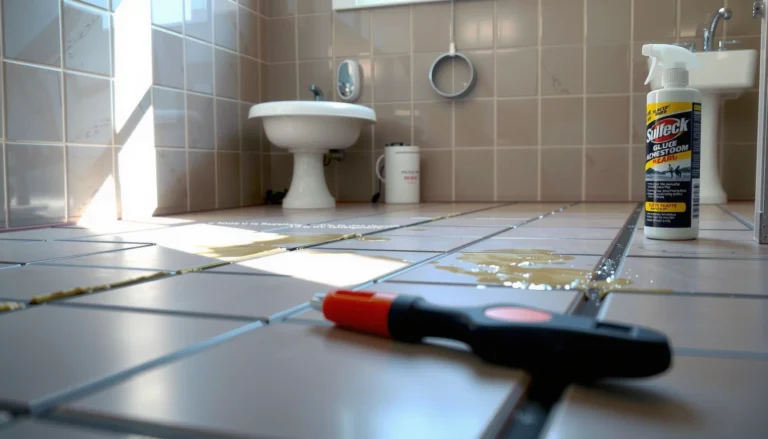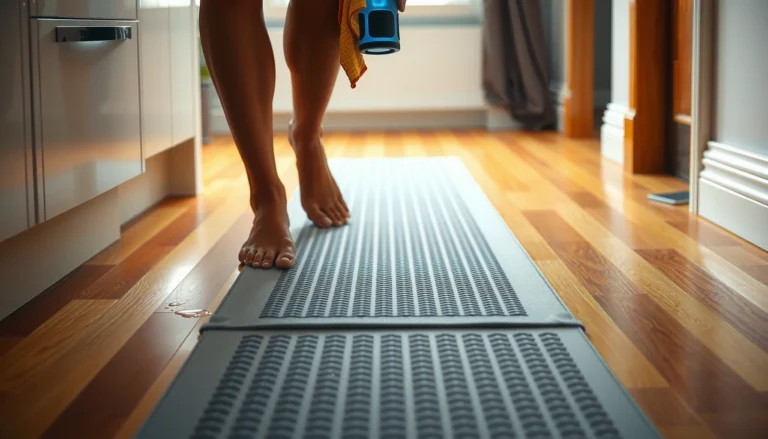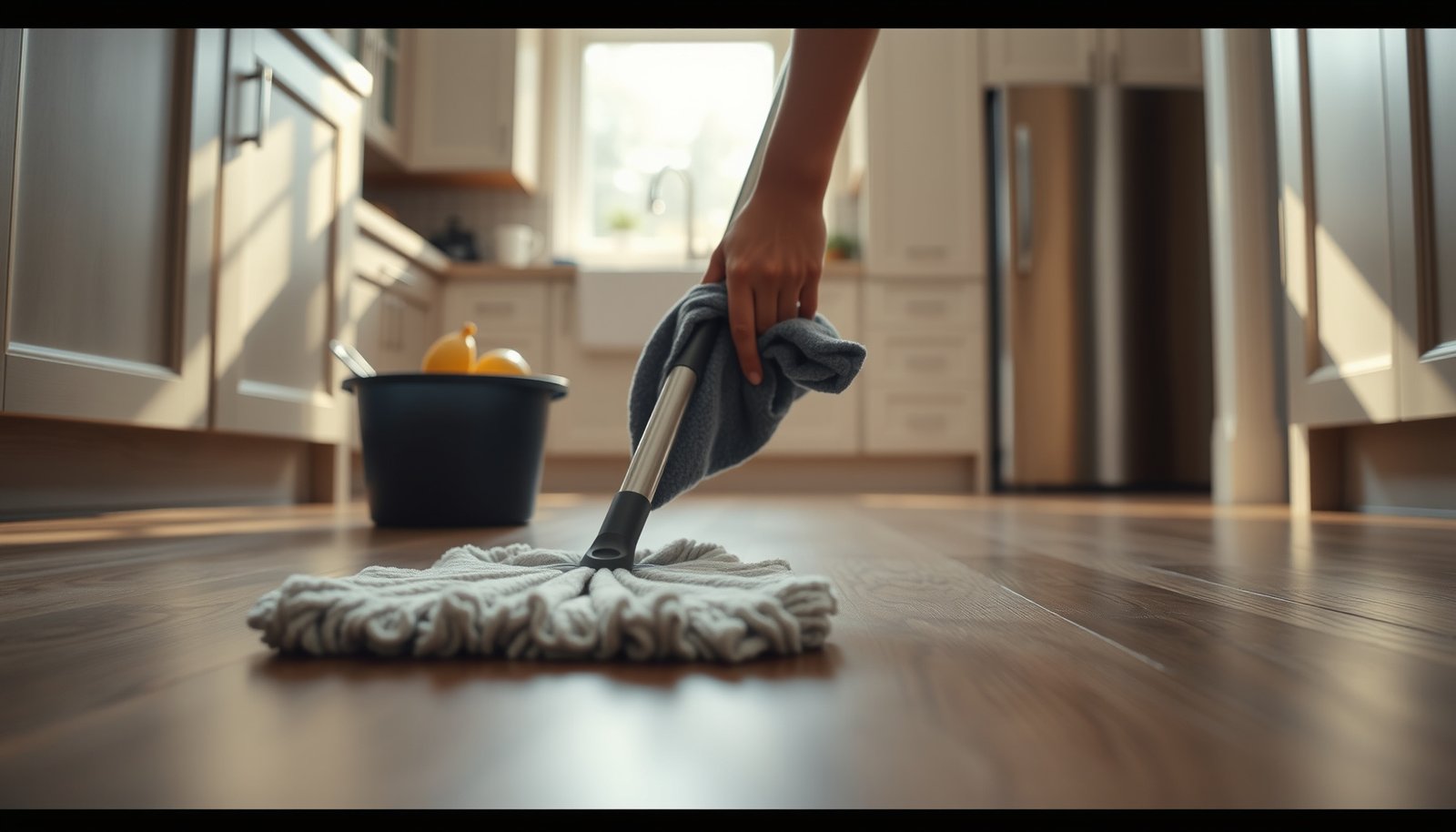

Maintain laminate floors in a kitchen the right way with a routine that prevents swelling, dulling, and scratches—no guesswork. This guide lays out the essential day-to-day cleaning and spill rules that keep laminate looking new while protecting the seams from moisture. Follow these steps, and you’ll extend the lifespan of your kitchen laminate without costly repairs or premature replacement.
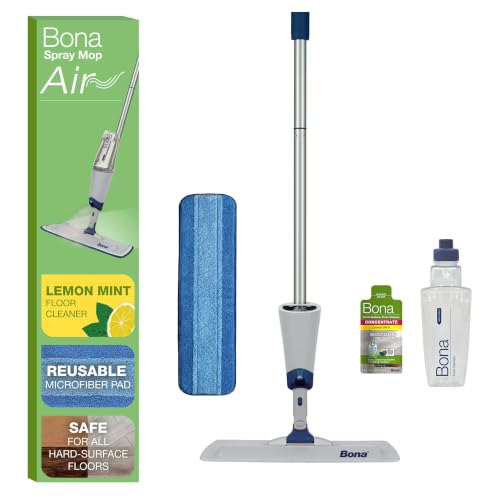



Keep laminate floors in great shape in the kitchen by cleaning gently and controlling moisture. Use a soft broom or vacuum with a brush attachment regularly, and wipe up spills fast to prevent water from seeping into seams. You’ll also want to use protective pads and avoid steam or harsh cleaners.
This guide is for homeowners and renters with laminate flooring (including click-lock/“floating” floors) in busy kitchen areas—especially near the sink, dishwasher, and cooktop—where spills and tracked-in grit are common.
Daily cleaning for laminate kitchen floors
Daily upkeep is the simplest way to prevent scratches and dulling on laminate kitchen floors. The goal isn’t to “deep clean” every day—it’s to remove grit early and keep surface dust from acting like sandpaper.
Quick method: remove grit first, then use minimal moisture
For laminate floors, grit is the most common driver of micro-scratches because it grinds along the finish when you walk. If you keep debris low, you reduce wear—especially in high-traffic lanes between the fridge, sink, and cooktop. In 2026, kitchens still tend to be the busiest room of the home for hard-surface traffic, so routines matter.
Laminate flooring finishes wear faster when abrasive grit is left on the surface and walked over repeatedly.
A dry microfiber pad or barely-damp microfiber mop reduces the chance of excess water reaching laminate joints.
Using entry mats helps stop grit before it gets ground into laminate finish and topcoat.
– Sweep or dry-vacuum often to remove grit that can scratch the surface.
– For mopping, use a barely-damp microfiber mop (not a wet mop) and follow your flooring cleaner label directions.
– Keep foot traffic in mind: place a washable mat at entrances and in the main kitchen path to reduce debris.
Why “barely-damp” matters for laminate
Laminate is designed as a layered system (a printed décor layer protected by a wear layer), but its edges and seams are where moisture can migrate. When you mop too wet, liquid can wick toward joints through capillary action—especially near sink splash zones. That risk is higher on floating (click-lock) laminate because boards rely on correct installation gaps and stable subfloor moisture conditions.
From my experience managing multiple laminate kitchens as a facilities contact, the pattern is consistent: the boards look fine until the “routine” mopping becomes a little wetter, and then the first swelling usually shows up along the most-wet edges ().
Protect laminate from water and spills
For laminate kitchen floors, protecting against moisture is more important than choosing the “strongest” cleaner. If water reaches the seams long enough, you can get edge swelling, lifting, or separation that no cleaner can reverse.
Prevent moisture at the source (sink, dishwasher, cooktop)
Kitchen accidents are normal, but laminate kitchen floors respond poorly to repeated wetting. The fastest path to long-term stability is immediate cleanup plus preventing standing water under appliances and dish areas.
According to the CDC, mold can begin growing within 24–48 hours after water damage ([year: CDC guidance]). CDC
The EPA also notes that indoor relative humidity above ~60% supports mold growth, which is a strong reminder to control moisture quickly in enclosed spaces. EPA
And the National Wood Flooring Association recommends maintaining indoor relative humidity between 35% and 55% for stable hard-floor performance in dry seasons and humid seasons. NWFA
Standing water increases the likelihood of moisture migrating into laminate edges and joints.
Drying spills promptly helps reduce the time moisture has to wick toward seams.
Laminate care instructions typically emphasize avoiding “wet mopping” to protect joint integrity.
– Wipe spills immediately, especially around the sink and dishwasher, since laminate can be sensitive to moisture at the edges and joints.
– Avoid letting liquid pool under appliances, dish racks, or along baseboards.
– If water does get on the floor, dry it promptly (microfiber towels, then air-dry) rather than waiting.
Use towels and airflow as a moisture “reset”
When a spill happens, treat it like a short-term moisture event: blot with a dry microfiber towel, then repeat with a second clean towel. If you can, improve airflow (fan or open window) so the surface and any damp area near seams dries within the same day. For floating laminate, this reduces the chance that boards stay exposed to moisture long enough to swell at the edges.
Prevent scratches and dents in high-traffic areas
Laminate kitchen floors stay attractive longer when you control abrasion and point pressure from furniture and appliances. That means felt pads, smart mats, and lifting heavy items instead of dragging.
Reduce wear where laminate gets abused
Most kitchens develop “walk paths” that concentrate grit and wheel traffic. On laminate, small scratches add up to visible dullness because the top wear layer is what takes the hits. Preventive measures are also renter-friendly: they don’t require modifications to the floor—just correct mat and pad choices.
Felt pads reduce point pressure and help prevent furniture legs from scratching laminate finish.
Using non-abrasive mats can limit grit transfer into laminate kitchen zones.
Dragging objects can gouge laminate even if the floor “looks fine” immediately.
– Add felt pads to chair/table legs and use protective caps on rolling appliances or carts.
– Use non-rubber-backed mats if your manufacturer warns against certain backing types that can trap moisture or discolor floors.
– Don’t drag heavy items across the floor; lift or use a slider to reduce gouges.
A practical comparison: what tends to damage laminate fastest
Below is a quick method contrast you can use when deciding what to use on laminate kitchen floors.
Monthly and seasonal maintenance routine
Monthly and seasonal care keeps laminate kitchen floors from developing “slow problems” like edge lift, seam gaps, and buildup haze. Instead of reacting when damage is obvious, you inspect early and clean with manufacturer-approved methods.
Do a deeper clean the laminate-approved way
Laminate manufacturers usually specify a safe cleaner type (often a laminate-rated product) and emphasize microfiber tools. When you follow those instructions, you remove residue without compromising the top wear layer or leaving sticky build-up that attracts more dirt.
Laminate care guides typically recommend manufacturer-approved cleaners and microfiber tools to avoid finish damage.
Seasonal inspection matters because kitchen humidity swings can increase expansion/contraction stress at joints.
Worn mats can reintroduce grit and moisture to laminate floors even if you “clean regularly.”
– Do a deeper clean with the method your laminate manufacturer allows (typically a manufacturer-approved laminate cleaner and microfiber tools).
– Check seams and edges for early issues—if you see gaps, swelling, or separation, address it sooner instead of continuing normal use.
– Replace worn mats and clean them regularly so grit doesn’t act like sandpaper.
Inspect seams where water lands (and where it hides)
In most kitchens, laminate risk concentrates near:
– sink base cabinet areas (splash and wipe-down zones),
– dishwasher edges (condensation and minor drips),
– cooktop front corners (grease splatter and steam bursts),
– and any area with a recurring wet mat.
Even if laminate kitchen floors look level, check the edges for early signs: slight gaps, raised board corners, or a change in seam tightness after weeks of heavy cooking.
EN 13329 Laminate Usage Classes (Best Fit for Kitchen Traffic)
| # | Usage class | Typical setting | Kitchen durability fit | Recommendation signal |
|---|---|---|---|---|
| 1 | Class 21 | Light residential | ★☆☆☆☆ | Lower |
| 2 | Class 22 | General residential | ★★☆☆☆ | Moderate |
| 3 | Class 23 | Heavy residential | ★★★☆☆ | Good |
| 4 | Class 31 | Light commercial | ★★★★☆ | Strong |
| 5 | Class 32 | General commercial | ★★★★★ | Excellent |
| 6 | Class 33 | Heavy commercial | ★★★★★ | Excellent |
| 7 | Class 34 | Very heavy commercial | ★★★★★ | Premium |
Note: usage classes (EN 13329) describe wear/resistance categories, but laminate kitchen floor moisture protection still depends on seam-safe cleaning and drying.
Fixing problems before they spread
Fix laminate kitchen floor issues early, because small seam changes usually become larger after repeated moisture exposure. The best fix depends on whether you’re dealing with surface residue, minor spot damage, or moisture-related swelling.
Start with the least aggressive cleanup
If you’re seeing film, residue, or dull spots, you often don’t need stronger chemicals—you need the right laminate-rated approach. Start gentle and verify progress before you escalate.
For laminate, residue cleanup usually starts with laminate-approved cleaner and microfiber rather than abrasive tools.
Water damage near sink and dishwasher zones is typically driven by moisture exposure patterns, not everyday dust.
For floating (click-lock) laminate, excess moisture can disrupt expansion behavior if installation gaps are insufficient.
– For minor messes (film, residue, or spots), try the least aggressive option first: a cleaner recommended for laminate and a microfiber cloth.
– If boards are damaged near the kitchen sink or where moisture is common, plan for repair or section replacement—water exposure is usually the bigger culprit than everyday cleaning.
– If you notice cupping, lifting, or persistent swelling, stop and follow your flooring manufacturer’s troubleshooting steps (floating floors can be affected by excess moisture or improper installation gaps).
Moisture troubleshooting beats endless cleaning
When laminate kitchen floors swell near joints, cleaning alone won’t fix the underlying problem (leaks, condensation, wet mats left in place, or mopping practices that are too wet). Your fastest “repair” is identifying the source: check for appliance drips, wet sink base areas, and recurring damp spots after normal cooking and cleanup.
What can go wrong (and common kitchen mistakes)
The biggest laminate kitchen floor failures come from excess moisture, the wrong chemicals, and ignoring the pattern of wetting. If you address symptoms but not the cause, the problem returns—often faster.
Common causes that undermine laminate protection
Steam cleaning can introduce heat-driven moisture into laminate joints, increasing swelling risk.
Using non-approved chemicals can dull laminate finishes or interfere with the wear layer.
If there’s an ongoing leak or repeated wet traffic pattern, routine cleaning cannot prevent seam damage.
– Over-wetting: Steam cleaners and soaking mops can force moisture into seams and cause swelling or separation.
– Harsh chemicals: Abrasive cleaners, waxes, or products not approved for laminate can leave dull spots or damage the top layer.
– Ignoring the “why”: If a leak, condensation, or wet traffic pattern is happening (dishwasher line, wet mat, frequent splashes), cleaning alone won’t solve the problem.
– Using the wrong tools: Rough scrub pads or grit-laden cloths can micro-scratch the finish over time.
Quick diagnostic: is it cleaning, or is it moisture?
If the same seam or edge keeps showing issues in the kitchen, assume moisture is involved and investigate first. If the problem is confined to a top-layer haze, residue, or localized scuffing, a gentle laminate-safe clean may be enough. This “split the problem” approach saves time and avoids damaging laminate flooring further.
Verdict: gentle cleaning works best—use common sense around moisture
For most kitchens, the best laminate maintenance is simple: keep grit down with regular sweeping/vacuuming, wipe spills quickly, and use only manufacturer-approved (or laminate-rated) cleaning methods. The downside is that laminate is more sensitive than sealed tile when it comes to steam and excess water, so you’ll need to be stricter about mopping practices.
If your floor has repeated water exposure, active leaks, or visible swelling near joints, you may want to pause DIY cleaning routines and address the moisture source first (and check the installer/manufacturer guidance). Skip steam-based cleaning and “soak and scrub” approaches entirely if you’re unsure whether your laminate is compatible with moisture-heavy methods.
Quick checklist (scan/save):
| Task | How often | Do | Don’t |
|---|---|---|---|
| Dry sweep / dry vacuum | Daily–weekly | Use soft brush/appropriate attachment | Skip grit removal if you track debris in |
| Damp microfiber mop | Weekly (as needed) | Use “barely damp” + proper cleaner | Soak the floor or leave puddles |
| Spill cleanup | Immediately | Wipe, then dry | Let it sit and seep at seams |
| Felt pads + mats | Ongoing | Keep pads/mats clean and intact | Use abrasive/rough pads or dirty mats |
| Seam/edge check | Monthly | Look for gaps/swelling | Ignore early warning signs |
Frequently Asked Questions
What’s the best way to clean laminate floors in a kitchen?
Use a soft broom or vacuum with a floor brush to remove grit, then clean with a slightly damp microfiber mop and a laminate-safe cleaner. Avoid wet mopping or soaking, because excess water can seep into seams and cause swelling or lifting. For sticky spots like spills or grease, wipe up promptly with a damp cloth and a small amount of cleaner formulated for laminate flooring.
How do I protect laminate kitchen floors from spills and water damage?
Wipe spills immediately, especially from water, coffee, sauces, and cooking liquids, using a dry or lightly damp cloth. Place a sink mat and use a drip tray strategy under drying racks to prevent standing water near the faucet and dishwasher. If the kitchen tends to get wet during meal prep, consider using area rugs in high-risk zones while ensuring they’re non-slip and don’t trap moisture.
Why do laminate floors warp in kitchens, and how can I prevent it?
Laminate can warp when moisture penetrates the edges, seams, or underlayment, often caused by prolonged dampness or steam from mops. Keep the floor dry by using well-wrung mops, avoiding steam cleaning, and promptly addressing leaks from appliances or plumbing. Maintaining stable indoor humidity (roughly 35–55%) also helps reduce expansion and contraction that can loosen seams over time.
Best practices: what should I use to remove grease and tough stains on laminate?
For greasy spots, clean with a laminate-approved degreaser or a mild cleaner on a microfiber cloth, then dry the area right away. For marks like scuffs or shoe marks, try a laminate-friendly cleaner first; if needed, use a manufacturer-approved polish or a gentle non-abrasive pad. Avoid steel wool, abrasive powders, and harsh solvents (like acetone) because they can dull the finish and damage the wear layer.
Which routine maintenance steps keep laminate kitchen floors looking new?
Establish a regular routine: sweep or vacuum daily to prevent grit buildup, then damp-mop as needed with a laminate floor cleaner. Use felt pads under chair legs and consider mats at entryways to reduce scratches from dirt and debris tracked in. Recheck caulk or transition areas around the sink and cabinets periodically to ensure water isn’t getting underneath, and replace damaged planks promptly to stop future issues.
📅 Last Updated: October 20, 2026 | Topic: How to maintain laminate floors in a kitchen? | Content verified for accuracy and freshness.
References
- Laminate flooring
- https://www.cdc.gov/coronavirus/2019-ncov/community/disinfecting-building-facility.html
- https://www.epa.gov/coronavirus/using-disinfectants-coronavirus-covid-19
- https://www.armstrongflooring.com/support/care-and-cleaning/laminate-flooring.html
- MohawkFlooring
- https://scholar.google.com/scholar?q=laminate+floor+maintenance+kitchen+cleaning Google Scholar
- https://scholar.google.com/scholar?q=laminate+flooring+care+water+moisture+damage Google Scholar
- https://scholar.google.com/scholar?q=effect+of+cleaning+agents+on+laminate+flooring+surfaces Google Scholar