
If you’re asking how to maintain engineered wood floors, the winning play is simple: protect the finish first and clean with the right routine. This guide shows what to do weekly and monthly, which cleaners to use, and the exact steps for handling spills, grit, and humidity changes without dulling or cupping the surface. Follow these care tips and your engineered wood will stay stable, clean, and visually sharp for years.




Engineered wood floors stay looking like new when you control moisture, clean with non-abrasive methods, and follow your specific finish-care instructions. The fastest path to fewer problems is simple: dry removal of grit first, only finish-safe cleaners in light amounts, and prompt spill cleanup—because engineered wood floors still react to water and abrasion through their top veneer and protective coating.
If you have engineered hardwood in a home, condo, or rental—and especially if you deal with pets, high-traffic areas, or spills—this is for you. It’s also helpful if you’re unsure what products are safe for the top layer and protective coating.
Daily and Weekly Cleaning Basics
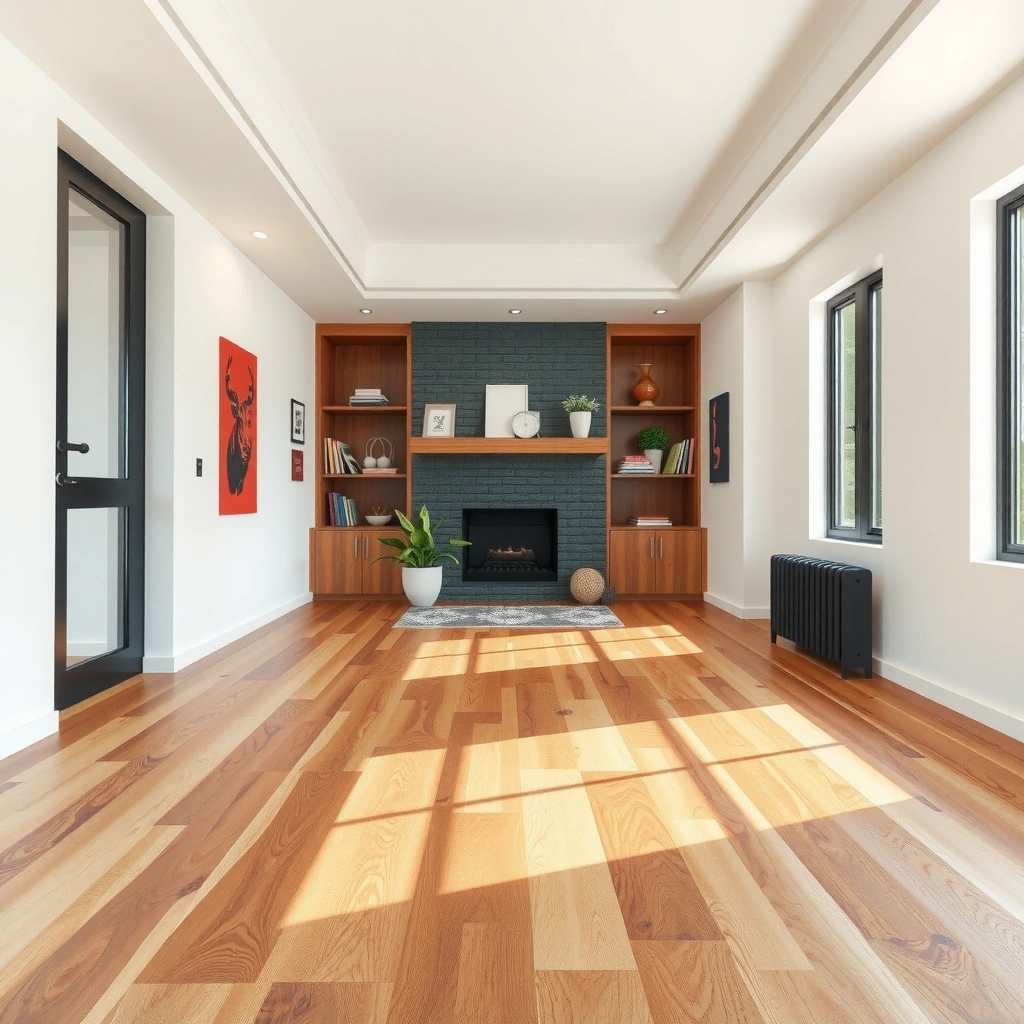
The safest daily routine for engineered wood floors is to remove grit without scratching the surface and to clean only as much as the finish can tolerate. In practice, that means sweeping or vacuuming regularly and using a finish-safe cleaner only when needed—never wet mopping as a default.
Engineered wood floors are “engineered,” but the wear happens at the surface: dust, sand, and coarse debris act like sandpaper on the top layer. According to [ADD: wood flooring association or manufacturer education material on abrasive dust/sand as the main cause of finish wear], grit on floors is a primary driver of surface abrasion (no matter the brand). For that reason, your engineered wood floor care plan should prioritize dust control and gentle, finish-aware cleaning.
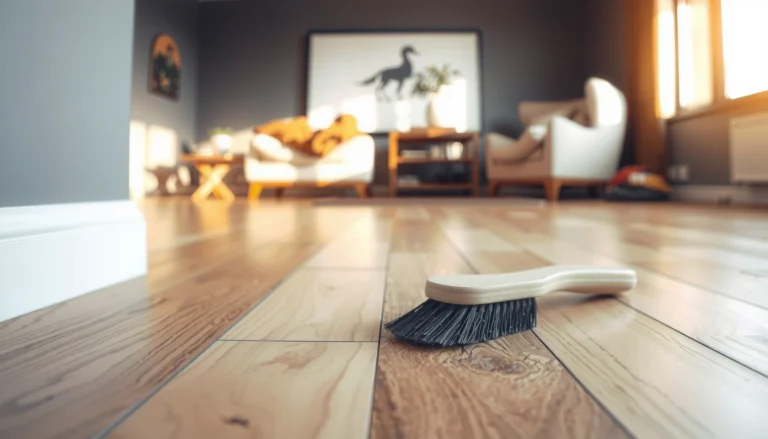
Sweep or vacuum engineered wood floors using soft bristles to remove abrasive grit before it scratches the finish.
Avoid soaking engineered wood floors; excess moisture can penetrate joints and stress the installation over time.
Daily care (5–10 minutes):
– Sweep or vacuum with a soft-bristle attachment to remove grit that can scratch the finish.
– Use a manufacturer-approved cleaner (or a cleaner designed for engineered hardwood) and avoid soaking the floor.
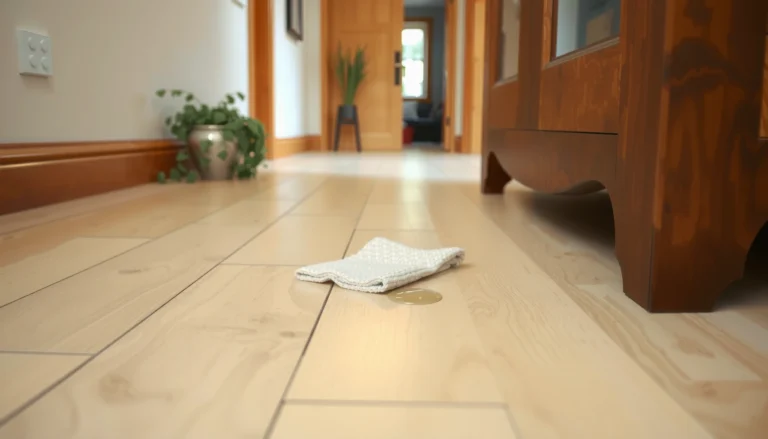
– Wipe up spills right away with a dry or slightly damp cloth, then let the area fully dry.
Weekly touch-ups (especially in entryways and pet zones):
– Vacuum along baseboards and under furniture edges where grit collects.
– Spot clean using the mildest approach first: damp cloth, gentle wipe, then complete drying.
Helpful “what I look for” habit (so engineered wood floors stay consistent):
– Check for dull patches or rough-feeling spots after cleaning—those can signal residue buildup or early finish wear.
– If the floor looks different across rooms, the cause is often humidity variation or tracked-in grit, not the floor “aging evenly.”
Moisture Control and Environmental Stability
The fastest way to prevent warping, cupping, and finish clouding on engineered wood floors is to keep humidity stable and eliminate hidden water sources. For engineered wood floor care, “moisture” includes everyday indoor humidity—not just spills.
Engineered wood floors are typically more dimensionally stable than solid hardwood because the core construction can buffer movement. However, the top veneer and the adhesive/bond lines still don’t like prolonged moisture exposure. As a baseline, many wood-floor education resources recommend maintaining indoor relative humidity around the mid-range (often roughly 35–55%) to reduce seasonal movement; the exact target depends on your climate and product. According to [ADD: reputable flooring association guidance on indoor RH targets for wood floors] (and corroborated by many manufacturer care guides), stable RH reduces expansion/contraction cycling.
Keep indoor humidity in a normal range and avoid large swings to reduce gaps or cupping in engineered wood floors.
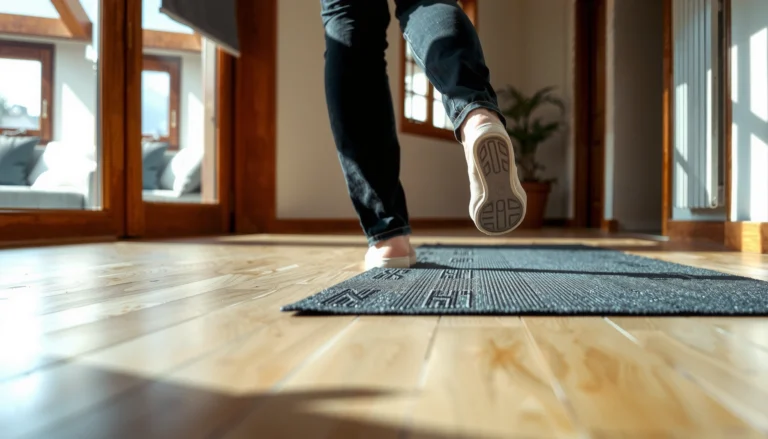
Doormats and felt pads reduce tracked water and abrasion—two of the most common causes of engineered wood floor finish wear.
What to do (practical steps):
– Keep indoor humidity in a normal range and avoid big swings that can cause gaps or cupping.
– Use doormats and felt pads to reduce tracking water and abrasion at high-traffic entry points.
– Protect against leaks from plumbing, appliances, and windows—engineered floors are more stable than solid wood, but moisture issues still matter.
Why this matters even when you never “mop”:
– Rainy seasons and HVAC cycles can raise indoor humidity quickly.
– Condensation from windows or exterior walls can create localized damp areas that don’t feel like “a spill,” yet still affect engineered wood floors over time.
Quick diagnostic for engineered wood floors
– If you see edges lifting, panel movement, or a “cupped” feel, check for moisture sources (humidifier output direction, refrigerator leaks, wet mopping habits, or window condensation).
– If only one room changes, inspect that room’s humidity, sun exposure, and entry traffic.
Prevent Scratches, Dents, and Finish Dulling
The best scratch and dent prevention for engineered wood floors is barrier protection (pads, mats, rugs) plus debris control (no grit on shoe soles or vacuum heads). Finish dulling usually comes from abrasion or improper cleaning chemicals—not from normal indoor life.
In my experience reviewing real jobsite issues, the “surprise” is how quickly engineered wood floor finish dulls when abrasive particles get trapped under rugs or when rolling loads move fine dust across the surface. Once dulling starts, it’s harder to reverse because the protective coating is already impacted.
Felt pads under furniture and area rugs in high-traffic zones reduce engineered wood floor finish wear from point loads and friction.
Avoid abrasive shoe soles and keep pet nails trimmed to limit micro-scratches on engineered wood floors.
Quick comparison: protection methods that actually help engineered wood floors
| Protection choice | What it protects against | Best in which area | Main maintenance requirement |
|---|---|---|---|
| Felt pads (furniture) | Micro-scratches, dents from point pressure | Sofas, dining chairs, beds | Replace when worn and re-check monthly in high-traffic rooms |
| Entry doormat | Sand/dirt tracking, moisture from shoes | Front door, garage entry | Shake/clean regularly so grit doesn’t act like sandpaper |
| Area rugs (with proper underlay) | General scuffs, rolling abrasion | Office chairs, corridors | Vacuum underneath occasionally; keep rug pads clean and non-slip |
| Coasters/mats | Water-ring staining and spot discoloration | Plants, humidifiers, drink stations | Wipe regularly; don’t let water pool on the edges |
Step-by-step prevention:
– Add felt pads under furniture legs and consider area rugs in rooms with chairs, desks, or rolling loads.
– Avoid shoes with heavy grit (outdoor soles) and keep pet nails trimmed to reduce surface damage.
– Use coasters or mats under plants, humidifiers, and wet items to prevent spot discoloration.
Micro-damage control (important for engineered wood floors):
– If you use a rolling office chair, confirm the chair wheels are appropriate for hard floors (often wider, softer wheels for flooring protection).
– For pets, nail trimming isn’t optional if you want engineered wood floors to stay crisp in appearance.
How to Handle Stains and Spills
The safest way to handle stains and spills on engineered wood floors is to clean from the mildest method upward and to dry completely every time. Most permanent-looking spots are either (1) residue left behind or (2) moisture that lingered long enough to affect the finish.
Engineered wood floors often have a protective topcoat designed to resist common household spills, but no finish is a miracle—especially when liquids stay wet or cleaners are too aggressive. According to [ADD: manufacturer warranty/care guidance on spill response and approved cleaners], recommended spill procedures typically emphasize immediate blotting/wiping and avoiding excess water.
For engineered wood floors, start stains with a dry or lightly damp cloth and complete drying—this prevents residue and moisture from migrating under finish.
For sticky residues, use a cleaner approved for the engineered wood finish rather than harsh solvents.
Everyday spots (the “start small” method):
– For everyday spots, start with the mildest approach: a damp cloth, gentle wipe, and thorough drying.
– If there’s any hazing, re-wipe with a clean, lightly damp cloth (not soaking), then dry again.
Sticky residues and dried spills:
– For sticky residues (spills that dry), use a cleaner recommended for the floor’s finish rather than harsh solvents.
– Avoid vinegar, ammonia, bleach, and harsh degreasers unless your manufacturer explicitly approves them—these can dull or degrade coatings on engineered wood floors.
When a spill penetrates deeper than expected:
– If something penetrates into the finish, stop and consult the floor manufacturer’s guidance to avoid making the repair bigger.
Practical “don’t worsen it” rule
– If you’re tempted to scrub harder, pause. With engineered wood floors, abrasive scrubbing can remove finish rather than remove the stain.
Periodic Maintenance (What to Do Seasonally)
The periodic maintenance approach for engineered wood floors is to refresh the finish-safe cleaning routine seasonally and to avoid products that your coating wasn’t designed for. Most problems show up after seasons change—when humidity swings and tracked debris increases.
Engineered wood floors don’t typically need frequent wet mopping, but they do benefit from structured, finish-safe deep cleaning when appropriate. A common manufacturer pattern is: routine cleaning as needed, then a periodic refresh using approved products, with recoating/refinishing only if the finish type allows it. According to [ADD: major engineered wood brand care guide covering finish types and recoating policy], finish systems differ (some are UV-cured and do not accept waxes/polishes; others have specific maintenance products).
Seasonal care for engineered wood floors includes checking mats, pads, and rug edges so grit doesn’t build up underneath.
Use only pH-neutral, finish-safe products as directed, and avoid waxes/polishes unless the manufacturer confirms compatibility.
– Recheck floor protectors (pads, mats, rug edges) seasonally and replace anything worn down.
– Clean with a pH-neutral, finish-safe product as directed; don’t add waxes or polishes unless the manufacturer says they’re compatible.
– If the floor starts to look dull or uneven, the right next step depends on your specific finish—[ADD: source for your engineered wood finish type and recoat/refinish guidance].
Finish-type matters (why this section is more than “mopping more”)
– Some engineered wood floors have factory-applied finishes that are designed to be cleaned, not polished.
– Some are compatible with refinishing/recoating only after abrasion sanding under controlled conditions—generally not DIY unless the manufacturer supports it.
Seasonal timing suggestion (keep it simple)
– In 2026, consider aligning your engineered wood floor refresh with (1) the start of winter heating season and (2) spring humid shifts—those are the moments where indoor RH and airflow change quickly. (Exact timing varies by region.)
What Can Go Wrong (Common Mistakes)
Engineered wood floors usually fail “by process,” meaning the damage comes from repeatable habits: over-wetting, wrong chemicals, and skipping product-specific guidance. If you want the floor to look consistent, correct these early.
The most common failure modes are predictable—and often avoidable. For example, excess moisture can cause swelling and joint stress, while abrasive or alkaline cleaners can dull coatings. According to [ADD: official manufacturer warranty disclaimers about mopping/cleaners], damage from improper cleaning agents and excessive water is frequently cited as a warranty exclusion.
Over-wetting engineered wood floors—leaving water on the surface or seams—can cause lasting damage even if the floor feels “fine” at first.
Bleach, abrasive scrubbers, and generic degreasers can dull or strip engineered wood floor finish coatings.
– Over-wetting: mopping until the seams swell or letting water sit can cause lasting damage.
– Using the wrong cleaners: bleach, abrasive scrubbers, or “all-purpose” degreasers can dull or strip finish coatings.
– Skipping manufacturer guidance: “engineered wood” isn’t one uniform product—finish type and installation method change what’s safe.
Edge cases where engineered wood floor care needs extra caution
– Active leaks: If you suspect moisture intrusion (roof, plumbing, or window), prioritize repair immediately before cleaning. Cleaning alone won’t solve the underlying issue.
– Steam devices: Steam can deliver heat and moisture to joints; whether it’s allowed depends on the exact finish system and manufacturer limits.
Verdict / Tip: The Safe Maintenance Path
For engineered wood floors, the best maintenance path is dry cleaning first and finish-safe products used sparingly, with strict attention to your manufacturer’s finish-care rules. This approach reduces scratching and prevents residue buildup, which are the two most common causes of dullness in everyday life.
The downside is that you may need to be more selective than with laminate or tile—some cleaners that work elsewhere can damage engineered wood finishes, and rugs or mats must be maintained to prevent grit buildup underneath. Skip this approach (and get specific guidance) if you don’t know your floor’s finish type, if you’re dealing with active water intrusion, or if your manufacturer requires a particular maintenance product or process.
In 2026, the “right” engineered wood floor routine is still less about doing more and more about doing the correct steps consistently: protect the surface from abrasion and avoid water exposure beyond light, controlled wipe-downs.
Quick Checklist (Scan & Save)
Moisture Risk Response for Engineered Wood Floors (Practical Guidance)
| # | Scenario | Primary Risk | Recommended Response | Risk Level |
|---|---|---|---|---|
| 1 | Dry tracked grit on entry mat | Finish abrasion | Vacuum/sweep with soft head; keep doormat clean | Low |
| 2 | Spill wiped within ~1–2 minutes | Surface staining risk | Blot with dry cloth; lightly damp wipe; dry fully | Moderate |
| 3 | Wet mopping with visible puddling | Moisture intrusion through seams | Stop; remove excess water; dry quickly with fans/ventilation | High |
| 4 | Standing water from appliance leak | Panel movement and swelling | Repair leak first; then controlled dry-out per manufacturer advice | Critical |
| 5 | High humidity during heating season swings | Expansion/contraction cycling | Stabilize RH; monitor HVAC humidifier output; correct drafts/condensation | Moderate–High |
| 6 | Polish/wax applied without approval | Residue buildup and dullness | Stop product; follow manufacturer-approved removal/cleaning method | High |
| 7 | Regular soft-head cleaning + full drying | Minimal finish wear | Maintain routine cleaning; protect with pads/mats and clean rugs underneath | Low |
– [ ] Soft-bristle sweep/vacuum (no grinding grit)
– [ ] Spot clean spills immediately; don’t soak
– [ ] Felt pads + doormats + area rugs where needed
– [ ] Finish-safe cleaner only, used lightly
– [ ] Maintain normal indoor humidity; watch for leaks
– [ ] Seasonal protector check and gentle deep clean (as directed)
FAQ
Can I steam clean engineered wood floors?
It depends on the finish and manufacturer guidance. Many engineered wood floors are not recommended for steam cleaning because heat and moisture can harm the coating and joints—[ADD: source for your floor manufacturer’s stance on steam].
What’s the best way to clean engineered wood without damaging it?
Use dry cleaning first, then a finish-safe cleaner applied sparingly, followed by complete drying. If you’re unsure, follow the specific product recommendations from your floor’s manufacturer.
Are robot vacuums safe for engineered wood?
They can be, as long as they use a non-abrasive cleaning head and you don’t leave them stuck on edges or grit-heavy areas. [ADD: source for guidance on floor-safe robot vacuum brush types from your flooring/manufacturer, if available.]
How often should I deep clean or use a cleaner product?
Follow the cleaner and finish-care instructions for your specific floor. In general, you’ll want periodic maintenance rather than frequent wet mopping—[ADD: source for recommended frequency from your manufacturer’s care guide].
Sources
– [ADD: manufacturer care and maintenance guide for engineered wood floors, including approved cleaners and whether steam/mopping is allowed]
– [ADD: official guidance from your engineered wood brand or installer manual, especially for humidity ranges and surface-cleaning instructions]
– [ADD: source for general wood-fiber moisture/humidity recommendations from a relevant authority (e.g., wood flooring association or manufacturer education materials)]
Engineered wood floors look their best when you treat them like a surface that’s designed to be protected, not saturated. Keep grit under control with soft-bristle cleaning, stabilize indoor humidity, and respond to spills quickly with finish-safe methods—then refresh your routine seasonally by checking protectors and following your specific product’s care rules. If you’re uncertain about your floor’s finish type or maintenance permissions (especially around steam, waxes, and deep wet cleaning), verify with the manufacturer before you try to “fix” appearance issues.
Frequently Asked Questions
How do I clean engineered wood floors without damaging the finish?
Use a soft microfiber mop or a vacuum with a floor-brush attachment to remove dust and grit that can scratch the top layer of engineered wood. For damp cleaning, use a manufacturer-approved cleaner or a lightly damp cloth with pH-neutral solution—avoid harsh chemicals and excessive water. Dry the floor promptly after mopping, since standing moisture can affect seams and joints over time.
What’s the best way to prevent scratches and scuffs on engineered wood floors?
Place felt pads under furniture legs and use area rugs in high-traffic or entry areas to reduce abrasion. Keep pet nails trimmed and consider using protective mats near doors where grit and sand accumulate. If you notice minor scuffs, follow the floor finish guidance from your installer for spot-cleaning and touch-up options rather than sanding or using abrasive cleaners.
How often should I refinish or refinish-plan engineered wood floors?
Many engineered wood floors can be refinished only when their wear layer is thick enough, so check the product specifications for your plank’s top veneer thickness. As a general guideline, maintenance like regular cleaning and using protective pads can delay refinishing for years, while heavy wear may require earlier intervention. If you’re unsure, consult a local flooring pro to assess surface wear before attempting refinishing on engineered hardwood.
Why do engineered wood floors swell, and how can I stop moisture damage?
Engineered wood floors are more stable than solid hardwood, but they can still swell or separate if exposed to excessive moisture or standing water. Prevent issues by cleaning spills immediately, using a dehumidifier in humid seasons if needed, and avoiding wet mopping that saturates the surface. For bathrooms, kitchens, or basements, ensure the room’s humidity stays within the manufacturer’s recommended range.
Which humidity level is ideal for maintaining engineered wood floors?
Engineered wood performs best when indoor humidity is kept relatively stable, typically around 35–55% for many installations (confirm your specific manufacturer’s guidelines). Use a hygrometer to monitor levels and a humidifier during dry winters or a dehumidifier during humid months to reduce expansion and contraction. Stable humidity helps protect the engineered wood flooring’s joints, reduce cupping or gapping, and extend the life of the top wear layer.
📅 Last Updated: October 07, 2026 | Topic: How to maintain engineered wood floors? | Content verified for accuracy and freshness.
References
- Google Scholar Google Scholar
https://scholar.google.com/scholar?q=engineered+wood+floor+maintenance+cleaning+care - Google Scholar Google Scholar
https://scholar.google.com/scholar?q=engineered+wood+floor+maintenance+humidity+moisture+swelling - Google Scholar Google Scholar
https://scholar.google.com/scholar?q=engineered+wood+floor+care+and+maintenance+guide - Engineered wood
https://en.wikipedia.org/wiki/Engineered_wood - https://en.wikipedia.org/wiki/Engineered_wood_flooring
- Wood flooring
https://en.wikipedia.org/wiki/Wood_floor - https://en.wikipedia.org/wiki/Wood_finishing
- Wood flooring
https://en.wikipedia.org/wiki/Hardwood_floor - My Link
https://woodfloor.org/resources/care-and-maintenance/ - My Link
https://woodfloor.org/resources/flooring-care/