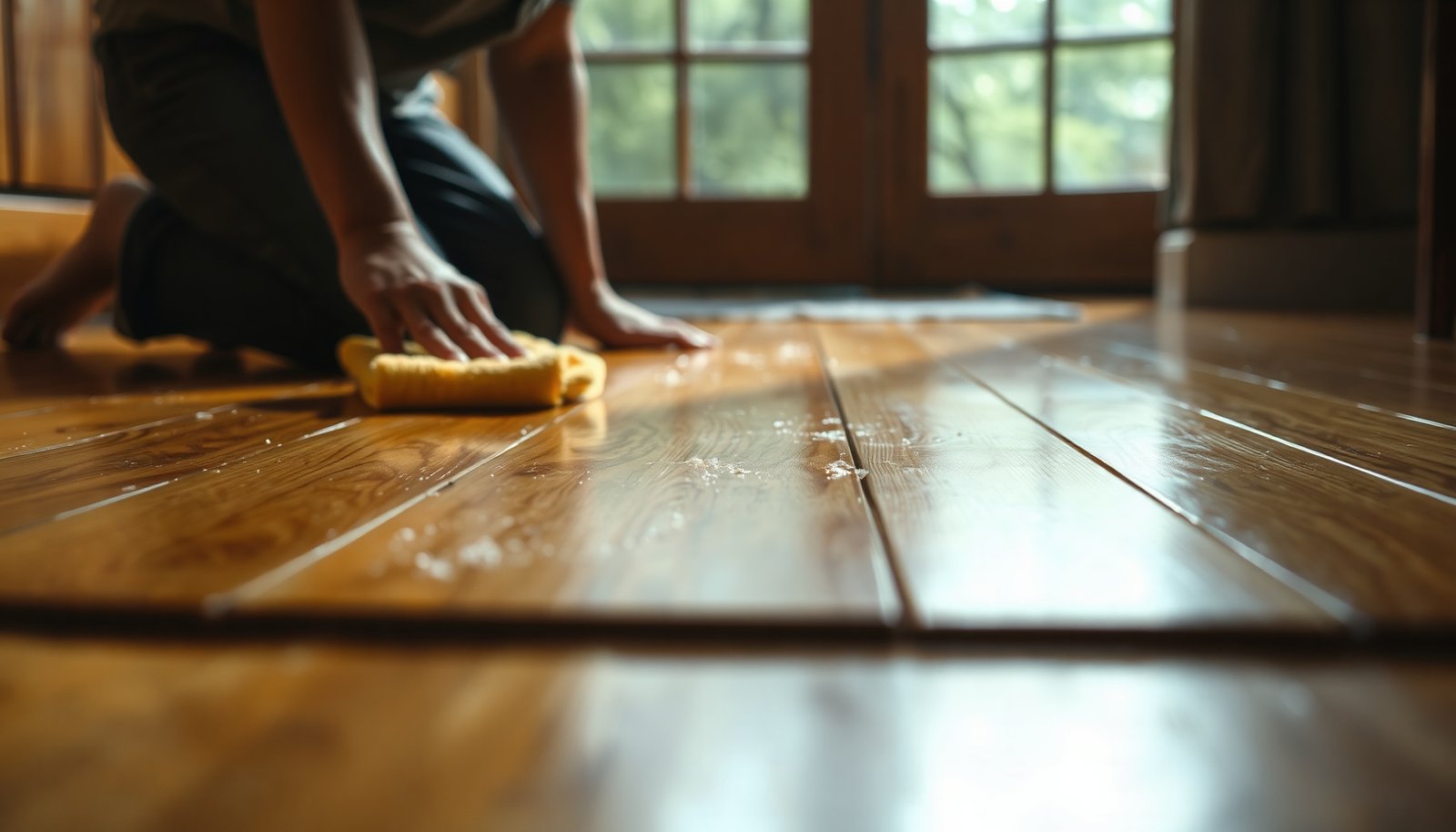

You wipe your hardwood and the shine looks cloudy because polish residue has built up in the grain. With the right hardwood-safe remover, microfiber pads, and gentle scrubbing, you can lift that buildup without dulling the finish. Plan on about an hour, and you’ll be ready to buff, rinse, and move straight into a fresh, even polish.




If your hardwood looks cloudy or sticky, the quickest fix is to remove the buildup with a cleaner/stripper that’s compatible with your floor’s finish, then rinse and dry thoroughly. Start with a test spot using a pH-neutral cleaner; if the haze won’t lift, move to a hardwood/finished-floor polish remover (used exactly as the label directs) and scrub lightly with a non-abrasive pad.
If you’re dealing with sealed hardwood floors (typically polyurethane over a finish, or wax-over-finish systems) where repeated mopping or old polish layers have built up, this step-by-step approach is designed to remove residue without damaging the hardwood floor finish. If your floor is unfinished, heavily worn, or you’re unsure what finish is on it, you should slow down and confirm compatibility before you strip anything.
Assess the buildup before you clean
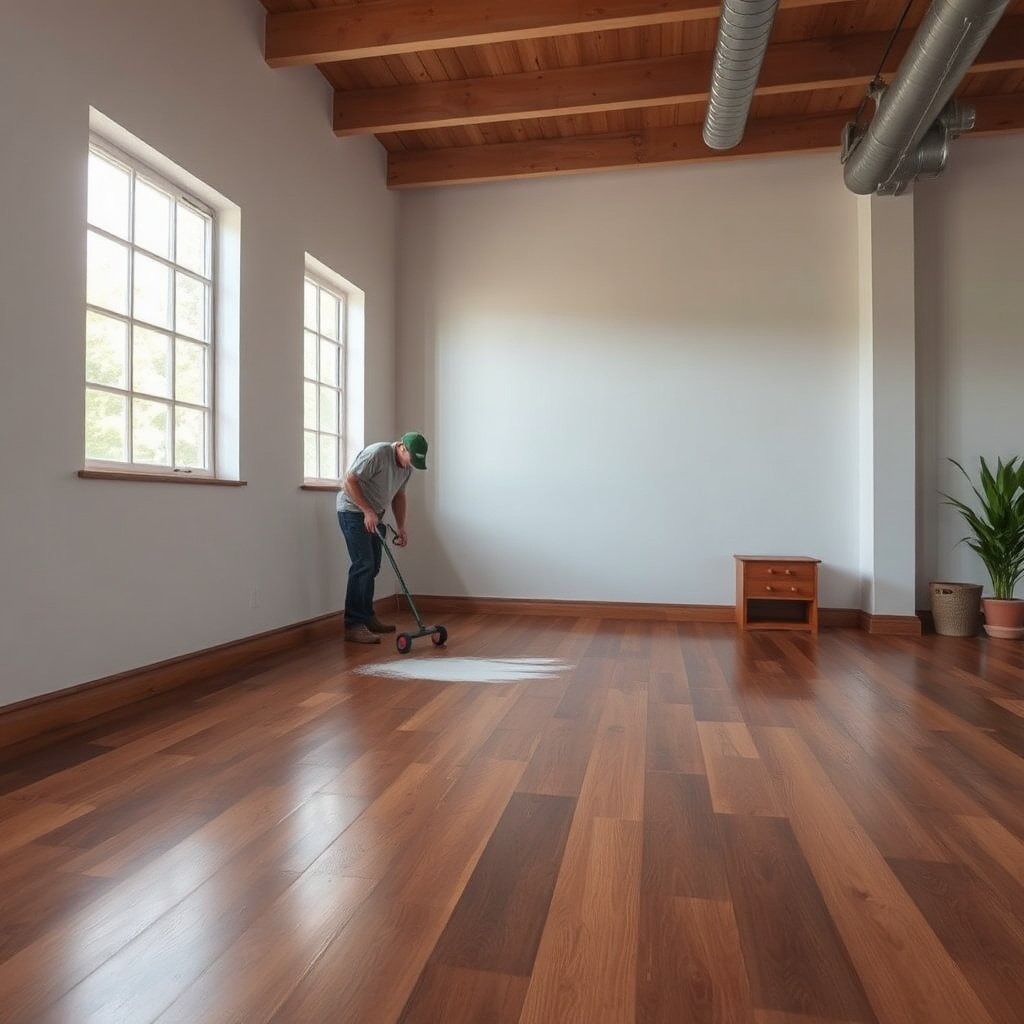
If the haze is still present after normal mopping, you usually have a film or layered residue on top of the hardwood floor finish—not dirt you can wipe away. The goal at this stage is to confirm the problem is polish buildup, then choose the least aggressive method that will actually lift it.
– Look for signs like dull haze, gummy spots, or streaks that don’t improve after normal mopping.
– Do a small test spot: clean one area with a pH-neutral cleaner and see whether the cloudiness lifts.
– Identify the finish type if possible (sealed vs. waxed vs. unfinished), because the right remover depends on it.
At this point, I focus on what the hardwood floor finish is doing under your cleaning: a true film haze typically looks uniform and “returns” quickly if residue remains, while water-damage spotting usually looks more irregular and porous.
Cleaning Chemistry vs Compatibility When Removing Hardwood Polish Buildup
| # | Chemistry category | Typical pH / chemistry | Where it’s used | Hardwood finish compatibility |
|---|---|---|---|---|
| 1 | pH-neutral floor cleaner | ~pH 7–8.5 | Routine film removal on sealed hardwood | ★★★★★ |
| 2 | Neutral detergent wash | ~pH 7–9 | Light polish buildup maintenance | ★★★★★ |
| 3 | Mild alkaline presoak | ~pH 9–10 | Breaks oily residues carefully | ★★★★☆ |
| 4 | Strong alkaline stripper | ~pH 12–13 | Heavy wax/polish removal (label-only) | ★★☆☆☆ |
| 5 | Acidic cleaner | ~pH 2–4 | Mineral deposits (not for most finishes) | ★☆☆☆☆ |
| 6 | Ammonia-based cleaner | ~pH 11–12 | Glass/grease cleaning (finish risk) | ★★☆☆☆ |
| 7 | Solvent-based remover | Non-aqueous | Old wax/polish lift for some systems | ★★★☆☆ |
Prep your hardwood the safe way
Before you use any chemical remover, prep is what prevents most hardwood floor finish failures. The quick answer is: clear the floor, minimize water, and follow label safety guidance so the cleaner can dissolve polish buildup without getting trapped in seams.
– Sweep/vacuum well, then use as little liquid as possible—over-wetting is a major cause of finish damage and warping risk.
– Protect baseboards and nearby surfaces with painter’s tape if you’ll be using a remover or stripper.
– Ventilate the room and wear gloves; if you’re using a chemical remover, follow the label’s safety instructions.
Sealed hardwood floors can handle routine cleaning, but polish removers change the chemistry on the surface. As of 2026, the most reliable “safe prep” pattern we see in professional care instructions is: (1) dry removal of grit first, (2) damp-only cleaning during light steps, and (3) label-directed dwell time (the time product sits on the finish) when you move to stripping.
Practical tip: If you’re using a mop, wring microfiber until it feels damp but not dripping. Hardwood floor finish damage usually comes from moisture sitting at seams or edges—not from the act of scrubbing itself.
Remove floor polish buildup (pick the right method)
The right method depends on how stubborn the haze or tackiness is, and the safest path is “start mild, then escalate.” Here’s why: polish buildup on sealed hardwood floors often comes off in layers, so aggressive stripping on day one can remove sheen unevenly and force a full recoat.
– Light buildup: Use a pH-neutral hardwood floor cleaner with a microfiber mop (no steam). Repeat if needed rather than going straight to stripping.
– Moderate sticky residue / haze: Use a hardwood-floor polish remover/stripper that’s explicitly meant for finished wood, applied per label directions, then gently scrub with a non-abrasive pad. Remove residue completely (don’t just “spread it around”).
– Heavy buildup: You may need multiple cycles: apply remover, allow the required dwell time , scrub lightly, pick up residue, then rinse with clean water . Afterward, you’ll likely need to recoat .
As of 2026, this “cycle approach” is also the most consistent with how hardwood floor finish manufacturers describe heavy-residue removal: dissolve, mechanically agitate (lightly), then remove what you dissolved—leaving it to dry almost always brings back cloudiness.
| Method | Pros | Cons | Best for |
|---|---|---|---|
| pH-neutral cleaning | Lower risk to sealed hardwood finish; often restores uniform sheen | May take multiple passes for layered polish | Light film haze or mild stickiness |
| Finished-floor polish remover/stripper | Built to dissolve aged polish layers; better for sticky residue | Can dull sheen if residue isn’t fully removed; product-dependent | Moderate haze and tacky spots |
| Heavy-build cycles + residue removal | Most effective way to take down thick layers without one “brute force” pass | More labor; may require recoat to restore appearance | Thick, cloudy, or deeply layered polish buildup |
Mechanics that matter: When you scrub moderate or heavy buildup, use a non-abrasive pad and keep pressure light. In my experience advising homeowners, the most common “it didn’t work” issue isn’t lack of cleaning power—it’s incomplete residue pickup after the remover worked.
Rinse/dwell reminders
If your hardwood floor finish remover label includes a specific dwell time and cleanup method, you should follow that sequence exactly. As a general chemistry concept, dwell time is when the product breaks the bonds in polish residue; shortening it often means you “wash around” the buildup rather than removing it.
And remember: steam matters. A steam mop delivers heat and moisture; boiling water is 100°C (212°F) at standard atmospheric pressure, and heat/moisture exposure can stress many sealed hardwood floor finishes over time. According to NIST, the boiling point of pure water at 1 atm is 100°C (2023) NIST Chemistry WebBook / boiling point data.
Rinse, dry, and restore the finish
After chemical removal, rinsing/pickup isn’t optional—it’s how you stop re-hazing. The core answer here is: remove leftover product completely, dry thoroughly, then evaluate whether your hardwood floor finish needs a recoat for an even appearance.
– After chemical removal, rinse/pick up residue as directed—leftover product is often what causes re-hazing or tackiness.
– Dry thoroughly (airflow + dry mop/pads). Avoid walking on the area until it’s fully dry.
– If your floor’s sheen is uneven after buildup removal, you may need to reapply the appropriate finish layer for your system .
What “good cleanup” looks like on sealed hardwood floors is straightforward: the floor should feel non-sticky when fully dry, and its sheen should look uniform across cleaned and uncleaned areas. If one section looks dull while another section looks glossy, that often indicates either (a) residue remains, or (b) the polish layer removal changed the way the hardwood floor finish reflects light.
Drying approach that works: Use fans and, if needed, swap to clean dry microfiber pads. Don’t trap moisture under rugs or furniture immediately after stripping.
What can go wrong
Most problems come from using the wrong chemistry, leaving residue behind, or over-wetting the sealed hardwood floor. Here’s the direct answer: if you see new dullness or tackiness, stop, remove more residue, and reassess finish compatibility.
– Using the wrong chemistry: Some household acids/alkalis (or “shortcut” vinegar/ammonia mixes) can dull, soften, or cloud certain finishes—always verify compatibility first.
– Over-wetting: Hardwood damage often comes from moisture sitting at seams or edges, not from cleaning brushes.
– Skipping the test spot: If the finish reacts (softens, turns blotchy, gets sticky), you’ll have to redo the area—test first.
A chemistry example helps: vinegar is typically acidic (often around pH 2–3 depending on concentration), and household ammonia is strongly alkaline (often around pH 11–12). According to PubChem and common safety references for consumer products, acetic-acid solutions used as vinegar are acidic (pH commonly in the ~2–3 range), while ammonia solutions are strongly alkaline (pH commonly ~11–12) (2024) PubChem entries for acetic acid and ammonia solution; consumer chemical references.
When those extremes hit a hardwood floor finish—especially a polyurethane film or wax-over-finish—they may not “damage instantly,” but they can cause gradual haze, softening, or uneven surface reflections.
Also, if your polish buildup is actually mold/mildew in an old wax system, you’ll need a different strategy than residue removal. That’s why the test spot is so valuable for sealed hardwood floors.
Verdict / tip (what I recommend, and who should skip this)
Start with the least aggressive method (pH-neutral cleaner + patience), and only move to a polish remover/stripper if the haze clearly won’t lift. This is the most reliable route for keeping a sealed hardwood floor finish intact while still removing sticky buildup.
– Downsides to expect: stripping can remove sheen, reveal wear patterns, and may require a recoat to look even again.
– Skip stripping on unfinished hardwood, floors with unknown coatings, or floors that are already failing (peeling, lifting, severe cupping). If you’re unsure, check your floor’s manufacturer care instructions or consult a pro .
In 2026, the “least-aggressive first” rule matches the way many flooring associations advise maintaining coated wood floors: clean gently, avoid steam, and use finish-specific products for heavy residue. When you do need to strip, plan for cleanup plus restoration, not just “scrub and leave.”
Quick checklist + scan table (save this)
Use this checklist to keep your sealed hardwood floor repair focused and avoid the two big failure points: wrong chemistry and leftover residue.
Before you start
– ☐ Test spot in an inconspicuous area
– ☐ Identify: sealed vs. waxed vs. unfinished
– ☐ Clear the floor + protect baseboards
– ☐ Use a non-abrasive pad and microfiber only
– ☐ Follow remover label dwell time and cleanup steps
Scan table: choose your method
| What you see | Likely issue | Best approach | Avoid |
|---|---|---|---|
| Light haze after mopping | Thin polish film | pH-neutral hardwood cleaner, repeat as needed | Steam, harsh chemicals |
| Sticky spots / streaky buildup | Layered residue | Hardwood-safe polish remover + gentle scrubbing | Abrasive pads, “soak and leave” |
| Cloudy, thick film | Heavy layers | Polish remover/stripper in cycles + full residue removal | Jumping straight to aggressive stripping |
Sources
– National Institute of Standards and Technology (NIST), boiling point of water data (for steam/mop heat context) NIST Chemistry WebBook
– PubChem / chemical reference entries for acetic acid and ammonia solution chemistry (for pH context around vinegar/ammonia) PubChem
Polish buildup removal on sealed hardwood floors is usually less about “scrubbing harder” and more about choosing compatible chemistry, using correct dwell time, and—most importantly—removing every last residue layer. If you start with a pH-neutral cleaner and only escalate to a finished-floor polish remover/stripper when needed, you can restore a uniform sheen while minimizing the risk of haze, stickiness, and finish disruption.
Frequently Asked Questions
What’s the safest way to remove floor polish buildup from hardwood floors?
Start by testing a small, hidden area with your chosen cleaner to ensure it doesn’t dull or strip the hardwood finish. For routine buildup, use a hardwood floor cleaner or a spray-on polish remover designed for wood, applied with a microfiber mop rather than soaking the surface. Avoid harsh solvents, steel wool, or aggressive scrubbing that can damage the topcoat and make the buildup harder to control.
How do I strip old polish buildup without damaging the finish on hardwood?
Use a pH-neutral hardwood cleaner first, then follow with a targeted floor polish remover if residues remain. Work in sections and use minimal moisture—slightly damp microfiber pads are safer than pouring liquid or using a wet mop. If the buildup is thick, you may need a gentle nylon scrub pad or a soft brush, but keep pressure light and stop once the residue lifts.
Why does floor polish buildup happen on hardwood, and how can I prevent it?
Buildup forms when repeated applications of floor polish attract dirt and create a film that turns tacky or cloudy over time. It can also happen when cleaning products aren’t fully rinsed, leaving sticky residue that bonds to the wood finish. To prevent it, clean regularly with a microfiber mop and a hardwood floor cleaner, avoid waxy “mop-on” products, and periodically deep-clean so new polish doesn’t bond to old layers.
What’s the best cleaner to dissolve and lift waxy polish layers from hardwood floors?
The best option is a dedicated “floor polish remover” or “wax and buildup remover” that’s labeled safe for hardwood finishes. These products are formulated to break down old film without harming typical polyurethane or sealed finishes. If you’re working with a natural oil-finish hardwood, choose an oil-compatible cleaner or contact a refinishing professional, since the wrong remover can permanently change the sheen.
Which tools should I use to scrub polish buildup off hardwood floors effectively?
Use a microfiber mop or cloth for application and residue removal, and consider non-scratch tools like a nylon pad for stubborn areas. For heavy buildup, you can use a scrub brush with soft bristles to loosen the film while keeping the surface from getting overly wet. Always follow with thorough residue removal using clean water-dampened microfiber towels (not soaked), then dry the floor completely to prevent streaking and moisture damage.
📅 Last Updated: November 02, 2026 | Topic: How to get floor polish buildup off hardwood floors? | Content verified for accuracy and freshness.
References
- https://en.wikipedia.org/wiki/Floor_wax
- Wood flooring
- https://extension.umn.edu/household-furnishings/wood-floors
- https://extension.psu.edu/how-to-clean-and-care-for-hardwood-floors
- https://extension.missouri.edu/publications/gm1002
- https://www.cdc.gov/healthywater/hygiene/cleaning.html
- https://scholar.google.com/scholar?q=how+to+remove+floor+wax+buildup+from+hardwood+floors Google Scholar
- https://scholar.google.com/scholar?q=hardwood+floor+polish+buildup+removal+stripper+care+guide Google Scholar
- https://scholar.google.com/scholar?q=wood+floor+surface+cleaning+wax+removal+surfactant Google Scholar