Get dirt off hardwood floors fast and safely with a simple step-by-step approach that won’t dull, scratch, or damage the finish. You’ll learn the quickest way to loosen and lift grit, the right cleaners to use (and what to avoid), and how to finish with a streak-free dry. Follow these easy steps to restore the look of your floors without guesswork.




Sweep or vacuum loose grit first, then mop with a hardwood-safe cleaner using only a lightly damp microfiber mop. For stubborn spots, blot with a soft microfiber cloth and a pH-neutral hardwood spot cleaner—never soak the wood—so you lift dirt while protecting the finish.
If your hardwood floors look dull, gritty, or have visible footprints, this is for you. It’s also a good fit when you’re trying to clean regularly without risking scratches or water damage.
Remove Loose Dirt First

Start by removing dry grit before you touch water—this prevents scratches and keeps grime from grinding into the finish. In most homes, the “mystery dirt” under footprints is actually sand-like particles that need dry removal first.
The National Wood Flooring Association (NWFA) recommends dry cleaning methods (sweeping or vacuuming) first to prevent grit from being dragged across the finish.
Using a vacuum with a soft floor-brush attachment reduces the risk of micro-scratches compared with dragging debris across hardwood surfaces.
What to do (and what to avoid)
– Sweep with a soft-bristle broom or use a vacuum with a floor-brush attachment to avoid scratching.
– Pay attention to edges, corners, and under furniture where dirt builds up.
– If grit is trapped in the finish, remove it dry before adding any cleaner.
Why this matters for hardwood floors: hardwood finishes act like a protective skin, but grit can behave like sandpaper. When you mop over dry particles, you don’t “wash them away”—you often smear them, leaving a hazy, dull film. From my experience working through household maintenance checklists, the difference between “dull” and “clean” floors usually comes down to whether gritty debris was removed dry first—.
Quick tool guidance: choose a vacuum setting designed for hard floors if it exists, and keep the head flat. For sweeping, soft bristles are key; stiff bristles can leave visible scuff trails on glossy finishes.
Clean With Minimal Moisture
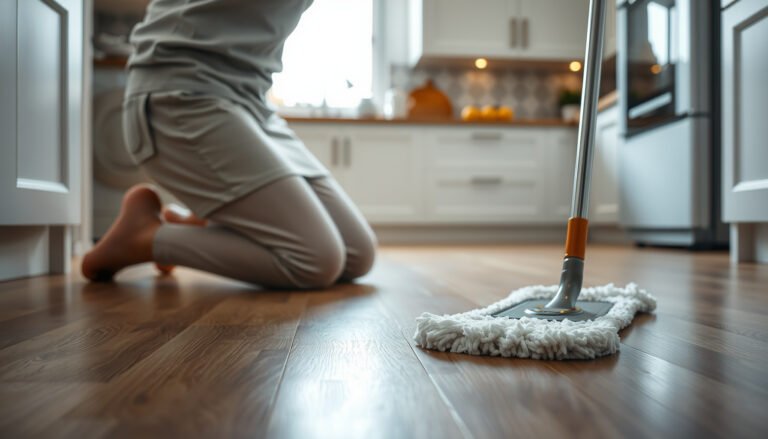
Use a hardwood-safe cleaner and a mop that’s only slightly damp—minimal moisture is the whole point of safe cleaning. This approach removes residue without giving water time to penetrate seams or edges.
Most hardwood care guidance emphasizes “lightly damp” mopping to avoid excessive moisture exposure to hardwood flooring systems.
Wood damage risk rises when liquid is allowed to pool; prompt wiping reduces moisture-related swelling at joints and edges.
The correct way to mop (step-by-step)
– Use a hardwood-safe cleaner and a mop that’s only slightly damp (wring it out well).
– Work in small sections and follow the cleaner’s dilution/use directions if it requires mixing.
– Don’t let liquid pool; wipe up any drips immediately.
Moisture reality check for hardwood floors: hardwood doesn’t need to be soaked to be affected. Water can travel through finish wear points, around baseboards, and into micro-gaps. As a wood-material reference point, wood can begin to swell when moisture content rises toward the fiber saturation region (often cited around ~28–30% moisture content, depending on species and conditions). For finished hardwood, the goal is simple: keep surface contact brief and avoid pooling.
Use the right “damp” level
If you can squeeze water out of the mop head after wringing, you’re using too much. Aim for a mop that leaves a clean, slightly damp look—not a wet sheen. If you see streaking, you’re usually applying either too much solution, too much water, or mopping with residue that needs a second pass with a clean, lightly damp cloth.
Spot-Clean Stuck-On Grime
Blot stubborn areas instead of scrubbing—spot cleaning protects the finish while still lifting embedded dirt. This is the best method for footprints, scuffs, and sticky patches that don’t respond to routine mopping.
Blotting with a microfiber cloth reduces finish wear compared with hard scrubbing, because it lifts soil with less mechanical abrasion.
pH-neutral cleaners are commonly recommended for hardwood finishes because extreme pH solutions can dull or degrade certain coatings.
Follow this spot sequence
– Blot (don’t scrub hard) with a microfiber cloth to lift soil with less risk of dulling the finish.
– Use a pH-neutral cleaner intended for hardwood floors for general spots; keep the area small.
– Avoid abrasive pads or “strong” household cleaners unless your floor’s manufacturer specifically approves them.
What “pH-neutral” means in practice: pH neutrality is commonly described around pH 7, and “mild/neutral” hardwood products are often formulated close to neutral to limit finish stress. If you’ve ever noticed that vinegar “works fast” on glass but leaves a hazy feel on some coatings, that’s consistent with finish sensitivity to acidic solutions.
A quick comparison: safe spot cleaning vs. aggressive household cleaners
Here’s why sticking to a pH-neutral hardwood spot cleaner usually protects hardwood floors better:
| Approach | What it does to grime | Finish risk | Best use |
|---|---|---|---|
| Blot with microfiber + pH-neutral hardwood spot cleaner | Lifts soil with minimal abrasion | Low (when used sparingly) | Footprints, light stickiness, scuffs |
| Scrub with abrasive pad or “strong” chemicals | Friction + chemistry both attack the topcoat | Higher risk of dulling/strip | Only if your manufacturer explicitly approves |
Deep-Clean (Only When Needed) + Drying
Deep-clean periodically, but treat it like maintenance—not a daily routine. After any deeper cleaning, dry the hardwood floors thoroughly to prevent moisture from lingering.
After mopping or spot treatment, drying with a clean microfiber towel helps reduce residual moisture on hardwood surfaces.
Ventilation (fans and normal airflow) supports faster evaporation and lowers the time moisture stays on hardwood finishes.
Deep-clean guidance (use the minimum effective effort)
– Do a deeper clean occasionally—when normal mopping isn’t removing buildup—using a product designed for hardwood finishes.
– After cleaning, dry the floor with a clean, dry microfiber towel to prevent moisture from lingering.
– Make sure airflow is good (fans/ventilation helps), especially if your home runs humid.
When “normal cleaning” stops working: buildup can include soap residue, dulling films from repeated improper cleaners, and grime embedded in micro-worn areas of the finish. In those cases, a hardwood-finish-specific deep cleaner is designed to lift that residue without damaging the coating system.
Why drying matters even when you didn’t “soak” the floor: water trapped along seams or edges can remain longer than you think, especially in rooms with rugs, furniture legs, or lower airflow. If you’re in a humid climate, running a fan for a short period after cleaning can help hardwood floors recover their normal surface feel.
Mandatory pH context for “why products matter”
Different cleaner chemistries react differently with finish types. Here’s a practical reference for why pH-neutral is safer than many household alternatives.
Typical pH Ranges of Common Household Cleaners (for Hardwood Floor Considerations)
| # | Cleaner/Agent | Approx. pH | Common Use | Finish Compatibility |
|---|---|---|---|---|
| 1 | Distilled water | ~7.0 | Light rinse/wipe | ★★★★★ |
| 2 | Hardwood pH-neutral floor cleaner | ~6.5–8.0 | Routine cleaning | ★★★★★ |
| 3 | Mild dish soap (typical formulations) | ~7–9 | General grease removal | ★★★☆☆ |
| 4 | Baking soda solution | ~8.3–8.8 | Odor/spot lift | ★★☆☆☆ |
| 5 | White vinegar (≈5% acetic acid) | ~2.4–3.0 | Scale/film removal | ★☆☆☆☆ |
| 6 | Household ammonia solution (typical) | ~11–12 | Degreasing/glass cleaner | ★☆☆☆☆ |
| 7 | Hydrogen peroxide (≈3% solution) | ~3–5 | Disinfection/whitening | ★★☆☆☆ |
Note: finish safety depends on the specific hardwood floor coating (urethane, oil-modified, wax, etc.), so always follow the manufacturer’s cleaner guidance for your hardwood floors.
What Can Go Wrong
Skipping dry removal, over-wetting, or using the wrong chemistry are the most common reasons hardwood floors end up dull or damaged. The goal is to clean effectively while staying within the moisture and chemical limits of the finish.
Leaving liquids to sit can accelerate finish wear and promote moisture-related issues at joints and edges on wood flooring systems.
Steam cleaners combine heat and moisture, which many hardwood floor care guides caution against for finished floors.Common failure modes to avoid (the “why” behind them)
– Using too much water or leaving cleaner to sit can damage the finish and cause warping over time.
– Harsh acids/alkalis (like some vinegar/ammonia mixes) and steam cleaners can dull or strip certain finishes—check manufacturer guidance first.
– Scratches happen fast when you mop over grit or use abrasive tools; always pre-clean with dry removal.
Cleaner chemistry: why vinegar and ammonia can backfire
Vinegar is often suggested for household cleaning, but hardwood finishes may react differently than tile or sealed stone. Typical white vinegar at around 5% acetic acid corresponds to about pH ~2.4–3.0. That acidity can contribute to dullness or finish softening on coatings not designed for it. Similarly, typical household ammonia solutions sit around pH ~11–12, which can be harsh on certain film finishes.
A quick pros/cons comparison you can actually use
Method Pros Cons Best match Dry removal + lightly damp pH-neutral cleaner Safest for routine care; least finish stress Won’t erase deeply embedded stains overnight Most finished hardwood floors Steam cleaning or soaking mops Can remove some surface grime quickly Higher risk of finish dulling and moisture issues Usually only if manufacturer explicitly allows it Abrasive pads / strong household acids/bases Can lift certain residues fast High scratch and finish degradation risk Only with written manufacturer approval Verdict / Tip
Use a simple sequence: dry removal → lightly damp, hardwood-safe mopping → gentle microfiber blotting for spots—done. If you’re patient enough to work in small sections and avoid soaking, you’ll get cleaner-looking hardwood floors with far fewer long-term issues.
Skip DIY cleaning and contact a flooring pro (or your floor manufacturer) if your floors are unfinished, you’re unsure of the finish type, or the dirt is actually paint/wax/unknown residue—those often need a very specific solvent or method. If you try a new cleaner, test it in a hidden spot first: .
Downsides to be aware of
This approach is safer than aggressive scrubbing, but it may take longer to remove heavy buildup. It also won’t reliably remove deep, absorbed stains if the contaminant has penetrated beyond the finish layer—those cases require targeted strategies based on floor type and chemistry.
Quick Checklist (Scan & Save)
What you’re dealing with Do this Avoid Dust and light dirt Sweep/vacuum first, then light damp mop Mopping grit into the finish Everyday grime Hardwood-safe cleaner + slightly damp microfiber/mop Soaking or pooling water Sticky spots Blot with microfiber + pH-neutral spot cleaner Abrasive pads, heavy scrubbing Dullness from buildup Occasional deep clean + thorough drying Steam cleaners or unapproved chemicals Frequently Asked Questions
What’s the safest way to remove dirt from hardwood floors without damaging the finish?
Start by vacuuming with a floor brush attachment or using a microfiber dust mop to lift grit and loose debris—this helps prevent scratches. For stubborn dirt, use a slightly damp microfiber mop with a hardwood floor cleaner that’s pH-neutral and specifically made for sealed hardwood. Avoid soaking the floor or using harsh chemicals, steam, or abrasive pads that can dull the finish.
How do I get ground-in dirt and grime out of hardwood floors?
First, dry-clean the area by vacuuming thoroughly, then spot-clean with a hardwood floor cleaner on a microfiber cloth rather than pouring directly onto the floor. Let the cleaner sit briefly to loosen grime, then gently scrub in the direction of the wood grain. Wipe up residue with a clean, barely damp cloth and dry immediately to prevent water marks.
Why does dirt make hardwood floors look dull, and how can I prevent it?
Dirt acts like tiny abrasives that dull the protective finish over time, especially in high-traffic areas and near entryways. Use doormats, felt pads under furniture, and a regular cleaning schedule (dry dusting or vacuuming) to reduce buildup. For ongoing maintenance, use a recommended hardwood floor cleaner and avoid water-heavy mopping that can degrade the finish.
What’s the best cleaner to use for tough dirt on sealed hardwood floors?
For sealed hardwood, choose a pH-neutral cleaner labeled safe for hardwood floors and sealed finishes. If the dirt is sticky or oily, use a cleaner formulated for grime and follow the label instructions for dilution and dwell time. Always test any product in an inconspicuous area first, and rinse or wipe if the product requires it to avoid leaving residue.
Which cleaning method works best for pet hair and muddy paw prints on hardwood?
Begin with a vacuum or sweeping microfiber mop to remove hair and loose debris, then address mud by letting it dry slightly and lifting it gently with a damp microfiber cloth. For remaining residue, use a hardwood floor cleaner on a cloth and wipe along the grain, followed by a quick dry with a towel. This method prevents muddy particles from grinding into the wood finish and helps keep your hardwood floors clean and streak-free.
📅 Last Updated: October 29, 2026 | Topic: How to get dirt off hardwood floors? | Content verified for accuracy and freshness.
References
- https://www.cdc.gov/lead/parents/index.html
- 25red-About Lead-based Paint | HUD.gov / U.S. Department of Housing and Urban Development (HUD)
- https://www.epa.gov/lead/renovations-renovation-repair-and-painting-program
- Wood flooring
- 404 Error
- NWFA | National Wood Flooring Association
- https://www.armstrongflooring.com/support/care-and-maintenance/hardwood-floor-care.html
- https://scholar.google.com/scholar?q=hardwood+floor+cleaning+dirt+removal+methods Google Scholar
- https://scholar.google.com/scholar?q=wood+floor+maintenance+microfiber+mopping+avoid+standing+water Google Scholar
- https://scholar.google.com/scholar?q=cleaning+hardwood+floors+vacuuming+abrasion+residue+studies Google Scholar