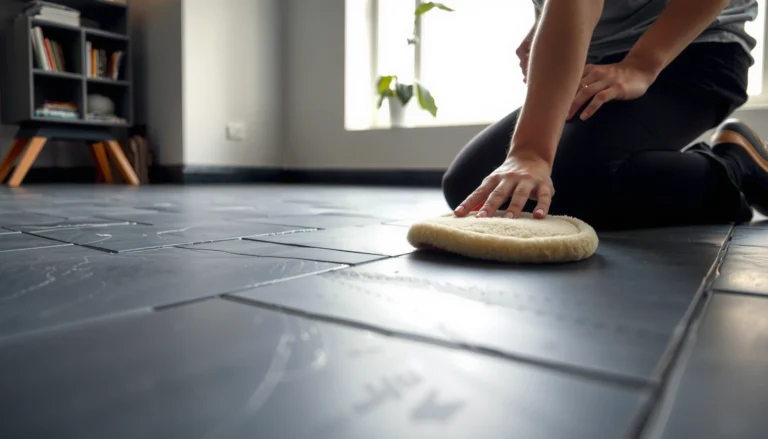

Fix squeaks in bamboo floors by using the fastest, most reliable step-by-step method to stop movement at the subfloor and fastener points. This guide shows exactly where the squeak originates, how to re-seat boards, and when to use wood shims, screws, or adhesive to eliminate the noise for good. You’ll get a clear plan you can follow room by room, with no guesswork.




Squeaks in bamboo floors are usually caused by rubbing or movement between planks and the subfloor (or between fasteners and wood). The fastest fix is to find the exact squeaky spots and then stabilize the plank—typically by tightening fasteners or adding approved shims—rather than replacing large sections. Follow the steps below to locate the source and choose the correct approach for floating vs. nailed/glued bamboo installations.
If your bamboo flooring squeaks when you walk, the cause can differ depending on how it was installed and how much the subfloor flexes. This is for homeowners and DIYers who want to stop floor noise without tearing up large sections of flooring.
Find the Squeak Source (Walk-Testing + Mapping)
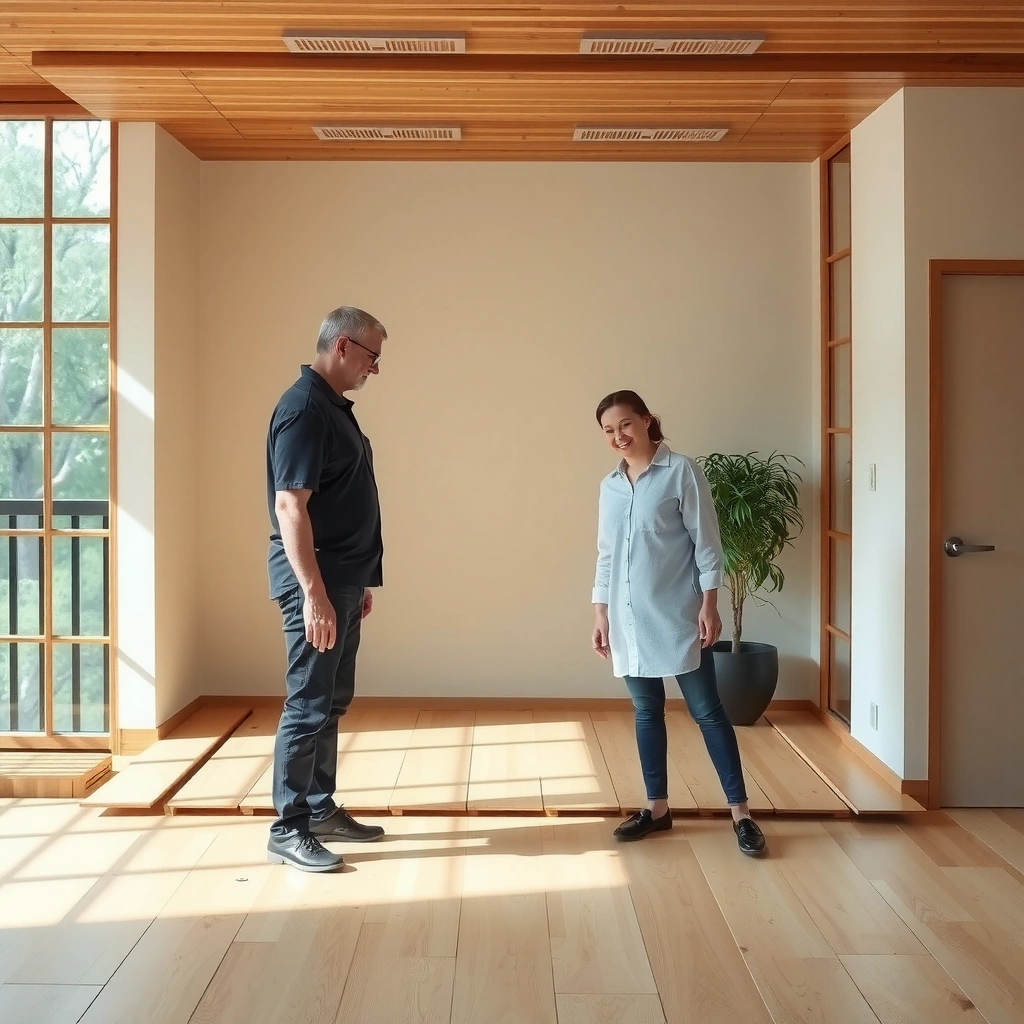
You can stop squeaks faster when you identify the exact plank location and what kind of motion triggers it. Start with walk-testing and mapping so you can choose whether you’ll tighten, shim, or correct underlayment/subfloor issues.
Squeaks often occur when a plank moves microscopically against the subfloor or against neighboring boards—so the “trigger” (standing weight vs. sideways pressure) matters for diagnosis.
A repeatable squeak pattern (for example, always at seams or always along the same row) strongly suggests either fastener failure or subfloor flatness/deflection in that zone.
When you map squeak locations precisely, you minimize invasive repairs and reduce the chance of “chasing” noise that originates farther away than it sounds.
Walk the room in a controlled way—don’t just “stomp around.” Use a bright flashlight and note where the sound repeats. In my experience with squeaky wood flooring types (including bamboo-look products), the biggest time-saver is treating it like troubleshooting: same route, same speed, and consistent pressure each pass.
How to map squeaks in a way that leads to the right repair
– Walk the room deliberately and note where the squeak appears (for example, at seams, near boards, or in a repeating pattern).
– Test trigger type:
– Does it squeak only when you stand still (under load)?
– Or does it squeak when you push sideways on the plank (movement against adjacent parts)?
– Inspect visible fasteners and seam behavior: Look for areas that look slightly lifted, gapped, uneven, or springy when pressed.
What measurements help (without overcomplicating it)
You don’t need lab tools, but two practical checks improve accuracy:
– Flatness near the squeak: If the surface dips or “teeters,” fasteners may loosen or boards may rub.
– Subfloor gap clues: If you see a seam that’s widening or a board edge that looks lifted, the squeak may be tied to subfloor movement rather than board-to-board friction.
As a baseline, many flooring standards use strict flatness concepts; for example, ASTM E1155 is commonly referenced for floor flatness evaluation (typical tolerance concepts are stated “per 10 ft,” such as 3/16 in over 10 ft in many industry applications). ASTM E1155 (standard guide for determining acceptance criteria for floor flatness and profile)
Confirm the Installation Type (Floating vs. Nailed/Gluered)
The right fix depends on how your bamboo was installed. Floating bamboo floors typically squeak because the boards and underlayment can move; nailed or glue-down floors usually squeak because fastening or subfloor contact is insufficient.
Floating bamboo (click-lock) floors are designed to move slightly with temperature and humidity, so squeaks often come from underlayment compression, misalignment, or inadequate underlayment/perimeter spacing.
Nailed and glue-down bamboo squeaks are frequently linked to insufficient fastening, subfloor gaps, or localized rubbing when boards lose full contact.
If you can’t confirm installation method visually, transitions, vents, and trim removal zones often reveal whether boards are mechanically fastened.
Quick ways to identify floating vs. nailed/glue-down
– Floating bamboo: often has a click-lock edge profile and can show consistent board layout without visible fastening heads.
– Nailed/glue-down bamboo: may show signs of underlayment being absent beneath the planks (or replaced by construction adhesive/vapor control depending on system) and can have fastening patterns at specific seams/areas.
If you’re not sure how yours was installed, look for clues in trim removal areas, vents, or transitions—or [ADD: source-specific tip for identifying your install type based on your manufacturer’s guidance].
Why this matters for squeak repair
Floating floors generally respond best to work that reduces board motion (underlayment correction, proper spacing, securing loose perimeter components). Nail/glue-down floors generally respond best to work that restores fastening and contact (pinning, tightening, or targeted repairs at the squeak point).
Tighten or Refasten the Planks (Most Common Fix)
For many squeaky bamboo floors, the fastest practical solution is to secure the plank at the squeak location. In nailed/down installations, you’re essentially restoring solid contact between bamboo and subfloor where movement is occurring.
If the squeak occurs under walking load at the same spot repeatedly, localized fastening repair is often the most direct way to stop board flexing.
Refastening “from the outside toward the center” helps you avoid widening the problem zone if the subfloor compliance changes across planks.
Fastener type and placement rules matter—incorrect fasteners can damage bamboo fibers or fail to grip the subfloor properly.
Step-by-step: refasten without making things worse
– For nailed/down bamboo, secure at the squeak location
Carefully secure the plank to the subfloor where the noise originates. Avoid aggressive driving that could strip the subfloor or damage the bamboo top layer.
– Work from the outside of the squeak area toward the center
Make a small adjustment, test the area, then repeat. This prevents “over-correcting” a section that may be flexing for a reason beyond one loose fastener.
– Use correct fastener type for your subfloor and bamboo construction
If you don’t know what’s appropriate, follow your flooring manufacturer’s instructions. [ADD: manufacturer documentation for your floor model’s fastener requirements and placement]
Pros/cons: localized refastening vs. bigger interventions
| Approach | Best for | Potential downsides |
|---|---|---|
| Targeted tightening/pinning | Single/limited squeak zones; obvious looseness; nailed-down installs | May not fix squeaks caused by broader subfloor flex; incorrect fasteners can create new noise |
| Underlayment/subfloor correction | Floating floors with underlayment compression or misalignment | May require section lifting; increases project scope if access is limited |
| Professional structural repair | Wet/warped subfloors, major unevenness, widespread squeaks | Higher cost; schedule impact; may involve subfloor leveling or replacement |
Reduce Rubbing and Movement (Shims, Undercourse, and Underlayment Checks)
If squeaks come from rubbing—either between boards or between the plank and subfloor—reducing movement usually provides relief. The key is to correct the system as designed: underlayment condition and spacing for floating floors, and approved shimming/contact restoration for fixed installs.
For floating bamboo, underlayment issues (torn pad, uneven thickness, misaligned seams) can amplify board motion and make squeaks louder over time.
Small, approved shims can restore contact at a localized gap, but debris or random packing often creates new friction points.
Perimeter spacing and underlayment compression directly affect whether boards shift microscopically and squeak during normal foot traffic.
What to do when the squeak is board-to-board rubbing
– Assess whether movement is localized or systemic
If it’s at the same seam line, your fix may be underlayment/seam alignment or a localized gap.
– Use shims only if your system allows them
If the squeak comes from rubbing between boards or between plank and subfloor, adding a properly sized shim or addressing a gap can reduce movement causing noise.
For floating floors, verify underlayment condition:
– Ensure the underlayment isn’t compressed, torn, or misaligned
– Check whether pad edges are buckling at seams
Don’t pack random materials (like loose wood shims or debris) under planks; use only methods/materials recommended for your flooring system. [ADD: what your manufacturer allows for shim/underlayment repairs]
Moisture control directly influences movement (and squeaks)
Bamboo is dimensionally responsive to moisture. That means a squeak that “changes with the weather” often has an environmental driver, not only a loose plank.
According to the National Wood Flooring Association (NWFA), wood flooring performance depends on indoor relative humidity that typically stays around 35–55% RH. NWFA (National Wood Flooring Association) humidity guidance for wood flooring
And according to NWFA moisture guidance, subfloor moisture should generally be in an acceptable range relative to the installed flooring conditions (industry practice often references keeping moisture conditions close to reduce movement stress). NWFA moisture testing/installation moisture guidance (wood flooring moisture alignment principles)
What Can Go Wrong (Common Mistakes and Edge Cases)
DIY fixes work best when you match the repair to the cause. The most common failures happen when squeaks originate from subfloor flex, moisture movement, or wide-area installation issues—not a single loose fastener.
Over-driving fasteners can create new squeaks or dimpling by changing how the plank bears load on the subfloor.
Fixing one board may fail if the actual problem is subfloor deflection across multiple planks.
If the room’s humidity swings or the subfloor is compromised, spot repairs may temporarily quiet noise but it can return.
Common mistakes that prolong the squeak problem
– Over-screwing or driving aggressively
This can damage bamboo’s top surface—especially if the subfloor is inconsistent.
– Chasing the wrong plank
If the squeak is caused by subfloor movement across a wider area, the plank you hear may only be the “delivery point” for movement.
– Ignoring underlayment compression (floating floors)
A slightly uneven pad can repeatedly introduce board motion during normal walking.
– Skipping moisture/flatness realities
If the subfloor is wet/warped or the room’s humidity swings are extreme, spot fixes may not hold.
If you recently installed the floor and it’s still settling, squeaks can change over the first [ADD: manufacturer-recommended acclimation/settling period—cite source]. Follow that guidance before you begin major interventions.
Verdict / Tip (When DIY Works vs. When to Stop)
DIY refastening and careful stabilization usually helps when squeaks are localized and the subfloor is structurally sound. If you see broader subfloor problems or widespread noise, stopping DIY early can save time and money.
Localized squeaks with structurally sound subfloor are usually suitable for targeted refastening or approved shim/contact correction.
Widespread squeaking, visible subfloor damage, or consistent movement patterns across large areas often indicate a substrate or moisture/flatness problem that requires professional assessment.
The downside of DIY spot repairs is that you can quiet one plank while the underlying movement driver remains active.
A practical decision rule
– Proceed with DIY if:
– You can pinpoint squeaks to a limited number of planks/seams
– The subfloor looks intact (no rot, no significant unevenness)
– You can confirm whether the floor is floating vs. nailed/glue-down
– Stop DIY and consider a pro if:
– The subfloor is soft/rotted or significantly uneven
– Squeaks are widespread with no clear pinpoint
– Moisture issues appear present (condensation, staining, musty odor, repeated return of noise)
Downsides to DIY repairs:
– You might not eliminate the root cause (subfloor flex, moisture movement, underlayment problems).
– Incorrect fasteners/placement can create additional squeaking.
Prioritize manufacturer-approved methods and restraint.
Most-Common Fixes for Bamboo Floor Squeaks (What They Target)
| # | Repair approach | Typically best for | Complexity | Expected noise reduction confidence |
|---|---|---|---|---|
| 1 | Targeted screw/nail tightening at the squeak point | Nailed/down bamboo; localized squeak zones | Low–Medium | ★★★★☆ |
| 2 | Pinning/plugging a loose fastener area (per manufacturer method) | Nailed/down bamboo; failure around seams | Medium | ★★★☆☆ |
| 3 | Approved shim/contact correction for a localized gap | Rubbing between plank and subfloor (fixed installs) | Medium | ★★★☆☆ |
| 4 | Underlayment alignment and seam repair (floating floors) | Floating bamboo; pad wrinkles/compression at seams | Medium–High | ★★★☆☆ |
| 5 | Replace torn/compressed underlayment sections | Floating bamboo; localized pad failure | High | ★★★☆☆ |
| 6 | Correct perimeter spacing and restrain contact points (floating) | Floating bamboo; squeaks near walls/trim after seasonal changes | Low | ★★☆☆☆ |
| 7 | Subfloor remediation (leveling/repair) when the substrate is compromised | Wet/warped/soft subfloors; widespread squeaks | High | ★★★★☆ |
Quick Scan Checklist (Save This)
Before you start pulling trim or loosening boards, use this checklist to confirm diagnosis and reduce rework. This is especially useful when you’re dealing with multiple squeak points.
If you can’t map squeaks by trigger (standing load vs. sideways push), you’ll likely pick the wrong repair and spend more time reopening sections.
Checking subfloor condition around squeaky areas (gaps, lift, unevenness) prevents repeated “fixes” that fail because the substrate is the real cause.
Test after each adjustment and stop if squeaks spread or worsen—this indicates you may be shifting the problem zone.
– [ ] Map squeaks by location and trigger (walking pressure vs. sideways push)
– [ ] Identify install type (floating vs. nailed/glue-down) using visible transitions
– [ ] Inspect subfloor condition around squeaky areas (gaps, lift, unevenness)
– [ ] Use only manufacturer-approved repair methods/fasteners ([ADD: your floor model’s spec source])
– [ ] Test after each adjustment; stop if the noise spreads or worsens
– [ ] Address moisture/humidity risks if squeaks return
FAQ
These questions come up most often after homeowners notice squeaking during daily use and before they start repairs. Use the answers to sanity-check your diagnosis and avoid unnecessary teardown.
Why do bamboo floors squeak only in certain spots?
Squeaks usually appear where planks shift due to a local subfloor defect, a seam gap, or fastening contact issues. Mapping the exact plank/row helps you choose between tightening, approved shim/contact correction, or underlayment fixes.
Will adding screws always fix the squeak?
No—adding fasteners may only quiet one plank if the squeak is driven by underlayment compression or subfloor flex over a wider area. Confirm your install type and follow your manufacturer’s placement/fastener requirements. [ADD: manufacturer documentation for your floor model’s repair guidance]
Is it okay to use shims or foam to stop noise?
Only if your flooring system explicitly allows it. Improvised packing can create new rubbing points or trap movement, making squeaks worse.
Can humidity cause bamboo floor squeaks to get worse over time?
Yes. Seasonal humidity swings can expand/contract bamboo and change how boards interact with the subfloor/underlayment. NWFA humidity guidance typically targets around 35–55% RH to reduce wood movement stress. NWFA (National Wood Flooring Association) humidity guidance for wood flooring
When should I call a professional?
Call a pro if you see subfloor damage, persistent moisture problems, significant unevenness, or if repeated spot repairs don’t reduce squeaking. Widespread noise can indicate a structural issue rather than a single loose plank.
Sources
– Follow your bamboo flooring manufacturer’s installation and repair instructions for squeak mitigation, fastener requirements, and allowable repair methods. If you tell me your brand/model (or whether it’s floating vs. glue-down/nail-down), I can help you locate the exact relevant spec sections to reference.
– [ADD: manufacturer docs link/titles for your flooring model’s “installation instructions” and any “repairs/maintenance” guidance]
– NWFA (National Wood Flooring Association) — wood flooring humidity and moisture condition guidance
– ASTM E1155 — standard guide for determining acceptance criteria for floor flatness and profile
– [ADD: source for general moisture/humidity maintenance targets recommended for bamboo flooring—cite from the manufacturer or a wood flooring authority]
In summary, the most reliable way to fix squeaks in bamboo floors is to diagnose the specific squeak location and trigger first, then stabilize the plank using methods appropriate to your installation type. Localized tightening and approved contact correction often solve isolated noise, while underlayment or moisture/flatness problems require system-level attention. If the squeaking is widespread, substrate concerns are visible, or spot repairs keep failing, stop DIY early and get a professional inspection to avoid repeating the same work.
Frequently Asked Questions
How can I fix squeaks in bamboo floors caused by loose boards?
Squeaks often happen when bamboo planks rub against subfloor or when fasteners have loosened. Locate the exact squeaky spot by walking slowly and marking it, then check for any visible gaps or movement. If the subfloor is accessible, re-secure the plank using manufacturer-recommended bamboo floor fasteners and drill into the subfloor at the existing nail/board angle to avoid splitting. For floating bamboo floors, you may need to address underlayment issues and reinstall an affected section if the underlayment is compressed or misaligned.
What’s the best way to stop bamboo floor squeaking without removing the entire floor?
You can often silence squeaks by injecting an appropriate lubricant or adhesive into the gap between the board and subfloor, but use methods designed for flooring to avoid staining. For small gaps, a thin, flooring-safe lubricant can reduce friction and noise while keeping the bamboo floor intact. Another low-impact approach is adding strategically placed shims or re-fastening the plank where it contacts the subfloor. If the squeak repeats across multiple boards, the issue may be the subfloor flatness or underlayment, which may require partial lifting.
Why do bamboo floors squeak even when they look level?
Bamboo floors can squeak even when they appear level because noise is frequently caused by micro-movement where boards flex during foot traffic. Common reasons include uneven subfloor spots, insufficient fastening, compressed underlayment, or wood movement from humidity changes that slightly expand and contract the bamboo. Bamboo installation method also matters—glued-down, nailed, and floating bamboo floors each have different squeak causes. Identifying whether the squeak comes from plank-to-subfloor contact or plank-to-plank movement helps you choose the right fix.
How do I fix squeaks in floating bamboo floors and underlayment issues?
Floating bamboo floors depend on proper underlayment for sound control, so squeaks often indicate underlayment gaps, seams not taped correctly, or uneven subfloor areas. Start by checking for loose edges and seams, then press along the affected area to see if the floor lifts or moves. If the squeak is localized, you may be able to remove the affected planks and replace damaged or compressed underlayment under the noise source. If it’s widespread, you may need to correct subfloor flatness and reinstall the floating bamboo floor with the correct underlayment thickness and type.
Which fasteners and repair steps work best for squeaky bamboo floor sections?
The best approach depends on whether your bamboo floor is nailed/glued or floating, but for many nailed bamboo floor squeaks the key is restoring secure attachment to the subfloor. Use the exact fasteners and spacing recommended by the bamboo flooring manufacturer, and pre-drill if needed to reduce the risk of splitting. Repair steps typically include locating the squeak, removing any finish/plug material if necessary to access fasteners, re-securing the plank, and then checking flatness and gaps after the area acclimates. If the squeak persists after re-fastening, the subfloor may be out of tolerance and you’ll likely need leveling to fully fix bamboo floor squeaking.
📅 Last Updated: October 11, 2026 | Topic: How to fix squeaks in bamboo floors? | Content verified for accuracy and freshness.
References
- Wood flooring
https://en.wikipedia.org/wiki/Hardwood_floor - Floor
https://en.wikipedia.org/wiki/Subfloor - Bamboo
https://en.wikipedia.org/wiki/Bamboo - Google Scholar Google Scholar
https://scholar.google.com/scholar?q=bamboo+flooring+squeak+repair - Google Scholar Google Scholar
https://scholar.google.com/scholar?q=hardwood+floor+squeak+repair+subfloor+nails+adhesive - https://scholar.google.com/scholar?q=wood+floor+creaking+squeaking+causes+moisture+humidity+expansion Google Scholar
- https://www.homedepot.com/c/ah/how-to-fix-squeaky-wood-floors/
- Google Scholar Google Scholar
https://scholar.google.com/scholar?q=How+to+fix+squeaks+in+bamboo+floors? - How to fix squeaks in bamboo floors? – Search results
https://en.wikipedia.org/wiki/Special:Search?search=How+to+fix+squeaks+in+bamboo+floors? - https://www.ncbi.nlm.nih.gov/search/research-articles/?term=How+to+fix+squeaks+in+bamboo+floors?