
Need to fix dents in vinyl floors fast, without replacing the whole sheet or plank? This step-by-step repair guide shows the quickest, most effective method to raise dents back to level using common tools, with clear timing and safety tips. If you want results that look straight and feel smooth underfoot, follow these instructions.




If your vinyl floor has a dent, the fastest fix is usually to warm the spot and gently flatten it back out; in many cases, the material rebounds if the subfloor is still solid. If heating doesn’t help, you may need to support the dent from underneath (for accessible areas) or replace the damaged plank. This guide walks you through safe ways to try both approaches, plus what to avoid so the dent doesn’t turn into a crack.
This is for homeowners dealing with common vinyl denting from heavy furniture, dropped items, or rolling loads—especially if the floor looks indented but not torn. It’s also helpful when you’re deciding whether a dent is “fixable” without pulling up much flooring.
Check the dent: what kind of damage you’re dealing with
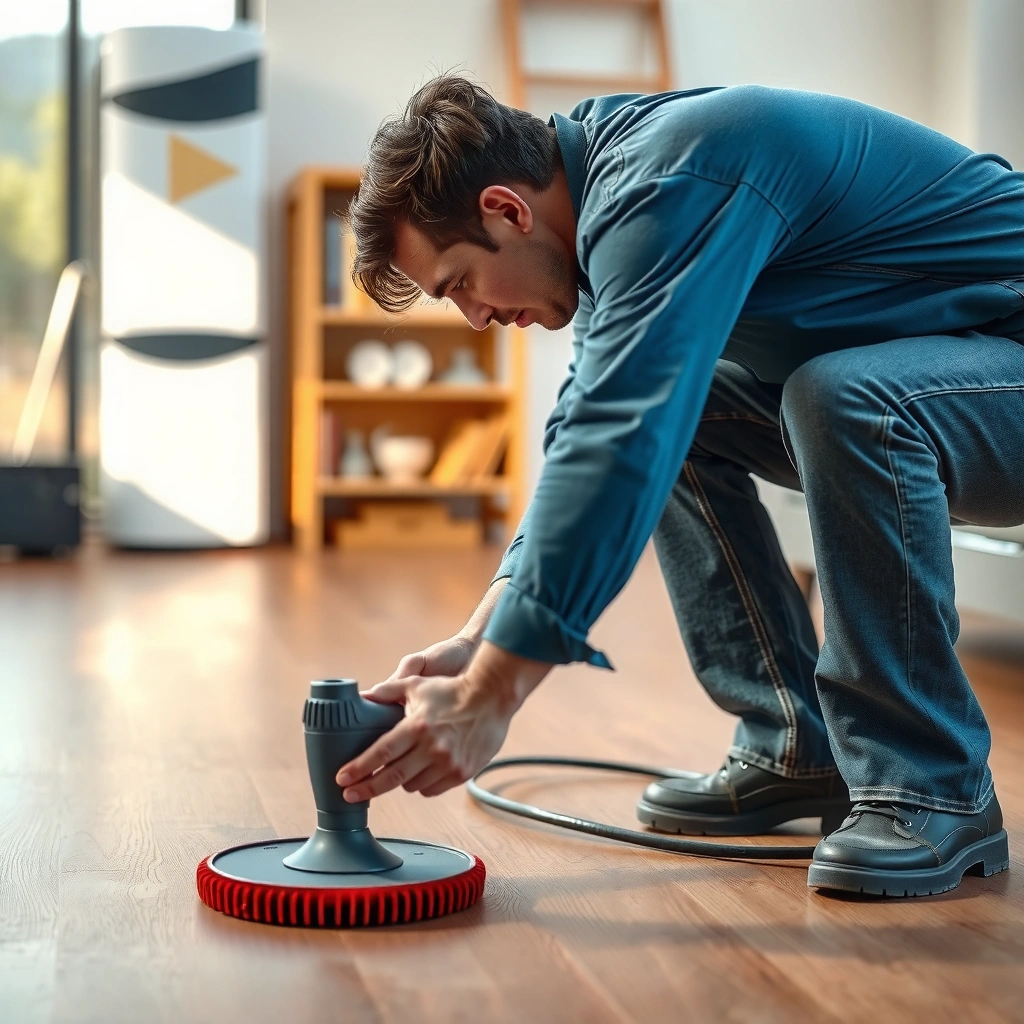
Vinyl floor dents fall into a few distinct categories, and the right repair depends on whether the wear layer is intact. A surface-only dent often rebounds with heat, while a dent tied to a soft subfloor or loose plank will keep returning unless the cause is addressed.
Start by visually inspecting the dented area closely:
– Only indented (best-case): The surface looks pressed down, but the vinyl isn’t cracked, and the seams/joints look aligned.
– Cracked or crazed vinyl: The dent may have damaged the top surface or printed pattern, meaning heating won’t “erase” the damage.
– Edges lifting or joint separation: If the dent comes with lifted corners, widened seams, or visible movement, the installation/adhesion is likely failing.
– Hollow feel when pressed: If you press lightly around the dent and it feels “springy” or hollow, the vinyl is flexing because the subfloor is not adequately supported.
To decide which direction to go, do two quick checks:
1. Press-test for stability: Press around the dent in a small circle. If the vinyl feels firm and doesn’t wobble, you can usually start with heat + controlled pressure on vinyl floor dents.
2. Look for movement: If the dented plank shifts when you press it, you’re not dealing with only a cosmetic indentation—you’re dealing with an installation or subfloor support problem that will likely defeat a simple resurfacing approach.
A key installation concept is flatness. Resilient flooring (including LVP/LVT) expects the subfloor to be flat enough that the plank doesn’t deflect under load. According to ASTM F710 (Standard Practice for Preparing Concrete Floors to Receive Resilient Flooring), resilient flooring systems are generally specified to tolerate only limited deviations in flatness (commonly cited as 3/16 in over 10 ft in many resilient-flooring instructions). If a dent in your vinyl floor is caused by a soft spot, vinyl floor dents will often reappear after the plank rebounds.
A resilient floor dent that feels hollow when pressed often indicates subfloor deflection rather than a surface-only deformation.
If vinyl plank joints show gaps or the plank can be moved by hand, the dent is likely tied to installation or support—not just the top layer.
To keep the repair grounded in what your vinyl floor is actually doing, use this quick decision logic: firm + intact surface = heat first; hollow or moving = support or replacement.
Try the safest first step: heat + controlled pressure
For most vinyl floor dents where the plank surface is intact, warming the material and applying gentle, temporary pressure is the least invasive and often the most effective repair. The goal is to help the vinyl relax back toward its original shape while you keep the spot controlled until it cools.
Here’s a careful, low-risk heat method for vinyl floor dents:
1. Clean the area first. Wipe off dust so you don’t embed grit into the surface while pressing.
2. Use a hair dryer on low/medium. Hold it several inches away and warm the dent gradually. Keep the air moving so one spot doesn’t overheat.
3. Add a cloth barrier. Place a clean, dry cloth over the dent to reduce direct heat contact with the vinyl’s finish.
4. Gently flatten. While the area is still warm and flexible, press lightly with your hand (or a flat, clean tool wrapped in cloth) just enough to encourage rebound.
5. Hold until cooling starts. Let the vinyl cool down under light pressure, then release gradually.
From my reading of resilient flooring guidance and common installation best practices, the biggest risk during heat repair of vinyl floor dents is overheating one area, which can distort the surface print, haze the finish, or weaken adhesives (especially on glue-down systems). If you’re doing vinyl floor dent repair, favor *gentle, distributed warming* over speed.
Also, be aware of system type:
– LVP/LVT click-lock (floating): Heating can still work for dents, but loose boards or underlayment issues can cause repeat deformation.
– Glue-down LVP/LVT: Heat can be more sensitive because adhesives may soften if overheated—use less heat and more patience for vinyl floor dents.
Heat-based dent repair is most reliable when the vinyl surface is intact and the plank does not feel hollow or loose.
Indirect, low-to-medium heat with a cloth barrier reduces the risk of finish discoloration during vinyl floor dent repair.
Visual reference: what usually determines success for vinyl floor dents
Vinyl Dent Repair: Most Common Outcomes by Dent Type
| # | Dent / condition | Best first approach | Rebound likelihood if subfloor is solid | Repair risk |
|---|---|---|---|---|
| 1 | Shallow indentation, no cracking, joints aligned | Heat + light pressure | High | Low |
| 2 | Indentation with slight surface haze (finish only) | Heat gently, stop early | Medium | Medium |
| 3 | Deeper dent but vinyl feels firm (no hollow) | Heat + longer cool-hold | Medium-High | Medium |
| 4 | Indent feels hollow or bouncy when pressed | Inspect/repair subfloor support | Low | High |
| 5 | Dent with lifted seam or visible joint separation | Address installation/adhesion | Very Low | High |
| 6 | Indent with cracked wear layer | Replace affected plank/section | None | High |
| 7 | Repeated indent from rolling chair/rollers | Fix support + add protection | Medium | Medium |
Use a steam/cloth method for stubborn dents (with caution)
If a vinyl floor dent won’t rebound after careful warming and light pressure, steam-assisted heat can help relax the vinyl further. This method works best when you need more pliability but you still want to avoid soaking seams or joints.
Steam/cloth repair of vinyl floor dents should be approached conservatively:
1. Damp cloth, not dripping: Lay a cloth over the dent that is slightly damp—you want moisture from the cloth to create humidity, not water pooling on the floor.
2. Indirect steam/heat through the cloth: Apply steam or heat through the cloth while moving constantly. Avoid letting moisture sit in one spot.
3. Press gently after warming: Once the vinyl is more relaxed, apply controlled pressure and hold until it starts cooling.
4. Check surrounding joints frequently: If your dent is close to seams (especially for click-lock joints), stop earlier to avoid affecting adjacent planks.
Why the caution matters: resilient flooring systems can be sensitive to moisture intrusion at edges and seams. Manufacturer care instructions for LVP/LVT commonly emphasize avoiding excessive water. Even when steam is indirect, it’s still moisture-driven, so the risk is not theoretical.
Indirect steam through a cloth is intended to add flexibility without pooling water at seams or edges.
Moisture near vinyl plank joints can increase the risk of movement or separation, especially if installation moisture tolerance is exceeded.
When steam is a bad idea for vinyl floor dents
Steam-assisted repair should be paused or skipped when:
– The dent is accompanied by cracks in the vinyl surface.
– You see lifting seams or signs of adhesive failure (glue-down).
– The dent is in an area that already shows looseness or subfloor flex—steam may only “re-form” a problem that will return.
Fix dents by addressing the subfloor (when the floor won’t rebound)
If vinyl floor dents don’t improve after heat and careful pressure, the subfloor is likely allowing the plank to deflect. In that scenario, the vinyl can only rebound temporarily—unless you eliminate the movement under it.
Start by confirming the symptom:
– Hollow/bouncy feel = deflection: Press the dent area and compare with nearby spots. If it flexes, heat repair won’t last.
– Dent returns within a day or two: This often indicates ongoing subfloor movement, not “memory” in the vinyl alone.
When you can access underneath:
– Add localized support under the dent area (for example, jacking/cribbing methods, or support boards in a crawl space), so the plank no longer flexes.
– Keep the support plan compliant with your home’s structure and any local code considerations.
When you can’t access underneath:
– Focus on localized replacement, especially for dented areas with joint impact. For click-lock LVP, replacement may require carefully disassembling rows (often starting from the nearest edge). For glue-down LVP/LVT, replacement typically involves cutting and removing the damaged plank and re-preparing the surface for proper adhesive bonding.
Flatness requirements matter here. Again, per ASTM F710, resilient floors depend on subfloor preparation; excessive deviation (commonly cited as ~3/16 in over 10 ft) can promote deflection under furniture and rolling loads. If your vinyl floor dent is repeating, it’s frequently tied to that root cause.
A dent that feels hollow usually means the plank is flexing due to inadequate support, so heat-only repair won’t be durable.
Resilient flooring longevity depends on subfloor preparation and flatness; localized softness can cause repeated vinyl floor dents.
What can go wrong (and how to avoid it)
Heat and moisture can fix dents, but vinyl floor dents can also worsen quickly if the repair is rushed. Most failures come from overheating, excessive moisture, or pressing in a way that permanently changes the vinyl beyond the original dent.
Here’s a practical pros/cons contrast to guide whether you should use heat vs. steam for vinyl floor dents:
| Method | Pros for vinyl floor dents | Cons / failure risks |
|---|---|---|
| Hair-dryer heat + cloth | Low moisture risk; often restores shallow dents if the subfloor is firm | Overheating can haze the finish or soften adhesives (especially on glue-down) |
| Steam/cloth indirect method | Can relax stubborn dents when dry heat stalls | Steam can worsen seam-related issues if moisture reaches edges/joints |
| Subfloor support or replacement | Most durable when dent returns or plank is hollow | More work; may require partial disassembly or plank removal |
Now the specific “what can go wrong” list for vinyl floor dent repair:
– Overheating: Concentrated heat can cause discoloration, warping, or adhesive failure. Use indirect, low/medium settings and keep the air moving.
– Water damage: Steam methods can worsen issues if moisture reaches seams or edges. Always use a cloth barrier and avoid pooling.
– Pressing too hard: Aggressive pressure can create more permanent deformation or flatten the pattern beyond the original dent.
– Ignoring loose planks: If the dent is tied to lifting/looseness, fixing only the surface can lead to repeated dents.
– Assuming every dent is reversible: If the vinyl is torn or the wear layer is damaged, heating won’t restore it—replacement is likely.
Direct high heat increases the risk of finish haze and adhesive softening; vinyl floor dent repair should use indirect, controlled heat.
Steam repair fails when moisture reaches seams or edges that are already stressed or improperly bonded.
From a practical standpoint, the fastest way to avoid future problems is prevention: use furniture pads, chair glides rated for hard floors, and avoid dragging heavy items across vinyl—those actions reduce the recurrence of vinyl floor dents.
Verdict / tip: what to do first, and when to stop
Start with heat + gentle pressure because it’s the least invasive and often works when the subfloor is solid. If you don’t see improvement after a couple careful attempts, or if the plank feels loose/hollow, stop “chasing” the dent—focus on subfloor support or plan a localized replacement instead.
Skip heat methods entirely if the vinyl is already cracked, lifting at seams, or you notice adhesive failure—those cases usually need repair beyond resurfacing. If you tell me your flooring type, I can tailor the approach: [ADD: manufacturer name/model or flooring type (LVP click-lock vs glue-down) here if you want a more precise recommendation based on your specific system.]
Heat-first repair is most appropriate when vinyl floor dents are cosmetic and the plank remains firmly supported.
When dents return or the plank feels hollow, durable vinyl floor dent repair requires addressing subfloor flatness/support or replacing the affected plank.
Quick checklist (scan/save)
– [ ] Check for cracks, lifting edges, and joint movement
– [ ] Warm the dent indirectly with a hair dryer (low/medium; keep distance; use cloth barrier if needed)
– [ ] Gently flatten and hold lightly while it cools
– [ ] If needed, try indirect steam through a damp cloth (no pooling, keep moving)
– [ ] If it still won’t rebound or the floor feels hollow, inspect subfloor/support
– [ ] Replace a section if the dent is associated with damage or continued movement
FAQ
Can I fix dents in vinyl floors without replacing planks?
Often, yes—if the vinyl isn’t cracked and the subfloor doesn’t feel soft. Start with indirect heat and gentle pressure on vinyl floor dents, then move to support or replacement if the dent doesn’t hold.
Will steam damage vinyl floor seams?
It can, especially if moisture reaches seams or edges or if water pools. Use steam indirectly through a cloth and avoid soaking any joints during vinyl floor dent repair.
What if the dent comes back after a day or two?
That usually points to subfloor flex or an unstable plank/installation issue. Address the underlying support and consider replacing the affected section if movement continues.
Is it safe to use an iron or heat gun?
In general, using direct high-heat tools (iron/heat gun) increases the risk of warping or damaging finishes and adhesives. Stick to indirect, controlled heat sources like a hair dryer and cloth barriers for vinyl floor dent repair.
Sources
– ASTM F710 (Standard Practice for Preparing Concrete Floors to Receive Resilient Flooring) — resilient flooring subfloor preparation/flatness principles used to evaluate whether a dent is caused by deflection.
– [ADD: manufacturer installation instructions for LVP/LVT (click-lock vs glue-down) regarding moisture/heat and subfloor flatness requirements]
– [ADD: your vinyl flooring manufacturer’s care/repair guidance for dent removal and acceptable heat exposure limits]
When you fix vinyl floor dents, the key is matching the repair to what’s underneath. Start with indirect heat and gentle pressure on an intact, well-supported plank; switch to subfloor support or localized replacement when the area feels hollow, moves, or the dent returns.
Frequently Asked Questions
How do I fix dents in vinyl plank or vinyl sheet flooring without damaging the surface?
Start by cleaning the dent area so you can see its depth and remove grit that could cause scratches. For shallow dents, try heat plus gentle pressure: place a damp cloth over the dent and use a warm iron on low for a few seconds, then press lightly and let it cool flat. If the dent is deeper, you may need to re-level the subfloor or use a flooring repair kit, because repeated heating alone won’t always restore the core.
What’s the best way to remove furniture dents from vinyl floors?
Remove the furniture and check whether the dent is only in the top wear layer or has reached the vinyl core. For light furniture dents, try warming the spot with a damp cloth and apply gentle pressure after heat to help the vinyl relax back. For stubborn marks, use a vinyl floor repair kit or replace the affected plank—especially if the dent creates a visible depression that traps dirt and can eventually lead to joint failure.
Why do dents happen in vinyl floors, and how can I prevent them in the future?
Dents usually occur when heavy items compress the vinyl layer or when the floor has limited support from an uneven subfloor. Prevent dents by using furniture pads, glides, and rolling casters designed for hard floors, and avoid dragging items across the surface. Also ensure your vinyl flooring is installed over a properly level subfloor; addressing low spots before they cause dents is often the most effective long-term fix.
Which DIY method works best for a dented vinyl floor: heat, steam, or pressing?
Heat is typically the safest first DIY method for dents in vinyl plank and luxury vinyl flooring, because it encourages the material to relax without flooding seams. Steam can help in some cases, but too much moisture can seep at edges or seams and cause lifting—so use only a damp cloth rather than direct steam. Pressing after gentle warming usually yields the best results for shallow dents, while deep dents often require subfloor correction or plank replacement.
How do I repair a deep dent in vinyl flooring that won’t flatten?
If the dent doesn’t improve with heat and light pressure, it may be caused by an uneven base or the plank/core being permanently compressed. Check the area for a low spot or soft subfloor; correcting the underlying issue is crucial to prevent re-denting. For a localized deep dent, you can replace the damaged vinyl plank (for click-lock systems) or use a vinyl floor patch/repair compound for small areas, then match finish and allow proper cure time.
📅 Last Updated: October 07, 2026 | Topic: How to fix dents in vinyl floors? | Content verified for accuracy and freshness.
References
- https://en.wikipedia.org/wiki/Vinyl_flooring
- https://en.wikipedia.org/wiki/Resilient_flooring
- https://www.armstrongflooring.com/support/care-maintenance.html
- Bodenbeläge für den Wohn- und Objektbereich – Tarkett Deutschland
https://www.tarkett.com/en-us/support/care-and-maintenance/resilient-floor-care - https://www.rfcireference.com/indenting-resilient-flooring
- Google Scholar Google Scholar
https://scholar.google.com/scholar?q=vinyl+floor+dent+indentation+repair+heat - Google Scholar Google Scholar
https://scholar.google.com/scholar?q=indentations+in+resilient+vinyl+flooring+recovery - Google Scholar Google Scholar
https://scholar.google.com/scholar?q=sheet+vinyl+floor+indentation+repair+steam+heat - Google Scholar Google Scholar
https://scholar.google.com/scholar?q=How+to+fix+dents+in+vinyl+floors? - https://en.wikipedia.org/wiki/Special:Search?search=How+to+fix+dents+in+vinyl+floors?