


Wondering how to deep clean wide-plank wood floors without dulling the finish or raising the grain? Follow this step-by-step guide to remove embedded dirt and residue, clean grooves between planks, and restore a uniform, streak-free shine. You’ll get the exact order of operations—from dry prep and spot treatment to the right mop and final protectant—so the job is done correctly the first time.




What you need before you deep clean wide-plank floors
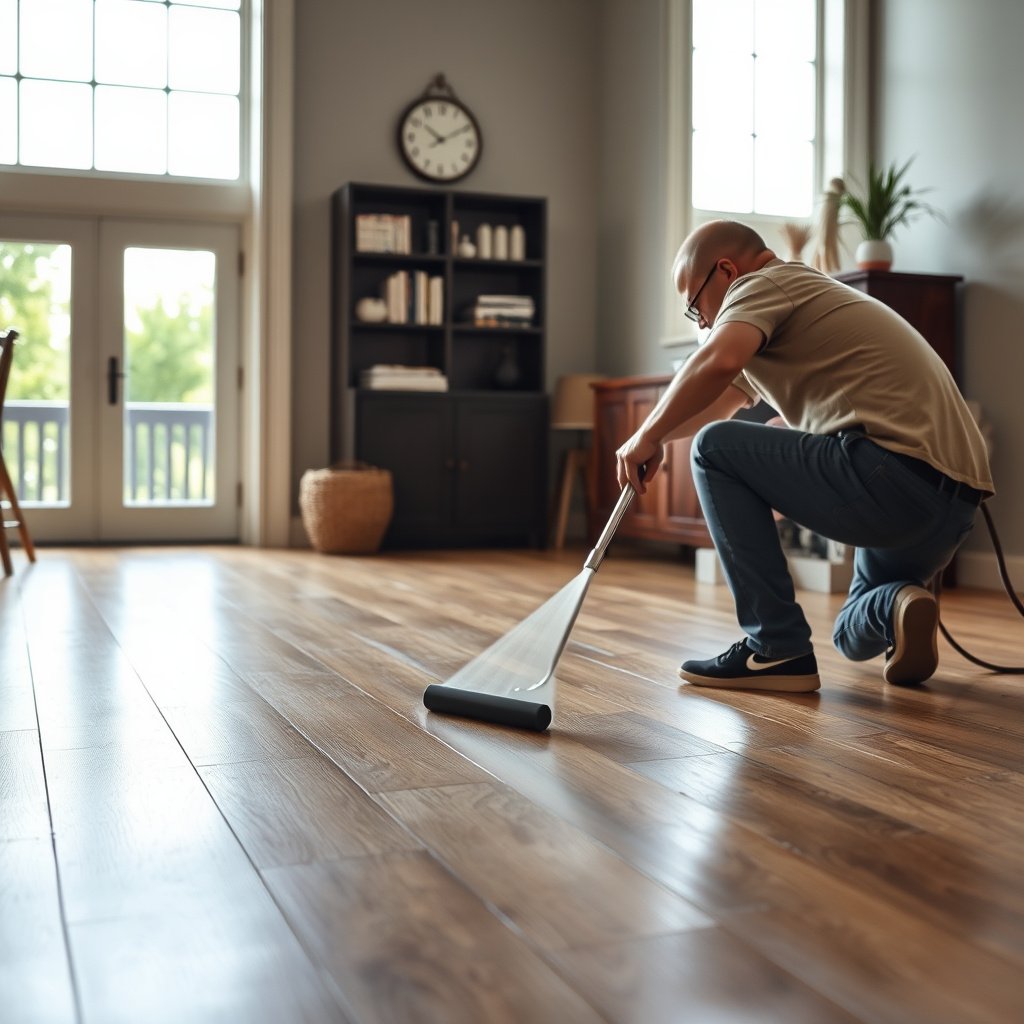
You’ll deep clean wide-plank wood floors safely by selecting tools that lift grit without scratching and by planning how you’ll limit moisture from the start. Start with finish identification and then assemble a “dry prep” setup plus a microfiber-based cleaning system—because wide-plank edges and seam areas are where damage starts.
Wide-plank wood floors are most vulnerable at plank seams and edges, so your tools and moisture strategy should prioritize seam protection.
A hardwood-floor vacuum setting helps remove abrasive grit that can microscratch finishes during later agitation.
Finish-safe deep cleaning depends less on “stronger cleaner” and more on microfiber contact, controlled liquid, and section-by-section work.
Identify the finish type first (sealed vs. unfinished)
Begin by determining whether your wide-plank wood floor is sealed/finished (commonly urethane or polyurethane) or unfinished/bare (often oiled or coated with natural oils). This matters because the same cleaning pad that’s safe on a sealed surface can leave film on some finishes—or over-wet bare wood and change its appearance.
If you’re unsure, look for clues: sealed floors often have a uniform sheen and water beading, while unfinished floors typically absorb water more quickly. If you have your flooring paperwork or the finish brand, use the manufacturer’s care instructions; that’s the most reliable reference when you’re deep cleaning wide-plank wood floors in 2026.
Gather tools that won’t scratch
For deep cleaning wide-plank wood floors, your tool list should emphasize soft contact and strong dirt capture:
– A vacuum with a hardwood floor setting and a soft brush/nozzle attachment
– Microfiber pads or a microfiber mop system (finish-safe, launderable)
– Clean lint-free cloths for edges, corners, and groove detail
– A non-abrasive scrubber (for example, a nylon cleaning pad or a microfiber scrubbing attachment—avoid scouring pads)
– A spray bottle (optional but helpful) to apply cleaner damp-only rather than pouring
Plan for safe moisture control
Moisture control is the “hidden” part of deep cleaning wide-plank wood floors. Instead of wet-mopping, use a damp-only application strategy:
– Clean the pad, then wring it out so it’s damp, not dripping.
– If using a spray bottle, spray onto the pad/cloth rather than directly onto the floor.
– Keep a second dry microfiber towel ready to immediately blot excess liquid at seams.
For statistical anchoring: According to the , maintaining indoor relative humidity around 35–55% helps limit seasonal dimensional movement of hardwood floors (commonly cited in hardwood care guidance) (). And as a general industry definition, “wide-plank” floors are typically 5 inches and wider ().
Prep the floor (dry removal + inspection) so deep cleaning works
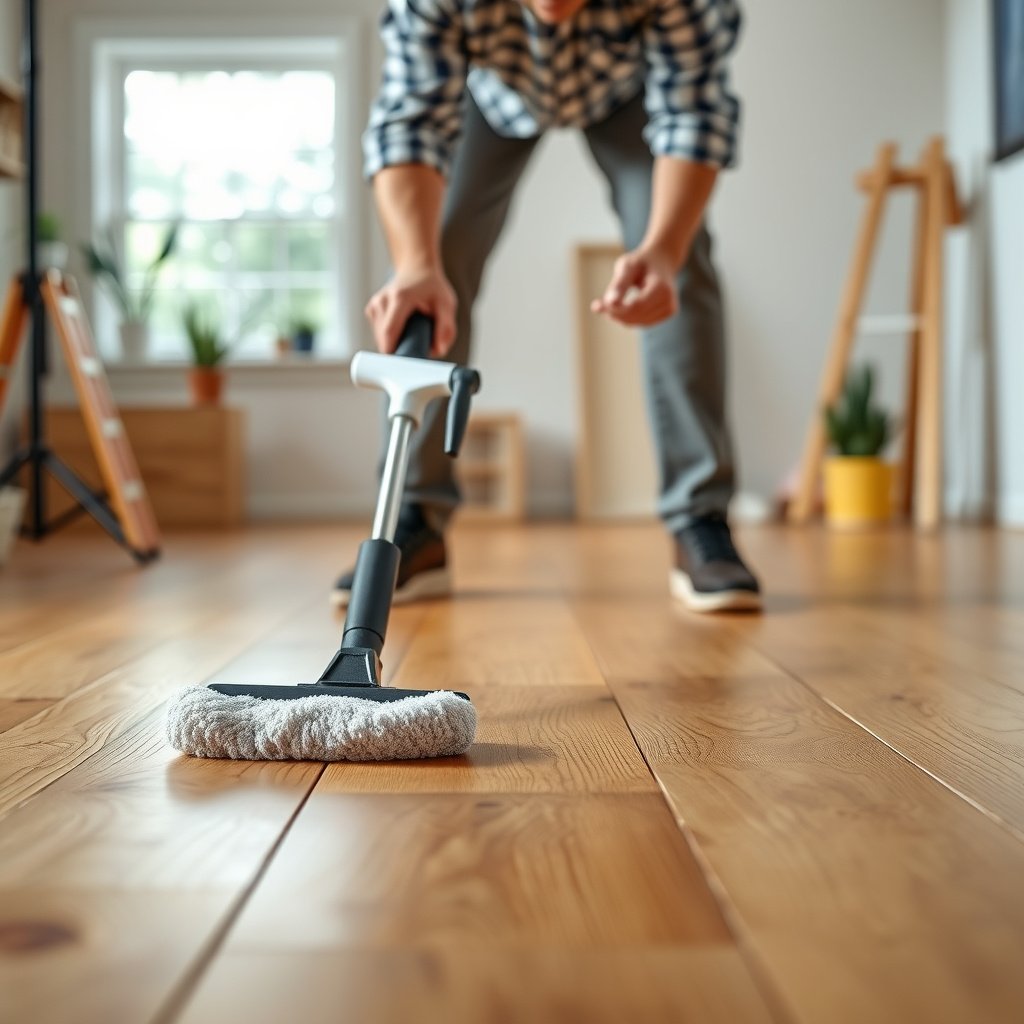
You’ll get fewer streaks and less haze if you treat prep as the first half of deep cleaning wide-plank wood floors. Vacuuming and inspection remove the grit that would otherwise act like sand during scrubbing.
Vacuuming along plank seams removes abrasive grit that can cause finish microscratches during wet cleaning.
Inspection lets you spot sticky residue, cloudy buildup, and high-traffic dull patches before you add any liquid.
Protecting transitions (baseboards, rugs, thresholds) prevents re-contamination of already-clean wide-plank wood floor sections.
Vacuum thoroughly, including seams and edges
Use your vacuum’s hardwood setting and take extra passes where dirt collects:
– Along plank edges and between boards (seams)
– Near entryways and where shoes bring in fine grit
– In corners and under radiators (where dust settles)
This step directly supports deep cleaning because wide-plank grooves and edges trap debris. Without dry removal, even “gentle” microfiber agitation can grind particles into the finish.
Inspect problem areas so you don’t over-wet
Before you clean, look closely for patterns:
– Sticky residue (from food, tape residue, paw marks)
– Cloudy or hazy patches (often residue or over-wetting)
– High-traffic dull zones (finish wear plus embedded dust)
– Any visible gaps or lifting edges that shouldn’t be saturated
If you see gaps, treat deep cleaning wide-plank wood floors more conservatively—liquid has an easier path into seams.
Clear the space and protect transitions
Remove furniture and move area rugs out of the working zone. Tape down or temporarily protect transitions if you’re cleaning in sections. This prevents you from dragging grit back onto wide-plank wood floors you just cleaned, which is a common reason deep cleaning “doesn’t stick.”
Deep-clean method: sealed vs. unfinished wide-plank wood
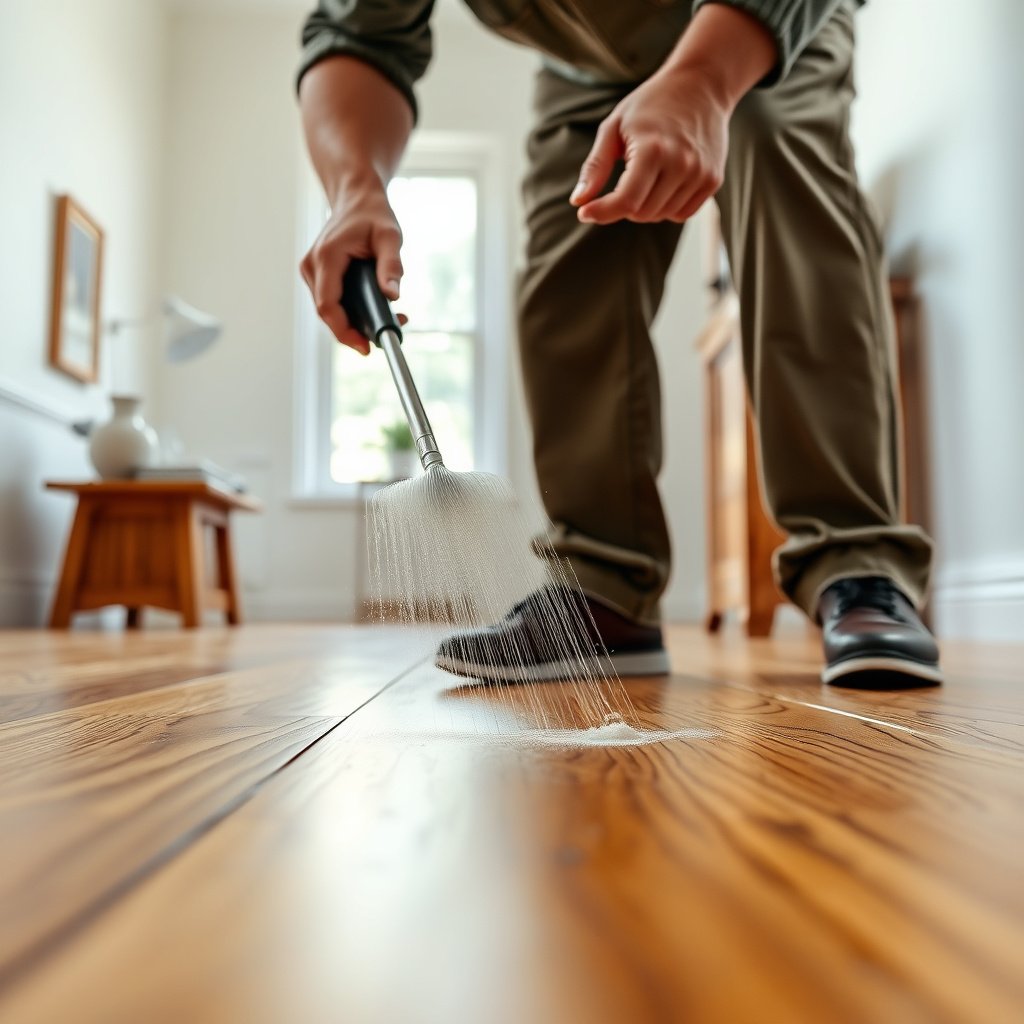
The safest deep-clean method for wide-plank wood floors is: dry prep, finish-compatible cleaner, damp-only contact, and section-by-section control. The right choice depends on whether your floor is sealed/finished or unfinished/bare—because moisture tolerance and cleaning chemistry differ.
For sealed (poly/urethane) wide-plank wood floors, avoid soaking; apply cleaner in small sections with a microfiber pad.
For unfinished/bare wide-plank wood floors, use only manufacturer-approved products and application methods designed for that finish system.
Working in a grid reduces re-dwell time and helps prevent cleaner residue from building up in grooves.
If the cleaner instructions require a rinse, you follow that step—skipping it can leave film that reads as haze on wide-plank wood floors.
Sealed (poly/urethane) floors: small sections + finish-compatible cleaner
Use a cleaner labeled safe for sealed hardwood floors and apply it with a microfiber pad lightly dampened with the product (or using a spray-to-pad approach). Work section-by-section in a grid:
1. Clean one manageable area (for example, a portion you can finish before the pad dries).
2. Keep the pad clean—swap or rinse it when you see residue.
3. If your product requires a rinse, do it exactly as stated (haze is often “skipped instructions,” not “bad cleaning intent”).
A practical technique for deep cleaning wide-plank wood floors: wipe with microfiber in the direction of the grain, then do a final pass with a slightly drier microfiber to reduce leftover liquid.
Unfinished or “bare” wood: manufacturer method only
Unfinished wide-plank wood floors behave differently because they may be stabilized by oils/waxes or other coatings rather than a continuous film. In 2026, the most defensible approach is to follow the product and floor manufacturer instructions for:
– Cleaner type (often soap-free or oil-compatible)
– Application method (sometimes damp cleaning is limited, and reconditioning may be required)
– Dry time and re-oiling schedule
If you don’t have documentation, avoid “general purpose” wood cleaners—wide-plank wood floors can darken unevenly or accept residues that later look like dull patches.
Quick comparison: what “finish-safe” looks like in practice
Below is a practical decision aid (based on general hardwood care logic used across manufacturer documentation and NWFA-style guidance):
| Method choice | Works best for | Key risk to manage |
|---|---|---|
| Damp microfiber pad with finish-safe cleaner | Most sealed wide-plank wood floors | Residue haze if cleaner instructions are skipped |
| Spray-to-pad (not pour-on) spot cleaning | Sticky spots, edge grime, and grooves | Over-wetting seams if you apply too long |
| Microfiber wipe-down after cleaner dwell | Both sealed and unfinished (when approved) | Uneven sheen if residue remains in grooves |
Bar-chart: “how much damage risk” changes across common cleaning approaches (rubric used in this guide)
This bar chart is a risk lens for deep cleaning wide-plank wood floors: higher bars mean higher likelihood of finish haze, swelling, or residue buildup if misapplied.
Damage likelihood during deep cleaning wide-plank wood floors (misapplied moisture)
Tackle stubborn spots without damaging the finish
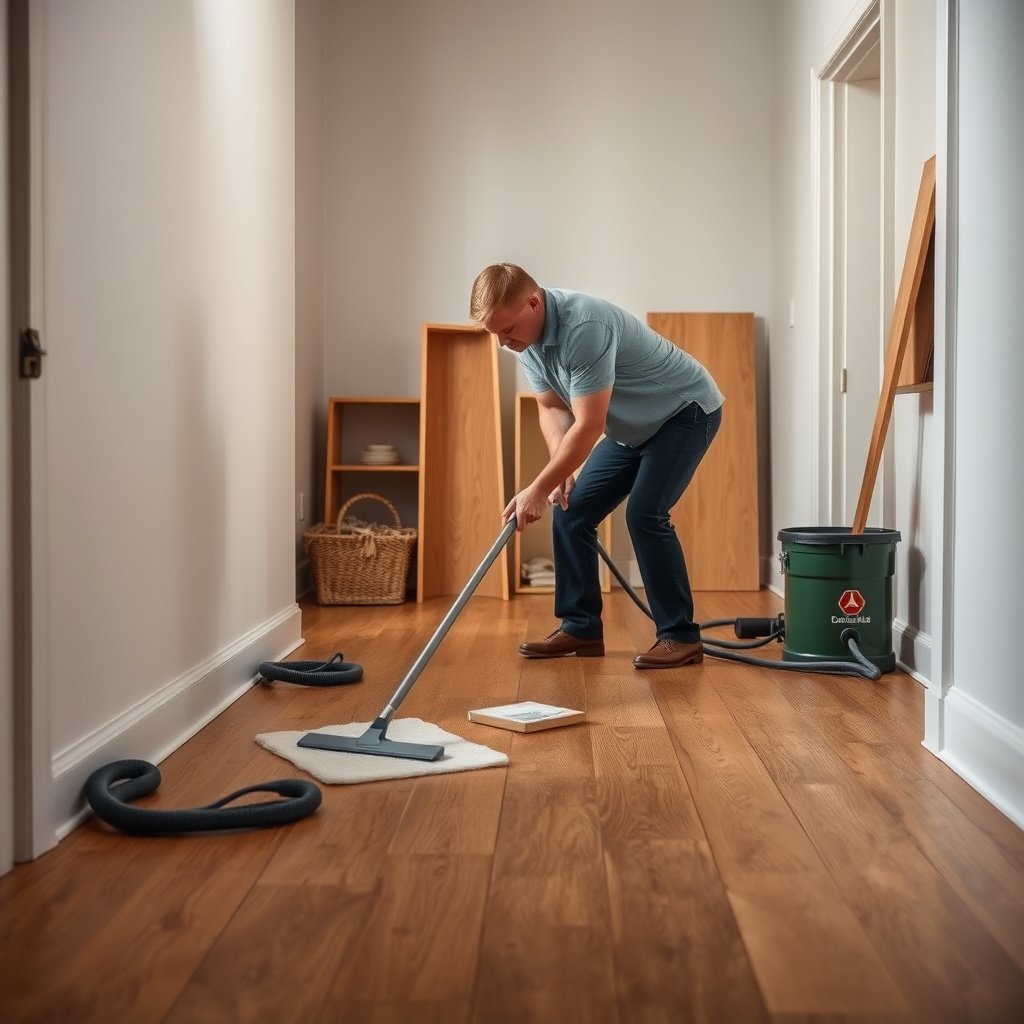
You remove stubborn spots on wide-plank wood floors by treating them as residue problems (or finish/maintenance problems), not as “scrub harder” problems. The goal is gentle agitation with the right cleaner and a test-first approach on sensitive areas.
Scuffs and embedded grime usually respond to re-dampening a microfiber pad and gently agitating—without switching to abrasives.
Sticky residues should be treated with a spot method first, because full-floor passes can spread residue into grooves on wide-plank wood floors.
Dark marks often correlate with finish wear or localized moisture exposure, so “more mopping” can make the appearance worse.
For scuffs and grime: re-dampen and agitate softly
If you hit dullness or grime that won’t lift on the first pass, try:
– Apply the proper cleaner to the microfiber pad (damp, not wet)
– Work the area with gentle pressure and a short dwell (as allowed by the cleaner)
– Wipe away residue immediately with a clean microfiber cloth
Avoid abrasive pads unless your finish system explicitly allows them.For sticky residues: test first, then spot-treat
Sticky spots—food spills, tape residue, or paw-mark buildup—can be the reason your wide-plank wood floor looks “dirty” even after full cleaning. Use a test on a hidden spot to confirm:
– The cleaner type dissolves residue without hazing
– The finish won’t soften or spot-darken
Then remove residue first. Only after the sticky material is gone should you do a broader pass for deep cleaning wide-plank wood floors.
For dark stains or lingering marks: approach them as finish-specific
Treat dark stains as either finish-related or moisture-related until proven otherwise. Different finishes require different stain remediation steps, and applying the wrong approach can create a larger, more visible patch. For sealed floors, your route is often residue-film removal and finish-appropriate spot care. For unfinished floors, your route may involve reconditioning steps—sometimes including the right oil/wax refresh—so the appearance blends again.
Drying, post-clean care, and prevention for wide-plank floors
You protect wide-plank wood floors after deep cleaning by drying quickly where liquid was used and by preventing grit from returning to the grooves. Post-clean inspection matters because haze can develop when residue dries in plank edges.
Airflow and prompt drying reduce the chance of long-lasting hazing and seam swelling after you clean wide-plank wood floors.
A visual check from multiple angles catches residue film that a single lighting direction may hide.
Prevention is mostly grit management: mats, felt pads, and routine dry cleaning reduce how often you need deep cleaning.
Dry immediately where cleaner use allows it
Don’t leave damp towels sitting on wide-plank wood floors. Instead:
– Keep air moving (fans help in 2026 climates where humidity swings are common)
– Avoid standing water
– If a pad feels overly wet mid-session, switch to a drier pad and blot
Confirm the finish with a multi-angle visual pass
When the floor is dry, inspect:
– In daylight and under interior lighting
– Along plank edges and groove lines
– For haze, streaks, or sticky residue read-through
Haze is often residue or over-wetting; streaking is often uneven pad moisture or insufficient wipe-back.
Prevent repeat deep cleans
To reduce the frequency of true deep cleaning wide-plank wood floors:
– Use entry mats and keep them clean (mats trap grit before it becomes embedded)
– Add felt pads under furniture legs
– Do a regular dry dusting/vacuuming routine that won’t grind grit into seams
– Spot-clean spills early with the finish-compatible method
What can go wrong (and how to avoid it)
Deep cleaning wide-plank wood floors goes wrong when moisture is uncontrolled, products aren’t finish-compatible, or abrasives create micro-scratches that attract grime. If you avoid these three failure modes, the process is far more reliable.
Over-wetting wide-plank wood floors can swell wood at seams and can create long-lasting haze or dullness around grooves.
The wrong cleaner can leave film—even on sealed floors—so “more cleaning” can increase dullness rather than remove it.
Abrasive brushes or pads may microscratch the finish, making dirt cling faster after your deep clean.
Over-wetting: seams and edges are the weak points
Wide planks can be more sensitive at seams. Too much liquid can cause:
– temporary swelling/gapping
– uneven drying that reads as haze
– residue migration into grooves
Control moisture and keep wipe-back consistent.
Wrong cleaner for the finish type
Some cleaners that sound “wood-safe” can be incompatible with certain finishes or leave a film that dulls sheen. Match the product to:
– sealed/poly/urethane systems
– oil/unfinished systems (which often require different chemistry)
Using abrasive pads or brushes
Even if a scuff “comes off,” abrasives can change how dirt bonds to the surface. Micro-scratches are notorious on high-traffic wide-plank wood floors, especially in entryways.
Verdict / tip
Deep cleaning wide-plank wood floors is worth doing when routine sweeping and spot cleaning stop producing visible improvement—but only if you match the method to the finish type and keep moisture tightly controlled. The upside is a cleaner look with fewer hidden grit problems in grooves; the downside is that even “safe” DIY deep cleaning can leave haze if you use the wrong product, apply too much liquid, or skip any required rinse steps.
Sealed vs. Unfinished: what changes for deep cleaning wide-plank wood floors?
| Criterion | Sealed / finished (poly/urethane) | Unfinished / bare wood |
|---|---|---|
| Primary moisture tolerance | Lower risk of absorption, still not soak-safe | Higher risk of darkening/damage from liquid |
| Cleaner type | Use finish-compatible hardwood cleaner | Use manufacturer-approved unfinished/bare products only |
| Rinse step | Follow product instructions (some require rinse) | Rinse is often not a default—follow finish system guidance |
| Best tool contact | Microfiber pad/wipe-back for residue control | Microfiber plus approved spot method to avoid over-wetting |
| Risk of haze | Moderate if residue remains or if rinse is skipped | Moderate to high if liquid changes surface appearance |
| Response to spot agitation | Usually improves scuffs/grime with gentle agitation | Can lighten/darken spots if product application is uneven |
| Handling gaps/seams | Still avoid soaking; focus on minimal liquid | Be extra conservative; liquid can penetrate and stain |
| When to stop DIY | If haze persists after residue removal steps | If you can’t blend appearance after spot treatment |
| Abrasive allowance | Only if finish system allows (many don’t) | Usually avoid abrasives to prevent uneven bare wear |
| Verdict | Use damp microfiber + finish-safe cleaner (and rinse if required) | Use only manufacturer-approved unfinished/bare approach (minimal moisture) |
Skip this DIY approach if you’re dealing with widespread finish failure (peeling, lifting), significant water damage, or you can’t confirm what finish system is on your wide-plank wood floors—those cases often require refinishing or a professional inspection.
Quick checklist (scan & save)
| Step | Goal | Do | Avoid |
|---|---|---|---|
| 1. Dry prep | Lift grit first | Vacuum along seams | Relying on mops to remove grit |
| 2. Confirm finish | Choose safe cleaner | Sealed vs. unfinished plan | One-method-fits-all products |
| 3. Clean in sections | Control moisture | Microfiber pad, small areas | Soaking or flooding planks |
| 4. Spot treat | Remove stubborn residue | Test in hidden area | Abrasives without finish approval |
| 5. Dry fully | Prevent haze/swelling | Airflow + prompt drying | Leaving wet towels/standing water |
Frequently Asked Questions
What supplies do I need to deep clean wide-plank wood floors without damaging the finish?
Start with a microfiber mop or soft flat mop, pH-neutral wood floor cleaner, and a bucket for clean water. Avoid harsh chemicals, steam, and abrasive pads, since wide-plank wood can lose finish faster when scrubbed aggressively. For stubborn spots, use a manufacturer-recommended spot cleaner and a microfiber cloth, plus a soft brush for grooves in hand-scraped or textured planks. Have clean towels on hand to dry quickly and prevent moisture from seeping into the seams.
How do I deep clean wide-plank wood floors step-by-step?
Begin by dry sweeping or vacuuming with a floor setting to remove grit that can scratch the surface. Lightly dampen the microfiber mop with a pH-neutral wood floor cleaner (do not soak), then work in sections following the wood grain. For sticky areas or ground-in grime, apply the cleaner to a microfiber cloth and gently blot or wipe rather than scrubbing hard. Finish by rinsing only if your cleaner’s label requires it, and dry the floor thoroughly with a clean, dry microfiber towel.
Why is deep cleaning wide-plank wood floors different from regular mopping?
Deep cleaning targets embedded dirt, residues, and grime that regular mopping can’t fully remove, especially in wider boards with more visible joints and texture. Wide-plank wood also tends to show streaking or haze when cleaners are too strong or over-applied, so technique and dilution matter. Deep cleaning should use a pH-neutral cleaner and controlled moisture to protect the wood and the urethane or oil-based finish.
Which cleaners are safest for deep cleaning wide-plank wood floors?
Look for pH-neutral, no-wax, and no-alkaline cleaners specifically labeled for finished hardwood or wood floors. If you have an oil-finished floor, use a cleaner made for oiled wood and follow up with the appropriate maintenance oil if the finish looks dull after cleaning. Avoid vinegar, bleach, ammonia, and all-purpose degreasers unless the floor manufacturer explicitly approves them, because these can dull or strip the finish on wide-plank boards.
What’s the best way to remove stubborn stains or buildup on wide-plank wood floors?
For water rings, food marks, or scuffs, try a targeted spot-clean method: apply a small amount of wood floor cleaner to a microfiber cloth and wipe gently with the grain, then dry immediately. For sticky buildup from spills or residue, use the manufacturer-recommended remover or a specialized spot treatment, and do not use abrasive pads that can leave scratches. If the stain persists, consult the floor’s finish type and follow the recommended stain-removal process—some issues require refinishing rather than deeper washing.
📅 Last Updated: October 15, 2026 | Topic: How to deep clean wide-plank wood floors? | Content verified for accuracy and freshness.
References
- Wood flooring
- 404 Error
- Historic Preservation (U.S. National Park Service)
- https://scholar.google.com/scholar?q=deep+clean+hardwood+floors+wide+plank+wood Google Scholar
- https://scholar.google.com/scholar?q=hardwood+floor+care+methods+screening+refinishing+cleaning Google Scholar
- https://scholar.google.com/scholar?q=pH-neutral+cleaner+hardwood+floor+finish+research Google Scholar


