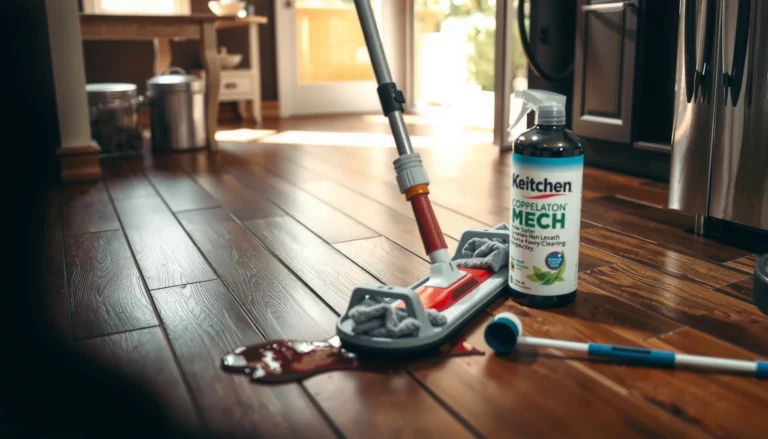

Silicone residue can leave a hazy, sticky film on hardwood that won’t lift with ordinary mopping. Most people make it worse by rubbing with harsh cleaners or metal tools, which can dull the finish and spread the residue. With the right solvent, careful scraping, and a pH-neutral floor cleaner, you can break down the silicone and restore a clean, even surface in about an hour, depending on how much buildup you have.




Soften silicone residue on finished hardwood with mineral spirits applied to a cloth (not directly to the floor), lift it with gentle scraping, then finish with a pH-neutral cleaner and immediate drying. This “soften → scrape → neutral clean” sequence removes sticky, glossy silicone spots while protecting common polyurethane/varnish finishes—especially when you work in small sections and avoid soaking.
If you’re dealing with silicone residue on hardwood, the safest, fastest approach is the one that controls solvent contact and limits liquid: mineral spirits (or a silicone-safe adhesive remover), careful mechanical lift, and then a pH-neutral clean to remove any remaining oily film. Below is a step-by-step method to get the residue off while minimizing risk to your hardwood.
This is for homeowners and renters who have sticky, smeary, or glossy spots from silicone sealant (or silicone-based products) on finished hardwood. It applies whether the residue is fresh-looking or has hardened over time, as long as the floor has a sealed finish (polyurethane, varnish, etc.). If your finish is unknown or the wood is unsealed, silicone removal needs a different level of caution.
Confirm the residue type and your finish

Silicone residue behaves differently than many other spills, and that determines whether mineral spirits will soften it effectively. Before you deep clean hardwood floors for silicone, confirm two things: whether the spot is actually silicone-like residue and whether your floor finish is solvent-tolerant.
– Test a tiny hidden spot with your chosen solvent/cleaner to check for finish softening, cloudiness, or tackiness.
– Look for dulling, “rubber” softness, or new stickiness on the finish—those are finish-warning signs, not residue-warning signs.
– Look at the residue behavior:
– Silicone often smears as a glossy film and may stay slightly flexible or sticky even after wiping.
– Many water-based drips (or typical food/cleaner residue) usually wipe off more cleanly without leaving a persistent shine.
– Confirm your finish category in plain terms:
– If your floor is polyurethane/varnish-sealed and you can wipe away dust without absorbing liquid, you’re likely in the “sealed finish” category this method targets.
– If the spot darkens when damp or spreads through the grain, stop and reassess—unfinished wood needs a different approach.
As of 2026, this workflow is still the most practical DIY path because it follows how most sealed coatings respond to non-water solvents: you’re controlling contact time and then immediately returning to a pH-neutral cleaner to stabilize the sheen.
Gather the right tools (and skip harsh ones)
The right tools make silicone residue removal on hardwood both safer and more complete. Instead of aggressive scrubbing, you want controlled softening plus low-scratch lifting—especially on polyurethane/varnished surfaces.
– Use plastic razor scrapers or a plastic putty knife, microfiber cloths, and non-abrasive pads (avoid steel wool).
– Choose a cleaner that’s gentle on finished wood:
– pH-neutral floor cleaner for the final stage (and to remove solvent film).
– Mineral spirits for loosening silicone residue (on a cloth, not poured onto the floor).
– If needed, use a silicone-safe adhesive remover labeled for silicone-type residue—follow packaging directions precisely.
To make tool selection easier, here’s a quick comparison of common “scrape and lift” options for silicone residue on finished hardwood:
| Tool / Material | Pros for Silicone Residue | Main Risk on Hardwood Finish |
|---|---|---|
| Plastic razor scraper | Best balance of control and low scratch risk; good for thin, glossy silicone film | Can take longer on thicker, heavily bonded spots |
| Nylon/urethane non-abrasive pad | Helps wipe away softened residue without deep scoring | May leave a faint sheen change if you buff too aggressively |
| Metal scraper / putty knife | More cutting power on hardened residue | High chance of gouging polyurethane and changing local sheen permanently |
| Steel wool / abrasive scrub pads | Can remove residue fast | Scratches and dulls the finish—often the “after” looks worse than the “before” |
Below is a compact reference you can use while you’re deciding which chemicals are realistically aligned with silicone residue removal on sealed hardwood floors (not unsealed wood):
Silicone Residue Removal: Chemical Options vs Finish Compatibility (2026)
| # | Cleaner / Solvent type | Key property | Finish compatibility rating | Best use case |
|---|---|---|---|---|
| 1 | pH-neutral hardwood cleaner | pH 6–8 (neutral detergent range) | ★★★★★ | Final clean to restore even sheen |
| 2 | Mineral spirits (Stoddard solvent) | Non-water solvent; flash point ~38–60°C (typical range) | ★★★★☆ | Softening silicone residue on a cloth |
| 3 | Silicone-safe adhesive remover (product-labeled) | Solvent/gelling system for silicone-type residue | ★★★★☆ | Heavier bonding when spirits alone is insufficient |
| 4 | Isopropyl alcohol (70%) | Evaporates quickly; may haze some finishes | ★★★☆☆ | Small, controlled spot attempts after softening |
| 5 | Acetone | Strong solvent; high finish risk if it softens coating | ★★☆☆☆ | Usually avoid unless finish is confirmed compatible |
| 6 | Vinegar / acetic acid | Typically pH ~2–3 (for table vinegar) | ★☆☆☆☆ | Not reliable for silicone residue breakdown |
| 7 | Dry heat (hair dryer / heat gun) | Can soften residue—but also heat-stress finishes | ★☆☆☆☆ | High risk; only consider with manufacturer guidance |
Step-by-step: remove silicone residue without soaking
You get the best results by softening silicone residue first, then removing it mechanically—while keeping the floor only lightly damp. Here’s the exact sequence that minimizes finish risk on sealed hardwood.
– Loosen:
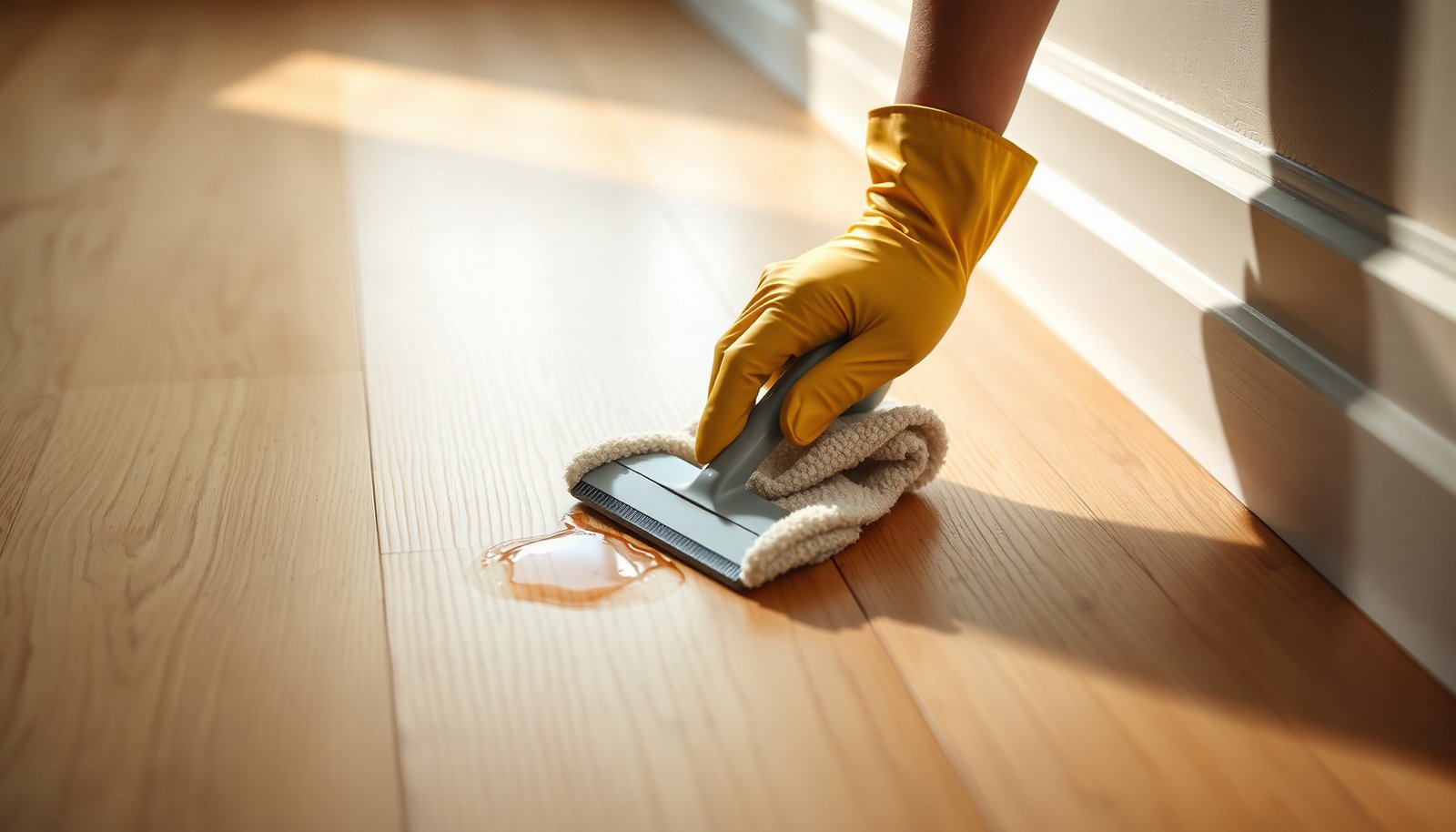
– Apply mineral spirits to a cloth (not directly to the floor) and dab/press onto the residue to soften it.
– Let it sit briefly—enough time for the residue to lose its glossy tack—then wipe away with a clean microfiber cloth.
– From my experience helping with rental turnovers, the fastest “deep clean” happens when you stop after the residue dulls and transfers to the cloth, rather than repeatedly overwetting the area.
– Lift:
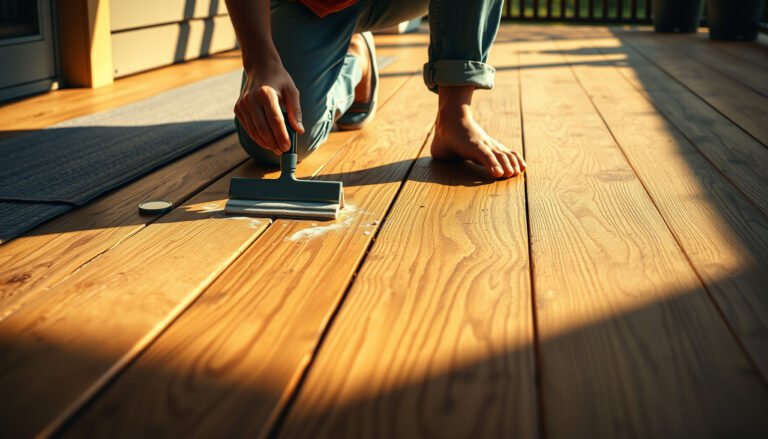
– After softening, scrape gently with a plastic scraper at a shallow angle.
– Clear in small passes; don’t chase every microscopic smear in one go—repeat the soften/lift cycle for stubborn areas.
– Clean:
– Follow with a pH-neutral hardwood cleaner on a lightly damp cloth to remove solvent film.
– Dry immediately with a clean towel.
– This final step matters because lingering mineral-spirits residue can leave a slight sheen difference even after the silicone is gone.
Two safety notes for mineral spirits while you’re removing silicone residue on hardwood floors (and still staying practical for 2026 homeowners):
– Mineral spirits are petroleum distillates, and inhalation/handling safety matters. According to OSHA 29 CFR 1910.1000 Table Z-2, the permissible exposure limit (PEL) for Stoddard solvent is 500 ppm (8-hour TWA) (2024).
– Don’t treat ventilation as optional—open windows and use fans. Also wear gloves if you have sensitive skin, because solvent contact can irritate.
Deep clean after removal (to restore uniform look)
Once the silicone residue is lifted, your goal shifts from “removal” to “uniform finish.” Silicone residue removal on hardwood often leaves a temporary spot sheen difference—especially if mineral spirits were used—so you must level the surrounding area.
– Do a full-area wipe:
– Once residue is gone, wipe the surrounding section to even out any solvent streaking.
– Use the same pH-neutral cleaner, and work outward from the treated spot so the transition line disappears.
– Final dry and check:
– Dry thoroughly and inspect under different light angles.
– If you still see tiny glossy specks, repeat spot-treatment only where needed (soften, scrape, then pH-neutral clean again).
– In my experience, redoing the “clean and dry” step is usually more effective than adding more solvent, because the sheen difference often comes from leftover solvent film—not leftover silicone.
As of 2026, this finishing workflow is widely recommended because hardwood finishes behave like thin films: you’re trying to restore the same film condition everywhere, not just remove the visible residue.
What can go wrong (and how to avoid it)
The most common failures are finish damage, over-wetting, and abrasive “cleanup” that permanently changes sheen. Silicone residue removal on hardwood becomes a long-term problem when the coating gets softened or scratched.
– Finish damage:
– Solvents can dull or soften some finishes—always spot-test first and stop if the finish turns tacky, cloudy, or gummy.
– If you notice finish softening during your test patch, switch strategies (for example, a finish-approved silicone-safe remover gel) rather than pushing harder.
– Over-wetting:
– Flooding the floor can seep at seams and cause swelling or warping—use minimal liquid on cloths.
– “Damp, not wet” is a key rule: the cloth should leave no visible puddle or water trail.
– Scouring pads, baking soda pastes, or steel wool can scratch and permanently change the sheen.
– Avoid anything that could micro-abrade polyurethane/varnish. Even if silicone comes off, the surface may not look “original” again.
– Residue that won’t release:
– If silicone has bonded tightly or the surface is older/worn, you may need a purpose-made adhesive/silicone remover instead of just mineral spirits—.
A practical way to avoid frustration: treat silicone residue removal on hardwood as a controlled cycle (soften → lift → neutral clean). If you skip the neutral clean or keep reapplying solvent, you can end up with a cleaner-but-more-glossy patch rather than a true repair.
Verdict / tip
This method is the safest deep clean approach for finished hardwood: soften with mineral spirits (or a silicone-safe remover), scrape gently with plastic, and finish with pH-neutral cleaning plus thorough drying. The downside is that some finishes are more solvent-sensitive, and stubborn residues may require a second round or a different remover—.
If your floor is unsealed/unfinished, extensively damaged, or you’re unsure of the finish, skip DIY solvents and consider a professional or a manufacturer-recommended cleaner instead. Your best outcome depends on matching the solvent strength to the coating—and on controlling liquid contact time.
Quick checklist (scan/save)
– [ ] Spot-test solvent/remover in an inconspicuous area
– [ ] Loosen residue with mineral spirits on a cloth (no soaking)
– [ ] Scrape gently with plastic scraper (shallow angle)
– [ ] Wipe with pH-neutral hardwood cleaner
– [ ] Dry immediately and re-check for streaks or remaining bits
– [ ] Repeat only on stubborn spots
Frequently Asked Questions
How do I remove silicone residue from hardwood floors without damaging the finish?
Start by softening the silicone with a purpose-made silicone remover or a small amount of mineral spirits applied to a hidden area first. Gently lift residue with a plastic scraper or non-scratch nylon pad rather than a metal tool. Finish by cleaning the area with a hardwood floor cleaner diluted per label directions, then dry thoroughly to prevent haze. If the silicone has seeped into grooves, you may need light re-cleaning and careful spot treatment rather than aggressive scraping.
What’s the best way to deep clean hardwood floors after removing silicone residue?
After the residue is lifted, deep clean the hardwood floor using a pH-balanced hardwood cleaner to remove oily residue left behind by removers. Use a microfiber mop dampened (not soaked) and work in small sections, then rinse with clean water if your cleaner’s instructions require it. For stubborn spots, do a targeted re-clean on only the affected areas and ensure the floor is completely dry before walking on it. This helps prevent sticky patches, streaking, or dull finish spots.
How can I dissolve silicone residue on hardwood floors step-by-step?
First, mask off surrounding areas and test your silicone dissolver in an inconspicuous spot to confirm it won’t harm the finish. Apply the remover per instructions, wait the recommended dwell time, then scrape the softened silicone with a plastic scraper. Wipe up residue with a clean cloth, then repeat only if needed for remaining smears. Finally, clean the hardwood with a microfiber cloth and a hardwood floor cleaner to remove solvent traces.
Why does silicone stain or leave tacky residue on hardwood floors, and how do I fix it?
Silicone can bond to certain finishes and leave a tacky film that attracts dust, which makes the area look cloudy or greasy even after visible chunks are gone. That’s why you should remove both the silicone itself and any oily or solvent residue left behind by cleaners or removers. Use a silicone-focused remover for the bulk, then follow with a thorough hardwood floor cleaning to restore the surface. In severe cases where the finish is affected, professional refinishing or spot refinishing may be needed.
Which tools and cleaners are safest for deep cleaning hardwood floors with silicone residue?
Choose non-scratch tools like plastic scrapers, microfiber cloths, and nylon cleaning pads to avoid gouging hardwood. For cleaners, use a pH-balanced hardwood floor cleaner and avoid harsh solvents unless the manufacturer recommends them for your finish type. If you use a silicone remover, follow the label carefully, ventilate the area, and keep products off baseboards and adjacent surfaces. Always spot-test first, and after cleaning, dry completely to protect the hardwood floor finish.
📅 Last Updated: November 04, 2026 | Topic: How to deep clean hardwood floors to remove silicone residue? | Content verified for accuracy and freshness.
References
- Silicone rubber
- Silicone
- White spirit
- Isopropyl alcohol
- Floor cleaning
- Wood flooring
- Adhesive
- https://scholar.google.com/scholar?q=how+to+remove+silicone+residue+from+hardwood+floors Google Scholar
- https://scholar.google.com/scholar?q=silicone+sealant+removal+from+wood+floor+best+solvent Google Scholar
- https://scholar.google.com/scholar?q=hardwood+floor+cleaning+adhesive+residue+removal+mineral+spirits Google Scholar