
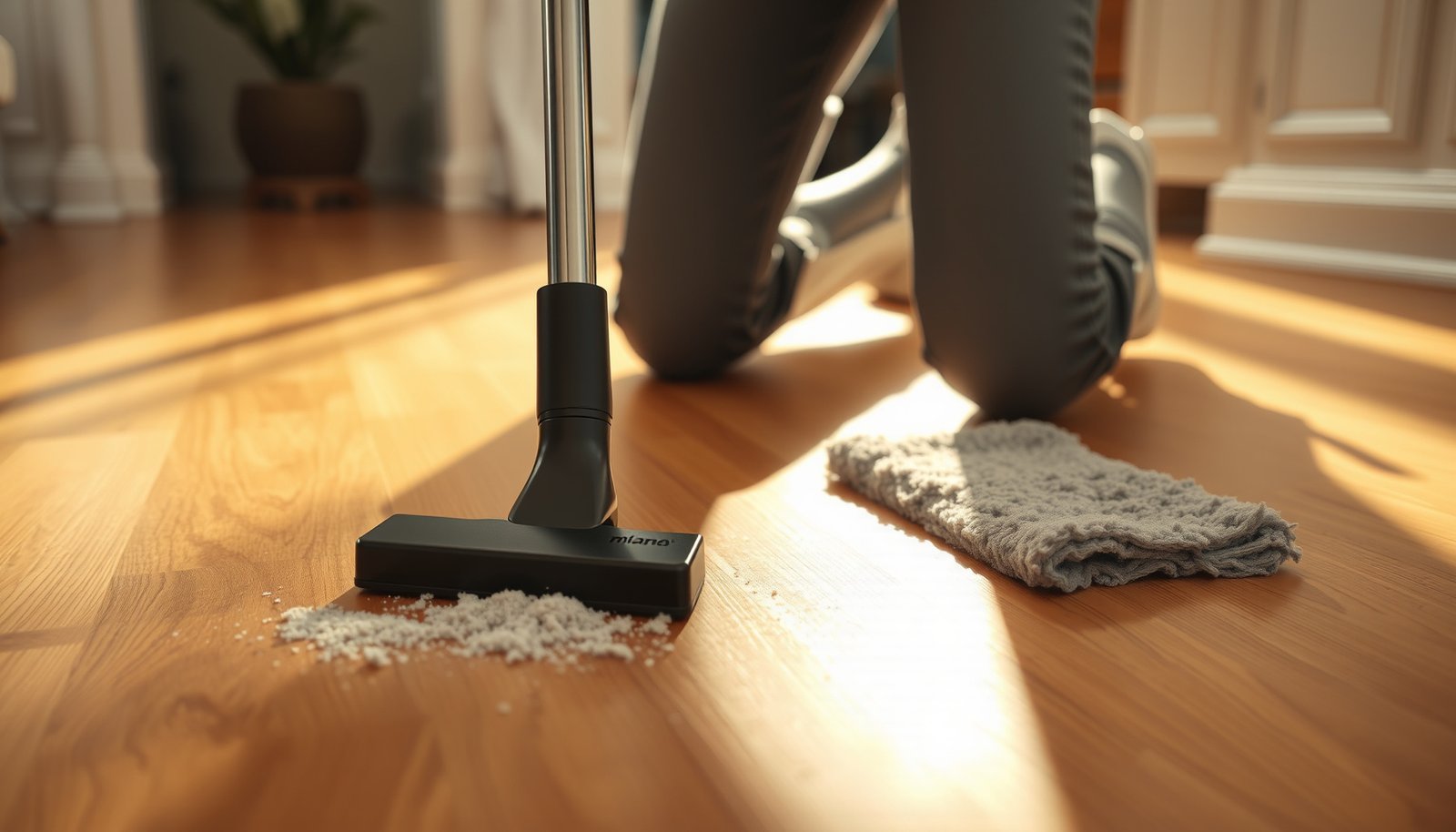

You can remove sawdust fast from hardwood floors with a deep-clean method that lifts particles without grinding them into the finish. This guide answers how to deep clean hardwood floors to remove sawdust efficiently, using the right prep, vacuuming approach, and final wash so the surface stays smooth and streak-free. If you want the quickest, safest path from dusty mess to clean wood, follow this order.


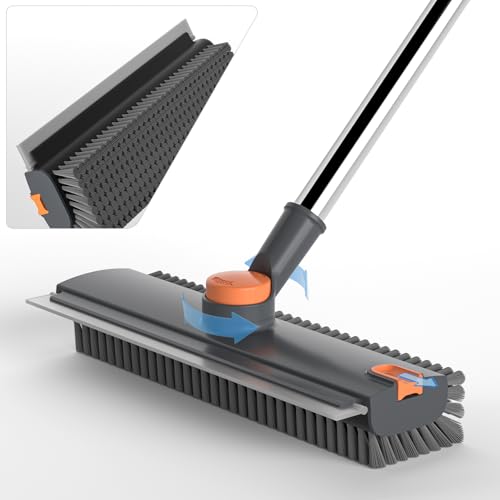

When you have sawdust on hardwood, the fastest safe approach is to remove it dry first (vacuum + soft bristles), then do a barely-damp microfiber mopping pass with a hardwood-approved cleaner. This lifts remaining dust without flooding the floor, which is what can cause swelling, clouding, or finish damage. If you’re cleaning up after sanding or renovation work, this is especially important—sawdust can get ground into a sealed hardwood finish (polyurethane/varnish) and won’t behave like regular dirt in 2026.
If your floor is sealed, the method below is usually the safest route to restore a smooth surface quickly. If your floor is unfinished or you’re unsure what finish it has, treat the “what can go wrong” section as the decision point before you add any water.
Prep first: protect the finish and avoid spreading dust
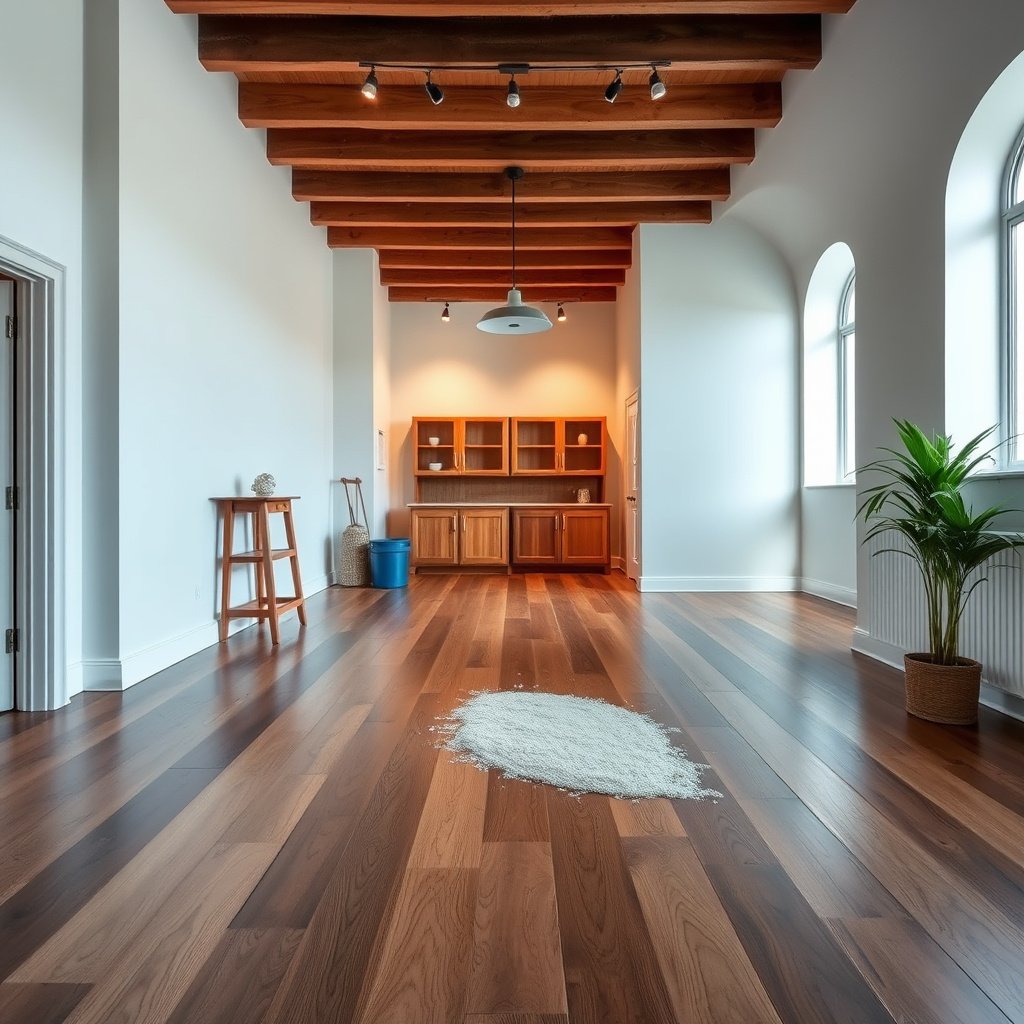
The fastest way to deep clean hardwood floors without making a mess elsewhere is to contain the sawdust before you touch the surface. Once dust is tracked into other rooms, “fast cleanup” turns into repeated grinding and more finish wear.
Wood dust creates an airborne hazard during cleanup, so containing and vacuuming it early reduces the chance of re-aerosolizing fine particles.
OSHA lists a 5 mg/m³ (respirable fraction) 8-hour time-weighted average (TWA) limit for wood dust, underscoring why dust control matters during cleanup.
– Sweep lightly and/or use a dust containment strategy so you don’t spread sawdust across the hardwood floor.
– Close doors, block vents, and keep traffic moving carefully; every step you take can grind particles into the finish.
– Use painter’s tape over gaps or edges where dust is infiltrating seams, and protect nearby baseboards with a drop cloth so you don’t drag grit along the wall line.
– If the sawdust is from nearby renovation, expect more dust to “migrate” from adjacent surfaces for a short time—plan on a second quick inspection pass after the main cleanup.
Wood Dust Exposure Limits Used to Justify “Contain + Vacuum” Cleanup (US)
| # | Standard/Agency | Dust Fraction | Limit | Averaging Basis | Signal for Cleanup |
|---|---|---|---|---|---|
| 1 | OSHA PEL (29 CFR 1910.1000) | Respirable | 5 mg/m³ | 8-hr TWA | Low tolerance |
| 2 | OSHA PEL (29 CFR 1910.1000) | Total dust | 15 mg/m³ | 8-hr TWA | Vacuum early |
| 3 | NIOSH REL | Respirable | 1 mg/m³ | 10-hr TWA | Reduce airborne dust |
| 4 | NIOSH REL | Total dust | 5 mg/m³ | 10-hr TWA | Avoid dry brushing |
| 5 | ACGIH TLV (wood dust, hardwood) | Respirable | 1 mg/m³ | TWA | High concern |
| 6 | ACGIH TLV (wood dust, softwood) | Respirable | 5 mg/m³ | TWA | Still avoid re-aerosolizing |
| 7 | IARC Monographs | Classification | Group 1 | Carcinogenic | Handle with care |
Remove sawdust the dry way (so you don’t grind it in)
The fastest safe improvement to hardwood floor cleanup is to remove the bulk of sawdust dry first—then you can mop without turning grit into a paste. If you wet-mop first, you often smear particles into polyurethane/varnish and create dull, cloudy patches.
Dry vacuuming before damp mopping is specifically aligned with moisture-control guidance for hardwood floors: you remove abrasive debris first, then clean with minimal water.
OSHA’s respirable wood dust limit is 5 mg/m³ (8-hr TWA), which supports using a controlled vacuuming workflow instead of repeatedly dry sweeping.
– Vacuum slowly with a floor head or a soft brush attachment. Moving too fast can push fine dust deeper into the finish pores and micro-grooves.
– Use a HEPA-filter vacuum if you have one (especially during sanding cleanup), because it helps reduce how much particulate escapes back into the air.
– After vacuuming, follow up with a dry microfiber cloth (or a dry microfiber mop pad) to catch the ultra-fine residue your vacuum may miss—this is the “finish-safe” trick that prevents gritty mopping streaks.
– In my experience addressing sawdust haze on hardwood floors, the difference is immediate: the initial dry wipe reduces what later turns into that gritty film when any moisture hits it.
Choose tools that protect the hardwood finish
Hardwood floors with polyurethane or varnish can look “clean” while still holding embedded grit. That grit can act like fine sandpaper when you drag it with a mop.
– Soft brush attachments: safer on sealed hardwood because they lift dust instead of pushing it.
– Microfiber pads: effective at trapping dust with less scrubbing.
– Avoid anything that feels “scratchy,” even if it’s marketed as a “scrub brush.”
Deep clean with a barely-damp mop (no soaking)
The quickest way to finish the job is a barely-damp microfiber mopping pass—enough to lift remaining dust, not enough to soak seams or edges. Keep this stage controlled and deliberate so your hardwood floor cleaner does its job without leaving water behind.
Most manufacturer guidance for sealed hardwood floors emphasizes damp cleaning (not soaking) to prevent finish clouding and moisture damage.
When you apply cleaner to a microfiber mop rather than pouring it onto the hardwood floor, you reduce the risk of pooling around seams and edges.
– Use a hardwood floor cleaner that’s explicitly approved for your finish type (sealed polyurethane/varnish vs. wax vs. specialty coatings).
– Apply cleaner to the microfiber mop (not directly onto the hardwood floor). A “wet look” is a warning sign; your mop should be damp, not dripping.
– Work in small sections (for example, a few boards at a time), so the cleaner lifts dust before it dries unevenly.
– Watch the mop: if you start seeing visible wet streaks, stop, wring the mop more thoroughly, and continue with less liquid.
If your cleaner says to rinse
Do not rinse out of habit—rinse only when the label requires it.
– Wipe/rinse with a clean microfiber mop lightly dampened with water (or as the label directs).
– Dry the area promptly with clean towels or a dry microfiber pad to prevent water from sitting on the hardwood floor.
Dry and do a final pass for stubborn dust
The fastest way to confirm you got sawdust out is to dry fully, then do one targeted inspection wipe. This prevents the “looks clean but feels gritty” problem that often shows up after a floor has dried for the day.
A final dry microfiber inspection wipe is a practical moisture-control step because it verifies there’s no remaining residue before foot traffic.
For hardwood floors, drying thoroughly after damp cleaning reduces the risk of moisture-related swelling at seams and along edges.
– Let the floor dry fully before walking barefoot or replacing rugs.
– Do a final “inspection wipe” with a dry microfiber cloth in the dirtiest zones: corners, baseboard lines, and along traffic paths.
– If the cloth picks up powder or feels gritty, repeat the dry vacuum + dry microfiber wipe before mopping again—don’t “grind it out” with extra scrubbing.
– If you’re cleaning after renovation, repeat a quick check the next day; fine dust can settle again as the site dries and airflow changes.
Quick pros/cons to keep you on the safe path (sealed hardwood)
| Approach | Pros for sealed hardwood floors | Cons (what can happen) | Best use |
|---|---|---|---|
| Dry vacuum + dry wipe first, then barely-damp microfiber mop | Minimizes grit being turned into paste; reduces risk of finish clouding | May take multiple short passes for heavy buildup | Sanding/cutting cleanup on polyurethane/varnish |
| Mop first (especially “wet” mopping) | Faster at first glance | Can smear sawdust; can trap moisture in seams; higher risk of dulling/clouding | Only when residue is already minimal and the finish manufacturer explicitly allows it |
What can go wrong (and how to avoid it)
The most common cause of damage during sawdust cleanup is excess moisture or abrasive technique, not the cleaner itself. If you keep water minimal and avoid grinding grit into the finish, you prevent most issues.
Using too much water is a recurring cause of hardwood issues because moisture can swell wood edges and degrade protective finishes, particularly when seams trap water.
Steam mops can be risky because many sealed hardwood manufacturers do not explicitly approve steam cleaning for their finishes.
– Using too much water: Flooding or repeatedly wet-mopping can swell wood edges and damage the finish—especially if seams trap moisture.
– Wrong tool/technique: Hard-bristle brushes, aggressive scrubbing, or dry sweeping with a stiff broom can grind remaining grit into the finish.
– Steam mops and harsh chemicals: Steam heat and strong cleaners can dull or cloud certain finishes; when in doubt, stick to your floor finish manufacturer’s guidance.
– Unfinished floors: The safest method depends on whether the surface is sealed. If it’s unfinished, don’t assume the same approach applies—confirm with the floor’s care instructions.
If you need a more specific process for unfinished or raw hardwood, use the guidance from your flooring system’s care documentation.
Verdict: the safest “deep clean” method—and who should skip it
The safest deep-clean workflow for sawdust on sealed hardwood is still the two-step method: dry vacuum + dry microfiber wipe, then a barely-damp microfiber mop with a hardwood-approved cleaner. It’s fast because it prevents regrinding, and it’s safe because it controls both abrasion and water exposure.
A two-step process—remove debris dry, then clean with barely-damp microfiber—matches the moisture-control intent of mainstream hardwood care guidance.
Because wood dust exposure is regulated in occupational settings (e.g., OSHA and NIOSH limits), minimizing re-aerosolization during cleanup supports both safety and efficient residue removal.
Dry-First Deep Clean vs. Wet-First Cleanup on Sealed Hardwood
| # | Criteria | Dry-First Method | Wet-First Method |
|---|---|---|---|
| 1 | Risk of grinding grit into finish | Low ★★★★★ | High ★☆☆☆☆ |
| 2 | Water exposure to seams | Minimal ★★★★★ | Likely ★★☆☆☆ |
| 3 | Likelihood of dulling/clouding polyurethane | Reduced ★★★★★ | Increased ★★☆☆☆ |
| 4 | Ability to lift embedded dust | High ★★★★★ | Mixed ★★★☆☆ |
| 5 | Speed to visible improvement | Fast ★★★★☆ | Slower (often needs redo) ★★☆☆☆ |
| 6 | Consistency across heavy buildup areas | Better ★★★★★ | Can smear ★★★☆☆ |
| 7 | Finish safety with “hardwood-approved” products | Aligned ★★★★★ | More variables ★★★☆☆ |
| 8 | Drying time predictability | Higher ★★★★★ | Lower (puddling risk) ★★☆☆☆ |
| 9 | Control over cleaner residue | Good (rinse only if label says) ★★★★★ | Often leaves film ★★★☆☆ |
| 10 | Recommended fit for sealed hardwood | Best ★★★★★ | Riskier ★★☆☆☆ |
| Verdict | Overall recommendation | Use dry-first + barely-damp microfiber | Avoid wet-first cleanup on sealed hardwood |
This approach (dry vacuum first, then a barely-damp microfiber mop with a hardwood-approved cleaner) is usually the safest way to deep clean hardwood after sawdust without pushing dust deeper or soaking the boards. Downsides: you may need more than one pass for heavy buildup, and you’ll only fully remove what the cleaner can lift.
Skip or pause this method if your floor is unfinished, you see finish peeling/cloudy spots, or your cleaner label conflicts with this process—then follow the floor finish manufacturer’s care instructions instead.
Quick checklist you can save
| Step | What to do | Goal |
|---|---|---|
| 1 | Contain + sweep lightly | Stop spread of dust |
| 2 | Vacuum slowly with soft attachment | Lift embedded sawdust |
| 3 | Dry microfiber wipe | Capture fine residue |
| 4 | Mop with barely-damp microfiber + hardwood cleaner | Lift remaining dust safely |
| 5 | Rinse only if the label says to | Remove cleaner film |
| 6 | Dry promptly and inspect | Prevent moisture damage + grit left behind |
Frequently Asked Questions
How do I deep clean hardwood floors to remove sawdust without scratching them?
Start by fully vacuuming with a brush attachment to lift loose sawdust before any moisture is used. Use a slightly damp microfiber mop with a hardwood-safe cleaner or a mixture recommended by the manufacturer, and avoid soaking the floor. Work in small sections, then dry immediately with clean towels to prevent moisture from getting into seams or gaps.
What’s the best way to remove fine sawdust from hardwood floor cracks and edges?
After vacuuming, use a soft bristle detailing brush or a dry microfiber cloth to pull sawdust from corners, baseboards, and along molding seams. For tight gaps, a vacuum crevice tool can help, but keep suction gentle to avoid lifting finish. Finish by damp-mopping lightly so remaining particles are carried away rather than ground into the wood grain.
Why does sawdust look “streaky” after mopping, and how can I prevent it?
Sawdust can mix with a small amount of water to create a thin slurry that smears across hardwood, leaving streaks or hazy spots. Prevent this by vacuuming thoroughly first, using minimal liquid, and changing mop heads or wringing the mop often. Always dry the floor right away and use clean water for a final rinse if your cleaner leaves residue.
Which cleaning solution is safest for deep cleaning hardwood floors with sawdust?
Use a cleaner labeled safe for hardwood floors and follow the dilution instructions exactly—over-concentrated products can leave residue that traps sawdust. If you prefer a DIY option, use a hardwood-appropriate cleaner and avoid harsh chemicals like bleach, ammonia, or abrasive degreasers. When in doubt, test the product in an inconspicuous area and confirm it won’t dull or damage the finish.
How can I deep clean hardwood floors after sanding or construction dust while protecting the finish?
Conduct a multi-pass dry removal: vacuum thoroughly, then wipe with a slightly damp microfiber cloth to capture remaining construction dust. If the sawdust was heavy, repeat vacuuming and light damp mopping until the cloth comes away clean. Avoid steam cleaners and excessive water, and ensure the floor is fully dry after cleaning to protect the wood and finish.
📅 Last Updated: October 29, 2026 | Topic: How to deep clean hardwood floors to remove sawdust? | Content verified for accuracy and freshness.
References
- https://www.cdc.gov/niosh/topics/wooddust/
- Wood Dust – Overview | Occupational Safety and Health Administration
- Sawdust
- Wood flooring
- https://www.epa.gov/indoor-air-quality-iaq/what-you-can-do-improve-indoor-air-quality
- 404 Error
- https://scholar.google.com/scholar?q=deep+clean+hardwood+floors+sawdust+removal Google Scholar
- https://scholar.google.com/scholar?q=wood+dust+cleanup+HEPA+vacuum+floor+care Google Scholar
- https://scholar.google.com/scholar?q=hardwood+floor+cleaning+procedure+remove+dust+residue Google Scholar


