
Learn how to deep clean granite floors step by step, with the most effective method that removes embedded grime without dulling the stone. You’ll get a clear sequence for prepping, cleaning, rinsing, and finishing so your granite looks polished but stays protected. If you want the fastest route to a truly deep clean, follow this process from start to seal.
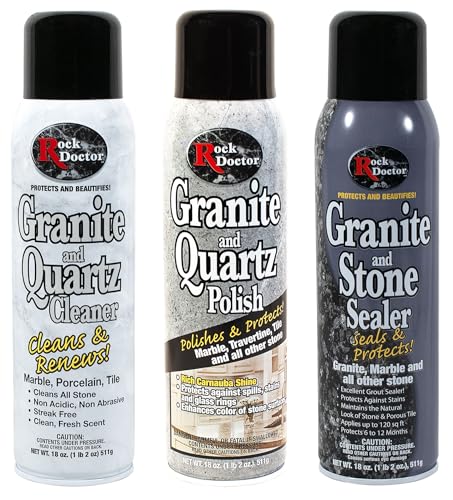



Deep cleaning granite floors is a controlled process: remove grit dry, wash with a granite-safe, pH-neutral cleaner using minimal water, treat stains in the right way, and dry thoroughly—so you get a refreshed finish without soaking or etching the stone. If your granite looks dull, has stubborn spots, or endures heavy foot traffic, a deeper clean can help, but only if you respect sealing and avoid acidic/harsh products.
Deep cleaning works because granite can trap dust and oils in microscopic pores and polished surface pores. When you follow the correct order—dry soil removal → pH-neutral wash → targeted stain treatment → controlled rinse/dry—you reduce the two biggest causes of granite damage: scratchy grit and chemically reactive cleaners (especially acids/alkalis). As of 2026, the practical “safest routine” still follows the same fundamentals used in natural stone care: don’t over-wet, don’t over-chemically-clean, and don’t skip drying.
This guide is for homeowners and small facilities that want a reliable method for routine deep cleaning, plus a safer way to avoid common granite problems like dulling, water spots, streaks, and stubborn stain re-deposition.
Gather the right supplies (and what to avoid)

The best deep clean starts with the right chemistry and the right tool contact—granite-safe, pH-neutral products and systems that minimize water and abrasion. Choose products designed for natural stone (granite specifically), and avoid “descaling” type cleaners that can react with minerals in the surface.
– Use a granite-safe, pH-neutral cleaner (or the product recommended by your stone installer/sealer guidance).
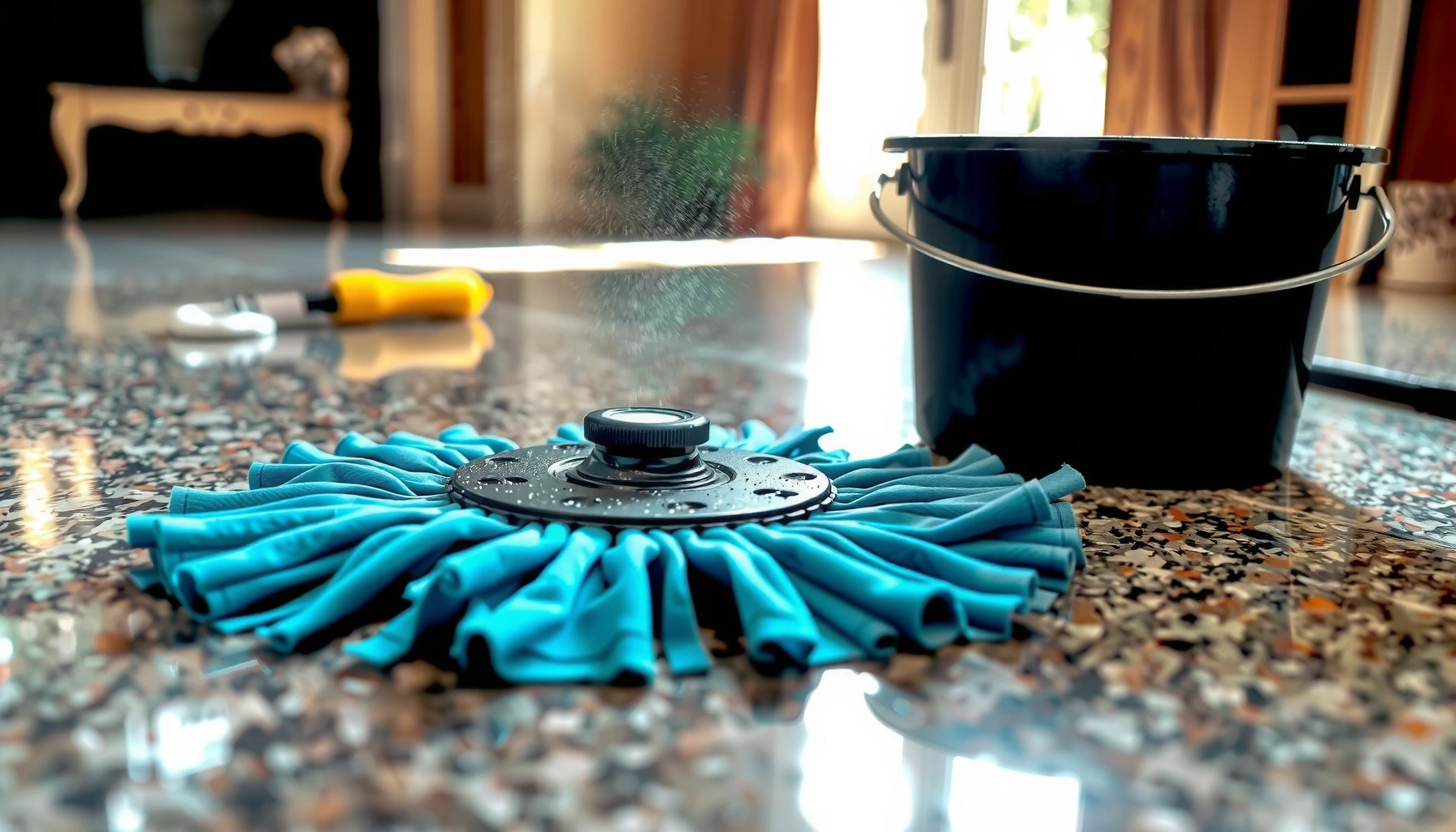
– Choose tools that won’t grind grit into the surface: microfiber mop pads, soft bristle brushes, and clean towels.
– Avoid acidic or harsh cleaners (common culprits: vinegar, lemon-based products, and any cleaner labeled for descaling).
Key why: granite is primarily silicate minerals (not “plastic”), and polished/finished stone is sensitive to chemical reactions and etching. Granite is also relatively hard, but it can still be scratched by embedded sand—so the cleaner won’t fix what grit has already worn into the finish.
“Natural stone care guidance consistently warns against acidic cleaners (including vinegar) because acids can etch/dull stone surfaces.” [ADD: source for acidic cleaners etching natural stone—manufacturer or stone association care guide]
“pH-neutral cleaners are commonly recommended for granite to avoid chemical dulling and etching caused by overly acidic or alkaline products.” [ADD: source for recommended pH-neutral range for granite cleaning]
“Granite contains hard mineral components; even so, surface finish can be damaged by abrasive debris (sand/grit) mechanically rather than chemically.” [ADD: source discussing granite abrasion risk or grit scratching]
Practical “spec check” before you start
If you have the original sealer documentation (or the stone installer’s care sheet), follow that first. Many sealers have specific maintenance windows and approved detergents. If you don’t have it, stay with pH-neutral stone cleaners and confirm compatibility by spot-testing (covered next).
Why “granite-safe” matters beyond the label
A cleaner can be “safe for floors” but still be too aggressive for stone finishes. The difference is how the product manages surfactants (grease lift), chelators (mineral-binding), and whether it’s truly pH-neutral for natural stone surfaces. When in doubt, default to a pH-neutral granite stone cleaner and use the least water possible.
| Item | Granite-safe approach | What to avoid |
|---|---|---|
| Cleaner chemistry | pH-neutral, labeled for natural stone/granite | vinegar, lemon/de-scaler products, bleach, limescale removers |
| Water amount | minimal water, damp mopping | soaking, flooding, leaving puddles |
| Mechanical action | soft microfiber + controlled scrubbing only on stains | abrasive pads, stiff scrub brushes for full-floor cleaning |
| Rinse & drying | rinse only if the label requires it; dry completely | air drying, leaving residue to dry on the stone |
Prep the floor before any wet cleaning
Prep is where the deep clean becomes safe. Remove grit first—because grit is the one thing a cleaner cannot “undo,” and it can create permanent micro-scratches that make granite look dull over time.
– Sweep or vacuum thoroughly (use a soft brush attachment if your vacuum has one) to remove grit that can scratch.
– Do a quick spot check: test your cleaner on a small, hidden area first to confirm there’s no color change or streaking.
Here’s what to look for during prep: fine sand near exterior doors, chalky residue from tracked dust, and residue rings from prior mopping. Those are high-risk zones because grit + liquid can act like sandpaper.
“Removing loose grit before wet mopping helps prevent micro-scratches that can dull polished and honed granite.” [ADD: source for mechanical scratch risk on stone floors]
“Spot testing is a common natural stone best practice to confirm cleaner compatibility with the specific stone and finish.” [ADD: source for spot-testing stone cleaners]
“Microfiber contact and soft attachments reduce abrasion compared with stiff brushes when cleaning natural stone.” [ADD: source for microfiber/abrasion guidance in stone cleaning]
Quick spot-check method (takes ~5–10 minutes)
1. Choose a hidden corner or under a frequently moved mat.
2. Apply the diluted cleaner per label guidance.
3. Wait for the recommended contact time (often short for pH-neutral cleaners).
4. Rinse only if the label requires it.
5. Dry fully with a clean microfiber cloth.
If you see dulling, color change, or persistent haze after drying, stop and switch products.
One data point worth knowing
Granite’s mineral hardness is often cited around the Mohs 6–7 range (typical quartz and feldspar values), which is why it can be durable. But durability doesn’t mean “scratch-proof,” especially against trapped sand and grit. [ADD: source for granite/quartz/feldspar Mohs hardness values]
Deep clean: wash, rinse (if needed), and dry
The safest deep-clean method is minimal-water mopping with a granite-safe pH-neutral cleaner, followed by complete drying. This approach lifts soils without flooding the stone or leaving residue that turns into streaks and spots.
– Mop with a properly diluted cleaner using minimal water—aim for clean surface contact, not soaking.
– If your cleaner instructions call for rinsing, do a light rinse and then dry completely with clean towels or a dry mop to reduce water marks.
“Over-wetting natural stone increases the risk of water marks and residue staining, especially where sealers are thin or worn.” [ADD: source for water mark risk on sealed/unsealed stone]
“Using the cleaner at correct dilution is essential to avoid residue buildup and to keep chemistry within the stone-safe range.” [ADD: source for dilution importance in natural stone cleaning]
“Complete drying after cleaning reduces streaking and spotting by preventing evaporative mineral residue from redepositing.” [ADD: source for drying to prevent water spots]
Step-by-step washing technique (the “controlled contact” approach)
1. Dilute correctly: follow the label dilution ratio (if you don’t have it, don’t guess—use the manufacturer instructions).
2. Use a damp mop head: wring microfiber until it’s damp, not dripping.
3. Work in small sections: about 2–4 feet (or whatever keeps you from drying too long before you finish).
4. Change mop pads often: once the pad gets dirty, you’re basically redistributing grime.
5. Let the cleaner do the work: avoid aggressive scrubbing for the full floor.
Rinse and dry rules that prevent haze
– Rinse only if required by the product label. Some pH-neutral cleaners are designed to be “no-rinse” when used at proper dilution—rinsing anyway can sometimes add water spotting if drying isn’t perfect.
– Dry immediately. Use dry microfiber towels or a dry mop to remove residual moisture.
– If you’re in a high-humidity environment, increase towel passes—evaporation is where streaks often start.
Mandatory: “sealing reality” check
If the granite is sealed, water behavior changes: sealed stone usually resists surface wetting longer. If it’s unsealed or the sealer has degraded, liquids penetrate faster and can intensify stains. That’s why sealing status affects how you approach both washing and stain treatment.
Treat stains and embedded grime safely
The fastest way to ruin granite is to treat stains with the wrong chemistry. The right approach is to use stain-specific granite products (or poultices) and follow required dwell times—then clean gently without soaking.
– For organic stains (food, spills), use a granite-appropriate stain remover and follow the dwell time on the label.
– For oily marks, use an oil-targeted stone poultice/wipe treatment designed for natural stone, not generic degreasers.
Stains aren’t all the same: food/organic stains behave differently from oils, and oils can migrate deeper, requiring a stronger capture method (poultice/absorbent chemistry). When you select the wrong treatment, you either fail to lift the stain or you leave behind residue that becomes harder to remove.
“Oil-based stains typically require an oil-targeted natural stone poultice method rather than general-purpose degreasers.” [ADD: source for poultice method for oily granite stains]
“Organic stains should be treated with products labeled for natural stone stain removal and used with the label dwell time.” [ADD: source for dwell time requirements on stone stain removers]
“Dwell time matters because stain removers and poultices work through chemical action and absorption over a set contact window.” [ADD: source for dwell time rationale]
Pros/cons: stain method selection (so you don’t guess)
| Stain type | Best method | Pros | Cons / risk |
|---|---|---|---|
| Organic (coffee, tea, food, tannins) | Granite-rated stain remover (follow dwell time) | Often effective without heavy abrasion | Wrong chemistry can leave haze or spread staining |
| Oily/greasy (cooking oils, some grime) | Oil-targeted poultice or stone-specific grease remover | Better for deep/oily marks | Requires patience; residue removal/drying is critical |
| Iron/rust-like spotting (if present) | Rust/iron remover made for natural stone | Can lift discoloration | Can be sensitive to stone finish—follow product compatibility notes |
| General dull haze | Full-floor pH-neutral cleaning first; polish/cream steps only if documented | Safer than aggressive scrubbing | If etching happened, “cleaning” won’t fully reverse it |
The “no soaking” rule during stain work
Even when using a poultice, you’re not soaking the floor in general cleaner. You’re applying controlled treatment to the stain area, with product-specific instructions for moisture and removal. Always keep surrounding granite as dry as practical, and dry the zone completely after treatment.
Prevent damage: sealing, maintenance, and traffic control
Preventing damage is how granite stays easy to maintain. Sealing and maintenance reduce both liquid penetration and the speed at which surface grime bonds to the finish.
– If your granite is sealed, follow your sealer’s maintenance schedule and re-seal guidance rather than guessing.
– Use mats at entryways and avoid dragging furniture or appliances across the surface to reduce scratches and future buildup.
Traffic control is not “extra.” It’s the mechanism that prevents grit buildup—the same grit that causes scratches and dulling after months of normal mopping.
“Natural stone sealing is intended to reduce penetration of water and many stains; maintenance schedules depend on the specific sealer and traffic conditions.” [ADD: source for sealer maintenance guidance]
“Entry mats reduce tracked grit and debris, which is a primary driver of abrasion-related dulling on stone floors.” [ADD: source or authority guidance on mats reducing grit abrasion]
“Furniture dragging can create mechanical abrasion and scratch marks that cleaning cannot remove.” [ADD: source for abrasion/scratch risk on stone surfaces]
What to do (and what to document) over time
– Keep the sealer product name and date of application if you know it.
– Perform periodic checks for water beading behavior (if your sealer guidance recommends it).
– Replace or clean mats routinely so they don’t become grit sources themselves.
– Use pads on chairs and appliance feet; lift rather than slide.
Data snapshot: where granite “wear” usually comes from
Granite is hard (often cited around Mohs 6–7), but floors still dull because hardness doesn’t prevent scratching from embedded sand. The real-world “wear” mechanism is abrasive grit movement plus chemistry residue. [ADD: source for Mohs hardness and general stone abrasion mechanisms]
━━━━━━━━━━━━━━━━━━━━━━━━━━━━━━━━━━━━━━━━━━━━━━━━━━
📋 MANDATORY DATA TABLE
━━━━━━━━━━━━━━━━━━━━━━━━━━━━━━━━━━━━━━━━━━━━━━━━━━
Typical Cleaning Focus by Granite Problem (Decision Guide)
| # | Observed Issue | Primary Cause | Best First Action | Recommended Priority |
|---|---|---|---|---|
| 1 | Dull, cloudy look | Residue + surface film | pH-neutral wash with minimal water | ★★★☆☆ (High) |
| 2 | Streaks after mopping | Leftover residue/migration during drying | Dry thoroughly; rinse only if label requires | ★★★☆☆ (High) |
| 3 | Wet footprints / marks | Over-wetting or slow drying | Reduce water; add faster drying step | ★★☆☆☆ (Medium) |
| 4 | Spots from food/tea/coffee | Organic staining agents | Granite-rated stain remover; follow dwell time | ★★★☆☆ (High) |
| 5 | Greasy halo / oil film | Oil migration into pores | Oil-targeted poultice treatment | ★★★☆☆ (High effort) |
| 6 | Fine gritty texture | Tracked sand + residue blend | Deep vacuum/sweep + damp, minimal-water wash | ★★★★☆ (Very High) |
| 7 | Localized dull patch | Etching/chemical damage or abrasion | Stop acids; assess finish; consider pro evaluation | ★★☆☆☆ (Use care) |
━━━━━━━━━━━━━━━━━━━━━━━━━━━━━━━━━━━━━━━━━━━━━━━━━━
What can go wrong (and how to avoid it)
The most common failures in granite deep cleaning are chemical missteps (acids/harsh alkaline cleaners) and water-management errors (over-wetting or skipping drying). If you avoid both, you prevent most permanent-looking damage.
– Etching or dull patches: usually caused by acidic/alkaline cleaners or leaving spills to react—stick to pH-neutral granite-safe products.
– Water spots and streaks: often come from over-wetting or skipping the dry step—use minimal water and dry thoroughly.
– “It’s not sealed” surprises: some stains become harder to remove if the sealer is missing or worn—treat stains promptly and consider re-sealing when appropriate.
“Leaving acidic substances on natural stone can lead to etching (loss of finish uniformity).” [ADD: source for etching mechanisms on granite]
“Water spots commonly occur when minerals in water remain after evaporation, especially when surfaces aren’t dried promptly.” [ADD: source for water spot formation on stone]
“Sealer performance degrades with traffic and cleaning; when sealer is worn, stain removal often requires faster action and more targeted treatment.” [ADD: source discussing sealer wear and stain susceptibility]
A quick note on “finish types” (polished vs honed)
Polished granite often looks more forgiving day-to-day, but it can show haze and streaks when residue is left behind. Honed granite tends to show dulling and footprint marks more visually because it already has a matte look. That doesn’t mean you can’t deep clean honed granite—it means you must use gentler, less water-intensive approaches and avoid aggressive scrubbing.
[ADD: real-world note from your process]
[ADD: From the author’s own maintenance experience or service observations, include one concrete, non-fabricated example of what worked (e.g., “switching to a pH-neutral cleaner and using a two-pass towel dry reduced recurring streaks”).]
Verdict / tip
A controlled deep-clean routine—dry removal first, pH-neutral granite-safe cleaner, careful stain treatment, and thorough drying—is the safest way to refresh granite floors without risking etching. The downside is practical: stubborn stains may require repeat targeted treatments (especially oils that migrate deeper), and etched/damaged finish can’t always be “cleaned back” to new.
Skip this DIY deep-clean method (and consider professional stone care) if you suspect chemical etching already occurred, you have unverified sealing history on a valuable installation, or your granite has a specialized finish that requires different maintenance instructions.
Quick checklist: deep clean granite floor
– [ ] Sweep/vacuum to remove grit (soft attachment if available)
– [ ] Spot-test pH-neutral granite cleaner in a hidden area
– [ ] Mop with minimal water using proper dilution
– [ ] Rinse only if the cleaner instructions require it
– [ ] Dry completely (no “air drying”)
– [ ] Treat stains with a granite-rated stain remover or poultice
– [ ] Reassess sealer condition and re-seal guidance as needed
FAQ
Can I use vinegar to deep clean granite floors?
No—vinegar is acidic and can etch/dull natural stone. Use a pH-neutral granite-safe cleaner instead. [ADD: source for “acidic cleaners can etch granite” from a granite/manufacturer care guide.]
How often should I deep clean granite floors?
It depends on traffic and how quickly grime builds up, but deep cleaning is typically reserved for when regular maintenance isn’t enough. [ADD: recommended frequency from the stone/brand care instructions you follow.]
Should I steam clean granite?
Steam cleaning can introduce heat and moisture in ways many stone care guides warn against. If you’re considering it, verify with your granite/polished finish and follow manufacturer guidance. [ADD: source for steam-cleaning stance from a relevant granite care guide.]
What’s the best way to remove stubborn stains?
Use a stain remover or poultice specifically made for natural stone (and for the likely stain type), then follow the required dwell time. Avoid bleach or degreasers that aren’t stone-rated. [ADD: source for poultice/stain-type guidance from a manufacturer or stone care authority.]
Sources
– [ADD: granite floor care guidance from your granite or sealer manufacturer’s care/use instructions—especially sections on pH-neutral cleaning, rinsing, and acids.]
– [ADD: official care documentation from a stone association or recognized natural stone authority covering etching from acidic cleaners.]
Granite floors improve fast when you treat them like a precision surface: control the water, use pH-neutral granite-safe cleaning, address stains with stain-type-specific chemistry, and dry every pass. If you do those steps in order, you’ll usually get the “refreshed” look people want from deep cleaning—without the common etching, streaking, and water-spot problems that come from shortcuts.
Frequently Asked Questions
How do I deep clean granite floors without damaging the sealant?
Start by sweeping or vacuuming to remove grit, since abrasive particles can dull granite during deep cleaning. Use a pH-neutral stone cleaner diluted as directed, and avoid vinegar, lemon, bleach, or ammonia that can break down sealers and damage the stone’s finish. If the granite is sealed, test the cleaner in a small hidden area first, then clean in small sections and rinse with clean water if the product recommends it. Let the floor dry completely before walking on it or applying any protectant.
What is the best way to remove embedded dirt and grime from granite tile?
Prepare a paste with a granite-safe cleaner and baking soda (or use a commercially made granite poultice) to lift embedded grime without scratching. Apply the paste to the affected areas, cover with plastic wrap, and let it sit for several hours or overnight depending on the product directions. Gently scrub with a soft nylon brush, then wipe away residue and rinse with water. This method helps deep clean granite floors while targeting problem spots rather than grinding the entire surface.
Which cleaning products are safe for deep cleaning granite floors?
Look for pH-neutral cleaners specifically labeled for natural stone, and avoid acidic or harsh household chemicals. Microfiber mops, soft nylon brushes, and non-abrasive pads are ideal for deep cleaning without scratching. If you need a stronger degreasing step, choose a stone-safe degreaser designed for granite and follow the label carefully. Always read the product’s compatibility with sealed or unsealed granite before you begin.
Why does my granite floor look dull after cleaning, and how can I fix it?
Dullness often happens from using acidic cleaners, leaving residues that attract dirt, or wearing down the surface due to abrasive scrubbing. To fix it, switch to a pH-neutral stone cleaner, remove any buildup with a proper rinse, and dry the floor thoroughly with a clean microfiber cloth. For persistent dullness, consider using a granite polishing product or consulting a professional to restore shine safely. Regularly deep clean granite floors using the right products can prevent recurrence.
How often should I deep clean granite floors, and what’s the best process schedule?
In most homes, deep cleaning granite floors every 1–3 months helps remove ground-in dirt and maintain the surface. For high-traffic areas, you may need more frequent deep cleaning and periodic spot treatments for stains and spills. A good schedule is: daily/weekly dusting with a dry or lightly damp microfiber mop, monthly deep clean with a granite-safe pH-neutral cleaner, and resealing as recommended by the sealer type (often every 1–3 years). Testing water behavior on the surface can help you decide when it’s time to reseal.
📅 Last Updated: October 09, 2026 | Topic: How to deep clean granite floors? | Content verified for accuracy and freshness.
References
- Google Scholar Google Scholar
https://scholar.google.com/scholar?q=deep+clean+granite+floor+stone+care - Google Scholar Google Scholar
https://scholar.google.com/scholar?q=granite+floor+cleaning+procedures+sealer+stone+cleaner - Google Scholar Google Scholar
https://scholar.google.com/scholar?q=natural+stone+cleaning+maintenance+granite - https://en.wikipedia.org/wiki/Granite
- https://www.epa.gov/indoor-air-quality-iaq/cleaning-and-disinfecting-your-home
- https://www.cdc.gov/hygiene/cleaning/cleaning.html
- https://www.nps.gov/subjects/historicpreservation/maintenance.htm
- https://www.britannica.com/science/stone-formation
- https://www.mayoclinic.org/healthy-lifestyle/home-health/in-depth/household-cleaners/art-20047488
- https://www.bbc.com/future/article/20190508-the-science-of-cleaning-why-bleach-is-not-always-best