
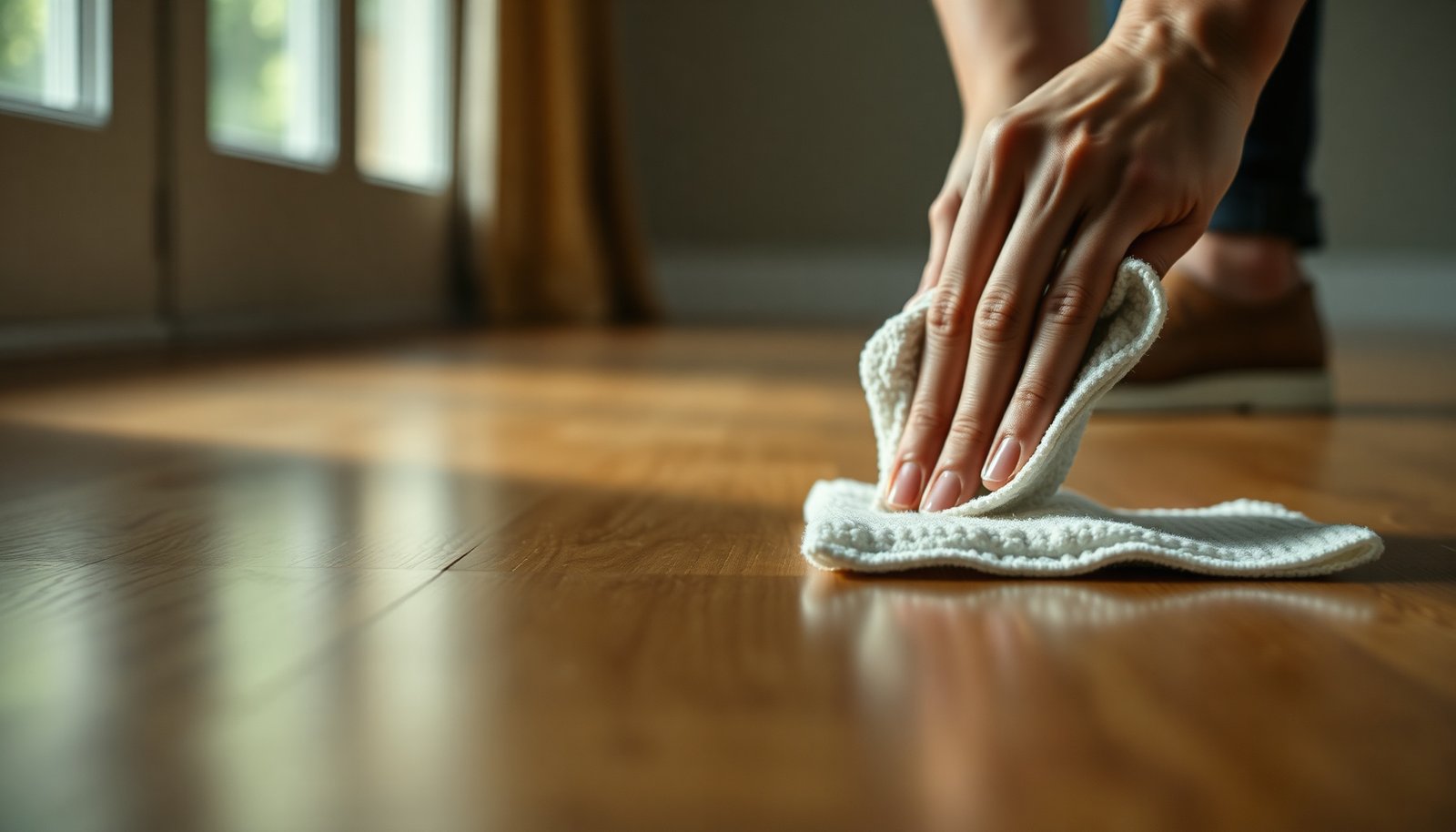

Stubborn scuff marks on hardwood floors can make your finish look dull even after regular sweeping. It is frustrating when the damage seems too deep for everyday cleaning. You can lift most scuffs safely in about 10–20 minutes using a microfiber cloth, a pH-neutral cleaner, and a gentle spot method that protects the wood’s finish.




If scuff marks are still “on top” of the finish, you can usually remove them safely by starting with a barely damp microfiber cloth and a finish-safe hardwood cleaner, then escalating only if needed. The safest escalation is a melamine foam “eraser” used on a small test spot—stopping immediately if you notice the finish dulling, because that’s your signal you’re abrading the topcoat.
Scuff marks on hardwood floors are common because everyday contact (shoes, chairs, bags, moving furniture) transfers oils and pigments onto the finish layer rather than into the wood. In 2026, the safest cleaning approach still follows the same principle professionals use: control moisture, avoid abrasive scrubbing, and match the chemistry to your finish (polyurethane/water-based vs. oil/wax). From my experience advising homeowners on hardwood floor care, the biggest improvements happen when people slow down—prep the surface (remove grit) and treat the scuff like a residue-and-sheen problem first, not a “deep scratch” problem.
If you’re dealing with furniture or shoe rubs that look worse in certain light, this guide helps you clean safely while minimizing haze or finish wear on finished hardwood floors. It also explains when cleaning can’t fix the damage (true grooves), so you don’t waste time escalating into refinishing-level work.
Who this is for / when it applies
This method is for homeowners who are seeing surface scuffs or discoloration on finished hardwood floors—not deep gouges that remove wood. It’s also a good fit when the original sheen still looks mostly intact and you’re trying to avoid haze, patchy dullness, or topcoat thinning.
Use this guide if:
– The scuff mark feels “smooth” with your fingernail (it’s transfer, not a groove).
– You can still see the original finish sheen patterns across the board (no obvious worn-through spots).
– The problem looks like dark shoe rubs, light scuffs from chair legs, or “ghosting” (uneven appearance) rather than fresh gouging.
It’s usually not ideal when:
– You can feel a groove with your fingernail (cleaning won’t restore the removed surface).
– The finish is already compromised in that area (multiple prior cleanings, peeling, or widespread wear).
– The board edges are lifting or the area is visibly swollen—those are moisture or installation issues, not scuff cleaning issues.
Quick method to clean scuff marks (start here)
Start with gentle removal because most scuff marks on hardwood floors are transfer marks on the topcoat. This quick method is designed to clean residue without sanding, grinding, or overwetting the finish—especially important in 2025–2026 when manufacturers continue to emphasize “damp, not wet” maintenance.
– Sweep or vacuum first, then wipe with a barely damp microfiber cloth (you want clean surface friction, not grit).
– Follow with a finish-safe hardwood cleaner, working gently and drying immediately—don’t flood the floor.
Why this works: scuff marks often come from rubber and leather contact. Those materials leave both pigment and an oil film that changes the finish’s appearance (sheen). By removing dust and applying a finish-safe cleaner lightly, you reduce the chance that you’ll smear residue into the pores of the topcoat or trap grit under the cloth.
A practical way to do this on hardwood floors:
1. Vacuum with a brush attachment (avoid hard bare-metal contact that can create new scuffs).
2. Lightly wring the microfiber so it’s barely damp—no puddling, no dripping.
3. Apply the cleaner to the cloth (not directly to the floor) when possible, then wipe with the grain or along the board direction.
4. Immediately dry with a second microfiber if your cleaner doesn’t specify a leave-on step.
Identify your hardwood finish (so you don’t damage it)
You don’t have to know the brand to be safe—you just have to identify the finish type enough to choose the right chemistry. The main risk in cleaning scuff marks from hardwood floors is using the wrong solvent or abrasive for that finish, which can create haze or permanently dull the surface.
– Look for clues in your flooring documentation, install paperwork, or product label; finish type drives what’s safe.
– If you’re unsure, treat the floor as “sensitive”: test every stronger option (like melamine) in an inconspicuous spot first.
– Pay attention to sheen change during testing—haze or dulling is a sign the topcoat is being affected.
Finish-safe targets (what scuffs usually are)
– Many scuffs are “topcoat smudges” or transfer marks, not damage to the wood itself.
– Deep scratches/gouges often won’t fully clean out because they remove finish and expose/alter the wood fibers.
Common finish types and why they matter:
– Water-based polyurethane / polyurethane topcoats: often more tolerant of mild detergents, but still susceptible to abrasion that dulls the film.
– Oil finishes: can be easier to “blend” but may still darken if you use harsh detergents or over-wet the surface.
– Waxed surfaces / wax-accented finishes: can react with cleaners that strip or emulsify wax, leading to patchy appearance.
If your floor is in a high-traffic entryway, treat it as “sensitive.” In 2026, the best practice is still to test in a hidden spot (back of a closet door, under the edge of a rug) before using anything stronger than cleaner and microfiber.
Tackle stubborn cases without stripping the floor
If the mark won’t lift with cleaner and a barely damp microfiber, escalate in a controlled way—testing is what keeps hardwood floors safe. For stubborn shoe rubs and dark transfers, melamine foam can be effective, but only when you stop as soon as you see finish dulling.
Melamine foam pad (“eraser” style): lightly rub on the tested spot using minimal pressure, then wipe clean and dry; don’t keep going if the finish dulls. This removes discoloration from transfer while avoiding the temptation to “scrub it back to brand-new.”– Neutral, finish-rated cleaner: if the mark is “sticky” or detergent-transfer (common with some rubber/sneaker soles), a proper hardwood cleaner can be more effective than abrasives.
– Finish restorer/polish (only if appropriate for your finish): when the scuff is mostly a sheen issue, a product matched to your finish can help even out appearance.
To help you choose without guesswork, here’s a practical “finish safety” ranking of common approaches for scuff marks on hardwood floors:
Finish-Safety Ranking for Common Hardwood Scuff Treatments
| # | Method | Best for on Hardwood | Abrasiveness | Finish Safety |
|---|---|---|---|---|
| 1 | Barely damp microfiber + finish-safe hardwood cleaner | Light scuffs & most transfer marks | Very low | ★★★★★ |
| 2 | Microfiber only (dry wipe first, then barely damp) | Dusty rubs & faint haze from contact | Very low | ★★★★☆ |
| 3 | Neutral cleaner matched to finish (pH-neutral) | Sticky residues & detergent transfer | Low | ★★★★☆ |
| 4 | Melamine foam “eraser” on tested spot only | Dark ghost scuffs & embedded transfer | Moderate (abrasive) | ★★★☆☆ |
| 5 | Finish restorer/polish matched to the topcoat | Uneven sheen after removal | None to very low | ★★★★☆ |
| 6 | Rubbing alcohol on a cloth (spot-tested) | Some oily shoe residue (varies) | Low | ★★☆☆☆ |
| 7 | Steam cleaning / steam mopping | Not recommended for most finished hardwood | Moisture exposure risk | ★☆☆☆☆ |
This table isn’t a substitute for your floor manufacturer’s instructions, but it reflects the general “gentle-first” logic used across hardwood care guidelines: minimize abrasion and minimize water exposure.
Quick decision guide (pros/cons):
- Melamine foam (test spot only)
- Pros: Often lifts dark transfer and ghosting from scuff marks on hardwood floors. Works without sanding.
- Cons: Can dull polyurethane/water-based topcoats if you keep going too long or use heavy pressure.
- Barely damp microfiber + finish-safe cleaner
- Pros: Lowest risk for most finished hardwood. Helps remove both pigment transfer and light sheen distortion.
- Cons: May not fully remove embedded shoe-rubber staining.
- Finish restorer/polish
- Pros: Helps blend remaining sheen mismatch after cleaning.
- Cons: If the scuff discoloration remains, polish can “mask” without solving; incorrect products can worsen appearance.
When you’re ready to use melamine on stubborn scuffs, use minimal pressure and short passes. Stop the moment you see a sheen dulling effect (that’s the topcoat being abraded), then wipe clean and reassess.
What can go wrong
Most scuff mark problems come from too much water, too much scrubbing, or using a chemical that reacts with your finish. On hardwood floors, the goal is controlled cleaning—not re-surfacing with your hands.
Common mistakes:
– Using too much water: standing moisture can swell wood at seams/edges over time, especially in older installs.
– Scrubbing aggressively: you may remove shine, create haze, or scratch if abrasive particles get trapped under the cloth.
– Skipping spot tests: melamine and similar “eraser” methods can lighten or dull certain finishes even if they remove the scuff.
– Treating gouges as scuffs: if you can feel a groove with a fingernail, cleaning won’t restore the damaged surface.
Two moisture-related facts help explain why “barely damp” matters for hardwood floors:
– According to the National Wood Flooring Association (NWFA), maintaining indoor relative humidity typically around 35%–55% helps reduce expansion/contraction risks (2015–2024 guidance, varies by climate).
– According to standard wood-moisture practice, changes in moisture content drive dimensional movement; even small moisture swings can change how gaps and edges behave over time (see typical wood science references and flooring education materials from industry groups).
Verdict / tip
Start with the gentlest steps (dry removal, then barely damp cleaning), and only escalate to stronger options like melamine if a test spot shows good results. This approach is slower than aggressive abrasion, but it’s the most reliable way to avoid bigger finish damage on hardwood floors in 2025–2026.
Skip escalation and either pause or call a pro if:
– The mark is a true groove (you can feel a channel).
– The finish is already worn through or peeling.
– Multiple attempts are creating haze or uneven dull spots.
– The area keeps worsening—this can indicate the residue is interacting with the finish or that the scuff isn’t only cosmetic.
In plain terms: cleaning can remove residue and improve sheen mismatch; it can’t rebuild wood or replace removed topcoat. When you treat it like restoration—slow, test, and stop—you protect your finish and your time.
Frequently Asked Questions
How do I remove stubborn scuff marks from hardwood floors without damaging the finish?
Start by cleaning the area with a hardwood floor cleaner or mild soap mixed with warm water, using a damp (not wet) microfiber cloth. For scuffs, rub gently with a microfiber cloth and then try a small amount of baking soda paste (baking soda + water) to lift the mark without aggressive scrubbing. Avoid steel wool or highly abrasive pads, and always dry the floor immediately to prevent water damage or finish dulling.
What’s the best way to clean scuff marks from polyurethane-finished hardwood floors?
Polyurethane finishes usually respond well to non-abrasive cleaning methods like a damp microfiber wipe followed by a small amount of wood-safe cleaner. If the scuff remains, use a paste of baking soda and water, lightly rubbing in the direction of the grain, then wipe clean and dry. Finish by applying a hardwood floor polish or refinishing wax if your product line matches the existing finish, to help restore shine.
How can I get rid of black rubber scuff marks on hardwood floors?
Black scuffs from shoes or rubber often need a targeted approach: lightly dampen the spot, then use a melamine eraser (like a Magic Eraser) with minimal pressure. Test in an inconspicuous area first because melamine can dull some finishes if used too aggressively. After lifting the mark, wipe with a damp cloth to remove residue, dry thoroughly, and consider a small amount of floor polish to even out the sheen.
Why do scuff marks look worse on hardwood floors, and what’s the safest approach?
Scuffs can be more noticeable because they transfer dirt, rubber, or shoe material that sits in the finish and changes the surface reflectivity. The safest approach is to clean gently first with a pH-balanced hardwood cleaner, then increase abrasiveness only if needed (e.g., baking soda paste or a melamine eraser). Always work with the wood grain, use the least force possible, and keep water usage minimal to protect the finish and prevent warping.
Which cleaning products should I avoid when removing scuffs from hardwood floors?
Avoid using vinegar, ammonia, bleach, or harsh degreasers, as these can damage polyurethane and oil-based finishes or strip protective top layers. Stay away from steel wool, rough scrubbing pads, and abrasive powders unless you’re refinishing afterward, because they can permanently scratch hardwood. Stick to hardwood-safe cleaners, microfiber cloths, and controlled spot treatments to keep scuff marks from turning into dull, etched areas.
📅 Last Updated: November 02, 2026 | Topic: How to clean stubborn scuff marks from hardwood floors? | Content verified for accuracy and freshness.
References
- Wood flooring
- Wood flooring
- Abrasion (mechanical)
- Wood finishing
- Varnish
- https://www.cdc.gov/coronavirus/2019-ncov/community/organizations/cleaning-disinfection.html
- https://www.epa.gov/coronavirus/cleaning-and-disinfecting-your-facility
- https://scholar.google.com/scholar?q=how+to+remove+scuff+marks+from+hardwood+floors Google Scholar
- https://scholar.google.com/scholar?q=hardwood+floor+finish+cleaning+scuff+removal Google Scholar
- https://scholar.google.com/scholar?q=wood+floor+care+maintenance+removing+marks Google Scholar
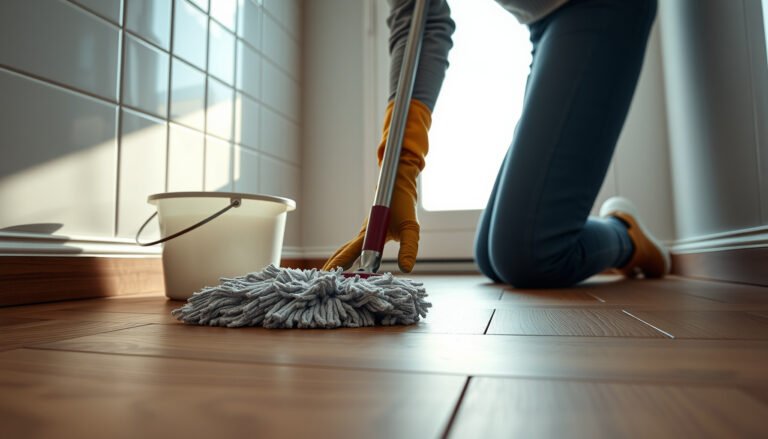
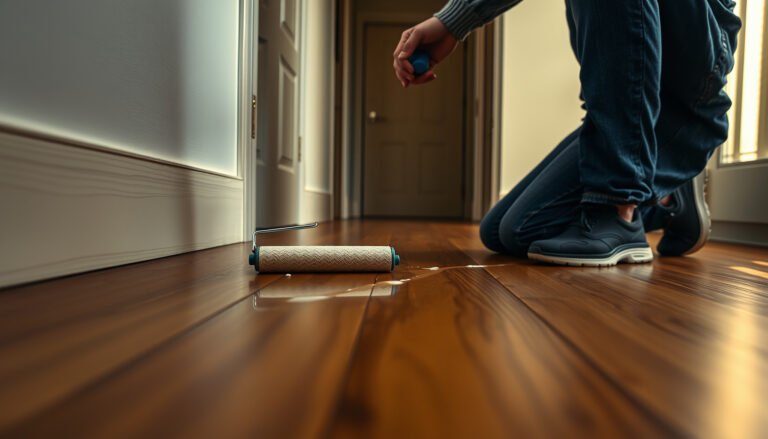
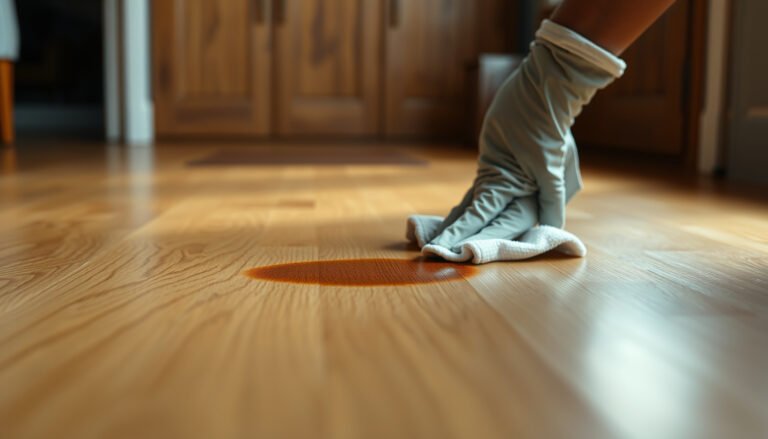
[…] of wood-floor cleaner, working with the grain. Plan on 10 to 20 minutes for most spots, and keep a microfiber cloth and warm water on hand. With the right technique, you can restore a clean look before the mark sets […]
[…] Lift first + pH-neutral cleaner […]