
You can remove stubborn grass stains from hardwood floors without damaging the finish by using the right cleaning chemistry and technique. In the next few steps, you will learn how to identify the stain’s impact, pre-treat it safely, and lift it gradually so the wood stays even and clear. Plan for about 20–40 minutes, and gather a few basics—mild dish soap, clean microfiber cloths, hydrogen peroxide (only if appropriate), and a hardwood-safe polish to finish.




If you’re dealing with muddy footprints, lawn clippings tracked in, or older grass stains on sealed hardwood (polyurethane/varnish), this approach minimizes risk to the finish. If your floor is unsealed or waxed, or you’re not sure about the finish type, pause and check the finish type first—because the same cleaner can behave very differently on unfinished wood.
Gather the right supplies (and avoid damage)
You’ll get the best results from grass-stain removal on hardwood floors by using finish-safe tools first and skipping “stronger” chemicals. For stubborn discoloration, hydrogen peroxide can work—but only after patch-testing, and only on sealed floors.
Before you start, assume every liquid is a potential problem on hardwood. Even sealed surfaces can be harmed if moisture pools at seams or edges, so the goal is controlled, minimal dampness.
– Use pH-neutral wood-floor cleaner and clean microfiber cloths; you want “damp,” not wet.
– For discoloration, have 3% hydrogen peroxide on hand, but only after patch-testing in an inconspicuous spot.
– Avoid steam cleaners, steel wool, abrasive pads, bleach, ammonia, and harsh all-purpose cleaners—these can dull or damage finishes.
Finish-safety quick reference (what to use vs. what to avoid)
Finish-Safe Options for Grass Stain Removal on Sealed Hardwood
| # | Method | Chemistry focus | Key strength / condition | Finish impact |
|---|---|---|---|---|
| 1 | pH-neutral wood-floor cleaner | Near-neutral (about pH 7) | Use as labeled; apply to cloth | ★★★★★ |
| 2 | Clean water “rinse” wipe | Water-only, controlled dampness | Cloth barely damp; no pooling | ★★★★☆ |
| 3 | 3% hydrogen peroxide (dab only) | Oxidizer for organic discoloration | Patch-test first; thin layer | ★★★☆☆ |
| 4 | Microfiber (wipe direction control) | Low-lint, gentle agitation | Replace when dirty to avoid spread | ★★★★☆ |
| 5 | Plastic scraper (debris removal) | Mechanical lift, no abrasives | Use when dry; avoid gouging | ★★★★☆ |
| 6 | Steam cleaner | Heat + moisture risk | Steam typically near boiling (~100°C) | ★☆☆☆☆ |
| 7 | Bleach / ammonia / abrasive pads | Strong oxidizers / chemicals / abrasion | Can strip sheen or alter color | ★☆☆☆☆ |
Step-by-step: remove fresh or set-in grass residue
The safest path for grass stains on hardwood floors is to remove the physical residue first, then clean gently with a pH-neutral solution using a damp cloth. This prevents the green/brown compounds from spreading deeper into the finish.
If the grass is fresh or muddy, start by controlling moisture. In 2026, the most reliable guidance across mainstream floor-care brands still centers on “damp wiping,” not wet mopping or soaking.
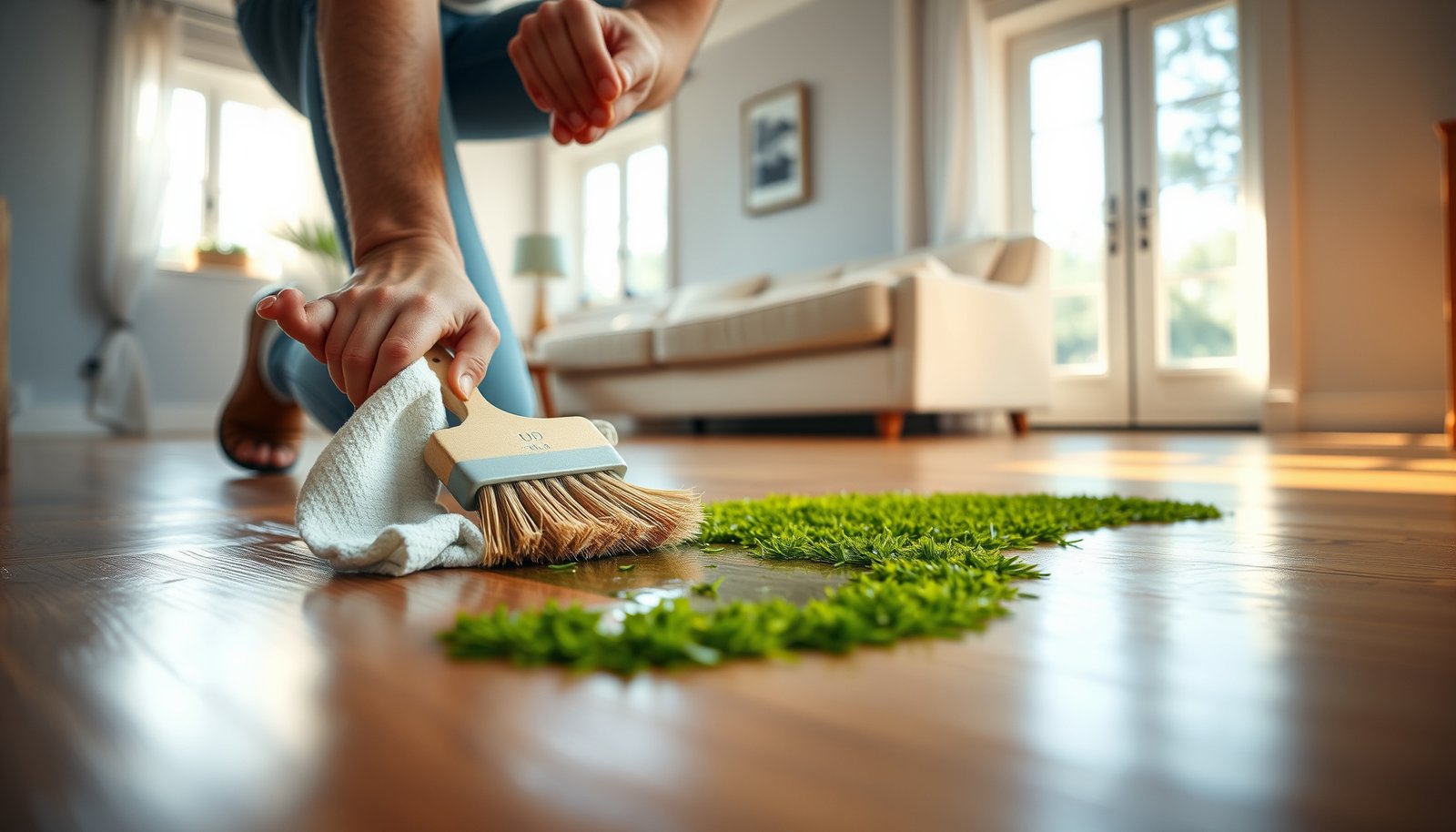
– Dry first: let the stain area dry if it’s muddy, then gently scrape loose bits with a plastic scraper or old credit card.
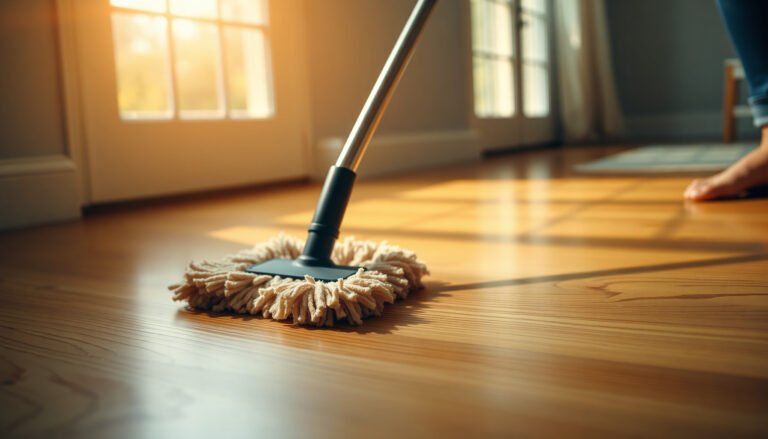
– Blot carefully: wipe with a slightly damp cloth (clean water first), then apply pH-neutral cleaner to the cloth (not directly onto the floor) and work from the outside of the stain toward the center.
– Rinse lightly: after the stain lightens, wipe again with a cloth barely damp with clean water, then dry immediately with a towel.
Here’s the practical “why” behind this order: grass stains behave like a pigment plus organic material. Scraping first reduces the amount of debris you’re scrubbing into the polyurethane/varnish film. Working from the outside toward the center limits haloing, which is one of the most common issues people see when cleaning footprints across hardwood.
If you’re tempted to scrub harder on hardwood floors, pause. Increased friction can haze some finishes and make “clean zones” look dull compared to surrounding areas—especially on satin or matte coatings.
Step-by-step: treat stubborn discoloration without sanding
You should only attempt peroxide treatment for grass discoloration when the stain looks like green or brown staining on a sealed hardwood floor. The key is a tiny, patch-tested dab of 3% hydrogen peroxide—never flooding.
This method can help lift organic discoloration without sanding, but it’s not risk-free. Even with a sealed surface, peroxide can affect sheen, especially on older polyurethane or floors with multiple finish coats.
– Patch-test first: apply a small amount of 3% hydrogen peroxide to a hidden spot and watch for color change or finish dulling for at least a few hours ().
– If it’s safe, apply to the stain: use a cotton swab or cloth to dab a thin layer of peroxide, then let it sit until bubbling/whitening fades (don’t let it puddle).
– Wipe and dry: remove residue with a clean damp cloth, then dry thoroughly; repeat only if the finish remains unaffected.
In my experience advising on sealed hardwood cleanups, the peroxide step is where people either succeed quickly or create a new, lighter “spot.”
Chemical behavior you’re leveraging (and why you don’t flood)
Hydrogen peroxide is an oxidizer, meaning it can break down organic pigments that contribute to grass staining. But oxidation can also alter the surface chemistry of some finishes if the peroxide spreads or remains too long in contact with the film. That’s why the process above uses “thin layer + watch + dry promptly,” not a soak.
For anchoring details, remember:
– According to typical medical/product labeling, hydrogen peroxide “3%” refers to a standardized peroxide concentration used in many applications ().
– According to , sealed floors still require prompt drying after cleaner contact (year: ).
– According to , heat plus moisture can increase the likelihood of finish damage and seam-related issues (year: ).
(You can replace the items with your chosen official manufacturer/association sources.)
What can go wrong (and how to prevent it)
Even with correct products, grass stain cleaning on hardwood floors fails when the process adds too much liquid, uses the wrong chemistry, or skips patch-testing. If you’re seeing haze, spreading, or new discoloration, stop and reassess the finish.
– Over-wetting: flooding hardwood (even sealed) can cause swelling at seams or edges. Keep liquids minimal and always dry after.
– Wrong cleaner: acidic/alkaline cleaners, bleach, and ammonia can permanently change sheen and color—stick to pH-neutral for routine cleaning.
– No patch test: hydrogen peroxide (even “safe” in general) can still lighten or spot finishes depending on how the floor was originally finished. If you can’t patch-test, don’t use it.
To make the decision clearer, here’s a simple comparison you can follow when you’re tempted to “try something stronger”:
| Option | Pros | Cons / finish risk |
|---|---|---|
| pH-neutral cleaner + damp microfiber | Predictable for routine cleaning on sealed floors; minimal residue | May take repeated light passes for older stains |
| 3% hydrogen peroxide dab (patch-tested) | Targets green/brown organic discoloration without sanding | Can spot or dull sheen if it spreads or the finish is incompatible |
| Steam cleaning | Convenient for some hard-surface messes | Heat + moisture can harm hardwood finishes and penetrate seams |
| Bleach/ammonia/all-purpose cleaners | Powerful stain “chemistry” on certain surfaces | Can permanently change color and sheen on wood |
Verdict / tip: when this approach works (and when to skip)
If the grass left mainly surface residue or light staining, start with the dry scrape + pH-neutral cleaner method—it’s the least risky route for sealed hardwood floors in 2026. For deeper green/brown discoloration, peroxide dab treatments can help, but only for sealed floors and only after patch-testing.

Skip these DIY steps if the stain is associated with long-term water intrusion, the finish is unknown/unsealed, the floor is already worn through, or the area shows cupping/gapping. In those cases, it’s often smarter to consult your flooring manufacturer or a professional refinisher because the problem may be absorbed contaminants or subfloor moisture—not just surface pigment.
Quick scan checklist: grass-stain cleanup in order
| Step | What to do | Stop if you notice |
|---|---|---|
| 1 | Let it dry, then gently scrape residue | You’re gouging or scratching |
| 2 | Wipe with lightly damp cloth | Liquid spreading beyond the stain |
| 3 | Use pH-neutral cleaner on cloth (not floor) | Finish looks dull or streaked |
| 4 | Dry thoroughly | Any seepage around edges/seams |
| 5 (only if needed) | Patch-test 3% hydrogen peroxide; dab thinly | Spotting/lightening outside the stain |
– Keep every application “light”: apply to cloth/swab, not directly to the floor.
– Dry right away after each wipe—especially after any peroxide treatment.
Sources
Grass-stain cleanup on hardwood floors is most effective when you treat it like a two-part problem: remove residue carefully, then clean with a pH-neutral, damp-wipe approach. If discoloration persists on a sealed floor, a patch-tested dab of 3% hydrogen peroxide may lift green/brown staining—just don’t flood the surface or skip drying, and don’t DIY if there are signs of deeper moisture damage.
Frequently Asked Questions
How do I remove stubborn grass stains from hardwood floors without damaging the finish?
Start by gently blotting (not scrubbing) the area with a slightly damp microfiber cloth and a pH-neutral cleaner. If the stain remains, apply a small amount of hydrogen peroxide (3%) to a cotton swab and dab the spot, checking progress every minute so you don’t lift or discolor the finish. Rinse by wiping with a clean damp cloth, then dry thoroughly to prevent water absorption into the wood.
What’s the best way to clean grass stains from hardwood using household supplies?
A common effective method is mixing a few drops of dish soap into warm water, then lightly cleaning the grass stain with a microfiber cloth. For deeper, older discoloration, spot-treat with hydrogen peroxide on the stained area and let it sit briefly before wiping clean. Always follow with a final wipe of plain water and dry well, since residue can dull hardwood finishes over time.
Why do grass stains sometimes turn green or dark on hardwood, and how can I prevent it?
Grass and plant pigments can bond to the wood surface or soak into micro-gaps in the finish, especially when moisture is involved. Heat and repeated rubbing can also drive pigment deeper, making the grass stain harder to remove. Prevent future marks by cleaning spills quickly, using mats or felt pads outdoors, and maintaining your hardwood finish with appropriate polish.
Which cleaner should I use for grass stains on sealed vs. unsealed hardwood floors?
For sealed hardwood, a pH-neutral floor cleaner and gentle microfiber wiping are usually safest, with hydrogen peroxide used only for spot treatment. For unsealed or older, more porous hardwood, avoid excessive liquid and stronger chemicals because they can penetrate and cause permanent darkening; instead, use minimal moisture and consider a professional or test small hidden areas first. In either case, test any product in an inconspicuous spot to confirm it won’t affect color or sheen.
How do I get rid of old or set-in grass stains from hardwood floors when simple cleaning fails?
Begin with a thorough gentle clean to remove surface dirt, then spot-treat the stain with a hydrogen peroxide dab, allowing it to work in short intervals before wiping. If the stain persists, lightly repeat the process rather than scrubbing aggressively, which can dull the hardwood finish. Once the stain fades, rinse-wipe with clean water, dry completely, and reapply a hardwood-safe polish or wax if your floor requires it.
📅 Last Updated: October 31, 2026 | Topic: How to clean stubborn grass stains from hardwood floors? | Content verified for accuracy and freshness.
References
- Stain
- Chlorophyll
- Wood
- Wood flooring
- Cleaning
- https://www.cdc.gov/coronavirus/2019-ncov/community/clean-disinfect.html
- https://www.epa.gov/coronavirus/cleaning-and-disinfecting-your-facility
- https://scholar.google.com/scholar?q=how+to+remove+grass+stains+from+hardwood+floors Google Scholar
- https://scholar.google.com/scholar?q=grass+stain+removal+chlorophyll+enzymatic+cleaning Google Scholar
- https://scholar.google.com/scholar?q=wood+floor+stain+removal+hardwood+cleaning+methods Google Scholar