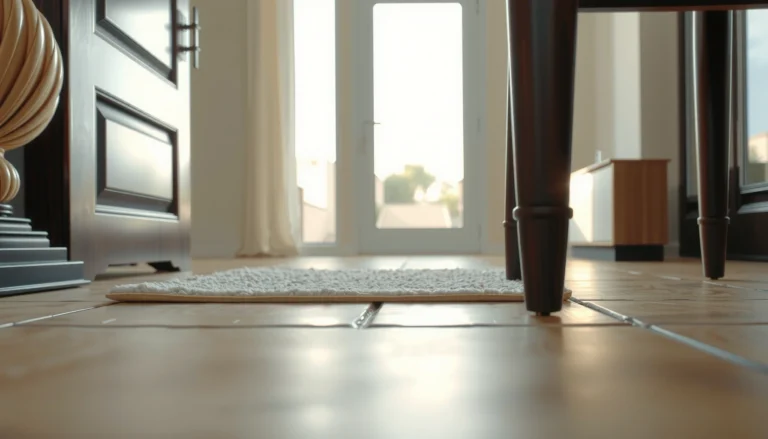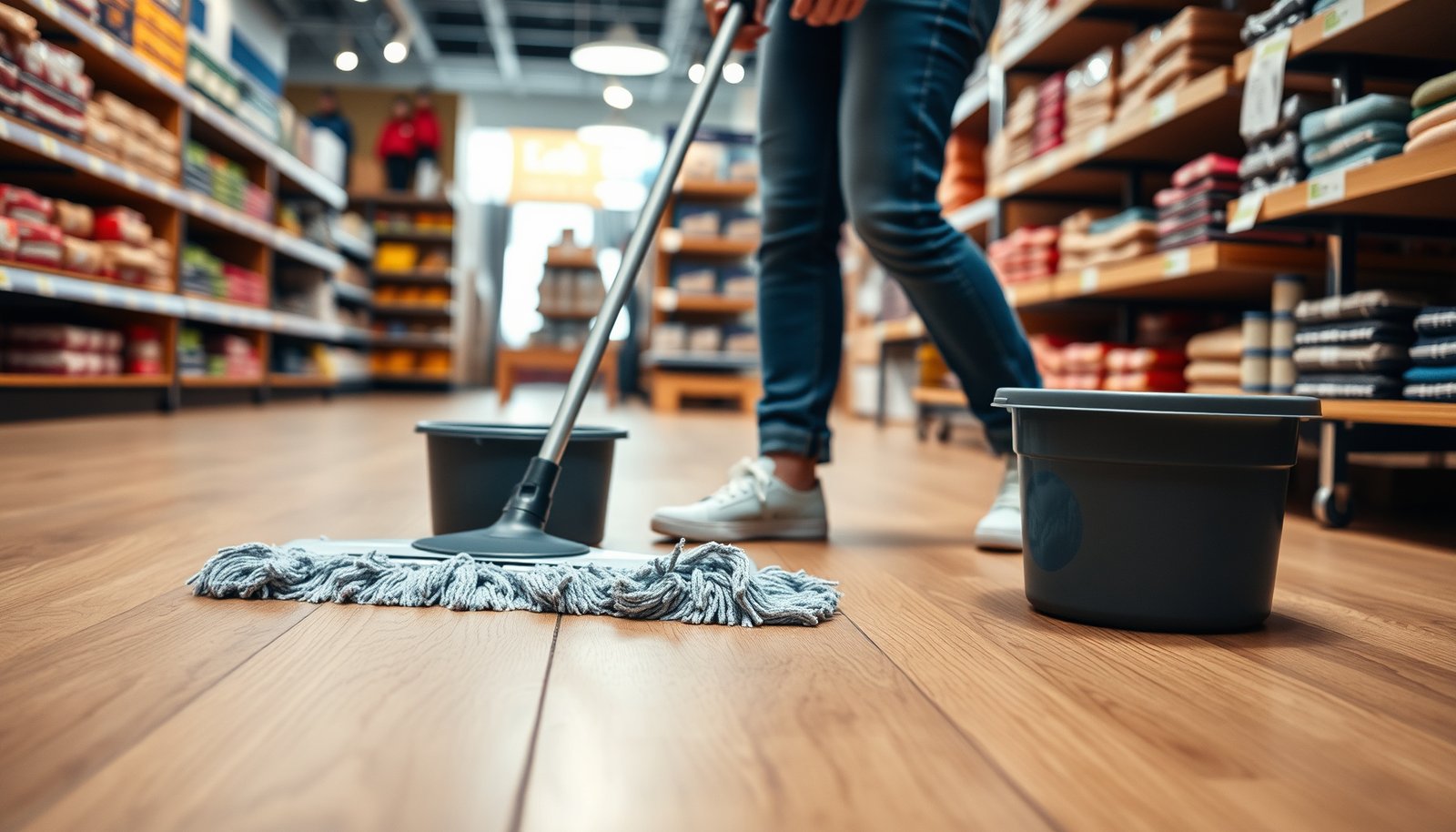

Cleaning hardwood floors in a retail store isn’t a guessing game—you need steps that remove grime fast without dulling the finish or leaving streaks. This guide delivers the most effective, low-risk cleaning routine for high-traffic spaces, including what to use, how to spot-clean spills, and how to mop without water damage. Follow it and you’ll get floors that look showroom-clean while staying durable under daily foot traffic.




A repeatable routine for finished hardwood in a retail store is simple: remove grit first with a dust mop, then damp-clean with a tightly wrung microfiber mop and a pH-neutral (or manufacturer-approved) cleaner, drying as you go. This approach protects the top finish, reduces scuffing from tracked particles, and helps prevent moisture-related swelling in high-traffic areas—something retail teams need in 2026 because daily wear cycles are continuous.
Retail hardwood floors face a constant “grit + moisture + friction” cycle: shoes track fine dust, cleaning adds water, and foot traffic grinds everything into the finish. If your store sees heavy traffic, tracked dust, and frequent spills, the most valuable strategy is removing abrasive particles before they act like sandpaper.
Who this is for / when it applies

This guide is for facility managers, store operators, and janitorial leads maintaining finished (sealed) hardwood floors in retail spaces—especially stores with walk-up entrances, fast replenishment schedules, and daily spill events. It assumes the floor has a factory-applied or installed top finish (commonly polyurethane/UV-cured finishes) and that you’re trying to keep it looking consistent between deeper maintenance cycles.
Prep the floor and protect the finish
You don’t start by mopping—on retail hardwood, you start by controlling abrasive grit. If you remove dust before adding any moisture, you dramatically reduce the micro-scratches and haze that build up under foot traffic.
Here’s what “prep” should accomplish in one pass: capture loose debris (sand, dust, small grit), prevent it from getting ground into the finish, and set the floor up so your damp-cleaning step can do real work without spreading contamination.
According to the National Wood Flooring Association (NWFA), routine cleaning for finished wood floors should prioritize removing abrasive debris and avoiding excess moisture to protect the finish.
If abrasive particles remain on the surface, even a soft microfiber pad can transfer grit and contribute to dulling over time—especially in high-traffic retail aisles.
Walk-off mats work as a “first line of cleaning” by intercepting sand and grit at entrances before it reaches the main floor area.
Sweep or dust-mop first to remove abrasive particles
Retail floors accumulate fine grit that customers can’t see but you can feel underfoot. Use a microfiber dust mop or a vacuum with a soft/no-beater-floor head to capture dust without agitating it. Avoid dry sweeping with stiff bristles; it can scatter debris back into traffic paths.
Use walk-off mats at entrances and keep them cleaned
Mats fail when they’re full. In practice, mat maintenance should be treated like cleaning, not decoration: vacuum the mat regularly and shake/clean it on schedule so it keeps trapping grit rather than redistributing it.
In retail environments, the highest-wear zones are often near entrances where soil load is heaviest and cleaning is most inconsistent.
Plan cleaning after peak hours so the floor dries properly
Moisture management is part of appearance and part of protection. As of 2026, many stores are tightening cleaning windows to off-peak times (after rush or before closing) so the floor can dry fully before the next traffic spike. Even when you use a damp mop, the best results come when you allow the finish to return to a stable, dry state quickly.
Step-by-step: How to clean hardwood floors in a retail store
For finished hardwood floors in a store, the winning method is dust → damp mop → dry pass. This sequence reduces abrasion, limits water exposure, and prevents streaking or dampness from lingering in seams.
A tightly wrung mop keeps water off the floor surface long enough to clean, but not so long that it can soak into edges and seams—an important distinction for finished hardwood.
Drying after damp mopping helps prevent streaks and reduces the chance that residual moisture stays where it can affect the finish.
Using a microfiber pad for dust and damp cleaning is consistent with best practices for capturing fine debris while minimizing scratching risk.
Dust removal: microfiber dust mop or brush-free/no-beater vacuum
Start with a full coverage pass:
– Microfiber dust mop: best for broad, dry pickup.
– Vacuum: best when dust is heavy and you need fast capture—use a brush-free or soft floor head to reduce finish wear.
What you’re removing matters: sand and gritty dust are the “abrasive particles” that can cause permanent dulling and micro-scratches even if your cleaner is otherwise gentle.
Damp mopping: apply cleaner to the mop (not directly to the floor)
Damp mopping should feel controlled:
– Mix or dilute cleaner exactly per the label/spec sheet.
– Apply cleaner to the mop or pad so you control the amount.
– Keep the mop damp, not wet. A practical test is how the floor looks immediately after passes—if you see pooling, the mop is too wet.
As you work, move from the farthest point toward the exit so you don’t step back across freshly dampened areas.
Drying: go over the area with a clean, dry microfiber pad
If the finish looks streaky or you notice lingering dampness, do a final pass with a clean, dry microfiber pad/cloth. This is especially useful in retail because customers notice haze quickly and it makes floors look “unclean,” even when they’re technically clean.
Choose the right cleaner (and avoid the wrong ones)
The safest cleaner choice for finished hardwood in retail is a pH-neutral hardwood cleaner or the exact cleaner your floor manufacturer specifies. When you match cleaner chemistry to the finish, you reduce haze, residue, and finish softening.
pH-neutral cleaners are designed to be less chemically aggressive than strongly acidic or alkaline products, which helps protect many common finished hardwood top coats.
According to basic chemistry references, “neutral” water is at pH 7, and the pH scale runs from 0 to 14, with acidity below 7 and alkalinity above 7.
Retail floors often accumulate residue from incorrect cleaners, and residue can attract more dirt—creating a cycle that makes daily cleaning harder.
Prefer pH-neutral hardwood cleaners (or your manufacturer’s recommended product)
A finished hardwood floor typically has a sealed surface meant to tolerate normal cleaning within limits. Many facilities adopt “pH-neutral + microfiber + minimal water” because it’s compatible with a broad set of finishes—while still requiring you to confirm the specific cleaner requirements in your maintenance documents.
Avoid harsh degreasers, wax removers not meant for your finish, and residue-producing products
Avoid cleaners that:
– Leave film or wax build-up (this can create tackiness that grabs soil)
– Strip the finish or soften it
– Use strong solvents or harsh alkalinity/acidity outside manufacturer guidance
Instead, use a cleaner labeled for hardwood and specifically compatible with the finish type (often polyurethane/urethane/acrylic systems on finished floors).
Always spot-test in an inconspicuous area first
Before you scale up across the sales floor, test:
– In a back-of-house area or behind shelving
– Under your normal lighting conditions
– After the drying window you typically use before reopening
This prevents a situation where a small chemical incompatibility becomes a visible store-wide issue.
Cleaner choice quick comparison (what to use and what to avoid)
| Cleaner / method | Why it’s used | Main risk | Good fit for finished retail hardwood? |
|---|---|---|---|
| pH-neutral hardwood cleaner | Supports frequent cleaning without harsh chemistry | Residue if over-applied or not rinsed (if required by spec) | Often |
| “All-purpose” cleaner (unknown pH) | Convenient, but chemistry varies widely | May leave residue or be too acidic/alkaline for your finish | Only if approved |
| Steam mop | Kills germs using heat | Heat + moisture can damage many finishes and increase edge/ seam risk | Usually not recommended |
| Wax build-up remover | Targets residue (when compatible) | Can strip or dull if not designed for your top coat | Only for finish-specific plans |
A chemistry reality check (why pH matters)
Here’s the practical chemistry behind the “pH-neutral” guidance:
– According to IUPAC references on the pH scale, neutral is pH 7 and the scale ranges 0–14 (International Union of Pure and Applied Chemistry (IUPAC)).
– Wood is sensitive to moisture content changes. According to the USDA Forest Products Laboratory (Wood Handbook), fiber saturation occurs around ~30% moisture content, which is why excess moisture is risky even when floors are “finished.”
To connect that to retail cleaning: you keep the mop damp so you don’t raise moisture conditions at the surface and edges.
Representative pH of Common Cleaning Chemicals & Hardwood Finish Compatibility Risk
| # | Chemical / cleaner type | Typical pH (common use concentration) | pH “closeness” to 7 | Finish risk (direction) |
|---|---|---|---|---|
| 1 | pH-neutral hardwood cleaner (labeled) | 6–8 | 10 ★ | Lower |
| 2 | Distilled water (neutral reference) | ~7.0 | 10 ★ | Lower (if used minimally) |
| 3 | Baking soda solution (alkaline) | ~8.3 (typical) | 8.7 ★ | Moderate |
| 4 | White vinegar (5% acetic acid) | ~2.4 | 5.4 ★ | Higher |
| 5 | Household ammonia solution (typical) | ~11.6 | 5.4 ★ | Higher |
| 6 | Chlorine bleach solution (sodium hypochlorite, typical) | ~11.0–11.5 | 5.5–6.0 ★ | Higher |
| 7 | Drain cleaner lye (sodium hydroxide, typical) | ~13.7 | 3.3 ★ | Very high |
> Note: “pH-neutral” is a category defined by label/spec; always follow your floor manufacturer’s cleaner compatibility instructions. The pH values above reflect common-use concentrations and can vary by brand and dilution.
What can go wrong (and how to prevent it)
The most common failure mode is “too much water” or “wrong chemistry,” both of which degrade the finish and invite visible defects. Avoid wet mopping, skip abrasive tools, and match products to your specific floor finish.
Flooding or wet mopping increases the risk of moisture migration at seams and edges, even on finished hardwood, because wood can still respond to moisture.
Skipping grit removal turns cleaning into abrasion: sand and grit can scratch the finish faster than you can restore it with routine damp mopping.
Steam mops combine heat and moisture; many hardwood floor care guides advise against steam due to finish and moisture exposure risks.
Too much water: flooding, “wet mopping,” and seam/edge risk
Even when the surface is sealed, water can:
– Penetrate at edges, gaps, or imperfectly sealed seams
– Sit under residues, allowing finish softening or haze
– Increase the chance of cupping/warping when moisture conditions shift
This matters because wood dimensional stability is tied to moisture content changes. According to the USDA Forest Products Laboratory (Wood Handbook), wood begins to change dimensions as moisture approaches moisture states well below fiber saturation (~30%), which is why you avoid visible wetness on floors.
Skipping grit removal
If you mop over sand/dirt, you create permanent dulling:
– Fine grit lodges under the pad
– Foot traffic then polishes the finish in micro-ruts
– The surface loses its even reflectivity, making the floor look “dirty” even after cleaning
Using the wrong tools
Retail teams are tempted to use faster equipment. Resist shortcuts that increase wear:
– Steam mops (heat + moisture)
– Abrasive pads
– Vacuums with aggressive beater bars
– Rotating scrubbers without finish-safe pads and controlled pressure
Glossy and pre-finished surfaces show these mistakes quickly because wear appears as uniform dull zones.
Verdict: what to do for daily retail cleaning
If you want the safest, repeatable routine for most finished hardwood floors, prioritize dust control, damp (not wet) mopping, and manufacturer-approved (or pH-neutral) cleaner. The downside is you won’t “deep strip” heavy wax/residue build-up with this approach—those cases need a finish-specific maintenance plan.
NWFA-style guidance generally supports frequent dust removal and limited moisture for finished hardwood maintenance, rather than aggressive wet mopping.
A damp, microfiber-based routine reduces both abrasive wear and prolonged moisture exposure, which are the two major drivers of finish dulling in busy retail lanes.
Routine cleaning can’t remove scratches or restore finish thickness; visible defects usually require resurfacing/refinishing or finish repair.
Skip this approach (or consult a flooring professional) if:
– Floors are unfinished
– You have unknown/legacy finishes (old wax systems, multiple top coats, or unclear chemistry)
– There’s widespread cupping/gapping or active moisture issues (that’s an assessment problem, not a cleaning problem)
– The surface is already failing (peeling, deep checking, or delamination)
Checklist: clean hardwood floors without damaging them
Use this scan-friendly checklist so your team can execute consistently across shifts—especially if you’re training new staff or using a rotating third-party crew.
| What you do | Best time in a retail store | Tool to use | Key “don’t” |
|---|---|---|---|
| Dust-mop / dry pickup | Before customers (or between rushes) | Microfiber dust mop or vacuum (soft/no-beater head) | Don’t wet anything until grit is gone |
| Damp-clean routine | Off-peak hours | Microfiber mop + pH-neutral/approved cleaner | Don’t pour cleaner onto the floor |
| Dry/spot finish | Immediately after mopping | Dry microfiber pad | Don’t leave the floor visibly wet |
| Spill response | Right away | Clean absorbent cloths + lightly damp microfiber | Don’t scrub aggressively or soak edges |
Frequently Asked Questions
What’s the safest way to clean hardwood floors in a retail store?
Start by using a dust mop or microfiber pad to remove grit and debris, since particles can scratch finished hardwood. Use a cleaner specifically labeled for hardwood floors and apply it sparingly with a damp (not wet) mop to avoid water pooling. For retail settings, work in small sections so the floor dries quickly and stays streak-free.
How do I remove sticky spills and scuff marks from hardwood floors in a store?
Blot spills immediately with a clean, absorbent cloth, then use a hardwood-safe cleaner on a slightly damp microfiber cloth to lift residue without saturating the wood. For scuffs, try a soft eraser pad or a hardwood floor cleaning product recommended for scuff removal, testing first in an inconspicuous area. Avoid abrasive scrubbers and steam, which can damage the finish and leave dull spots.
Why is routine maintenance critical for hardwood floors in high-traffic retail areas?
High foot traffic brings in grit from customers’ shoes, and grit acts like sandpaper that wears down the protective finish over time. Regular sweeping, dry mopping, and prompt spot cleaning help prevent scratches, dulling, and stubborn stains. This also supports consistent appearance for customers and helps preserve the longevity of your hardwood floor.
Which mop type and cleaning method works best for hardwood floors in a retail environment?
A microfiber string mop or microfiber flat mop is typically best because it controls moisture and captures dust effectively. Use a bucket method with a well-wrung mop head so the hardwood floor is cleaned with minimal water, not soaked. In retail, consider using a maintenance schedule and keep traffic moving while you let the area dry quickly.
What’s the best way to prevent water damage and streaks when cleaning hardwood floors in a store?
Never flood the floor—use a hardwood-approved cleaner and apply it lightly, then immediately dry with a clean microfiber pad if your process leaves moisture behind. Use the correct dilution and avoid “all-purpose” degreasers that can leave residues and cause streaking. Place doormats at entrances and use floor protectors to reduce moisture and dirt before it reaches the hardwood.
📅 Last Updated: October 17, 2026 | Topic: How to clean hardwood floors in a retail store? | Content verified for accuracy and freshness.
References
- https://www.cdc.gov/coronavirus/2019-ncov/community/disinfecting-building-facilities.html
- https://www.osha.gov/slips-trips-and-falls
- Wood flooring
- https://www.epa.gov/disinfectants/disinfectants-coronavirus-covid-19
- hard surface disinfection floor – Search Results – PubMed
- https://www.nps.gov/subjects/historicpreservation/preservation-briefs.htm
- https://scholar.google.com/scholar?q=commercial+hardwood+floor+cleaning+maintenance+protocol Google Scholar
- https://scholar.google.com/scholar?q=hardwood+floor+care+vacuuming+microfiber+mopping+finish+damage Google Scholar
- https://scholar.google.com/scholar?q=disinfection+of+hard+surfaces+floor+efficacy+study Google Scholar