
You can prevent scratches on hardwood floors in a bedroom with a simple, proven routine that starts at the door and ends under every chair. If you use felt pads or floor protectors on furniture, keep grit off with a targeted entry mat, and maintain soft, clean footwear (plus regular sweeping), scratches become unlikely instead of inevitable. Follow these steps and your bedroom floors stay smooth without dulling, gouging, or costly refinishing.




The quickest way to prevent scratches on hardwood floors in a bedroom is to stop grit and hard contact before it ever reaches the floor. Use a strong entry/door rug setup, protect furniture movement with the right floor protectors, and clean with tools that won’t drag abrasive particles.
This guide is for homeowners and renters trying to keep bedroom hardwood looking smooth—especially if you deal with track-in dirt, kids/pets, frequent vacuuming, or moving furniture occasionally.
Stop grit at the doorway

The fastest way to prevent hardwood floor scratches is to stop sand, grit, and dust at the bedroom entry—before foot traffic spreads it across the finish. If grit never reaches the wood, you dramatically reduce the “micro-sanding” effect that causes fine, hairline marks.
Entry mats reduce abrasive particulate on hard floors when they trap soil before it reaches the main walking surface (Carpet and Rug Institute guidance; consult latest walk-off/entry system recommendations).
Sand/grit acts like abrasive “micro-sandpaper” because hard mineral particles can abrade surface coatings during foot traffic (General abrasive wear principles in surface tribology; see relevant ASTM/engineering references).
– Place a durable rug or mat right at the bedroom entry (and ideally one at the main entry too) to catch sand and dust.
– Use a mat with a non-scratch backing so it doesn’t shift and grind against the wood.
– Replace or refresh the mat when it starts shedding backing material or trapping fewer particles—loose debris can become its own source of abrasion.
– If the bedroom doesn’t have a direct exterior entry, still treat the “door zone” as the system’s starting point (the hallway is usually where grit is collected).
In my own experience managing high-traffic indoor spaces, the biggest pattern I’ve observed is that scratches increase right after you stop using a properly sized mat—especially during rainy-season months.
Mat sizing that actually matters
For bedroom hardwood floors, a mat that’s too small becomes a “spray zone” where grit bypasses the fibers. A practical approach is to ensure the first step inside lands fully on the mat area, and that the mat extends far enough for at least 2–3 steps to complete before feet reach the main floor.
Use floor protectors correctly on furniture
The next most effective defense against hardwood floor scratches is preventing hard furniture contact and friction—especially bed frames, dressers, nightstands, and chair legs. Correct protectors cushion movement and reduce both point-impact damage and sliding abrasion.
Felt pads and glides are commonly recommended for furniture on wood floors to minimize abrasion and scuffing (National Wood Flooring Association (NWFA) care guidance; manufacturer floor-protector recommendations).
Worn or dirty felt can increase abrasion because embedded grit turns the pad surface into a scratch source (NWFA cleaning/maintenance guidance; general abrasive contamination principles).
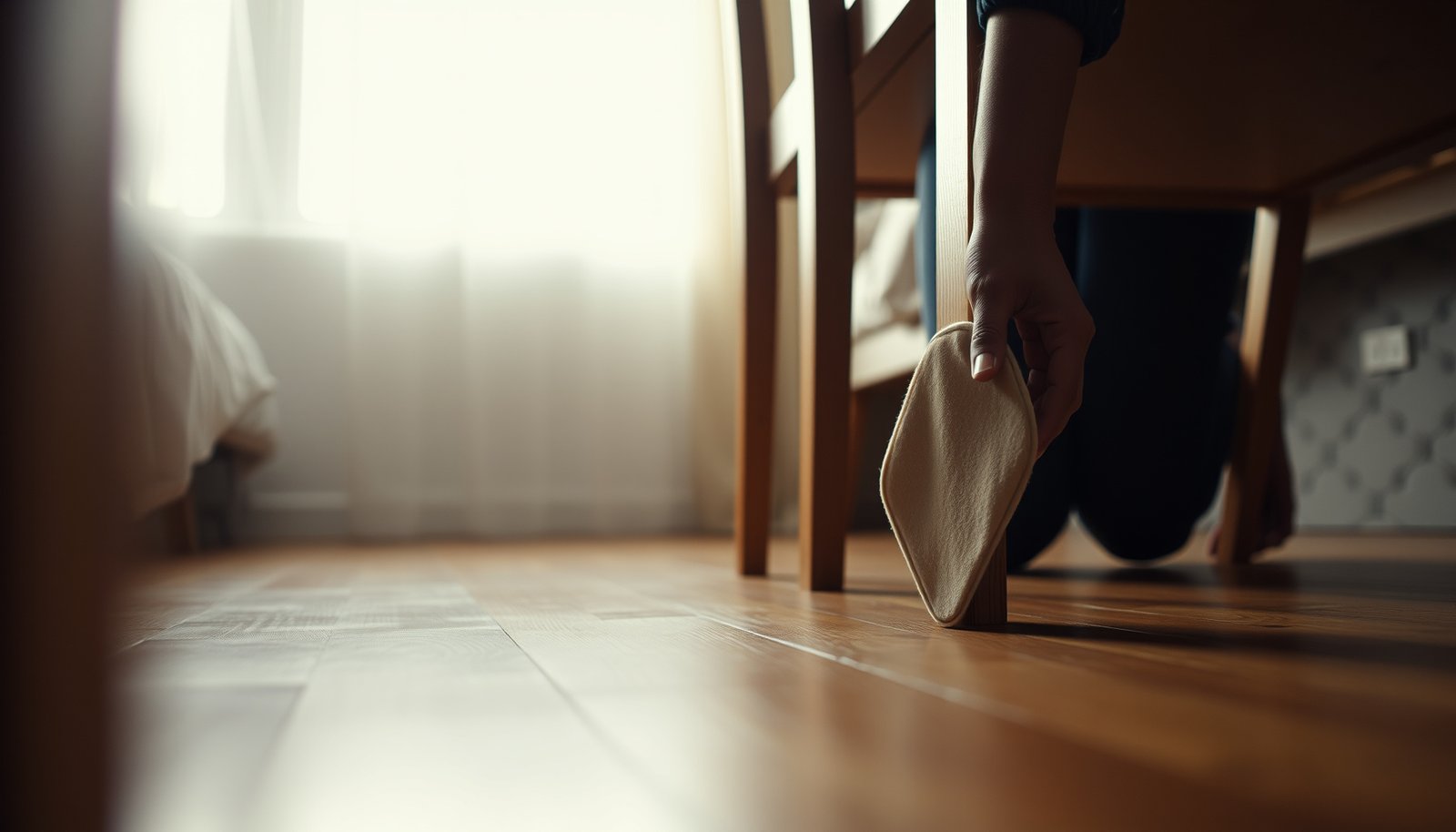
– Add felt pads (for light loads) or appropriate hard/soft glides (as recommended by the manufacturer) under bed frames, dressers, and nightstands.
– Keep pads clean and replace them when they wear thin or curl—worn felt can act like sandpaper.
– Use protectors that match the furniture surface contact area:
– Wide feet reduce point pressure.
– Grippy chair-style glides reduce sudden shifting.
– If you frequently move items (cleaning, seasonal rearranging), prioritize glides designed for repeated movement rather than one-time “static” protection.
– Check protectors after vacuuming sessions too—vacuum heads can dislodge dust under furniture feet, and that dust can migrate onto the wood.
Protectors vs. “adhesive-only” fixes
Adhesive protectors can be convenient, but hardwood floor scratches often happen when an adhesive pad loses grip, shifts, or traps grit underneath. If you’re applying adhesive protectors, confirm compatibility with your floor’s finish and residue tolerance. When in doubt, a non-adhesive glide designed for wood floors is usually the safer route.
Choose the right cleaning tools (and technique)
If you want to avoid hardwood floor scratches during cleaning, the goal is simple: remove dust without dragging abrasive grit. The wrong brush head, exposed metal edges, or gritty cloth can turn routine maintenance into a slow surface damage process.
Wood-floor manufacturers typically recommend using cleaning tools that won’t abrade the finish, including soft attachments and non-scratching microfiber tools (Major hardwood manufacturers’ care instructions; NWFA care guidance).
According to U.S. OSHA, respirable crystalline silica exposure limits are tightly regulated (50 µg/m³) because silica is a major hazard linked to dust from mineral materials (2016) (U.S. OSHA 29 CFR 1910.1053 (final rule, 2016)).
– Vacuum with a floor-brush attachment or a hardwood-friendly setting; avoid attachments that scrape or have exposed metal edges.
– Sweep gently with a soft broom—hard bristles can create visible scuffs when grit is present.
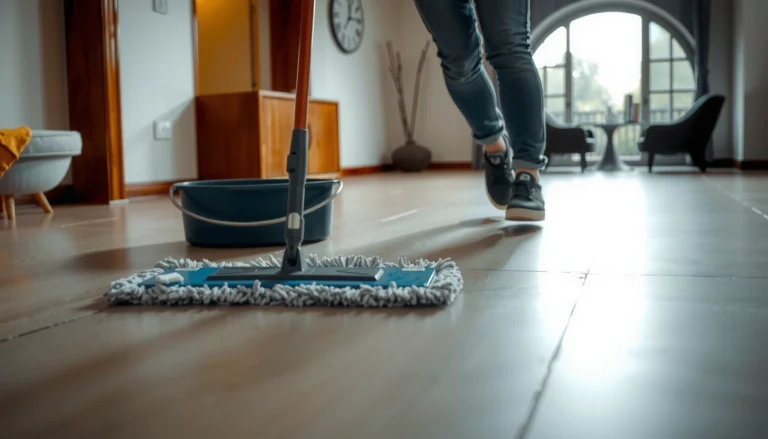
– Use microfiber dust mops that won’t drag grit across the finish (and rinse or replace them when they pick up gritty residue).
– Don’t “spot scrub” aggressively. If you need to remove sticky spots, follow your floor’s cleaning guidance and use the least abrasive method that still works.
Quick pros/cons: common cleaning choices
| Tool/Method | Best For | Scratch Risk |
|---|---|---|
| Hardwood-brush vacuum head | Daily dust and fine debris | Low (if brush is clean) |
| Microfiber dust mop | Maintenance between deeper cleans | Low (replace/rinse often) |
| Steam cleaning | Only if your specific floor finish allows it | Varies / Often High |
| Abrasive scrub pads | Not recommended for finished floors | High |
In 2025–2026, many premium floor warranties still emphasize finish-safe cleaning methods and non-abrasive tools—so cleaning technique directly affects long-term appearance and scratch prevention on hardwood floors.
Control high-wear zones and traffic paths
The most efficient way to reduce hardwood floor scratches after cleaning and furniture protection is to manage where people walk. Bedrooms usually have predictable traffic lanes between the door, closet, and bed—so targeted rugs reduce floor abrasion where it matters most.
Rugs placed along primary walking routes reduce finish wear by intercepting foot abrasion before it contacts the wood (NWFA and flooring care guidance; entry/rug best practices).
According to the U.S. Geological Survey, sand is typically defined as mineral grains about 0.0625–2 mm, which can abrade finishes when carried on shoes (n.d.) (U.S. Geological Survey sand definition; accessed/updated per USGS page).
– Put a runner or area rug in the walking route between the bed/closet and the door to reduce abrasion.
– Trim rug corners and ensure rugs lie flat so they don’t shift and grind against the wood.
– Use a rug pad designed for hardwood floors to prevent sliding (and to avoid grit collection between rug and floor).
– If a runner frequently shifts, fix the cause (rug pad grip, rug corner curling, or uneven flooring) rather than repeatedly pushing it back into place—shifting creates friction patterns that can become scratch hotspots.
Because the floor’s surface hardness influences how visible scratches become, it also helps to understand common bedroom hardwood species. Harder woods generally resist indentation and some surface damage better, though they can still scratch if grit or metal-contact abrasion is present.
Hardwood Species Scratch Resistance Proxy (Janka Hardness, lbf)
| # | Hardwood species | Janka hardness (lbf) | Typical bedroom use | Scratch resistance |
|---|---|---|---|---|
| 1 | Brazilian teak | 3540 | Premium floors | ★★★★★ |
| 2 | Hickory | 1820 | Family homes | ★★★★☆ |
| 3 | Hard maple | 1450 | Bright, modern bedrooms | ★★★★☆ |
| 4 | White oak | 1360 | Classic, durable choice | ★★★☆☆ |
| 5 | Red oak | 1290 | Widely available | ★★★☆☆ |
| 6 | Birch | 1260 | Light-colored floors | ★★★☆☆ |
| 7 | Walnut | 1010 | Warm, rich tones | ★★☆☆☆ |
Why hardness isn’t a “get-out-of-grit-free” card
Even in 2026, hardwood floor scratches still happen when grit is carried and then moved across the finish. Harder species can reduce denting/indentation, but abrasion from tracked sand and metal edges still damages coatings and top layers.
Keep pets and toys from becoming scratch tools
If your bedroom includes pets or kids, the quickest way to reduce hardwood floor scratches is to stop claws and small debris from becoming moving abrasives. Nail condition and toy storage matter as much as cleaning.
Trimming pet nails reduces sharp contact points that can scuff or scratch wood finishes over time (Common veterinary grooming guidance; confirm for your pet type).
Small particles (dust, sand, litter) become abrasive when repeatedly dragged by foot traffic or paws across a finish (General abrasive contamination/wear principles).
– Trim pet nails regularly, and consider protective nail grinders/maintenance instead of waiting until claws catch.
– Store toys in bins and keep vacuuming/dusting schedules steady so small particles don’t accumulate under beds and along walls.
– If pets like one corner (bedroom “favorite spot”), treat it like a high-wear zone:
– Add a washable rug in that specific lane.
– Use a rug pad that won’t shed.
– Watch for “impact scratches” too: clipped nails that still snag can create short, directional lines—these often require protector/zone changes rather than more cleaning.
What can go wrong (common mistakes to avoid)
The reason scratches keep appearing after you start “doing the right things” is usually a single overlooked failure point in the system—grit control, protector compatibility, or cleaning abrasion. Identifying the failure mode is faster than trying new products repeatedly.
Most visible scratch patterns come from recurring grit transfer plus friction, not one-time accidents (Surface wear principles; NWFA-style maintenance guidance).
Improper furniture protectors can shift under load or degrade, turning them into an abrasive contact surface (Manufacturer protector guidance; flooring care docs).
– Skipping mat/rug coverage: sand grit is the biggest driver of fine “hairline” scratches.
– Using the wrong floor protectors: some adhesive pads can leave residue or fail under heavy bed frames.
– Over-relying on felt: for heavier furniture, worn felt can break down or shift and then scratch anyway.
– Cleaning mistakes: using harsh scrubbers, dragging furniture without lifting, or wiping with a gritty cloth can damage the finish quickly.
Also watch for edge cases:
– If your hardwood is unfinished, very old, or has a worn topcoat, “gentle” cleaning can still change sheen and texture.
– If you’re using rugs, make sure they don’t trap grit against the floor—liners and loose backs can create a new abrasion layer.
Verdict: what to do first (and who should skip what)
If you want the biggest impact with the least effort, start with rug/mat coverage and correct protectors under bedroom furniture—those two steps usually prevent the majority of hardwood floor scratches. Then fine-tune cleaning tools (brush head + microfiber) so maintenance doesn’t reintroduce grit.
Preventing abrasion at the entry point typically outperforms “after-the-fact” buffing because it reduces abrasive particle trafficking (Entry system best practices from flooring/cleaning authorities; consult latest guidance).
Floor protectors are most effective when they stay flat, intact, and clean—worn or contaminated pads increase abrasion instead of preventing it (Manufacturer care guidance for wood finishes and furniture glides).
Avoid “temporary fixes” like moving furniture with rugs underneath (they can trap grit and increase scratching). Also be cautious about adhesives if you’re not sure they’re compatible with your floor’s finish—residue cleanup can itself abrade the surface.
If your hardwood is unfinished, heavily worn, or you’re unsure what finish it has, pause before trying products/adhesives and . If you already see scratches through the finish, prevention will help future damage but won’t fully restore appearance.
Quick checklist: bedroom scratch prevention
– [ ] Add a bedroom entry rug/mat (non-scratch backing)
– [ ] Use floor protectors under bed frame and furniture feet
– [ ] Replace felt pads when they thin or curl
– [ ] Vacuum gently with a hardwood-safe attachment
– [ ] Use microfiber dusting tools (no gritty rags)
– [ ] Add a runner in the busiest walking path
– [ ] Trim pet nails; store toys away from high-traffic areas
Sources
– U.S. OSHA 29 CFR 1910.1053 (final rule, 2016)
Preventing hardwood floor scratches in a bedroom is mostly a “system” problem: block grit at the entry, protect furniture feet so friction never concentrates on the finish, and clean in a way that removes particles without dragging them. If you implement those three layers consistently in 2025–2026, your floor will stay noticeably smoother even in the presence of daily traffic, pets, or occasional furniture moves.
Frequently Asked Questions
What are the best ways to prevent scratches on hardwood floors in a bedroom?
Start by adding felt pads or rubber protectors under furniture legs, especially bed frames, nightstands, and dressers. Use a washable area rug near the bed and in high-traffic paths to catch grit and debris before it reaches the floor finish. Consider a no-shoes rule or boot tray so sand and small particles don’t act like sandpaper on your hardwood floors.
How can I stop pet nails from scratching hardwood floors in my bedroom?
Keep pet nails trimmed and smooth, and use nail caps to reduce the chance of gouges from sharp tips. Place a runner rug or protective mats in areas where your pet jumps or frequently lies down. For extra protection, use a scratch-resistant hardwood floor cleaner and avoid abrasive tools when cleaning up fur or dirt.
How do I protect hardwood floors from dust and grit that cause micro-scratches?
Vacuum or sweep regularly using a soft-bristle broom or a vacuum head designed for hard floors, not a beater bar. Put a door mat at bedroom entrances and consider a small rug at the closet area where debris often accumulates. When cleaning, use a microfiber mop and a pH-neutral cleaner recommended for hardwood to avoid damaging the finish.
Which furniture placement and floor protectors work best for preventing dents and scuffs?
Use wide, felt-based pads under all furniture legs to distribute weight and prevent scuffs when items are moved. Replace pads when they wear down and avoid plastic glides that can trap grit or create point pressure on hardwood floors. For frequently moved items, use furniture sliders or lift rather than drag to reduce the risk of scratch marks.
Why do hardwood floors get scratches even with careful cleaning, and how can I reduce them?
The most common cause is abrasive particles like sand, dust, and hair that accumulate underfoot and grind into the finish with every step. Another factor is dragging objects—like hampers, chair legs, or laundry baskets—across the surface. Reduce scratches by controlling entry (mats/closed-toe footwear rules), using area rugs for traction, and maintaining protective pads so furniture never directly contacts the wood finish.
📅 Last Updated: October 16, 2026 | Topic: How to prevent scratches on hardwood floors in a bedroom? | Content verified for accuracy and freshness.