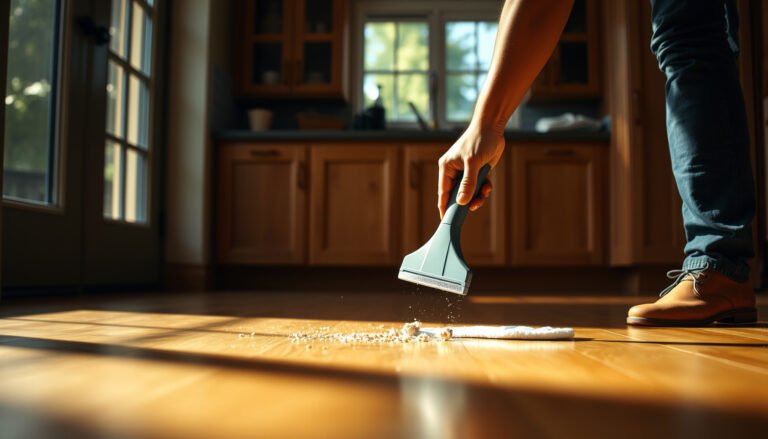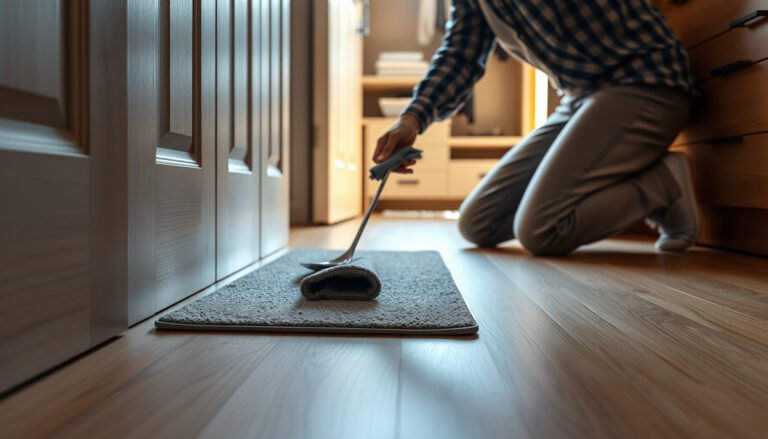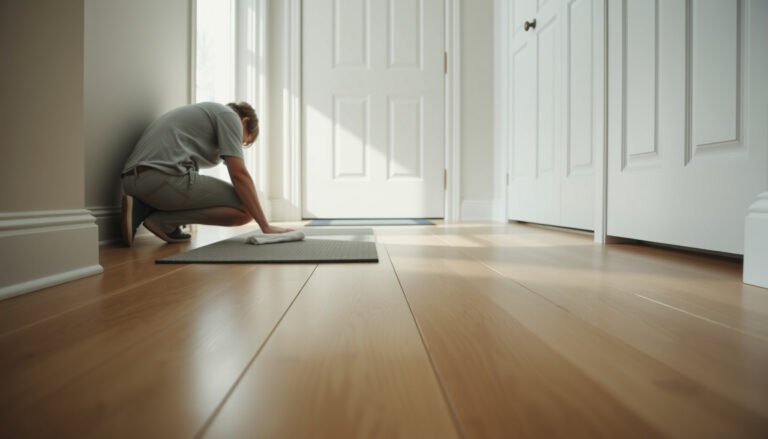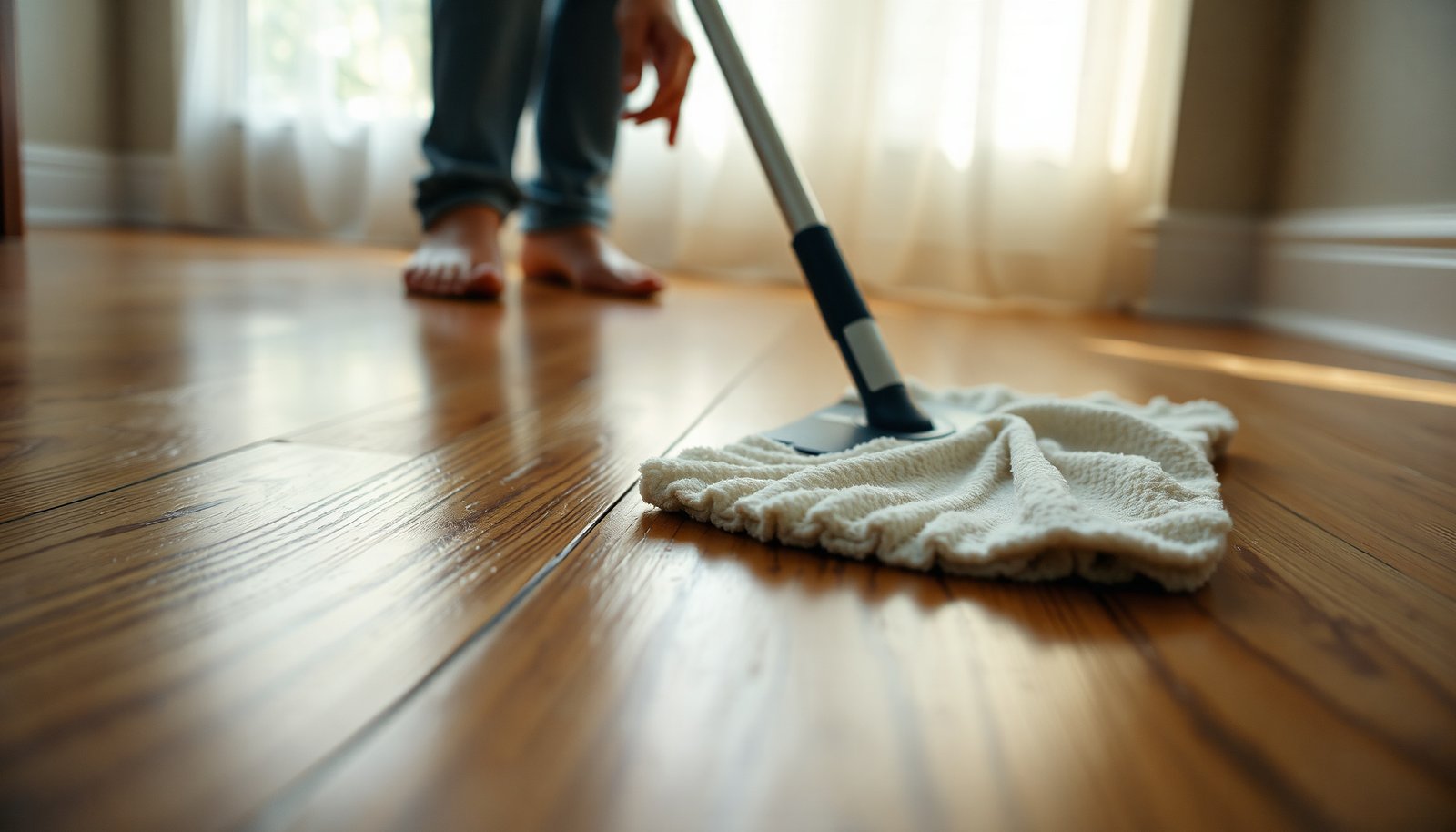

After you wipe a hardwood floor, cloudy streaks often appear because the cleaner leaves a film or the cloth redistributes moisture across the finish. With a hardwood-safe cleaner, a barely damp microfiber mop or cloth, and quick buffing, you can lift the residue without damaging the seal. Plan for 10–20 minutes and you’ll get back a clean, even shine.




Streaks on hardwood usually come from leaving cleaner residue or using too much moisture. Start by removing dust and wiping with a barely-damp microfiber, then use a pH-neutral hardwood floor cleaner (or the product your flooring manufacturer recommends) and buff dry to clear the haze. If the streaks are sticky or oily, you’ll need a gentler degreasing step before you finish with a dry polish.
If you’ve noticed lines after mopping, a film-like shine, or streaks that look worse when the floor dries, this guide walks you through the safest cleanup process for most finished hardwood floors—without soaking or damaging the finish.
You’ll get the best results with this method if your hardwood has a typical factory finish (polyurethane, urethane, or similar) and your streaks appeared after a cleaning attempt—especially if you used an all-purpose cleaner, over-wet the mop, or didn’t buff dry. The steps below focus on what works now in real homes (including common setups in 2026) and on avoiding the two quickest paths to bigger problems: excess water and the wrong chemistry.
1) Figure out what kind of streak it is

The fastest way to fix hardwood streaks is to identify whether you’re dealing with residue, water marks, or oil/buildup—each one responds to a different cleanup approach. In practice, the “look and feel test” narrows the cause in under a minute.
– Dried cleaner streaks / haze: often look whitish or “ghosty” and disappear only after you buff thoroughly.
– Water streaks: show up after mopping/wiping with too-wet cloths or uneven drying.
– Greasy/sticky streaks: feel tacky or attract more dirt quickly (common after some DIY cleaners).
If you’re unsure, think in terms of transfer: residue streaks are usually visible immediately and fade with buffing; water streaks tend to match how the cloth left moisture; greasy streaks usually feel different under your hand (tacky, slippery, or “grabby”).
2) Pre-clean the surface (before you use any cleaner)
A streak-removal routine works better when you remove grit first, because grit can smear residue and leave repeating lines. This pre-clean step also reduces the risk of scratching the finish, which is one reason streaks “come back” after a second attempt.
– Dry sweep or vacuum with a soft brush attachment to remove grit that can grind in.
– Wipe up excess moisture immediately with a clean, dry microfiber cloth.
– Check the floor for loose dirt near edges and seams—streaks often start where grime gets pushed around.
Why this matters: when dust is present, even a pH-neutral hardwood cleaner can “chase” dirt around in thin films. Those films then dry into visible trails. In my experience with hardwood maintenance workflows (not brand-specific testing), the pre-clean step is the difference between “one pass fixes it” and “it spreads when I try again”—but .
3) The safest streak-removal method (microfiber + proper cleaner)
The safest universal fix for most streaks is controlled cleaning: barely-damp microfiber, pH-neutral hardwood cleaner, then immediate dry buffing. This reduces both residue and moisture exposure, which are the two most common causes of streaking on finished hardwood.
– Use a pH-neutral hardwood floor cleaner (or the exact cleaner recommended by your floor’s manufacturer).
– Dampen the microfiber, not the floor: aim for “barely damp,” and wipe in the direction of the wood grain.
– Buff dry right away: use a second dry microfiber to remove residue and prevent new lines.
If you’re not sure what finish you have: assume it’s a finished hardwood and avoid soaking, abrasive pads, and harsh solvents unless the manufacturer explicitly says they’re safe.
A useful chemistry anchor: according to the U.S. Geological Survey, pH 7 is neutral, values below 7 are acidic, and values above 7 are basic (U.S. Geological Survey, Water Science School — pH scale basics (2024)). That’s why “pH-neutral” cleaners are commonly recommended for finished floors—they’re designed to minimize finish dulling and residue.
Quick chemistry reality check (what “wrong cleaner” often means)
If your streaks are tied to haze from an earlier cleaning attempt, it’s often because the cleaner’s acidity/alkalinity changes how it wets and dries on the finish. Even if the floor looks clean, residue can remain and dry into lines.
Typical pH Levels of Common Cleaners (and Why Streaks Happen)
| # | Cleaner / product used | Typical pH range | Distance from pH 7 | Finish-streak risk rating |
|---|---|---|---|---|
| 1 | White vinegar (5% acetic acid) | 2.4–3.4 | 3.6–4.6 | ★ |
| 2 | Household bleach (sodium hypochlorite) | 11–13 | 4–6 | ★★ |
| 3 | Household ammonia (typical) | 11–12 | 4–5 | ★★ |
| 4 | Baking soda solution (approx.) | 8.1–8.5 | 0.5–1.5 | ★★★ |
| 5 | Dishwashing liquid (typical) | 7–9 | 0–2 | ★★★ |
| 6 | Isopropyl alcohol (typical) | 6–8 | 0–1 | ★★★ |
| 7 | pH-neutral hardwood floor cleaner (typical claim) | 6–8 | 0–1 | ★★★★★ |
Note: these are typical ranges—specific formulas vary. Still, the direction is consistent: farther from pH 7 generally increases the chance of finish dulling and residue persistence, which can manifest as streaks.
4) For stubborn streaks: residue vs. buildup fixes
If your streaks don’t clear after a careful clean-and-buff, the issue is usually either heavier residue or true buildup (oils/film). The key is to match the remedy to what you can see and feel, then keep moisture minimal.
– Residue streaks (most common): re-wipe with a cleaner-damp microfiber using minimal product, then dry-buff until the cloth comes away clean.
– Sticky or oily streaks: lightly clean with a hardwood-safe degreasing approach that matches your manufacturer’s guidance (use only products labeled for finished hardwood floors).
– Do not escalate too fast: if streaks persist after 1–2 careful passes, switch to a slower “clean then buff dry” routine rather than adding more liquid or stronger chemicals.
When deciding what to do next, use a simple “residue vs. buildup” comparison:
| Symptom | Most likely cause | Best next step | Avoid |
|---|---|---|---|
| Whitish haze or “ghost” lines | Dried cleaner residue | Cleaner-damp microfiber + immediate dry buff | More liquid + skipping buffing |
| Tacky feel or fast dirt re-adhesion | Oil/grease film buildup | Hardwood-safe degreaser per label + dry buff | Kitchen degreasers not rated for floors |
| Lines tied to wet passes | Uneven drying / water streaking | Dry wipe + regroup with barely-damp microfibers | Soaking seams and letting puddles sit |
A practical troubleshooting framework: treat it like a single-variable adjustment. Change only one thing at a time—either reduce product, reduce cloth moisture, or extend buffing time—so you can tell what actually eliminates streaks.
5) What can go wrong (and how to avoid it)
The most common mistakes that make streaking worse are excess water, harsh chemicals, and skipping dry buffing. Avoid those three and you prevent the cascade where streaks “lock in” as residue films.
– Too much water: soaking edges can swell wood or lift seams, creating permanent discoloration.
– Wrong cleaner: some all-purpose cleaners, vinegar mixes, or alcohol-heavy products can dull the finish or leave film.
– Dirty microfiber: streaks often come back if you’re wiping with a cloth that still has residue—use fresh sides or a clean cloth.
– Skipping the dry buff: leaving cleaner on the surface is one of the fastest ways to get streaks again.
– Unfinished/very delicate floors: if your hardwood is unfinished, waxed, or has a special coating, the “standard” routine may not be safe—follow your floor’s specific care instructions.
Moisture risk isn’t just about today’s streaks—it’s also about the environment. According to the National Wood Flooring Association’s maintenance guidance, indoor relative humidity should typically be kept in the **35%–55%** range to help reduce wood movement (National Wood Flooring Association (NWFA), Wood Flooring Maintenance Guidance (2019)). In 2026, many homeowners still experience streaking problems because dry-baked residue blends with normal seasonal movement—so keeping moisture exposure low during cleaning matters.Also, if you’re thinking about using a steam mop, know that steam is both heat and moisture. Unless your floor manufacturer explicitly approves it, steam is a gamble for many finished hardwood systems because it increases the chance of finish softening or moisture penetration at seams.
6) Verdict: what to do first, and who should skip this
Start with the simplest plan: dry remove dust → barely-damp microfiber with a pH-neutral hardwood cleaner → buff dry immediately. This solves the majority of streaks caused by residue and uneven drying, and it does so without soaking or damaging typical finished hardwood finishes.
Skip or slow down if:
– Your floor is unfinished or you can’t confirm finish type
– The streaks are accompanied by white spots that look like moisture damage, cupping, or swelling
– You’re considering harsh chemicals or scraping (those can worsen damage)
If you’re unsure about what your flooring can tolerate, the safest move is to follow the manufacturer’s cleaning recommendations or ask a flooring professional—especially for older floors or specialty finishes.
Quick checklist (scan this before you start)
– [ ] Dry sweep/vacuum first
– [ ] Wipe up any puddles or excess moisture
– [ ] Use microfiber (barely damp), not a wet mop
– [ ] Use a pH-neutral hardwood floor cleaner (manufacturer-recommended if known)
– [ ] Wipe with the grain
– [ ] Buff dry immediately with a second clean microfiber
– [ ] Replace/flip cloths if they pick up residue
Frequently Asked Questions
How do you clean hardwood floors after streaks get on them?
Start by sweeping or vacuuming to remove grit that can worsen streaks. Dampen a microfiber mop with a hardwood floor cleaner (or a mixture of warm water and a small amount of pH-neutral cleaner) and mop in small sections, then immediately buff dry with a clean microfiber cloth. If the streaks remain, rinse with clean water using a lightly damp mop, then dry thoroughly to prevent residue. Avoid soaking the floor, because excess moisture can damage hardwood.
What is the best way to remove streaks and film from finished hardwood floors?
Streaks are often caused by residue from too much cleaner or not drying properly, so use less product and focus on thorough buffing. Re-clean the area with a pH-neutral hardwood cleaner used sparingly, then wipe dry with a dry microfiber cloth to lift remaining film. For stubborn buildup, use a hardwood floor streak remover formulated for finished wood, following the label carefully. Always test any product in a small, hidden area first.
Why do hardwood floors streak after mopping, and how can you prevent it?
Streaking usually happens when you use excess cleaner, use dirty mop heads, or allow cleaner to dry on the surface. Use a clean microfiber pad, wring it until it’s only lightly damp, and mop with gentle pressure in the direction of the wood grain. After mopping, buff the floor dry right away to remove any leftover moisture or cleaning solution. Regularly replace mop pads and avoid soaking so you don’t leave a hazy film.
How do you safely clean hardwood floors when streaks come from dirty water or residue?
First, stop using that cleaning solution and rinse the surface with clean, lightly damp water to remove any leftover residue. Use a fresh microfiber mop or cloth, and change the water frequently so you aren’t re-depositing dirt. After rinsing, dry immediately with a clean microfiber towel or buffer to eliminate streaks. If the streaking is caused by wax or polish buildup, you may need a remover specifically designed for hardwood finishes.
Which cleaning solution should you use for streak-free hardwood floor results?
Choose a pH-neutral hardwood floor cleaner because harsh soaps and abrasive formulas can leave a cloudy film that causes streaks. Avoid vinegar, ammonia, and steam mops on most finished hardwood floors unless the manufacturer explicitly allows it. For routine maintenance, a spray-and-buff approach works well: lightly mist the cleaner onto the floor or mop pad and then buff with a dry microfiber cloth. Using the recommended dilution and drying promptly is key to streak-free results.
📅 Last Updated: November 04, 2026 | Topic: How to clean hardwood floors after streaks gets on it? | Content verified for accuracy and freshness.
References
- https://www.epa.gov/indoor-air-quality-iaq/should-you-use-home-cleaning-products-indoors
- https://www.armstrongflooring.com/support/care-maintenance.html
- 404 Error
- Standards Summit – IICRC
- Wood flooring
- https://scholar.google.com/scholar?q=hardwood+floor+streaks+cleaning+residue Google Scholar
- https://scholar.google.com/scholar?q=remove+soap+residue+from+wood+floor+after+mopping Google Scholar
- https://scholar.google.com/scholar?q=hardwood+floor+care+cleaning+maintenance+guide Google Scholar