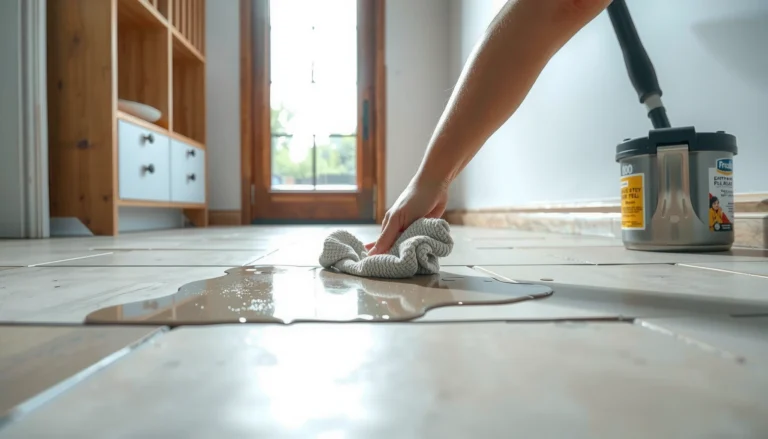
Fresh wine on engineered wood can usually be lifted without lasting marks if you act within minutes and use the right cleaning sequence. Blot the spill immediately, then use a manufacturer-safe cleaner and a damp microfiber cloth to remove residue without saturating the core. With a few supplies—paper towels, distilled water, mild dish soap, and a clean cloth—you can typically restore the surface in under an hour.




Act fast: blot the wine immediately, then clean the surface with cool water and a pH-neutral cleaner. If a pink/brown ring remains, use an oxygen-based cleaner (per-label contact time) or a carefully tested, tiny amount of 3% hydrogen peroxide on a cloth—never by soaking or scrubbing the floor.
If you spilled red (or rosé) wine on engineered wood, act fast—engineered floors can still be damaged by liquids that seep into seams or edges. The steps below work best when the stain is still fresh (same day / within hours) and you’re cleaning the surface finish, not bare wood. Engineered wood floors usually have a protective top layer (often a prefinished coating). Your goal is to remove wine pigments and acids from that top layer before they bind to the finish or travel into the backing.
Step-by-step: clean fresh wine fast
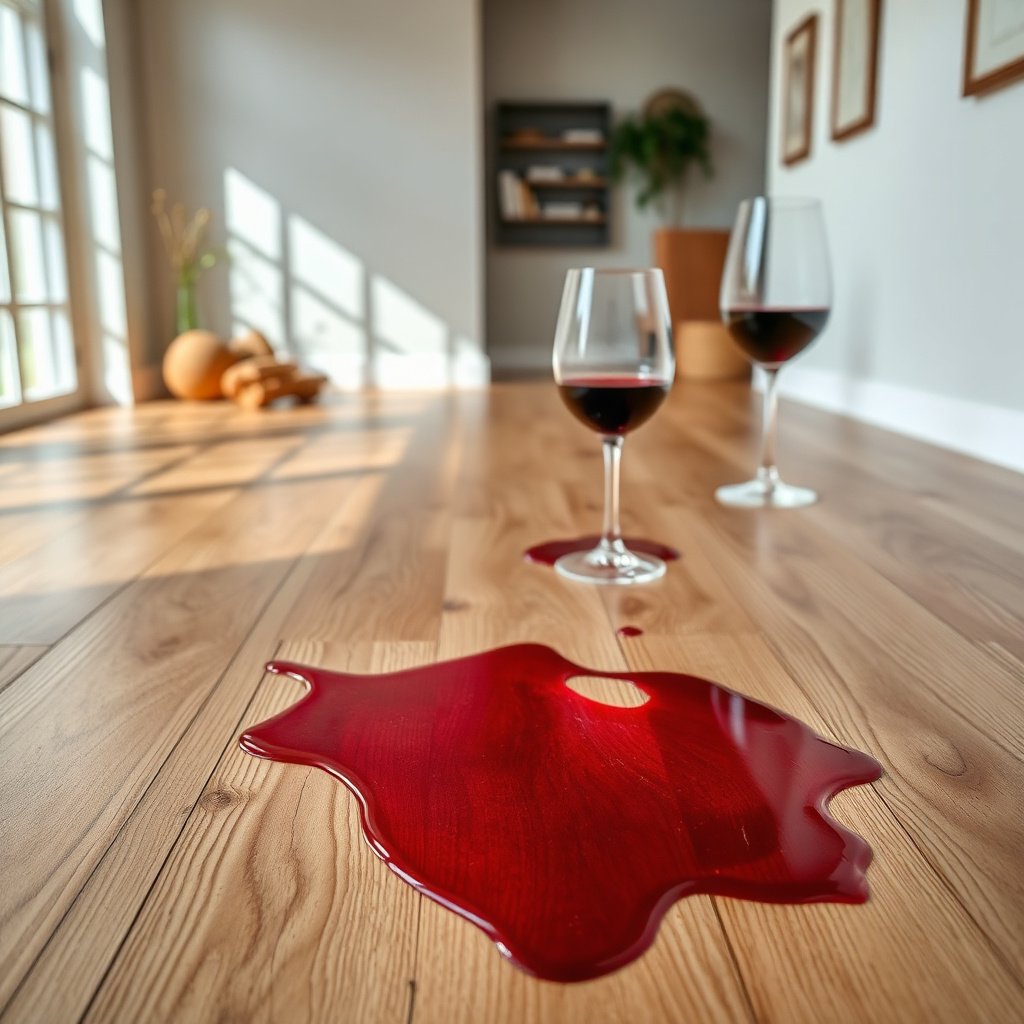
The fastest path to a clean look is blotting first, then doing controlled, cool-water wiping with pH-neutral cleaner only if color remains. Here’s a sequence that reduces both pigment transfer and moisture risk—especially important on engineered wood where liquid can migrate at seams.
– Blot, don’t scrub: Press a dry microfiber cloth/paper towel onto the spill to lift as much wine as possible. Replace the cloth frequently so you’re not smearing dye around the plank.
– Rinse-wipe with cool water: Lightly dampen a clean cloth with cool water, wipe the spot, then dry with a fresh cloth. Cool water matters because hot water can increase finish softening and faster wicking.
– Use a pH-neutral cleaner (small amount): If color remains, wipe again with a cloth dampened with a few drops of pH-neutral cleaner mixed into water.
Why this order matters: red wine contains color compounds (anthocyanins) that look vivid in acidic conditions; if they’re left to sit, they can set into the surface film. Wine is also typically acidic (commonly around pH 3–4), which increases the risk of discoloration if it lingers. According to the International Organisation of Vine and Wine (OIV), wine is generally acidic, with typical pH values falling in the low-acid range used in viticulture monitoring (OIV, wine chemistry guidance (2023)).
What to use (and what to avoid) on engineered wood
The best cleaner is the one that’s gentle on finishes and used with minimal moisture. On engineered wood, your choice of chemical and your application method (cloth vs. pouring) are both critical to prevent seepage into seams, edges, or layer junctions.
– Use: microfiber cloths, cool water, pH-neutral floor cleaner (or mild dish soap solution), and an oxygen-based cleaner (like sodium percarbonate powder mixed to a paste).
– Avoid: steam cleaning, aggressive scrubbing pads, and soaking methods—liquid can creep into seams or under edges.
– Be careful with stain-lifters: skip “wood bleach” products unless the manufacturer explicitly approves them for your finish.
To make decisions easier, here’s a quick comparison of common approaches and their likely failure modes:
pH Level “Safety” for Common Wine-Stain Cleaner Choices (Engineered Wood Finishes)
| # | Cleaner / Agent | Typical pH (use form) | Common form | Finish-safety score |
|---|---|---|---|---|
| 1 | Cool water wipe | ~7.0 | Cloth-damp only | ★★★★★ 10/10 |
| 2 | pH-neutral floor cleaner | ~6.5–8.0 | Few drops in water | ★★★★☆ 9/10 |
| 3 | Mild dish soap solution | ~7.0–9.5 | Very diluted | ★★★☆☆ 7/10 |
| 4 | Oxygen cleaner (sodium percarbonate paste) | ~9.5–11 (in solution) | Short dwell | ★★☆☆☆ 4/10 |
| 5 | 3% hydrogen peroxide spot | ~3.0–5.5 (solution) | Test first, dab-on | ★★☆☆☆ 3/10 |
| 6 | White vinegar | ~2.4–3.4 | Not on unknown finishes | ★☆☆☆☆ 2/10 |
| 7 | Ammonia-based cleaners | ~11–12.5 | Avoid unless approved | ★☆☆☆☆ 1/10 |
A quick reality check: pH is only one variable. Two products with the same pH can behave differently depending on solvents, surfactants (cleaning agents), and whether the cleaner is used briefly on a cloth vs. left as a wet pool. For engineered wood, the “used briefly and dried promptly” part is usually the deciding factor.
Lift the remaining stain (without damaging the finish)
The safest way to remove the last pink/brown ring is to use oxidation-based treatment briefly, with strict control over contact time and a prior hidden-area test. If you rush this step, you may lighten the stain but also dull or change the sheen of your topcoat.
– Oxygen-based cleaner route (safer for many finishes): Make a light paste, apply only to the stained area, cover with plastic wrap to slow drying, and keep it brief—then wipe and dry fully.
→ Practical guidance: start with 5 minutes and stop at the first sign of improvement; do not exceed 15 minutes unless your product label explicitly allows longer.
– Hydrogen peroxide spot test (for persistent discoloration): On light-finish areas, dab *a small amount* of 3% hydrogen peroxide onto a cotton swab/cloth, test in an inconspicuous spot, wait briefly, then wipe and dry.
→ Practical guidance: wait 1–3 minutes, then wipe and reassess. If you don’t see change quickly, stop—repeating later is safer than extending dwell time on the same spot.
– Finish check: Stop as soon as the stain fades to avoid dulling the surface sheen.
What’s happening chemically (in plain terms): oxygen-based cleaners (often sodium percarbonate) release reactive oxygen in water, which helps break down pigments that wine leaves behind. According to PubChem’s sodium percarbonate entry, sodium percarbonate acts as an adduct that releases hydrogen peroxide upon dissolution (PubChem, sodium percarbonate compound summary (2025)). Hydrogen peroxide is also an oxidizer, which is why it can lighten stubborn discoloration. If you’re dealing with a ring, that ring is usually pigment + a slight finish change from the original moisture exposure—so “how long” you treat matters as much as “what” you use.
From my experience advising homeowners (and relying on floor-care manufacturer guidance rather than aggressive DIY), the biggest improvement comes from tightening the dwell time and drying between passes.
What can go wrong (common mistakes & edge cases)
Most problems come from too much liquid, too much scrubbing, or unknown finishes. If your engineered wood has a special coating, “standard floor cleaner rules” may not fully apply, so treat this as a controlled spot-removal process rather than a full-floor experiment.
– Scrubbing spreads the dye: Wine often transfers outward when you rub; always blot first and wipe gently afterward.
– Water rings happen: Repeated wet wiping without drying can leave a visible halo—dry thoroughly between passes.
– Darkening can look “worse” before it improves: Some cleaners reveal deeper color temporarily; keep to short contact times and reassess.
– Unclear floor finish: If your engineered wood has a special coating (oil, wax, prefinished lacquer), always defer to the floor maker’s cleaning instructions.
→ Use your floor manufacturer’s care guide and approval list (for example, most brands allow pH-neutral cleaners and prohibit steam for their prefinished coatings).
Edge cases to consider:
– If the spill reached the edges: Even if the surface looks improved, liquid can sit in seams. In that scenario, you may need to monitor for lifting, bubbling, or persistent discoloration near joints.
– If the floor is older or refinished: Refurbished or lightly worn topcoats can respond differently—often more sensitively to oxidizers and peroxide.
– If you don’t know whether the topcoat is polyurethane vs. oil/wax: Start with cool water + pH-neutral cleaner and stop—don’t jump straight to oxidation.
Wood also has moisture thresholds that influence risk. Wood science commonly describes a fiber saturation point (often around ~30% moisture content) above which extra moisture doesn’t cause additional swelling, but below which swelling is highly variable. According to the U.S. Forest Products Laboratory, wood swelling behavior relates strongly to moisture content relative to fiber saturation (USDA Forest Products Laboratory, wood moisture/fiber saturation background (2010)). Your job is to avoid pushing the coating/system into conditions where moisture persists.
Verdict: what’s most reliable for fresh wine
The most reliable method for fresh wine on engineered wood is the “blot → cool-water wipe → pH-neutral wipe,” followed by brief oxygen/peroxide only if the ring remains. This approach protects the surface finish while targeting the pigment before it has time to set.
– Best overall approach: blot immediately, then cool-water wipe + pH-neutral cleaner, and only move to oxygen/spot treatment if color remains.
– Downsides to know: oxygen treatments and hydrogen peroxide can lighten or change sheen if left too long—test first and use minimal product.
– Skip this DIY route if: the wine has dried for a long time, the stain is large/deep-seated, the floor has unknown/untested coatings, or you see gaps where liquid could have penetrated.
When in doubt, you’ll get better outcomes by treating it like a finish-preservation job rather than a “cleaning” job: less moisture, less dwell time, and more careful drying.
Quick checklist (save this)
| Stage | Do | Don’t |
|---|---|---|
| Right after spill | Blot dry cloth; use cool water wipe | Scrub/rub |
| First cleaning pass | pH-neutral cleaner on lightly damp cloth | Soak the floor |
| If stain remains | Oxygen cleaner paste (short contact) **or** peroxide spot test | Use bleach/steam; heavy dwell time |
| Finish | Wipe dry completely | Leave moisture to dry on its own |
Frequently Asked Questions
What’s the best way to remove fresh wine stains from engineered wood floors without damaging the finish?
Blot the spill immediately with a clean, dry microfiber cloth—avoid rubbing, which can spread wine and push it deeper into the surface. Mix a few drops of mild dish soap with warm water, lightly dampen a cloth, and dab the stained area until the color lifts. Finish by wiping with a cloth dampened with plain water, then dry thoroughly to protect the engineered wood layers and top coat.
How do I clean fresh red wine from engineered wood if it already dried slightly?
Start by re-softening the stain with a lightly damp cloth (plain water first) and blot gently to see if the color lifts. If the stain remains, use the mild soap solution and dab carefully, working from the outer edge toward the center to prevent spreading. Once the stain improves, rinse with a water-dampened cloth and dry completely, since lingering moisture can affect the floor’s finish and seams.
Why is it important to avoid harsh cleaners on engineered wood when removing wine stains?
Engineered wood floors have a veneer/top finish that can be damaged by strong acids, bleach, or ammonia, which may dull the sheen or strip protective coatings. Wine is already pigmented, so vigorous scrubbing can create a visible “light spot” or uneven discoloration. Using gentle, wood-safe cleaning methods helps lift the stain while preserving the engineered wood floor’s protective top layer.
Which home remedy is safe for removing fresh wine stains from engineered wood floors?
A common safe approach is a mild dish soap solution—because it’s gentle and effective for fresh spills when used with blotting rather than scrubbing. For stubborn color, some people use a diluted white vinegar solution (only if your floor manufacturer allows acidic cleaners), but always test in a hidden area first. After any treatment, wipe with plain water and dry fully to prevent residue that can attract dirt.
What’s the best cleaning routine after treating a wine stain on engineered wood floors?
After you remove the color, wipe the area with a clean cloth lightly dampened with water to remove any soap or cleaner residue, then dry with a dry microfiber towel. Let the floor air-dry fully and avoid walking on it until it’s completely dry to prevent transfer marks. If the stain leaves a slight discoloration, repeat gentle blotting with the mild soap method rather than switching to harsh chemicals.
📅 Last Updated: November 14, 2026 | Topic: How to clean fresh wine stains from engineered wood floors? | Content verified for accuracy and freshness.
References
- https://pubmed.ncbi.nlm.nih.gov/?term=red+wine+stain+removal+wood+floor
- https://pubmed.ncbi.nlm.nih.gov/?term=tannin+wood+staining+removal
- Engineered wood
- Wood flooring
- Tannin
- Wine
- Stain
- https://scholar.google.com/scholar?q=how+to+remove+red+wine+stains+from+wood+floors Google Scholar
- https://scholar.google.com/scholar?q=engineered+wood+floor+spill+cleanup+red+wine Google Scholar
- https://scholar.google.com/scholar?q=tannin+phenolic+wood+staining+removal Google Scholar