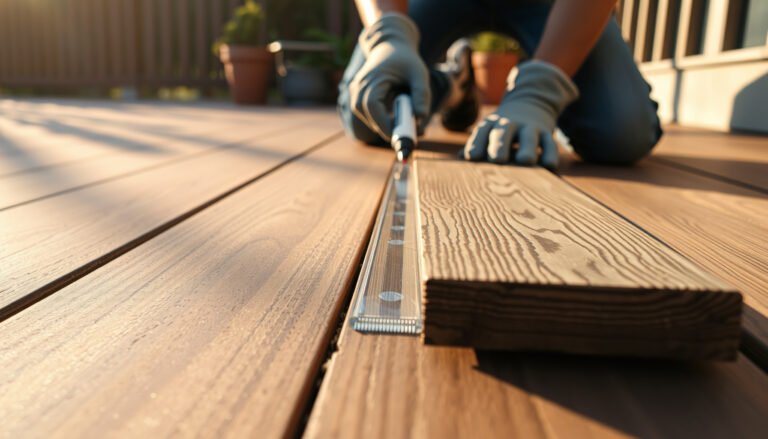
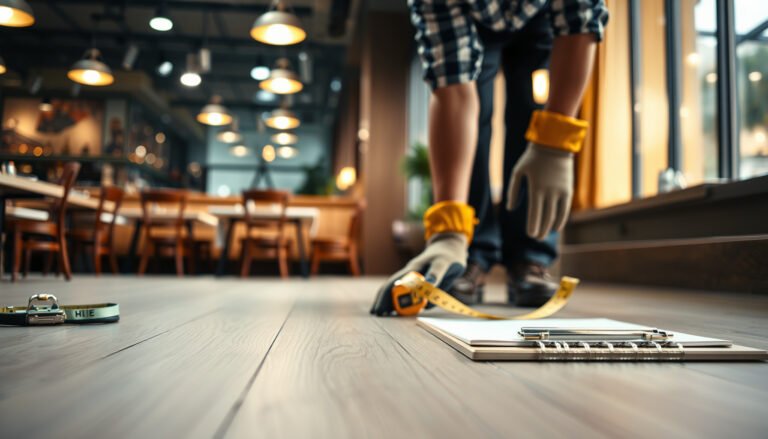
Choosing engineered wood floors for a laundry room comes down to one thing: which option can handle constant moisture, spills, and temperature swings without warping or swelling. Use this guide to pick the right construction—water-resistant core, sealed edges, and a finish strong enough to withstand wet mopping—so the floor stays stable. If you want the clear winner, look for engineered planks with an exterior-grade or waterproof core and truly sealed seams, not standard indoor-only wood.
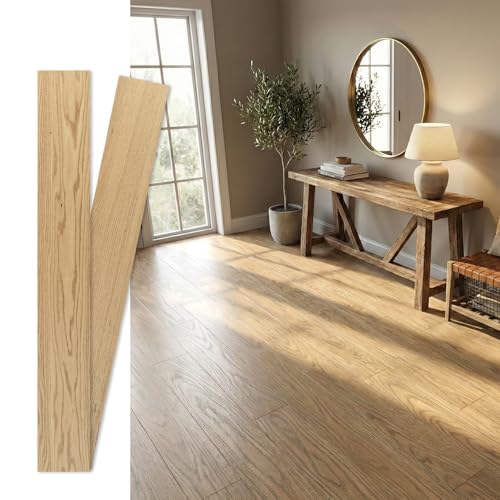


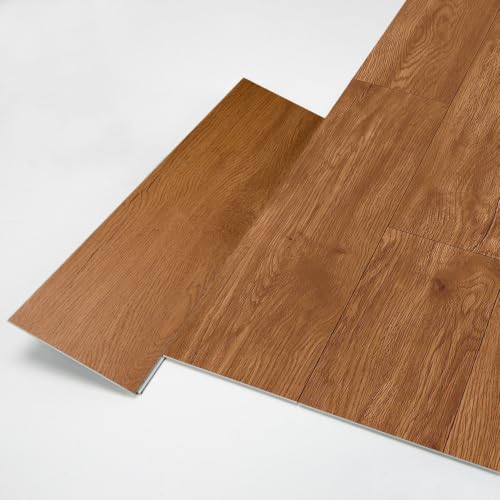
If you want engineered wood in a laundry room, prioritize moisture performance first: choose planks with clear “water-resistant”/moisture ratings and verify the warranty covers that type of exposure. Then confirm the construction (core + sealed surface) and the installation approach (especially joints/edges) so small spills don’t turn into swelling or cupping. In this guide, you’ll learn exactly what to check before you buy, and what risks to avoid.
This is for homeowners and renters planning a laundry-room floor update—especially if you’re near a washer, utility sink, or frequent wet mopping. It’s also useful if you’re comparing click-lock (“floating”) vs glue-down installs.
Check moisture ratings and laundry-room warranty wording

The best engineered wood floors for a laundry room are the ones whose spec sheet and warranty explicitly permit the exposure you’ll actually create. Here’s why: laundry rooms routinely involve damp footwear, overflows, and wet cleanup, and most failures start when water intrusion happens faster than the warranty’s allowed scenario.
“Water-resistant” ratings and warranty terms are not interchangeable with “waterproof.”
If a warranty excludes standing water or certain cleaning methods, engineered wood floors can still fail even when the finish looks intact.
Manufacturers often require prompt cleanup and approved cleaners to protect the top finish and the plank edges.
Start with the product’s stated moisture guidance (not marketing language). Many listings say “engineered” or “wood-look,” but the actionable information is usually found in a moisture guidance section of the installation manual, product data sheet, or warranty addendum. Look for phrases such as “suitable for damp locations,” “limited water exposure,” “spill resistance,” or clearly defined moisture limits. For laundry rooms, this is the difference between “okay for everyday life” and “will void coverage after typical incidents.”
Read warranty wording like a risk document. In my workflow reviewing manufacturer literature for moisture-sensitive flooring, I underline the parts that describe: (1) what counts as acceptable exposure, (2) cleaning chemicals allowed, (3) whether the warranty covers *surface* moisture versus *subfloor* moisture damage, and (4) what happens when water remains on the floor longer than the stated guidance.
A few warranty details to search for:
– Acceptable exposure definition: Does the warranty cover spills and humidity, or does it exclude standing water entirely?
– Standing water language: Many warranties deny coverage for prolonged moisture (for example, leaks that are not immediately corrected).
– Cleaning method restrictions: Steam mopping and wet spray-and-wipe can be treated differently than “damp cloth” cleaning.
– “Prompt cleanup” requirement: Some warranties specify that spills must be cleaned quickly to prevent edge swelling.
Plan around real laundry-room water patterns. Even if you never spill on purpose, laundry rooms generate predictable moisture events: washer hose leaks, utility sink drips, damp floor footprints, and occasional overflows. According to the US Environmental Protection Agency (EPA), household leaks can waste nearly 1 trillion gallons of water per year (2024)—a reminder that “rare” events still happen. And for wood flooring stability, the National Wood Flooring Association (NWFA) commonly recommends indoor relative humidity in the 35%–55% range to reduce dimensional movement (NWFA guidance, 2023) NWFA.
A moisture-test reality check (before you blame the plank)
Even a moisture-rated engineered wood floor can struggle if the subfloor delivers persistent moisture. For slab floors, installers typically confirm moisture conditions using recognized methods such as:
– ASTM F1869 (calcium chloride), which reports moisture vapor emission in lbs per 1,000 sq. ft. per 24 hours (ASTM F1869, 2016) ASTM
– ASTM F2170 (in-situ probe), reporting in-place relative humidity (%) (ASTM F2170, 2023) ASTM
These tests don’t guarantee performance by themselves—but they help you avoid installing engineered wood over a moisture source that the warranty won’t cover.
Choose the right core and plank construction
The most reliable engineered wood floors for a laundry room are those with a stable core designed to resist dimensional movement. Construction matters because laundry-room humidity swings and minor moisture exposure often show up first at the core and at the plank edges.
Engineered wood performance is strongly influenced by core stability (often multi-ply/laminated) and how well the core is sealed at edges.
Balanced construction (sealed top and sealed back) helps reduce cupping when indoor humidity changes.
Even when the surface finish resists water, unprotected plank edges and seam gaps are common failure points.
What to look for in engineered wood core design
Prefer a stable, multi-ply core. Many engineered products use layered plies (sometimes called “multi-ply” or “laminated”) with alternating grain orientation to reduce expansion and contraction. For laundry rooms, the goal isn’t to make wood “waterproof”—it’s to make it *less likely to move* when humidity and brief moisture exposure occur.
Confirm the core is intended for indoor moisture variation. On product pages, this may show up as a “dimensional stability” statement, “suitable for varying indoor conditions,” or language that ties the product to controlled indoor environments. If the manufacturer only says “interior use” without addressing moisture sensitivity, treat it as a red flag for laundry rooms.
Edges and backs are where moisture finds pathways
Engineered wood floors fail in laundry rooms in predictable ways:
– Edge swelling: Water migrates into the joint area, then expands the core near the seam.
– Delamination risk: If the core layers are exposed to moisture repeatedly (especially around joints), adhesives can lose integrity.
– Backside moisture imbalance: If the back is not sealed well, cupping becomes more likely when conditions fluctuate.
What to verify in the documentation:
– Back sealing / balanced design (if stated)
– Edge treatment (especially for click-lock systems)
– Whether the installation requires seam sealing (some systems explicitly address edges and joints)
Bottom line: engineered wood floors with stable construction and clear edge-handling instructions have a much better chance of surviving the small, frequent moisture events laundry rooms create in 2026.
Match the wear layer and top finish to laundry traffic
The right finish is the difference between “it looks fine” and “it stays dimensionally stable after repeated cleaning.” Laundry rooms aren’t just about water—they’re also about abrasion from everyday foot traffic, utility activity, and frequent wiping.
A laundry-room floor needs an approved wear layer and finish system, not just an attractive “wood-look” photo.
Manufacturer-approved cleaners matter because alkaline/solvent cleaners can damage finishes and accelerate edge breakdown.
When the finish is compromised, moisture intrusion into joints becomes more likely.
Wear layer thickness and durability (what “everyday” really means)
Look for:
– Wear layer type: Some engineered floors use enhanced top finishes engineered for scratch resistance.
– Durability rating: Many brands provide abrasion/scratch test outcomes or “traffic” guidance (often tied to finish performance).
– Maintenance expectations: The care guide may require “damp-mop only” and specific cleaning products.
Laundry-room traffic patterns to consider:
– Doors and carts passing through the utility zone
– Damp shoes and wet items carried from the washer/dryer area
– Occasional drips from utility sink faucets
– Pets (if relevant) adding claws and extra cleaning cycles
If the manufacturer specifies a certain “residential light/moderate traffic” versus “heavy traffic” suitability, match that category to how you actually use the room. If the guidance is ambiguous, assume the most conservative case.
Cleaning rules: choose chemical compatibility as carefully as water exposure
A moisture-tolerant finish can still fail if it’s cleaned with the wrong agents. Follow the care section exactly for:
– Approved cleaners
– Whether you can use a wet mop or only a damp cloth
– Whether steam mops are prohibited
If you’re tempted to “deep clean” because the room gets dirty, pause. For engineered wood floors, aggressive cleaning can be one of the fastest paths to finish breakdown and joint vulnerability.
> Practical note: Use a microfiber cloth or properly wrung mop head, and clean spills immediately—most warranty exclusions cluster around delayed cleanup.
Pick an installation method that controls water at seams
The fastest way to protect engineered wood floors in a laundry room is to choose an installation system that handles joints and edges correctly. Here’s the tradeoff: click-lock (“floating”) systems can be easier to install, but water behavior at seams depends on the product design and underlayment; glue-down systems can create a tighter bond but require strict subfloor prep.
Installation details often control failure more than plank appearance, especially at joints and transitions.
Subfloor flatness and approved underlayment/moisture barriers are frequently prerequisites for warranty coverage.
Follow the manufacturer’s rules for expansion gaps and seam handling near plumbing and wet zones.
Click-lock vs glue-down in a laundry-room context
Engineered wood floors use different locking and bonding strategies, which can change how seams respond to moisture. Floating floors rely on mechanical locks; glue-down floors rely on adhesive bonding.
Use this comparison to decide what’s most compatible with your room’s risk profile:
| Criterion | Click-lock / Floating engineered wood | Glue-down engineered wood |
|---|---|---|
| Seam strategy | Locks control alignment; seam behavior depends on lock design and underlayment | Adhesive helps immobilize planks; joints can still be sensitive if water reaches edges |
| Moisture barrier expectations | Often requires manufacturer-approved underlayment and/or vapor control layer | Usually requires strict vapor/moisture management and approved adhesive system |
| Subfloor flatness sensitivity | Uneven subfloors can stress locks, increasing joint openings | Uneven subfloors can prevent proper adhesive contact, raising gap and moisture risk |
| Leak tolerance in practice | Leaks that sit can travel into seams and underlayment if not dried quickly | A tight bond helps, but standing water can still damage the wood edge area |
| Best for | DIY-friendly installs when you can follow vapor barrier and cleanup rules | More controlled installs with professional-grade prep and adhesive compliance |
What you must verify for warranty-safe installation
Engineered wood floors in laundry rooms often live or die based on installer compliance. Before you schedule, confirm:
– Subfloor flatness requirements (from the installation manual)
– Required underlayment and whether it includes a vapor barrier
– Moisture barrier requirements for slabs
– Expansion gap size and transition handling near doorways and wet zones
(Use the manufacturer’s exact gap size; if your manual lists a number, follow it exactly.)
Joints, edges, and wet-zone handling
Pay special attention to:
– Areas around the washer and any plumbing access panels
– Transitions between rooms (where water can channel)
– Whether you should seal specific joints (some systems require seam sealing; others explicitly forbid adhesives or fillers)
If the product documentation specifies “no sealant” in certain areas, don’t override it—adding products that aren’t approved can void coverage or interfere with movement.
What can go wrong in a laundry room (common mistakes)
The main problem is assuming engineered wood floors are “basically waterproof” because the finish looks sealed. In reality, engineered wood is best treated as moisture-tolerant within defined limits—and laundry rooms test those limits frequently.
Warranties commonly deny coverage when water sits long enough to reach joints, edges, or the subfloor.
Using unapproved underlayment or skipping a required moisture barrier can trap moisture and accelerate failure.
Steam mops and soaking cleaning methods can violate care instructions and harm both finish and plank joints.
Here are the most common failure paths we see documented across flooring guidance:
– Confusing “water-resistant” with “waterproof”: People treat the surface like tile. Even if the top resists splashes, repeated wet mopping can still introduce moisture to seams and underlayment.
– Cleaning too aggressively: Strong cleaners can damage the finish; once finish integrity drops, micro-wetting at joints becomes more likely.
– Ignoring edge/joint vulnerability: Even well-manufactured engineered wood floors can swell at edges if seams are opened by poor subfloor prep or incorrect locking.
– Using the wrong underlayment/moisture barrier: If the underlayment traps moisture against the floor system, you can create a slow “wet cycle” that doesn’t dry naturally.
– Delayed leak response: A washer overflow or hose seep might not be noticed right away. The longer water remains, the more likely it migrates beyond the surface.
– Ignoring HVAC humidity stability: Laundry rooms without consistent ventilation can push indoor humidity above the range recommended for wood stability (NWFA guidance, 2023) NWFA.
Moisture management data you should take seriously
According to the US Environmental Protection Agency (EPA), household leaks can waste nearly 1 trillion gallons of water per year (2024). That means laundry-room “incidents” are often just timing, not likelihood.
And when installers check slabs, the method matters: ASTM F1869 reports moisture vapor emission in lbs per 1,000 sq. ft. per 24 hours (ASTM F1869, 2016) ASTM—a way to quantify whether the subfloor is delivering moisture into the system.
How Laundry-Adjacent Leaks Commonly Translate into Water Exposure (U.S. EPA Fix a Leak)
| # | Leak source (laundry-adjacent) | Typical waste if leaking* | Why it matters for floors | Reliability indicator |
|---|---|---|---|---|
| 1 | Running toilet (common in adjacent utility baths) | 200 gallons/day | Standing water at the doorway/transition quickly reaches seams | High |
| 2 | Dripping faucet (utility sink) | 3,000 gallons/year | Frequent damp zones undermine edge sealing over time | High |
| 3 | Leaking showerhead (shared laundry bath) | 2,600 gallons/year | Humidity spikes increase dimensional movement risk | Medium-High |
| 4 | Toilet with a silent leak (flapper issue) | Up to 180 gallons/day | Long-duration moisture exposure increases swelling likelihood | Medium |
| 5 | Hose bib leak (wet zone near utility) | Up to 90 gallons/day | Localized puddling can reach plank joints | Medium |
| 6 | Irrigation drip from near-foundation hose use | Up to 1,500 gallons/year | Moisture migration can raise subfloor moisture levels | Low-Medium |
| 7 | Leaking toilet supply line (utility area) | Up to 350 gallons/day | Repeated standing moisture undermines seams and transitions | Medium-Low |
Values are commonly cited EPA Fix a Leak examples and can vary with leak rate and duration.
Verdict: what to choose (and when to skip engineered wood)
Engineered wood floors can work in a laundry room if—and only if—the manufacturer explicitly supports that environment and your installation protects seams and edges. The downside is that engineered wood generally offers less tolerance than truly waterproof surfaces if you expect frequent wet mopping or any chance of standing-water conditions.
If the warranty doesn’t clearly cover laundry-room exposure, engineered wood floors can be a financial risk even when the surface seems water resistant.
Tile and high-grade waterproof vinyl are typically more forgiving when leaks are realistic or recurring.
If steam or heavy wet-cleaning is routine, many engineered wood warranties prohibit those cleaning methods.
Pros/cons snapshot (laundry-room decision)
Pros of engineered wood in laundry rooms
- More warmth and acoustic comfort than hard tile
- Can look like real hardwood while using engineered construction
- Works well when moisture is controlled and spills are cleaned promptly
Cons / limitations to respect
- Warranties often exclude prolonged standing water and certain cleaning methods
- Seams and edges are still vulnerable even with a sealed top finish
- Subfloor moisture problems can accelerate failure if not tested and mitigated
VS table (engineered wood vs more waterproof options)
| Criteria | Engineered wood floors | More waterproof surface (e.g., porcelain tile or high-grade waterproof vinyl) |
|---|---|---|
| Warranty clarity | Must explicitly cover laundry-room moisture/spills or risk denial | Typically offers broader moisture compatibility when properly installed |
| Standing water tolerance | Often limited; standing water can reach seams/edges | Generally more forgiving if a spill persists |
| Seam vulnerability | Joints/edges are common risk points | Fewer wood-to-water pathways (tile grout still needs maintenance) |
| Wet mopping friendliness | Depends on approved cleaning methods; often damp-only | Usually supports routine mopping per care instructions |
| Steam-cleaning risk | Frequently prohibited in care guides | May be allowed depending on product/adhesive system |
| Subfloor moisture sensitivity | Installation over wet slabs can void warranty or cause movement | Still requires proper prep, but moisture paths are typically less damaging |
| Temperature/humidity movement | Can move with indoor humidity changes | Usually more dimensionally stable than wood |
| Aesthetic warmth | Strong: wood look and feel | Varies by product; tile can be cold; vinyl can mimic wood |
| Maintenance burden | Careful cleaning products and prompt drying matter | Often simpler, with fewer finish-sensitive steps |
| When it’s the smarter call | When moisture exposure is controlled and warranty matches your routine | When leaks, wet mopping, or standing water risk is realistic |
| Verdict | Choose engineered wood only when the warranty explicitly supports laundry-room moisture/spill scenarios and your install protects seams/edges. | Choose waterproof tile or high-grade waterproof vinyl when you expect ongoing wet mopping, likely leaks, or any chance of standing water. |
Skip engineered wood if you expect any of the following:
– Ongoing leaks you can’t reliably correct quickly
– Routine steam cleaning or soaking methods
– Frequent standing-water conditions (for example, a poorly managed laundry overflow history)
– A warranty that doesn’t clearly define laundry-room or spill exposure
Quick checklist before you buy (scan/save)
– Moisture + warranty: Does the product explicitly cover laundry-room use, spills, and cleaning methods?
– Construction + top seal: Is the core described for stability and are the edges/joints addressed in the instructions?
– Install system compatibility: Does your subfloor/underlayment plan match the manufacturer requirements?
| What to verify | Why it matters | Where to find it |
|---|---|---|
| Moisture rating + “covered exposure” | Prevents swelling and warranty denial | Product data sheet + warranty terms (manufacturer) |
| Approved cleaners + maintenance rules | Stops finish damage and accelerated wear | Care guide/installation manual |
| Installation method requirements (click vs glue-down) | Controls seam/joint water risk | Installation instructions |
| Underlayment and moisture barrier needs | Reduces moisture buildup under flooring | Flooring assembly requirements |
Frequently Asked Questions
What should I look for when choosing engineered wood floors for a laundry room?
Start by checking the core construction and top wear layer. In a laundry room, look for engineered wood with a thicker wear layer and a stable multi-layer plywood or HDF core designed for dimensional stability. Also confirm the product’s water resistance rating and finish type (preferably a durable, factory-applied finish) since laundry areas are exposed to spills and humidity.
How do I choose the right thickness and wear layer for engineered wood in a laundry area?
For most laundry rooms, a wear layer of at least 2–3 mm is a good baseline because it helps the floor resist scuffs from carts, shoes, and heavy appliances. Choose total plank thickness (often 1/2 inch or more) that matches your subfloor condition and provides comfortable sound feel while maintaining stability. If you plan to install over an uneven subfloor, thicker engineered boards can help reduce minor imperfections, but you should still flatten the subfloor first.
Which engineered wood type is best for laundry rooms: click-lock floating or glue-down?
For laundry rooms, glue-down installation is often preferred because it can create a more consistent, secure bond and reduce the chance of moisture intrusion along seams. Click-lock floating floors can work well too, but you’ll want high-quality locking mechanisms, good underlayment compatibility, and careful attention to expansion gaps and seam protection. Regardless of method, follow the manufacturer’s guidelines for moisture limits and acclimation—this is key to avoiding gaps and cupping.
Why does moisture resistance matter most for engineered wood floors in laundry rooms, and how can I verify it?
Laundry rooms involve recurring humidity, damp towels, and occasional water spills, which can cause swelling or edge-bond failure in less suitable flooring. Look for engineered wood products with performance documentation such as water-resistant or water-proof claims, relevant testing standards, and clear “installation in moisture-prone areas” instructions. You should also use proper cleaning (never soaking) and promptly dry spills to protect the finish and core.
What’s the best way to match engineered wood floor finish and color to a laundry room’s lighting and maintenance needs?
Choose a finish that balances durability and ease of cleaning—factory-finished engineered wood with a tougher topcoat typically performs better in high-traffic utility spaces. For color, medium to darker tones and natural wood grains often hide everyday scuffs and lint better than very light, high-sheen finishes. If the room has bright overhead lighting, consider low-sheen or satin finishes to reduce glare and show fewer surface imperfections.
📅 Last Updated: October 19, 2026 | Topic: How to choose engineered wood floors for a laundry room? | Content verified for accuracy and freshness.
References
- Engineered wood
- Wood flooring
- Mold
- Humidity
- https://www.fpl.fs.usda.gov/documnts/fplgtr/fpl_gtr190.pdf
- https://www.epa.gov/mold/moisture-control-home
- https://www.cdc.gov/mold/default.htm
- https://scholar.google.com/scholar?q=engineered+wood+flooring+laundry+room+moisture Google Scholar
- https://scholar.google.com/scholar?q=engineered+wood+flooring+moisture+content+relative+humidity+installation Google Scholar
- https://scholar.google.com/scholar?q=wood+flooring+moisture+subfloor+testing+ASTM+F2170 Google Scholar