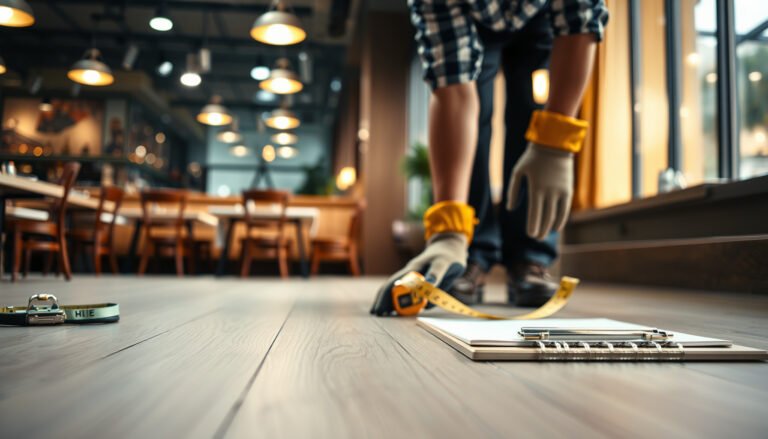
Choosing vinyl floors for an entryway comes down to one decision: pick the most water-resistant, toughest wear layer you can afford. If your entryway gets wet shoes, tracked-in salt, and heavy foot traffic, choose a waterproof LVP or LVT with a thick wear layer (and a click-lock or sealed core for full moisture protection). Get the look right too—opt for a textured, slip-resistant surface that hides grit—so your floor stays clean, safe, and durable through daily use.




Vinyl is usually the best entryway flooring choice when you prioritize water resistance, durability, and a wear layer that’s easy to clean. Start by matching the vinyl style (plank vs. tile) and installation method (click-lock vs. glue-down) to your traffic level and subfloor conditions—then verify slip/indent resistance and the warranty before you buy. This matters even more in 2026, because many product data sheets now separate “everyday tracking spills” from true moisture/wet-area coverage, especially at door seams.
If your entryway sees frequent foot traffic, muddy shoes, and occasional puddles, your vinyl selection has a bigger impact on long-term appearance than in low-use rooms. Use the steps below to narrow down the right type, thickness, wear layer, finish, and installation approach for your home.
Who this is for
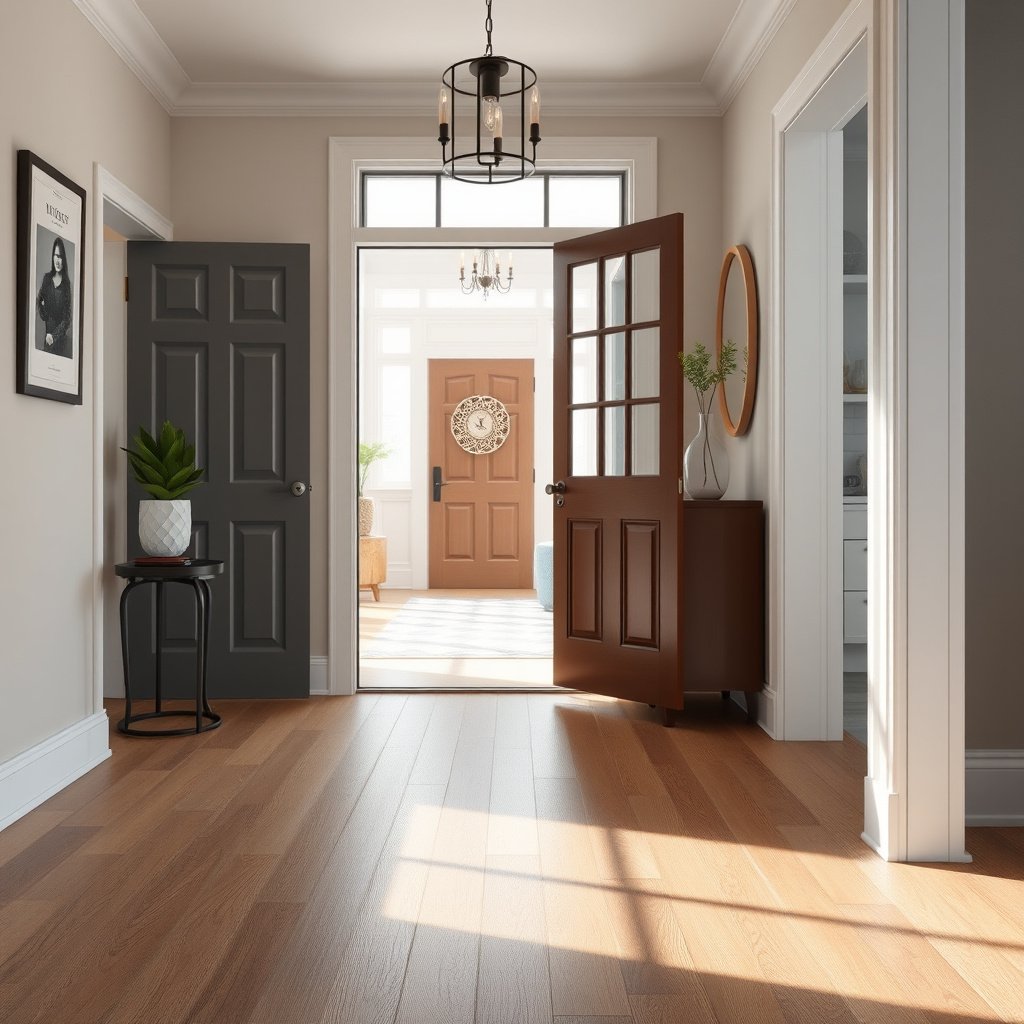
This guide is for homeowners, property managers, and contractors selecting vinyl entryway flooring (LVP or LVT) for spaces with tracked water, grit, and constant shoe traffic. It’s also useful if you’re comparing options in late 2026—when manufacturers’ installation instructions and warranty limitations are often specific about seams, edges, and subfloor flatness.
Know your entryway demands first
The fastest way to choose the right vinyl floor for an entryway is to identify whether your biggest problem is moisture, abrasion/scuffs, or subfloor unevenness. Once you know the “failure mode,” you can pick the right vinyl specs (wear layer, slip resistance, and installation method) and avoid the common causes of seam gaps and early wear.
According to the Resilient Floor Covering Institute (RFCI) installation guidance, resilient flooring performance depends on a properly prepared subfloor that meets a flatness tolerance of about 3/16 inch over 10 feet (≈4.8 mm over 3 m).
According to ASTM D2047-based guidance used in North America for wet static conditions, a coefficient of friction threshold of 0.42 DCOF is often cited as a minimum benchmark for slip resistance.
According to ASTM F2170 relative humidity testing used for floor covering installations, many moisture-related acceptance criteria referenced by manufacturers commonly target 75% RH or lower (verify product requirements).
Moisture, scuffs, or subfloor—what’s your entryway’s main stress?
– Moisture from tracking: Rain, snowmelt, and wet umbrellas create repeated exposure at the doorway. Even when the floor “looks dry,” dampness can travel through seams and transitions if the system isn’t designed or installed for it.
– Scuffs from grit: Entryway dirt acts like fine sand. Boot heels and rubber soles can abrade the surface finish and expose the wear layer faster than in hallways or bedrooms.
– Unevenness from an older subfloor: Bumps, dips, or damaged underlayment can stress the locking system (click) or prevent full adhesive contact (glue-down), which can lead to lifting, clicking, or gaps.
Use an inverted decision: start with what breaks first
In 2026, I’m seeing more vinyl products marketed as “water resistant,” but the real question is where water is allowed to go (micro-splashes vs. standing water) and how seams are protected. Your entryway’s demands determine how strict you need to be with those claims—because vinyl entryway flooring failures usually start at transitions, seam lines, or the subfloor surface itself.
Pick the right vinyl type (and what it means)
The best vinyl entryway flooring choice depends on whether you want easier DIY layout (typically click-lock) or a more rigid, seam-minimizing installation (often glue-down). Then you pick LVP vs. LVT based on how you want dirt and visual grout lines (if any) to behave over time.
LVP (Luxury Vinyl Plank) is designed to mimic wood plank visuals, while LVT (Luxury Vinyl Tile) is designed to mimic tile formats, which can change how dirt lines visually “show.”
Click-lock (floating) vinyl typically reduces the need for full-spread adhesive, but it still requires a flat, stable subfloor to prevent seam stress.
Glue-down vinyl uses adhesives to bond the flooring to the subfloor, which can improve stability and rigidity when installed to the manufacturer’s method and moisture limits.
LVP vs. LVT: not just aesthetics
– LVP (plank): Often makes entries feel more “linear” and continuous. If your entryway is narrow, planks can visually stretch the space.
– LVT (tile): Tile visuals can sometimes hide small debris lines differently than planks, depending on the pattern and grout-mimic design.
Click-lock floating vs. glue-down: installation drives performance
The practical difference isn’t only “DIY vs. pro.” It’s also how the floor handles movement at the door area and how it resists water reaching seams.
| Feature (entryway reality) | LVP (Plank) | LVT (Tile) |
|---|---|---|
| Typical look | Wood-grain visuals | Tile/grout visuals |
| How dirt can “read” | May blend with grain patterns | May align with grout-mimic lines |
| Layout complexity | Usually faster in long runs | Often requires pattern planning |
| Visual impact of transitions | Seams may be less noticeable if pattern flows | Grid-like pattern can highlight misalignment |
| Cleaning approach | Surface finish matters most | Grout-mimic realism influences perceived cleanliness |
| Best fit for narrow entries | Often helps elongate the view | Can work, but pattern scale matters |
| Pattern repeat behavior | May hide small spacing issues | Can expose spacing if pattern is strict |
| Scuff visibility | Depends on finish and wear layer | Depends on finish and wear layer |
| Common installation formats | Widely available in click-lock and glue-down | Widely available in click-lock and glue-down |
| Most important spec still | Wear layer + slip rating | Wear layer + slip rating |
| Best For | Entries that benefit from a wood-style flow | Entries where a tile-grid look is acceptable and patterns are planned |
Click-lock vs. glue-down (what the “feel” hides)
| Criterion | Click-lock floating | Glue-down |
|---|---|---|
| Subfloor flatness sensitivity | High—click seams can stress on bumps | High—adhesive contact matters across the surface |
| Water challenge at door seams | Depends on system seam design and sealing | Depends on adhesive compatibility and edge coverage |
| Flex/movement during temperature swings | More movement possible without rigid bonding | Typically more rigid due to bonding |
| DIY friendliness | Often easier for first-time installers | Often requires experienced adhesive workflow |
| Repair strategy | May be easier to replace a plank/tile | Localized repairs can be harder depending on adhesive cure |
| Sound/vibration | Can be quieter with a compatible pad (product-specific) | Often more solid feel, but depends on underlayment allowance |
| Moisture precautions | Still needs moisture control and correct transitions | Adhesive compatibility makes moisture limits more critical |
| Best use in an entryway | When you can prep a flat subfloor and plan seams/transitions carefully | When you want maximum stability and can meet the bonding requirements |
| Installation time constraints | Often faster and cleaner (no adhesive spread in most cases) | Often slower due to adhesive setup and cure behavior |
| What to verify before buying | Locking system, underlayment allowances, and seam limitations in warranty | Correct adhesive type, moisture limits, and required subfloor prep in documentation |
| Verdict | Choose click-lock when you want simpler installation and can meet flatness + seam/transitions best practices | Choose glue-down when you want maximum rigidity and can follow adhesive + moisture requirements exactly |
Focus on the wear layer, thickness, and protective finish
The most important spec for vinyl entryway flooring is the wear layer—it’s the protective top that fights scuffs from boots and grit. Pick a higher-rated wear layer and confirm the floor is designed for everyday tracking exposure, not just dry indoor use.
Many vinyl product specs measure the wear layer in mil (thousandths of an inch), which is directly tied to how well the surface resists abrasion and scuffs in traffic areas.
According to ASTM D2047 static friction testing practices, slip resistance claims depend on the floor’s surface/finish and the test conditions (dry vs. wet).
According to RFCI work practices, resilient floors can fail early when installation shortcuts prevent proper bonding or proper flatness—so wear-layer durability can be undermined by subfloor problems.
How to read the wear layer and thickness without guessing
– Wear layer rating: Look for an entry-appropriate or heavy-traffic claim in the product documentation (often expressed via thickness of the wear layer and/or intended use category).
– Overall thickness: Total thickness can influence stability and feel, but it doesn’t automatically guarantee better abrasion resistance—wear layer protection is still the key.
– Surface finish: A more slip-resistant surface can be worth trading off some visual “shine,” especially in wet climates.
A practical wear-layer guide (spec-based tiering)
Below is a spec-based tier to help you interpret wear-layer thickness numbers that appear on many vinyl listings. It’s not a lab test result; it’s a conversion and decision aid based on typical industry spec ranges seen in product literature.
7 Vinyl Wear-Layer Thickness Tiers Used in Entryway Product Specs
| # | Wear layer (mil) | Wear layer (mm) | Entryway suitability | Priority tier |
|---|---|---|---|---|
| 1 | 4 mil | 0.10 mm | Light-duty entries | ★★☆☆☆ |
| 2 | 6 mil | 0.15 mm | Frequent tracking (moderate) | ★★★☆☆ |
| 3 | 8 mil | 0.20 mm | Higher-traffic entryways | ★★★★☆ |
| 4 | 12 mil | 0.31 mm | Heavy residential entries | ★★★★★ |
| 5 | 20 mil | 0.51 mm | High-traffic homes | ★★★★★ |
| 6 | 28 mil | 0.71 mm | Very demanding entryways | ★★★★★ |
| 7 | 40 mil | 1.02 mm | Commercial-leaning durability | ★★★★★ |
Note on the “real world” limits
Vinyl entryway flooring performance still depends on cleaning chemicals, mat placement, and how well the seams and edges are handled. If you’re expecting regular puddling or overflow near the doorway, wear-layer thickness alone won’t protect the installation.
Nail down slip resistance and comfort details
The right vinyl for an entryway should reduce slip risk during wet shoe traffic and still feel stable underfoot. That means you confirm slip-resistance testing data and choose the right balance of surface finish, comfort padding (if allowed), and underlayment compatibility.
Slip-resistance claims are test- and condition-specific, so a “wet” rating is not the same as a “dry” rating.
If a vinyl product includes an attached pad, the manufacturer’s instructions control whether additional underlayment is allowed (to avoid warranty conflicts).
In entryways, comfort features that change thickness or height transitions can create edge stress at door thresholds if installers don’t follow the specified build-up.
Slip resistance: verify the test type, not just the marketing
When you compare vinyl entryway flooring, look for:
– Slip/traction documentation (often based on ASTM D2047 static coefficient of friction practices).
– Whether the claim is for wet conditions, which matter most near the threshold.
– Maintenance guidance, because contamination (mud, salt, oils) can change friction dramatically.
Comfort and noise: use padding only when the product permits it
Some vinyl comes with an attached pad. If yours doesn’t, you may consider underlayment—but:
– Confirm underlayment compatibility with the flooring system (especially for click-lock).
– Make sure padding doesn’t break flatness requirements or create excessive bounce that stresses the click seams over time.
– Plan transitions carefully so your entryway door area doesn’t “pinch” the floor build-up.
Plan for subfloor and installation realities
The best vinyl entryway flooring is the one installed over a subfloor that’s stable, clean, and flat enough for the specific installation method. If you skip subfloor prep, you can negate even the best wear layer by creating gaps, movement, and seam stress.
According to RFCI installation guidance, resilient flooring is sensitive to subfloor flatness and moisture conditions, which directly affect seam performance and long-term appearance.
ASTM F1869 (calcium chloride) and ASTM F2170 (in-situ RH) are widely used moisture tests referenced by flooring manufacturers when approving installations.
Most warranty coverage for vinyl entryway flooring limits moisture exposure and often highlights seam/edge vulnerabilities and improper installation as key exclusions.
Why entryways punish poor prep
Entryways concentrate stress:
– Door swings and thresholds create repeated pressure points.
– Transitions are where water can migrate if sealing/fit isn’t correct.
– Temperature swings near exterior doors can expand and contract materials, making proper acclimation and fit essential.
Installation planning that actually matters
– Transitions at doorways: Make sure your layout accounts for the doorway so seams aren’t constantly exposed to the wettest path.
– Around mats: Plan the mat placement so heavy loads (boot heels) land on supported plank/tile areas, not over subfloor imperfections.
– Edge protection and sealing: Confirm how the product handles edges and seams in the warranty. Some products require specific seam/edge treatments; others rely on design and proper installation only.
What can go wrong (and how to avoid it)
The biggest vinyl entryway flooring problems come from thin wear-layer choices, poor seam/edge moisture handling, and rushed subfloor preparation. Avoid these and you significantly reduce early scuffing, seam lifting, and warranty denial risk.
Choosing a thinner wear layer to save money can accelerate scuff visibility in entryways because boots and grit concentrate abrasion at the same footpaths.
Moisture at seams and edges is a recurring failure point in resilient flooring when standing water is allowed to remain or when sealing doesn’t match manufacturer instructions.
Uneven concrete and inadequate underlayment can contribute to gaps, clicking, and premature wear because resilient flooring systems depend on full, consistent support.
Common mistakes to watch for
– Choosing for looks only: If you buy a vinyl entryway floor with a wear layer intended for low-traffic rooms, you’ll often see scuffs and dulling before the rest of the finish “settles.”
– Ignoring seam/edge moisture guidance: Many products handle everyday splashes, but standing water can still defeat seam design—especially in entryways where meltwater pools at the threshold.
– Skipping subfloor prep: Uneven concrete or damaged underlayment can cause installation failure modes (gaps/clicking/lift), which then become visible “traffic lines.”
The trade-off people miss
Vinyl entryway flooring is forgiving compared to some alternatives, but it’s not a “no-prep” floor. Your subfloor flatness and the product’s stated moisture limits still control outcomes, especially in 2026 when warranties are more explicit.
Verdict: what to buy (and who should skip vinyl)
Vinyl is a strong entryway choice because it’s relatively easy to maintain and can be specified for everyday tracking spills when installed correctly. Buy the vinyl with the right wear layer and slip-resistance documentation—and be strict about subfloor flatness and warranty moisture limits; if you can’t meet those conditions, you may want a different flooring plan or professional evaluation.
If your vinyl entryway flooring is installed over a sufficiently flat subfloor and within the manufacturer’s moisture limits, it typically performs well under normal tracking, mud, and quick cleanups.
If you experience frequent standing water at the doorway, you must verify seam/edge coverage in the warranty; otherwise, you risk exclusions even when the product is “water resistant.”
When installation prep requirements can’t be met (for example, persistent unevenness), glue-down and floating systems can both be at higher risk for seam stress and early failure.
Who should choose vinyl
– Homes with regular tracking, occasional spills, and a routine of quick cleanup.
– Buyers who will verify: wear layer for traffic, slip rating for wet conditions, and subfloor flatness requirements.
– Anyone ready to plan transitions carefully at the entry threshold.
Downsides (be honest with expectations)
– Vinyl entryway flooring can still show wear patterns if grit is ground into the surface finish.
– “Water resistant” doesn’t automatically mean “standing water tolerant.”
– Installation quality matters: poor prep can cause seam problems regardless of wear-layer thickness.
Who should skip vinyl (or get help first)
– You have ongoing standing water at the doorway or drainage that frequently fails.
– You can’t access/achieve the flatness and moisture conditions required by the manufacturer.
– You’re considering glue-down in a moisture-prone situation without confirming adhesive compatibility and moisture limits.
Quick entryway vinyl checklist (scan/save)
– Water resistance claims: everyday tracking/spills (confirm what’s covered in specs)
– Wear layer: entry/traffic-appropriate rating in product documentation
– Slip resistance: look for traction info in the flooring spec sheet
– Installation type: click-lock vs glue-down based on your subfloor and skill level
– Subfloor condition: stable + sufficiently flat (verify manufacturer requirements)
– Warranty terms: seam/edge coverage and limitations for moisture
Sources
– ASTM standards (for verification testing referenced in product claims): ASTM D2047 (slip resistance testing practices), ASTM F2170 (in-situ concrete RH testing), ASTM F1869 (MVER/calzum chloride).
– Resilient Floor Covering Institute (RFCI) installation work-practice guidance for resilient flooring prep and flatness tolerances.
Vinyl entryway flooring is one of the most practical choices you can make for daily messes—especially when you match the wear layer and slip performance to your traffic pattern and keep water away from seams and thresholds. In 2026, the winners are the installs that treat “spec reading” and “subfloor prep” as part of the product choice, not as steps you can skip.
Frequently Asked Questions
What vinyl floor type is best for an entryway?
For most entryways, choose luxury vinyl plank (LVP) or luxury vinyl tile (LVT) with a wear layer rated for “light to heavy” residential traffic. Look for a thicker core (often 5mm–8mm) and an attached pad or smoother underlayment options to handle foot traffic and minor subfloor unevenness. If your entryway is prone to moisture from wet shoes, prioritize waterproof or water-resistant vinyl flooring with a tight click-lock seam or properly sealed edges.
How do I choose the right vinyl plank thickness and wear layer for an entryway?
Start by checking the wear layer thickness (commonly 6–20 mil) and aim for a higher rating in high-traffic entryways where dirt and grit are tracked indoors. Thicker planks (e.g., 6mm+) can feel more comfortable underfoot and better resist dents from heavy bags, boots, and rolling items. If you’re installing over an uneven subfloor, a thicker, rigid core vinyl plank can help reduce “bounce” and improve long-term durability.
Which vinyl floor style and finish works best for resisting dirt and scratches?
Choose a textured or embossed-in-design (EIR) finish that better hides scuffs and vacuum marks compared to glossy surfaces. For scratch resistance, prioritize thicker wear layers and darker tones or realistic wood/grain patterns that disguise everyday wear. Entryways collect sand and grit, so a surface with strong stain resistance is ideal—especially if you frequently mop with regular cleaners.
Why is waterproof vinyl important for entryway floors, and how can I verify it?
Entryways often get moisture from snow, rain, and wet umbrellas, so waterproof vinyl flooring helps prevent swelling, warping, and seam damage. Verify the product is labeled “100% waterproof” (not just water-resistant) and confirm installation requirements for your specific system. Also check whether the manufacturer recommends sealing specific seams or using certain underlayments to maintain the waterproof warranty.
How should I measure and install vinyl floors in an entryway for the best results?
Measure the entryway carefully and plan your layout to minimize narrow “sliver” cuts near doorways; dry-fit planks and account for expansion gaps if your system requires them. For a clean, professional look, use transition strips at thresholds and make sure the subfloor is flat, clean, and dry before installation. If you’re installing over tile or older flooring, confirm compatibility and consider leveling compounds where needed to avoid gaps or raised edges.
📅 Last Updated: October 25, 2026 | Topic: How to choose vinyl floors for a entryway? | Content verified for accuracy and freshness.
References
- Vinyl flooring
- Vinyl composition tile
- https://www.cdc.gov/homeandrecreationalsafety/falls/adultfalls.html
- https://www.epa.gov/search?query=resilient%20floor%20coverings%20indoor%20air%20quality
- vinyl flooring phthalates emissions indoor air – Search Results – PubMed
- https://www.sciencedirect.com/search?qs=vinyl%20flooring%20slip%20resistance%20wear%20waterproof
- https://www.osha.gov/slips-trips-and-falls
- https://scholar.google.com/scholar?q=how+to+choose+vinyl+flooring+wear+layer+thickness+entryway Google Scholar
- https://scholar.google.com/scholar?q=luxury+vinyl+tile+water+resistance+entryway+durability Google Scholar
- https://scholar.google.com/scholar?q=vinyl+flooring+slip+resistance+coefficient+of+friction Google Scholar