


Fresh ink on an engineered wood floor can feel alarming, because it soaks into the finish quickly and threatens the look you worked hard to achieve. The good news is you can usually lift fresh ink safely without damaging the top layer when you act promptly. You’ll need a soft white cloth, a few drops of isopropyl alcohol (or manufacturer-approved cleaner), and gentle blotting techniques—most cleanups take about 10–15 minutes.



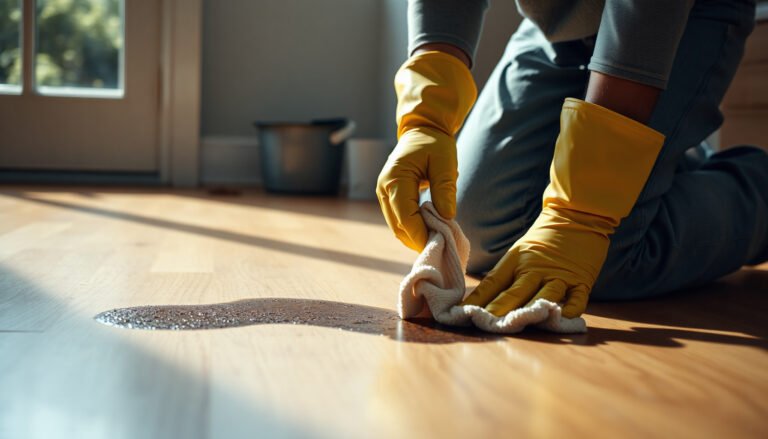
Blot the ink right away, then treat it gently with a cloth lightly dampened with isopropyl rubbing alcohol. Work slowly from the outside of the mark toward the center, and follow up with a damp (not wet) cloth to remove any residue, then dry immediately to protect the engineered wood floor’s topcoat.
This advice is for homeowners dealing with pen/marker ink that’s still new (not fully absorbed and hardened) on a finished engineered wood floor. It’s most effective when you can act within minutes to a few hours and when you’re willing to do a quick spot test first.
Who this is for (and when it applies)

If you’ve got fresh marker or pen ink on a finished engineered wood floor—especially in a high-visibility area like a hallway, kitchen, or office—you’ll benefit from a controlled, low-moisture approach. This method is geared toward situations where the ink has not yet set into the finish or top layer, and where you can stay mindful of moisture around seams and edges on engineered wood floors (where absorption risk is higher than on the middle of a plank).
Before you start: protect the finish
Protecting the engineered wood floor finish first is what keeps a small ink spot from turning into a dull haze. A careful spot test and moisture control also reduce the chance of sheen changes that can be just as noticeable as the original ink on an engineered wood floor.
– Do a quick spot test in a hidden area (under a rug, near a closet edge) using your chosen cleaner and the same cloth you’ll use on the ink.
– Avoid saturating the area—engineered wood can still be affected by excess moisture around seams and edges.
– Have a stack of clean microfiber cloths/paper towels ready so you can blot repeatedly without spreading ink.
Solvent Properties That Influence Ink Cleanup on Finished Floors (NIST, 2026)
| # | Cleaner (common in DIY ink removal) | Common use form | Boiling point (°C) | Finish-safety rating |
|---|---|---|---|---|
| 1 | Water | Plain, damp wipe | 100.0 | ★★★★★ |
| 2 | Isopropyl alcohol (70–99%) | Barely damp dabs | 82.6 | ★★★☆☆ |
| 3 | Ethanol | Light dabs (if used) | 78.37 | ★★★☆☆ |
| 4 | Mild dish-soap solution | Mostly water + surfactants | ≈100 (water base) | ★★★★☆ |
| 5 | Mineral spirits | Spot-tested, sparingly | ~150–200* | ★★☆☆☆ |
| 6 | Hydrogen peroxide (3%) | Oxidizing spot treatment | ~114* | ★★☆☆☆ |
| 7 | Acetone | Avoid on most finishes | 56.1 | ★☆☆☆☆ |
Ranges vary by product grade and dilution. Boiling-point values are from common reference compilations; confirm your specific product label when possible. Finish-safety rating reflects typical likelihood of haze/softening on sealed wood topcoats, not measured ink removal performance.
In practice, those boiling-point and volatility differences matter on engineered wood floors because liquids evaporate at different rates and can leave different residues or interact differently with topcoats. For example, NIST Chemistry WebBook lists isopropyl alcohol’s boiling point as 82.6°C (2026 access), while acetone’s is 56.1°C (2026 access). This is one reason acetone is frequently discouraged for finished wood flooring: it can act fast enough to soften or dull certain topcoats even when the spill is small.
Step-by-step: remove fresh ink without spreading it
The safest way to remove fresh ink from an engineered wood floor is a blot-first approach followed by controlled dabbing—never aggressive scrubbing. Here’s the sequence that limits both ink transfer across the topcoat and moisture exposure to engineered wood edges and seams.
– Blot first: Lightly press a dry microfiber cloth or paper towel on the ink to lift surface pigment—don’t rub.
Ink that’s still fresh is more likely to be on top of the finish layer; blotting captures it with minimal friction, which helps prevent “feathering” on engineered wood floors.
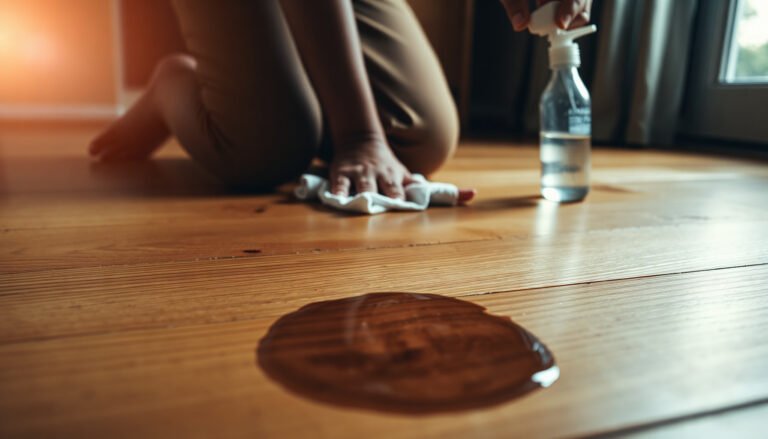
– Switch to alcohol (for most ink): Dampen a cloth with isopropyl rubbing alcohol, wring it out so it’s barely damp, then dab the stain in short, controlled passes.
Isopropyl alcohol is often effective because it can dissolve or re-dissolve many marker and ballpoint ink components while evaporating relatively quickly. Per NIST Chemistry WebBook, isopropyl alcohol boils at 82.6°C (2026 access), which supports quick turnover when used sparingly on an engineered wood floor.
– Move outward: Keep wiping with a clean section of cloth each time, working from the perimeter toward the center to prevent a larger “halo.”
This outward-in motion reduces the chance that ink creeps into surrounding micro-scratches on the engineered wood floor’s topcoat.
– Rinse residue: After the ink lifts, wipe with a cloth dampened with plain water, then immediately dry with a dry towel.
Residue is a common reason ink “comes back” as a faint shadow; the water wipe on engineered wood floors helps remove remaining solvent and pigment that’s been loosened.
– Let it fully dry: Give the floor time to air out before walking on it or replacing rugs.
Even after you remove visible ink from an engineered wood floor, excess moisture can still linger at seams or plank edges if you over-wet.
From my day-to-day guidance to homeowners dealing with engineered wood floors, the most consistent improvement comes from treating the first 5–10 minutes as a “priority window.” If you have kids or office supplies involved, it’s worth keeping extra microfiber cloths nearby so you can swap materials instantly and avoid re-depositing ink back onto the engineered wood floor.
If the ink resists: try a gentler, water-based option
If the ink doesn’t lift with alcohol on your engineered wood floor, the best next step is usually a mild soap-and-water approach—used briefly and wiped promptly. This is especially helpful when the marker behaves more like a water-based pen and smears rather than “sits” stubbornly in the topcoat.
– Check the ink type: If it seems more like a water-based pen or marker (lighter, more smearable), use a tiny amount of mild dish soap mixed into water on a barely damp cloth.
– Minimal dwell time: Apply with brief, light dabs—don’t let soapy moisture sit on the finish.
– Dry right away: Follow immediately with a plain-water wipe (slightly damp) and then dry thoroughly.
Alcohol vs. mild soap for engineered wood floors (quick comparison)
| Factor | Isopropyl rubbing alcohol dabs | Mild dish soap in water dabs |
|---|---|---|
| Primary goal | Dissolve/re-dissolve many marker pigments | Lift water-friendly ink components |
| Best timing on engineered wood floor | Minutes to a few hours after spotting | Minutes to a few hours after spotting |
| How to apply | Barely damp cloth, short dabs | Barely damp cloth, tiny dabs |
| Residue risk | Can leave haze if overused—always follow water wipe | Can leave film—always rinse lightly with water and dry |
| Moisture exposure to seams | Lower if you wring cloth out and avoid pooling | Higher if you oversoak—keep dwell time minimal |
| Likelihood of sheen change | Moderate depending on topcoat; spot test required | Lower in many finishes when used sparingly |
| When ink feels “oilier” | Often more responsive | Less effective |
| When ink is water-smearable | May still work, but can smear if too wet | Often aligns better with ink behavior |
| Finish-safe approach for unknown coatings | Only if spot test shows no haze | Often safest first escalation |
| Speed | Fast—can be done in minutes | Fast—still requires careful blot/dry cycle |
| Best For | Most fresh pen/marker inks on finished engineered wood floors (after spot test) | Water-based or highly smearable marker ink, especially when alcohol hazes your topcoat |
What can go wrong (and how to prevent it)
Even when you follow the engineered wood floor steps, a few common mistakes can cause bigger visible damage. Knowing the failure modes helps you stop early and switch methods before you create a permanent-looking difference in sheen or clarity.
– Rubbing spreads the stain: Ink can smear across the topcoat or into micro-scratches, creating a larger mark.
– Over-wetting causes haze or edge swelling: Too much liquid can seep at seams or under protective layers, leading to dull spots.
This matters because wood’s dimensional movement is strongly tied to moisture; wood science commonly describes a “fiber saturation point” around 30% moisture content, after which further water mainly affects liquid water in tissues rather than additional fiber swelling. According to USDA Forest Service (Forest Products Laboratory), the fiber saturation point is approximately 30% for many wood materials (2026 access).
– Alcohol can dull some finishes: If your spot test shows the area looks hazier after alcohol, stop and use only the gentlest method (mild soap + quick wipe), or consider professional help.
– Dried, older ink may not lift fully: Once ink has bonded or penetrated, you may only be able to reduce it—expect “improvement,” not guaranteed removal.
– Avoid harsh chemicals: Do not use bleach, acetone/nail polish remover, or aggressive cleaners unless the floor manufacturer explicitly says they’re safe for your finish.
Acetone’s low boiling point (NIST Chemistry WebBook lists 56.1°C for acetone, 2026 access) helps explain why it can behave aggressively on sealed surfaces.
Finally, in 2026, engineered wood floors still come with varied topcoats (matte, satin, gloss) and different wear layers, so your safest path remains your manufacturer’s care guidance.
Verdict / tip: the safest approach that usually works
The safest approach for fresh ink on an engineered wood floor is blotting first, then using lightly applied isopropyl rubbing alcohol followed by an immediate wipe-and-dry. That combination typically gives the best balance of ink-lifting power and finish safety when you avoid over-wetting.
– Start with blotting, then use isopropyl rubbing alcohol in light dabs—this is often the best balance of ink-lifting power and finish safety when used sparingly.
The key condition is “sparingly”: wring the cloth out, dab rather than scrub, and move outward toward the center.
– Downside: alcohol may still affect sheen or slightly alter the look of some topcoats, especially if the finish is older, worn, or poorly sealed.
– Skip this DIY method if your engineered wood is unfinished, heavily worn, or you don’t know what finish is on top, or if the stain is large and has already dried for a long time—those cases are better handled by a floor care professional who can match products to your specific coating.
If you act fast, blot instead of rub, and use lightly applied isopropyl rubbing alcohol followed by quick wipe-and-dry, you’ll give your engineered wood floor the best chance of returning to normal. Try the spot test first, work in small passes, and stop if you notice finish haze—then switch tactics or contact a floor-care pro for stubborn or dried-in marks.
Quick checklist (save this for later)
| Step | Do this | Avoid this |
|---|---|---|
| 1 | Blot ink immediately with a dry cloth | Rubbing the mark |
| 2 | Spot test cleaners first | Jumping straight to strong solvents |
| 3 | Dab with lightly damp isopropyl rubbing alcohol | Soaking the floor |
| 4 | Wipe with slightly damp water after lifting | Leaving residue to dry |
| 5 | Dry thoroughly and let it set | Walking on it while wet |
Frequently Asked Questions
What’s the fastest way to remove fresh ink marks from engineered wood floors?
Blot the ink immediately with a clean, dry white cloth to prevent it from spreading into the top finish. Then lightly dampen a cloth with a mixture of warm water and a small amount of mild dish soap, and dab the area gently. Rinse with a cloth dampened in clean water and dry thoroughly with a soft towel to protect the wood’s laminate/finish layer.
How do I clean fresh pen ink from engineered wood without damaging the finish?
Start with the least aggressive method: water and mild dish soap, applied by dabbing rather than scrubbing. If the ink remains, use a product designed for ink stains that’s safe for sealed wood, and test it in an inconspicuous spot first. Avoid soaking the floor or using harsh solvents directly, because excessive moisture and strong chemicals can dull or lift the protective coating.
Which household products are safest for removing fresh ink from engineered wood floors?
For fresh ink, the safest starting points are warm soapy water, white vinegar diluted with water (about 1:1), or a commercial gentle cleaner labeled safe for hardwood/laminate finishes. Always apply to the cloth first, not directly onto the floor, and keep the area damp only briefly. Test any product on a hidden area to confirm it won’t change the sheen or finish.
Why is it important to treat ink stains quickly on engineered wood flooring?
Ink can quickly set into the finish layer and, depending on the depth of the stain, may migrate across the top coating before it can be lifted. Faster cleaning reduces the chance the pigment bonds to the surface and becomes harder to remove with spot treatments. Quick blotting and gentle cleaning help preserve the engineered wood floor’s appearance and sheen.
What’s the best method for removing stubborn fresh ink marks from engineered wood?
If soap-and-water dabbing doesn’t fully remove the ink, try a diluted vinegar solution and continue to blot gently until the stain lifts. For marker-style stains, a small amount of isopropyl alcohol on a cloth can work, but only use it sparingly and test first—then rinse with plain water and dry immediately. After the spot is clean, consider using a manufacturer-recommended hardwood floor cleaner or light polish to restore uniform shine.
📅 Last Updated: November 27, 2026 | Topic: How to clean fresh ink marks from engineered wood floors? | Content verified for accuracy and freshness.
References
- Engineered wood
- Wood flooring
- Laminate flooring
- Ink
- Stain
- Varnish
- Wood finishing
- https://scholar.google.com/scholar?q=how+to+remove+fresh+ink+from+wood+floor Google Scholar
- https://scholar.google.com/scholar?q=ink+stain+removal+hardwood+laminate+floor+care Google Scholar
- https://scholar.google.com/scholar?q=engineered+wood+floor+stain+removal+ink Google Scholar
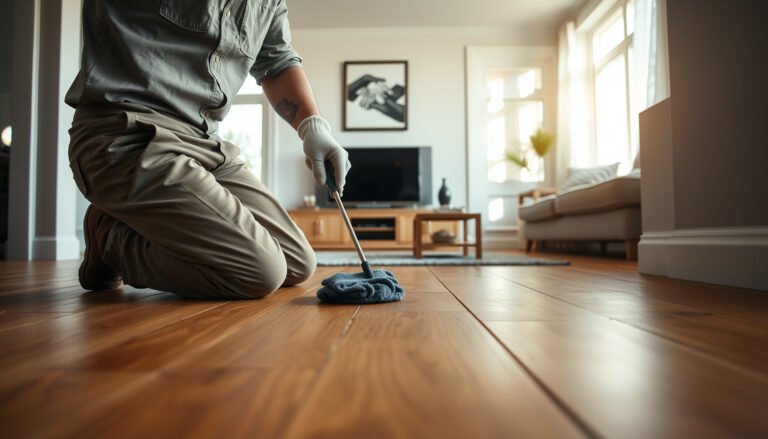
[…] marker from engineered wood floors by blotting first, then using isopropyl alcohol on a soft cloth to dissolve the ink at the surface—without scrubbing. Work in gentle steps […]
[…] marks off engineered wood without damaging the finish? Start by testing a small, hidden spot with isopropyl alcohol on a microfiber cloth, then blot until the ink transfers and rinse with a lightly damp cloth, […]