

Tar smears on hardwood floors can feel stubborn and alarming, especially when they catch the light. The good news is you can lift most residue safely with a simple step-by-step process that typically takes 30–60 minutes, using a plastic scraper, ice or another cooling method, and a hardwood-friendly tar remover or mineral spirits. Once the sticky bits are gone, a gentle cleaner and quick drying will help restore the finish without damaging the wood.




To get tar residue off hardwood floors, harden it with ice, gently scrape off what you can, then dissolve the leftover sticky film with a small amount of mineral spirits or a wood-finish-safe adhesive remover. After that, wipe clean with a hardwood-safe cleaner and dry the area fully so the finish isn’t left to break down. Test any solvent in a hidden spot first.
This applies if you’ve got fresh or dried tar from roads, shoes, roofing, or driveway splatter on sealed hardwood. If your floor is unsealed/unfinished or the tar has already stained deeply, you may need a different approach (or a pro).
Before you start: protect the floor and yourself
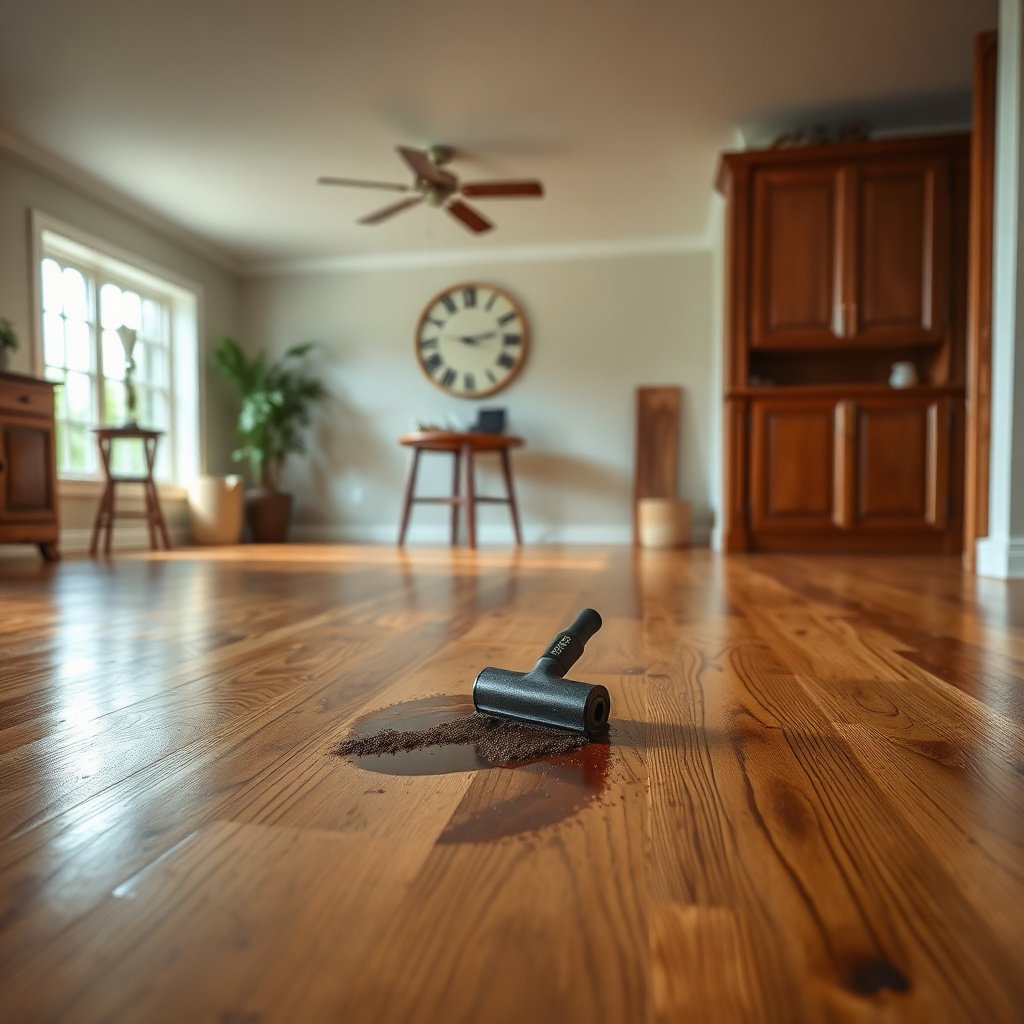
Before you touch the tar, confirm the finish and plan for ventilation—this is what prevents permanent hazing or softening. The core principle for hardwood care is simple: minimize how long solvents sit on the surface and keep them off edges, seams, and unfinished spots.
First, identify the finish. Sealed hardwood typically has polyurethane/polymer clear coating (common in modern floors). Waxed finishes and oil/penetrating finishes behave differently, and unsealed (unfinished) wood can absorb tar so far that surface cleaning won’t fully remove the stain.
Second, protect yourself. Mineral spirits and other petroleum solvents can be hazardous if inhaled or used without ventilation. According to OSHA’s exposure limits, the PEL (permissible exposure limit) for acetone is 1,000 ppm TWA (OSHA 29 CFR 1910.1000 Table Z-1, 2024), and mineral-spirits-type materials (often listed as Stoddard solvent) are commonly regulated around 500 ppm TWA (OSHA 29 CFR 1910.1000, 2024). Also, isopropyl alcohol has a regulated PEL of 400 ppm TWA (OSHA 29 CFR 1910.1000 Table Z-1, 2024). Use gloves, ventilate, and keep rags away from flames—these products are also flammable depending on formulation.
Third, do a patch test in a hidden spot. Wood finish failure usually shows up as dullness, color shift, or tackiness. Test your chosen solvent/adhesive remover on an inconspicuous area first, then wait until it fully dries to evaluate sheen.
Finally, gather the right tools so you don’t improvise mid-job:
– Ice (or an ice pack wrapped in a thin cloth)
– Plastic scraper/old credit card (no metal)
– Microfiber cloths (several)
– Mineral spirits or a labeled wood-finish-safe adhesive remover
– Hardwood-safe cleaner (finish-friendly, pH-balanced)
Tar/Adhesive Cleanup Options for Sealed Hardwood (Practical Compatibility Guide)
| # | Method | Best for | Finish risk | Odor/ventilation | Cleanup difficulty | Overall fit |
|---|---|---|---|---|---|---|
| 1 | Ice + plastic scraping | Dried tar/bits | Low | None | Easy | ★★★★★ |
| 2 | Mineral spirits on cloth | Sticky residue film | Medium | Moderate | Moderate | ★★★★☆ |
| 3 | Wood-finish-safe adhesive remover | Glue/tar overlap | Medium-Low | Varies by formula | Moderate | ★★★★☆ |
| 4 | Isopropyl alcohol (small dabs) | Light tackiness | Medium | Strong | Moderate | ★★★☆☆ |
| 5 | Citrus terpene cleaner (finish-safe) | Oily grime around residue | Medium | Low-Med | Moderate | ★★★☆☆ |
| 6 | Acetone (avoid on finished floors) | None for sealed hardwood | High | Strong | Hard to control | ★☆☆☆☆ |
| 7 | WD-40 / similar lubricants | Loosening (not finishing) | High (residue) | Low-Med | Harder cleanup | ★★☆☆☆ |
Step-by-step: remove tar residue without gouging
If you want the safest cleanup, follow the “harden, scrape, dissolve lightly” sequence. This prevents tar from smearing deeper into the clear coat, which is where most hazing comes from.
– Harden first: place ice over the tar until it becomes brittle, then lift the chunks gently with a plastic scraper (don’t dig into the wood).
– Practical note: wrap ice in a thin cloth so moisture doesn’t sit on the finish. Tar often softens when it warms, so only uncover as much as you can scrape immediately.
– Dissolve the remainder: lightly apply mineral spirits (or a wood-finish-safe adhesive remover) to a cloth—not directly onto the floor—then dab/wipe until the stickiness releases.
– Apply “cloth-first” to control the amount of solvent. In 2025–2026, we’re seeing more finishes with tighter coatings that tolerate brief solvent contact but can haze if you flood the surface.
– Repeat carefully: use fresh clean areas of the cloth as the tar transfers, and stop if the finish looks hazy or changes color.
– In my experience walking homeowners through spot repairs, the fastest way to a clean outcome is to work in short cycles: scrape → wipe → reassess. If sheen changes, pause and reassess your solvent choice rather than pushing harder.
To make the decision logic clearer, here’s a quick comparison of the “common solvent” choices people reach for:
- Mineral spirits on cloth
- Pros: Strong at breaking down oily tar film; wipes away when used lightly.
Cons: Can dull or soften certain finishes if left too long or overused. - Wood-finish-safe adhesive remover
- Pros: Often targets tacky residues and is formulated to be safer on sealed surfaces when used as directed.
Cons: Still a solvent—misuse can still create hazing; formulation varies by brand. - Acetone (generally avoid)
- Pros: Very fast at dissolving many organics.
Cons: Higher risk of finish softening, discoloration, or coating breakdown on hardwood.
Clean up and restore the finish
After the tar is removed, your job is to eliminate solvent residue so the finish can stay stable. This is the step that often separates “tar is gone” from “the floor still looks like itself.”
– Wipe off residue: after the tar is gone, clean the spot with a hardwood-safe cleaner to remove any solvent film.
– Use a cleaner intended for your finish type (polyurethane-safe, floor-finish-safe, etc.). Avoid “all-purpose degreasers” unless the label explicitly supports finished wood.
– Dry fully: buff dry with a clean microfiber towel to prevent dull patches.
– Even sealed hardwood can show temporary haze if moisture or softened binder remains.
– If the sheen looks uneven: you may need to follow your floor’s original care method (e.g., the same finish products the manufacturer recommends)—.
– Many manufacturers offer touch-up products or specific polishing methods. If you don’t know the brand, the safest route is to start with gentle cleaning and dry-buffing rather than jumping to a full refinishing cycle.
What can go wrong (and how to avoid it)
Most problems happen when people try to “speed run” the cleanup by using the wrong chemical or smearing tar while it’s still warm. The fix is to control contact time, keep tools non-abrasive, and always finish with a proper wipe-down.
– Using the wrong chemicals: acetone/strong paint thinners or repeated heavy solvent soaking can damage finish, soften coatings, or remove color.
– If you’re unsure, default to mineral spirits or a wood-finish-safe adhesive remover used sparingly on a cloth—not pooled on the surface.
– Scraping too aggressively: metal blades can scratch hardwood and leave permanent marks.
– Tar removal doesn’t require aggressive force—ice brittleness does the work.
– Spreading the tar: wiping before it’s hardened can smear tar deeper into the finish.
– Always harden first, then scrape and only then dissolve the remainder.
– Leaving solvent behind: if you don’t follow up with a hardwood-safe cleaning wipe, the area can stay greasy or turn dull.
– Solvent residue can interfere with the finish’s uniform sheen and attract dust.
Verdict: what’s worth trying first
Start with the “ice → gentle scrape → small amount of mineral spirits/adhesive remover → hardwood-safe clean” method, because it limits how long harsh liquids sit on the floor. Skip DIY and consider professional help if the wood is unsealed/unfinished, the tar penetrated and left a persistent stain, or the finish is already compromised—otherwise you risk a bigger refinishing job.
Quick checklist: tar residue off hardwood floors
| Step | What to do | Stop when… |
|---|---|---|
| Harden | Ice over tar, then gentle lift with plastic | No more chunks come off |
| Dissolve | Wipe small amount of mineral spirits/wood-safe adhesive remover on a cloth | Tar stops transferring |
| Clean | Hardwood-safe cleaner wipe-down | Area feels dry and non-greasy |
| Dry/inspect | Fully dry, check sheen | Finish looks unchanged in test spot |
Frequently Asked Questions
What’s the safest way to remove tar residue from hardwood floors?
Start by avoiding harsh solvents that can strip hardwood finish or discolor the wood. Let the tar cool and harden, then gently lift residue with a plastic scraper or old credit card. Use a small amount of hardwood-safe adhesive remover or mineral spirits on a soft cloth, working in sections, then wipe with clean water and dry immediately. Finish by buffing the area and, if needed, reapplying a matching floor finish to restore protection.
How do I get tar off hardwood floors without damaging the finish?
Use the least aggressive method first: scrape off softened tar carefully, then treat remaining streaks with a commercially made tar remover labeled safe for finished wood, or mineral spirits used sparingly. Always test any cleaner in an inconspicuous area to confirm it won’t dull or haze the floor. Apply the solvent to the cloth (not directly to the floor), blot rather than scrub, and immediately wipe with a damp cloth to remove any residue. Dry thoroughly to prevent lingering solvent marks.
Why does tar leave sticky residue and discoloration on hardwood?
Tar is an oily, sticky substance that can seep into micro-gaps in the finish layer, especially if it was warm when it touched the floor. As it dries, it forms a tacky film that attracts dust and creates dark smears. Even after the bulk is removed, solvent-soluble components can remain, causing an oily sheen or uneven appearance. Proper wiping, moisture control, and finishing touch-ups help prevent long-term stains.
Which products work best for removing tar and asphalt stains from hardwood floors?
Look for adhesive removers or “tar and asphalt” cleaners that specify compatibility with sealed/finished wood surfaces, and avoid products that contain aggressive stripping agents. Mineral spirits can work well for some tar residue when used lightly and wiped off promptly, but they should be tested first. For very stubborn spots, a targeted tar remover plus careful scraping is usually more effective than soaking the floor. After treatment, clean with a mild wood-floor cleaner and consider re-coating the area if the finish is impacted.
How can I remove tar residue from hardwood floors if it’s dried and stuck?
Harden the tar first by placing ice in a bag or using a cold compress for several minutes, then scrape off loosened chunks with a plastic tool. For the remaining thin layer, apply a small amount of mineral spirits or a tar remover to a cloth and let it sit briefly (don’t flood the wood). Work slowly in sections, wiping clean as you go, then finish with a damp cloth to remove any chemical residue and dry completely. If you notice dulling, buff and apply a matching wood floor finish to blend the cleaned area.
📅 Last Updated: November 04, 2026 | Topic: How to get tar residue off hardwood floors? | Content verified for accuracy and freshness.
References
- White spirit
- Turpentine
- Checking your browser – reCAPTCHA
- Checking your browser – reCAPTCHA
- Checking your browser – reCAPTCHA
- Checking your browser – reCAPTCHA
- Checking your browser – reCAPTCHA
- https://scholar.google.com/scholar?q=how+to+get+tar+residue+off+hardwood+floors Google Scholar
- https://scholar.google.com/scholar?q=asphalt+tar+removal+from+wood+floor+finish+mineral+spirits Google Scholar
- https://scholar.google.com/scholar?q=tar+residue+removal+from+wood+surfaces+cleaning+solvent Google Scholar

[…] technique to prevent scratches. Most cleanups take about an hour and require only a few supplies—plastic scraper, solvent or adhesive remover, microfiber cloths, and a gentle floor […]
[…] Follow with a hardwood-safe cleaner (usually something mild and finish-appropriate) to remove solvent […]