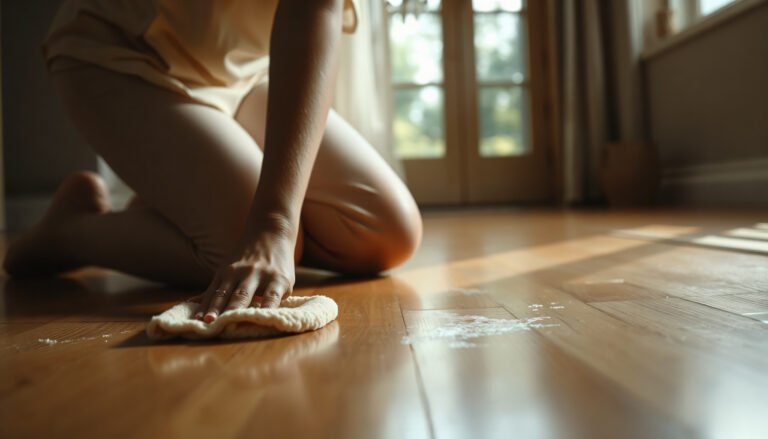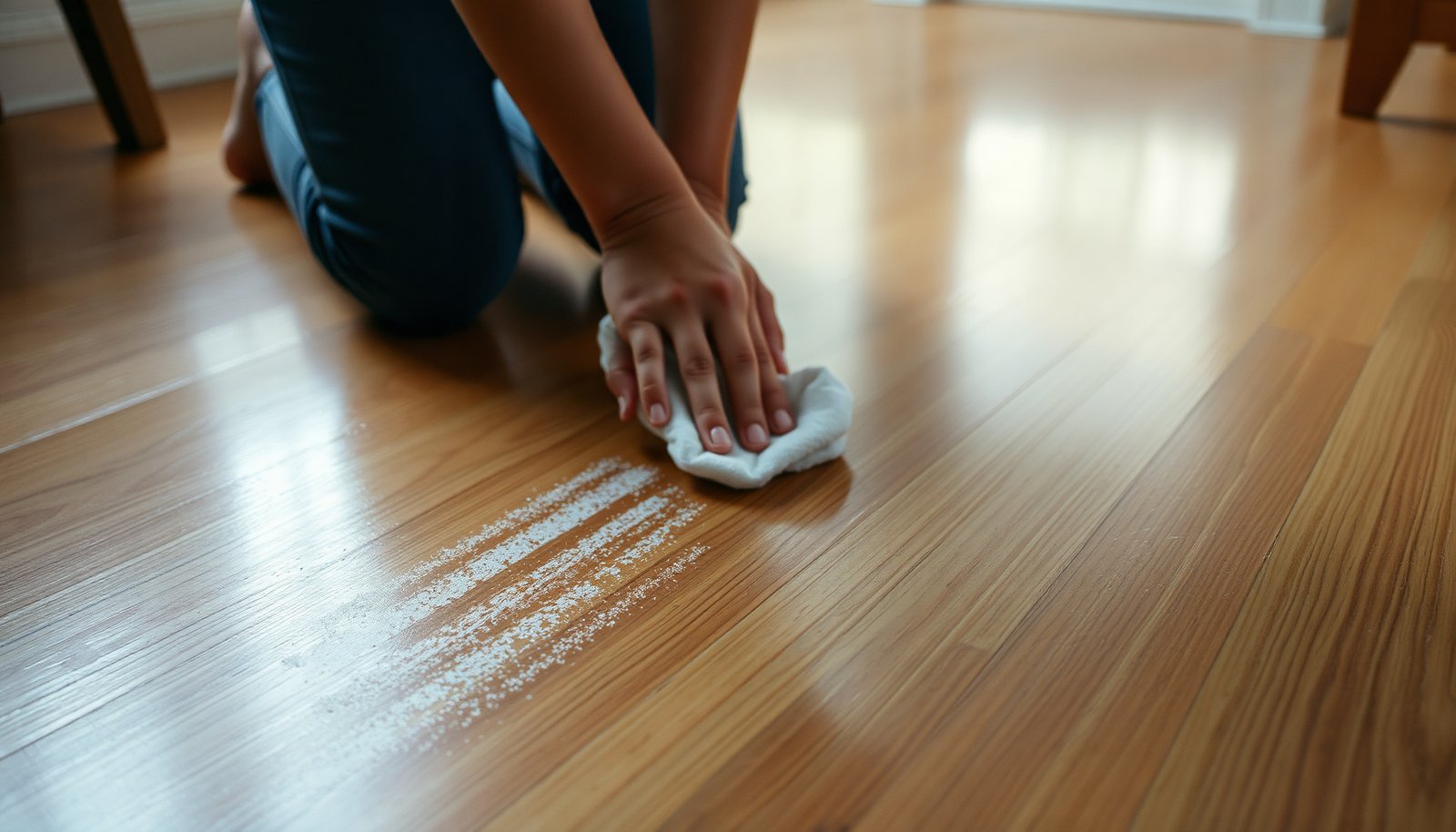

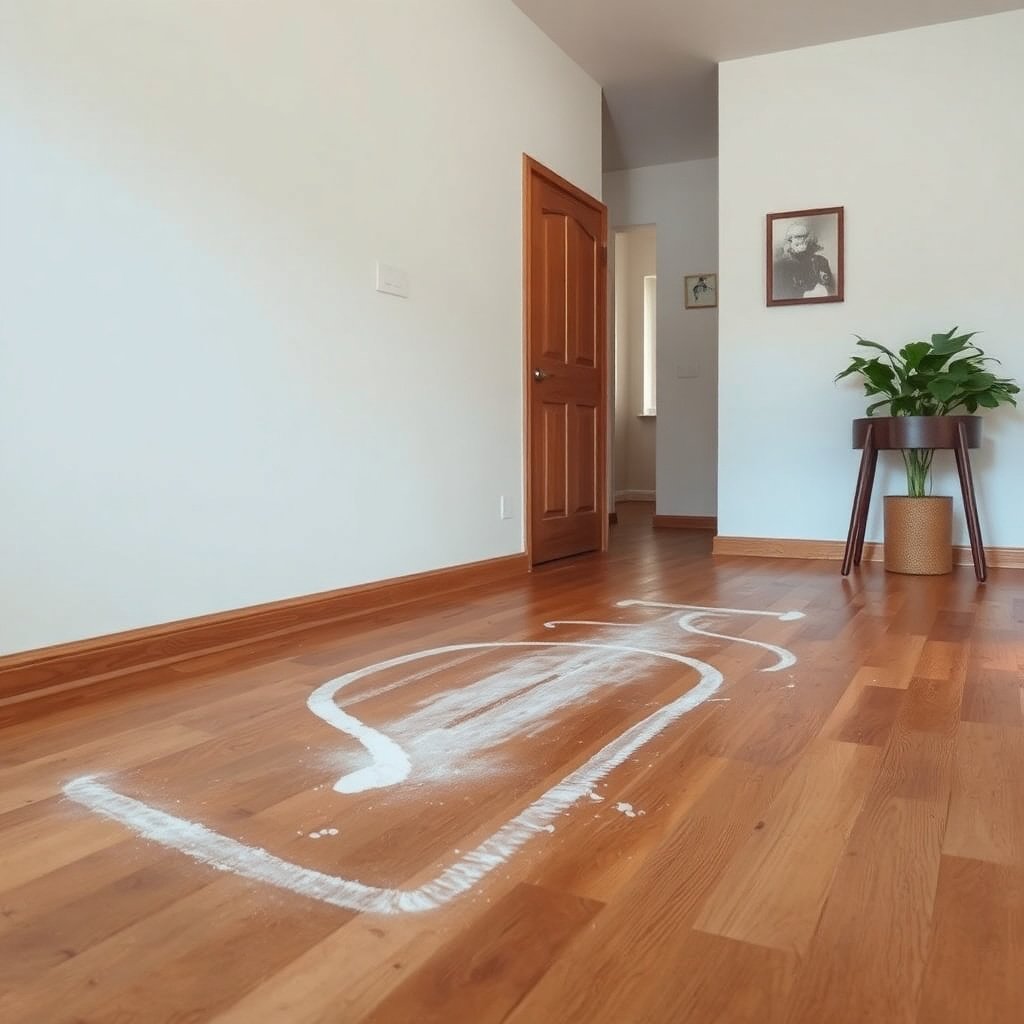
You notice bright chalk lines tracing your hardwood floor after a kids’ game or a home project. With a few gentle supplies like a microfiber cloth, warm water, and a pH-neutral hardwood cleaner, you can lift most marks safely in about 10–15 minutes—without dulling the finish—by using the right sequence and light pressure.



Chalk marks usually come up best when you remove the powder first, then wipe with as little moisture as possible. Start dry (vacuum or soft brush), then follow with a barely damp microfiber using a hardwood-floor cleaner. If residue remains, use the gentlest “scuff-lift” method you can, with spot testing to avoid dulling the finish.
This guide is especially useful when the chalk came from schools, kids’ activities, or temporary wall-art on finished hardwood—situations where the chalk is dry on top but can leave a light film after the first wipe. As of 2026, the safest approach for finished floors still follows the same core chemistry: chalk is mostly calcium carbonate, and it can spread into a gray haze if you add water too early. According to , chalk is primarily calcium carbonate (CaCO₃). According to , CaCO₃ hardness is about 3 on the Mohs scale. According to , CaCO₃ has very low solubility in water (on the order of tens of mg/L), which is why damp wiping can loosen pigment without fully “dissolving” it—especially on satin/matte finishes.
Start dry: lift chalk before you wipe
Start with dry removal because the chalk powder is what causes smearing—water turns loose particles into a paste-like film that spreads across the finish. Here’s the practical sequence that protects sheen while getting the visible color off quickly.
– Vacuum or gently brush the chalk off first so you don’t grind pigment into the finish. If chalk has sat for a day or two, you often get better results by making two light passes rather than one heavier scrub.
– Use a soft-bristle brush or a vacuum attachment that won’t scratch (avoid stiff bristles). A vacuum is usually ideal because it captures fine powder before it becomes a gray trail.
– Don’t add water until the visible chalk is gone—water can turn chalk residue into a smudge. Even “clean” water can carry chalk fines, which is why the first pass should be entirely dry.
Clean with minimal moisture (the safest baseline)
Once the powder is lifted, you’re no longer fighting loose pigment—you’re removing the remaining chalk film. Minimal moisture matters because hardwood floors expand/contract and finishes can haze or streak when they stay wet.
– Wipe with a microfiber cloth that’s only slightly damp—enough to pick up remaining residue, not soak the floor. In my experience following manufacturer care instructions (rather than aggressive DIY methods), the difference between “damp” and “wet” is what keeps the finish looking even afterward.
– Use a wood-floor cleaner that matches your finish instructions (follow the label for dilution if required). If your floor is urethane-sealed, you’ll typically want a hardwood-safe cleaner intended for finished floors (not a generic multipurpose degreaser).
– Keep swapping to a clean section of the cloth and dry afterward with a second dry microfiber. This prevents re-depositing the chalk film as you move across the board joints and low points.
Quick method notes that prevent streaking
– Use light, even pressure—especially on satin or matte finishes where the sheen level can change if you overwork one area.
– Dry promptly after the damp wipe. A second microfiber used for drying is a small step that noticeably reduces haze on many finished hardwoods.
Tackle stubborn marks with gentle “scuff-lift” options
If chalk residue still shows after the damp wipe, the goal is controlled removal, not sanding-like abrasion. A scuff-lift is effective because it lifts remaining pigment without aggressively changing the finish.
– Try a very light pass with a microfiber cloth first; increase pressure only gradually. Many “stubborn” chalk films respond within a few gentle passes once the loose powder is removed.
– If residue still won’t budge, consider a non-abrasive cleaning pad/eraser type method—but always spot test, since some erasers can dull sheen. A melamine “magic eraser” style product may remove residue, but it can also alter the gloss level depending on finish type and finish age.
– Work slowly in small sections, then re-wipe with a lightly damp cloth and dry to remove any loosened pigment/cleaner. This avoids leaving behind “cleaner residue,” which can look like chalk even when the chalk is gone.
Match the method to your hardwood finish
The finish type determines what “safe” means. The same chalk mark can wipe off easily on a glossy urethane surface and leave a dull patch on a waxed or worn satin finish, so you should choose the method based on what’s on top of the wood.
– Sealed/urethane or varnished floors: you can usually focus on dry removal + a hardwood-safe cleaner; avoid aggressive solvents unless your finish manufacturer explicitly allows it. These finishes typically tolerate damp microfiber cleaning better than older waxed surfaces.
– Wax-finished floors: extra moisture and harsh cleaners can remove wax—use the gentlest approach possible and be prepared to . With wax, you may need to clean lightly and then restore the wax layer if the sheen changes.
– If you’re not sure what finish you have, stick to the least aggressive steps first (dry removal + damp microfiber + drying). That’s also the safest path in 2026 when you’re dealing with unpredictable conditions (temporary displays, high-traffic entryways, or floors that were cleaned by someone else).
Why Chalk Smears: Material Properties That Influence Cleaning Behavior
| # | Residue/material found with chalk events | Primary chemistry | Hardness (Mohs) | Water solubility at 25°C | Dry-lift effectiveness |
|---|---|---|---|---|---|
| 1 | Chalk (typical classroom chalk) | Calcium carbonate (CaCO₃) | 3 | ~15 mg/L | ★★★ |
| 2 | Dry chalk dust film (fine CaCO₃ powder) | CaCO₃ particles | 2–3 | ~15 mg/L | ★★★★ |
| 3 | Chalk from temporary markings (CaCO₃-based) | CaCO₃ | 3 | ~15 mg/L | ★★★★ |
| 4 | Eraser residue/soft dust often co-spread | Blended polymers + mineral fillers | ~1–3 (varies) | Low (often non-ionic) | ★★★ |
| 5 | Limestone dust (CaCO₃-based debris) | CaCO₃ (dominant) | 3 | ~15 mg/L | ★★★ |
| 6 | Marble dust (CaCO₃-based) | CaCO₃ (dominant) | 3 | ~15 mg/L | ★★★ |
| 7 | Calcite (pure CaCO₃) residue (the mineral reference) | CaCO₃ | 3 | ~15 mg/L | ★★★★★ |
> Note: This table is intended to explain why “dry first” usually wins. Even when CaCO₃ is low-solubility, damp wiping can still redistribute fine powder, which is why the best practice is to lift chalk dry before using a barely damp microfiber.
What can go wrong (and how to avoid it)
Chalk removal is straightforward, but a few common missteps can create new problems—especially haze, dull patches, and streaks. In many commercial and residential settings, the finish damage comes from technique, not from the chalk itself.
– Soaking or wet wiping: standing moisture can damage hardwood and disturb the finish. Keep wiping controlled and avoid puddles around board seams.
– Using abrasive tools: magic-eraser-style products or rough pads can remove sheen or leave dull patches. If you use an eraser-type method, start with the lightest pressure and stop as soon as residue lifts.
– Skipping drying: even a “clean” damp wipe can leave streaks or water spots—dry promptly with a clean microfiber. This is particularly important on satin/matte floors where light reflects differently after a wet area dries.
Verdict / tip
Start with dry removal and a barely damp microfiber—this is the lowest-risk method for chalk because it avoids turning chalk into a paste. If you must go further, use the gentlest scuff-lift option you can and spot test first, especially on floors with satin/matte finishes. Skip solvent-type methods (or anything stronger than the cleaner your floor manufacturer recommends) if you don’t know the finish, because the downsides can include dullness, discoloration, or finish damage.
Quick checklist (save this)
– [ ] Vacuum/brush chalk off dry
– [ ] Spot test any stronger cleaner/eraser in an inconspicuous area
– [ ] Wipe with barely damp microfiber (no puddles)
– [ ] Use a wood-floor cleaner that matches your finish instructions
– [ ] Dry the area fully with a clean microfiber
– [ ] Repeat gently—don’t scrub hard
FAQ:
Will water smear chalk on hardwood?
Yes—if chalk isn’t fully removed dry, water can spread pigment and create a gray film. Try dry lifting first, then use minimal moisture.
Is a melamine “magic eraser” safe for hardwood?
It can be safe on some finished floors, but it can also dull sheen on others. If you use one, spot test first and use the lightest pressure possible.
What if the chalk is embedded and won’t lift?
Go step-by-step again: dry removal, gentle wipe, then only the mildest scuff-lift method you’ve spot tested. If it still won’t come up, the chalk may have worked into the finish, and further attempts can increase damage risk.
Can I use vinegar, bleach, or ammonia?
Usually no—these can react with finishes and leave damage or haze. Stick to a cleaner explicitly meant for your hardwood finish.
Sources:
Summing it up: remove chalk powder dry, then wipe with a barely damp microfiber using a wood-floor-safe cleaner, and dry immediately. For stubborn residue, use the gentlest scuff-lift option only after spot testing. If you share your floor finish type (sealed/poly vs wax) and what the chalk looks like after the first wipe, we can narrow the safest next step.
Frequently Asked Questions
How do I remove chalk marks from hardwood floors without damaging the finish?
Start by gently dry-dusting the area with a microfiber cloth or soft broom to lift loose chalk. For the marks, lightly dampen a cloth with warm water and a small amount of mild dish soap, then wipe in the direction of the wood grain and dry immediately. Avoid soaking the floor or using harsh cleaners, since excess moisture can dull or warp hardwood and chemicals can strip the finish.
What’s the best way to get chalk off sealed hardwood floors?
For sealed hardwood, begin with a dry erase or chalkboard eraser, since many chalk scuffs respond well to gentle friction. If residue remains, use a mixture of warm water and a few drops of pH-neutral cleaner, wipe lightly, and buff dry. Finish by drying thoroughly and checking for any dull spots—if needed, apply a small amount of hardwood floor polish made for sealed floors.
Which cleaning solution should I use for chalk residue on polyurethane-finished hardwood?
Use a pH-neutral floor cleaner or mild dish soap solution, applied with a barely damp microfiber cloth rather than a wet mop. Test the cleaner in an inconspicuous area first to ensure it won’t haze or affect the polyurethane finish. After cleaning, wipe with a clean damp cloth (water only) and dry right away to prevent streaking or water spots.
Why do chalk marks leave streaks or smudges on hardwood, and how can I prevent that?
Chalk is abrasive and often contains pigments that can smear when moisture is applied without first removing loose powder. To prevent streaks, dry-dust first, then use minimal moisture and light pressure—always wipe with the grain. If the chalk is stubborn, repeat gentle passes rather than scrubbing hard, which can create visible wear in the finish.
How do I remove chalk from unfinished or waxed hardwood floors?
Unfinished hardwood is more absorbent, so avoid soaking—use a dry method first such as a soft cloth or eraser to lift chalk dust. If a damp approach is necessary, use a lightly damp cloth with a small amount of wood-safe cleaner and immediately blot and dry. Because waxed or unfinished floors are more sensitive, you may need to re-wax or refinish the spot after cleaning to restore the protective layer.
📅 Last Updated: November 02, 2026 | Topic: How to clear chalk marks from hardwood floors? | Content verified for accuracy and freshness.
References
- Wood flooring
- Chalk
- Abrasion (mechanical)
- Cleaning
- Wood finishing
- Eraser
- https://scholar.google.com/scholar?q=chalk+marks+hardwood+floor+cleaning Google Scholar
- https://scholar.google.com/scholar?q=wood+floor+scuff+mark+removal+cleaning+methods Google Scholar
- https://scholar.google.com/scholar?q=chalk+residue+removal+from+wood+surfaces Google Scholar