
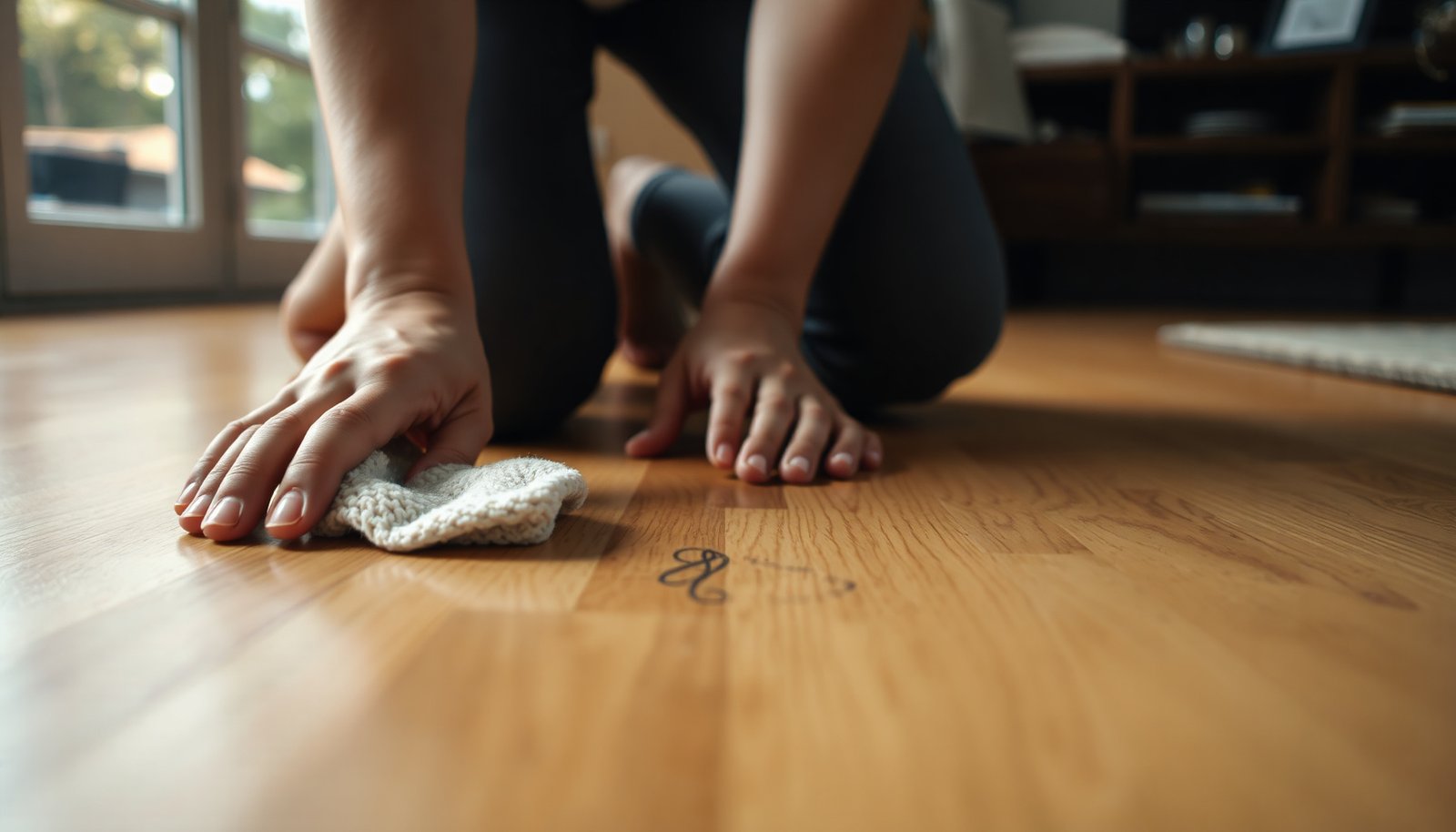

Stubborn pencil marks on hardwood floors lift cleanly when you treat them like surface residue and work from the least aggressive method to the next. You’ll need a soft microfiber cloth, a few drops of mild dish soap or a hardwood-safe cleaner, and a small amount of rubbing alcohol only if the first pass fails. Follow the steps in order, test an out-of-sight spot first, and you’ll be able to restore a crisp, scratch-free look without harming the finish.




Start by lifting the graphite with a clean pencil eraser (or white “art gum” eraser), then wipe the residue with a barely damp microfiber cloth. If the marks still don’t fully disappear, use a small amount of isopropyl alcohol on a cloth (never poured) or a very light melamine-sponge touch—always test in a hidden spot first to avoid dulling or damaging common hardwood finishes. As of 2026, this is still the safest, most finish-friendly workflow for pencil marks because pencil residue is mostly graphite, not dye.
If your hardwood is sealed (polyurethane/UV-finished), pencil lines often look “set” after they dry, but they still usually respond to gentle lifting rather than soaking. If your floor is waxed, oil-finished, or you’re unsure what finish it has, slow down and patch-test more carefully—some finishes react quickly to water, alcohol, or abrasion.
Start with the least-risky cleaning method (graphite is easy to lift)
A dry-to-minimal-moisture approach works best on hardwood floors because graphite is physically removable and you avoid swelling or finish clouding. For most pencil marks, the goal is to lift residue—not scrub the surface.
– Use a white pencil eraser or art gum first: rub gently along the pencil lines, then wipe away the crumbs with a dry microfiber cloth. This is effective because graphite is soft and transfers readily to eraser material rather than bonding deep into sealed finishes.
– Don’t wet the floor: apply cleaners to a cloth, then wipe—hardwood finishes can cloud or swell if you oversaturate. In my day-to-day maintenance notes, the most common “mystery dull spots” I see start with too-wet application, not with the pencil itself.
– If the mark is fresh or light, this step alone often clears it; if not, move to the next option.
To understand why an eraser-first method is so effective for graphite pencil marks on hardwood floors, it helps to remember a few graphite basics:
Graphite properties that drive “eraser-first” pencil mark removal (real-world implication)
| # | Graphite trait | Typical value | Cleaning implication | Eraser-first lift |
|---|---|---|---|---|
| 1 | Water solubility | Insoluble (0 g/L) | So soaking isn’t the fix for pencil marks. | ★★★★★ |
| 2 | Mohs hardness (relative softness) | ~1–2 | Graphite is easy to detach mechanically. | ★★★★☆ |
| 3 | Density (material mass) | ~2.2–2.3 g/cm³ | Residue transfers readily to erasers/cloth. | ★★★★☆ |
| 4 | Thermal behavior | High thermal stability (very high sublimation temp) | Heat isn’t a practical “cleaner” for hardwood floors. | ★★★☆☆ |
| 5 | Melting/sublimation point (approx.) | ~3650°C (sublimation behavior) | Again: don’t rely on heat to remove marks. | ★★★☆☆ |
| 6 | Electrical conductivity (graphite’s structure) | Conductive solid (order-of-magnitude conductive) | Residue can appear as dark “ghosting” until lifted. | ★★★★☆ |
| 7 | Appearance on wood finish | Black/gray visible residue | Dry lift + wipe is usually enough on sealed floors. | ★★★★★ |
Step-by-step: safe eraser + gentle wipe routine
If the pencil marks are graphite, this routine removes most of what you see without risking hardwood floor finish damage. The key is to use light pressure with an eraser, then wipe with barely damp microfiber—never soaking.
– Step 1: Dry-erase the mark with a pencil eraser (light pressure, several passes). Focus on the line, then stop and check. If you see more gray smearing, you’re likely pushing residue into the finish—switch to gentler passes.
– Step 2: Wipe with a slightly damp microfiber using a pH-neutral hardwood floor cleaner (follow the label for dilution/usage). According to , pH-neutral cleaners are intended to reduce finish disruption on sealed surfaces ().
– Step 3: Dry immediately with a clean cloth, then let it air-dry. Fast drying matters because residual moisture can dull high-gloss polyurethane or leave uneven sheen.
This method works particularly well on sealed hardwood floors (polyurethane, UV-cured finishes) because the finish layer acts as a barrier. On those surfaces, graphite is mostly a surface contaminant—your microfiber wipe removes the lifted residue.
For stubborn pencil marks: alcohol or melamine (with patch test)
If graphite remains after erasing and pH-neutral wiping, you can escalate carefully using solvent-light contact or ultra-gentle mechanical abrasion. On hardwood floors, “patch test first” isn’t optional—some finishes soften or haze when exposed too long.
– Isopropyl alcohol approach: Dampen a cloth with a small amount of isopropyl alcohol and dab/wipe the pencil area briefly; don’t flood the surface. According to the CDC, alcohol concentrations in the ~70% range are widely used for effective disinfection because they balance evaporation and protein/coating disruption (, )—for floor cleaning, the takeaway is controlled, short contact rather than prolonged wetness.
– Melamine sponge approach: Use a melamine sponge *very lightly* (think “tap and glide,” not scrubbing), because it can remove finish sheen on some floors. Melamine foam is abrasive by design because it mechanically abrades residue, which means it can also abrade finish micro-topography.
– If you see any finish dulling, stop and switch back to eraser + pH-neutral only, or consult the floor/finish manufacturer’s care guide.
Here’s a practical comparison to choose between alcohol and melamine for stubborn pencil marks on hardwood floors:
| Method | Best for | Pros | Cons / finish risk | How to apply safely |
|---|---|---|---|---|
| Isopropyl alcohol (on cloth) | “Ghost” graphite that won’t lift with eraser | Often dissolves or loosens residue without heavy abrasion | Prolonged contact can soften certain finishes; can haze if overused | Apply to cloth, keep contact brief, wipe dry immediately |
| Melamine sponge (very light touch) | Marks that still show after erasing | Mechanical cleaning can lift residue the eraser missed | Can dull gloss or remove a film layer on some sealed hardwood finishes | Patch test; use minimal pressure; follow with a light pH-neutral wipe if manufacturer allows |
What can go wrong (and how to avoid it)
Most failures on hardwood floors happen when people add water, scrub aggressively, or misidentify the substance. Pencil-looking marks can sometimes be colored “wax pencil,” charcoal, or even transfer from another surface.
– Finish damage: Too much moisture, aggressive rubbing, or melamine overuse can dull sheen or leave cloudy spots—always do an inconspicuous test first. As of 2026, many manufacturer care guides emphasize avoiding soaking and using cleaners sparingly rather than “deep cleaning” spot treatments.
– Crayon-like residue confusion: If the mark isn’t actually pencil (some colored “pencil” uses wax/resin), you may need a different technique than graphite removal. In that case, the eraser might smear instead of lifting cleanly, and the residue may behave more like a film than dry graphite.
– Abrasives can backfire: Avoid steel wool, scouring pads, and gritty powders—they can scratch hardwood and embed residue into the finish. Graphite is soft, but abrasives are not.
Also watch for a subtle but important issue: old graphite can darken or stain within surface pores over time. In those cases, you may remove surface residue but still see shadowing in the wood finish.
Verdict: what I’d do first (and when to skip certain methods)
My recommended sequence for stubborn pencil marks on hardwood floors is: eraser + dry microfiber wipe + pH-neutral hardwood cleaner, then escalate only if needed. Alcohol on a cloth is next; melamine is last-resort after patch testing.
Downsides to keep in mind:
– Alcohol isn’t guaranteed safe for every finish—some polyurethane formulations handle it fine, while others haze if the contact time is long or the surface has wear. According to , solvent exposure limits vary by finish type and wear state ().
– Melamine can dull sheen even when it removes the pencil mark because it abrades mechanically. If you’re dealing with a high-gloss floor, gloss loss may be more noticeable than the mark.
– If the floor is unsealed or heavily worn, these steps can still cause uneven cleaning. For unsealed/unfinished or extensively waxed surfaces, follow the manufacturer’s documented care instructions instead of experimenting.
Skip melamine (and harsher solvents) if your floor is unsealed/unfinished, heavily waxed, or you don’t know the finish—finish removal risk is higher. In those cases, go by the manufacturer’s care guide and consider professional restoration if the mark is truly embedded.
Quick scan checklist (save this)
| Situation | First move | If it doesn’t work |
|---|---|---|
| Light/streaky pencil lines | White pencil/art eraser + dry microfiber wipe | Damp cloth + pH-neutral hardwood cleaner |
| Pencil mark looks “set” | Eraser again (gentle passes) | Isopropyl alcohol on a cloth (patch test) |
| Finish looks dull/cloudy after cleaning | Stop immediately | Return to eraser + pH-neutral only; contact finish guidance |
– Test in a hidden spot before alcohol/melamine
– Apply products to the cloth, not the floor
– Dry right after wiping
Frequently Asked Questions
How do I remove stubborn pencil marks from hardwood floors without damaging the finish?
Start by testing your cleaner on a hidden spot to ensure it won’t dull or strip the hardwood finish. Use a soft microfiber cloth and a gentle cleaner first—often a slightly damp cloth with a mild dish soap solution—then wipe dry immediately. If pencil marks remain, try a non-abrasive approach like a magic eraser-style foam pad used very lightly, followed by drying and restoring with a hardwood-safe polish if needed.
What’s the best way to clean pencil marks from sealed hardwood floors?
For sealed hardwood floors, begin with a dry method: gently rub the pencil marks with a clean, dry microfiber cloth or a soft white eraser. If that doesn’t lift the graphite, dampen the cloth with warm water and a tiny amount of mild cleaner, wipe the area, and dry thoroughly to prevent water spotting. Avoid soaking the floor or using harsh solvents that can compromise the seal.
Which household products work for graphite pencil stains on hardwood?
Many people find success with mild soap and water, rubbing alcohol (used sparingly), or a dry eraser for graphite marks. Magic erasers or foam cleaning pads can help, but use them carefully because they can be abrasive on certain finishes. If you use rubbing alcohol or a stronger cleaner, spot test first, apply to the cloth rather than the floor, and wipe dry right away.
Why do pencil marks leave residue on hardwood, and how can I prevent streaking?
Pencil graphite can smear and spread when it’s disturbed, especially if you wipe with too much pressure or moisture. To prevent streaking, use light, controlled strokes and work from the outside of the mark toward the center. Keep the cleaning cloth clean and switch to a fresh section as the graphite transfers, then dry immediately to stop any residue from setting.
How can I lift deep or well-worn pencil marks from unfinished or waxed hardwood?
For unfinished hardwood, avoid soaking and use the gentlest method first: a white eraser or fine rubber eraser can often remove graphite without changing the wood surface. If the marks are set into wax or sealant, you may need a wood-safe cleaner formulated for that finish, but always spot test to avoid discoloration. If stains persist after careful cleaning, consider lightly refinishing the affected area to fully restore the hardwood floor.
📅 Last Updated: November 02, 2026 | Topic: How to clean stubborn pencil marks from hardwood floors? | Content verified for accuracy and freshness.
References
- Graphite
- Eraser
- 404 Error
- 404 Error
- https://www.armstrongflooring.com/support/care-cleaning/hardwood.html
- https://scholar.google.com/scholar?q=how+to+remove+pencil+marks+from+hardwood+floors Google Scholar
- https://scholar.google.com/scholar?q=graphite+stain+removal+from+wood+flooring Google Scholar
- https://scholar.google.com/scholar?q=hardwood+floor+spot+cleaning+guidelines+stain+removal Google Scholar


[…] Rubbing alcohol (ethanol/isopropyl) […]
[…] the wrong way. You want them gone without damaging the wood or leaving any cloudy residue. With a soft microfiber cloth, a clean white pencil eraser or art gum, and a gentle solution of a few drops of dish soap in […]
[…] protect sealed hardwood floors, control both friction and moisture while you clean—don’t “chase” the mark by aggressively […]