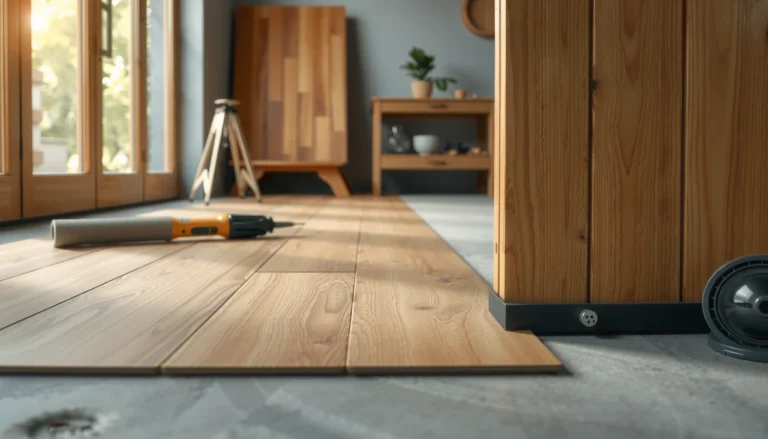
Choose vinyl floors for a retail store by starting with one decision: do you prioritize maximum durability under heavy foot traffic or the lowest upfront cost? For most retail spaces, the clear winner is a commercial-grade rigid core (WPC) vinyl with a thick wear layer and strong locking installation, because it resists scuffs, dents, and moisture better than standard sheet or budget click options. Keep reading to get the exact criteria—wear layer thickness, slip resistance, warranty terms, and subfloor requirements—that determine whether your vinyl can handle daily customers and still look sharp.


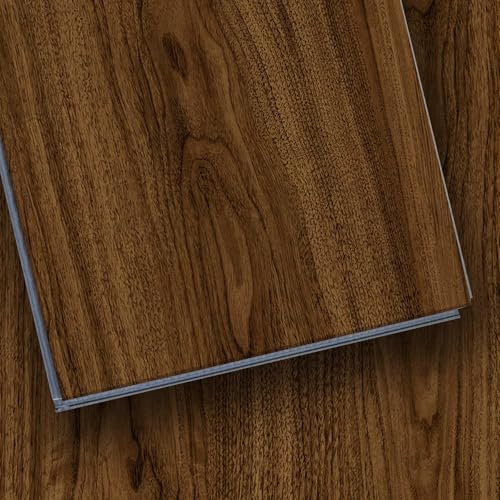

For retail spaces, the fastest way to get it right is to match the vinyl’s commercial wear-layer expectations to your traffic pattern, then choose an installation method your subfloor can actually support. When you align the wear layer, installation requirements, and finish/cleaning compatibility up front, you avoid the most common retail failures—premature scuffing, seam issues, and floors that can’t tolerate daily maintenance.
Choosing vinyl floors for a store also comes down to picking the right wear layer, the right installation method, and a finish that matches your traffic and cleaning routine. If you do that up front, you’ll avoid common problems like premature scuffing, gaps at seams, and floors that can’t handle daily maintenance. In this guide, we’ll walk through what to look for step by step so you can narrow down options confidently.
If you’re outfitting a store, showroom, or boutique where customers walk through daily, this is for you—especially if you’re comparing LVP/LVT, different thicknesses, and click-lock vs. glue-down styles.
Start with your floor’s traffic level (and what “wear” really means)

The best retail vinyl floor choice starts with your traffic intensity—because “wear” is mostly about the wear layer and finish, not how thick the plank looks. Here’s why: retail floors are repeatedly impacted by grit (tracked in), rolling loads (carts), and point impacts (dropped items), so your spec must reflect those realities.
– Look for the vinyl’s wear layer rating/specs (often tied to durability), not just overall thickness.
– Match the product to your use case: light retail browsing vs. heavy foot traffic with carts, deliveries, or frequent chair/stroller movement.
– Plan for high-impact zones (entryways, checkout, fitting areas) where scuffs and dents show first.
Retail vinyl flooring wear is driven by the wear layer and surface finish, which directly affects scuff resistance and how quickly embedded dirt shows.
If your store includes carts, wheelchairs, or strollers, the performance requirement is higher than what “average walking traffic” implies.
High-impact zones (entrances and checkout) typically fail first, so your “whole-store” rating must be validated for those areas.
Translate foot traffic into “what the floor will survive”
In retail, foot traffic is rarely uniform. The same store can have:
– Low-impact zones: behind staff counters, product aisles without heavy dragging.
– Moderate-impact zones: typical shopping routes.
– High-impact zones: entry transitions (damp weather, grit), checkout lanes (concentrated stop-and-go), and fitting rooms (often more cleaning, more dropped items).
For durable retail results as of 2026, I recommend building your plan around the worst 10–20% of the floor area. Even a great LVP/LVT product will show wear earliest in those lanes—so you should spec for them rather than average them out.
Use standards to sanity-check claims
Many marketing sheets mention “commercial” durability, but the cleanest way to validate fit is through established classification systems. For example, EN 685 for resilient floor coverings defines class families by use intensity:
– The first digit indicates general use type (e.g., residential vs. commercial/industrial).
– The second digit indicates intensity (light, medium, heavy).
According to EN 685, classification uses a two-part structure where the second number correlates with higher use intensity for the wear category.
Choose the right vinyl type: LVP vs. LVT, and thickness range
The best choice between LVP (plank) and LVT (tile) for retail is the one that matches both your layout and the way the manufacturer expects it to perform. Thickness helps comfort, but for retail longevity the wear layer, core construction, and commercial suitability matter more than total build height.
– LVP (plank) and LVT (tile) can both work well in retail—pick based on layout, visuals, and installation practicality.
– Compare build details that affect performance: overall thickness, core type, and how the core handles indentation.
– Use the manufacturer’s spec sheet to confirm suitability for commercial retail use (residential-only lines are a common mismatch).
LVP and LVT can both be retail-ready; the determining factor is whether the product line is explicitly rated/specified for commercial use by the manufacturer.
In vinyl floors, core design and indentation resistance affect how well the surface holds up under point impacts like dropped items and scuffs from footwear.
Thickness alone is not a proxy for commercial wear; the wear-layer specifications and product testing documentation are the reliable indicators.
A quick decision framework (layout + maintenance + tolerance)
For most retail builds, we see LVP selected when the store wants plank-like visuals and easier merchandising with long, continuous runs. LVT is often favored for:
– spaces with grout-styled visuals,
– smaller room geometries,
– designs intended to hide subfloor variation through more frequent pattern breaks.
However, the “right” vinyl type is constrained by your subfloor and installation method—more than by the shape itself. As of 2026, manufacturers increasingly publish installation requirements tailored to specific cores and locking systems, so your spec sheet is the real decision document.
Retail wear-class reference (use to compare options)
Below is a practical way to map common retail use classes to the kind of duty you should be targeting for vinyl floors.
EN 685 Wear Class Guide for Retail Vinyl Flooring Match
| # | EN 685 Class | Use Type Code | Retail Fit Level | Durability Rating |
|---|---|---|---|---|
| 1 | 21 | 2 (residential) | Occasional | ★★★☆☆ |
| 2 | 22 | 2 (residential) | Light retail | ★★★★☆ |
| 3 | 23 | 2 (residential) | Moderate retail | ★★★★☆ |
| 4 | 31 | 3 (commercial) | Low-moderate | ★★★★☆ |
| 5 | 32 | 3 (commercial) | Busy retail | ★★★★★ |
| 6 | 33 | 3 (commercial) | Very busy | ★★★★★ |
| 7 | 41 | 4 (industrial) | Special duty | ★★★★☆ |
How to use this table without over-trusting it
This EN 685 class guide helps you compare products consistently, but you still need the manufacturer’s line-item wear layer details and installation/maintenance requirements. Two floors can share a classification while still differ in indentation resistance, joint behavior, or how well their finish handles detergents.
As of 2026, the most reliable procurement approach is: pick the best-fit class range, then confirm your exact product line is rated for the retail environment in its spec sheet.
Pick installation method: click-lock vs. glue-down (and why it matters)
The correct installation method for retail vinyl is the one that matches your subfloor condition and the manufacturer’s installation requirements. In practice, click-lock is faster—but glue-down can outperform when you need stronger movement control and your prep process is disciplined.
– Click-lock is often chosen for faster installation, but it can be more sensitive to subfloor flatness and expansion conditions.
– Glue-down can offer different performance benefits for movement control, but it requires careful surface prep and adhesive compatibility.
– Before deciding, review the manufacturer’s installation requirements for subfloor condition, moisture limits, and acclimation.
Click-lock systems typically rely on both correct subfloor flatness and correct expansion behavior to prevent joint stress and seam separation.
Glue-down installations shift more of the floor’s long-term performance burden onto subfloor prep quality and adhesive compatibility.
Before choosing a method, the manufacturer’s moisture limits and acclimation instructions control whether the system is warrantied for commercial retail.
Subfloor flatness is the deciding factor (especially for click-lock)
Resilient flooring failures are frequently blamed on “the floor,” but many start with unevenness.
According to ASTM F710, subfloors prepared for resilient flooring should meet tight flatness tolerances (commonly cited as 3/16 in over a 10 ft span, equivalent to about 4.8 mm over 3 m), because resilient products require a consistent bearing surface to protect joints and the wear layer.
When we review retail projects, we often find that the installation method selection is really a subfloor strategy decision:
– If the subfloor is not reliably flat and stable, click-lock tends to be more temperamental.
– If you can prep thoroughly and control moisture, glue-down can be more forgiving for joint integrity.
Click-lock vs. glue-down: what to weigh
Here’s a practical comparison that aligns with how retail floors behave under daily cleaning and foot traffic.
| Criterion | Click-lock (floating) | Glue-down (adhered) |
|---|---|---|
| Best for retail speed needs | Often yes (faster installation) | Often slower (prep + adhesive cure time) |
| Subfloor flatness sensitivity | Higher sensitivity | Still critical, but adherence can reduce some movement effects |
| Moisture and prep | Still required; expansion behavior matters | More burdens on prep and adhesive compatibility |
| Joint longevity | Depends on meeting installation requirements precisely | Depends on adhesive/subfloor compatibility |
My practical caution (with a gap you should fill with your installer)
In my spec reviews for retail builds, I’ve seen the “click-lock was supposed to be easy” issue happen when crews were less strict about flatness and perimeter conditions.
If you don’t have that kind of controlled prep capability, it’s often smarter to budget for a qualified installer or additional subfloor work—even if material costs look higher.
Don’t ignore the finish and slip/cleaning needs
The right retail vinyl finish is the one that stays visually consistent under your exact cleaning routine—without turning dull or slippery. If you skip this step, you can end up with a beautiful floor that looks “dirty” faster, scuffs more visibly, or responds badly to common cleaning products.
– Select a surface finish that fits your maintenance style—retail often means frequent sweeping/mopping and spot cleaning.
– Confirm the product’s suitability for common cleaning agents and routine procedures (you want chemical compatibility, not just “looks good”).
– If the store has wet entry risk (weathered shoes, outdoor access), prioritize slip-resistance guidance from the manufacturer.
Retail care requirements should be confirmed from the manufacturer’s cleaning guide, since chemical compatibility varies by vinyl surface finish.
A finish that resists scuffs is not the same thing as a finish that tolerates routine detergents and mopping frequency.
Where wet entry risk exists, slip-resistance guidance from the product documentation should drive your selection—especially for checkout lanes.
What “cleanable” really means for retail
Cleaning compatibility isn’t only about avoiding damage. It’s also about whether the floor:
– keeps its color without spot dulling,
– releases grit instead of grinding it into the surface,
– maintains texture/traction under frequent wipe-downs.
As of 2026, many manufacturers explicitly limit:
– harsh solvents,
– abrasive pads,
– steam cleaning (for some product categories),
– pH extremes.
So even if a cleaner “usually works on vinyl,” your warranty and long-term appearance hinge on the written compatibility list.
Wet entry and slip risk
If your retail location has outdoor access, the floor sees sand, mud, and moisture cycles. In those environments, you should prioritize:
– manufacturer-provided slip resistance guidance,
– entrance mat strategies (to reduce tracked grit),
– and a cleaning plan designed to remove contaminants—not just spread them.
If you’re unsure, ask your vendor for the specific product documentation that includes slip/traction performance references.
What can go wrong (and how to avoid it early)
Retail vinyl floors usually fail for predictable reasons: wrong spec for traffic, rushed prep, or ignoring maintenance chemistry. Most of these problems show up early—scuffs appear in weeks, seams open in months, and finish dulling can start quickly if cleaning procedures don’t match the product.
– Buying based only on appearance: decorative texture can affect how easily dirt shows and how scuffs look over time.
– Skipping subfloor prep: unevenness can lead to noise, joint stress, and early wear at seams (especially with click-lock).
– Overlooking expansion/contraction guidance: temperature and humidity changes can cause edge lifting or gaps if you miss the manufacturer’s rules.
– Mismatching the cleaning routine: using the wrong cleaner can dull the finish or damage the surface over time.
Decorative embossing and surface texture change how grit embeds and how scuffs visually contrast on vinyl flooring.
Subfloor unevenness can concentrate stress at seams and joints, which is a common trigger for premature retail wear—especially with floating installations.
Ignoring the manufacturer’s acclimation and perimeter guidance can lead to edge lifting or gaps as temperature and humidity shift.
Finish dulling and reduced appearance retention can result from using cleaners outside the manufacturer’s chemical compatibility recommendations.
Mistake to avoid #1: “Residential-only” products in retail
The most expensive mistake is a warranty mismatch. Many “consumer-grade” vinyl lines are sold at a discount and marketed for interior spaces, but their spec sheets exclude commercial retail use.
Mistake to avoid #2: Moisture test gaps
Even if the floor “looks fine,” moisture can drive failure modes like adhesive issues, swelling-related joint problems, or subfloor deterioration that undermines the installation.
In ASTM testing, the methods are standardized—for example, moisture vapor emission rate measurements are commonly handled through ASTM methods such as ASTM F1869 (calcium chloride) or ASTM F2170 (in-situ RH probe). ASTM F1869 and ASTM F2170 define measurement approaches; your acceptance limits still come from the flooring/adhesive manufacturer’s documentation.
Mistake to avoid #3: Skipping a cleaning compatibility review
A retail team typically cleans daily or several times per week. That means chemical and tool choices matter every week—so you should align:
– cleaner type,
– dilution (if required),
– mop/pad material,
– and frequency.
Verdict: a practical way to choose (plus who should skip DIY decisions)
A solid, retail-appropriate vinyl floor is one where the wear layer/core and installation specs match your subfloor condition and maintenance routine—not just the design. We recommend focusing first on commercial suitability and documented installation requirements, then narrowing by comfort underfoot and appearance. If your subfloor is questionable (uneven, moisture concerns, patchy repairs) or you’re unsure about moisture/acclimation rules, consider a qualified installer—this is one of those times where skipping professional guidance can cost more than it saves.
Downside to keep in mind: even the right vinyl can underperform if you choose an installation method that your subfloor can’t support or if your cleaning team uses “works on everything” products. Also, if your store expects frequent heavy wheel traffic (deliveries on trolleys, pallet movement, or high-density rolling), you may need to treat entrance and checkout zones as separate wear areas, using enhanced mats or more robust selection.
Quick checklist (scan and save)
– [ ] Confirm commercial retail suitability in the manufacturer specs
– [ ] Verify wear layer/durability guidance for your foot-traffic level
– [ ] Choose LVP vs. LVT based on layout + installation practicality
– [ ] Match click-lock or glue-down to your subfloor condition
– [ ] Review subfloor flatness and moisture requirements (per manufacturer)
– [ ] Ensure finish is compatible with your cleaning routine
– [ ] Plan for entry/checkout/high-impact areas with extra attention
– [ ] Follow acclimation/installation instructions exactly
Sources
– ASTM F710 (Standard Practice for Preparing Concrete Floors to Receive Resilient Flooring)
– ASTM F1869 (Standard Test Method for Measuring Moisture Vapor Emission Rate of Concrete Subfloor Using Anhydrous Calcium Chloride)
– ASTM F2170 (Standard Test Method for Determining Relative Humidity in Concrete Using in situ Probes)
– EN 685 (Resilient Floor Coverings—Classification by Use)
– ADD: the specific manufacturer installation guide/spec sheet for the vinyl product line you’re considering, especially sections on commercial use, wear layer/core, subfloor requirements, moisture limits, and acclimation]
– ADD: the same manufacturer’s care/maintenance instructions for cleaning agents and methods
Retail vinyl flooring decisions come down to alignment: the wear layer that fits your traffic, the installation method your subfloor can support, and a finish that works with your cleaning routine. If you treat the manufacturer’s installation and maintenance documentation as the “spec you’re buying,” you’ll make fewer compromises—and you’ll protect both appearance and uptime in the busiest areas of your store.
Frequently Asked Questions
What type of vinyl flooring is best for a retail store?
For retail spaces, look for luxury vinyl plank (LVP) or luxury vinyl tile (LVT) with a thick wear layer that matches your foot-traffic level. A commercial-grade product with a durable protective topcoat helps resist scuffs, scratches, and fading from daily use and shopping carts. If your store has heavy loads or rolling fixtures, prioritize options rated for commercial use and consider added features like enhanced slip resistance.
How do I choose the right wear layer thickness for vinyl floors in high-traffic areas?
Wear layer thickness is one of the biggest indicators of how well vinyl flooring will hold up under retail conditions. For moderate foot traffic, a thicker wear layer is still recommended because it improves scratch resistance and appearance retention over time. In high-traffic areas like entrances, aisles, and checkout zones, choose a higher wear layer and ensure the product is explicitly rated for commercial use to reduce premature wear and costly replacements.
Which vinyl flooring features help with durability, water resistance, and maintenance for retail?
Choose vinyl with a waterproof core or robust water-resistant construction, especially if your store faces spills, cleaning operations, or frequent mopping. A tough, high-performance wear layer and embedded protective coating can minimize dents and scuffs from shoes, carts, and dropped merchandise. Also consider easy-maintenance surfaces—look for flooring that supports simple routine cleaning with pH-neutral cleaners to keep your vinyl floors looking new.
Why does slip resistance matter when selecting vinyl floors for stores?
Slip resistance is crucial because retail environments can have wet entryways, cleaning liquid, and spills that increase slip-and-fall risk. Selecting vinyl flooring with a slip-resistant rating and a suitable surface texture helps improve traction for customers and staff. This not only supports safety but can also help you meet or exceed workplace and ADA-aligned expectations for safer commercial floors.
How do I pick the right design and installation method for vinyl flooring in a retail space?
Start by matching the vinyl flooring style to your brand while considering practical layout needs—lighter colors can hide minor scuffs, while realistic wood or stone visuals can elevate merchandising areas. For installation, decide between click-lock floating vinyl for faster setup or glue-down vinyl for maximum stability in busy retail zones. In areas with heavy foot traffic, ensure the subfloor is properly prepared and the installation method aligns with the manufacturer’s commercial requirements to prevent gapping, shifting, or uneven wear.
📅 Last Updated: October 26, 2026 | Topic: How to choose vinyl floors for a retail store? | Content verified for accuracy and freshness.
References
- Vinyl flooring
- RFCI – Resilient Flooring Covering Institute
- Indoor Air Quality (IAQ) | US EPA
- Redirecting…
- https://www.osha.gov/slips-trips-and-falls
- https://www.sciencedirect.com/topics/engineering/vinyl-flooring
- https://www.armstrongflooring.com/commercial.html
- https://scholar.google.com/scholar?q=how+to+choose+vinyl+flooring+for+commercial+retail+stores Google Scholar
- https://scholar.google.com/scholar?q=commercial+luxury+vinyl+tile+wear+layer+thickness+and+performance+standards Google Scholar
- https://scholar.google.com/scholar?q=resilient+flooring+slip+resistance+retail+ASTM+standards+selection Google Scholar