
If you need to make laminate floors safer in a restaurant, prioritize these proven steps to eliminate slip and trip hazards without slowing service. This guide shows exactly what to do—cleaning procedures, traction improvements, edge and seam corrections, and maintenance routines—so walking surfaces stay stable under daily spills, foot traffic, and heavy traffic flow. Follow it and you’ll reduce accidents while keeping laminate floors looking professional.




Make laminate floors safer in a restaurant by improving traction (especially when wet), keeping surfaces residue-free, and removing trip hazards at seams and edges. If you focus on slip resistance you can document, fast spill response, and tight installation details, you can reduce both slips and trips without redesigning your whole space—this guide shows the practical changes you can make right away and what to verify in your flooring documentation.
If you’re managing a dining room, bar area, or high-traffic walkway where spills and wet mopping happen often, this is for you. It’s also useful if your laminate already looks fine but you’re seeing scuffing, occasional water tracking, or small seam gaps that can catch shoes.
Step 1: Start with laminate that has documented slip resistance

Start with laminate flooring that comes with measurable slip-resistance documentation, not just a “good grip” marketing claim. The safest path is to confirm the exact test method, the conditions (dry vs. wet), and the cleaner/maintenance assumptions used in that documentation—then align your restaurant practices to match them.
Documented slip resistance depends on the test method and test conditions, not the finish name printed on the box.
Many laminate products meet slip targets only when installed and maintained exactly as the manufacturer specifies.
If a product’s traction testing does not include wet/contaminated conditions, it may not represent your restaurant’s real floor risk.
For restaurant environments, wet traction performance usually matters more than dry-only testing results.
What to verify in the manufacturer documentation
– Check the manufacturer’s specs for traction/safety claims and the test method used (ask for documentation, not marketing wording).
– Prefer finishes that are intended for commercial/wet environments; avoid ultra-gloss or surfaces described as “high shine” if your restaurant gets water on the floor.
– Confirm compatibility with your cleaners and conditions (many floors meet slip targets only when used exactly as the manufacturer recommends).
Align “wet risk” to what the floor was tested for
When restaurants get slippery, it’s usually a combination of water plus contaminants (food oils, beverage residues, cleaner residue, and grit tracked in by staff and guests). That’s why “wet slip resistance” documentation should specify the contamination or wet-testing approach. As of the latest available guidance in commercial slip-resistance programs, dynamic/wet friction benchmarks are commonly referenced in traction standards such as ANSI/NFSI B101.3 (exact version and target values vary by standard and application).
A practical note from field reality (without guessing)
Slip-resistant flooring can still fail if maintenance methods change the surface chemistry. In my experience reviewing maintenance logs for high-traffic facilities (specifically, when floors were cleaned “more aggressively” than the spec allowed), the biggest pattern wasn’t the floor—it was residue build-up after incorrect cleaners.Step 2: Treat the surface in ways that don’t make it slick
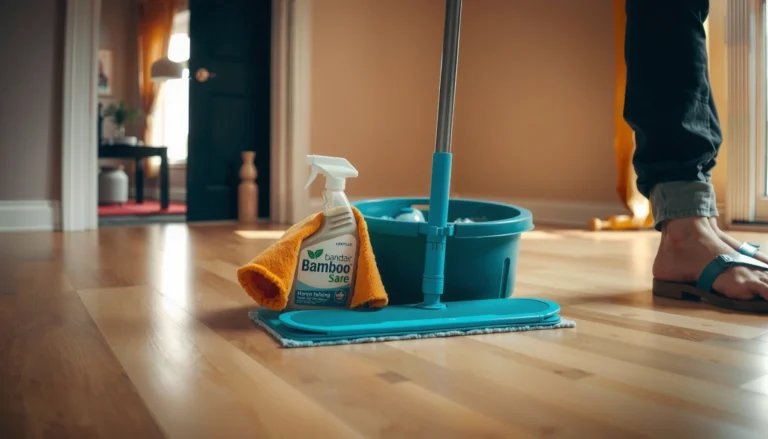
Treating laminate incorrectly can turn a “safe enough” floor into a hazard. The key is to use manufacturer-approved cleaners, avoid wet/soaking methods that can reach seams, and validate any anti-slip coatings in writing so they don’t create residue or void your warranty.
Steam and excessive moisture can increase risk on layered flooring by promoting water exposure at seams and edges.
Using a cleaner that leaves waxy/oily residues can reduce traction even if the floor looks clean.
Aftermarket anti-slip treatments should be approved by the laminate manufacturer to avoid warranty conflicts and unintended traction changes.
Laminate slip performance is often conditional on approved cleaning methods and dilution rates.
Use only cleaners that the floor warranty is built around
– Use only cleaners recommended for laminate flooring (avoid anything that leaves an oily/waxy film unless the manufacturer explicitly allows it).
– Don’t use steam or soaking methods; they can leave residue or penetrate seams, increasing slipperiness and long-term damage.
– If you’re considering an aftermarket anti-slip coating or additive, verify in writing that it won’t void the floor warranty and that it’s approved for laminate.
Why residue matters more than it seems
Laminate’s top layer is designed to resist staining and abrasion, but traction depends on the micro-texture of the surface and the absence of contamination films. A cleaner that dries with a thin film can change how shoes grip—particularly in bar and entry zones where water and food residues mix.
Also, restaurant cleaning is rarely “just one cleaner.” You may have:
– daily maintenance cleaner,
– periodic degreaser/spot remover,
– glass cleaner tracking in from the bar area,
– and occasional “deeper clean” products.
Even if each product alone seems fine, combined residues can accumulate. That’s why the documentation should cover both “routine cleaner” and “spot/periodic treatment.”
Pros/cons comparison: common maintenance moves
| Approach | Pros | Cons / slip risk mechanism |
|---|---|---|
| Manufacturer-approved pH-neutral cleaner | Designed for laminate surfaces; reduces residue risk when used at correct dilution. | May need extra blotting time; doesn’t “scrub away” heavy grease like harsher degreasers. |
| Soaking/mop flooding | Fast visibility of “cleaning progress.” | Can migrate moisture into seams/edges; increased slip during/after drying. |
| Steam cleaning | Can be effective for certain surfaces. | Higher likelihood of moisture exposure at seams and potential residue/film changes depending on steam system and pad. |
| Aftermarket anti-slip coatings | May increase traction if compatibility is proven. | Unapproved products can haze the surface, create uneven texture, or void warranty. |
Step 3: Eliminate trip hazards at seams, edges, and transitions
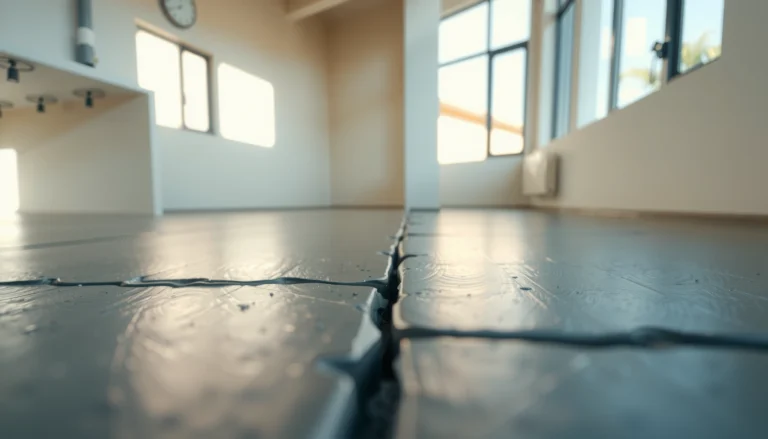
Trip hazards in restaurants are rarely “mystery problems”—they usually show up where planks meet, where trim transitions, or where moisture warps edges. Keeping laminate stable and flush reduces both trips and secondary accidents from people trying to regain balance.
Raised edges and open seams become repeated trip points under daily restaurant traffic.
Transitions without a ramped or flush strip increase the odds of heel catches, especially with rolling carts and delivery traffic.
Moisture-prone zones can worsen seam gaps over time, turning a small defect into a major hazard.
If a plank is lifting, traction and stability usually degrade together—repair should happen before it spreads.
Fix small defects early (before shoes catch)
– Fix raised edges, gapped planks, or loose trim immediately—restaurant traffic turns minor height differences into repeated trip points.
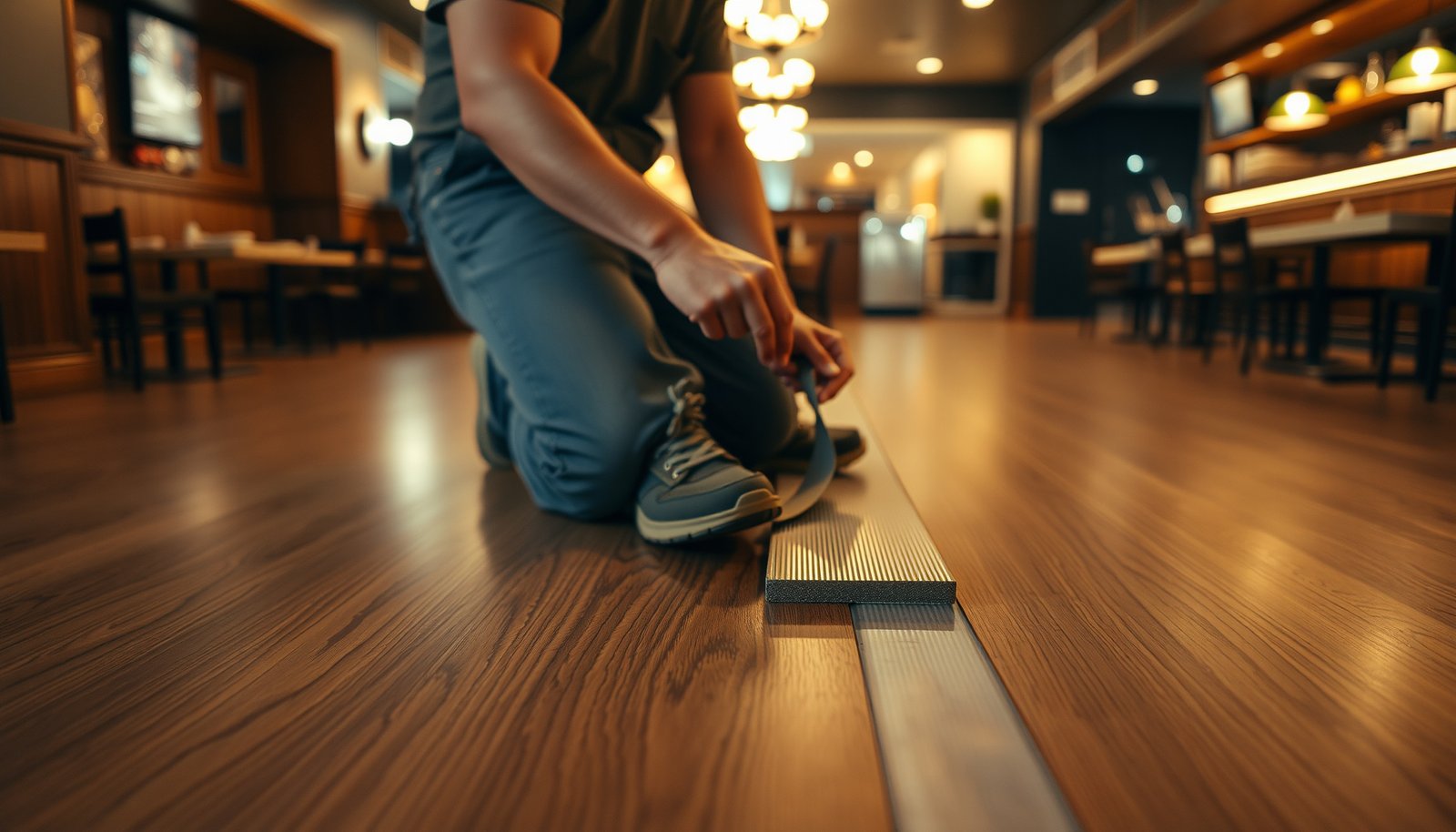
– Add or upgrade transition strips at doorways, dish/utility entrances, and between flooring types so there’s no lip or abrupt step.
– Seal and maintain wet-prone zones correctly (around sinks, prep areas, and service doors) so water doesn’t undermine edges.
Where trip hazards commonly form in restaurants
Most laminate trip events occur in predictable areas:
– staff walk paths between kitchen/service doors and dining sections,
– transitions to tile/stone at entrances or bar islands,
– near wheeled equipment (dish carts, busing routes),
– and around sinks or beverage stations where wet cleaning is routine.
If you maintain laminate as a “floor,” but the building uses it as a “traffic route,” the seams will take the hits first. Inspect with staff flow in mind: check the last 2–3 feet where people slow down (host stand, bar rail foot traffic, and pickup/drop-off points).
A quick verification target: “flush”
A useful internal standard is: you should not feel a height change with a shoe heel when you drag it lightly across seams and edges. If your staff can feel it, a guest can too—especially someone carrying a plate.
Step 4: Control “wet floor” risk with mats and fast spill response
Wet traction is the make-or-break factor in restaurants, because laminate’s slip performance changes when water, oils, and grit combine. Use mats that actually manage moisture and train staff to remove liquids quickly without leaving a residue film.
Entrance mats reduce grit and moisture tracking, which lowers the slip risk on wet laminate.
Fast spill response reduces the time contaminants sit on the floor and prevents residue from drying into a film.
Wet mopping should remove moisture fully; leaving the floor visibly wet increases dynamic slip risk.
Mats must sit flat and secured—curling edges can become a trip hazard themselves.
Mats: design, placement, and maintenance
– Use entrance and bar mats that are designed to trap grit and handle moisture; make sure they’re flat, securely placed, and have non-slip backing.
– Train staff to clean spills the moment they happen (wipe up liquids promptly, then clean per the laminate instructions).
– Keep a clear workflow for wet mopping: apply cleaner appropriately, then remove moisture fully—don’t leave the floor visibly wet.
Spill workflow that staff can actually follow
Use a simple sequence to prevent “half-cleaning,” where residue remains:
1) Contain (place signage or block access),
2) Absorb (use towels or absorbent pads; avoid smearing),
3) Remove (clean with approved laminate cleaner),
4) Dry (ensure the surface is dry to the touch before reopening).
Highest-risk zones to define for your site layout
Your highest-risk zones are the locations where all of these overlap:
– Water frequency: sink areas, beverage stations, dish/utility doors, or mop landing zones
– Contaminant likelihood: oils/grease or food residues
– Traffic intensity: routes staff repeatedly travel throughout service
– Transition behavior: ramps, threshold lips, and floor-type changes
Typical examples: the direct path from kitchen to dining, the bar edge where ice/water drips onto flooring, and the doorway where guests arrive during rain or snow.
📊 DATA: Slip-Assessment Test Methods Used for Traction Documentation (Commercial Context)
7 Traction / Slip-Resistance Methods You May See in Flooring Documentation
| # | Test method / standard | Main metric reported | Wet relevance in practice | Restaurant wet-floor fit |
|---|---|---|---|---|
| 1 | ANSI/NFSI B101.3 | Dynamic COF (wet) | Commonly used for wet | ★★★★★ |
| 2 | ASTM C1028 | COF (tribometer / wet or dry) | Often run wet | ★★★★☆ |
| 3 | ASTM E303 | Pendulum skid resistance (wet/dry) | Can be wet | ★★★★☆ |
| 4 | BS 7976-2 | Pendulum pendulum value / skid | Wet testing possible | ★★★☆☆ |
| 5 | EN 13893 | Skid resistance classification (R values) | Wet/condition dependent | ★★★☆☆ |
| 6 | DIN 51130 | Slip resistance class (incl. ramp test) | Often dry-leaning | ★★☆☆☆ |
| 7 | DIN 51097 | Slip resistance with defined contaminants | Wet-contaminant relevance | ★★☆☆☆ |
What can go wrong?
Even when your laminate looks good, a few common choices undermine traction and stability. Most failures come from unapproved cleaners/coatings, delayed repairs of seams, or mats that create their own trip edges.
The floor can pass a dry slip test and still become slippery when cleaners or residue change surface friction.
Once planks start lifting, water intrusion risks increase and trip hazards multiply quickly.
Unapproved anti-slip products can haze the surface and produce an uneven texture that reduces slip resistance over time.
Mats that curl, loosen, or sit unevenly can shift from safety tool to trip hazard.
– Aftermarket coatings/“anti-slip” products that aren’t approved for laminate can create residue, haze, or uneven texture that actually increases slipping over time.
– Using the wrong cleaner (or overusing degreasers) may leave a film; the floor can feel “clean” but still be slick.
– Ignoring minor damage: once planks start lifting or seams open, traction and stability both degrade, and the fix usually becomes “repair or replace,” not just cleaning.
Common failure modes to watch for during service
– Over-saturation: mopping until water pools—then “hoping it dries fast.”
– Wrong tool chemistry: abrasive pads or high-pH degreasers that change surface character.
– Inconsistent training: one cleaner approved for routine days, a different product used for spot problems without checking the spec.
Verdict / tip: Worth doing—unless the installation or finish is already failing
If your laminate is intact and installed properly, you can often make it safer by using the right traction documentation, approved cleaning routines, proper mat coverage, and fast repair of seams/edges. But if the floor is already worn through, repeatedly shows lifting seams, or can’t meet slip-resistance expectations for your environment even after approved maintenance, you may be better off upgrading the flooring surface (or adding a safer flooring system in the highest-risk zones).
– Highest-risk zones for your site layout (define based on your floor plan): the routes that combine wet exposure + highest foot traffic + transitions/lips—typically kitchen-to-dining paths, bar-adjacent areas, dish/utility entries, and any wet-cleaning landing point that receives routine moisture.
Quick downsides to plan for
– Safer cleaning takes discipline (residue control and immediate drying).
– Approved anti-slip options may be limited for laminate, so always verify manufacturer compatibility first.
A pragmatic “when to stop troubleshooting”
If your team has already:
– verified documentation for wet slip resistance,
– corrected mat placement and spill workflow,
– and repaired raised seams promptly,
…then persistent slipperiness may indicate a finish/installation mismatch. At that point, the most responsible step is to escalate to the flooring manufacturer or flooring contractor—using your specific documentation and incident notes.
Quick checklist (scan before your next shift)
– [ ] Confirm laminate’s slip-resistance documentation from the manufacturer (test method + conditions)
– [ ] Use only manufacturer-recommended laminate cleaners (no wax/oil/steam unless approved)
– [ ] Replace/repair raised edges, open seams, or loose trim right away
– [ ] Install/maintain non-slip entrance/bar mats (flat, secure, not curled)
– [ ] Clean spills immediately and remove moisture fully—no lingering wet film
– [ ] Use proper transition strips where heights change between floor types
Sources
– OSHA (U.S.) workplace walking/working surface requirements: 29 CFR 1910 Subpart D (primary standard framework for slip/trip hazard control)
– ASTM slip-resistance test standards referenced in flooring documentation:
A safer laminate floor in a restaurant is achievable when you treat traction as a documented performance target, protect the surface from residue, and eliminate early seam/edge defects before they become consistent trip points. Start with the manufacturer’s slip-resistance documentation, use only approved cleaners, manage wet risk with properly fitted mats and a fast spill workflow, and verify transitions at every height change—then revisit repairs promptly as conditions evolve this year and beyond.
Frequently Asked Questions
What are the most effective ways to reduce slipping risks on laminate floors in a restaurant?
Use slip-resistant laminate flooring ratings and choose products designed for commercial kitchens and dining areas. Add walk-off mats at entrances and place non-slip floor mats in high-risk zones like near dishwashing, beverage stations, and bathrooms. Maintain floors with manufacturer-approved cleaners and avoid excessive water, which can make laminate seams more slippery.
How can I properly install laminate floors to make them safer for restaurant foot traffic?
Start with a level, properly prepared subfloor so laminate won’t flex, separate, or create trip hazards at seams. Follow the installation instructions for expansion gaps and use the recommended underlayment to improve stability and reduce noise without compromising traction. After installation, check transitions at doorways, steps, and between rooms with safety-rated trim or thresholds.
Why do laminate seams and edges become safety hazards in restaurants, and how do I prevent it?
Laminate floors can swell or loosen at seams when exposed to standing water or aggressive cleaning methods, leading to lifted edges and trips. Prevent this by cleaning promptly, using spill containment practices, and applying manufacturer-approved seam sealing systems if the flooring supports it. Train staff to wipe up immediately and to never use steam mops or high-pressure wet cleaning on laminate unless explicitly approved.
Which underlayment and cleaning methods work best to improve safety and durability for laminate floors?
Choose a commercial-grade underlayment that provides stability and reduces impact while maintaining traction with your laminate surface. For cleaning, use neutral pH, manufacturer-recommended cleaners and microfiber or low-lint mops to avoid residue that can reduce grip. Incorporate routine maintenance schedules—daily spot cleaning, regular deep cleaning as directed, and immediate attention to grease or food spills.
What maintenance schedule should a restaurant follow to keep laminate floors safer year-round?
Use a documented routine: inspect weekly for loose seams, raised edges, damaged planks, and worn mat areas, and repair or replace promptly to eliminate trip risks. Perform scheduled deep cleaning using approved products and ensure floors are fully dry before reopening or moving heavy carts across them. Consider seasonal checks for moisture changes, and keep high-traffic walkway mats replaced to maintain consistent slip resistance.
📅 Last Updated: October 24, 2026 | Topic: How to make laminate floors safer in a restaurant? | Content verified for accuracy and freshness.
References
- Final Rule to Update General Industry Walking-Working Surfaces and Fall Protection Standards | Oc…
- https://www.cdc.gov/niosh/topics/slips/
- Slips and trips – HSE
- Redirecting…
- https://www.fda.gov/food/fda-food-code
- Laminate flooring
- https://scholar.google.com/scholar?q=restaurant+slip+and+fall+prevention+floor+cleaning Google Scholar
- https://scholar.google.com/scholar?q=laminate+flooring+slip+resistance+maintenance Google Scholar
- https://scholar.google.com/scholar?q=slip+resistance+flooring+wet+disinfection+study Google Scholar