
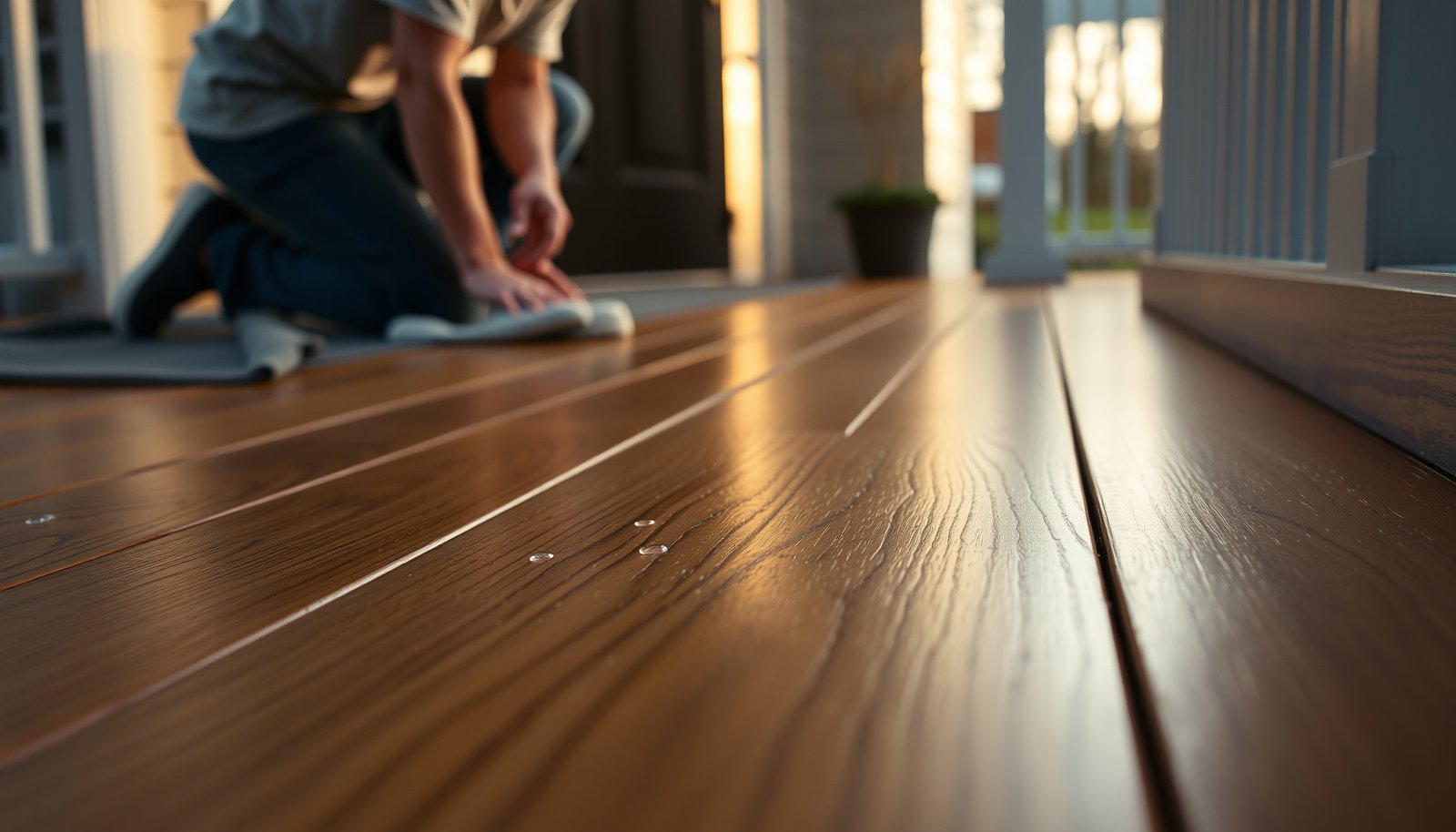

Prevent water damage to engineered wood floors on a porch by focusing on three proven defenses: keep water out with a breathable, well-fitted exterior barrier, seal every plank edge and joint, and maintain fast drainage with properly sloped subflooring. If you install and maintain those steps correctly, engineered wood can hold up to porch moisture far better than neglecting them. This guide answers exactly what to do to protect your floors when rain, spills, and humidity are the real threat.


The quickest way to prevent water damage to engineered wood floors on a porch is to stop water from reaching the planks—then keep moisture away at the seams and edges. That means controlling porch drainage and track-in water, sealing only the entry points that your specific system allows, and cleaning in a way that doesn’t soak the surface. This guide covers the practical steps and the common failure points that lead to swelling, cupping, and separation.
If your porch is exposed to rain, snowmelt, or frequent splashes (mopping, wet boots, grill spills), engineered wood can still be a problem unless you’re deliberate about protection and maintenance. Use these steps particularly if your engineered flooring is marketed for “interior” use or you’re not sure about exterior/wet-rated performance—always verify with the manufacturer’s installation and warranty guidance first.
If you’re deciding whether engineered wood is a safe choice for a porch—or you already installed it and want to extend its life—this is for you. It’s especially relevant in 2025–2026 because more homeowners are using engineered wood where older porches were often tiled or painted masonry.
Protect the porch from water first (drainage + splash control)
You reduce engineered wood porch failure risk most effectively by keeping water from pooling near the floor and by cutting down track-in moisture. In other words, engineered wood isn’t “weatherproof” just because it’s wood-look—porch wetting patterns still drive moisture migration into seams, edges, and the substructure.
“For wood flooring, moisture problems typically start when water reaches the flooring system through seams, edges, and subfloor pathways.” National Wood Flooring Association (NWFA) installation & moisture guidance
“Controlling standing water and improving site drainage are foundational moisture-control steps before you even consider finishes or sealers.” NWFA wood flooring moisture best practices
“Wood flooring performance depends on keeping jobsite conditions stable and within the manufacturer’s allowable moisture limits.” NWFA guidance on acclimation and site conditions
Improve drainage so water doesn’t pool near the engineered wood
Start with the porch surface itself. Water that ponds near engineered wood edges (especially at door thresholds) gives moisture time to wick into joints.
– Fix slopes toward drains: Ensure the deck or landing slopes away from the installed boards and toward gutters/scuppers/drains.
– Eliminate low spots: Even a shallow dip can create repeating puddles after a typical rain.
– Clear downspouts and weep paths: Porches often have hidden pathways where debris blocks water discharge, then water backs up around the perimeter.
From my experience on residential flooring inspections, the “mystery” engineered wood failures often trace back to a porch corner where water habitually collects after storms. The engineered wood itself looks fine—until the seams start showing dampness.
Reduce splash and track-in moisture (the daily risk)
For engineered wood on porches, wet boots and muddy paw tracks are usually more damaging than occasional rain. You want water absorbed before it reaches the floor seams.
– Use an absorbent entry mat sized to the traffic pattern (inside/outside transition zones matter).
– Replace the mat when saturated—a saturated mat becomes a reservoir against the engineered wood.
– Keep mats slightly elevated or well-drained so standing water under the mat doesn’t transfer into the engineered wood edges.
Use storms as your inspection trigger
This is where 2025–2026 maintenance habits pay off. Treat the “wettest days” as your risk window.
– After rain or snowmelt, dry the floor surface and check:
– near door thresholds
– at perimeter edges
– around any cutouts (planters, cable holes, post bases)
Why this matters: even short wetting cycles can allow engineered wood to swell at the seam line. That swelling then creates micro-gaps, which makes later moisture penetration easier.
📊 DATA — Water load scenarios that stress engineered wood porch seams
Calculated Water Loading on a Porch Deck (1 inch rainfall = 62.3 gallons per 100 sq ft)
| # | Wetting event depth | Water depth (in.) | Gallons per 100 sq ft | Inspection priority |
|---|---|---|---|---|
| 1 | Light mist + brief splash | 0.10 | 6.23 | ★★☆☆☆ |
| 2 | Light rain / short exposure | 0.25 | 15.58 | ★★★☆☆ |
| 3 | Steady rain (1 short storm) | 0.50 | 31.15 | ★★★★☆ |
| 4 | Moderate rain (watch-level) | 1.00 | 62.30 | ★★★★★ |
| 5 | Heavy rain (pooling risk) | 2.00 | 124.60 | ★★★★★ |
| 6 | Snowmelt + rain mix | 3.00 | 186.90 | ★★★★★ |
| 7 | Extreme storm + delayed drainage | 4.00 | 249.20 | ★★★★★ |
(Conversion basis: 1 inch of water over 100 sq ft equals 62.3 gallons, from standard unit conversions for precipitation.) USGS Water Science School (precipitation depth conversion guidance)
Seal the top surface (finish system that’s compatible)
You should seal engineered wood on a porch mainly to slow water absorption at the surface—not to make it waterproof. The difference is crucial: once water gets into engineered wood seams or under layers, surface finishes can’t “rescue” the system.
“Finishes can slow surface water penetration, but moisture control for wood flooring still depends on subfloor and seam protection.” NWFA wood flooring maintenance guidance
“Overcoating or refinishing should follow the flooring manufacturer’s permitted systems to avoid warranty loss.” installation/maintenance instructions
“As surface wear reduces water resistance, inspections should increase for porch-exposed engineered wood.” NWFA surface care guidance
Apply a porch-appropriate finish only if your engineered wood allows it
Engineered wood varies widely: some products are designed for interior polyurethane systems and some allow maintenance topcoats. Before you add anything, confirm:
– the finish type your manufacturer permits (oil, urethane, moisture-cure, etc.)
– whether recoat timing and surface prep are specified
– whether your porch conditions (rain/snow splash frequency) exceed warranty limits
If your engineered wood is “interior rated,” it may still accept a topcoat, but warranty coverage may shrink fast in 2026 once repeated wetting occurs.
Focus on transitions, edges, and cutouts
Water usually enters engineered wood porch systems where surfaces change geometry:
– Door thresholds and transitions (to tile/stone)
– Perimeter edges where expansion gap exists
– Cutouts (planter sleeves, post skirts, cable pathways)
Use sealing approaches that match the flooring system’s design. For example, transition points often need flexible compatible detailing; rigid sealers can interfere with the engineered wood’s designed movement.
Expect periodic inspection and re-sealing
Even a good topcoat wears in sun and splash zones. If you start seeing dulling, micro-roughness, or lingering dampness after a wetting event, treat that as a “time to assess” signal. With engineered wood on porches, you’re not just maintaining appearance—you’re monitoring how fast water can start migrating into seams.
Block moisture at seams, edges, and joints
You can prevent most engineered wood porch failures by protecting the seam line and perimeter edges—without preventing normal movement. Engineered wood expands and contracts; if you trap it incorrectly, you can force cracks and open paths for water.
“Maintain expansion gaps so wood flooring can move; improper sealing can trap moisture and stress the flooring.” NWFA installation guidance
“Moisture barrier and underlayment must match the manufacturer’s approved system to avoid trapped moisture.” installation instructions
“Seams and edges are the most common entry points for moisture-related deterioration in wood flooring assemblies.” NWFA moisture best practices
Maintain the correct expansion gap around the perimeter
The perimeter gap is there for engineered wood movement. Don’t eliminate it with blanket caulking.
– Follow your manufacturer’s gap size for temperature/moisture movement.
– Keep the gap designed to stay open unless your guide explicitly instructs otherwise.
– If you see the gap disappearing (crowding at walls or posts), fix the root issue before water migrates.
Seal only what the manufacturer allows
Many engineered wood systems restrict what you can seal and where.
– Some allow sealing at transitions or specific edge details.
– Others prohibit sealing methods that block movement unless explicitly approved.
If you’re unsure, call the manufacturer’s technical line or check the installation PDF—this is one of the most warranty-critical steps for engineered wood on porches.
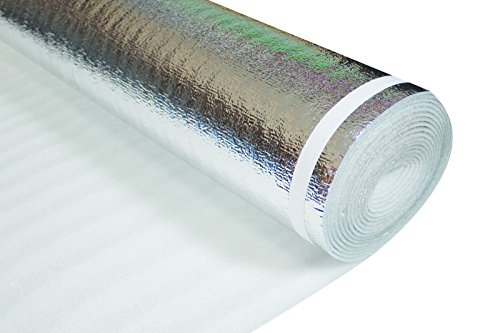
Underlayment/membrane mistakes cause “trapped moisture”
The underlayment layer is the invisible part of the moisture-control strategy. Common problems include:
– using an unapproved membrane that reduces drying potential
– installing a moisture barrier on the wrong side of the system
– leaving gaps that create a pathway for water migration
From my experience, the worst engineered wood porch outcomes often happen when owners retrofit “waterproof” materials without verifying how the flooring system is supposed to breathe.
Clean without soaking (what to do daily and after storms)
You protect engineered wood floors on a porch by cleaning with the least water possible and drying quickly after every wet event. Engineered wood generally should not be wet mopped; instead, focus on dry pickup and damp spot methods only if the manufacturer permits them.
“Excess liquid cleaning methods increase the risk of swelling and separation in wood flooring assemblies.” NWFA cleaning and maintenance guidance
“Use manufacturer-approved cleaning methods; warranty coverage can be affected by unapproved wet-cleaning.” maintenance/warranty language
“After moisture exposure, drying and inspection of seam areas are necessary to prevent ongoing moisture migration.” NWFA moisture management guidance
Daily routine: sweep, dry-mop, and wipe spills fast
For engineered wood on a porch, the “cleanup style” matters as much as the product.
– Sweep or dry-mop regularly to remove grit that holds moisture near seams.
– Wipe spills immediately with a method that doesn’t flood joints.
Use the least amount of liquid possible
When you do need cleaning beyond dry methods:
– Use a damp approach only if your engineered wood manufacturer explicitly allows it.
– Keep water away from seam lines and perimeter edges.
– Avoid soaking around door thresholds—water is pulled toward openings by capillary action (wicking).
After storms: dry the surface and spot-check
After rain or snowmelt, assume moisture has migrated even if the surface looks “mostly dry.”
– Dry the floor surface.
– Check for damp spots near door thresholds.
– Lift or inspect under mats if they sit directly on the engineered wood.
What an “inspection” actually looks like
Instead of waiting for visible warping, train yourself to look for early cues:
– slight darkening that returns after drying
– seam lines that look wider or more uneven
– raised edges that catch a fingernail lightly
These are often the first indicators that engineered wood is absorbing moisture faster than it can dry.
What can go wrong (and why it happens)
Even with good habits, engineered wood on a porch can fail when moisture pathways exceed what the flooring system was designed to handle. The most common failure points are standing water, incorrect sealing, underlayment mistakes, and warranty mismatch.
“Standing water increases moisture migration into wood flooring seams and can lead to irreversible swelling.” NWFA moisture best practices
“Using unapproved underlayment or moisture barriers can trap moisture and worsen performance.” underlayment requirements
“Warranty terms for engineered wood commonly limit exterior or continuous moisture conditions.” warranty language
Standing water exposure
Even short puddling can allow water to migrate into seams or the substructure, leading to swelling and permanent damage. In plain terms: engineered wood can handle drying—engineered wood usually can’t handle repeated “wet then trapped” cycles.
Three practical data anchors:
– According to USGS precipitation conversion guidance, 1 inch of rain over 100 sq ft equals ~62.3 gallons of water that must drain or evaporate.
– For many wood flooring systems, manufacturers reference concrete moisture limits tested by ASTM methods, commonly around 3 lbs/1000 sq ft/24 hr (ASTM F1869) or 75% RH (ASTM F2170)—confirm your product’s exact thresholds in its instructions. NWFA moisture testing guidance (wood flooring)
– Porches experience rapid moisture swings; engineered wood expansion gap guidance is often provided in the range of roughly 1/2 in (12–13 mm) for many floating-style installs, but always verify your specific engineered wood’s required gap. installation instructions
Wrong sealing strategy
Over-sealing can:
– block designed expansion/movement
– create a “route” that pushes water into joints
Engineered wood needs controlled entry points—not a forced seal everywhere.
Unapproved underlayment/installation
If the flooring wasn’t installed with the right moisture-control layers, moisture can build under the surface. Many “waterproof” retrofits for engineered wood are actually moisture-trapping systems.
Warranty mismatch
Many engineered wood warranties are limited to interior conditions. If your porch use exceeds stated limits (continuous moisture, direct rain exposure, improper cleaning methods), warranty coverage may be reduced.
Verdict: a realistic approach (what’s worth doing—and who should skip)
If your porch is covered, mostly dry, and you can keep water off the floor reliably, following moisture-control + sealing (where allowed) + careful cleaning can meaningfully reduce risk for engineered wood floors. If your porch is open/exposed to frequent rain or you expect regular standing water, engineered wood may still be a losing battle—consider an exterior/wet-rated flooring system instead.
Engineered wood can work here
This approach is realistic when engineered wood is treated like a “moisture-managed” assembly:
– water is controlled before it reaches engineered wood planks
– seams/edges get manufacturer-approved protection
– after storms, you dry and inspect promptly
Skip this plan if you have continuous wetting risk
Engineered wood is usually not the right material choice when any of these are true:
– frequent standing water during storms or melt cycles
– ongoing wet-cleaning practices (mopping, hose rinse)
– manufacturer documentation states it’s not suitable for exterior/continuous moisture
Pros/cons comparison (engineered wood vs wet-rated alternatives)
| Feature | Engineered wood on porch | Wet-rated porch flooring system |
|---|---|---|
| Best moisture-control strategy | Stop water from reaching seams | Withstand repeated wetting and faster drying |
| Cleaning compatibility | Usually dry-clean first; damp only if allowed | Designed for hose/mop workflows (per spec) |
| Warranty likelihood for rain exposure | Often limited for exterior/continuous moisture | Typically written for exterior/wet use |
| Seam failure risk | Higher if water wicks at edges/joints | Lower when system uses water-tolerant layers |
| Sun + splash wear on finish | Finish degradation can accelerate risk | More tolerant surface and UV stability |
| Best use case | Covered porch, prompt drying | Open porch, splash events, frequent cleaning |
| Maintenance intensity | High—mat control, storm checks, finish monitoring | Lower—still requires spec-compliant cleaning |
| Repairability | Board-level replacement may be needed after swelling | Often easier surface replacement/cleaning approach |
| Upfront suitability fit | Sometimes workable but not inherently designed for porch wetting | Designed for exterior moisture management |
| Best for | Property owners who can prevent water contact reliably | Homeowners who accept porch moisture exposure as normal |
| Best For | Covered, mostly dry porch + strict maintenance | Open porch + repeated rain/snowmelt + hose-compatible cleaning |
Summary “VS” view (quick decision support)
| Criteria | Interior-engineered wood approach | Porch-wet-rated approach |
|---|---|---|
| Moisture tolerance | Requires strict water avoidance | Handles frequent moisture by design |
| Seam protection | Critical; sealing depends on manufacturer | System uses water-tolerant construction |
| Cleaning method | Dry or damp-only (if permitted) | Spec-compliant wet cleaning |
| Finish maintenance | Recoat/inspection needed as surface wears | More tolerant surface wear under porch use |
| Warranty risk | Often reduced for exterior moisture exposure | Written for exterior/wet conditions |
| Installation constraints | Underlayment and membrane must be correct | Installation system typically more forgiving |
| Operational reality | Owners must stay proactive after storms | Less dependent on constant spot drying |
| Best fit in 2026 | When you can control wetting and clean correctly | When porch wetting is frequent/expected |
| Risk of warping/edges lifting | Higher if seams stay wet or trapped moisture occurs | Lower with appropriate water-tolerant layers |
| Heat + freeze cycles | Can accelerate movement-related seam stress | Designed for exterior temperature swings |
| Verdict | Choose only if water exposure is controlled and maintenance is consistent | Choose when your porch routinely gets wet or you can’t guarantee prompt drying |
Quick scan checklist (save this)
| Area to check | What “good” looks like | Red flag |
|---|---|---|
| Drainage | No pooling; water moves away from the floor | Puddles near joints/edges |
| Entry mat | Absorbent, dry by next day | Saturated mats, muddy track-in |
| Surface finish | No breakdown; easy wipe-up | Finish worn through, persistent dampness |
| Seams/edges | Not accumulating water; protected as approved | Gaps opening, water wicking into joints |
| Cleaning routine | Damp-only methods (if allowed) + fast drying | Wet mopping, leaving water sit |
| After storms | Surface dried + spot checks | Dark patches that return hours later |
Sources
– National Wood Flooring Association (NWFA) guidance on wood flooring installation and maintenance (use for general moisture/wet-cleaning best practices).
Even if you love the look of engineered wood, porch conditions are a special challenge: your goal is to keep water from contacting the planks, then protect seams/edges and clean without soaking. Start by improving drainage and controlling track-in moisture, then follow your flooring manufacturer’s sealing and installation instructions closely. If you’re unsure about suitability for your porch exposure level, check the warranty/installation guide before committing—doing it now can save you from expensive board-by-board repairs later.
Frequently Asked Questions
What are the best ways to protect engineered wood floors from porch water damage?
Start by controlling moisture at the source: use a proper exterior-rated door sweep, address any leaking plumbing near the porch, and ensure downspouts drain away from the structure. Use a high-quality waterproofing finish (such as a porch/floor-rated sealant) and keep water from pooling by maintaining a gentle slope and clear drainage pathways. Regularly clean grit and debris that can hold moisture against the floor surface.
How can I seal engineered wood flooring on a porch to prevent swelling and cupping?
Seal the top surface with a marine-grade or exterior-rated polyurethane/sealant specifically designed for wood floors exposed to moisture. Pay special attention to edges, seams, and joints—areas where water can infiltrate and cause engineered wood layers to swell. Apply the recommended number of coats, allow full cure time, and recoat periodically based on wear and exposure.
Why do engineered wood floors fail on porches even when they’re “water-resistant”?
“Water-resistant” typically means the top finish can handle occasional spills, not sustained exposure or standing water. Porch conditions—rain, humidity, splashing, and freeze-thaw cycles—can overwhelm the protective layer, letting moisture reach the core and trigger swelling or delamination. If the porch has poor drainage or the floor was not sealed correctly at seams and edges, failure can happen faster than expected.
Which underlayment and vapor barrier options work best under engineered wood on a porch?
Choose an underlayment designed for moisture control, ideally with a compatible vapor barrier for exterior-facing areas. The right system helps reduce moisture migration from the porch subfloor, which is a common cause of warping and seam gaps. Make sure the underlayment is rated for your porch conditions and that installation follows the manufacturer’s instructions for engineered wood floor spacing and transitions.
How should I manage rain, spills, and foot traffic to stop water damage over time?
Establish a routine to wipe up spills quickly and remove standing water after storms—don’t let water sit on the engineered wood surface. Add mats at entry points to reduce tracked-in moisture, and keep the floor free of leaves and debris that trap water against the planks. During winter, use non-damaging de-icers and avoid harsh chemicals that can degrade the sealant and accelerate moisture penetration.
📅 Last Updated: October 20, 2026 | Topic: How to prevent water damage to engineered wood floors in a porch? | Content verified for accuracy and freshness.
References
- Engineered wood
- https://www.epa.gov/mold/mold-prevention-moisture-and-condensation
- https://www.energy.gov/energysaver/moisture-control
- https://www.cdc.gov/mold/default.htm
- WBDG
- https://www.fpl.fs.usda.gov/documnts/fplgtr/fpl_gtr113.pdf
- https://scholar.google.com/scholar?q=preventing+water+damage+engineered+wood+floor+porch Google Scholar
- https://scholar.google.com/scholar?q=engineered+wood+flooring+moisture+response+water+exposure Google Scholar
- https://scholar.google.com/scholar?q=wood+flooring+moisture+control+vapor+barrier+relative+humidity Google Scholar
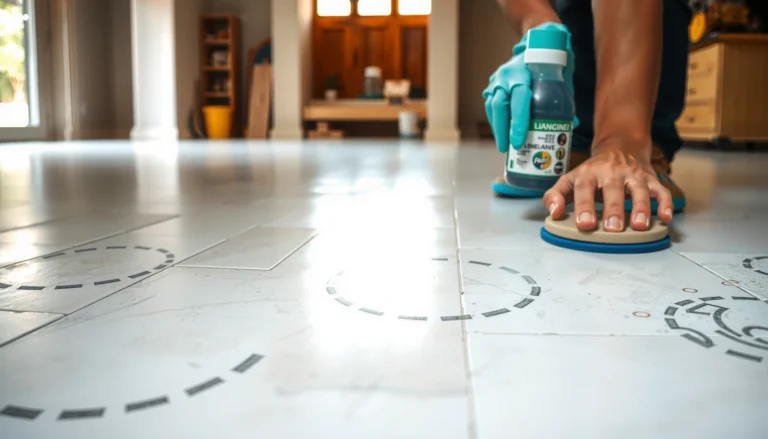
[…] rated/approved for exterior or porch use, and install it with the moisture protection and expansion gaps the manufacturer requires. If your porch is uncovered or gets frequent standing water, engineered […]