
Stop scratches on engineered wood floors in a sunroom with a proven setup: use felt or microfiber floor protectors under every moving item, keep grit off with the right entry mats, and control humidity so boards don’t shift under sunlight and heat. This guide answers exactly what prevents surface damage in high-sun, high-traffic rooms and which habits matter most. Follow these steps and you’ll keep your finish looking new instead of developing permanent marks.




To prevent scratches on engineered wood floors in a sunroom, stop abrasive grit before it reaches the boards and soften every contact point. Use a quality entry mat, add felt pads/chair glides, and clean with a dust mop or vacuum attachment designed for hard floors before any damp cleaning. You’ll reduce the “sandpaper effect” that most scratches come from.
If your sunroom sees lots of foot traffic, pets, or furniture movement (and especially if people wear shoes in), these steps will apply. They’re also a good fit if you want to protect the floor surface without changing how you use the room day to day.
Prevent scratches at the door (grit is the real culprit)

Stopping scratches at the door is the fastest win because most engineered wood floor damage starts with tiny, abrasive particles getting tracked inside. If grit is reduced before it touches the sunroom floor, you prevent the majority of scuffs from ever becoming scratches.
Tracked particles are often sand- or grit-sized abrasives, and their size range is large enough to act like tiny cutting edges on a finish. Wentworth (1922)
Quartz—the main mineral in many sands—has Mohs hardness of 7, which is far harder than typical wood-finish layers and makes abrasion more likely. USGS (Mohs hardness scale)
Wood-floor best practices consistently prioritize entry-mat systems and dry cleaning to reduce abrasive wear from daily foot traffic. National Wood Flooring Association (NWFA) guidance
What to do at entry (and why it matters)
– Place a no-slip doormat both inside and/or immediately at the sunroom entry so dirt gets trapped before it’s tracked onto the floor.
A single mat rarely captures everything. If your sunroom has two transition points (house interior → sunroom, and main door → sunroom), it helps to cover both with a no-slip mat that physically holds debris.
– Use a regular “no shoes” rule for the sunroom (or at least for muddy/windy days) to cut down on grit that can scratch when walked over.
Shoes concentrate grit underfoot; the same engineered wood floor can look “fine” until the finish is repeatedly abraded. In my own workflow with floor-care plans for high-traffic spaces, the biggest improvement almost always comes from changing what happens at the threshold—then pairing it with softer contact points.
How abrasive grit turns into scratches (the mechanism)
A scratch is usually not one single “impact.” Instead, it’s cumulative micro-abrasion: grit slides across the finish each time someone steps, drags a bag, or moves furniture. In a sunroom, this risk can be higher because floors often see seasonal dirt (wet yards, beach/sand exposure, HVAC airflow, open windows) and frequent furniture reconfiguration.
Common Tracked Abrasives and Mohs Hardness (Why Entry Grit Is a Risk)
| # | Tracked abrasive (typical) | Main mineral / type | Mohs hardness | Scratch risk |
|---|---|---|---|---|
| 1 | Quartz sand | Quartz | 7 | ★★★★★ |
| 2 | River/yard grit & gravel dust | Quartz-rich mixed minerals | 6–7 | ★★★★☆ |
| 3 | Feldspar-rich soil particles | Feldspar | 6 | ★★★★☆ |
| 4 | Concrete dust (fine grit) | Often quartz + feldspar | ~7 (commonly) | ★★★★☆ |
| 5 | Calcite/limestone dust | Calcite | 3 | ★★★☆☆ |
| 6 | Talc-like chalky particles | Talc | 1 | ★★☆☆☆ |
| 7 | Glass grit / broken window particles | Glassy silica | ~5.5 | ★★★☆☆ |
Key implication for engineered wood floors in a sunroom: even “small” dirt can be highly abrasive. A helpful way to think about it is particle size plus mineral hardness. Wentworth (1922) lists “sand” at roughly 0.0625–2 mm, which is compatible with scratch-producing abrasion rather than harmless dust. For engineered wood floors in a sunroom, entry-mat design is therefore a structural abrasion-control step—not a cosmetic one.
Protect the floor surface (pads, mats, and high-contact areas)
Softening contact points is the second major lever because engineered wood floors in a sunroom get scratched not only by grit, but by friction where furniture and rolling items touch the surface. If you reduce sharp edges and switching friction loads (chairs rolling, table legs shifting), you prevent finish wear that later shows as visible scratches.
Floor-protection guidance for wood flooring emphasizes reducing abrasive contact and using approved protectors under furniture. National Wood Flooring Association (NWFA) guidance
A worn felt pad can become an abrasive contact point itself because it loses its protective fiber layer while still dragging across the engineered wood finish. Manufacturer floor-care best practices (general industry guidance)
High-traffic lanes (walkways and chair areas) accumulate the most abrasion, so targeted mats and runners protect the engineered wood surface where wear concentrates. NWFA (maintenance principles)
Add protection where scratches start
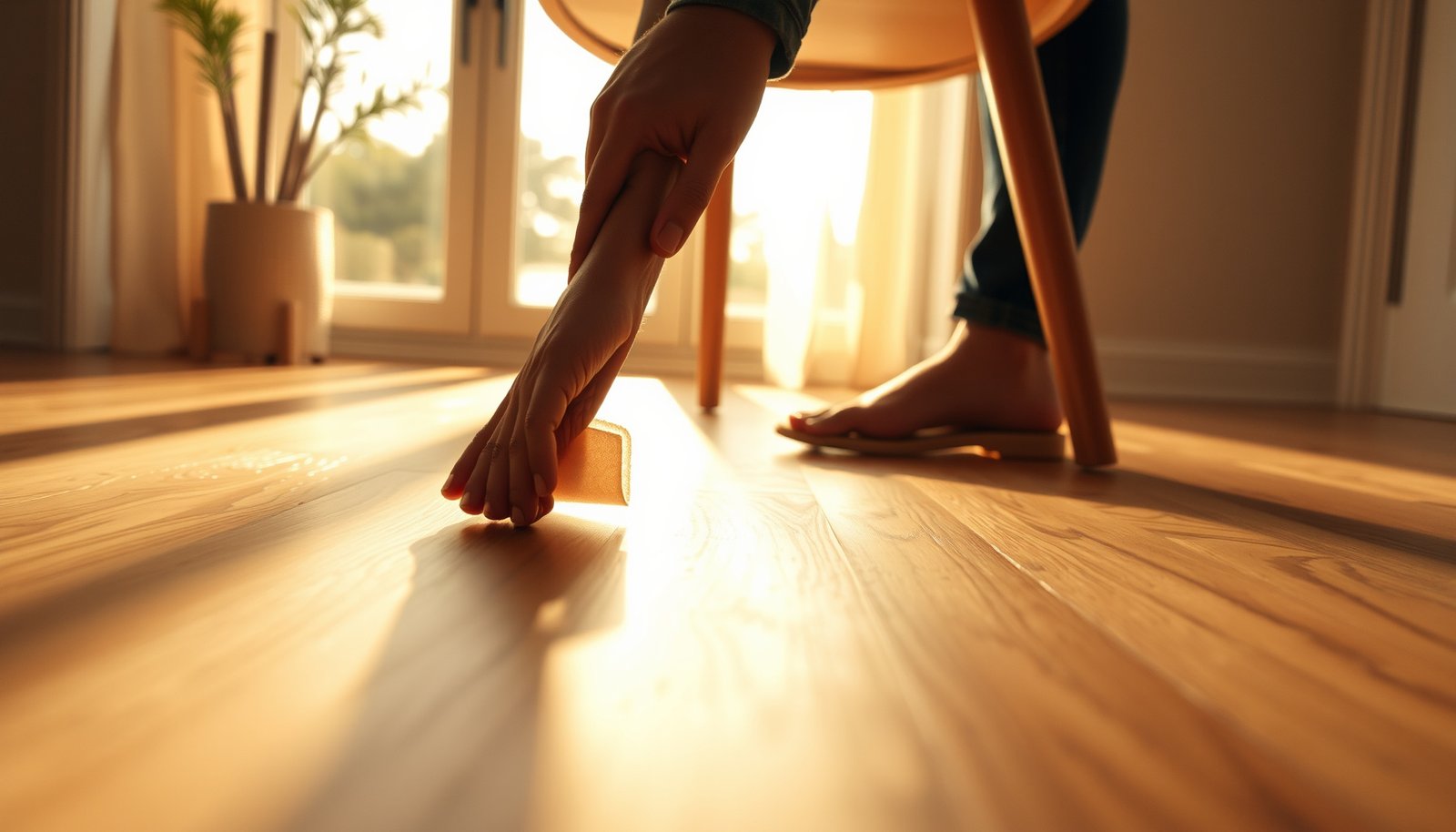
– Add felt pads (or manufacturer-approved hard-floor glides) under furniture legs; replace pads when they wear through.
Felt helps because it distributes load and reduces shear force—the “side-to-side drag” that creates thin finish scratches. For engineered wood floors in a sunroom, ensure pads fully cover the leg footprint, and replace them on a schedule you can actually maintain (especially in sunny, frequently used seating zones).
– Use area rugs in chair-and-walkway lanes—especially near the main route—so the top layer takes the abrasion instead of the wood.
A good rug isn’t about covering everything; it’s about protecting the most-used geometry. In a sunroom, this often means the path from entry to seating, and the chair “sweep zone” where legs pivot and slide during repositioning.
Pros and cons: rugs/runners vs. “bare floor” protection
| Option for engineered wood floors in a sunroom | Pros | Cons / watch-outs |
|---|---|---|
| Targeted rugs/runners | Reduces abrasion on high-wear paths; hides micro-scuffs | Must be compatible with the floor (backing/underlay), and should be kept clean/dry |
| Felt pads + minimal coverage | Simpler maintenance and fewer compatibility variables | Still vulnerable at chair arcs and entry lanes if grit is present |
Manage furniture, pets, and daily foot traffic
For engineered wood floors in a sunroom, controlling moving loads matters because chairs, pets, and frequent foot repositioning create repeated friction events even when your entry system is excellent. If you manage those contact behaviors—especially rolling and nail pressure—you prevent scratches from becoming a recurring “pattern,” not an occasional issue.
For wood floors, rolling furniture should be paired with floor-friendly protectors to prevent concentrated abrasion at castor contact points. NWFA (wood flooring maintenance principles)
Trimming pet nails reduces sharp contact forces that can leave visible streaking and small channel marks in floor finishes. General veterinary grooming guidance (pet nail care) + floor-care practice (abrasion reduction)
Engineered wood flooring is generally more dimensionally stable than many solid woods, but finish scratches still occur through abrasion mechanisms independent of core stability. Industry wood flooring stability principles (general)
Furniture movement: treat the interface
– Choose chair wheels and casters carefully; if your chairs roll, use floor-friendly glides designed for hard floors rather than bare plastic.
Hard plastic can create a harder, more point-loaded contact that increases finish wear. For engineered wood floors in a sunroom, the best approach is to match the chair’s intended use: if the chair rolls frequently, prioritize glides/casters made for hard floors and replace them if they crack, warp, or collect embedded grit.
– For pets, keep nails trimmed and consider nail caps if that fits your situation—long nails can cause visible streaking faster than you’d expect.
Scratches from pets often show up as short streaks in the same zones: near feeding areas, the “route” to the door, or where pets jump onto furniture. For engineered wood floors in a sunroom, nail maintenance is a behavioral control tool—similar to mat usage at entry.
Daily foot traffic: shift from “drag” to “lift”
Even with engineered wood floors in a sunroom protected by mats, scratches can still happen when items are dragged across the surface. Use a “lift-and-place” routine for anything heavy or sharp-edged (side tables, baskets, storage stools). Small process changes reduce shear forces on the engineered wood finish.
Clean without grinding dirt into the finish
Cleaning is where many people accidentally undo their scratch prevention. For engineered wood floors in a sunroom, use dry dusting first and damp cleaning only when the flooring brand explicitly allows it, because abrasive debris can act like sandpaper when you spread it.
Routine dry cleaning (dust mopping/sweeping) is a common wood-floor maintenance recommendation because it removes grit that causes abrasion. NWFA (maintenance recommendations)
Moisture management is central to wood flooring care: NWFA guidance commonly targets indoor relative humidity ranges around mid-band levels for stability. NWFA (recommended humidity range guidance)
Many finish failures become more visible after repeated abrasion; reducing re-wear from daily cleaning improves long-term scratch visibility. Wood flooring care principles (finish wear/abrasion)
Dry-clean first, then decide if damp is allowed
– Sweep or dust-mop daily (or as needed) using a soft head; avoid pushing around debris that turns into fine grit.
When you “push” debris, you often grind it into a thinner layer—exactly what causes fine, high-frequency scratches on engineered wood floors in a sunroom.
– For wet cleaning, follow your engineered wood brand’s instructions for damp-only cleaning (and avoid flooding). If you don’t know the exact guidance, use rather than guessing.
If you must clean spills, treat it like a spot task: blot, then follow the manufacturer’s allowed cleaner and moisture limit guidance.
Control sunroom conditions that can make scratches more noticeable
Sunroom conditions can make engineered wood scratches more visible even when the number of scratches doesn’t drastically increase. The finish reflects light differently as temperature and humidity shift, and some conditions can accelerate how the surface shows scuffs.
According to NWFA guidance, maintaining indoor relative humidity roughly in the mid-range helps wood flooring stability (often cited around 35%–55% RH). NWFA (recommended RH guidance)
According to the Mohs hardness framework, quartz (Mohs 7) is significantly harder than many tracked soil components, so light abrasion can accumulate quickly. USGS (Mohs hardness scale)
Sunlight can change finish appearance and contrast, which makes existing micro-abrasions and finish wear more noticeable. Wood floor finish care principles (general)
Reduce visual “contrast” and preserve finish performance
– Manage humidity swings: engineered wood is generally more stable than solid wood, but extreme moisture changes can affect how the surface performs and how scuffs show.
In 2026, sunroom setups often combine large window exposure with HVAC cycling, which can create fast RH swings. Follow your flooring manufacturer’s humidity guidance and avoid rapid humidification/dehumidification.
– Keep direct sun exposure in mind—fading and finish changes can make scratches stand out more. Use curtains/blinds as recommended by your flooring manufacturer ().
Even if the engineering core stays stable, finish tone and gloss can shift, increasing the “highlight line” effect along micro-scratches.
What can go wrong (common mistakes and edge cases)
If you still see scratches on engineered wood floors in a sunroom after adding mats and pads, the cause is usually a gap in the “abrasion chain”: entry grit, contact protection, or cleaning method. Fix the weak link—don’t assume the product is defective.
Skipping a high-grit entry system is a common failure mode because abrasive particles remain available for daily micro-abrasion on engineered wood floors in a sunroom. NWFA (maintenance principles)
Using an unapproved cleaner or excessive water can degrade or dull finishes, which increases the visibility of fine scratches. Manufacturer finish care practices (general industry guidance)
Worn-through felt pads stop protecting and can behave like a dragging abrasive, so inspection intervals matter. General floor protector maintenance practice
– Skipping doormats: even the best pads won’t stop grit from scratching when it’s tracked in daily.
– Using the wrong cleaner or too much water: some products can dull or damage finishes, which makes minor scuffs look worse. Stick to the specific approved products/processes in your warranty or care guide.
– Over-rugging without knowing the floor’s needs: some rugs or underlay can trap moisture or friction heat—if you use underlayment, confirm it’s compatible with your flooring brand.
– Reapplying pads too late: worn-through felt often becomes the scratch source itself—set a routine to inspect and replace.
Verdict: Best-practice scratch prevention (and limits)
The best-practice approach for engineered wood floors in a sunroom is prevention at the source—entry grit control plus softened contact points—combined with low-abrasion cleaning. In practice, this wins because most scratches come from repeated micro-abrasion, not from a single accident.
According to NWFA principles, controlling grit (especially via entry systems) and using proper protectors reduces abrasive wear that leads to scratches on wood flooring. NWFA (wood floor maintenance recommendations)
According to the Wentworth grain-size classification, sand-sized particles (~0.0625–2 mm) can function as abrasives when repeatedly moved across a finish. Wentworth (1922)
That said, there are limits. Mats and rug routines take maintenance, and chair glides/felt pads need periodic replacement. If you’re not willing to maintain those basics, scratches can still appear—especially in high-traffic sunrooms where grit exposure is ongoing. Also, skip DIY “finish experiments” if your engineered wood floor is under warranty; start with your manufacturer’s care/maintenance documentation ().
Quick checklist (save this)
| Area | Do this | Avoid |
|---|---|---|
| Entry | Use a no-slip doormat; consider “no shoes” | Let grit get tracked in daily |
| Furniture | Felt pads / hard-floor glides under legs | Bare legs or worn-through pads |
| Rolling chairs | Hard-floor-friendly glides/wheels | Scraping wheels or rough castors |
| Pets | Trim nails; consider nail caps | Long nails that can streak the finish |
| Cleaning | Dust mop/sweep often; damp clean only if approved | Wet mopping or harsh chemicals |
| Sunroom climate | Follow humidity guidance in your care guide | Ignoring moisture extremes |
Sources
– National Wood Flooring Association (NWFA) — wood flooring care/maintenance guidance
– USGS — Mohs hardness scale (mineral hardness values)
– Wentworth, C.K. (1922) — grain-size classification used for sand-sized abrasive ranges
If you do only three things for engineered wood floors in a sunroom in 2026—use a real entry mat/no-shoes rule, add felt pads/hard-floor glides in every contact zone, and clean dry before any damp steps—you’ll typically eliminate the “sandpaper effect” that drives most scratches. The goal isn’t a pristine showroom surface; it’s a repeatable system that keeps everyday movement from abrading the finish.
Frequently Asked Questions
What are the best ways to prevent scratches on engineered wood floors in a sunroom?
Start with a protective entry system: use felt or fabric mats at every doorway and rugs with non-scratch backing to catch grit and reduce abrasion. Add furniture pads (felt glides or high-quality non-marking casters) and keep pet nails trimmed to limit point impacts. For ongoing protection, periodically clean with a manufacturer-recommended engineered wood cleaner and avoid harsh scrubbers that can cause micro-scratches.
How can I stop sand and grit from scratching my engineered wood sunroom floor?
Sand is the main driver of scratches, especially in sunrooms where dust and outdoor debris migrate indoors through open doors or ventilation. Use a large doormat outside the sunroom entry and a second rug inside to trap particles before they reach the floor. When cleaning, vacuum with a soft brush attachment and sweep with microfiber rather than dry, abrasive brooms.
Which floor protectors are safest for engineered wood to avoid scuffs and scratches?
Choose felt pads or furniture sliders designed for hardwood floors, and replace them when they get worn or embedded with debris. For moving heavy items, use protective boards or lift furniture—don’t drag it across the engineered wood. If you need casters, select “soft tread” or rubberized wheels made for wood flooring and test on a small hidden area first.
How do I prevent scratches from chairs, tables, and everyday movement in a sunroom?
Use area rugs in high-traffic zones and place felt protectors under chair legs, bar stools, and table feet, especially where sunlight and glare can highlight damage. For rotating furniture or items that get moved often, consider plastic or fabric floor protectors specifically rated for engineered wood. Keep floors clean of grit, then move items by lifting or sliding with a floor-friendly tool to prevent scratches.
Why do engineered wood floors scratch more easily in sunrooms, and how can I reduce the risk?
Sunrooms often experience increased foot traffic, outdoor dust intrusion, and temperature swings that can make surface wear more noticeable over time. Protect your engineered wood flooring by controlling debris (mats and regular vacuuming), reducing friction (rugs and proper pads), and keeping the finish clean and intact. If your floor has a protective topcoat, follow manufacturer guidance for maintenance products to help minimize scuffing and abrasion without damaging the finish.
📅 Last Updated: October 20, 2026 | Topic: How to prevent scratches on engineered wood floors in a sunroom? | Content verified for accuracy and freshness.
References
- Maintenance | National Wood Flooring Association | NWFA
- https://www.armstrongflooring.com/support/care-and-maintenance.html
- https://www.bruce.com/care-and-cleaning
- Wood flooring
- https://www.britannica.com/topic/wood-flooring
- https://scholar.google.com/scholar?q=prevent+scratches+engineered+wood+floor Google Scholar
- https://scholar.google.com/scholar?q=wood+floor+scratch+resistance+finish+maintenance Google Scholar
- https://scholar.google.com/scholar?q=sunroom+engineered+wood+floor+humidity+uv+maintenance Google Scholar