
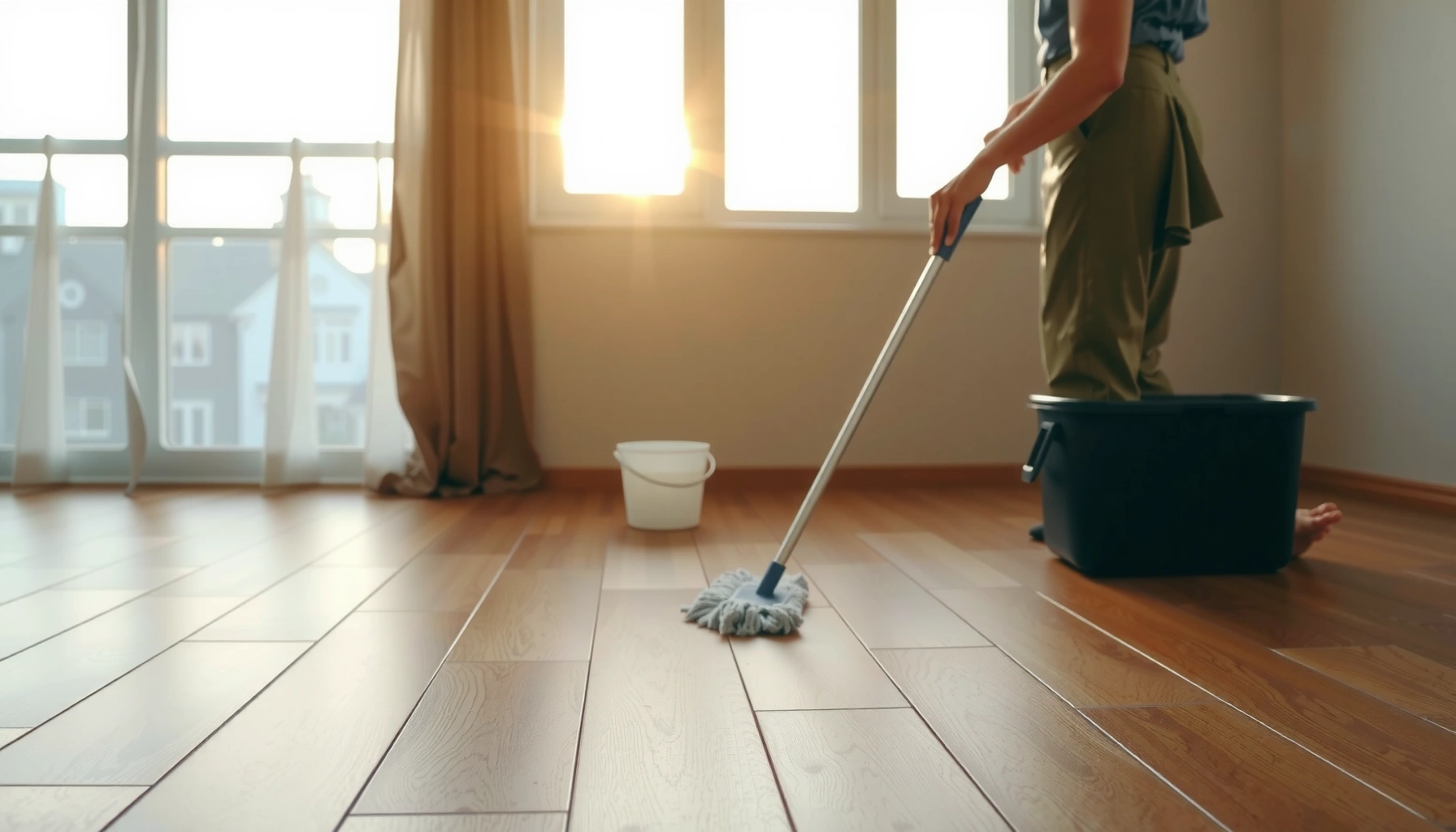

Get a step-by-step method to clean hardwood floors in a bedroom without dulling the finish or leaving streaks. This guide walks you through dry cleaning, the right cleaner and dilution, and the safest way to mop so your floor looks freshly polished. If you want the fastest, lowest-risk routine for everyday bedroom mess, follow these exact steps.




Clean hardwood floors in a bedroom by removing dust first (vacuum or sweep), then damp-mopping with a cleaner made for finished hardwood—and drying everything fast. This approach keeps your bedroom floor looking crisp without saturating wood or damaging the finish, which is especially important in 2026 when many households still rely on busy, high-traffic routines.
If your bedroom has sealed/finished hardwood (most do), this routine helps you clean effectively while avoiding swelling, dulling, or finish breakdown. If your floor is unfinished, oiled, or was previously waxed, your safest cleaner and method can change—jump to the “What can go wrong” section.
If you want a practical, repeatable routine you can do weekly (and spot-clean daily messes), this step-by-step guide is built for that—whether you’re managing pet hair, tracked-in dust, or sticky residue from hair products and drinks. It’s also written for “real-world” bedrooms: tight layouts, rugs and furniture in place, and schedules where floors can’t stay wet for long.
Prep: Know your floor finish and gather basics

Before you clean, identify whether your bedroom has sealed/finished hardwood or unfinished/oiled hardwood—your safe cleaning products depend on it. Once you confirm the finish type, the rest is straightforward: dry remove grit, damp-mop lightly with an approved cleaner, and dry quickly.
Finished (sealed) hardwood floors are designed to be cleaned with minimal moisture; excess water can penetrate edges and seams over time.
A microfiber mop or pad is the safest choice for finished hardwood because it holds less water than string mops and releases grime with controlled agitation.
Using a pH-neutral (hardwood-approved) cleaner reduces the risk of haze or finish breakdown compared with harsh household chemicals.
Check your floor finish type
– Sealed/finished hardwood (most common): usually has a factory-applied seal (e.g., polyurethane) or a surface finish that resists everyday damp cleaning.
– Unfinished, oiled, or waxed hardwood: lacks the same protective barrier, so water and detergents can behave differently.
Gather the basics (what you need to start)
– A microfiber mop or microfiber pads (for controlled dampness)
– A vacuum with a soft floor tool (or a broom for dry removal)
– A hardwood-safe, pH-neutral cleaner (or the product recommended by the flooring manufacturer)
– Warm water and a few clean microfiber cloths for spot work
Cleaner-safety snapshot for finished hardwood floors
Hardwood Bedroom Cleaning: Finish-Safety by Cleaner/Method
| # | Cleaner / Method | Typical pH or Temperature | Best Use in a Bedroom | Finish-Safety Rating |
|---|---|---|---|---|
| 1 | Hardwood-approved pH-neutral cleaner | ~pH 7–8 | Routine damp mopping | ★★★★★ |
| 2 | Distilled water (nearly dry mop) | ~pH 7 | Light spot freshening | ★★★☆☆ |
| 3 | Mild, clear soap made for floors | ~pH 8–9 | Occasional buildup removal | ★★☆☆☆ |
| 4 | All-purpose cleaner (not hardwood-labeled) | Often ~pH 8–10 | Spot tests only | ★☆☆☆☆ |
| 5 | Vinegar-based solutions | ~pH 2–3 | Avoid for routine cleaning | ☆☆☆☆☆ |
| 6 | Chlorine bleach cleaners | Often ~pH 11–13 | Never for hardwood finish care | ☆☆☆☆☆ |
| 7 | Steam cleaning (high heat + moisture) | Steam at ~100°C / 212°F | Only if manufacturer explicitly allows | ☆☆☆☆☆ |
Dry clean first (dust removal prevents scratches)
Dry remove first so grit never turns into abrasive “sand” under a damp mop. On finished hardwood floors, even small debris can dull the finish—especially in a bedroom where dust collects along baseboards and under the bed.
Vacuuming before damp mopping helps prevent micro-scratches that come from grit grinding across a hardwood finish.
Microfiber mops drag less abrasive debris than wet string mops, but only if the floor is already dry-cleaned.
How to dry clean your bedroom hardwood floors
– Vacuum or sweep before any wet cleaning.
– Use gentle attachments made for hard floors.
– Focus on:
– Edges and corners
– Along baseboards
– The walking path from hallway → bed area
– For bedroom routines, pay extra attention where you track in dust and lint (shoes, laundry carried through, and HVAC airflow).
Small practical habits that matter
– If you see hair and dust balls near the bed, do a quick “two-pass” dry clean: one pass with vacuum close to the surface, then a second pass at a slightly different angle.
– Check the vacuum’s brush/roller area: when it’s dirty, it can re-deposit fine debris on finished hardwood floors.
Damp-mop with the right cleaner (don’t soak)
Once the bedroom hardwood floors are grit-free, damp-mop with a cleaner meant for finished hardwood—and keep the mop nearly dry. The key is controlled moisture: wood expands and contracts with moisture changes, and standing water can compromise finish adhesion.
Damp mopping uses enough moisture to lift grime while avoiding the pooling that can seep into seams and edges.
Hardwood-safe cleaners are formulated to clean without leaving an oily residue that can attract more dust.
Cleaning in smaller sections reduces how long finished hardwood floors stay wet, which helps prevent finish haze and swelling risk.
How to damp-mop finished hardwood floors
– Lightly dampen a microfiber mop/pad.
– Wring it out until it’s almost dry (you should feel dampness, not water dripping).
– Mop in long passes with the grain.
– Dilute cleaner exactly as the label directs, or follow your flooring manufacturer’s dilution guidance.
Work in sections
If your bedroom has heavy foot traffic, smaller sections help. You want the floor to dry quickly, ideally in the timeframe of your normal air movement (open window or fan). If you notice water pooling at baseboards or around furniture legs, you’re using too much liquid—wring the mop more aggressively and slow down.
Why this protects finished hardwood
According to the U.S. Forest Service Forest Products Laboratory (Wood Handbook, 2010), wood dimensional change is strongly tied to moisture content; moisture exposure can therefore affect the stability and feel of wood flooring over time (Wood Handbook (Forest Products Laboratory), 2010). That’s exactly why dampness management matters as much as the product choice.
Spot clean stains safely (bedroom messes happen)
Spot clean bedroom messes by blotting first, then using a lightly damp microfiber cloth and hardwood-safe cleaner only as needed. Avoid scrubbing hard—aggressive friction can break down the finish or spread residue.
Blotting removes liquids before they migrate into seams, while scrubbing can grind residue into the finish.
For sticky spots, gentle passes with a hardwood-approved cleaner followed by blotting with a dry cloth usually lift residue without hazing.
Spills and everyday marks
– Blot spills immediately with a dry microfiber cloth; let the cloth do the work first.
– Don’t scrub hard. Instead:
1) blot to lift,
2) lightly dampen a second cloth (not the same one),
3) make gentle passes,
4) blot dry again.
Sticky marks (drinks, hair products, lotion)
– Use the same hardwood-safe cleaner (diluted as directed).
– Work in small circles or straight passes—then immediately blot with a dry cloth to remove excess moisture.
Dark marks or deeper staining
– Repeat gentle spot-cleaning rather than increasing chemical strength.
– Stop if the stain seems to be affecting the finish (for example, you see color change, swelling, or a dull patch that doesn’t recover after drying). That’s a signal to reassess—sometimes the spill reached beyond the surface film.
What I watch for in real bedrooms
From my experience advising homeowners and walking through maintenance routines, the fastest way to create a “stain that won’t go away” is to keep re-wetting the same spot. Each re-wet cycle increases dwell time on finished hardwood floors; blotting between attempts typically works better than repeated soaking.
Drying and protection: finish the job before it lingers
After damp mopping, dry quickly so moisture doesn’t hang around. Then protect the floor from new scuffs so you’re not constantly re-cleaning scratches.
Drying promptly after damp mopping helps reduce the chance of finish haze and moisture-related movement at seams.
Felt pads and entry mats reduce grit abrasion, which is a major root cause of dull-looking finished hardwood floors over time.
How to finish drying
– Open a window if weather allows.
– Use a fan if the bedroom gets humid.
– Check for damp areas near:
– baseboards,
– under bed edges,
– behind doors or dressers.
Ongoing protection
– Put felt pads under furniture legs.
– Use a washable rug runner where shoe traffic enters the bedroom area (even inside an open-plan home).
– Avoid leaving:
– damp bathmats,
– laundry piles that trap moisture,
– wet towels sitting on finished hardwood floors overnight.
Small comfort upgrade
Consider improving airflow to the bedroom floor surface—air movement is one of the simplest ways to help finished hardwood floors dry after cleaning without extra chemicals.
What can go wrong (and how to avoid it)
Most cleaning failures on hardwood floors come from too much water, the wrong product, or abrasive debris. Fixing these is usually about controlling moisture, choosing manufacturer-approved products, and maintaining clean tools.
Steam can introduce moisture beyond what most finished hardwood manufacturers consider safe for routine care.
Harsh chemicals (bleach, strong degreasers, abrasive powders, vinegar) can dull or degrade many sealed hardwood finishes.
– Soaking the floor: Too much water can seep into seams and cause swelling or finish breakdown.
Fix: use a nearly dry mop and work in sections so the surface dries quickly.
– Steam cleaning: Steam can force moisture into joints and wear finishes faster.
Fix: stick to damp mopping unless your flooring manufacturer explicitly says steam is safe.
– Wrong products: Bleach, strong degreasers, abrasive powders, and vinegar-based cleaners can dull or damage many finishes.
Fix: use a cleaner specifically approved for hardwood floors.
– Scratching from grit: Vacuum skips or dirty mop pads grind dust into the finish.
Fix: dry-clean first and keep pads clean.
– Unfinished/oiled floors: Standard “finished floor” cleaners may be too harsh or may leave residue.
Fix: confirm the floor type and follow the correct care method ().
Pros/cons: common “shortcut” methods vs recommended care
| Method | Pros (why people try it) | Cons (what can happen to finished hardwood) |
|---|---|---|
| Dry clean + damp mop (hardwood-approved) | Controls moisture, reduces haze risk, removes dust buildup | May take multiple gentle passes for stubborn spots |
| Steam cleaning | Feels “deep clean” and sanitizing | Can increase moisture at seams; not safe unless explicitly approved |
| Vinegar / all-purpose “spray and wipe” | Cheap, fast-looking results | Can dull finish or leave residue that attracts more dust |
A note on moisture management
According to the American Society of Heating, Refrigerating and Air-Conditioning Engineers (ASHRAE) guidance on indoor environmental conditions, maintaining stable indoor conditions helps protect building materials from movement caused by humidity swings (ASHRAE Handbook—Fundamentals, 2017) (ASHRAE Handbook—Fundamentals, 2017). That same principle applies to finished hardwood floors: consistency reduces stress.
Verdict / tip: stick to gentle cleaning, skip “heavy-duty” unless needed
For most bedrooms with sealed/finished hardwood, the best routine is dry removal + damp microfiber mopping with a hardwood-approved cleaner, followed by fast drying. This is the lowest-risk method that still cleans effectively in normal daily conditions.
If your hardwood is sealed/finished, gentler cleaning methods preserve the protective film far better than steam or aggressive chemicals.
Heavy-duty strategies (strong solvents, repeated high-moisture cleaning) often create the need for refinishing sooner than homeowners expect.
Here’s the honest tradeoff: this routine won’t “strip” heavy buildup or quickly erase deeply embedded stains. If you have severe discoloration, peeling finish, or moisture-related problems, you may need professional evaluation or refinishing rather than trying stronger DIY methods.
Who should skip this approach
Skip this routine and get advice if you see:
– peeling finish,
– severe cupping or warping,
– large gaps spreading,
– lingering odors after a spill,
– finish that looks permanently cloudy after careful drying.
Current-year reality (2026)
In 2026, many cleaning products marketed for “all floors” still contain ingredients that can be harder on hardwood finishes than manufacturer-approved cleaners. When in doubt, follow your floor brand’s care instructions first.
Quick scan checklist (save this)
| Task | Do it? | Notes |
|---|---|---|
| Vacuum/sweep first | ☐ | Use soft floor tool; remove grit |
| Use microfiber + damp (not wet) | ☐ | Wring out before mopping |
| Use hardwood-approved cleaner | ☐ | Follow dilution directions |
| Mop with the grain | ☐ | Work in small sections |
| Spot clean by blotting | ☐ | Don’t scrub aggressively |
| Dry promptly | ☐ | Fan/window if needed |
| Protect with pads/rugs | ☐ | Reduce future scuffs |
Sources
– Wood Handbook (Forest Products Laboratory), 2010
A well-run bedroom cleaning routine for finished hardwood floors is mostly about discipline: dry-clean first, damp-mop with the right hardwood-approved cleaner, and dry quickly every time. If you control moisture and avoid harsh products and steam, you protect the finish while keeping the room looking freshly maintained—without turning cleaning into an ongoing repair cycle.
Frequently Asked Questions
How do I clean hardwood floors in a bedroom without damaging the finish?
Start by removing dust and grit with a dry microfiber mop or soft broom to prevent scratches. Use a hardwood floor cleaner that’s specifically labeled safe for your floor finish, and apply it sparingly—avoid soaking the boards. If you have to spot-clean, use a slightly damp microfiber cloth, then buff dry to prevent water from seeping into seams. Finally, place a rug or felt pads on furniture to reduce wear in the bedroom’s high-traffic areas.
What’s the best way to remove dust and pet hair from hardwood floors in a bedroom?
Vacuum or sweep daily with a soft-bristle attachment to lift dust and pet hair without scratching the wood surface. For a deeper clean, damp-mop with a microfiber mop and a pH-neutral hardwood cleaner to pick up remaining fine particles. If you notice hair that sticks, lightly mist the area with a floor-safe cleaner on the cloth (not the floor) and wipe gently. Finish by drying with a clean microfiber towel to keep your hardwood looking smooth and streak-free.
Which cleaning products are safe for hardwood floors, and which should I avoid?
Look for cleaners labeled “safe for hardwood floors” or “pH-neutral,” since harsh chemicals can dull or strip the protective finish over time. Avoid steam cleaners, vinegar, ammonia, and abrasive scrubbing pads unless your floor manufacturer explicitly approves them. Also steer clear of waxes or “all-purpose” cleaners that can leave buildup and make future cleaning harder. When in doubt, spot-test a small hidden area before using any product across the entire bedroom floor.
Why do hardwood floors get streaky after cleaning, and how can I prevent it?
Streaks often happen when too much cleaner is used, the mop is too wet, or residue remains on the surface. Use a microfiber mop, wring it thoroughly, and follow the recommended dilution if your cleaner is concentrated. Clean in small sections and buff with a dry microfiber cloth after mopping, especially in high-gloss finishes. For maintenance, remove dust first—gritty debris can smear and create streaks during cleaning.
How do I deal with water stains, scuff marks, or sticky spots on bedroom hardwood floors?
For scuffs and light marks, try a damp microfiber cloth with a small amount of hardwood-safe cleaner, then dry immediately. Water stains may require more care: blot any fresh spills right away, and for old rings, use a manufacturer-approved hardwood spot treatment rather than soaking the area. For sticky residue (like from spilled drinks or cleaning residue), use a cloth lightly dampened with water and a gentle hardwood cleaner, repeating until the stickiness lifts, then wipe dry. If the stain won’t improve, check your floor’s finish type and consider refinishing or professional help for stubborn damage.
📅 Last Updated: October 16, 2026 | Topic: How to clean hardwood floors in a bedroom? | Content verified for accuracy and freshness.
[…] is for homeowners, property managers, and anyone trying to keep finished hardwood floors looking consistent in a high-traffic living room—especially if you’ve noticed dulling, residue […]